-
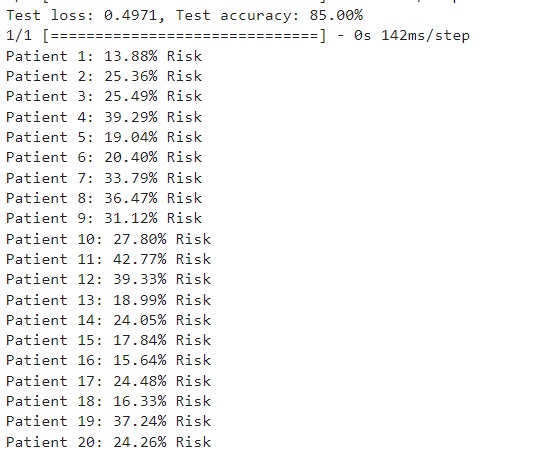
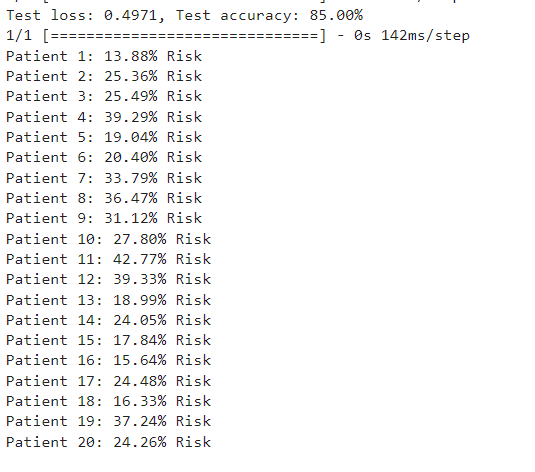
output of my AI model
Inspiration
University students suffer significant stress and mental health concerns. Inspired by the need for improved support, we created "Tech for Tranquility" to use technology to solve these concerns and promote well-being.
What We Learned
We learned about mental health difficulties, effective data preprocessing, and the value of individualized interventions. Our grasp of how technology can provide real-time help has grown dramatically.
What it Does
"Tech for Tranquility" employs data analysis and machine learning to identify university students at risk of mental health problems such as panic attacks and depression. It offers individualized, real-time support and tools to help individuals improve their well-being.
How We Built It
- Data Preprocessing: Convert categorical variables to numerical codes, divide the data into training and testing sets, and standardize numerical features.
- Model Building: Built and trained a deep learning model with TensorFlow, then evaluated its performance on the testing dataset.
- Risk Prediction: Predicted and computed risk percentages for each student to identify those at risk.
Challenges We Faced - Data Quality: Ensuring clean, correct data with minimal inconsistencies.
- Model Selection: Experimenting with different models and tuning parameters to get peak performance.
- Interpretability: Making predictions clear and actionable for mental health practitioners and students.
Proud Achievements: - Created a solid system for identifying at-risk students.
- Developed a tailored support framework that can deliver timely interventions.
- Used technology to have a significant impact on students' mental health.
What We Learned - The significance of clean and correct data in developing efficient machine learning models.
- Learn how to preprocess data and create, train, and evaluate deep learning models.
- The importance of individualized interventions in mental health treatment.
Next Steps in Tranquility Technology
- Expansion: Include new mental health indicators and broaden the system to address a wider spectrum of mental health conditions.
- Collaboration: Work with universities and mental health specialists to make the system broadly available.
- Enhancements: Continuously improve the model's accuracy and support features in response to user feedback and fresh research.
Built With
- colab
- dataframe
- pandas
- platforms:
- python
- scikit-learn

Log in or sign up for Devpost to join the conversation.