-
introduction
-
IDEA
-
HOW IT WORKS
-
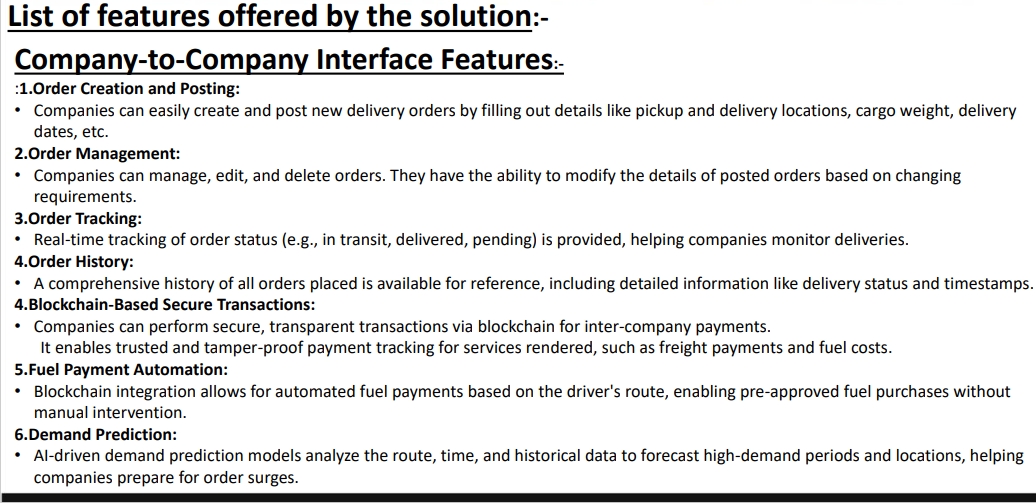
LIST OF FEATURES:- COMPANY-TO-COMPANY INTERFACE
-
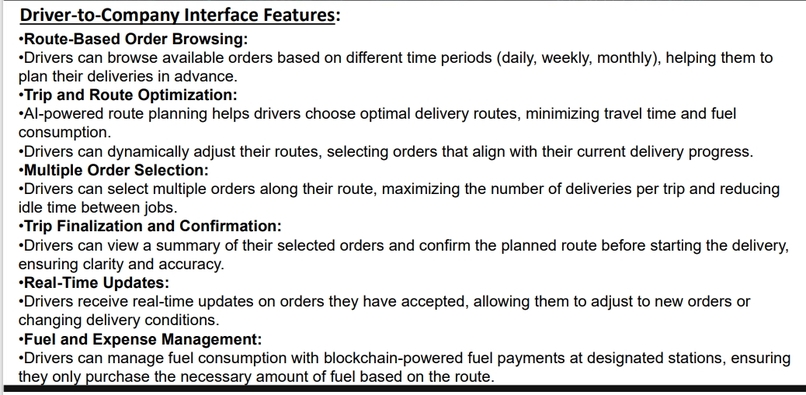
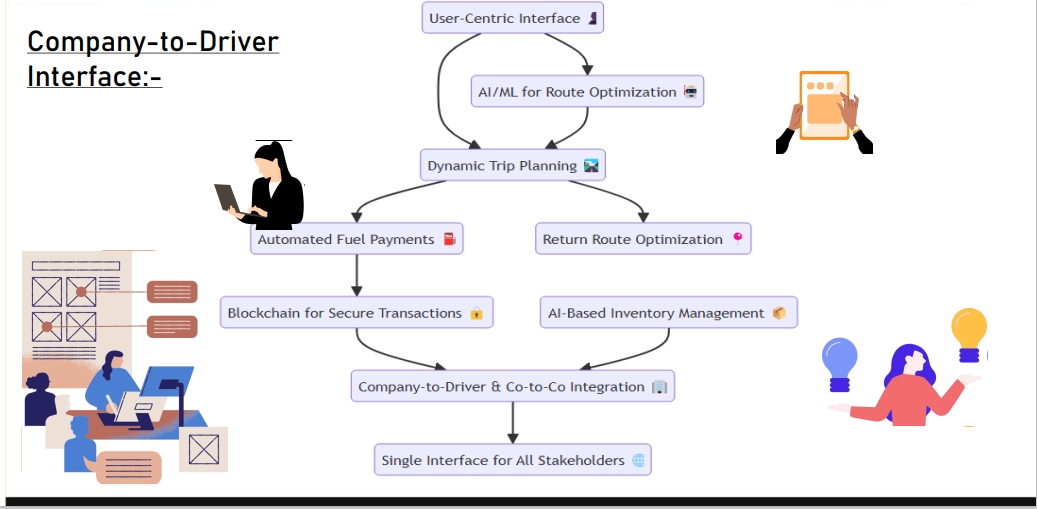
COMPANY-TO-DRIVER INTERFACE
-
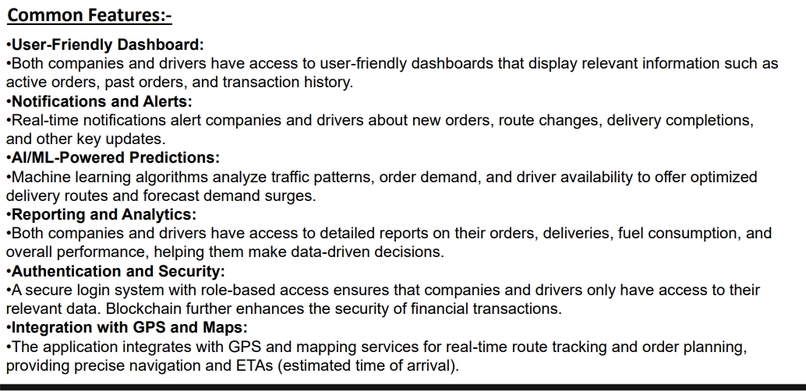
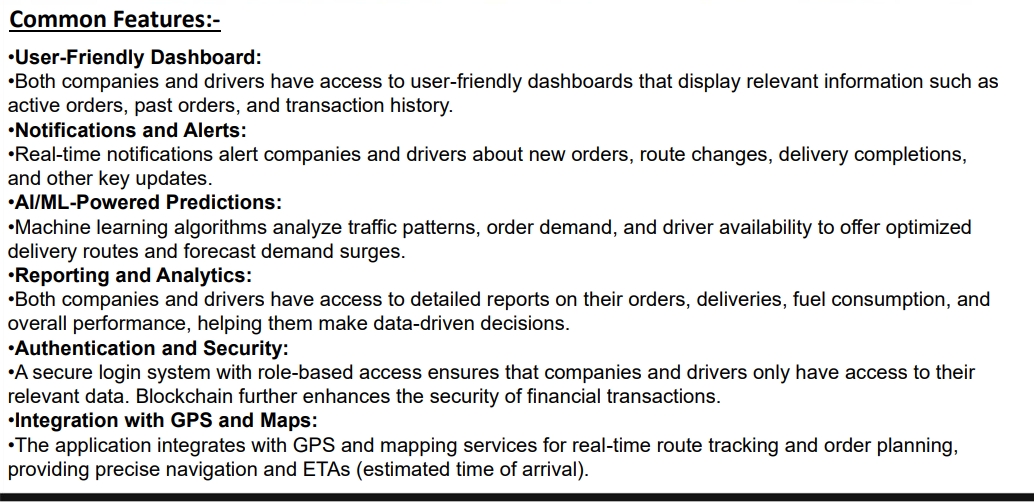
COMMON FEATURE'S
-
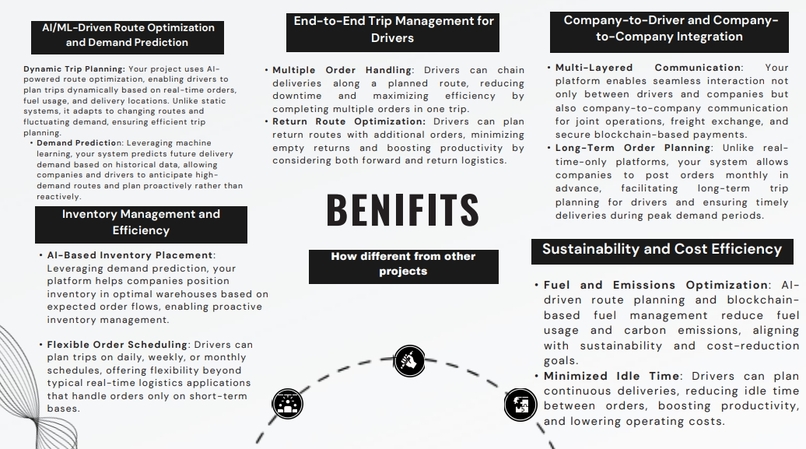
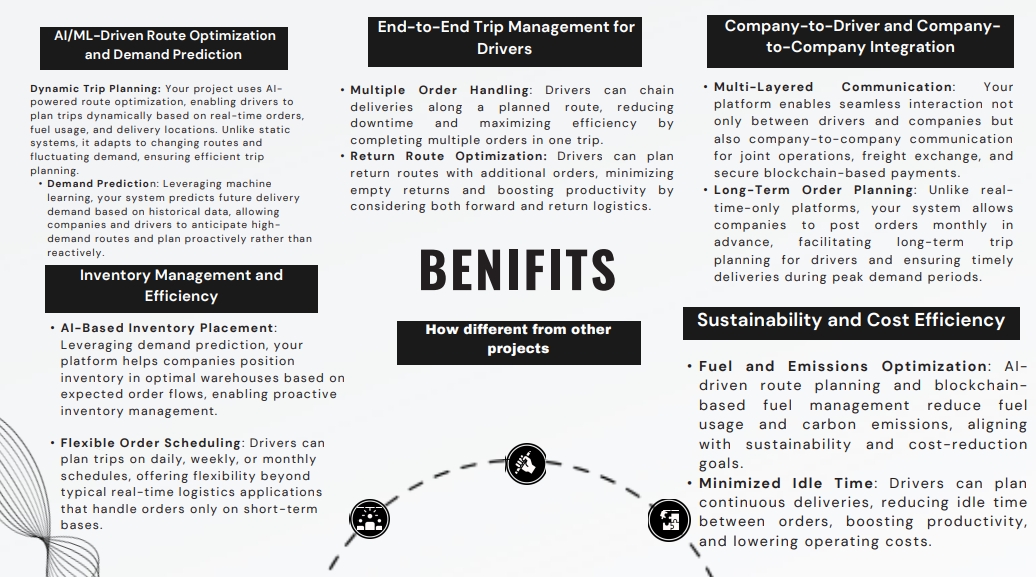
BENIFITS
-
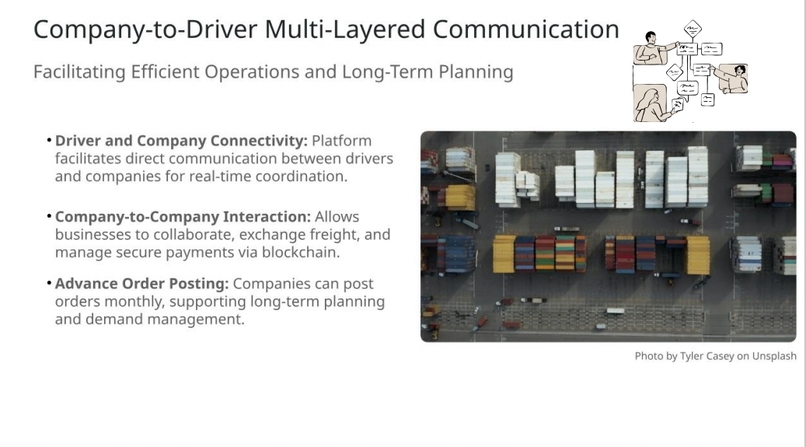
COMPANT-TO-DRIVER MULTI- LAYERED COMMUNICATION
-
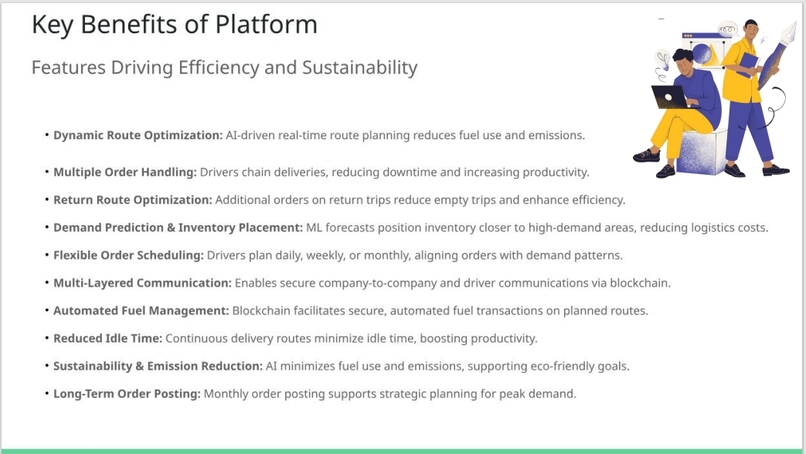
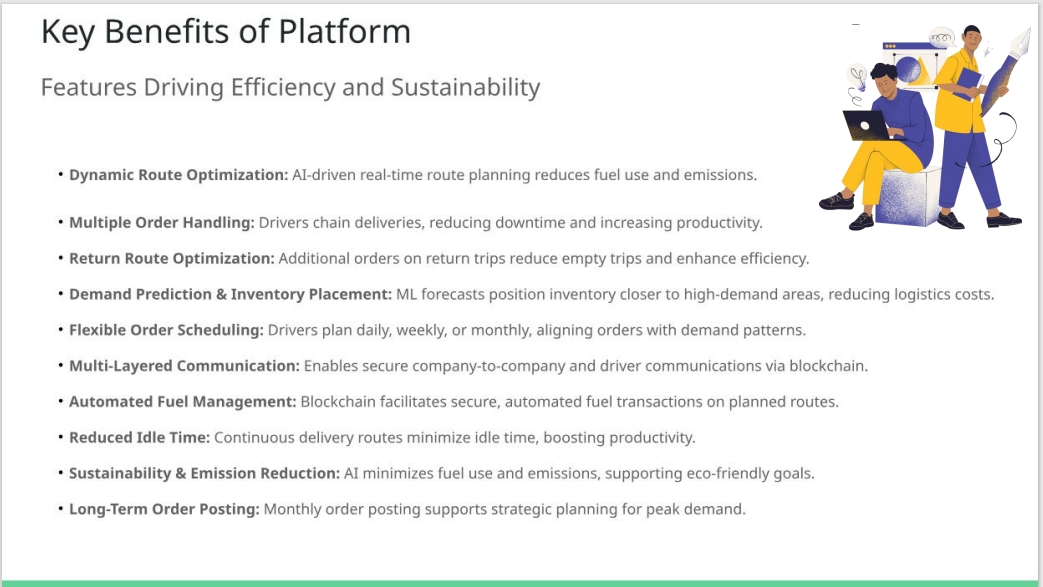
KEY BENIFITS OF PLATFORM
-
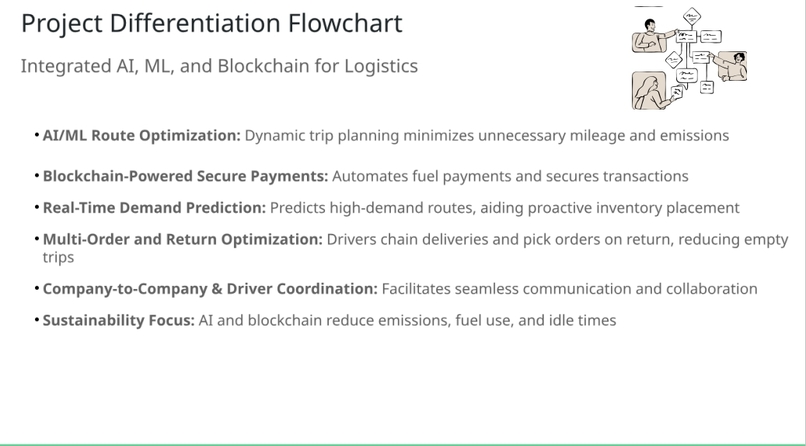
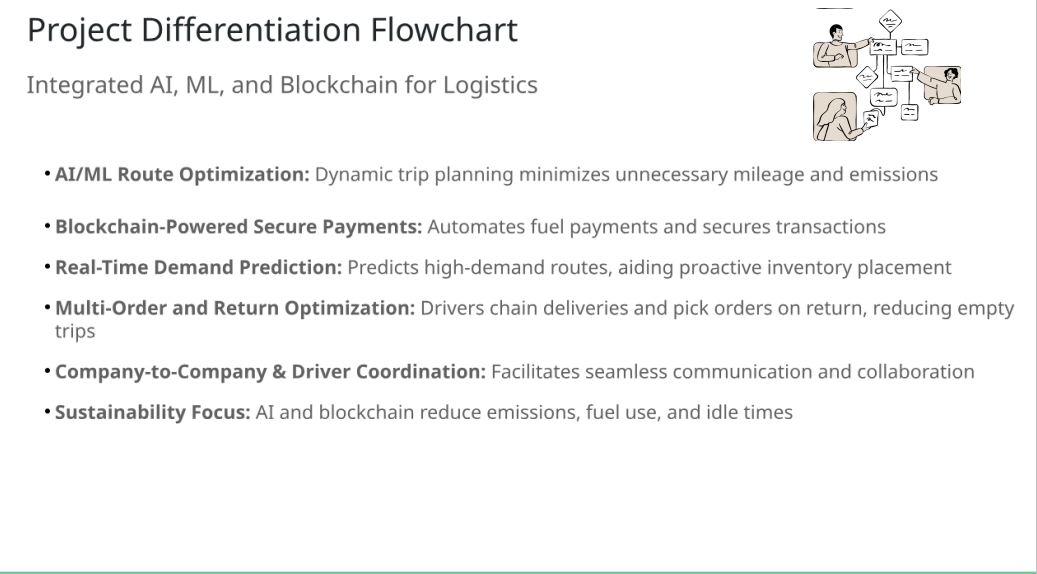
PROJECT DIFFERENTIATION
-
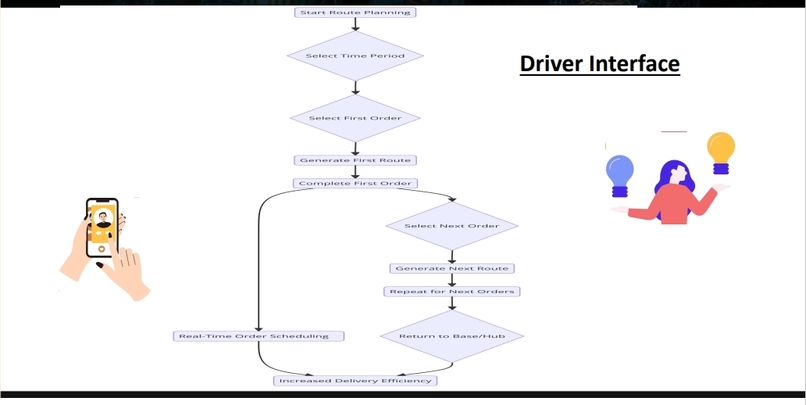
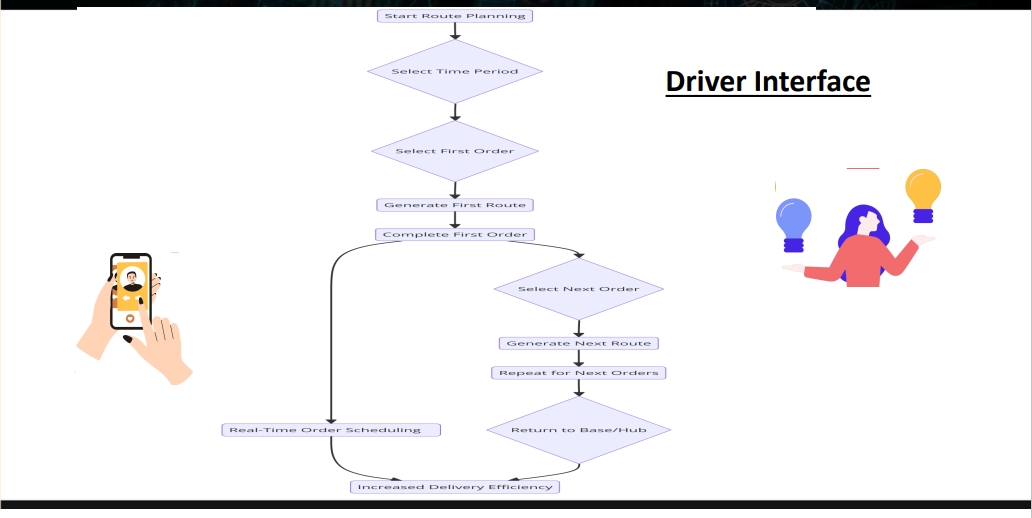
DRIVER INTERFACE FLOWCHART
-
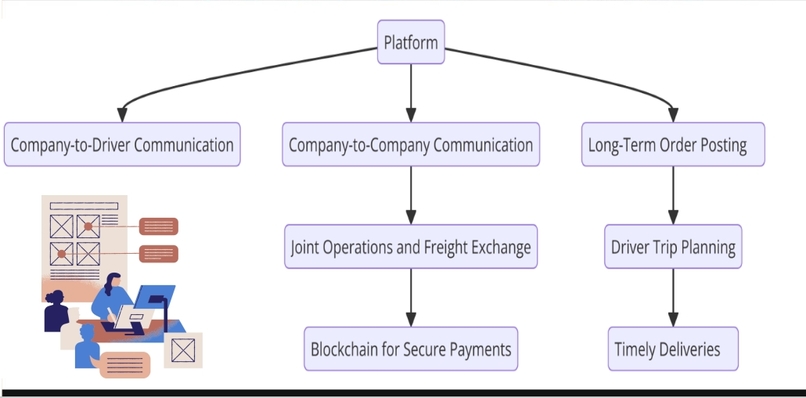
PLATFORM FLOWCHART
-
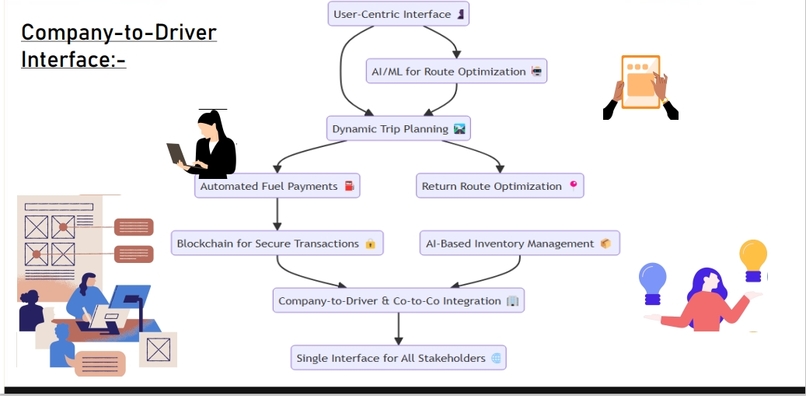
COMPANY-TO-DRIVER INTERFACE FLOWCHART



Inspiration
I was inspired by my friend's father, who runs a logistics business. He struggles to get orders, and when he do, he delivers on time. However, after completing the delivery, he often struggle to find a return order from that city back to their hometown. As a result, he have to wait in the city for 2-3 days to get a return order, which is time-consuming and inefficient. So to adress this issue we developed this idea.
Project: Tech-Driven Logistics Innovation
Team Information
- Team Name: QUANTUM8
- Team Leader: SATYAM MISTARI
- Problem Statement: Tech-Driven Logistics Innovation -Company Name:ZippyDeliver
Solution Overview
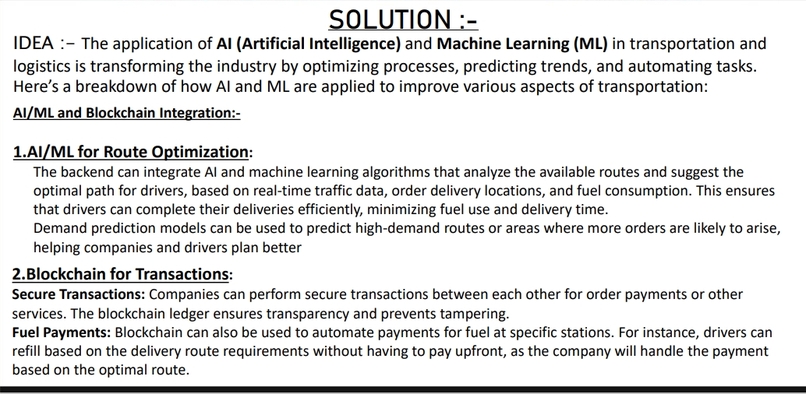
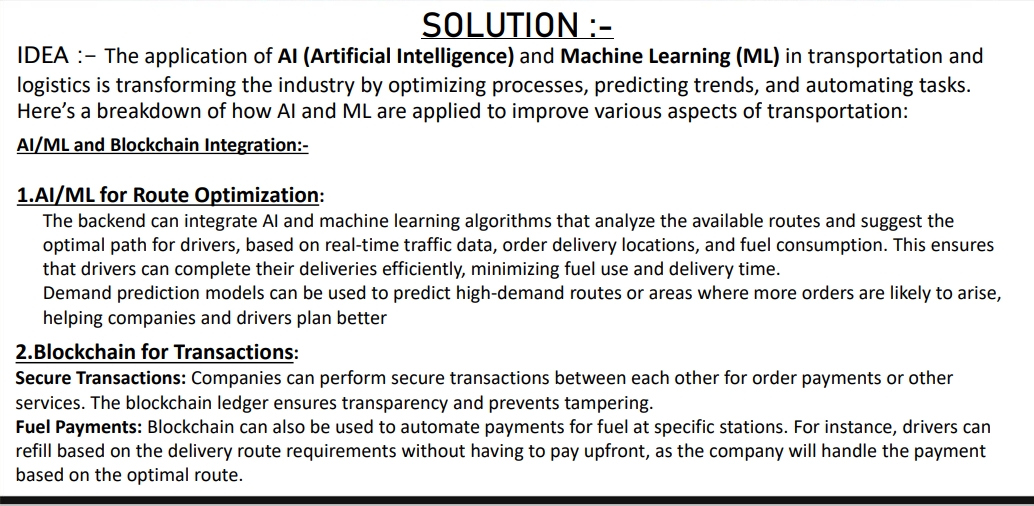
The project aims to leverage AI (Artificial Intelligence) and Machine Learning (ML) to optimize transportation and logistics processes, predict trends, and automate tasks. Key innovations include AI/ML for route optimization and Blockchain for secure transactions.
Key Solution Components
AI/ML and Blockchain Integration
Route Optimization
- AI and ML algorithms analyze real-time traffic, order locations, and fuel consumption to suggest optimal delivery routes.
- Demand Prediction: Predicts high-demand routes, helping companies plan proactively.
Blockchain for Transactions
- Secure Transactions: Ensures tamper-proof payments between companies.
- Fuel Payments: Automates payments at fuel stations along the driver’s route without upfront costs.
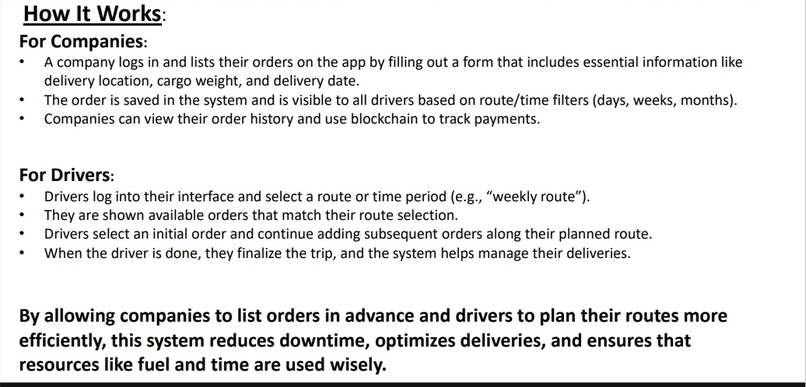
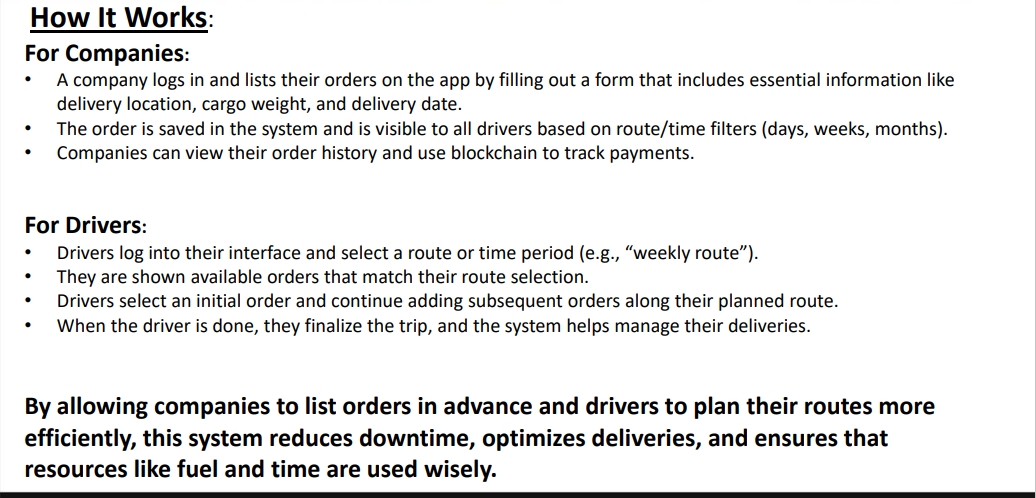
How It Works
For Companies
- Order Management: Companies create and manage delivery orders.
- Order Tracking: Real-time updates on order status.
- Order History: Track all orders placed, delivery status, and timestamps.
- Blockchain Payment Tracking: Secure, transparent payment tracking via blockchain.
For Drivers
- Route and Time Selection: Drivers choose routes and can select multiple orders to maximize efficiency.
- Trip Finalization: Drivers confirm routes before starting delivery.
- Fuel and Expense Management: Automated fuel payments based on the route.
Solution Features
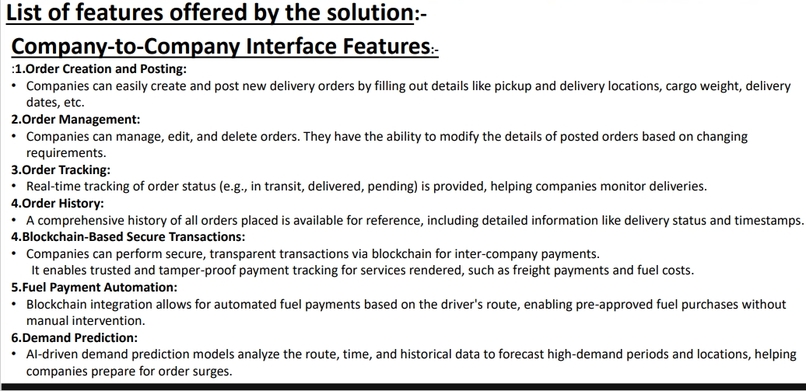
Company-to-Company Interface
- Order Creation and Posting
- Order Management
- Blockchain-based Secure Transactions
- Fuel Payment Automation
- Demand Prediction
Driver-to-Company Interface
- Route-Based Order Browsing
- Trip and Route Optimization
- Multiple Order Selection
- Real-Time Updates
Common Features
- User-Friendly Dashboard
- Notifications and Alerts
- AI/ML-Powered Predictions
- Reporting and Analytics
- Authentication and Security
- Integration with GPS and Maps
Benefits
- Dynamic Trip Planning: Real-time route optimization, adapting to fluctuating demand.
- Demand Prediction: Forecasts high-demand routes.
- AI-Based Inventory Placement: Positions inventory in optimal locations based on demand.
- Fuel and Emissions Optimization: Reduces fuel usage and carbon emissions.
- Reduced Idle Time: Allows continuous deliveries, minimizing idle time.
Unique Value
- Company-to-Driver and Company-to-Company Integration
- Long-Term Order Planning
- Sustainability and Cost Efficiency
What it does
For Companies: Companies log in and post orders by entering delivery details, visible to drivers based on selected filters (e.g., route, time).
Blockchain technology is used to track payments, including fuel transactions on designated routes. For Drivers: Drivers log in, select routes, view available orders, and optimize their trips by adding multiple deliveries along the route. Real-time updates and route optimization support dynamic planning, reducing idle time and enhancing delivery efficiency.
Key Features AI-Driven Route Optimization: Uses real-time traffic and demand data to recommend the best routes, minimizing travel time and fuel usage.
Demand Prediction: AI models predict high-demand areas, allowing companies to plan and allocate resources efficiently.
Blockchain Transactions: Ensures secure, transparent transactions for payments and fuel purchases, reducing manual processing and fraud.
Inventory and Order Management: Provides tools for long-term order planning, order tracking, and historical data access.
Benefits Dynamic Trip Planning: Allows drivers to plan routes flexibly, adapting to changing conditions. Cost and Emissions Reduction: Reduces fuel usage and carbon footprint through optimized routing.
Enhanced Communication: Facilitates seamless interactions between drivers, companies, and partners for joint operations and optimized resource allocation. This approach differentiates itself by integrating AI and blockchain for end-to-end trip management, supporting both short-term and long-term order planning, and focusing on sustainability and cost-efficiency.
How we built it
- AI and Machine Learning Integration
Route Optimization: AI algorithms were developed to analyze real-time data on traffic, fuel consumption, and delivery locations. This ensures that drivers receive optimal route suggestions that reduce fuel usage and travel time.
Demand Prediction: Machine learning models were trained on historical data to predict high-demand areas and peak times. These models help companies anticipate delivery needs and pre-emptively manage logistics operations.
Inventory Placement: The demand predictions also assist in strategic inventory placement at warehouses, reducing delivery times and costs.
- Blockchain Technology:- Secure Transactions: Blockchain was used to ensure secure and tamper-proof transactions between companies and drivers for order payments and fuel management. This eliminates the need for manual payments and allows for transparent, secure transactions.
Automated Fuel Payments:- Blockchain facilitates pre-authorized fuel purchases along optimal delivery routes, streamlining the fuel purchase process and reducing paperwork.
- Frontend and Backend Development
Company and Driver Interfaces:- Custom interfaces were built for companies and drivers to manage orders, view routes, and track deliveries. These interfaces are designed for ease of use, providing real-time information on delivery status, route options, and transaction history.
Dashboards:- User-friendly dashboards display relevant data, such as active orders, past orders, transaction details, and route maps, using integration with GPS and mapping services for accurate navigation and ETAs.
Real-Time Notifications and Alerts The system includes a notification service that alerts drivers and companies of new orders, route changes, and delivery updates. These notifications help in managing dynamic logistics and responding to real-time changes effectively.
Data Security and Access Control Role-based access and secure logins ensure that only authorized personnel have access to sensitive data. Blockchain further strengthens the security of financial transactions and order history, protecting against data tampering.
Challenges we ran into we have challenge of blockchain integration and route optimization technique
Built With
- amazon-web-services
- css
- html
- javascript
- mangodb
- python
- pytorch
- react.js
- solidity
- tensorflow


Log in or sign up for Devpost to join the conversation.