Inspiration
The climate and weather conditions are changing drastically, the pollution is increasing on an uncountable scale, technology is advancing, but still the techniques followed in agriculture are decades old. We believe that the toughest problems of tomorrow cannot be solved using the tools of yesterday and hence we developed "Tech-Agro."
In rural and developing areas, farming and agriculture continue to be the major source of livelihood for significant portions of populations. The risks facing the agriculture industry and the world’s food supply are substantial, aggravated even further by the increasing severity and cadence of natural disasters, uncertainty in crop production and market pricing, lack of effective rural infrastructure, and access to assistance programs. This devastating churn will continue to pick up momentum unless effective measures are taken to increase transparency and deploy mitigation measures.
It's quite ironical that INDIA is known as an agricultural country then also huge percentage of rural area people are unemployed. Because of covid19, migrant labours have returned back to their village and doesn't have any source of income.
The main reason that these people are running away from agriculture is loss of faith. The net average production per hectare of India is quite low and crops often lead to losses because of less production so farmer"s mostly try to indulge them or their future generation in someother work like labour or working in a factory. This could be easily seen as the amount of migrant labours returning back to their villages was very high.
This product mainly focus on making farmers self reliant and increasing average crop production per hectare thus making not only them but also India ecnomically stronger. It would not only provide employment to these migrant labours but would also reduce the trade deficit with other countries in terms of food items by increasing export and reducing imports.
After shocks are lot more fatal then the Earthquake itself so we have to prepare accordingly for the after effects of covid19 and this could be done by increasing economic conditions as well as providing employment to MSME.
What it does
An effective, efficient & feasible way of soil testing to promote modern agriculture and to also reduce it's ill health effects like bio-magnification and eutrophication.
Conventional soil testing laboratories take around ₹50-₹600 to get the soil tested whereas through this device it would be done in just ₹13.
For conventional soil testing in laboratories it takes around 2weeks to even 2 months to get the soil tested as the sample is first sent to the laboratories which are mostly situated in the major cities and then after the test the farmer gets back the result. Whereas through this device it can be done instantly.
This device provides easy to understand reports which even the farmers can interpret without any difficulties making them self reliable. Whereas conventional soil testing provides detailed report which an illiterate (in terms of formal education) can't understand.
This device provides localized reports depending upon weather conditions and topographical data making the report more accurate. For Ex- The soil of UNNAO, a district in UP, India is quite rich in Sulphur which is quite unnatural so it would cause errors in the conventional way of soil testing.
The device also provides weather precautions which could be of great help for farmers. If the farmers of Maharashtra would have got timely precautions about the pre mature rainfall then they would not have suffered such a big loss of onion crop and its price would have not hiked in India.
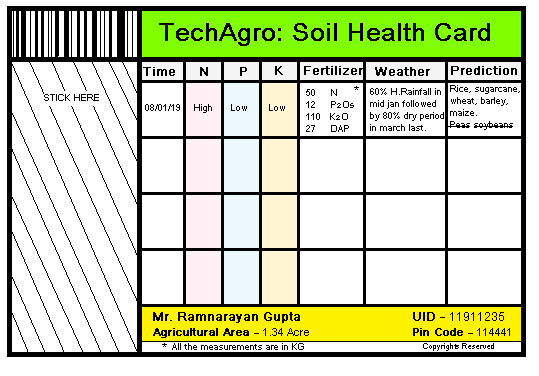
The device not only predicts the soil content but can also predict the most suitable crop along with type and amount of fertilizer required. It would also suggest precautions about weather conditions if any. The farmers have soil testing card which has details regarding the pincode and the area of their farm, so these data along with the NPK values helps in these predictions.
How we built it
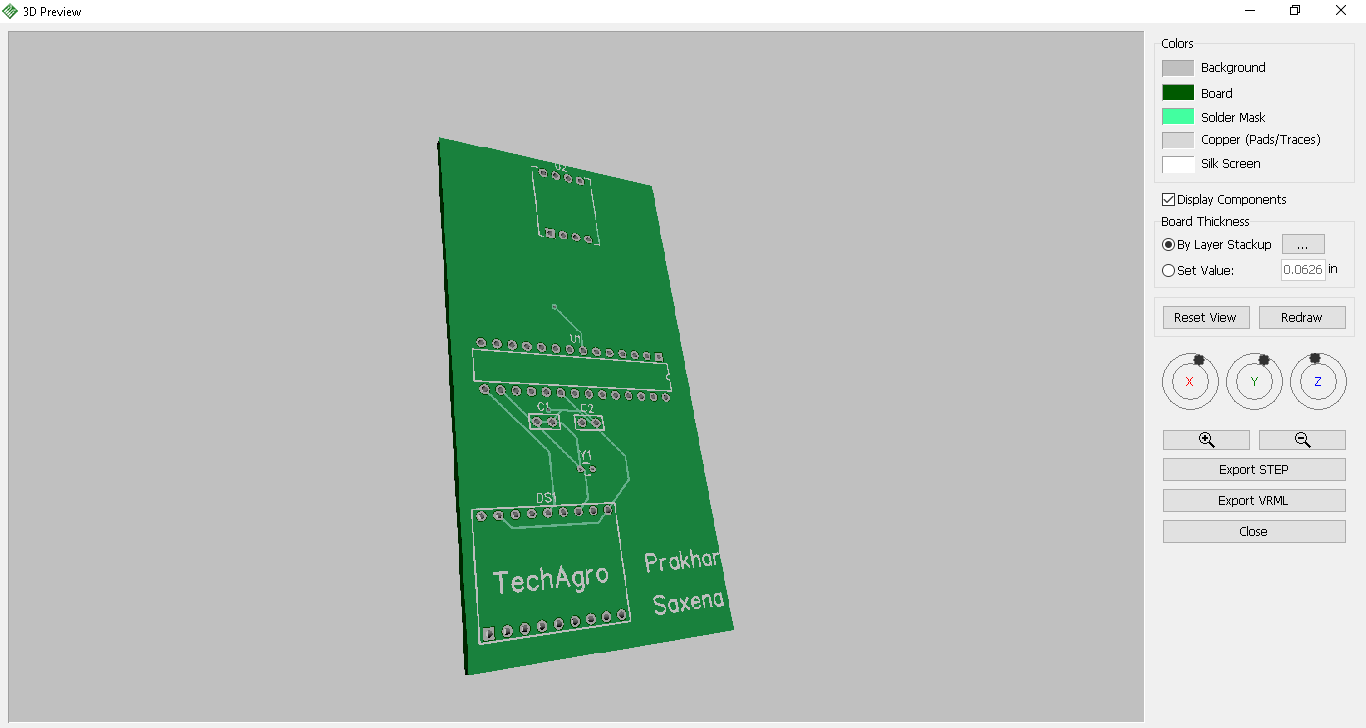
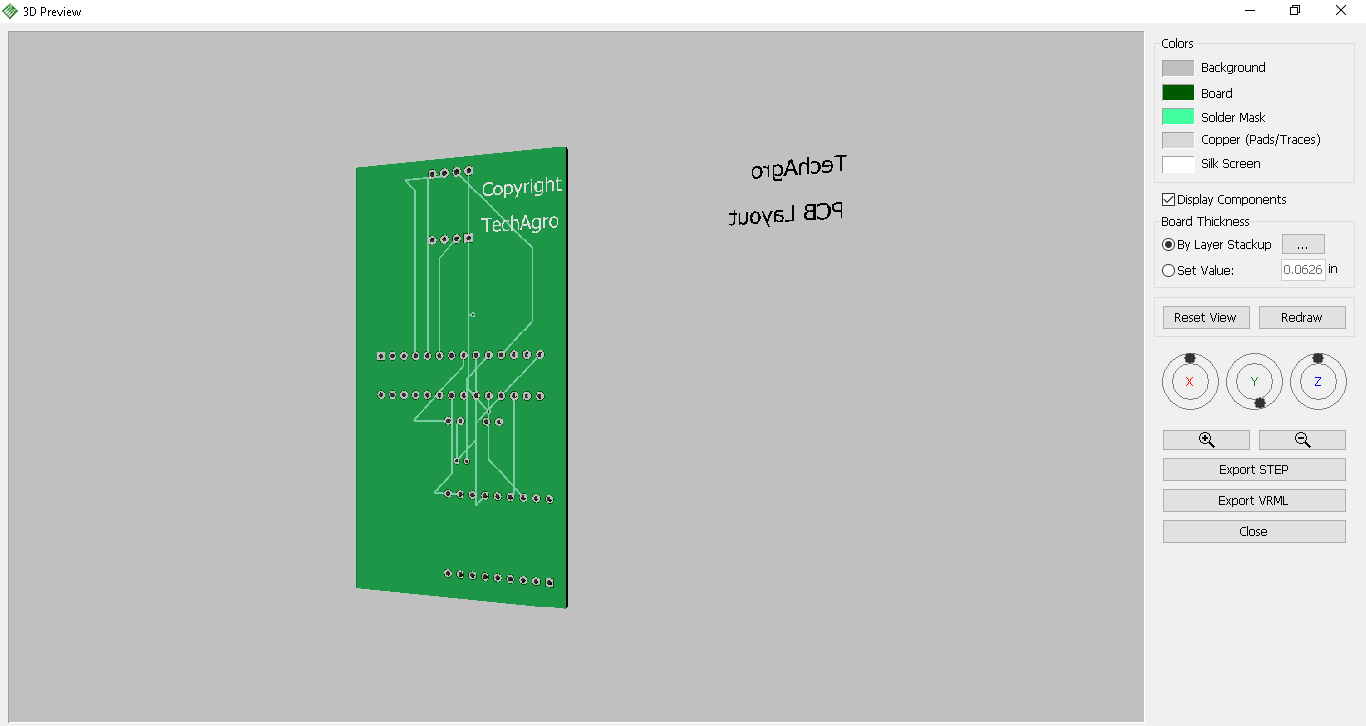
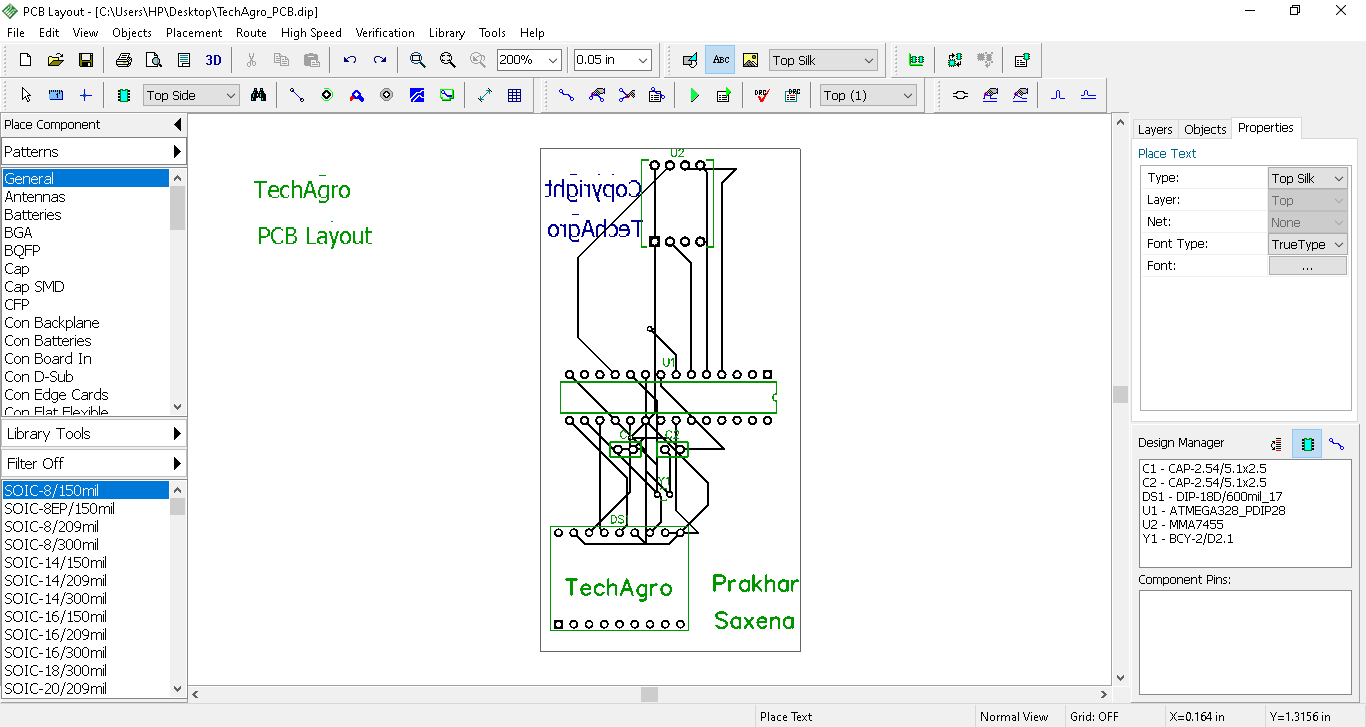
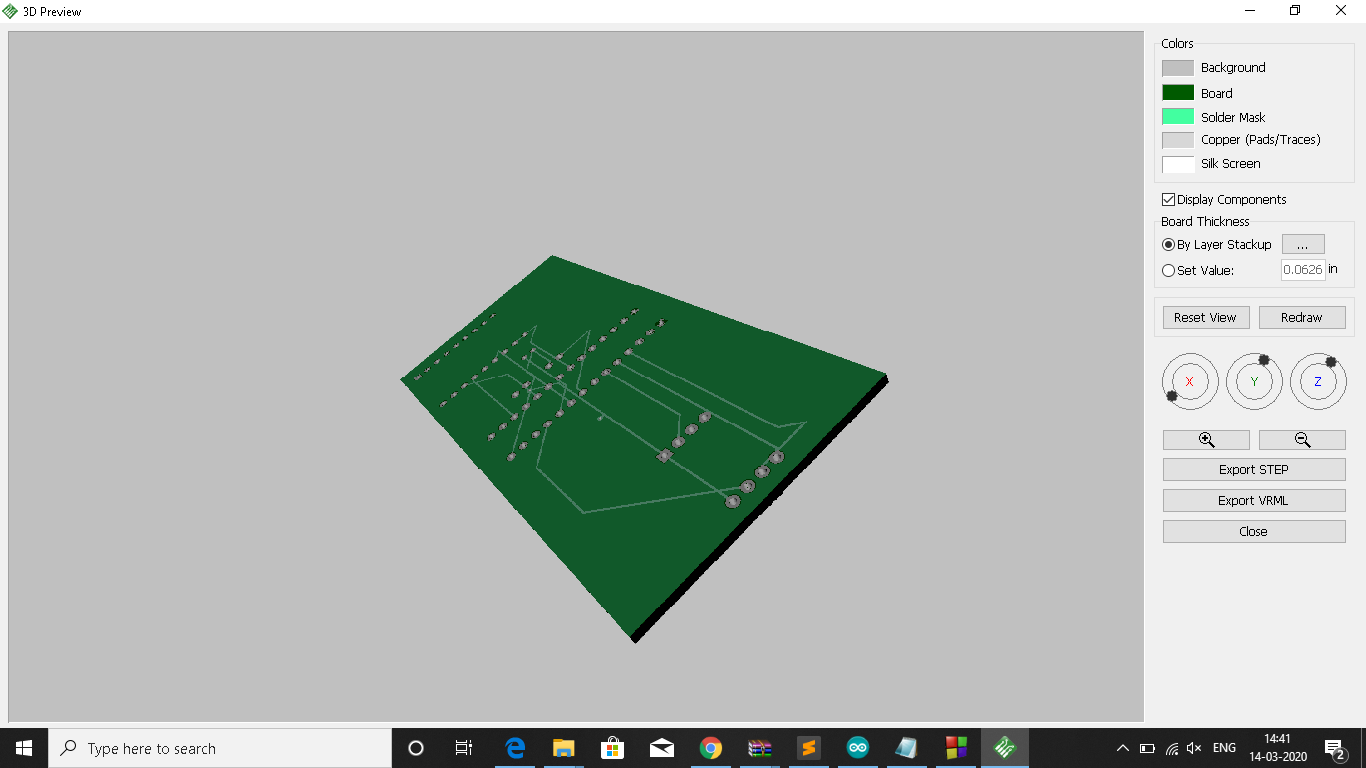
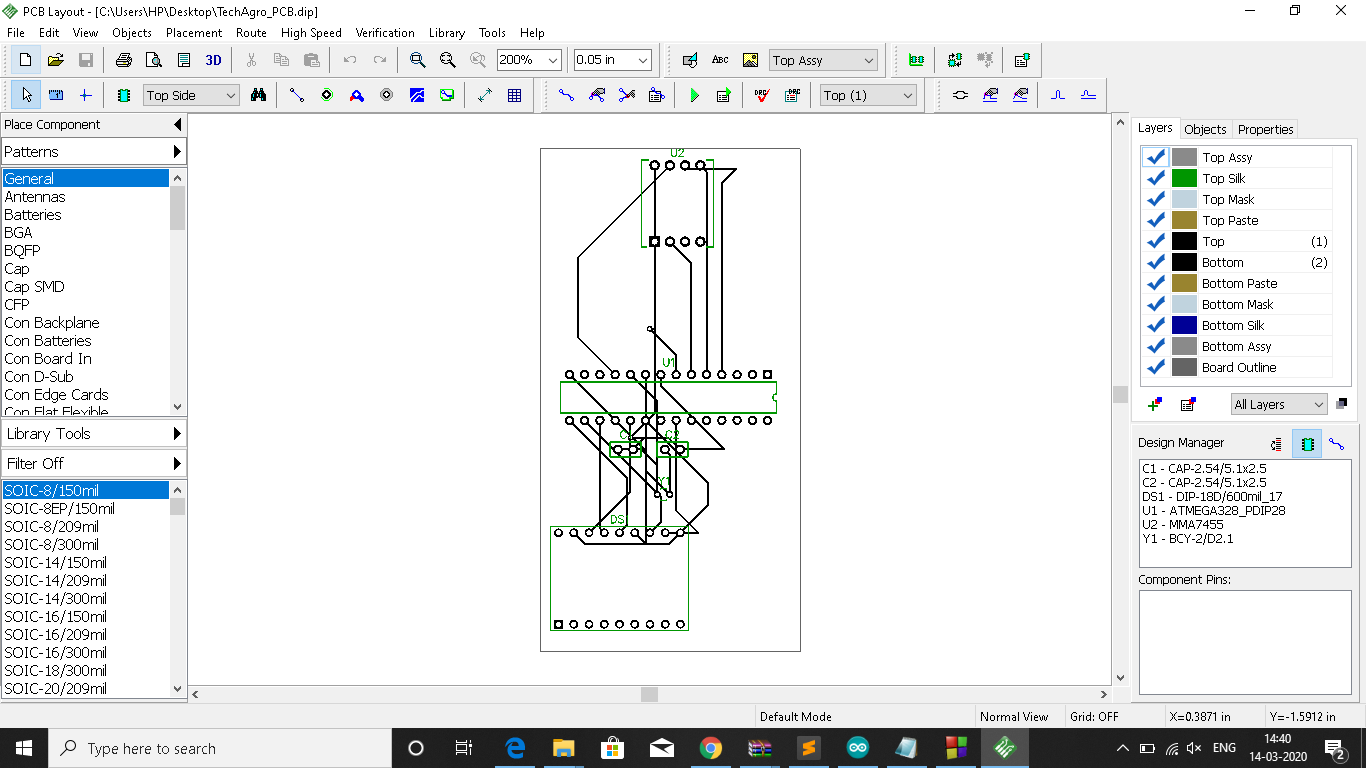
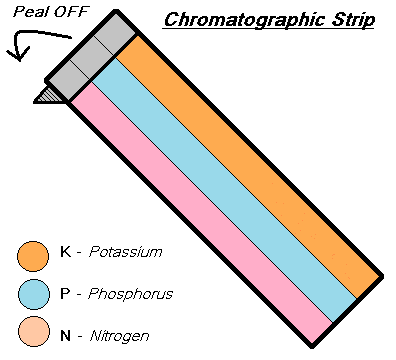
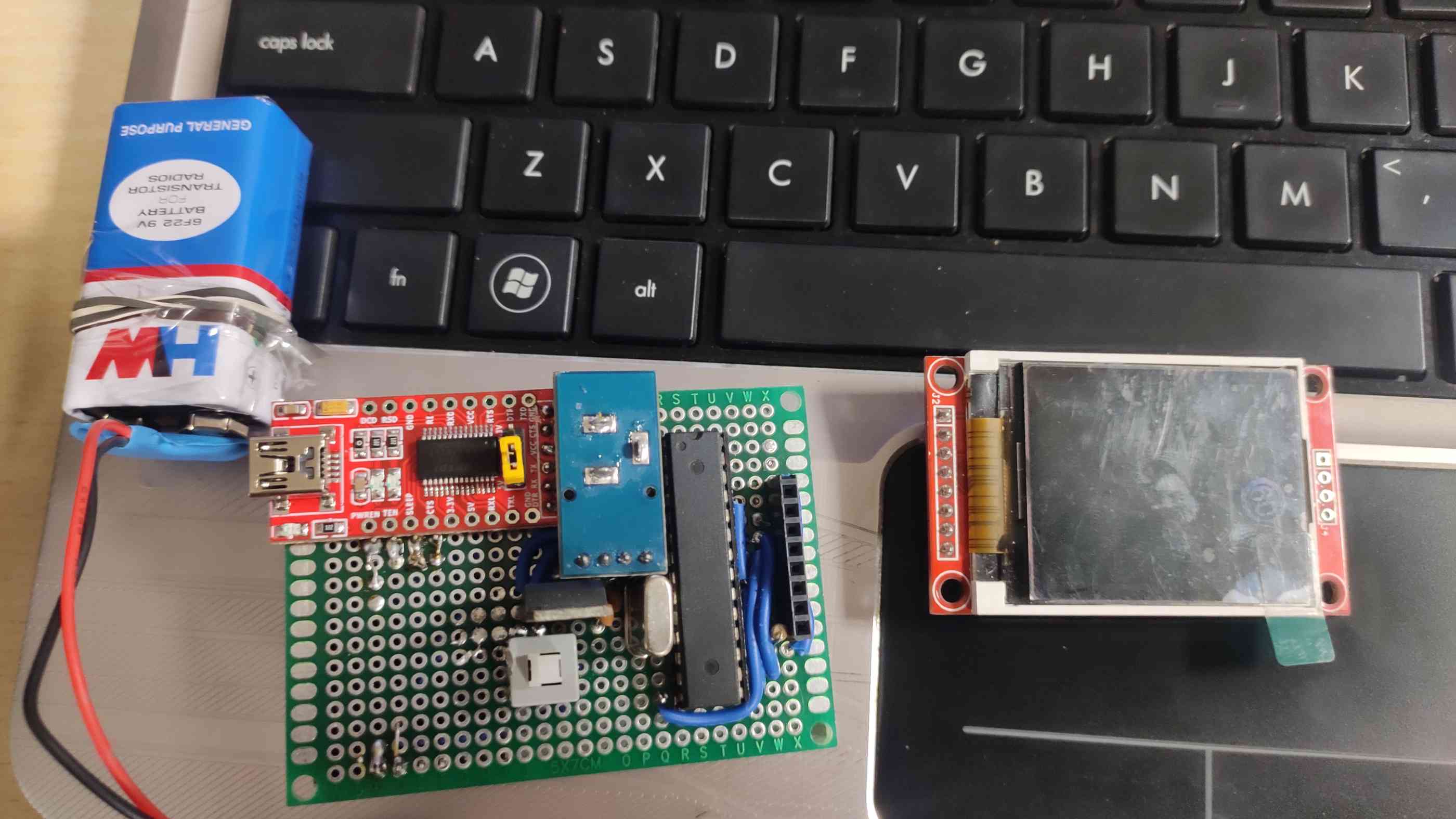
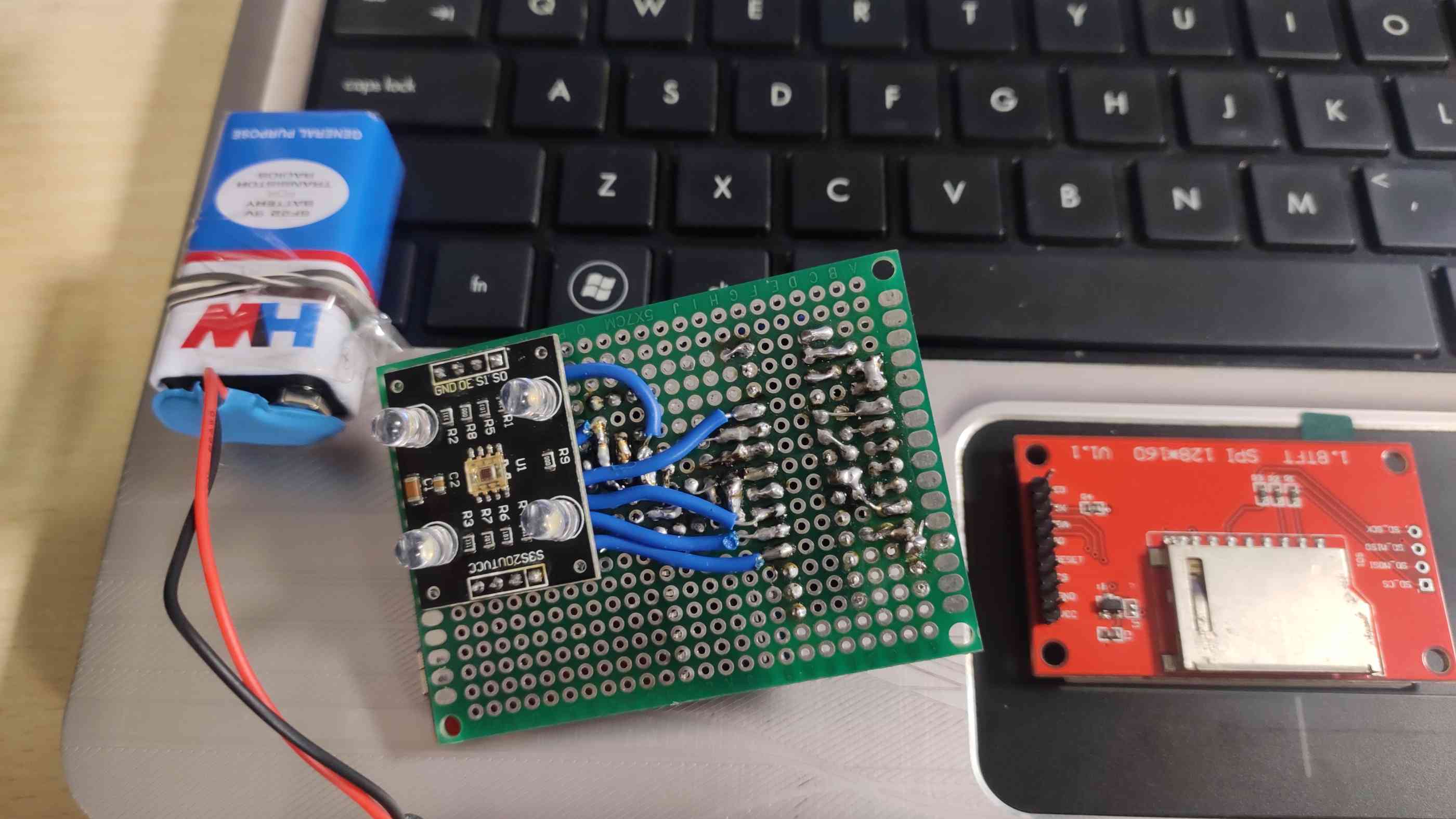
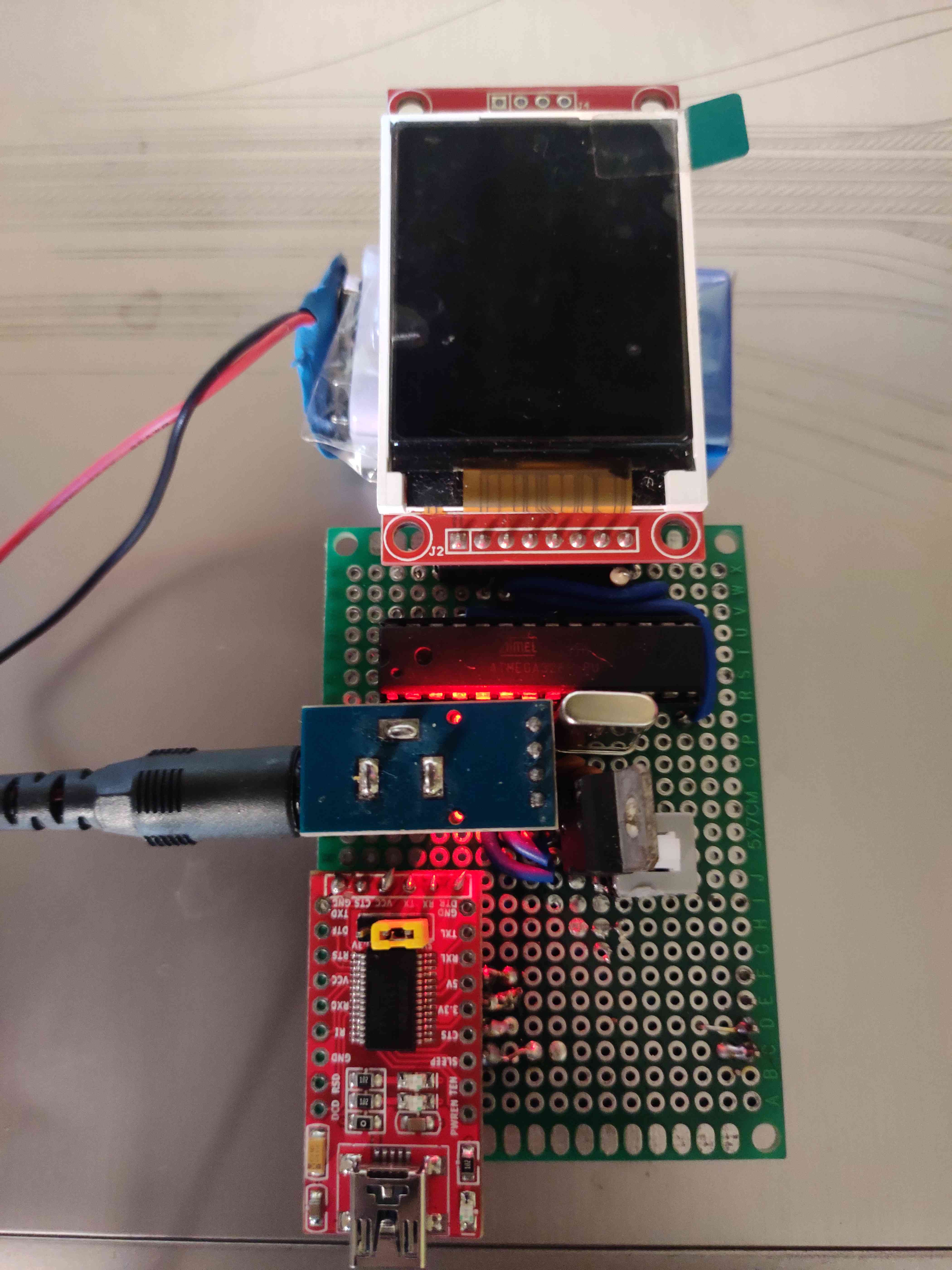
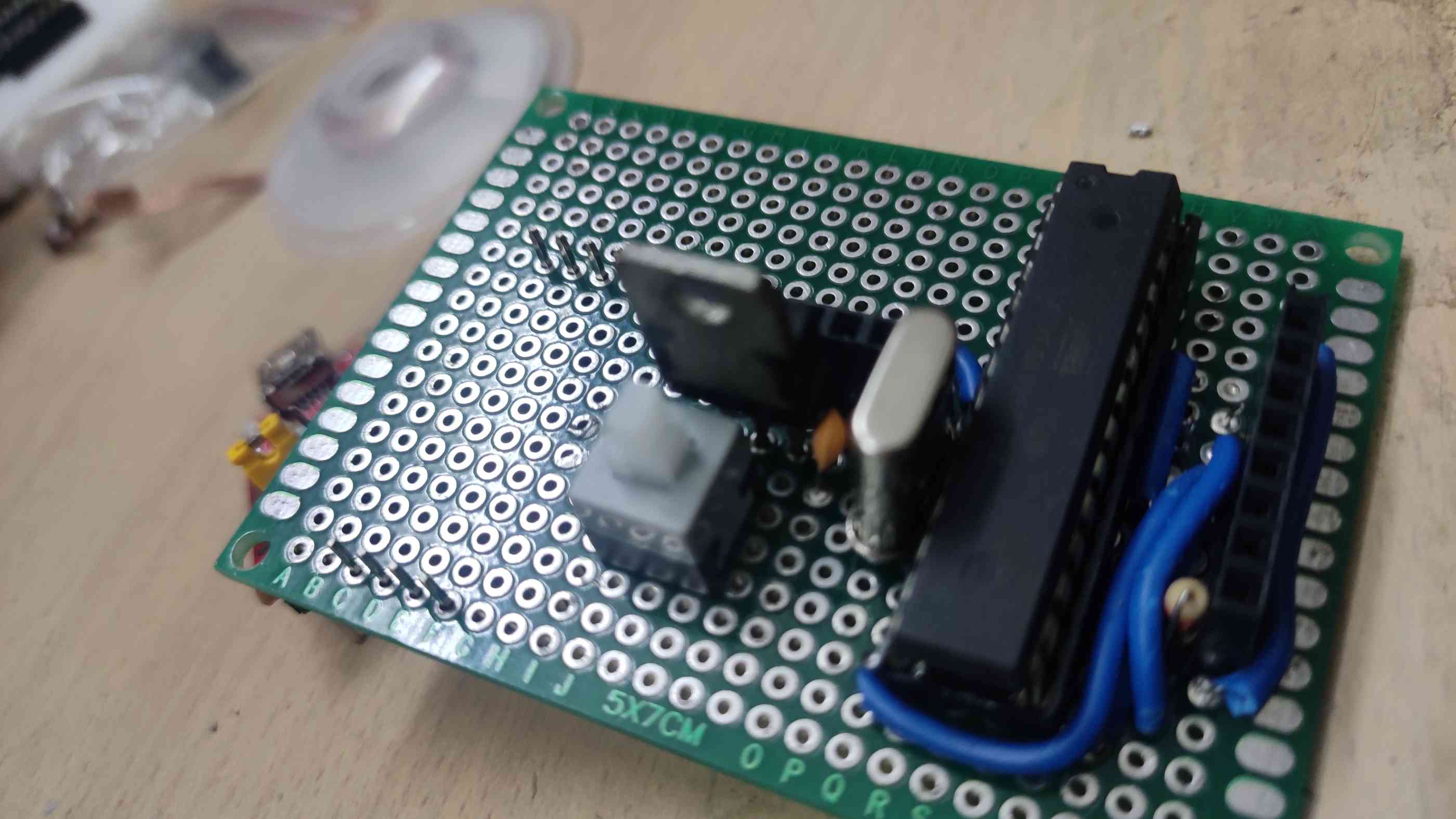
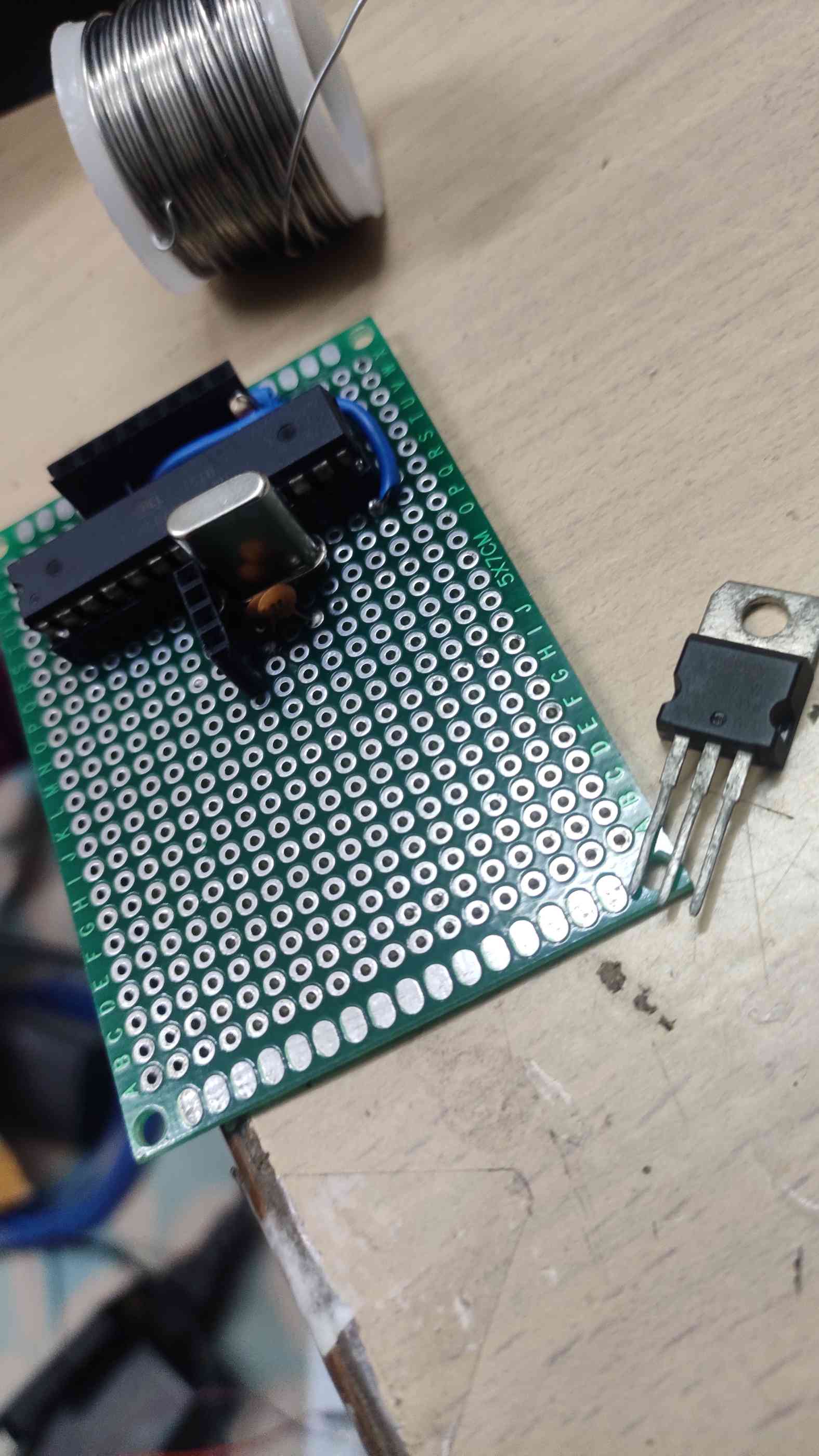
The device works on RGB analysis and is built using In depth interfacing TCS3200 colour sensor, At-Mega microcontroller, HC06 Bluetooth transmitter, Chromatographic chemical strip, liquid crystal display, some minor electronic parts, pcb board and python script for data analysis.
The farmers would just have to dip the given strip in the aqueous solution of their soil, stick it on the soil health card and scan it through the device. The soil health card would contain a barcode which would be unique for each farmer, having details like location, size and previous record of tests (if any). All these details along with the stored dataset would help in predicting the most suitable crop, soil NPK content, along with type and amount of fertilizers required depending upon all of the aforesaid factors.
All the details would be printed on the soil health card in the local language. This scanning device which cost around ₹400 could be installed in post offices of every village and in future it would be replaced by a smartphone application. Through the smartphone application, farmers could do the soil testing and prediction through just a click of their smartphones.
Challenges we ran into
Increasing accuracy of the prediction was one of the most challenging hurdle that I faced during the development of this project which was further solved by modifying the Convolutional Neural Networks (CNN) algorithm as per the need of the project. The second challenge was that the conventional soil tests are based on tilled systems was used from the 1940's through the 1960's, so they often fall short in providing estimates in cover-crop & no-till systems, which create entirely different soil profiles. This device solves this problem by doing testing by following RGB analysis on chromatographic strip. Soil content are affected by alot of artificial factors for example, because of the recent installation of nuclear power plant in Bhatinda, Punjab, soil content has changed drastically. Because of this wheat and rice aren't the most appropriate crops now. But since the farmer's father and grand-father used to grow it and as it's also grown in the rest of Punjab, the farmers of Bhatinda still grow it but get very low average production per hectare as soil content is affected alot by the installation of the nuclear power plant. This device solves this problem by incorporating localized report and topographical data along with the NPK values to predict the most appropriate crop depending upon all the factors.
What's next for Tech-Agro
To develop an app for soil testing, thus replacing the existing device Just click a snap of the strip and the test is done, real time reports on your smartphones along with precautions and steps for better yield. UI would be in local language for better understanding. Respond to developing risks with advanced warnings and decision insights. Improve field operations with strategic information from satellites, sensors, and markets. Monitor the health of large areas remotely and predict crop yields accurately.
Built With
- at-mega
- cockroach-db
- color-sensor
- hc06
- lcd-display
- python

Log in or sign up for Devpost to join the conversation.