-
Teary homepage
-
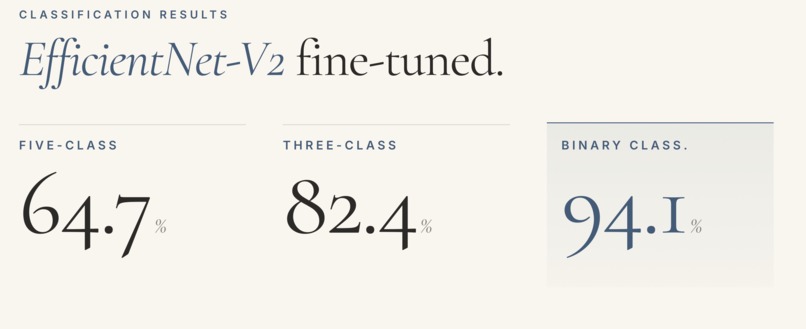
Scores
-
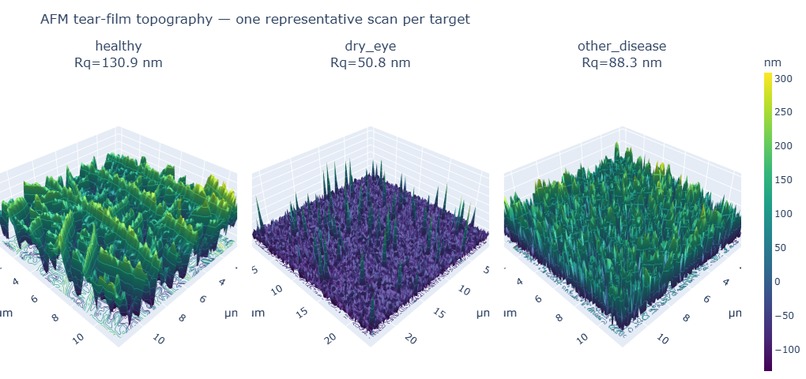
Visualisation app
-
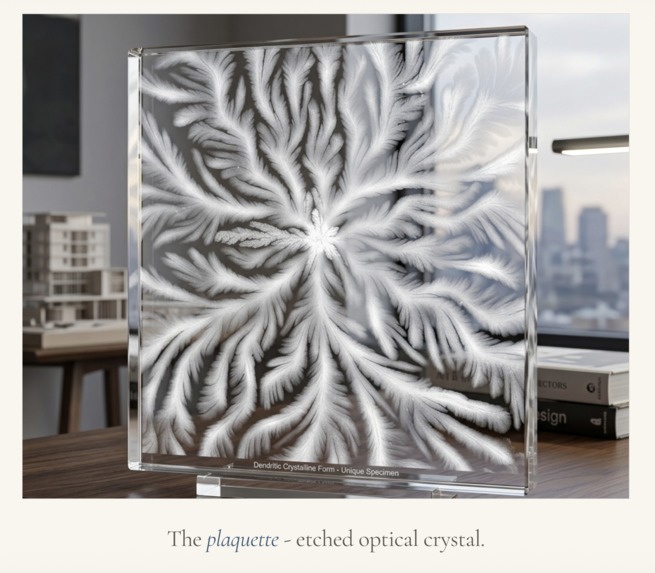
Product example
Teary
A disease classifier and a keepsake, built for your tears.
Inspiration
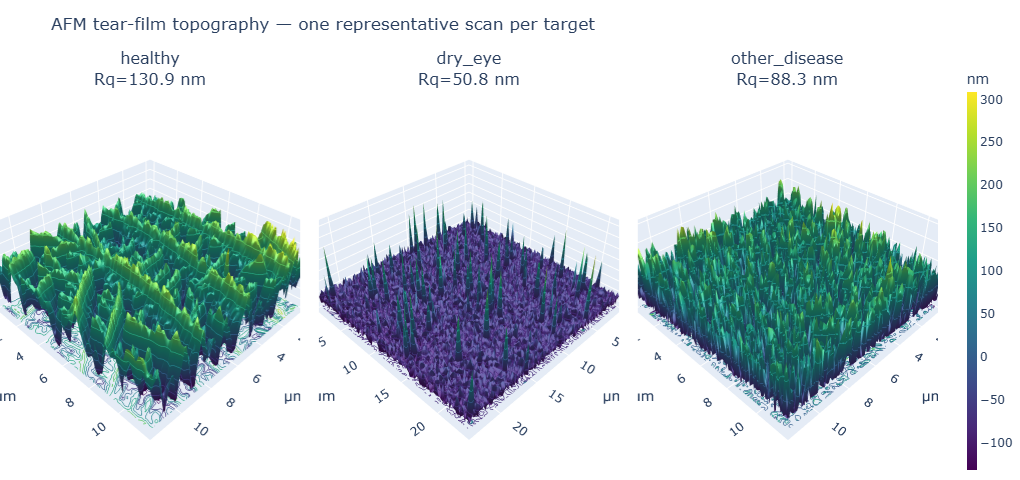
A tear isn't just saltwater, it's a biological fingerprint. When tears dry, they form dendritic crystal patterns shaped by your biology, mood, and the moment itself. We saw two possibilities in one drop: a diagnostic signal for disease, and an artifact of memory. Teary is both.
What it does
Teary turns a single teardrop into two things:
- A disease classifier — upload an image of a dried tear and our model predicts one of five classes: Healthy, Diabetes mellitus, Glaucoma, Multiple sclerosis, or Dry eye syndrome.
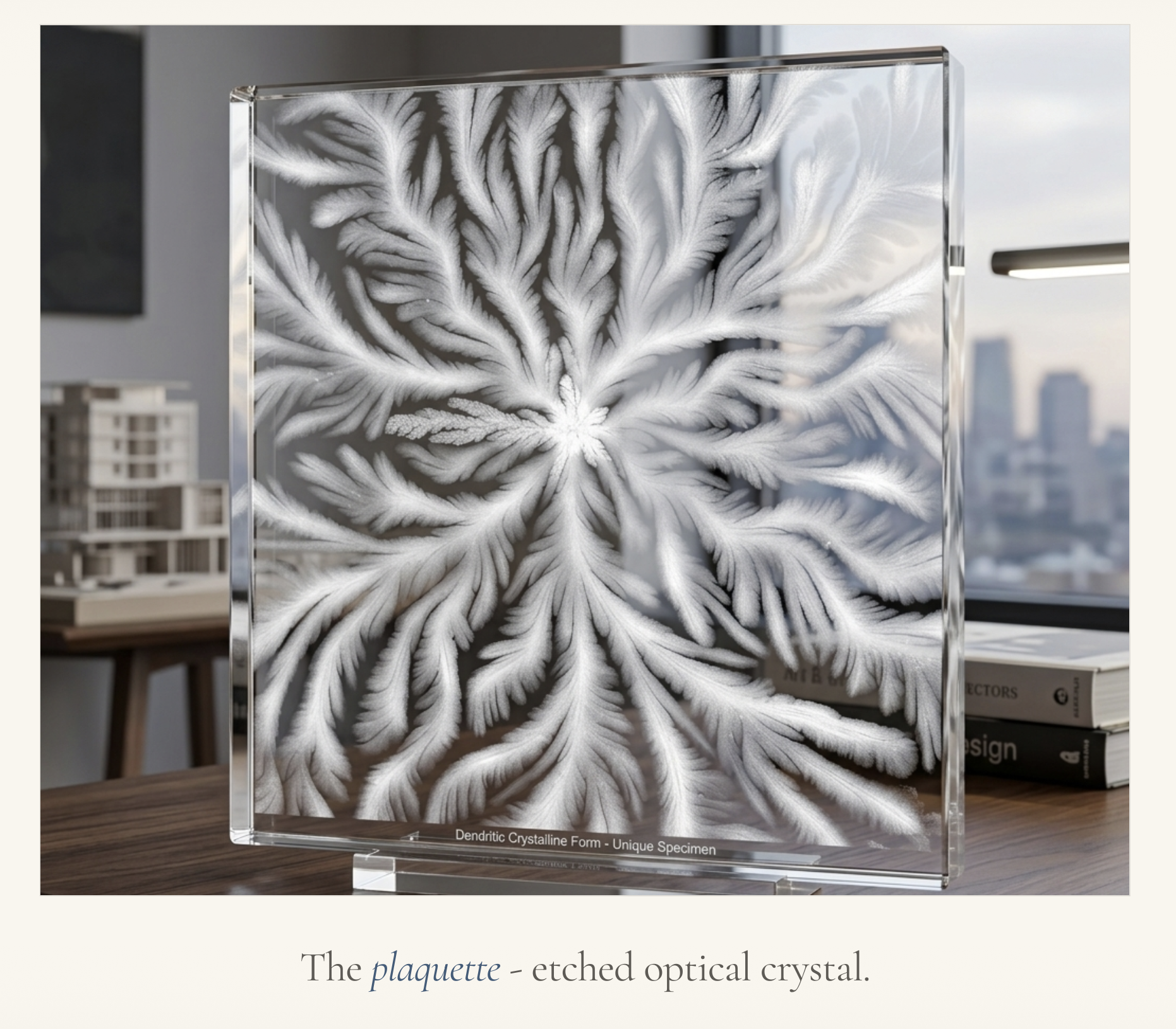
- A keepsake — the same dendritic pattern gets imprinted onto everyday objects (an etched optical crystal plaquette, a glazed ceramic plate, a laser-etched notebook cover) so tears of joy become something you can hold forever.
How we built it
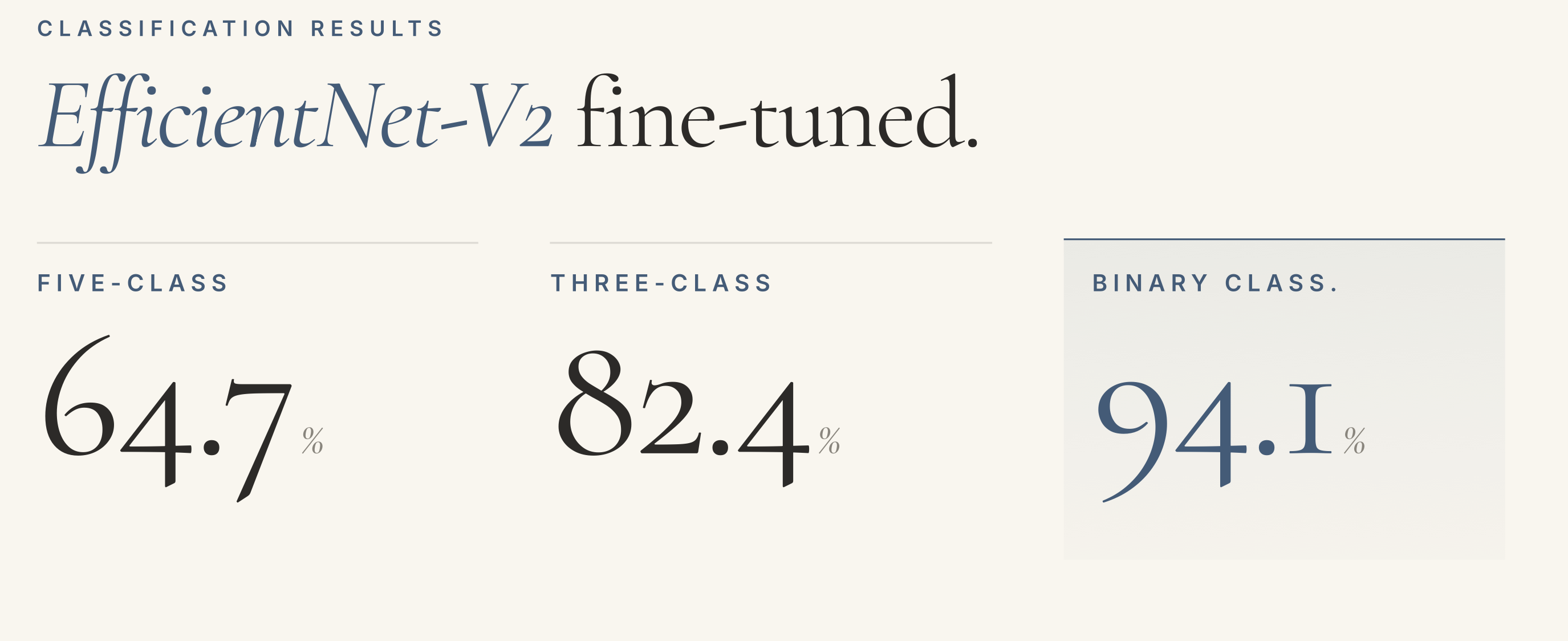
- Fine-tuned EfficientNet-V2 on dendritic tear-crystal images across five disease classes.
- Designed a home collection kit — since UPJŠ scientists confirmed tears are biologically stable in transit and resistant to heat, users can cry at home, mail the sample, and get results plus their keepsake back.
- Prototyped the keepsake line: optical crystal plaquette, dendrite-under-glaze ceramic plate, and laser-etched notebook cover.
Challenges we ran into
- Small, imbalanced dataset — tear-crystal imagery is niche, so we had to be careful with augmentation and validation splits to avoid overfitting.
- Five-class separation — some disease signatures look visually similar under dendritic formation, which pushed our macro-F1 down on the full five-class task.
- Bridging biology and design — making a medical tool that also feels like something you'd want on your shelf required constant back-and-forth between ML, UX, and product.
Accomplishments that we're proud of
- 94.1% macro-F1 on binary classification (healthy vs. diseased)
- 82.4% macro-F1 on three-class
- 64.7% macro-F1 on the full five-class problem
What we learned
- Tears carry far more structured information than we expected, dendrite morphology really does track with systemic disease.
- Sample stability matters: a diagnostic is only useful if people can actually collect it at home.
What's next for Teary
- Grow the dataset in collaboration with UPJŠ to push five-class F1 past 80%.
- Ship the home kit as a real pilot — packaging, cold-chain-free shipping, turnaround logistics.
- Expand the keepsake catalog (jewelry, glassware, prints) and launch a made-to-order pipeline from sample → dendrite scan → etched object.
- Explore longitudinal tracking: what does your dendrite look like over time, and what does that say about your health?
Teary · one drop · one story

Log in or sign up for Devpost to join the conversation.