-
-
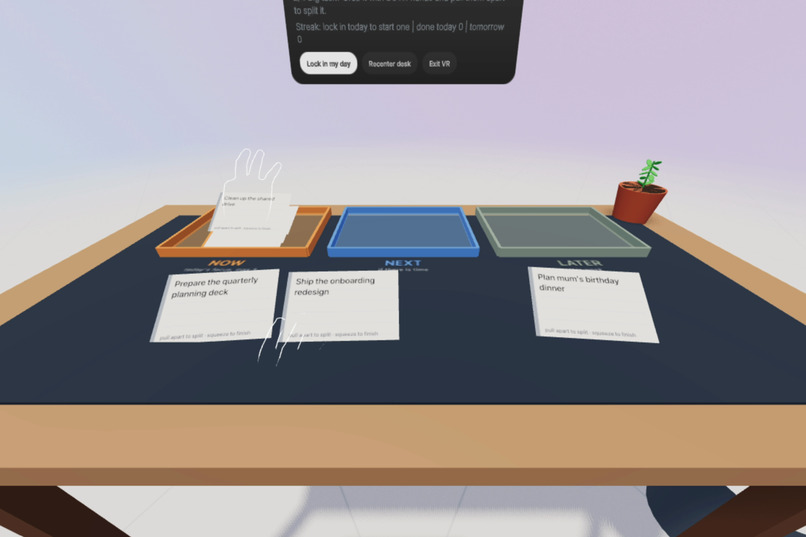
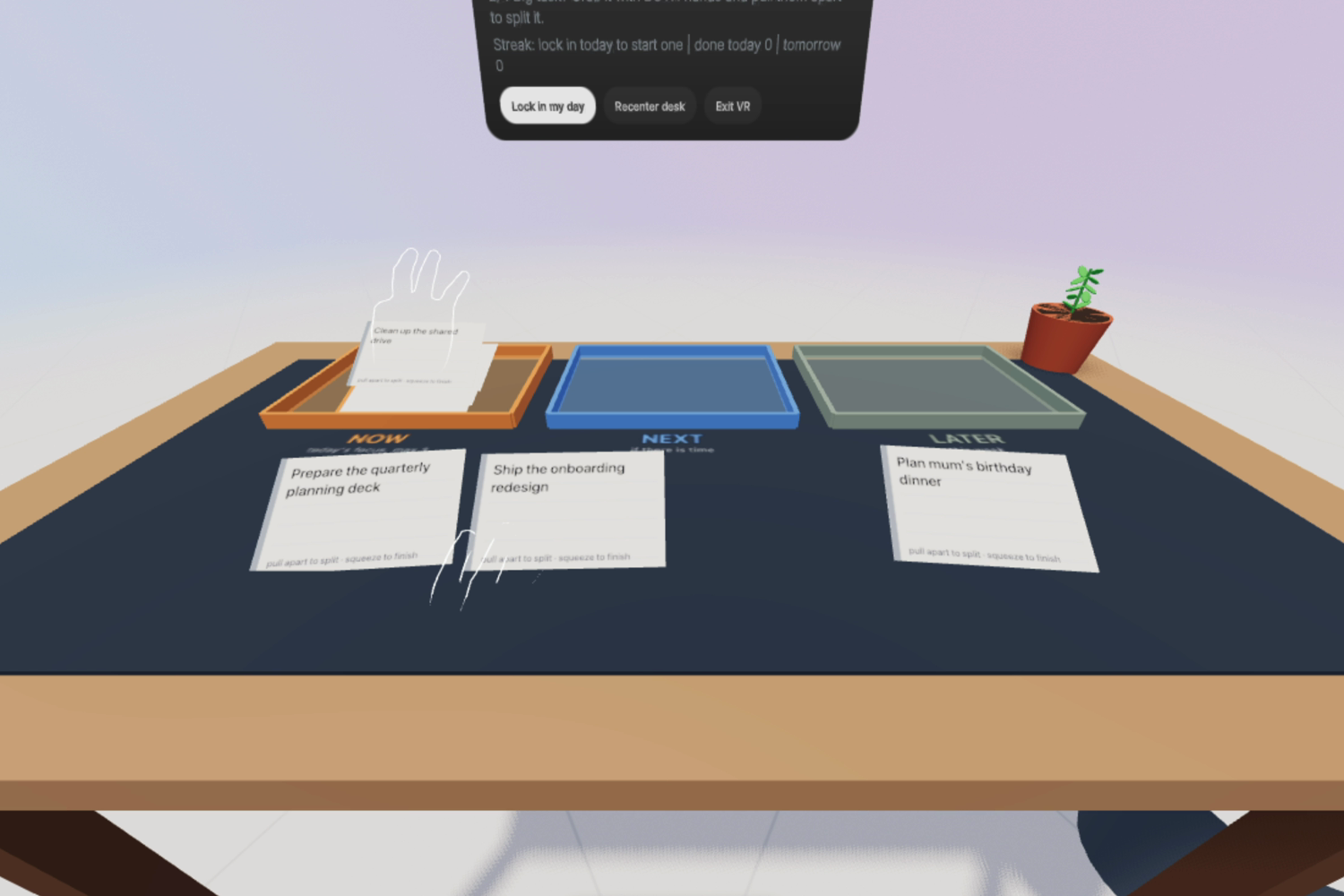
Pinch a card into a tray. NOW holds only three, so a fourth bounces back.
-
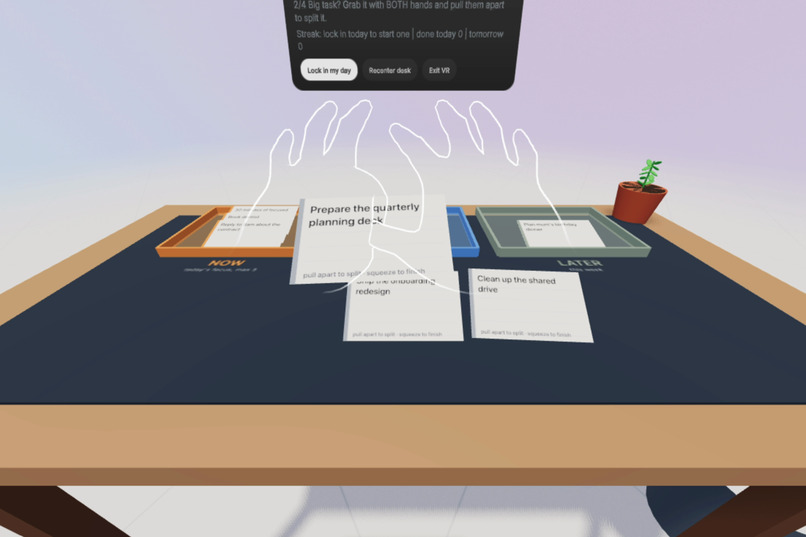
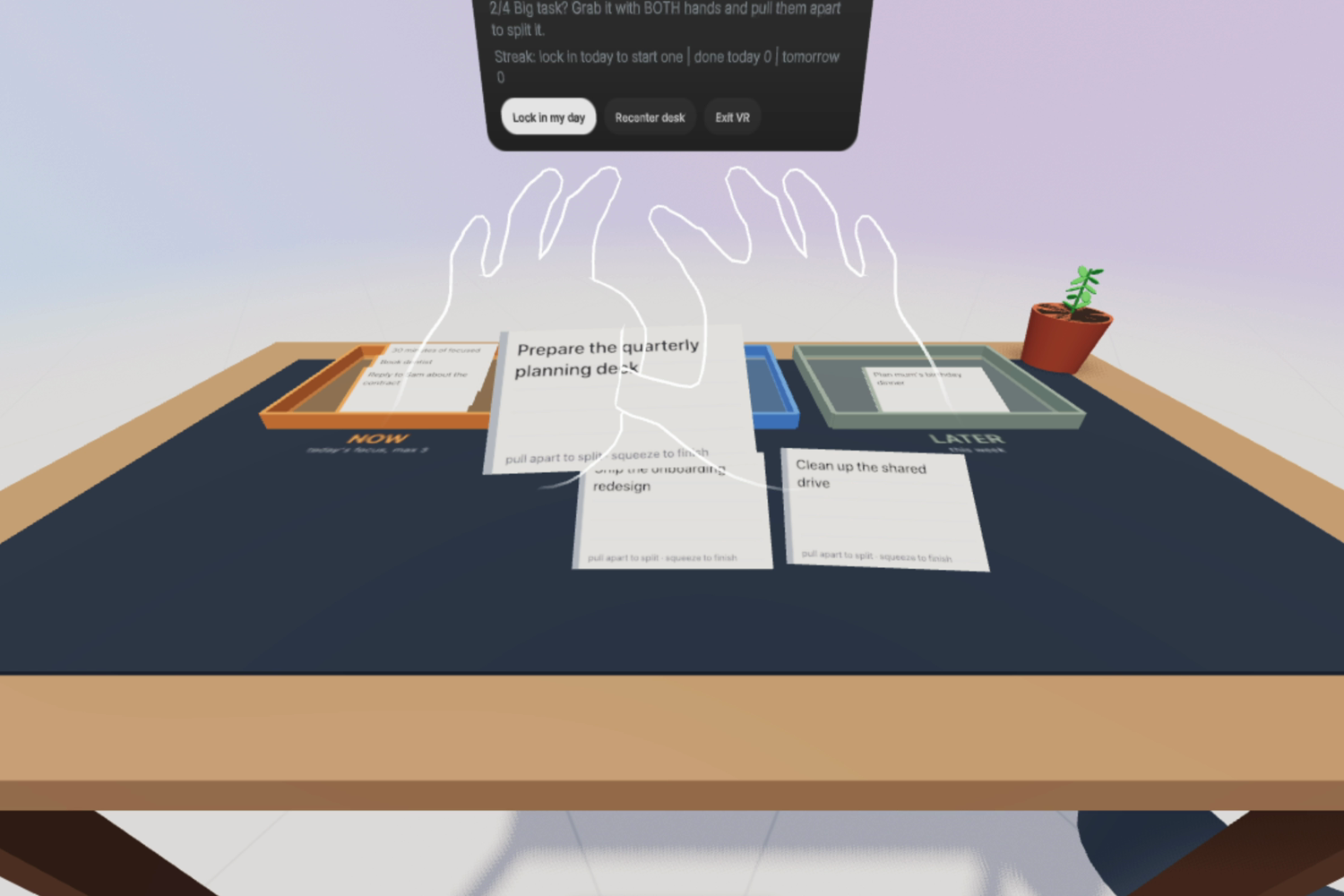
Lift a big task with one hand, then take its other side.
-
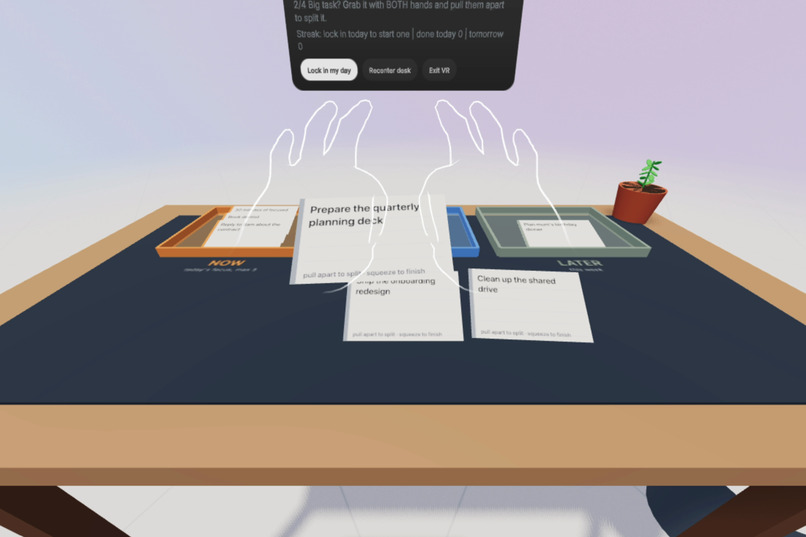
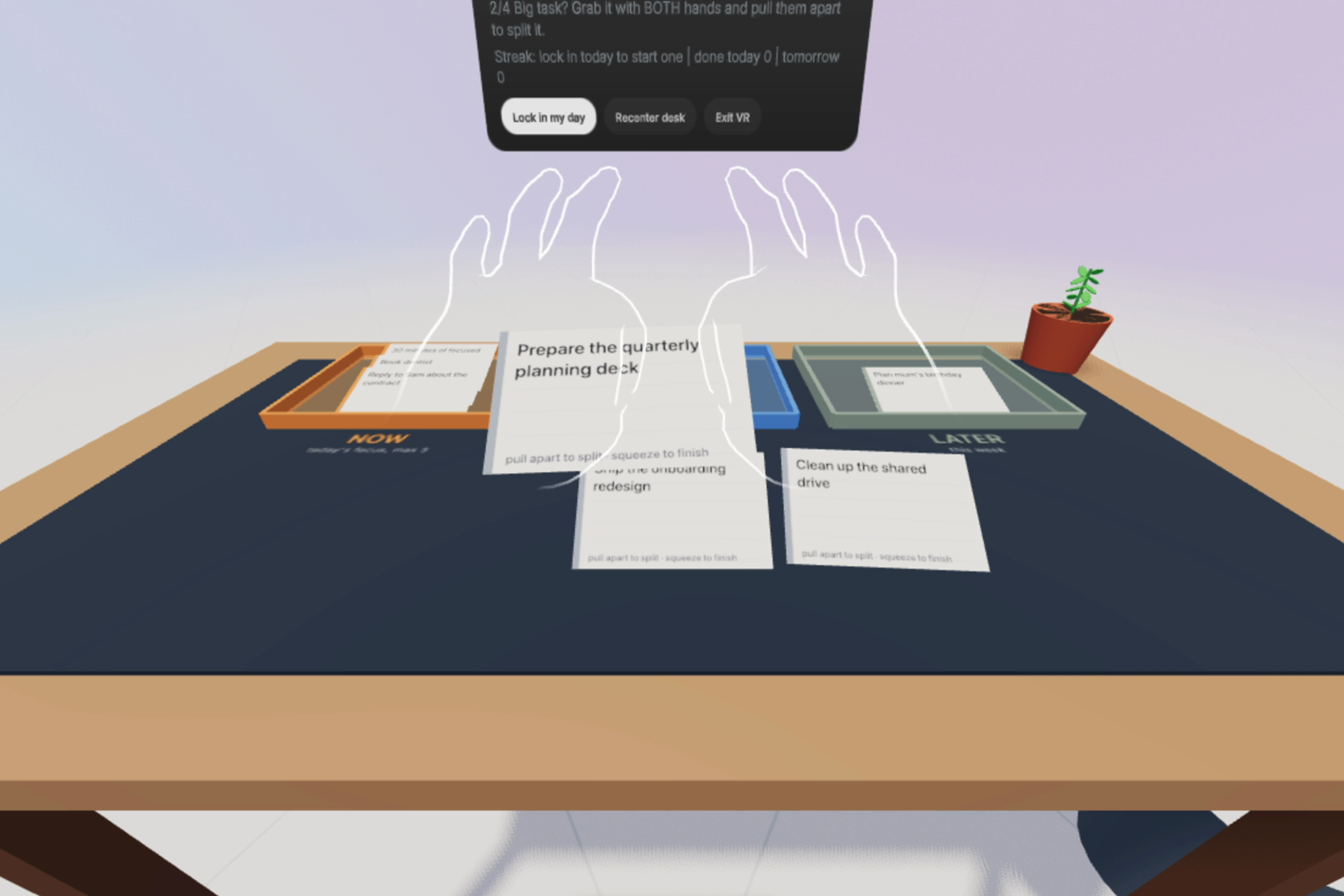
Pull your hands apart to tear it in two.
-
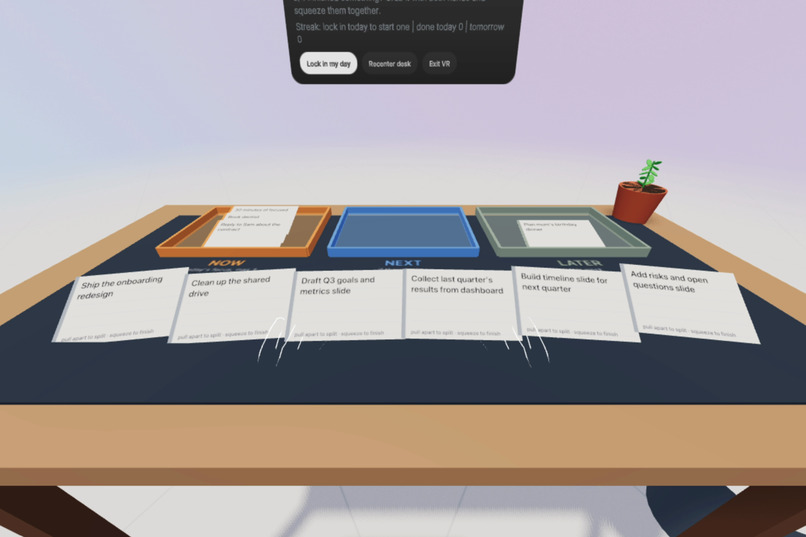
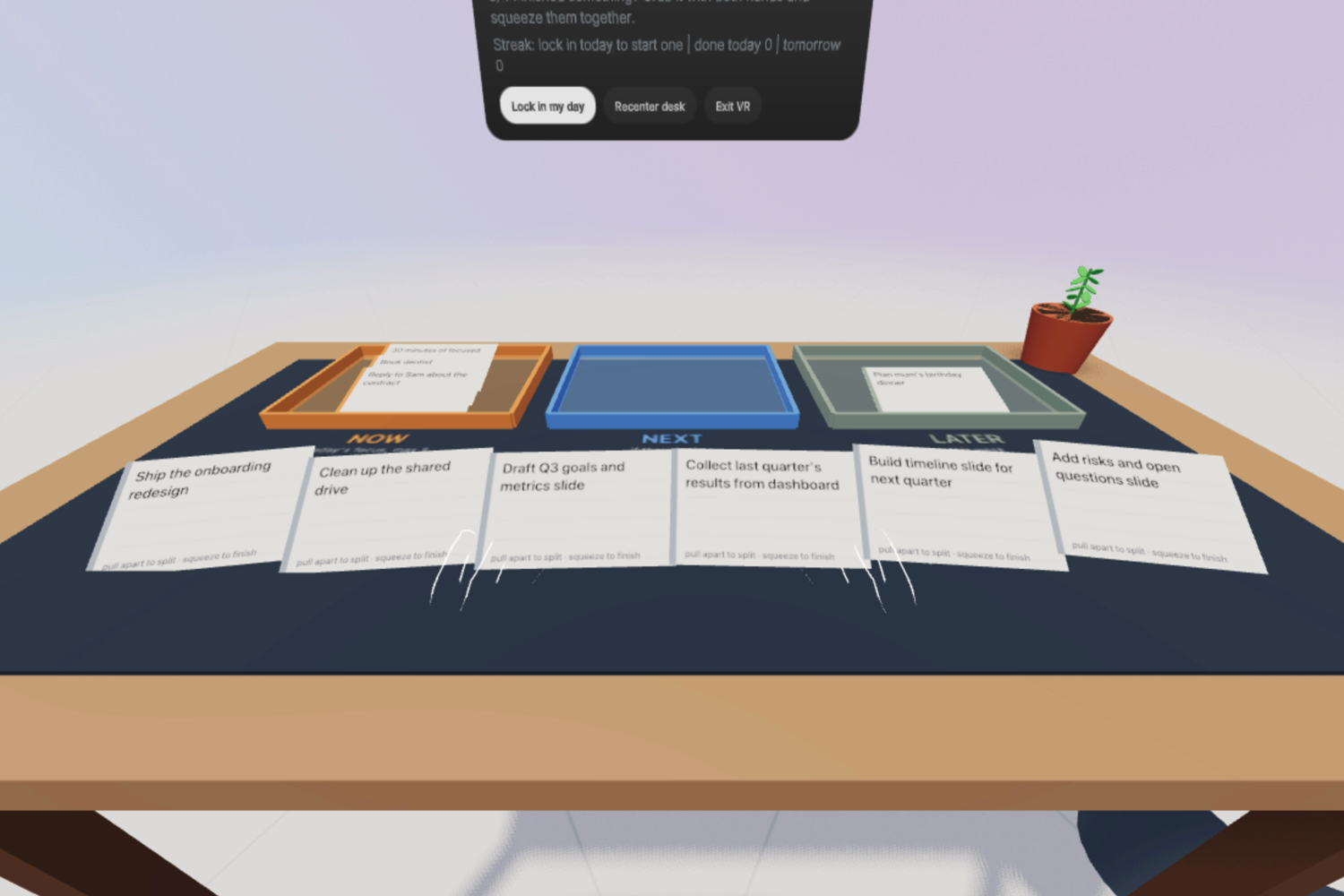
DeepSeek's subtasks land on the desk as new cards.
-
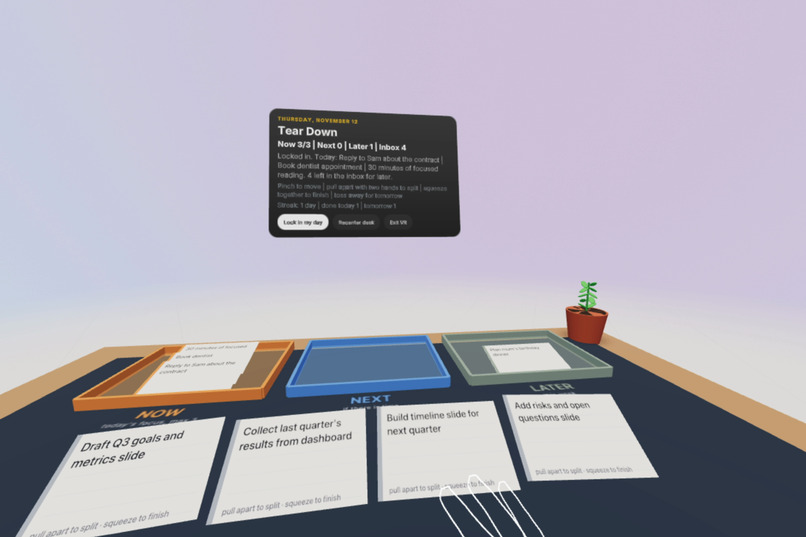
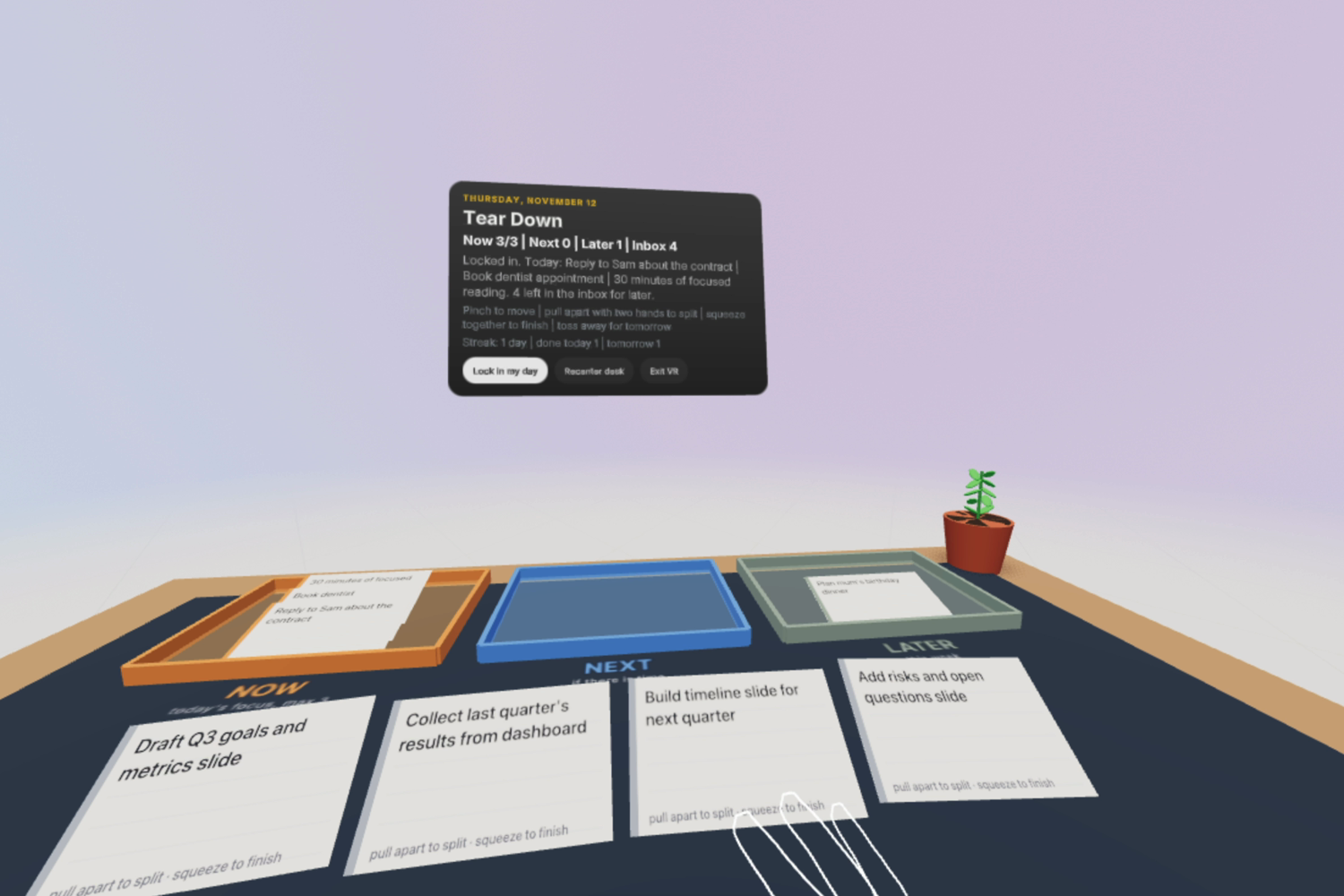
Lock in my day: three focus items, streak +1, and the plant grows.
-
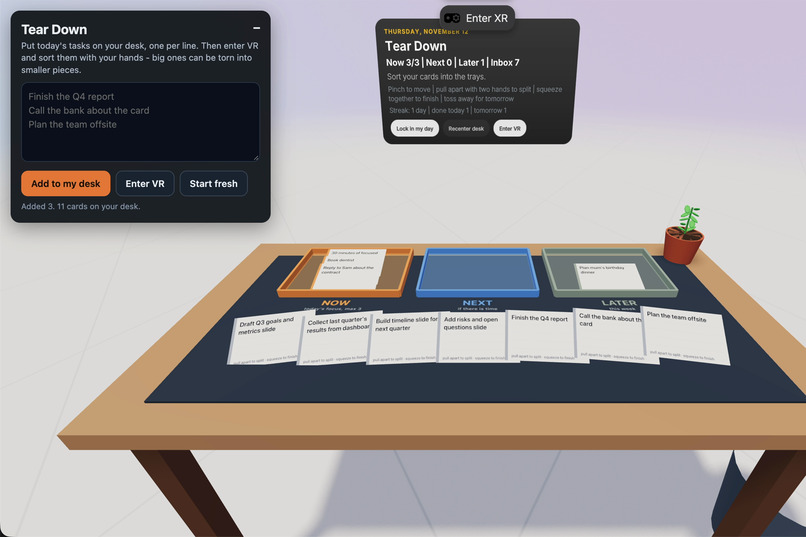
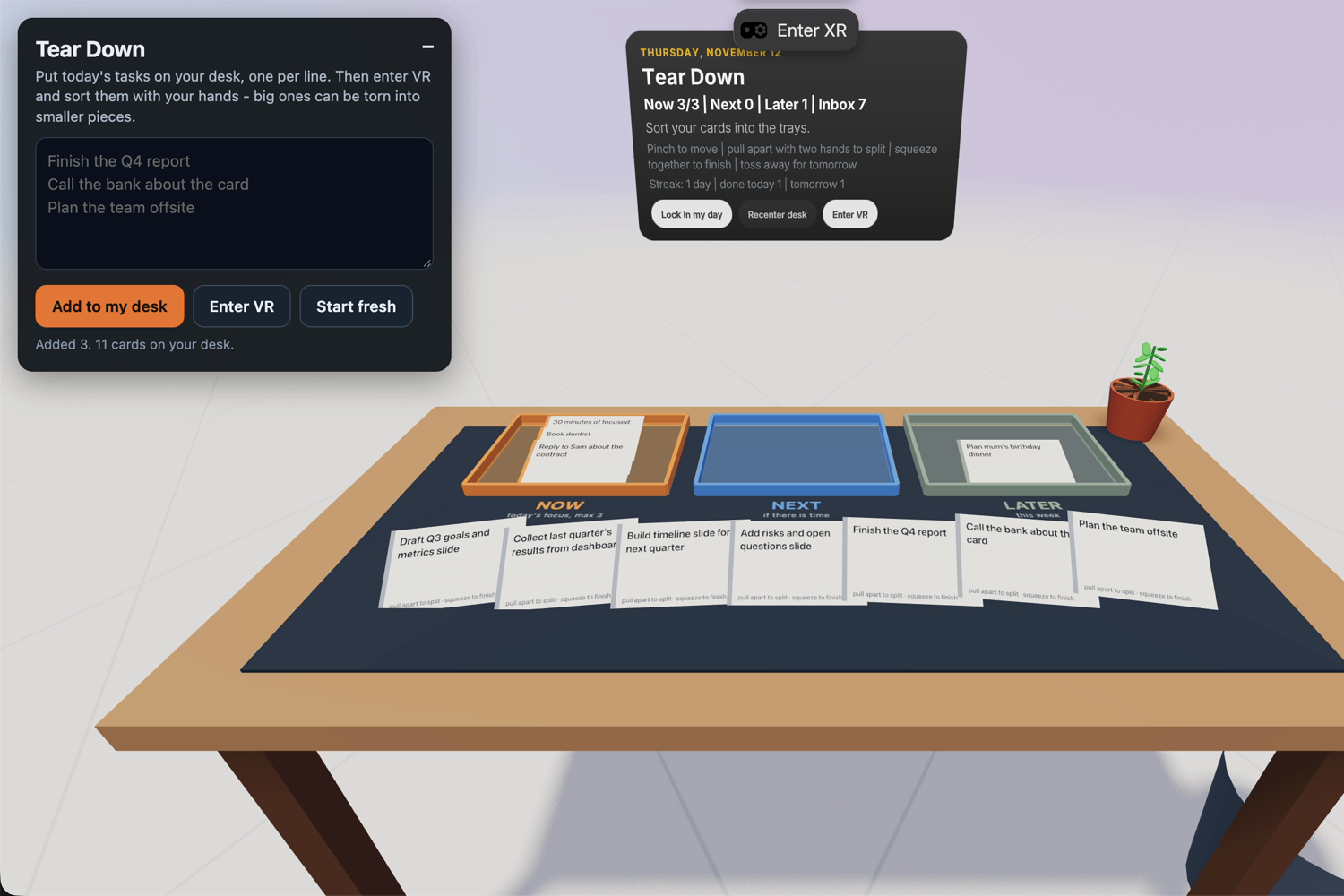
Add tasks on the 2D page, then press Enter VR.
-
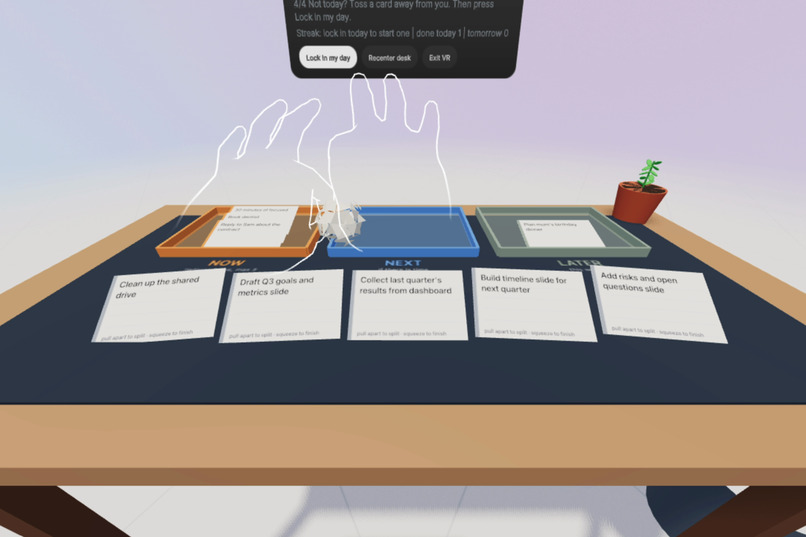
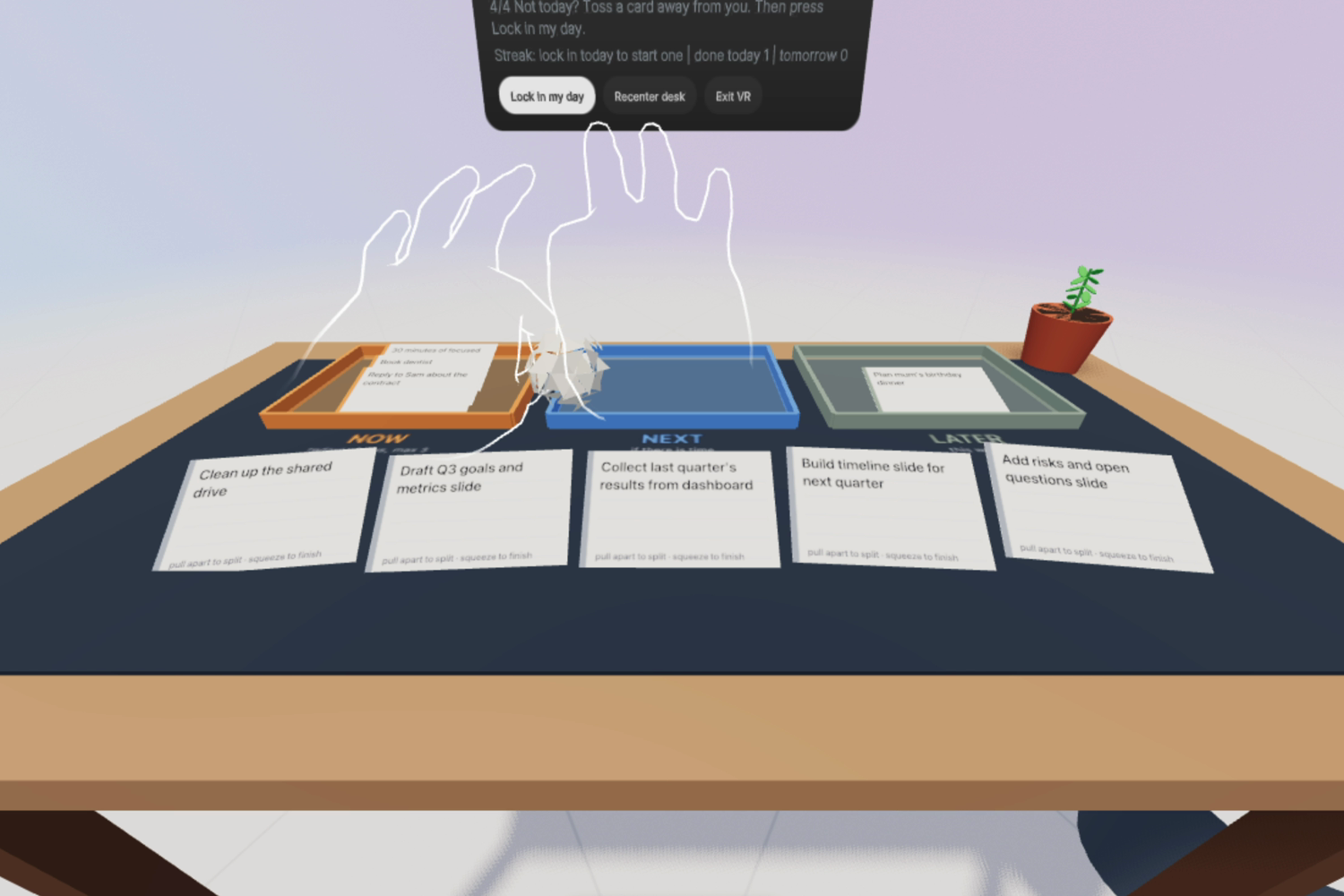
Squeeze a finished card into a ball; it flies to the bin.
Inspiration
Every to-do app eventually becomes a list you're afraid to open. The hard part of planning isn't writing tasks down. It's deciding: what matters today, what's too big to start, and what you're allowed to let go of. Those are physical, gut-level decisions, and on a phone they're reduced to taps on rows of text.
We wanted planning to feel like clearing a messy desk in the morning, with your hands.
What it does
Tear Down puts your tasks on a desk as paper cards. You do a short morning ritual, seated, with nothing but your hands:
- Pinch and drop cards into three trays: NOW (max 3, today's real focus), NEXT, LATER. A fourth card bounces out of NOW, so you have to choose.
- Grab a card with both hands and pull it apart to tear it. It rips in two, and 2–4 concrete next actions fall out as new cards. DeepSeek writes them, using your other cards as context.
- Squeeze a card between both hands to crumple it. It's done, and the paper ball arcs into the bin.
- Toss a card away from you to push it to tomorrow.
- Lock in my day shows your three focus items, extends your daily streak and grows the plant on your desk. Unfinished cards return to the inbox tomorrow.
A session fits in a bus ride, works within a two-foot reach, and needs no controller.
How we built it
- Platform: Meta's Immersive Web SDK (WebXR), with an entity-component architecture and TypeScript.
- Cards are canvas-textured
TwoHandsGrabbableentities. A two-hand grab scales a card. We read the scale every frame: above 1.55× is a tear, below 0.62× is a crumple. So the most natural two-hand motions became the two most important decisions. - Throws use the peak velocity in the last 250 ms rather than the release velocity, because people slow down right before letting go.
- Desk, trays, plant and bin are procedural models; the panel is UIKitML. Sound effects are synthesized live.
- Tearing calls a small Vercel function that asks DeepSeek for 2–4 short, verb-first subtasks. Without a connection, an offline splitter takes over, so the experience never stalls.
- Testing: every gesture was tested in the IWER emulator with emulated hands and controllers. The demo video was recorded there too.
Challenges we ran into
- Making two-hand gestures unambiguous. Pull-apart and squeeze-together share one grab, so the thresholds needed a dead zone. That way moving a card around with two hands doesn't accidentally tear it.
- Seated comfort. The desk re-seats itself relative to your head when you enter VR, and Recenter desk fixes it any time.
- Typing in VR is slow. You add tasks on the 2D page before entering VR (it has the system keyboard), and the cards appear on the desk live.
What's next
- Calendar and task-app import.
- Voice capture for new cards.
- A shared desk mode for team stand-ups.
- Mixed-reality mode on your real desk.
Target launch date
Q1 2027 on the Meta Horizon Store. The WebXR version is live today at https://teardown-snowy.vercel.app.
Try it
Open https://teardown-snowy.vercel.app in the Meta Quest browser and press Enter VR. Add your own tasks on the 2D page first, or use the starter cards.
Built With
- deepseek
- hand-tracking
- immersive-web-sdk
- meta-quest
- three.js
- typescript
- vercel
- webxr
