Inspiration
We were inspired by the concept of "cognitive vaccines," specifically how spatial tasks like Tetris and bio-responsive environments can physically reshape the brain to reduce trauma and anxiety. By leveraging the immersive power of Snap Spectacles, we aim to transform a user's immediate environment into a space that proactively armors the mind through these research-backed psychological mechanics.
What it does
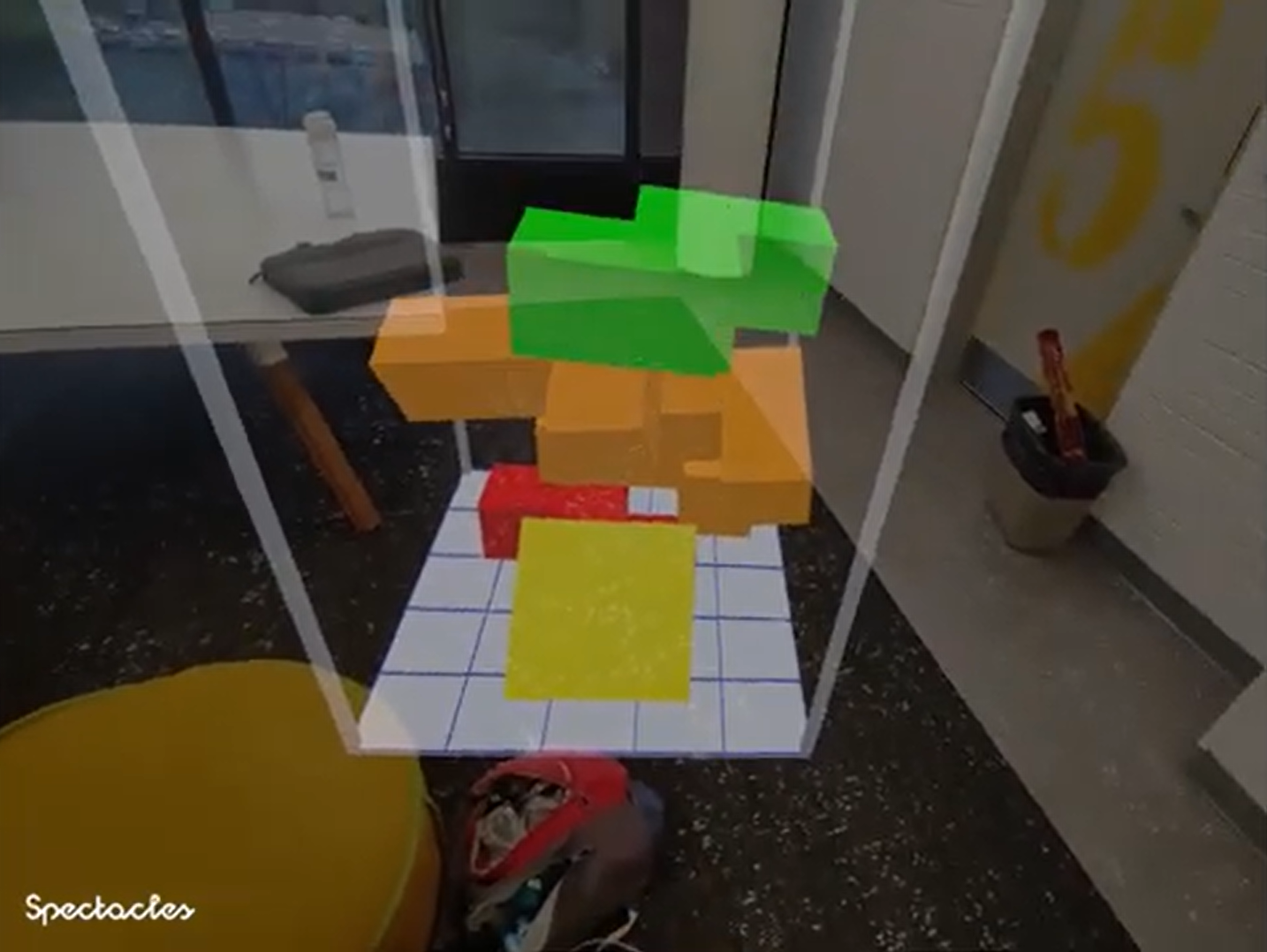
This spatial logic exercise involves managing a constant stream of complex geometric volumes as they descend into your physical environment. You must rapidly orient these multi-cube structures in 3D space to fill every available voxel within a horizontal plane. Completing a full, gapless layer triggers a satisfying visual collapse of that slice, rewarding your precise spatial reasoning and preventing the architectural chaos from reaching the ceiling.
How I built it
We designed it using Cursor in Lens Studio to accelerate production speed and make up for gaps in our knowledge.
Challenges we ran into
Coming into this hackathon as first years, we had never touched XR in any meaningful manner nor had we much experience with TypeScript. However, by leveraging the resources provided to us in both the Hackerguide and talking to Snap representives we were able to pull this off.
Accomplishments that I'm proud of
I'm proud that we went from a group who had no idea how we wanted to begin to one who finished with a solid vision in mind.
What I learned
What I learned was the importance of always trying something even if you feel it feels out of your depth, because you to sink before you can swim.
What's next for Brain3D
We want to dive more into XR to gain a deeper understanding of the field that's captured our interests.
Built With
- cursor
- lens-studio
- typescript
