-
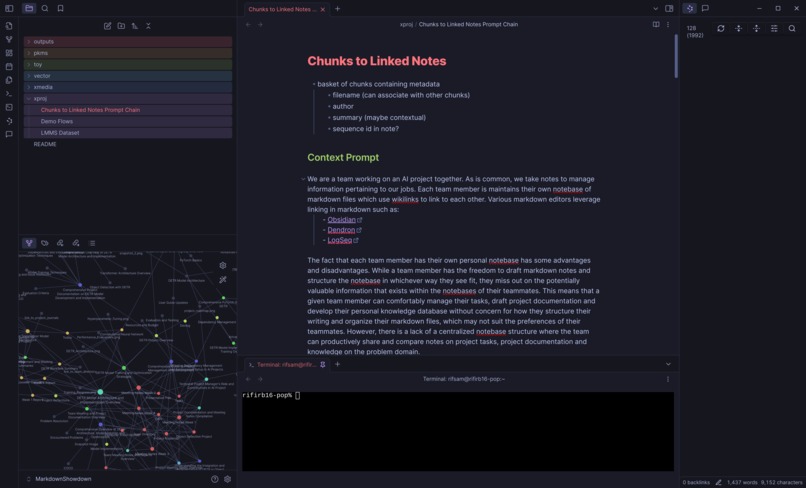
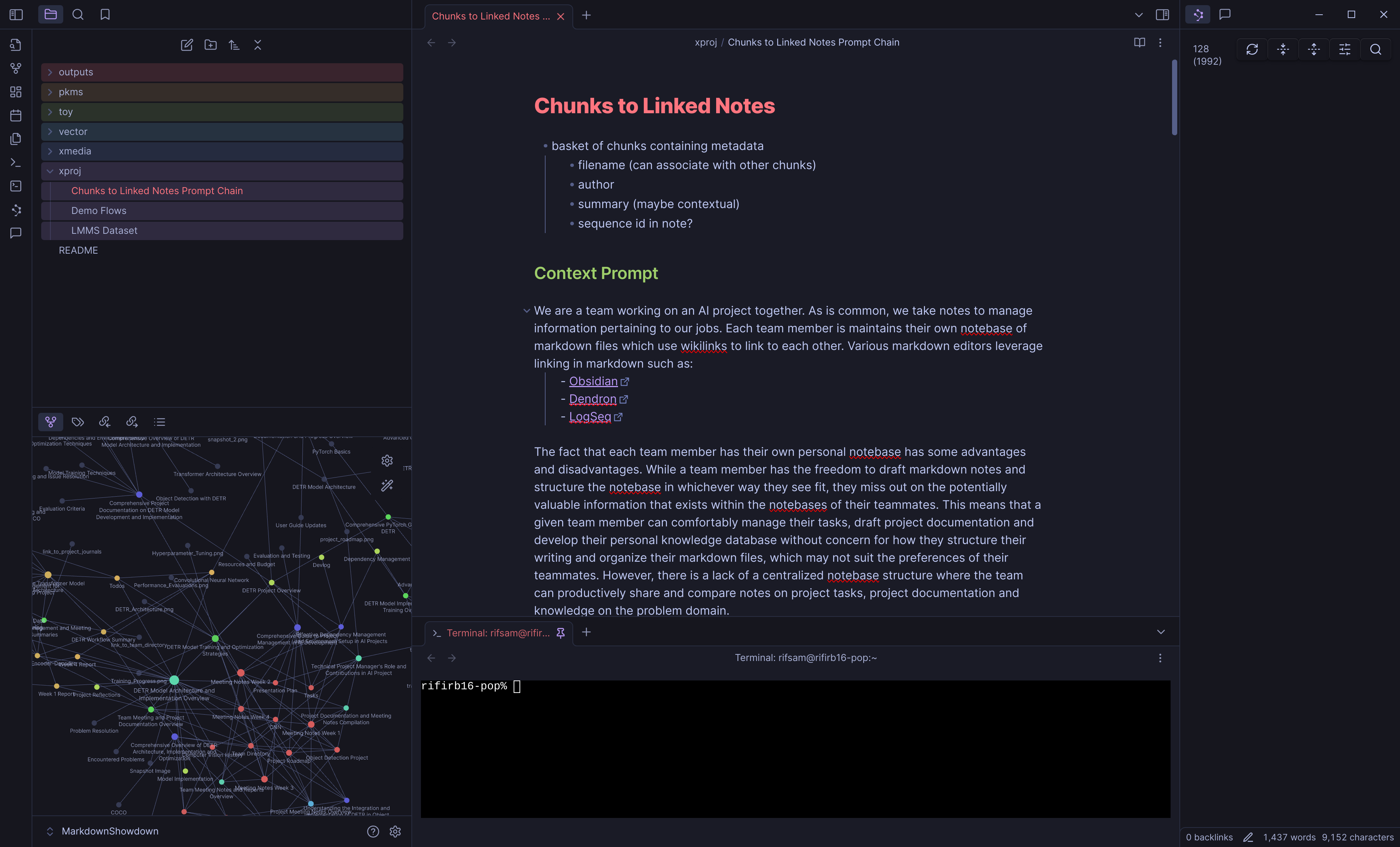
Obsidian Markdown Editor with merged notebases
-
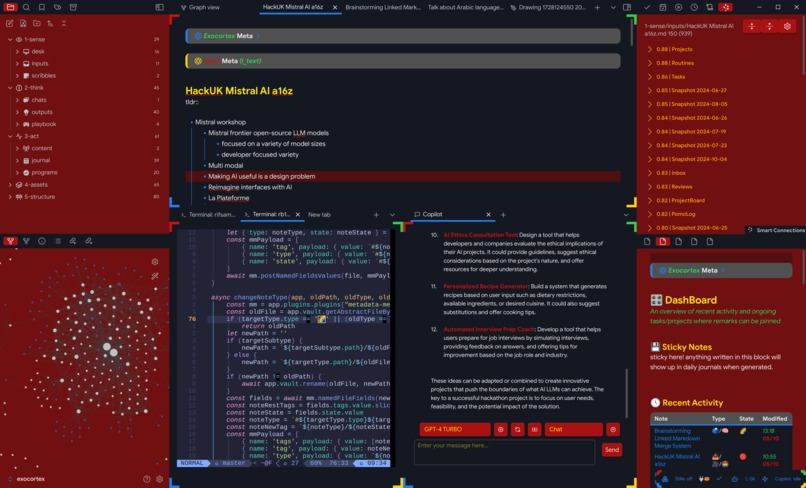
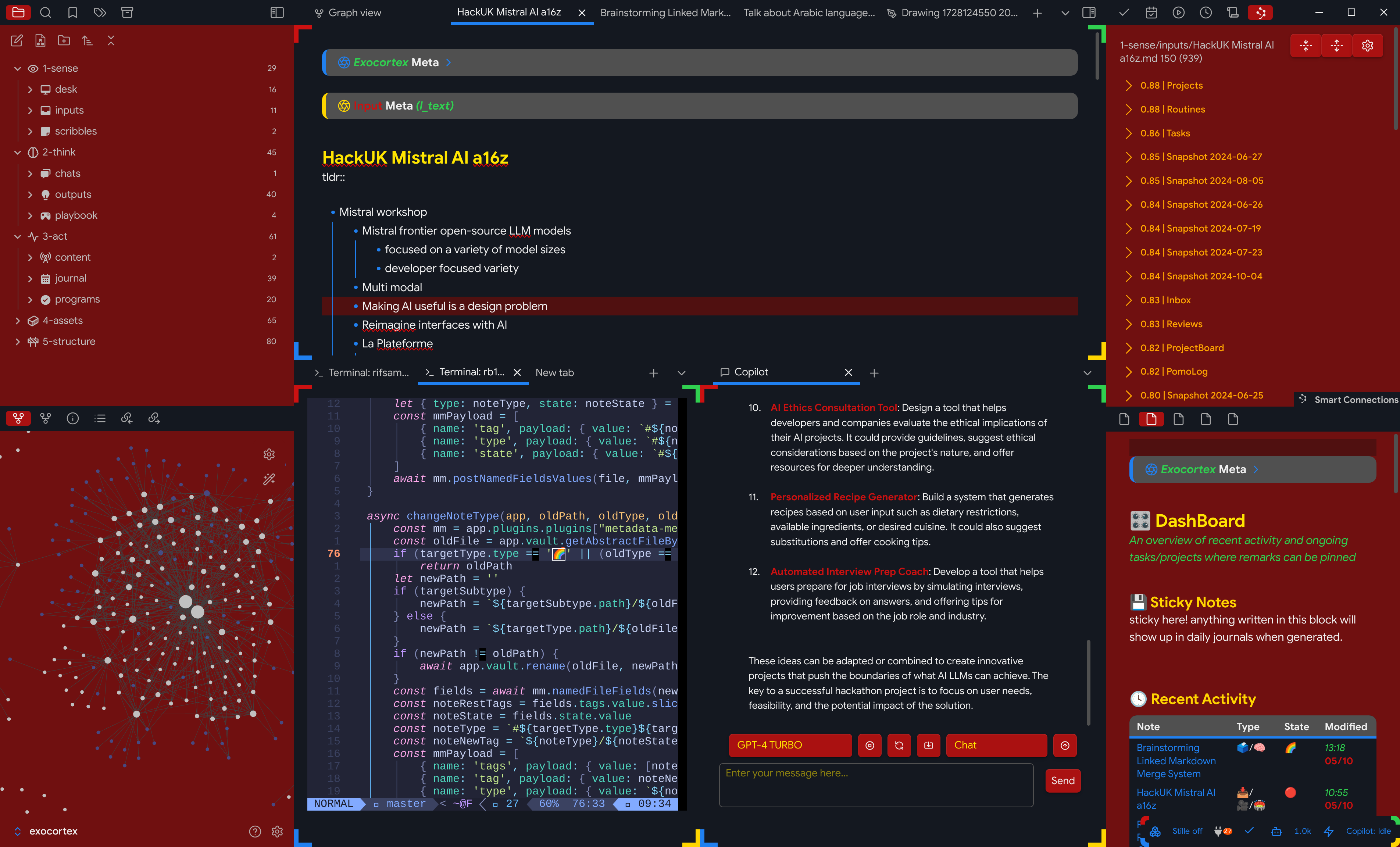
Obsidian Markdown Editor with heavy plugin use
TeamBrain
Inspiration
No current solutions for teamwork in Obsidian exist. As a result, teams resort to other services - such as Notion. Our multimodal approach aims to solve this!
What it does
An end to end flow using embeddings, clustering and RAG is used to merge, standardise, and query notes. The service is fully self hosted, so privacy is a first-class citizen.
How we built it
- first parse and process our markdown files
- break them down into chunks
- tag our files and chunks based on their function
- cluster the tagged chunks and markdown files into new potential markdown file candidates
- suggest wikilink style links to connect the note files semantically
- draft the new notes taking into consideration the relevant markdown file contents
Challenges we ran into
- Managing the variance in note formats across different users and finding an efficient way to align them without.
- Ensuring smooth integration with Obsidian while maintaining performance and data privacy also required us to implement a caching and syncing mechanism.
Accomplishments that we're proud of
Having an integrated product which is seamlessly integrated into Obsidian. We simplify the note-taking process for teams, saving time and reducing the mental overhead of merging various note formats. This allows teams to efficiently and easily share knowledge
What we learned
We learned how to better optimise LLM-based workflows for small, self-contained environments like Obsidian and balance the trade-off between model complexity and resource usage.
What's next for TeamBrain
- Front-end improvements 🖥️
- Stronger LLM models 🧠
- Faster execution 🚀

Log in or sign up for Devpost to join the conversation.