Inspiration
We chose SDG 12, "Responsible Consumption and Production," because we thought it encapsulated holistically the reason why overproduction and underconsumption is wasteful and unsustainable. This helps us understand that we have limited resources on Earth and that if we keep going this way there will be a point of no return for humanity. Even though we’ve been hearing about saving the planet since we were kids, we decided to choose this subject to explore a more specific niche that would teach us something new.
We also chose SDG 12 believing there would be sufficient data on the indexes, but we had difficulty finding the right data online that that would be interesting to explore. Moreover, we realized that with this subject, there could be things we can apply individually, like lowering our individual wasting of electronics, plastics, and water and limiting our use of energy which would allow us to say later in life that we did something instead of laying back and watching the world collapse.
Story
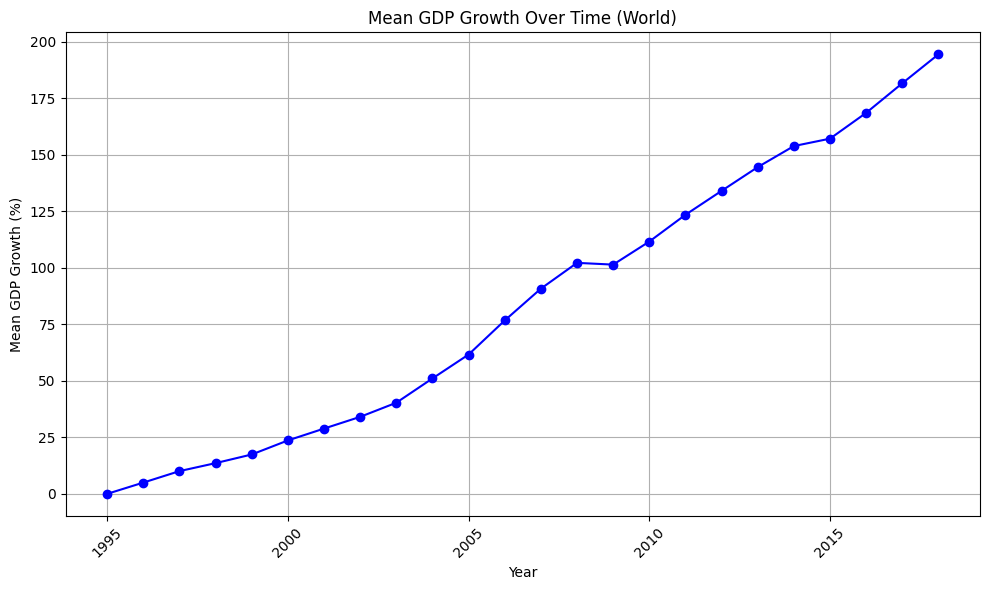
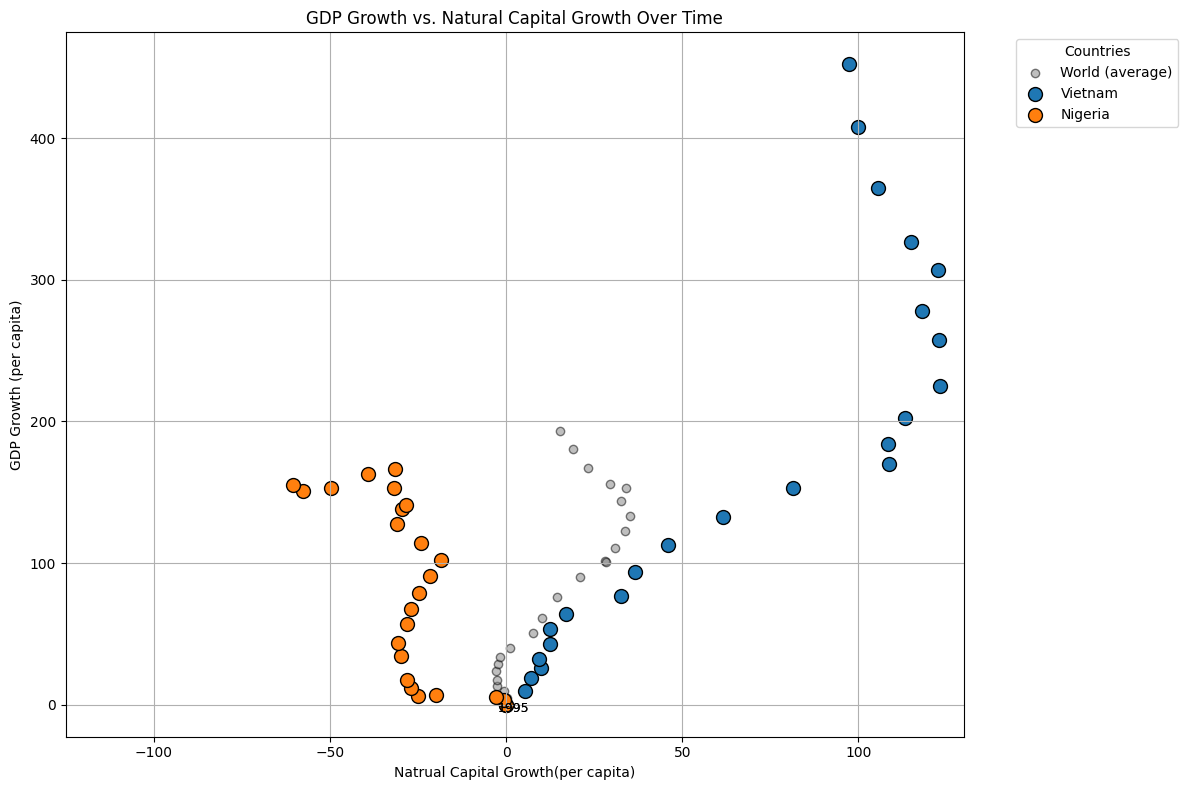
Sustainable growth necessitates a delicate equilibrium between economic advancement and the preservation of natural resources. The objective of SDG 12 is to foster an economic model that promotes prosperity without depleting the Earth’s natural capital (its resources). However, the pursuit of growth often continues to compromise natural resources, underscoring the need for a more sustainable approach.
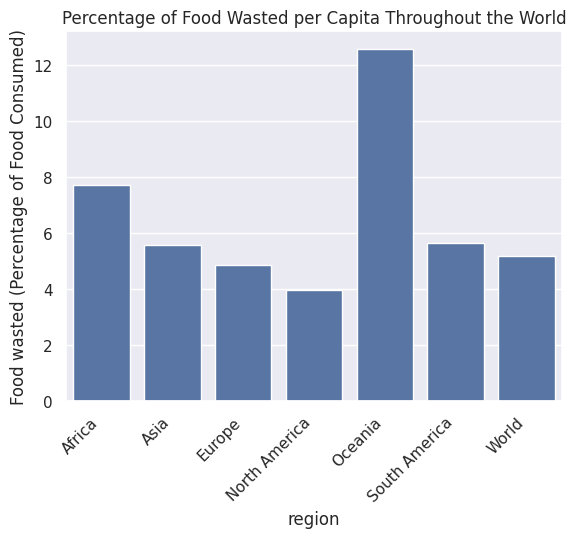
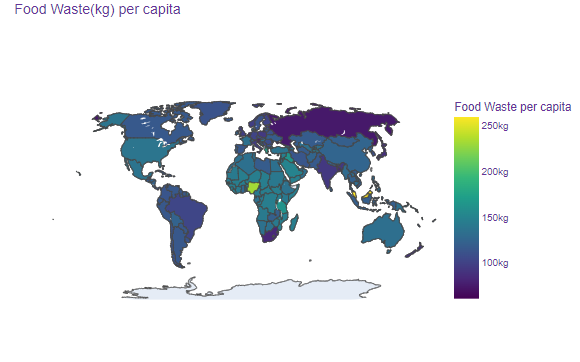
Food waste is a significant issue that directly impacts SDG 12. Globally, more than a third of food produced is wasted, contributing to eight to ten percent of greenhouse gas emissions. This waste is not only an economic loss but also a depletion of natural resources used in the production, storage, and transportation of this food. In contrast, food imports can sometimes be a more environmentally friendly option if the food is imported from countries with environmentally friendly agricultural production systems.
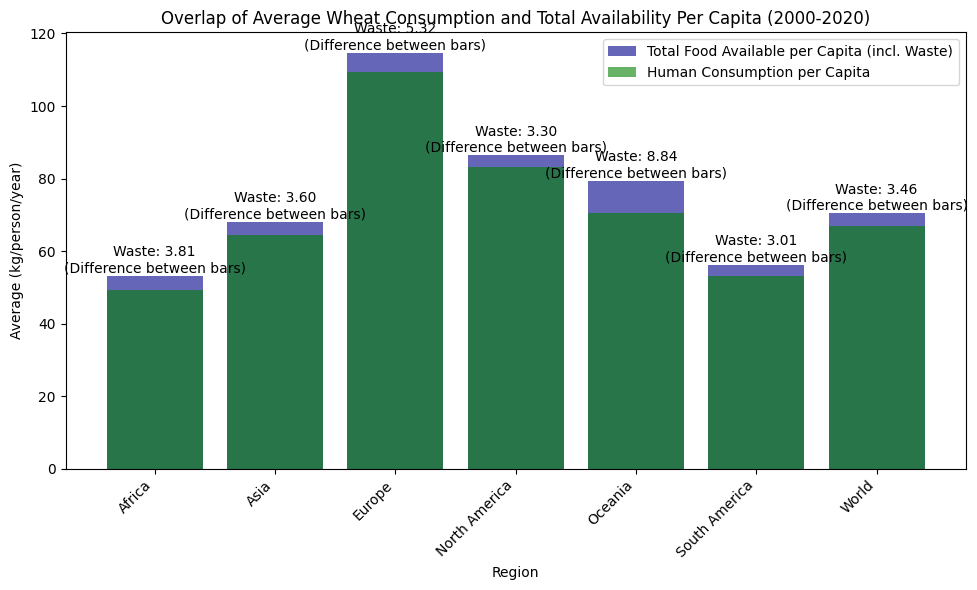
In example, the balance between wheat availability and consumption is another critical aspect of sustainable consumption. Wheat is a staple food crop, supplying a fifth of global food calories and protein. However, the global trend of wheat consumption is slowly increasing. This increase in consumption needs to be matched with sustainable production practices to prevent the depletion of natural resources.
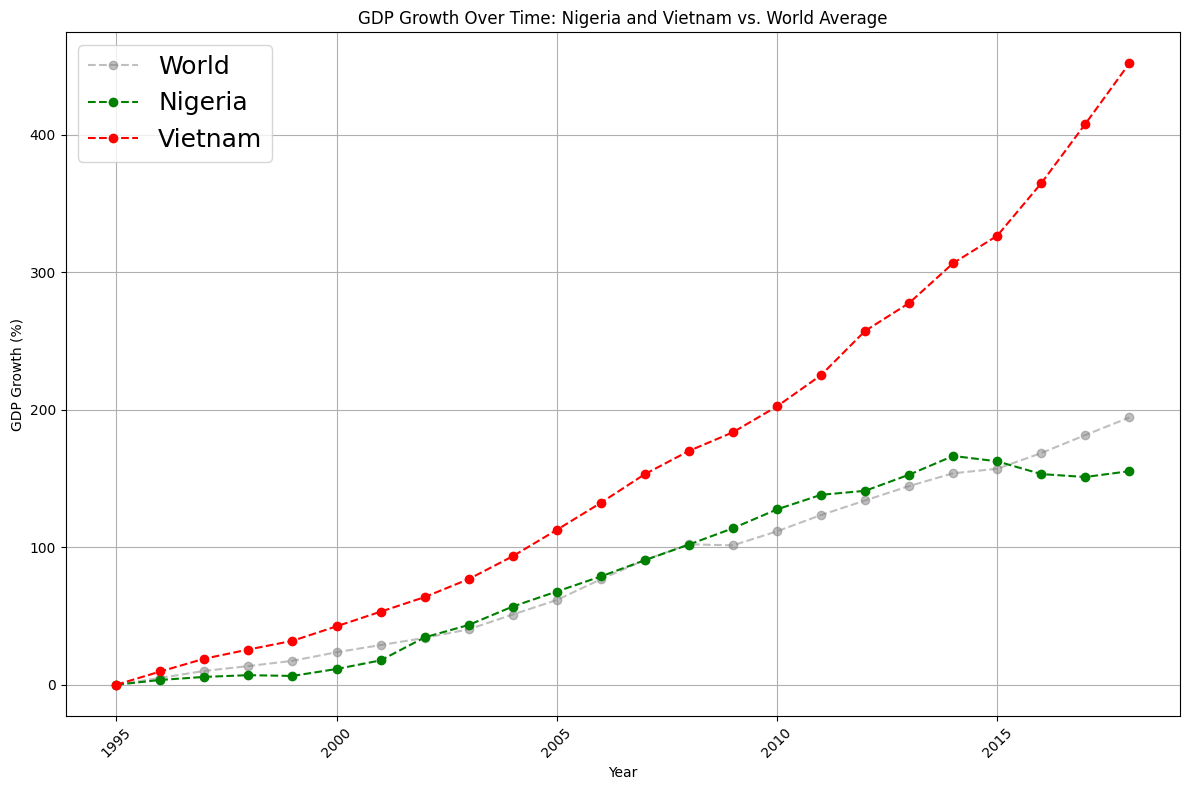
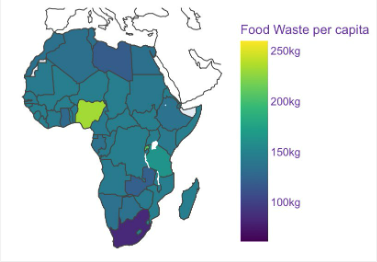
We also examine the situation in specific countries such as Nigeria and Vietnam provides a more nuanced understanding of these issues. Nigeria, despite being Africa’s largest economy, faces significant food waste issues. On the other hand, Vietnam has made notable progress in reducing food waste and improving its HDI over the years.
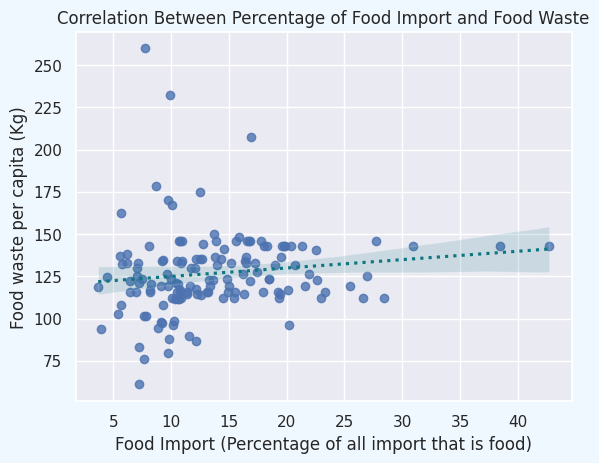
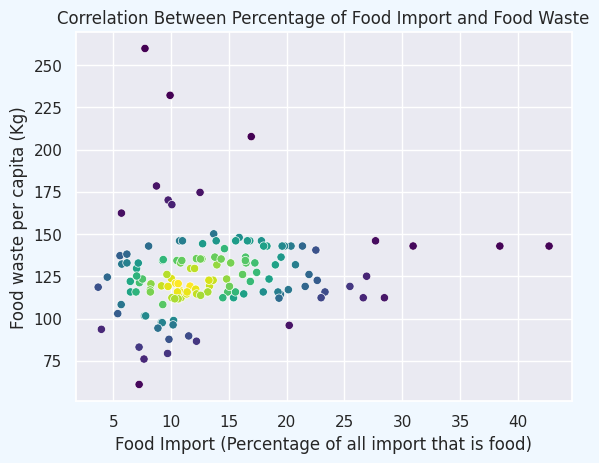
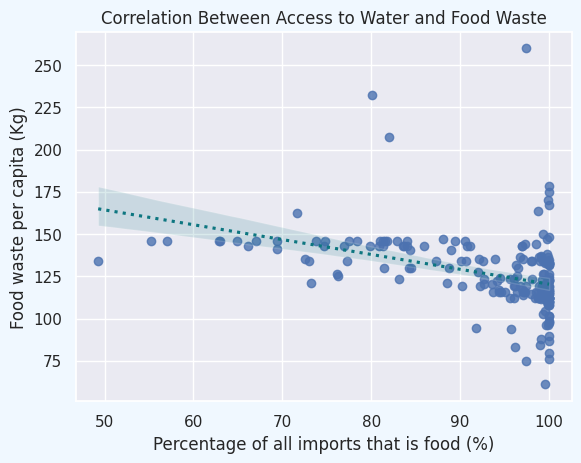
In our search for the reason behind the discrepancy between the two countries, we noticed that Nigeria import more food than Vietnam (11,5% vs. 8,5%) and has lower clean water accessibility (21,67% vs. 51%). In order to investigate if this is a wider trend, we plotted the graph of water accessibility vs. food waste and food import vs. food waste for all countries, and we noticed a slight negative correlations in that nations with less water accessibility and more food import generally waste more food. In our next report, we would like to investigate the reason behind this but right now, we hypothesize that nations without control of their own means of food production must import more food as necessary as a safety margin and lack of water might mean that base food ingredients (such as wheat) cannot be processed into actual food. Of course, in the case of Nigeria vs. Vietnam, the extreme gap in food waste must also be attributed in policy and governance issues which the wider trends does not absolve.
In short, achieving sustainable production and consumption requires a multifaceted approach. It involves reducing food waste, managing food imports, balancing food availability and consumption, and improving human development indices. As we continue to strive towards SDG 12, it is crucial to remember that every small step counts towards creating a more sustainable and resilient future.
Behind the Story: Our Data Analysis
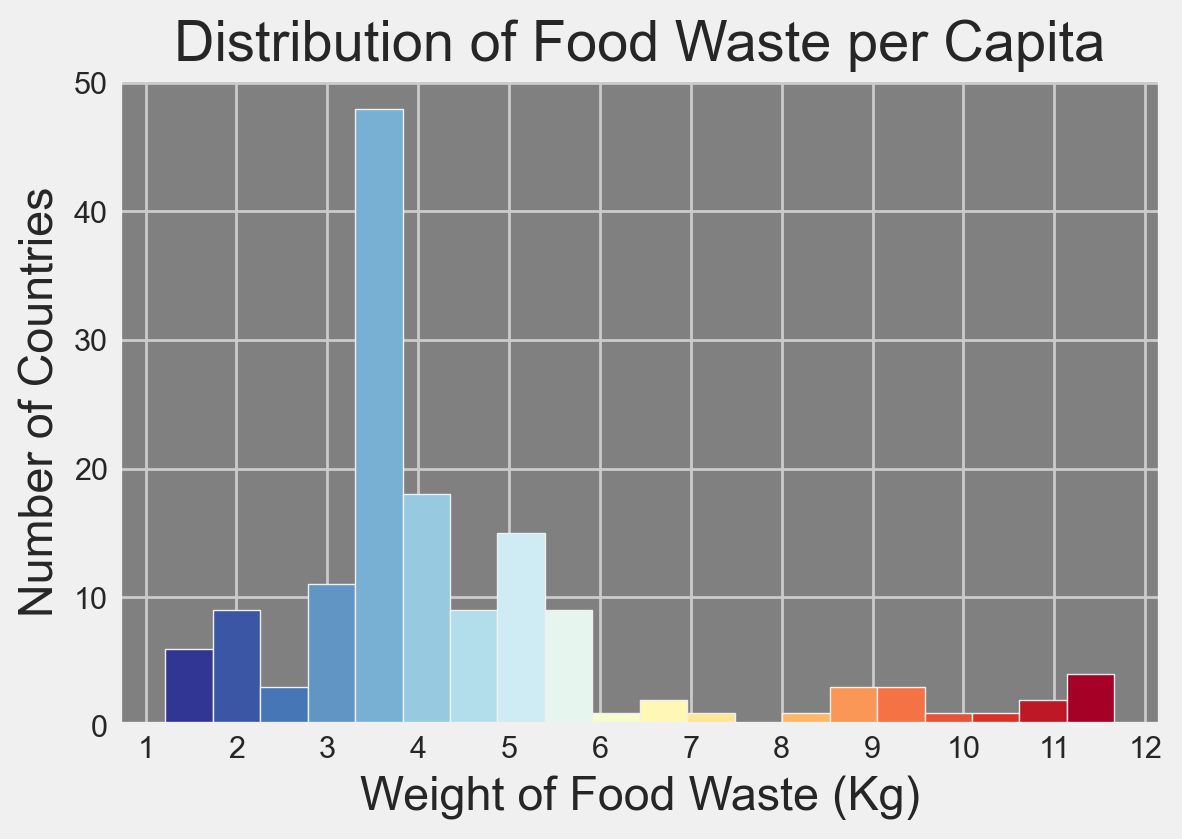
We downloaded the data in CSV format and opened on Collab, an interactive cloud-based python IDE using the Pandas module, which formatted the data under specific labels. In the case of the food import data from the World Bank, the CSV file, due to having blanks, had to be first edited in Excel where we replaced them with "NaN". Then, in Pandas, we dropped all entries for all tables where the data was marked "NaN" (unavailable). The data was recorded for several years so we choose to do our comparative analysis between food waste and water accessibility and food import using the latest year where the data were available for all three metrics, which is 2019. We thought it important that all three metrics where from the same year in order for isolate out force majeure fluctuations between years. For the figure 4 to 6, we computed the graph directly from our pandas table using MatPlotLib. Meanwhile, for figure 1 to 3, where we visualized the relationship between two variables, we had first to find the countries where the data was available for both variables, which we accomplished using the loc function in Pandas and standard set operations in Python. Then, we visualized the data for fig. 1 and 3 using the regplot function in Seaborn, which computed a scatter plot with a trendline. Then, for fig. 2, we used the scatterplot function so that the data point was colored according to data density, thus proving insight on where the majority of countries stood on food import and waste. Meanwhile, for our interactive maps on food security, we used the plotly add-on which provided the chloropleth method which colored a map automatically based on our data. Finally, for the graphs on the growth of GDP vs Time, we first had to sort the data by year in ascending order then we plotted the data using the plot function in MatPlotLib.
Where our data comes from
Per capita wheat waste in supply chains, 2000 to 2020
Responsible use of natural resources: Essential for sustainable growth
Challenges we ran into
Navigating the intricacies of the Colab platform initially posed a challenge, but it was one we were eager to overcome. The process required us to adapt and expand our technical skills, pushing us out of our comfort zones. However, this initial hurdle turned into a rewarding learning experience. As we delved deeper into the subject matter, we found that the platform’s advanced features and collaborative nature greatly enhanced our ability to work efficiently and innovatively.
Accomplishments that we're proud of
We’re proud of our accomplishments in learning and applying programming concepts while using artificial intelligence tools like ChatGPT. We’ve discovered that this tool can be incredibly beneficial across various fields, and its judicious use can lead to significant advancements. By integrating AI into our work, we’ve been able to automate complex tasks, enhance efficiency, and foster innovation, thereby opening up new avenues for exploration and development. This journey has not only enriched our technical skills but also broadened our perspective on the potential of AI in shaping the future.
What we learned
We learned how to use ChatGPT productively, especially for brainstorming and summarizing and to proofcheck the output of ChatGPT in the event of "hallucinations". We learned the basic of scraping the data and cleaning it, which is widely know to be the most time consumming part of all data science projects. We learned how to recognize good data source from bad how Panda can be used to format and filter the data. We learned the basics of using MatPlotLib for graphing as well as how to add more details to the graph using the seaborn extension.
What's next for Team 5 Food Substainability
Our initiative aims to raise public awareness about the critical need for responsible consumption and production. We plan to shed light on the pressing issue of food waste, a significant contributor to greenhouse gas emissions and a factor that leads to the unnecessary depletion of our natural resources.
By sharing data on global trends, such as the increasing consumption of staple crops like wheat, we aim to underscore the urgency of adopting sustainable production practices. Our goal is to make people aware of the delicate balance that must be maintained between economic advancement and the preservation of our planet’s resources.
Built With
- chatgpt
- colab
- llm
- python


Log in or sign up for Devpost to join the conversation.