-
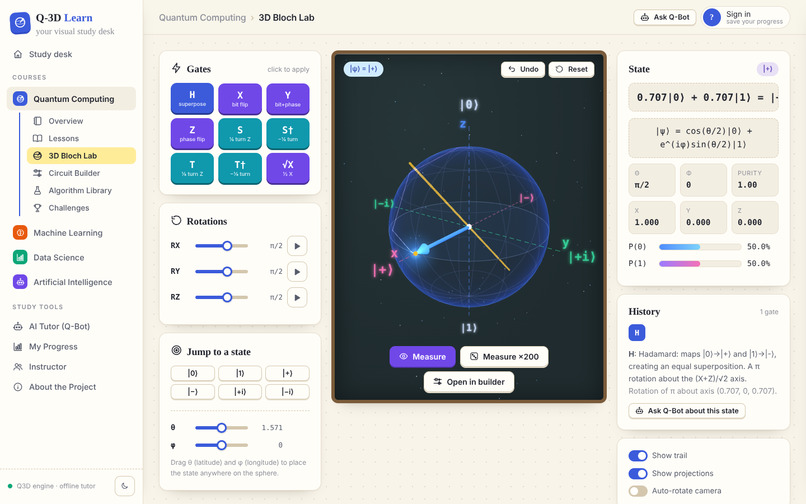
quantum lab
-
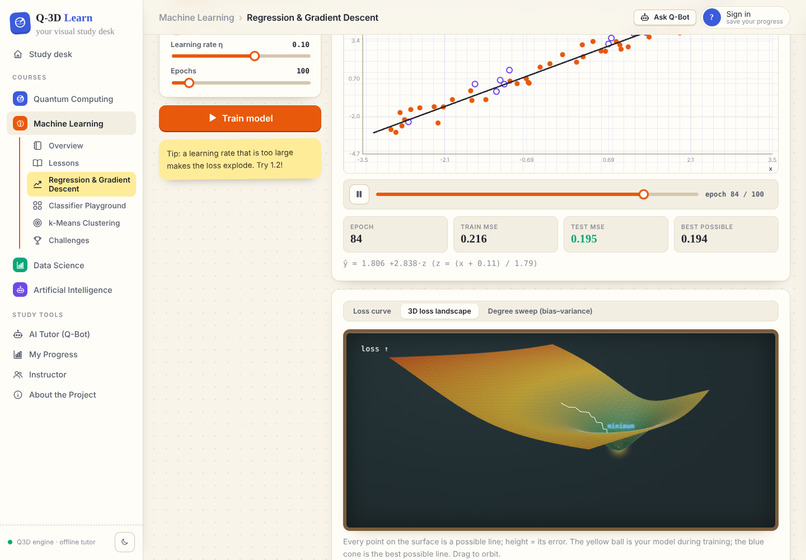
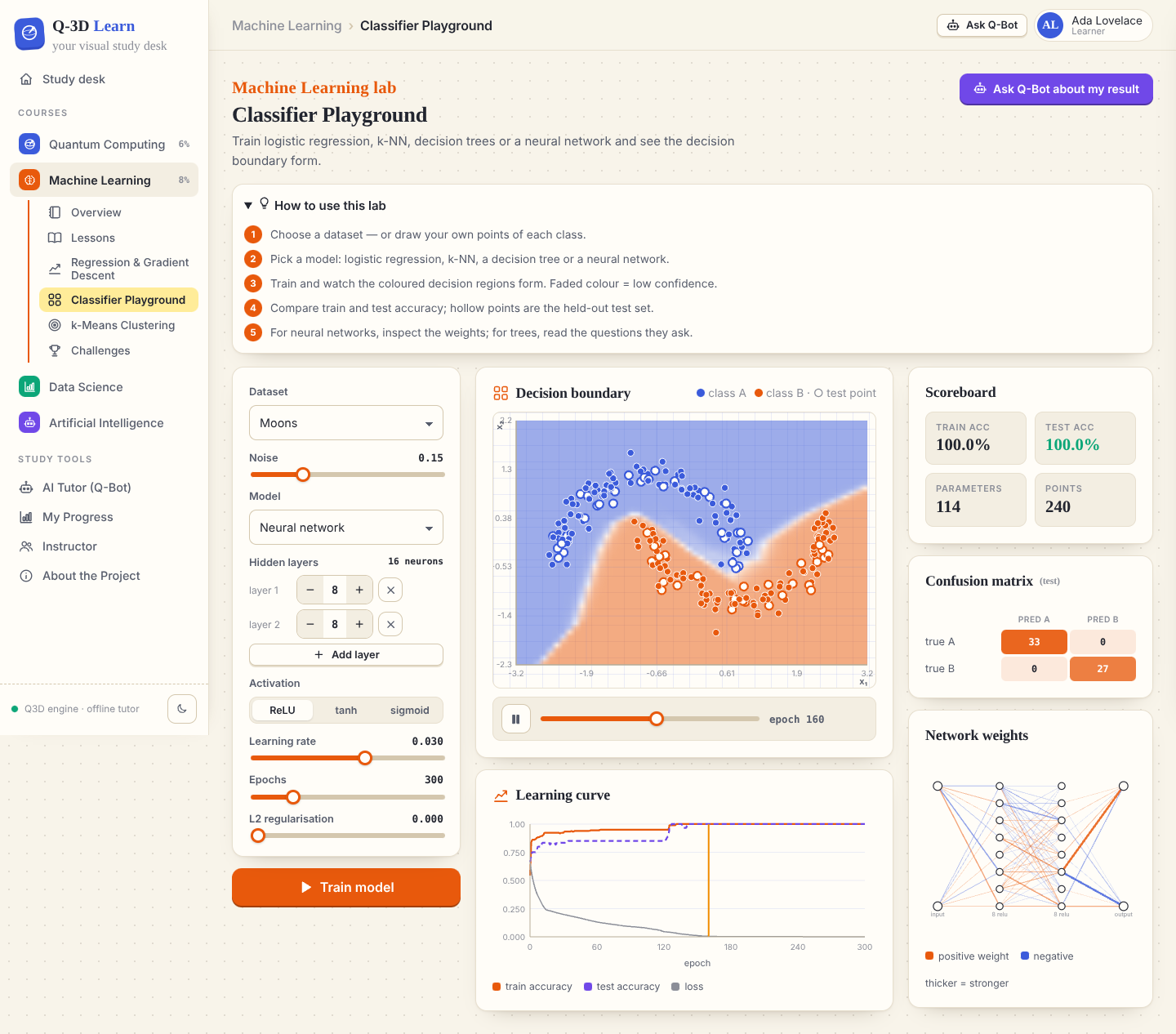
ml lab
-
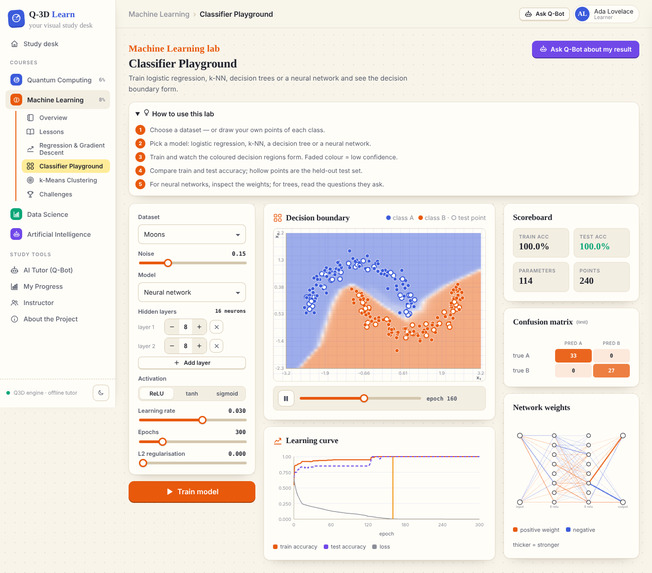
ml classifier
-
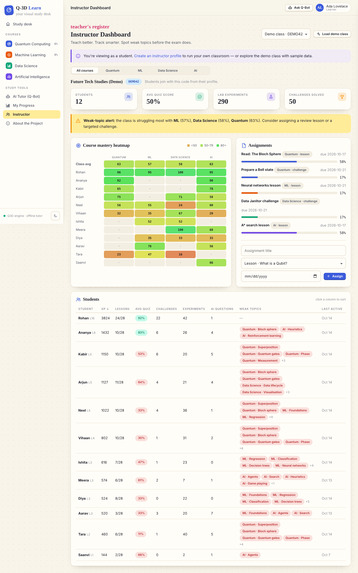
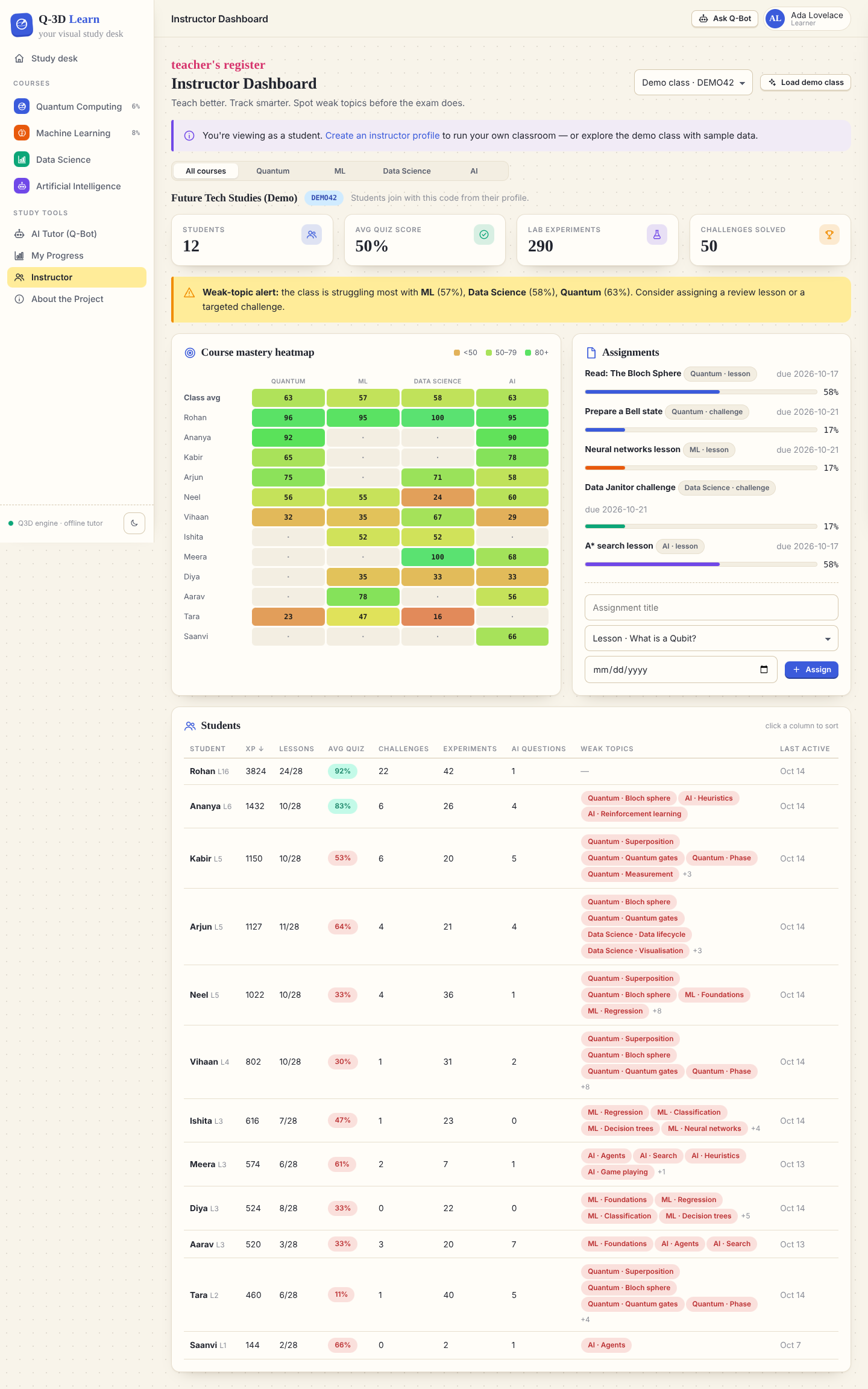
instructor
-
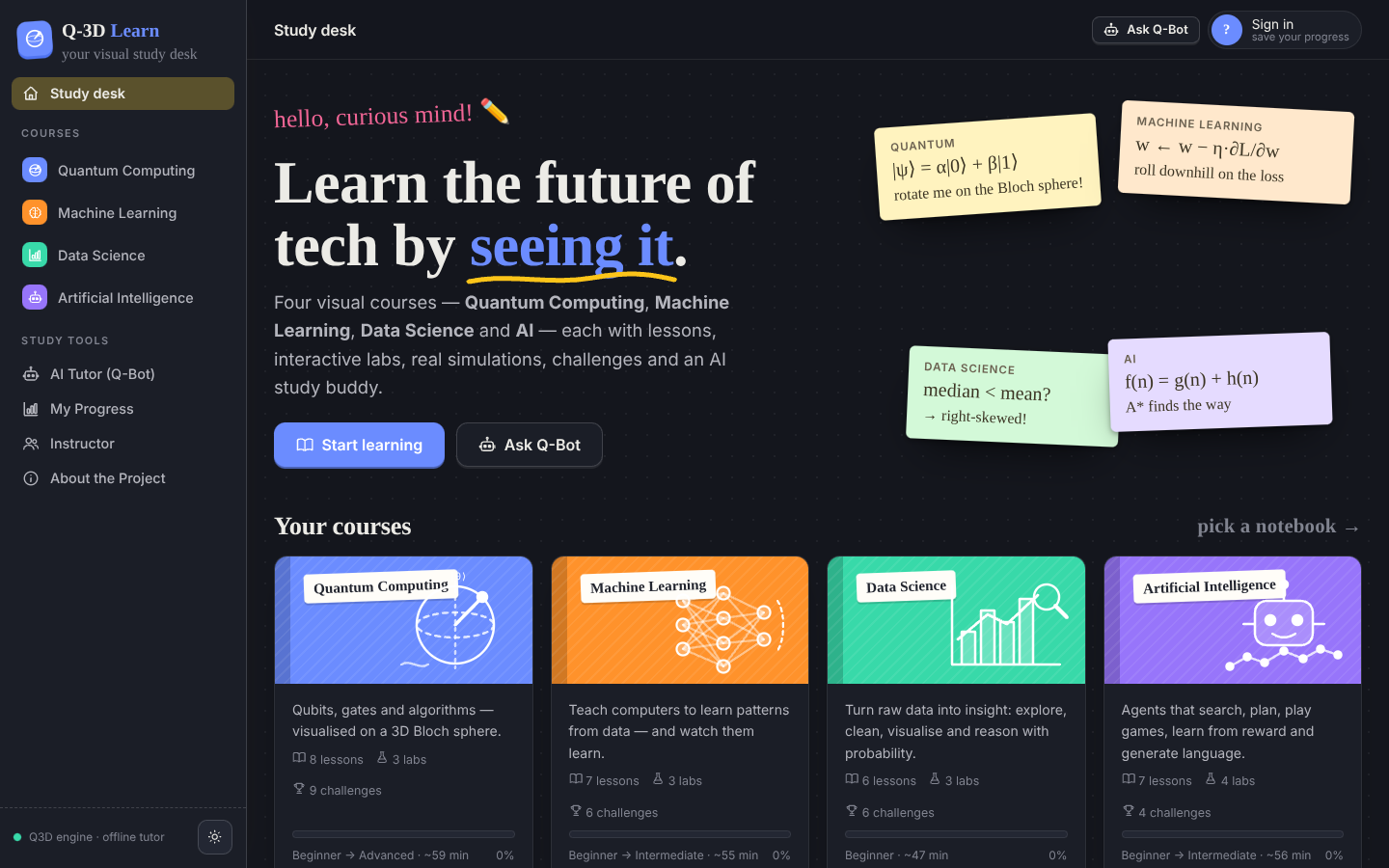
home page
-
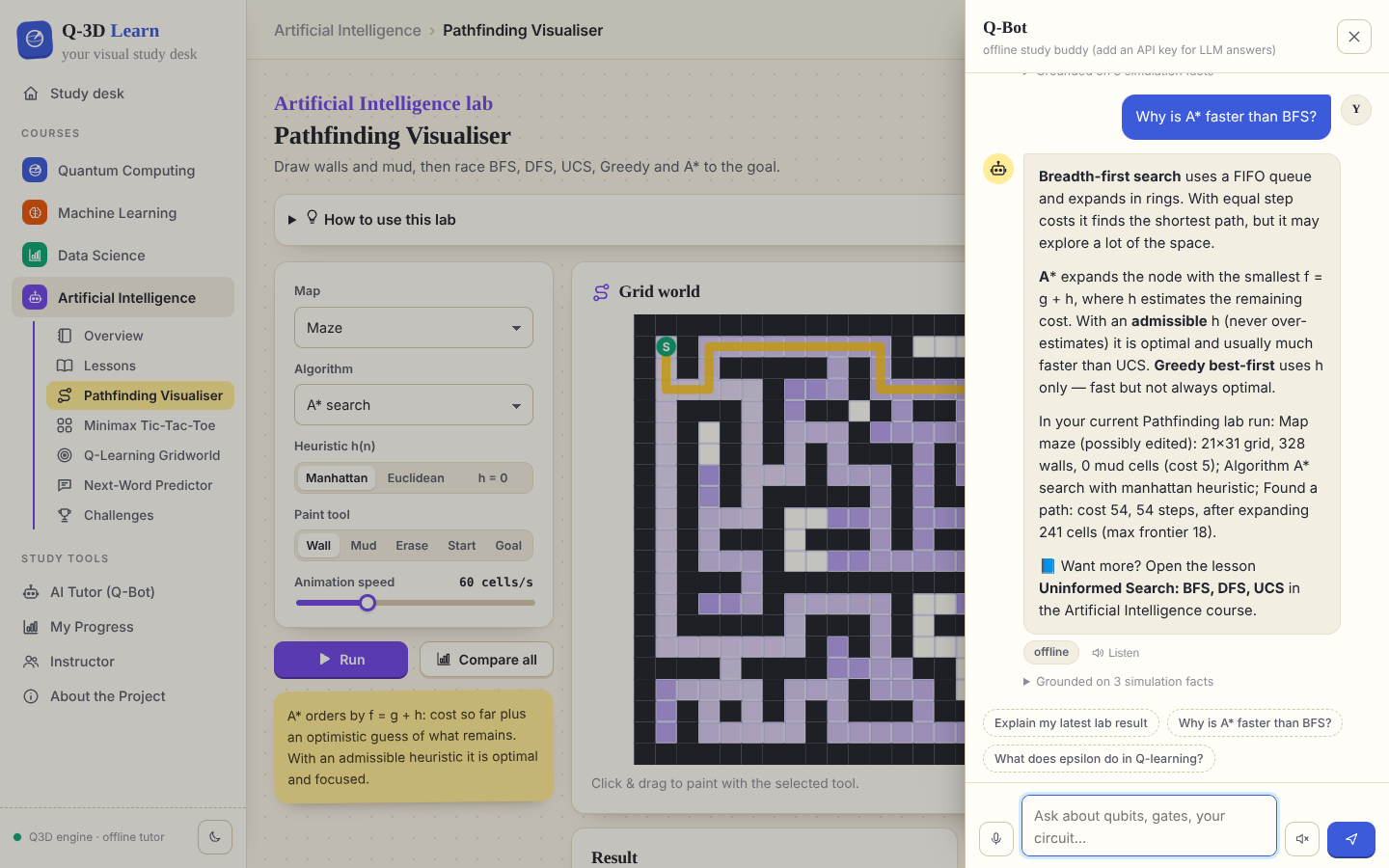
ai tutor
Inspiration
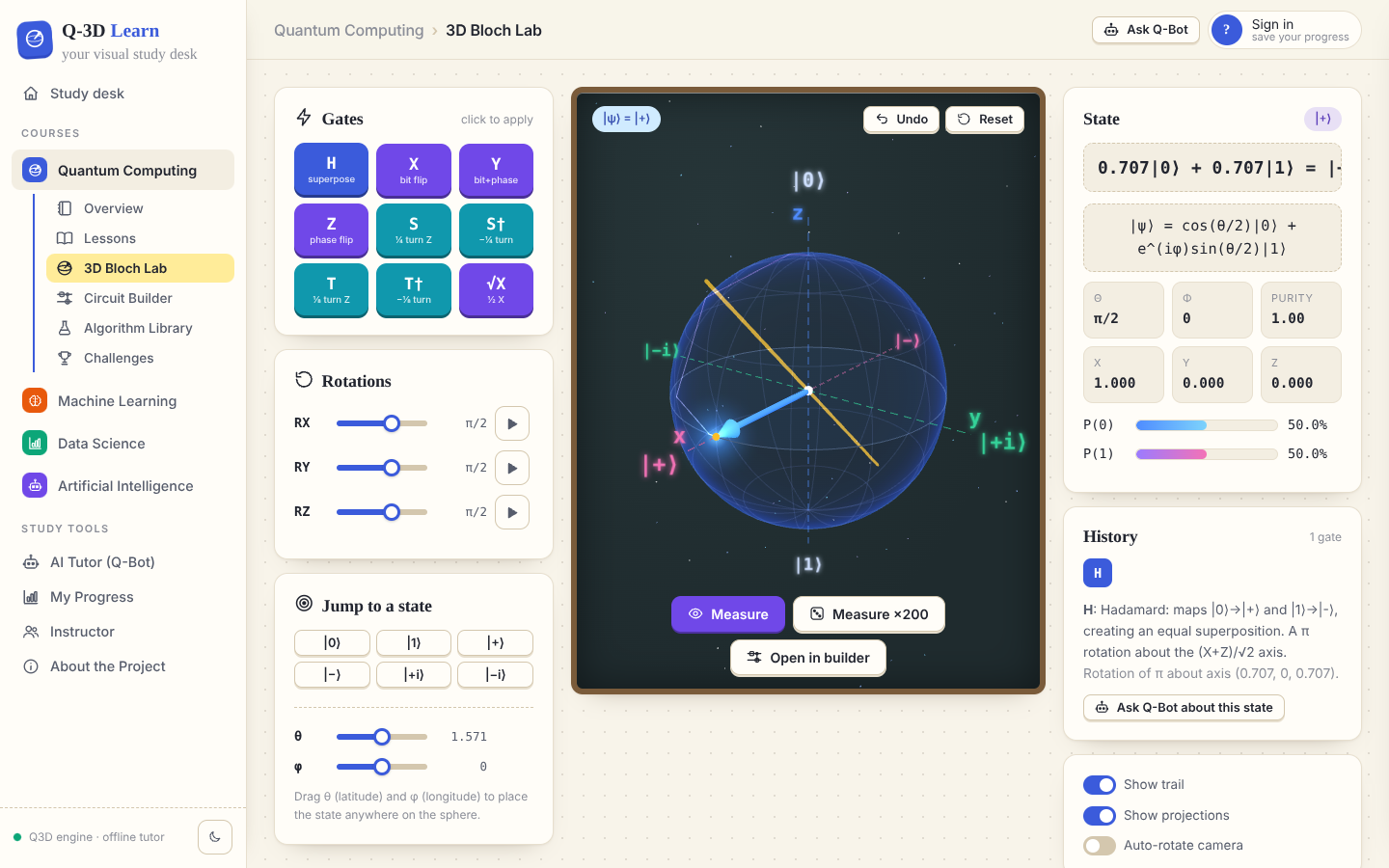
Every time we opened a quantum computing textbook, we met equations like \( |\psi\rangle = \alpha|0\rangle + \beta|1\rangle \) that we could memorise but never really see. Most tools let you run a circuit but don't teach you why it works. So we asked: what if learning felt like playing in a lab instead of reading a textbook? We soon realised Machine Learning, Data Science and AI students face the same gap.
What it does
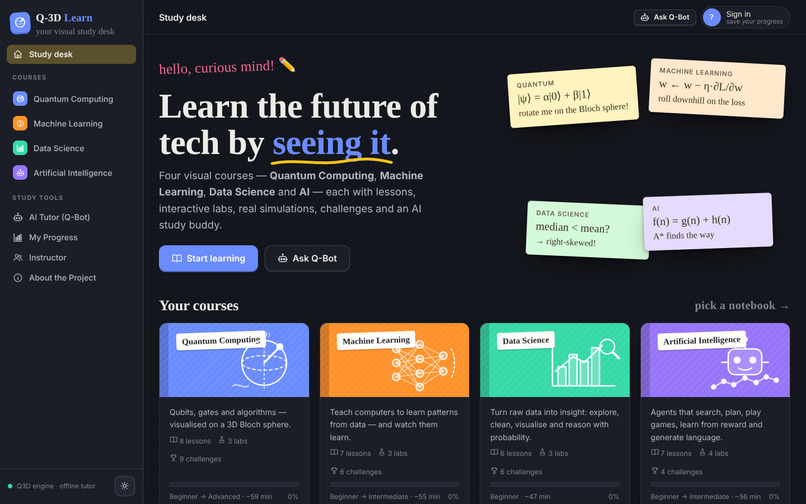
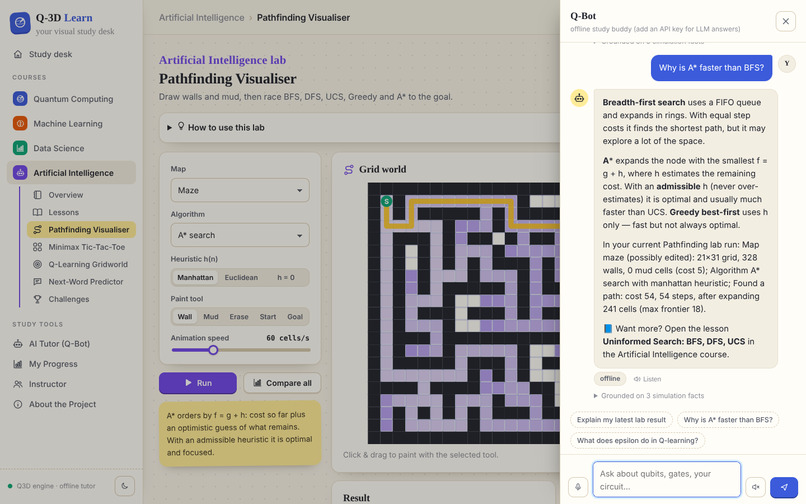
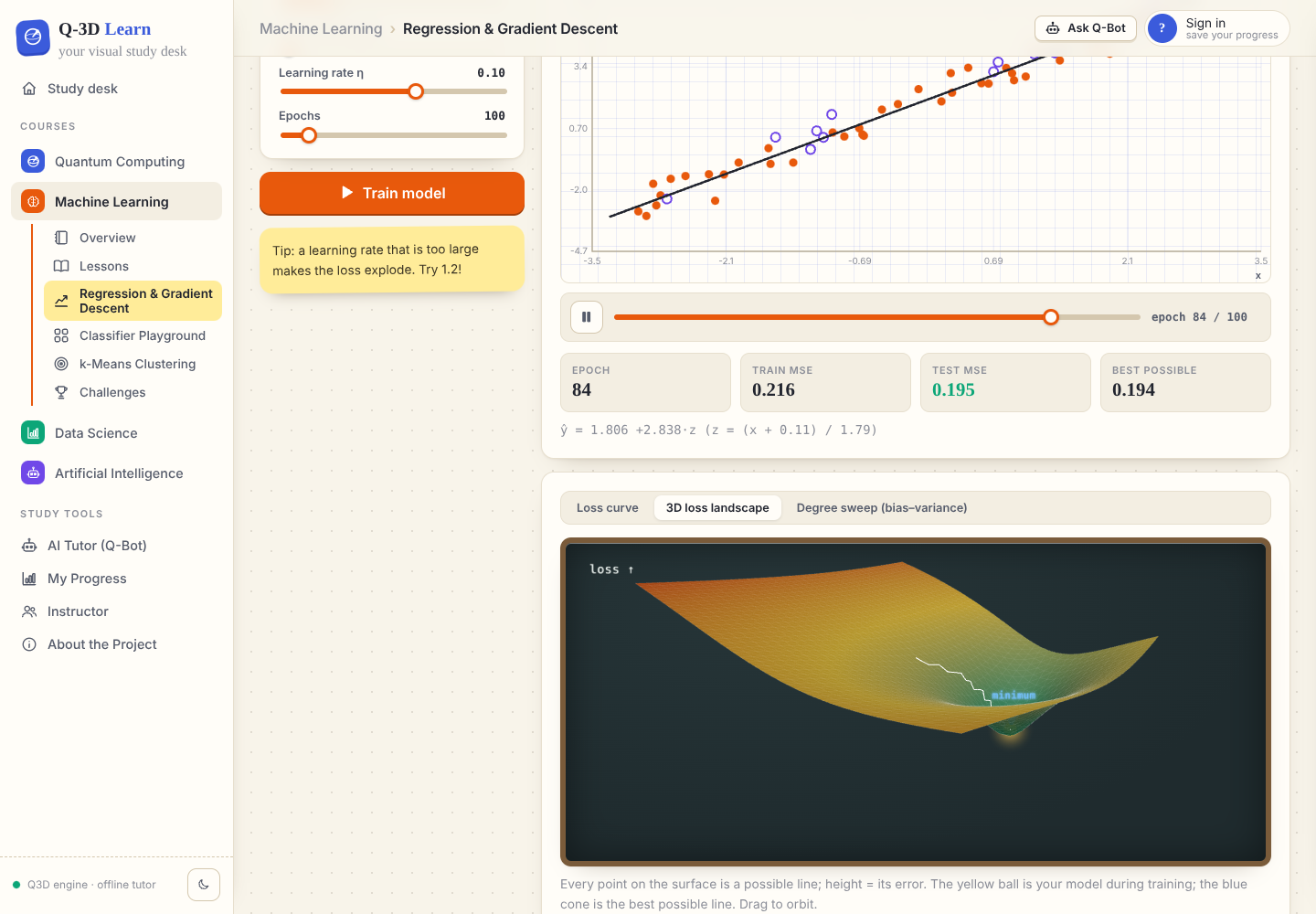
Q-3D Learn is a free, open-source study platform with four visual courses: Quantum Computing, Machine Learning, Data Science and AI. Each course has lessons, quizzes, graded challenges and interactive labs where you can spin a qubit on a 3D Bloch sphere, watch a neural network learn, clean messy data step by step, or race A* against BFS through a maze. Q-Bot, our AI tutor, explains your actual results by text or voice, and instructors get a dashboard showing where their class is struggling.
How we built it
We used Python and FastAPI with NumPy to write our own quantum simulator, ML models, data tools and AI algorithms from scratch, so every visual is driven by real computation. The frontend is plain JavaScript with Three.js for 3D and has no build step. Progress is stored in SQLite or PostgreSQL. The project ships with Docker support and 64 automated tests that run on GitHub Actions.
Challenges we ran into
Our hardest challenge was keeping every visual scientifically honest. For example, entangled qubits had to show their arrows shrinking inside the Bloch sphere, not just look pretty. We also had to stop the AI tutor from hallucinating, which we solved by giving it facts the platform actually computed instead of letting it guess.
Accomplishments that we're proud of
We built 4 complete courses with 28 lessons, 13 visual labs and 25 challenges in one platform. The tutor answers using real results, the platform works fully offline, and it's open source under the MIT license.
What we learned
We learned that people understand something best when they can see it, build it and play with it. We also learned how to design software that teaches, not just computes.
What's next for Team SRIJAN
Next, we want to add Hindi and regional-language lessons, run circuits on real IBM quantum hardware, and pilot Q-3D Learn in college classrooms.
Built With
- css3
- docker
- fastapi
- gemini
- github-actions
- html5
- javascript
- katex
- monaco-editor
- numpy
- ollama
- openai
- openqasm
- postgresql
- pydantic
- python
- qiskit
- sqlalchemy
- sqlite
- three.js
- uvicorn
- web-speech-api

Log in or sign up for Devpost to join the conversation.