What is your chosen theme and problem statement? Giving Back, Qn 2, How can we embrace inclusivity and integrate people who might be otherwise excluded or marginalised.
What does your hack do? DementiaCare is a web application which aims to enable persons living with dementia, so that they can lead a life with autonomy. It will feature two interfaces - one for persons living with dementia (PLWD) and one for caretakers.
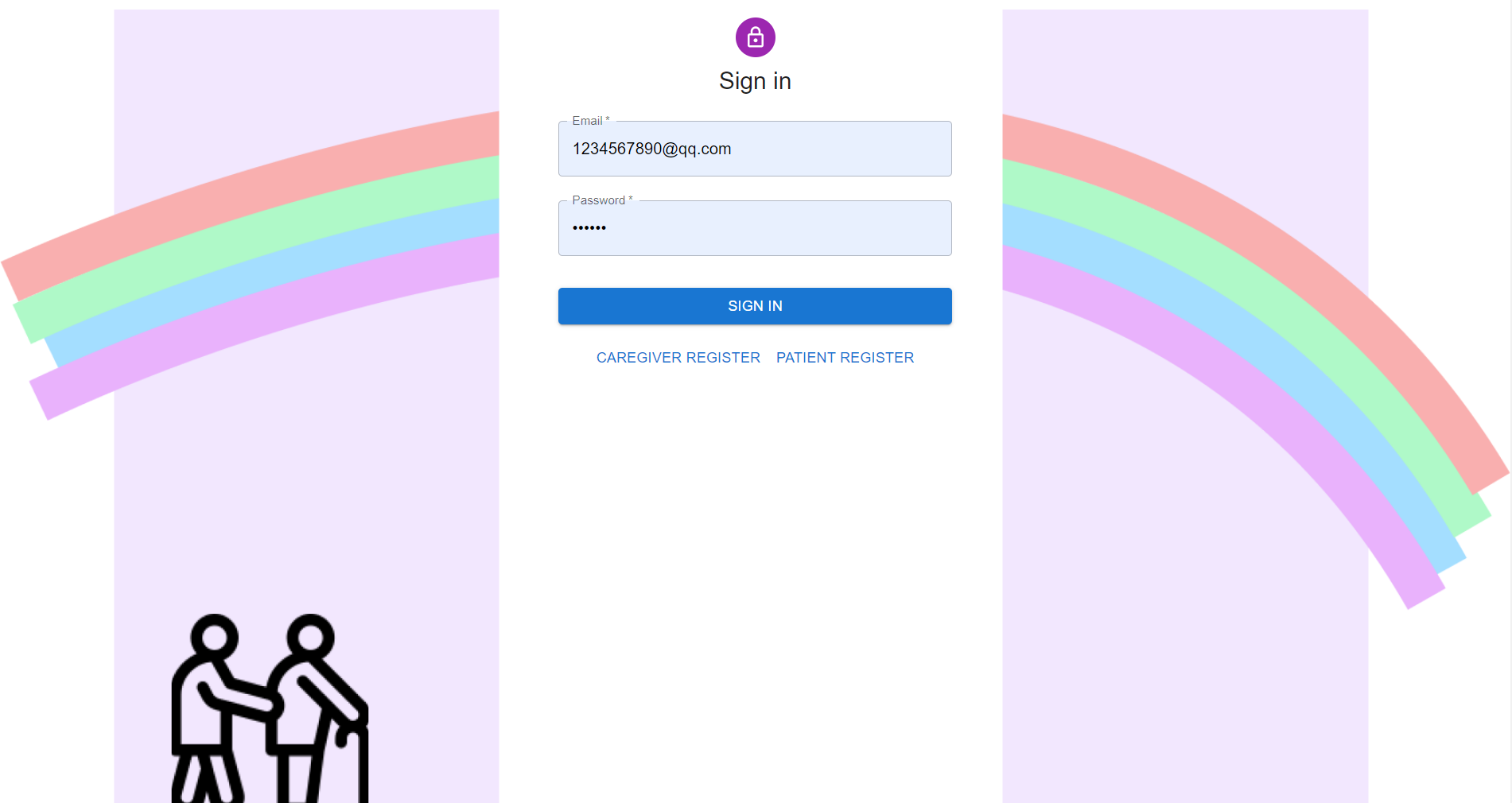
When creating accounts, caregivers will key in information for themselves and the PLWD they are caring for. A series of information such as preferred name, email address and second contact person will be recorded at registration. Contact information and meeting point location data will also be required as they are used when PLWDs are unable to find their way home. We are using Firebase as our database provider to record the data registered. At registration, caregivers will have to provide two sets of email addresses and passwords to login to the separate accounts, and this pairing is remembered by the database and retrieved to link the caregiver to the PLWD when the need arises.
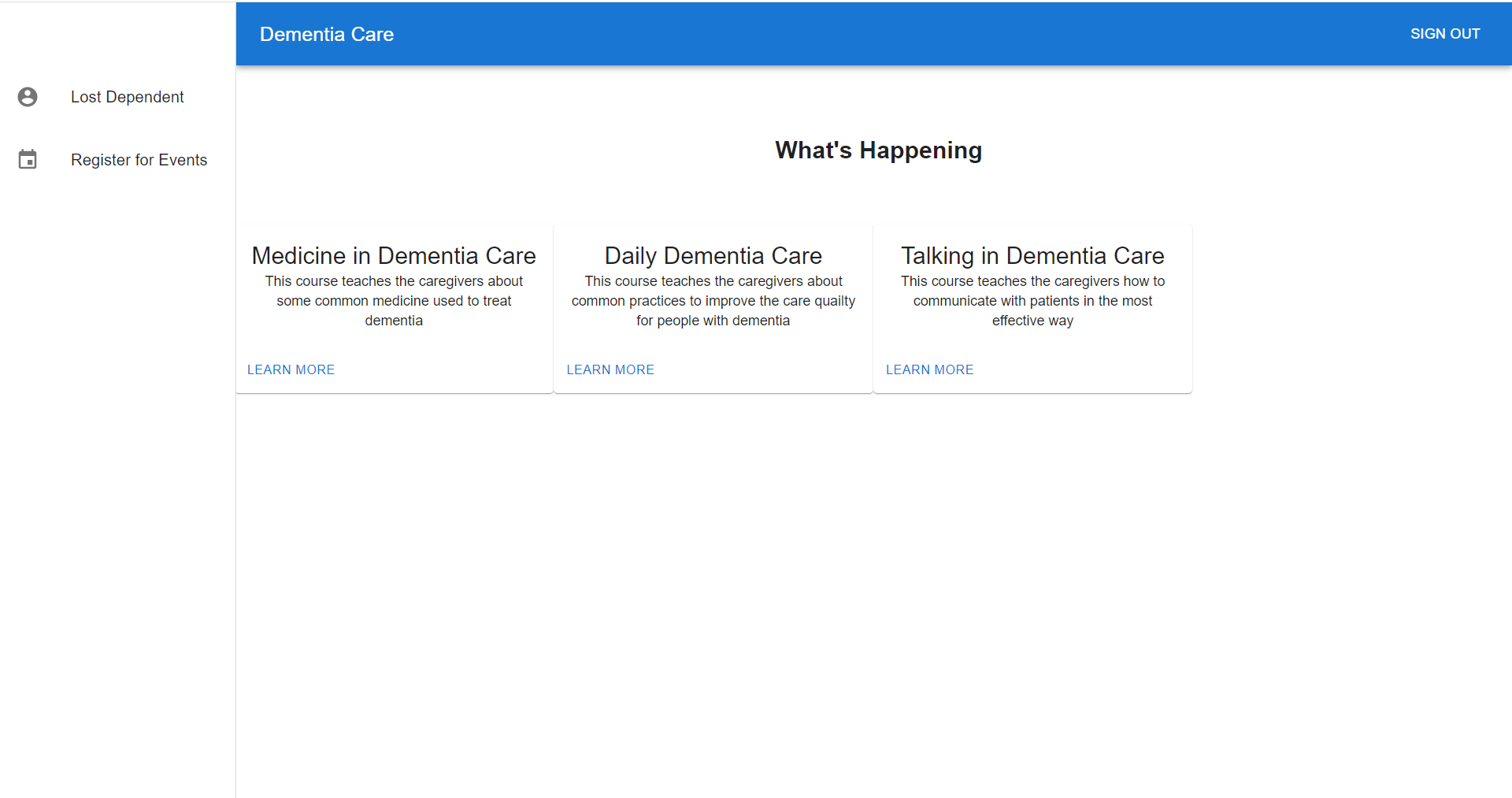
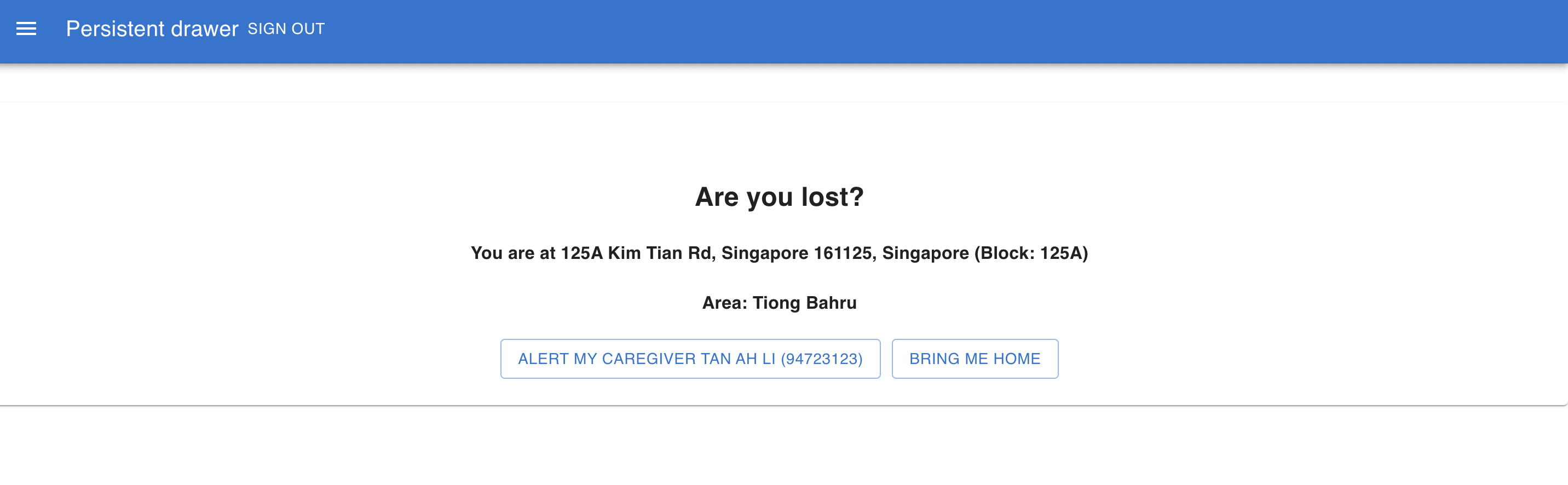
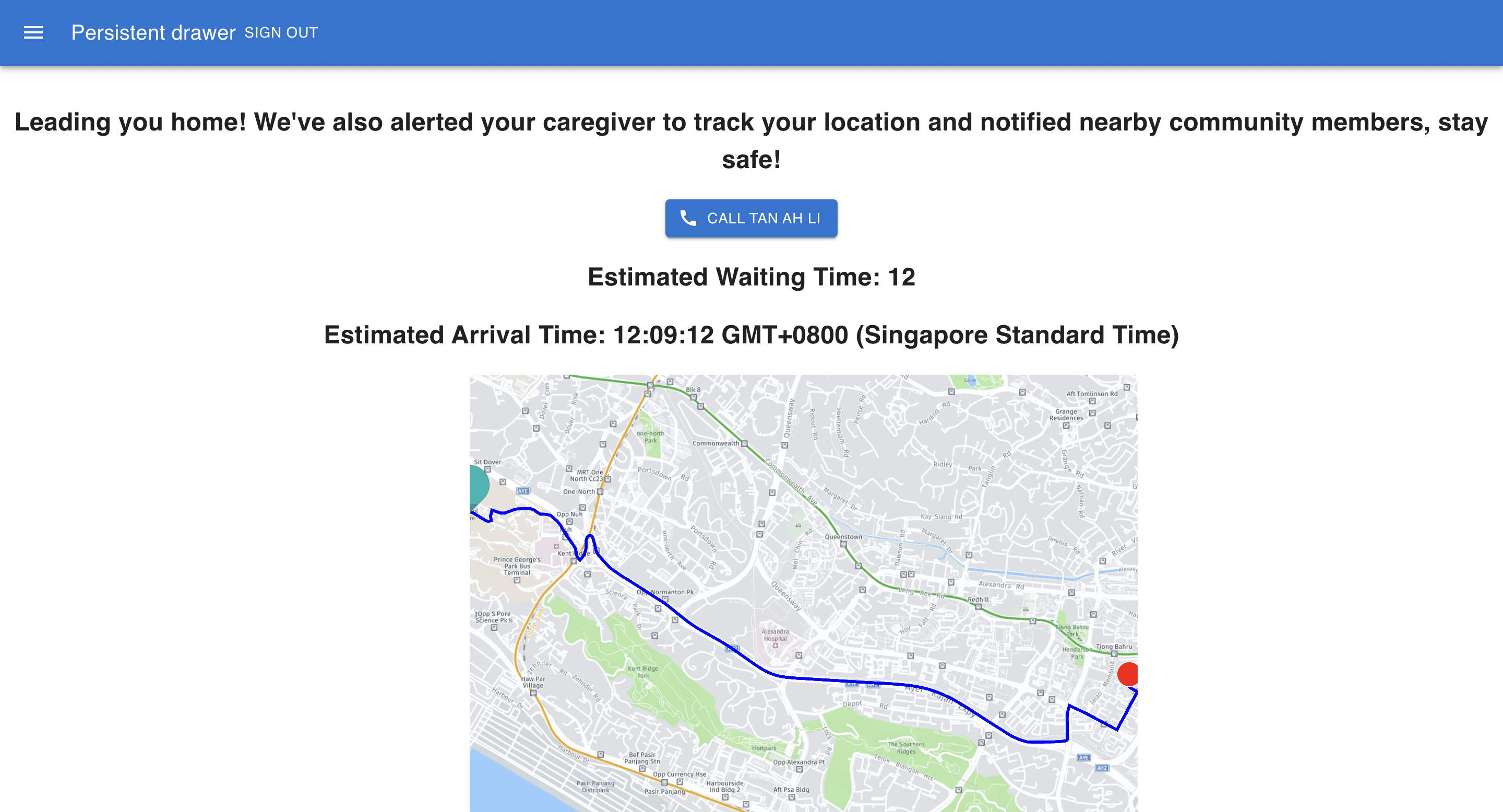
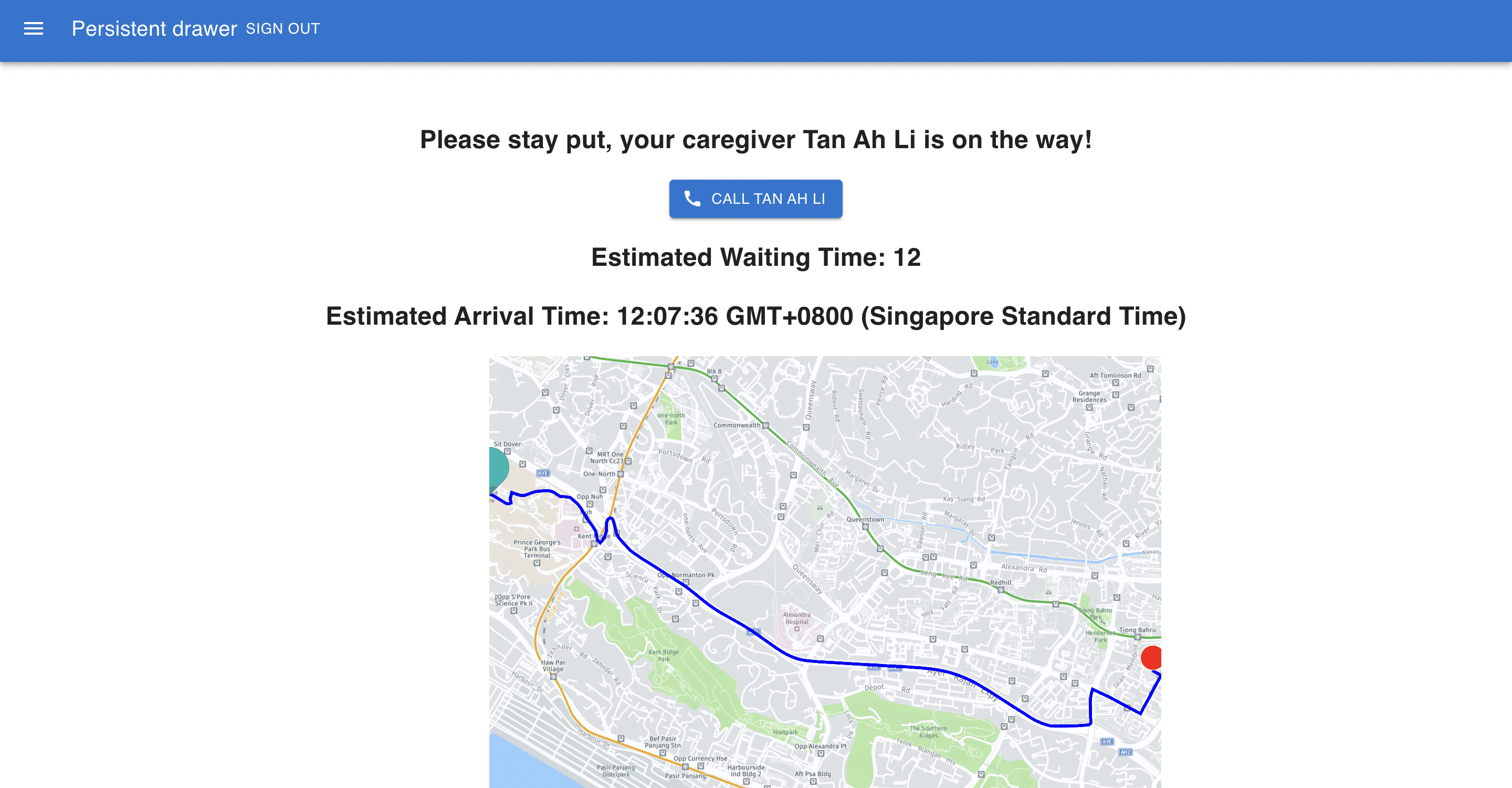
There are four main features in the caregiver account - lost dependent reporting, events, donation and settings. The lost dependent reporting is used in these situations: When the caregiver realises that the PLWD have left their home without informing them and suspects that the PLWD is facing difficulties getting back When the PLWD is unable to find their way home, and remembers to click on the button (in PLWD version of the application) When the PLWD is unable to find their way home, and is unable to make manoeuvres on the application, a passer-by who is well-informed about the technologies used by PLWDs offers a hand and helps the PLWD contact their caregiver. When the lost dependent reporting is activated, the location of the PLWD will be accessed and updated every minute. The caregiver can then rely on the information provided to find the PLWD. In the case of point 3, the passer-by will have the option to walk the PLWD to the meeting point to meet the caregiver, or bring the PLWD to somewhere nearby which is safe, before leaving. Live location sharing will be enabled the moment the “I’m lost” button is clicked (on PLWD’s device) and an alert will be sent to the caregiver’s device. This ensures that caregivers are aware of the PLWD’s needs as soon as possible, and can access the information in the shortest amount of time. This also reduces the number of steps the PLWD needs to make, to get help (in the case of point 2). Buttons like “I’m lost” and “emergency contact” are colored in red, for a more visual guide on what to press, for PLWDs who have trouble reading.
The events tab shows community events that are organised for the elderly and PLWD. We decided not to filter events based on whether or not it is a dementia-only event, as we want PLWDs to be integrated into a larger community.
Caregivers can also donate under the donations tab to support our cause, and the funds will be used to support dementia-friendly infrastructure and development.
Caregivers can edit the information they inputted at registration in the settings section.
The PLWD version of the application will only support one main feature, which is the navigation system for PLWD, to keep the interface simple and easy to use. An alarm in the caregiver’s phone will automatically be triggered when the PLWD seeks help by clicking on the “i’m lost” button, and it will function as per explained above, where the caregiver relies on the location information to find the PLWD. We also decided to make the location tracking feature enabled only when the PLWD is lost in hopes of preserving the dignity of PLWDs by ensuring that they have some privacy while being safe, rather than being put on a tracking device.
How does your hack answer the problem statement? Recognising that there are many marginalised groups in Singapore with distinctly different needs, Team Selffar chose to derive a solution to tackle the problems faced by elderlies living with dementia in Singapore. We chose elderlies living with dementia as our target group because a sizable portion of elderlies in Singapore suffer from dementia, and are often confined within the boundaries of their homes because family members fear that they are unable to find their way home, and are too busy to accompany them. We anticipate that this will become a greater problem in the future, as Singapore faces an ageing population and as infrastructure becomes more complicated. However, we believe that with technology and awareness, elderlies living with dementia can live normal lives alongside the rest of society, and families of the said elderlies can rest assured that the elderlies will safely reach home.
How did you built your hack? Tech Stack:
- Google Cloud Platform
- MongoDB 3. React
- Python
- Firebase
What are some difficulties you overcame? We struggled with producing the application within the time limit, as there were many features that we wanted to include in our application, but had to be dropped in the end. However, we were glad that instead of having many small features, we focused on the map function, which is a core and essential part of our application. We believe that this was a good decision call as the other smaller side functions complement the map function. For example, the person living with dementia must first be comfortable with leaving the house for daily errands before their family can rest assured to send the person living with dementia to community events. Thus, making the ‘lost dependent’ feature the first of many steps to reintegrating persons living with dementia back into society.
We also faced some difficulty with the way the features were presented within the application. We initially chose to use cards to present the various functionalities in the caretaker portion of the application. However, we changed it to a drop down menu because we felt that it will support easier navigation on a web application. We then faced a dilemma because we felt that the user interface would be smoother if the functions were presented in a ribbon.
There were many additional functions that we would like to include in our current version of DementiaCare, but were unfortunately unable to do so due to time constraints. Thus, if given a chance to deploy DementiaCare in full-scale, there are some modifications we would like to make.
We will implement a mobile application version of DementiaCare as well, as we believe that it will be more efficient in sending notifications and getting location data. The current web application version of DementiaCare can also run in the background, but is more susceptible to users accidentally closing the tab, which may make it difficult for the application to retrieve the location data of the PLWD.
In addition, we will also run dementia awareness campaigns to raise the public’s awareness about DementiaCare, so that they know what to do when they notice a PLWD in public who may require assistance. We will also promote our services to social service organisations in Singapore that work with PLWD, like Dementia Singapore.
Lastly, we intend to further ensure the safety of PLWDs by mapping out dangerous areas on the map (e.g. roads, construction sites), and raise an alarm on the PLWDs’ phone when they wander too close to the areas. Also, when PLWDs are accompanied by passer-by helpers who bring them to the meeting location, checks will be done in 1 minute intervals, to check if the helpers are leading PLWDs away from the meeting location. If the helper does not lead the PLWD in the correct direction after a fixed period of time, the caregiver will be notified once more, with the option to contact the relevant authorities. We believe that such features can be implemented by sending live location streaming data to big data streaming platforms like azure event hub, as they can support continuous flows of location data sent. From the event hub, the data can then be sent to an event processing engine like azure stream analytics, that can flag out problematic data using pre-defined query functions.
What was your biggest learning point from LifeHack 2022? Despite having dabbled into web development previously, we had to learn a lot more web development technologies. We are thankful to have the opportunity to work on this project, and are proud of what we have produced in the past 24 hours. We believe that this application has the potential to make a real impact in the dementia community in Singapore and we will continue to work on DementiaCare in the future to make it a reality for persons living with dementia in Singapore.


Log in or sign up for Devpost to join the conversation.