-
-
-
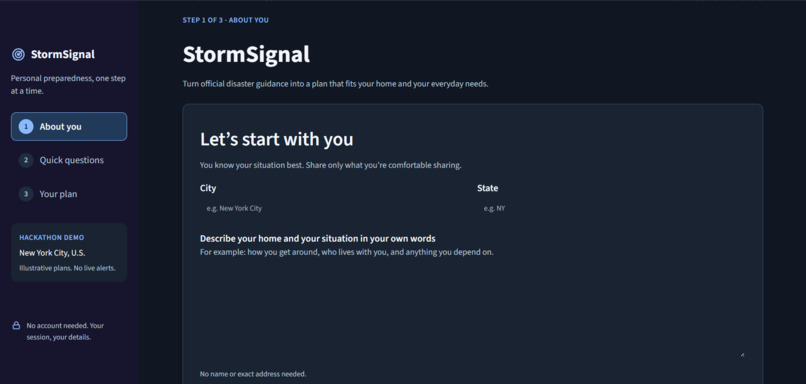
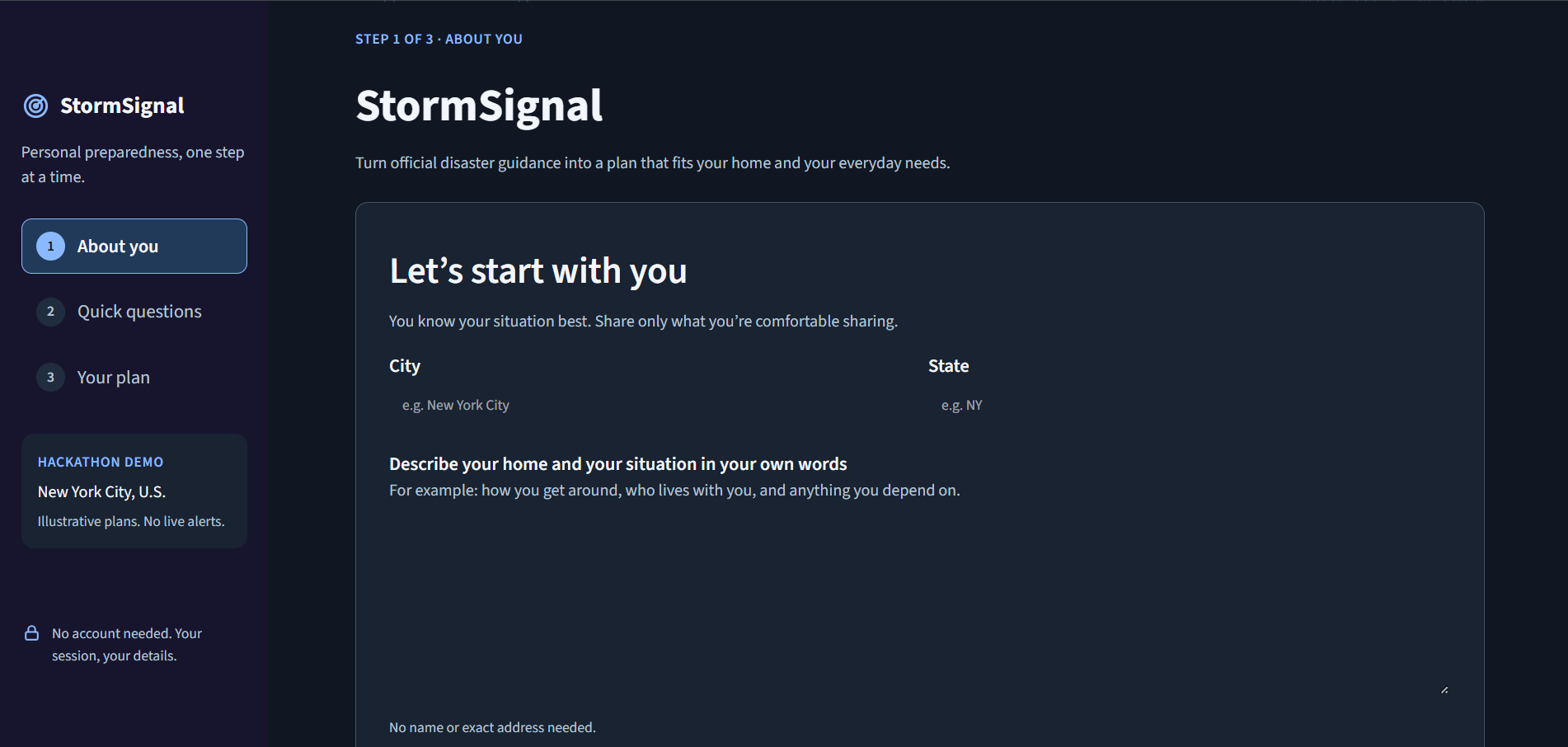
Interface face of the website
-
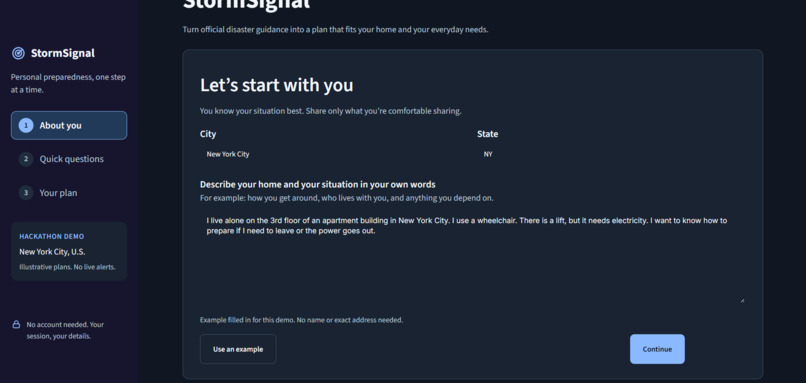
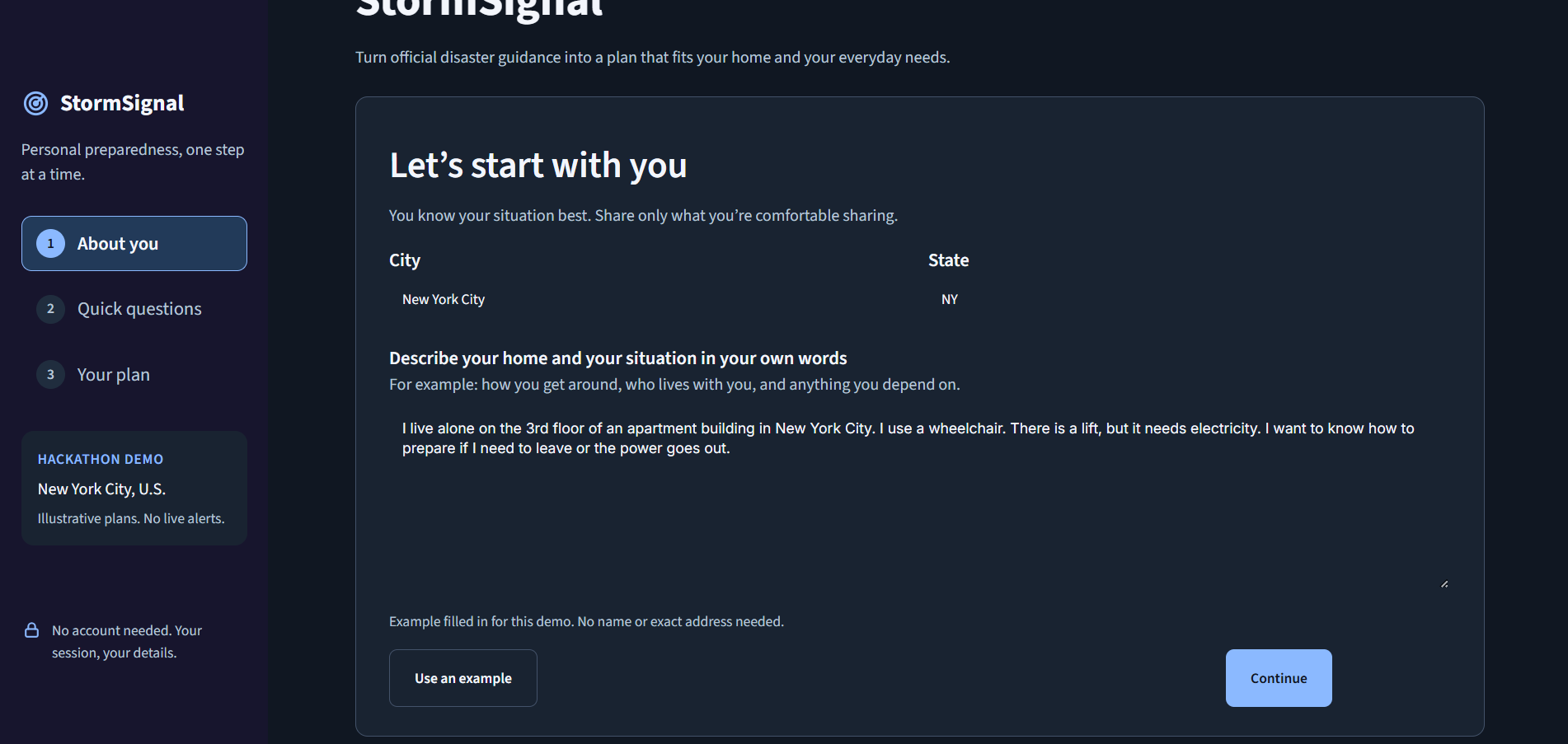
Step 01 : Type the required data then click continue
-
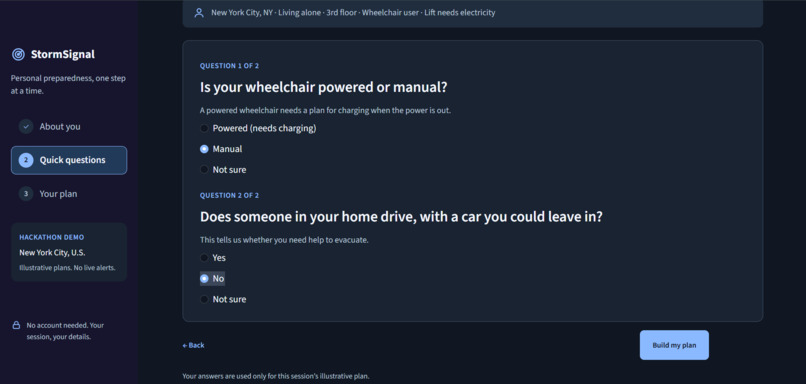
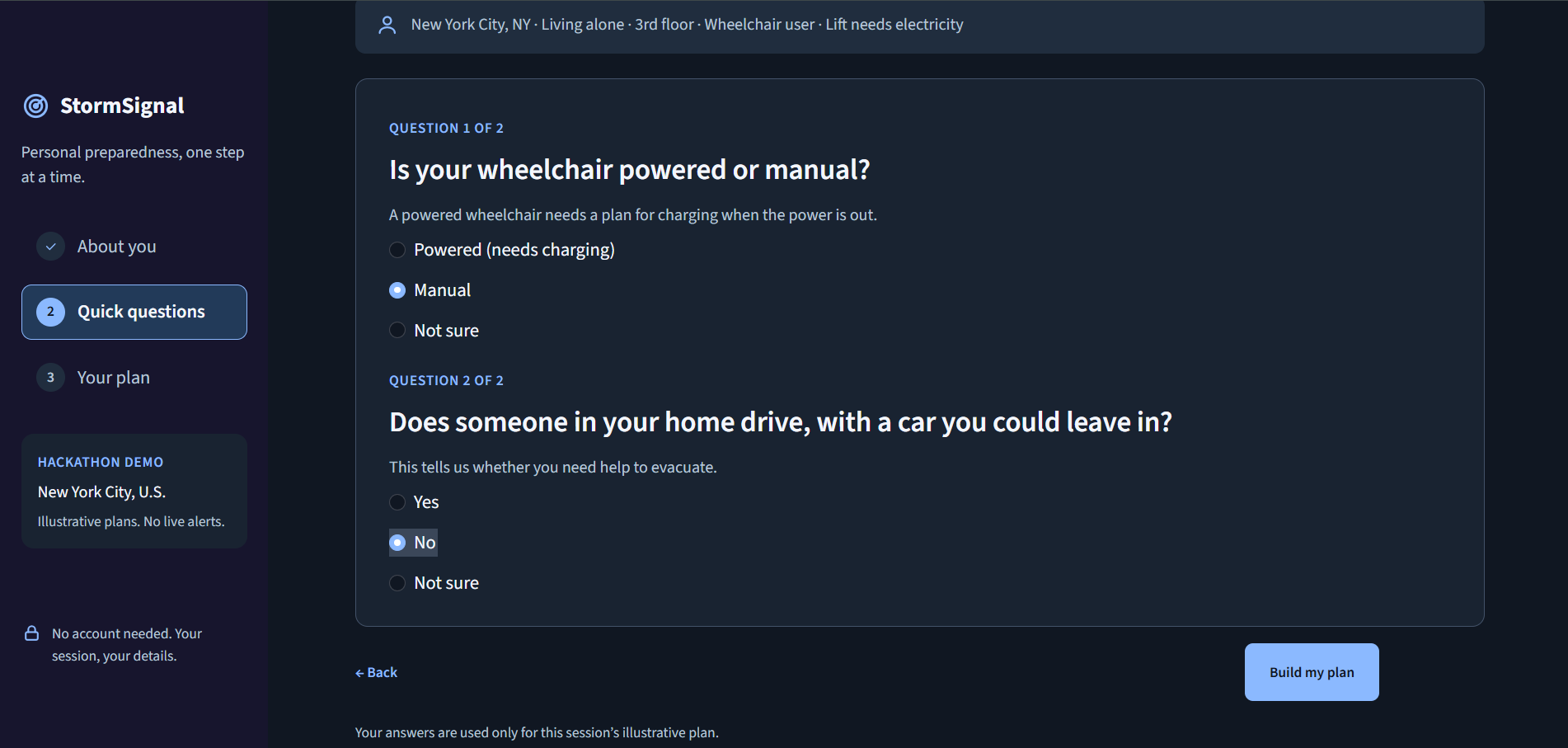
Step 02: Then fill the following options and then click build the plan
-
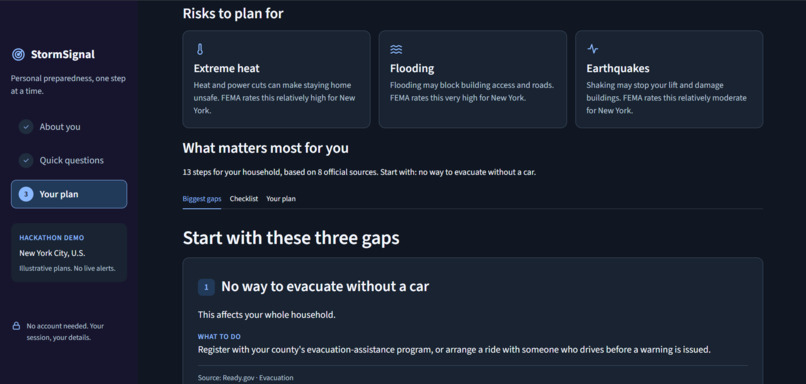
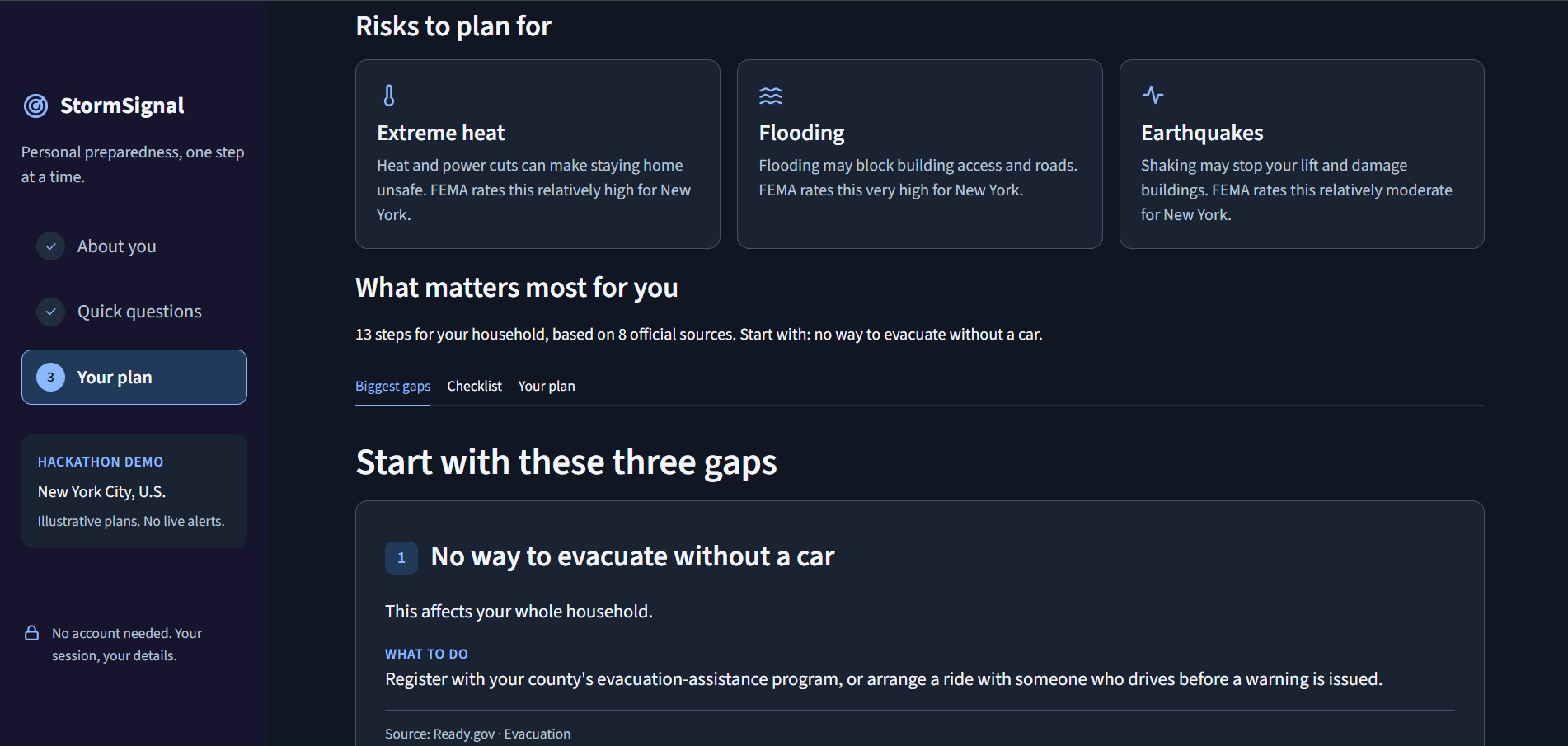
Step 03 : Then Stromsignal build a plan in three steps in step one it finds the biggest gaps
-
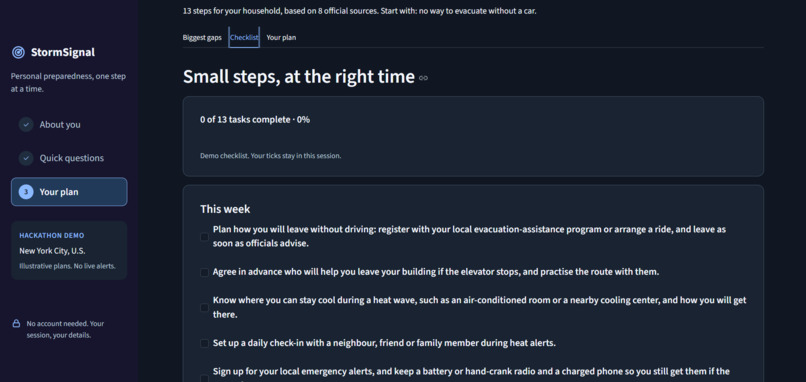
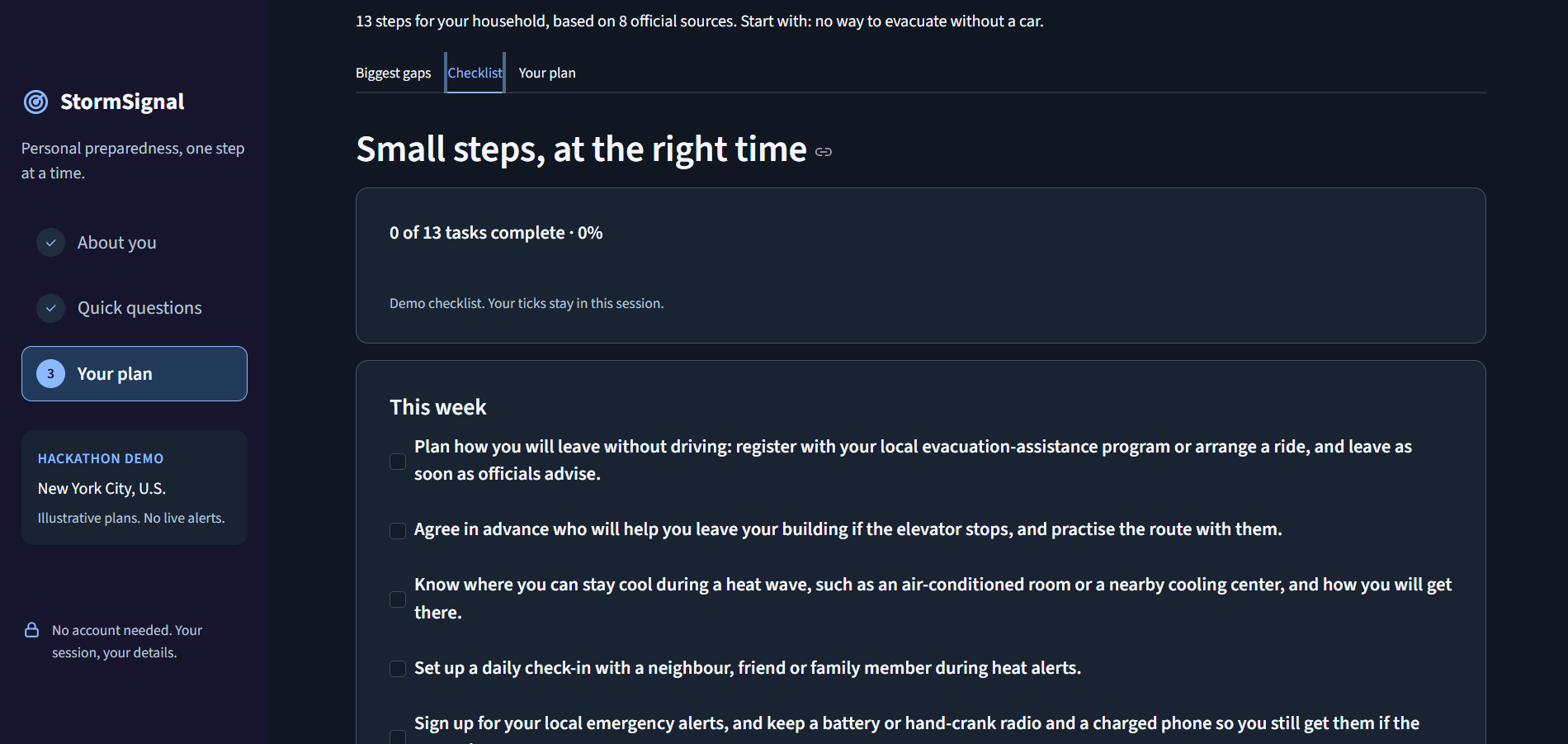
Check list : Small steps to complete (steps to stepping away risks)
-
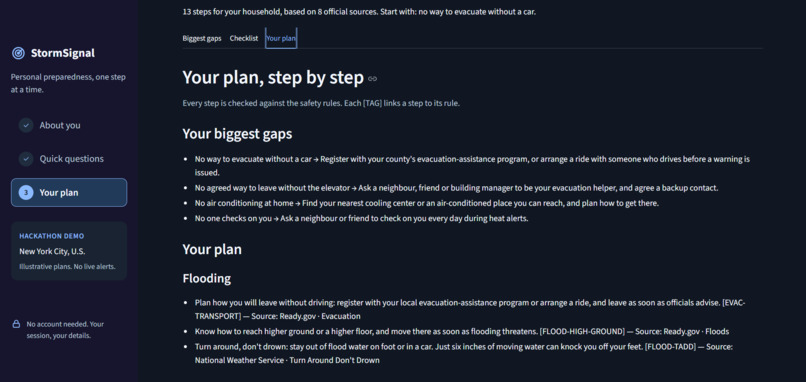
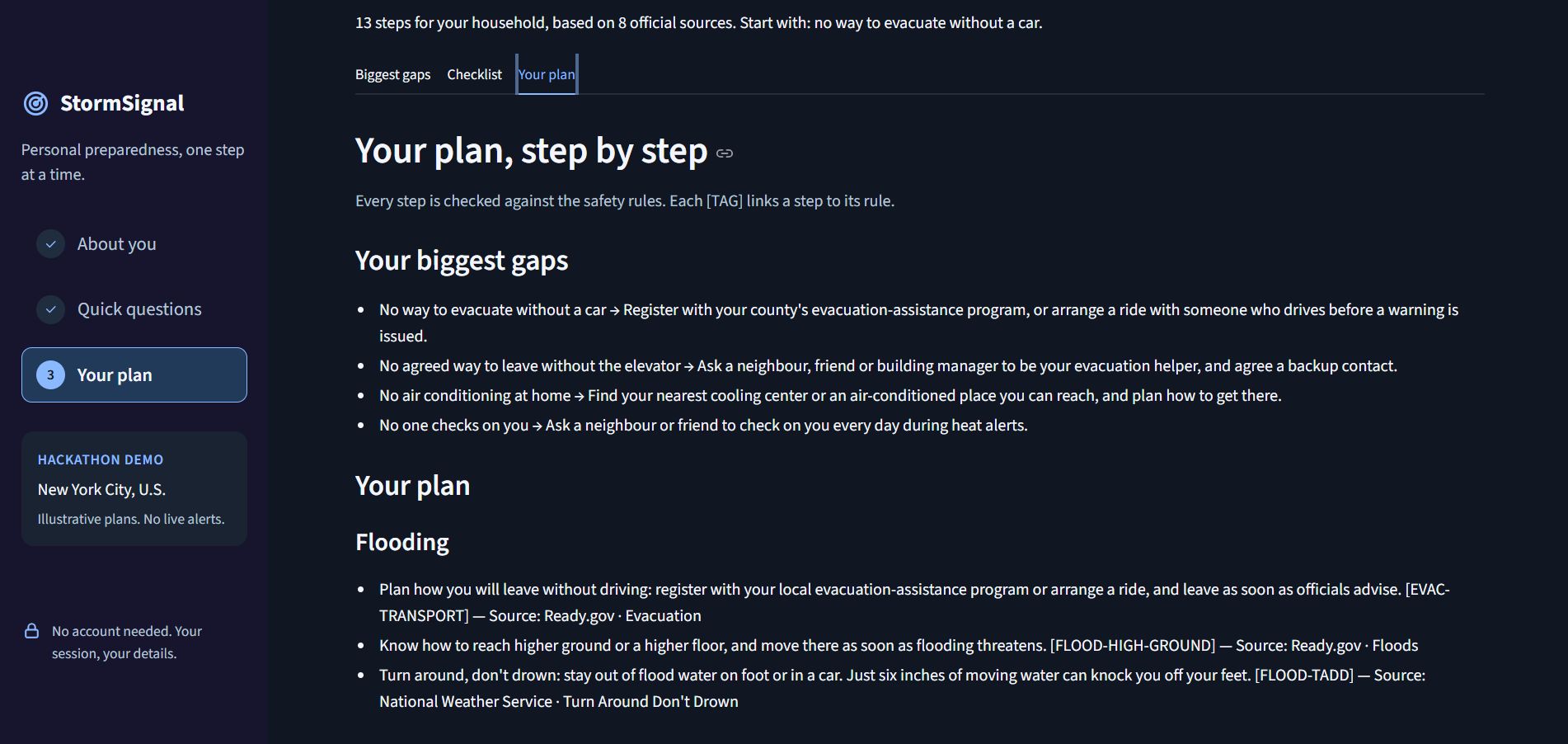
Stromsignal build an complete plan
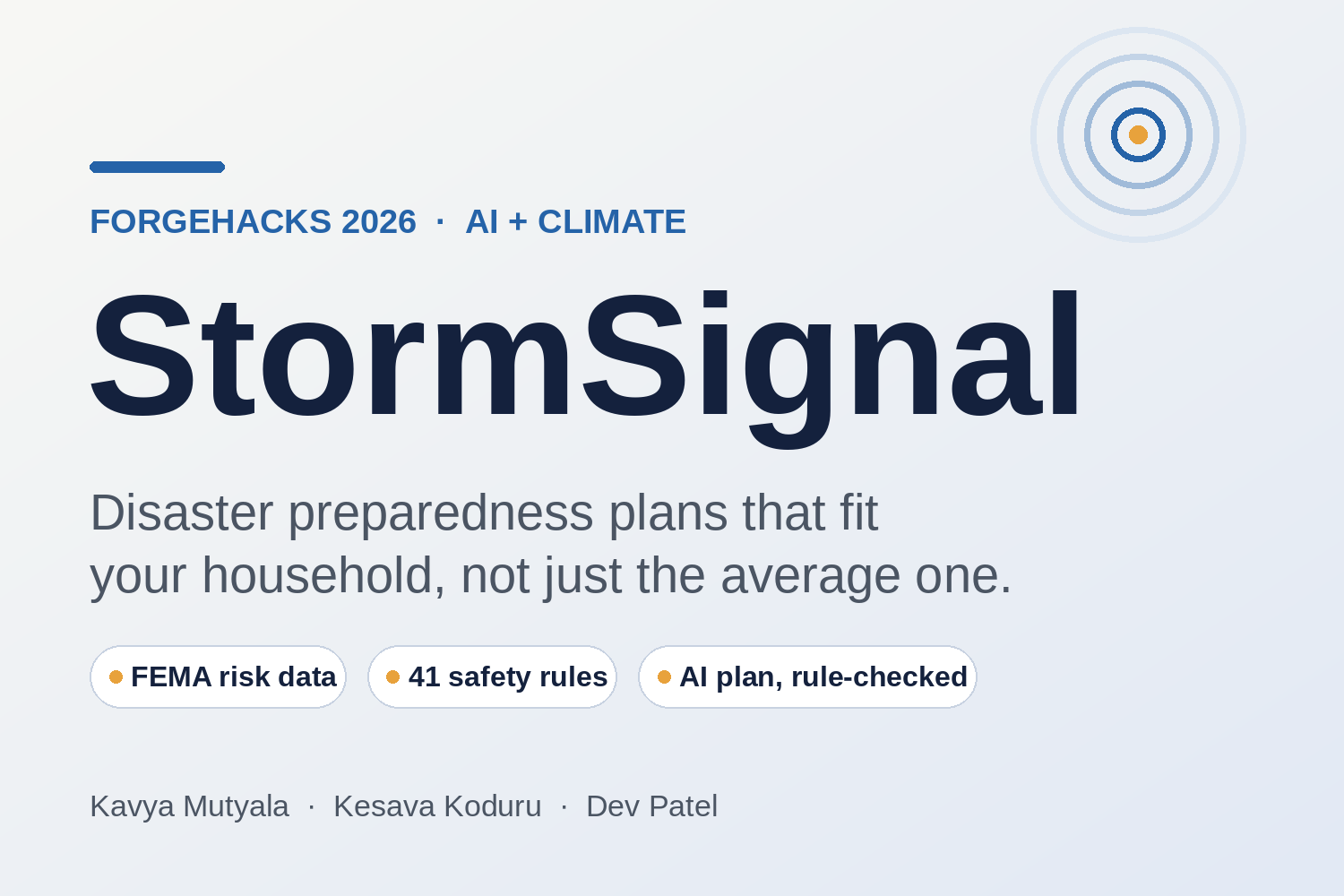
Inspiration
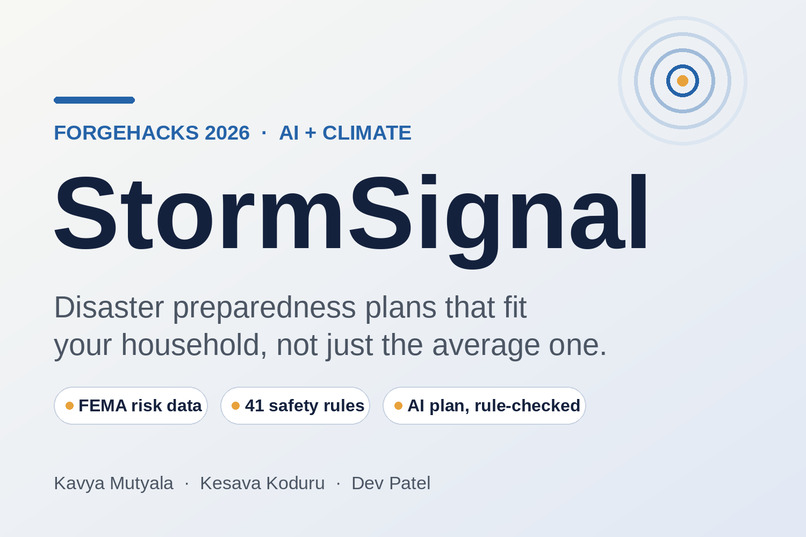
Disaster advice is written for an average household: go to the basement, drive out, keep a 72-hour kit. That fails people who use a wheelchair on an upper floor, have no car, or depend on powered medical equipment. These are often the people most at risk, and climate change is making extreme weather more frequent and more severe. We wanted preparedness that starts from the household instead of the average.
What it does
StormSignal turns a US location and a plain-language description of who lives at home into a personalized, cited preparedness plan.
- Shows the county's top disaster risks from FEMA's National Risk Index
- Asks only two follow-up questions that actually change the plan
- Produces ranked biggest gaps, a checklist, and a step-by-step plan
- Every step says who it's for (e.g. "for grandpa"), cites Ready.gov or National Weather Service guidance, and carries a tag for the safety rule behind it
How we built it
Five modules pass data through a pipeline:
- Risk lookup (code): FEMA risk data for 3,232 US counties
- Intake (AI): turns the household description into a profile using the CMIST framework (Communication, Maintaining health, Independence, Support and safety, Transportation)
- Safety rules (code): 41 rules across 5 hazards decide must-do steps, never-do advice and gaps
- Plan writer (AI): writes the plan in plain language, tagging every step
- Verifier (code): checks every required step is present and nothing forbidden appears
A failing plan gets one rewrite. If it still fails, the user sees the plain rules checklist instead. The AI never decides what's safe.
Built with Python, Streamlit, Groq (gpt-oss-120b), Pydantic and pytest. Frontend, verifier and testing: Kavya. AI intake and plan writer: Kesava. Backend and integration: Dev.
Challenges we ran into
- Making sure AI-written advice can never contradict safety guidance, which led to the rules-plus-verifier design
- Turning free-text descriptions into structured needs without dropping unusual ones (needs that fit no category are kept)
- Coordinating six modules across three time zones and agreeing on the data each module passes along
Accomplishments that we're proud of
A working end-to-end app with 164 automated tests that run without an API key, 41 safety rules, 23 need tags in 5 CMIST groups, and FEMA risk data for all 3,232 US counties.
What we learned
Constraining AI with tested rules and a verifier is more reliable than just prompting it to be safe. Personalization matters most for the people standard advice leaves out.
What's next for StormSignal
- Live National Weather Service alerts so the plan reacts when a warning is issued
- Rules for tornadoes and winter storms
- Canada and other countries with open risk data
- Voice input and more languages
- Printable plans for the fridge and for caregivers
- Reviewing the rules with disability and older-adult groups and local emergency managers
Limits: US counties only. StormSignal is a planning aid, not an emergency service. Always follow official instructions and local emergency officials.
Built With
- fema-national-risk-index
- gpt-oss-120b
- groq
- national-weather-service-ndfd
- pydantic
- pytest
- python
- ready.gov
- streamlit

Log in or sign up for Devpost to join the conversation.