-
-
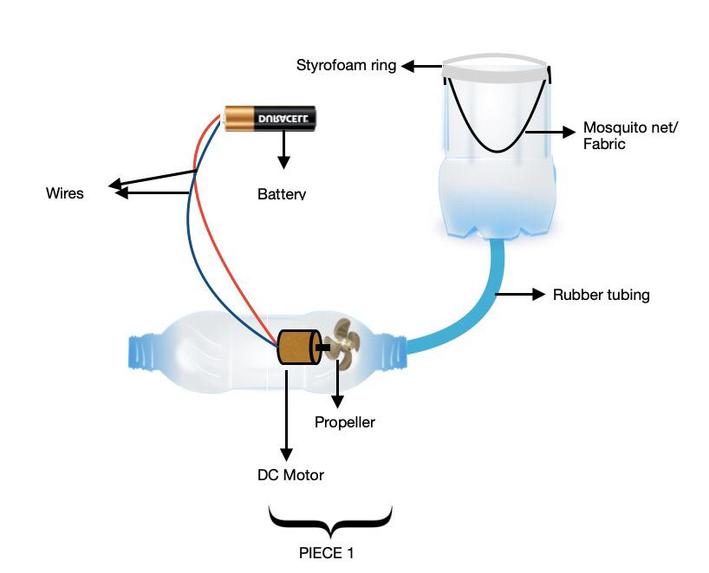
Here's our prototype!
Inspiration
SDG 6 : Clean water and sanitation
SDG 12: Responsible Consumption and Production
SDG 14: Life below Water
In 2015, the Australian Company Seabin Pty Ltd, known by the name of The Seabin Project, announced the initial placing on the market of Seabins - innovative, ecological collectors of floating plastic waste, which are intended for harbour areas and private marinas.
Inspired from the same innovation, our prototype will allow you to replicate a similar design and test it on contaminated small water bodies near your school district or in a simulated polluted water body in your classroom.
What it does
The Seabin, fixed on a pontoon, is submerged and connected to an electric pump which creates a continuous current to attract floating waste to the collector. Water is sucked in from the surface and passes through a catch bag inside the Seabin. The water is then pumped back into the marina leaving litter and debris trapped in the catch bag, collecting floating debris (including macro and micro plastics, micro fibres and organic wastes example leaves, seaweeds, etc.)
How I built it
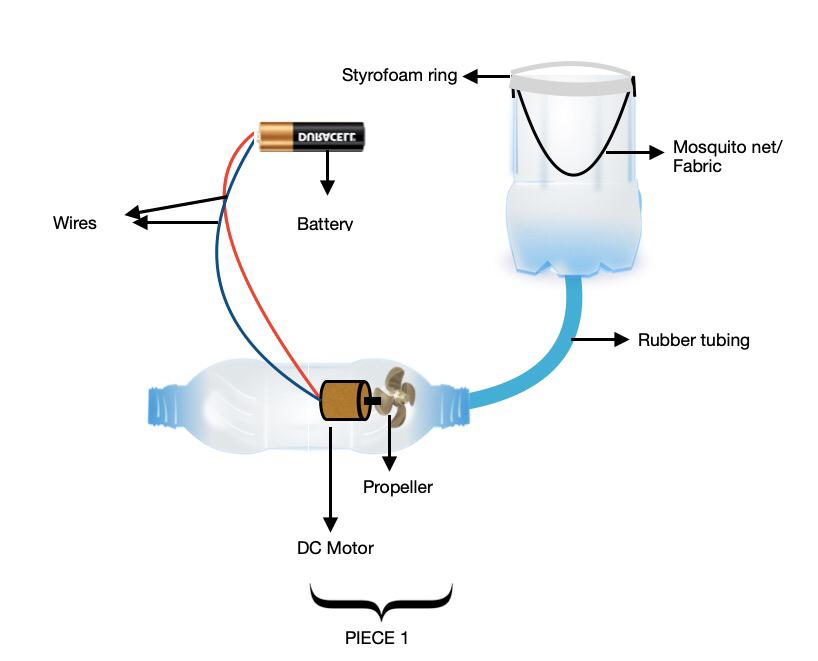
We used plastic bottles to create a small reservoir bin and used mosquito nets/fabric to act as our filter. Moreover, we used motor and propeller to create a water pump. The pump draws the filtered water through the base of the bin along a rubber tubing that connects the two components. For buoyancy, we used a styrofoam ring. We have attached an image of our prototype for reference.
Challenges I ran into
One of the challenges included creating enough suction to suck the plastic in and also to make our prototype continuously float instead of toppling over. After a couple of test prototypes, we were successful.
Accomplishments that I'm proud of
We are very proud of being able to replicate a smaller version of the Seabin in low cost because the original design uses advanced technology and our goal was to be able to demonstrate it for our students.
What I learned
We learnt greatly about the Philippines single use plastic problem and the methods being implemented to solve the problem, along with their feasibility and drawbacks.
What's next for Team EcoCrew
We will be thinking about how our design can be adapted to clean the ocean from oil/heavy metals etc, and how this technology can be replicated in a low cost at a large scale for developing countries.
Built With
- dc
- motor
- plastic
- styrofoam


Log in or sign up for Devpost to join the conversation.