-
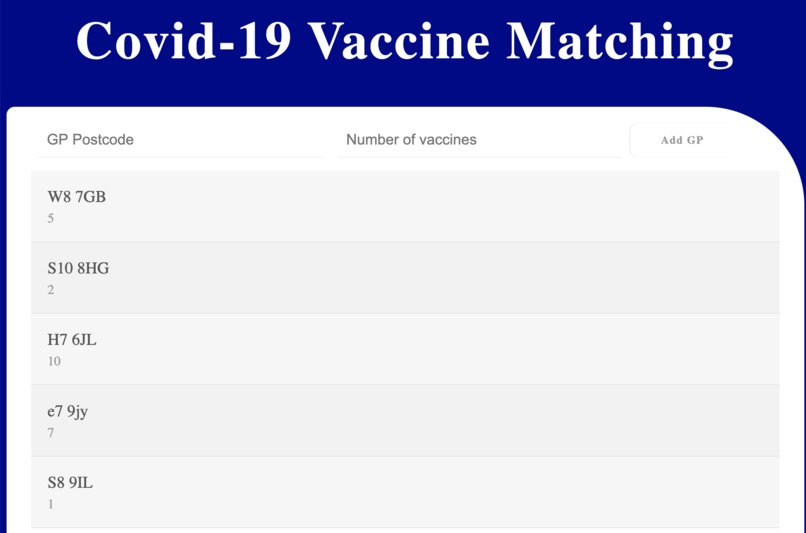
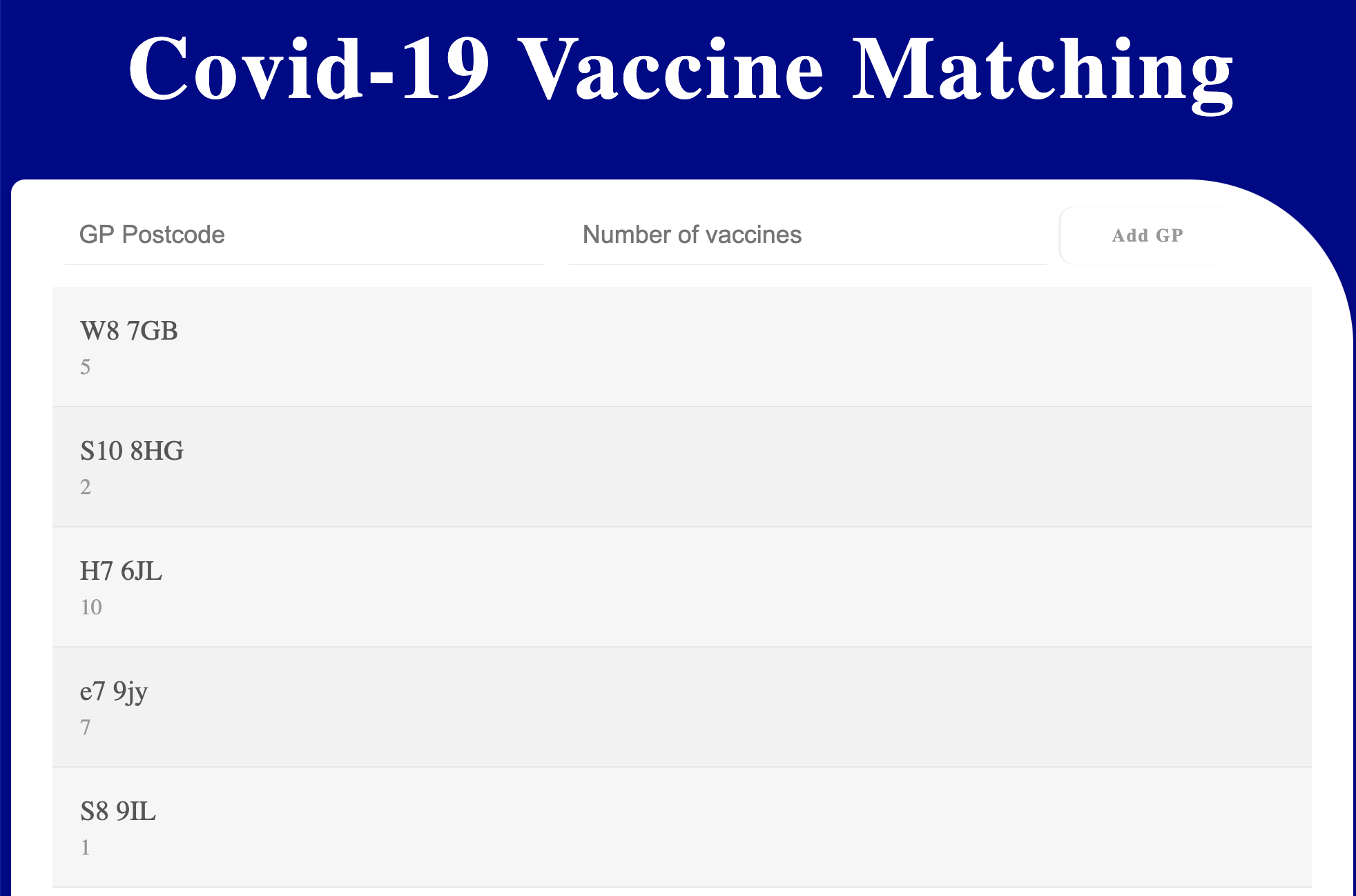
Simple Website made with html, css and javascript
-
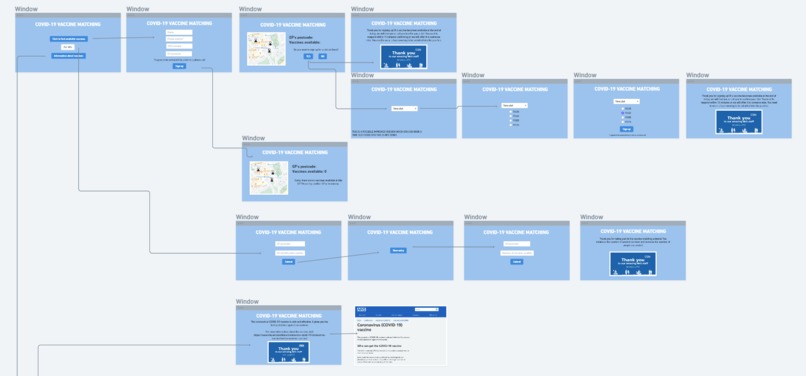
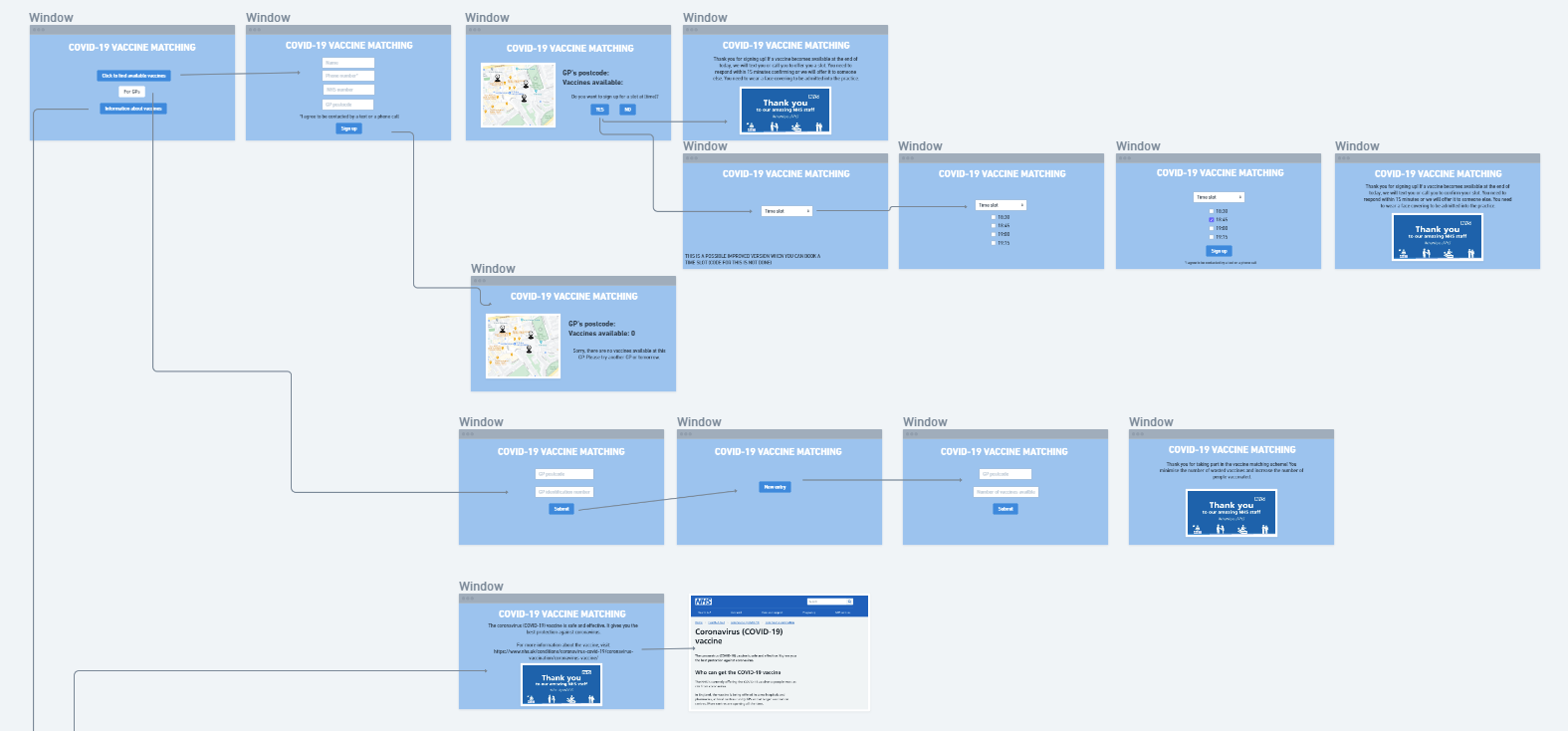
Website Interface Design
-
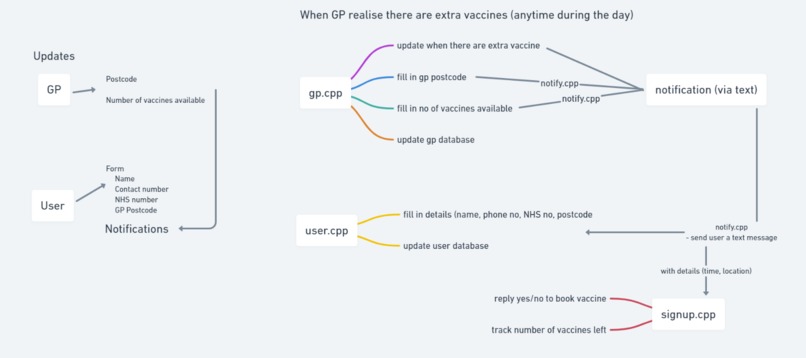
Skeleton of our interface
-
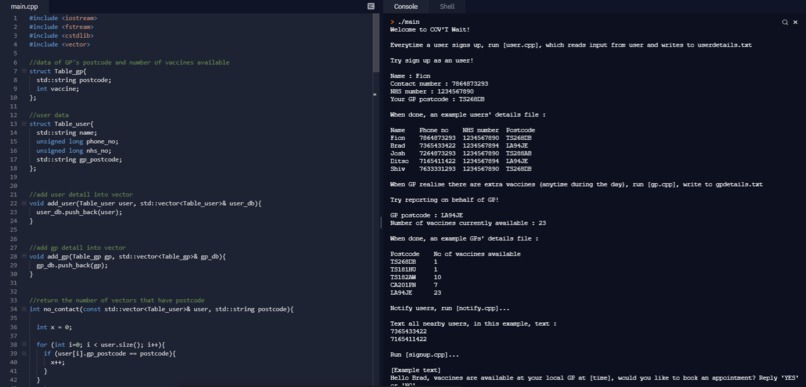
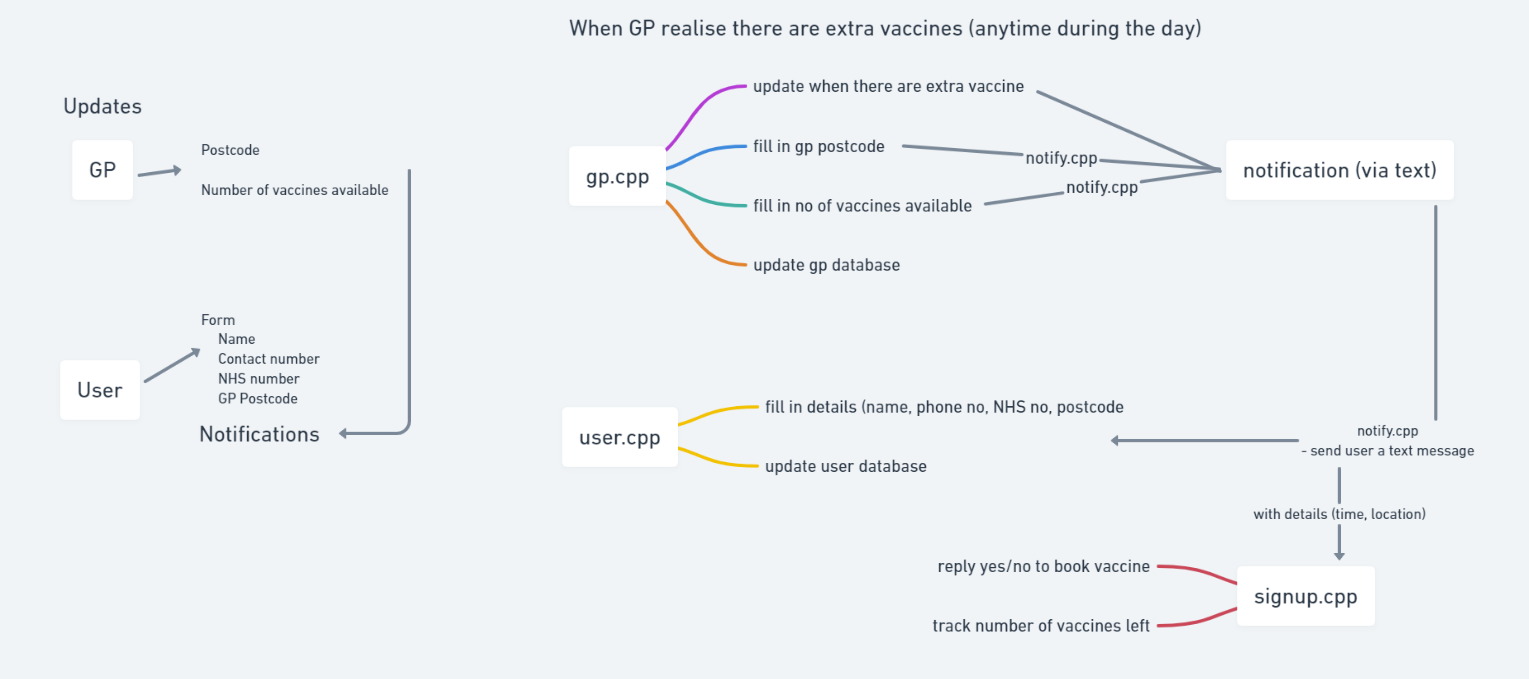
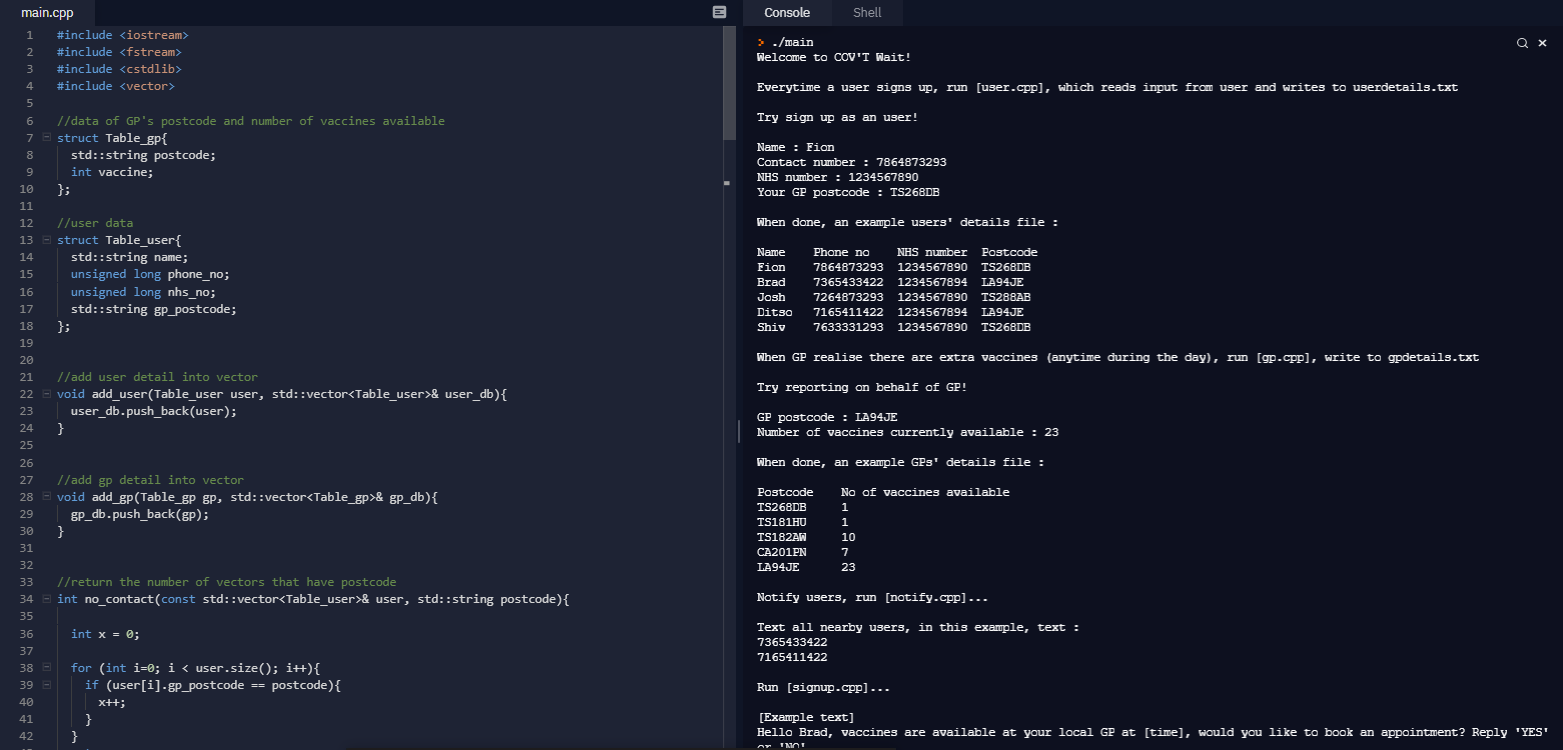
Model made with cpp
Inspiration
We started the day with brainstorming potential ideas. Our aim was to identify a problem that we could solve through design and innovation. Our very limited coding experience did not deter our enthusiasm one bit and we quickly began researching.
Soon, we had identified our problem. Vaccines with a short shelf-life are discarded at the end of the day, if patients do not attend their vaccinations. Some GP surgeries would advertise these spare vaccines, but would be inundated with the number of people that arrive to be vaccinated, only to be turned away. This has discouraged GP surgeries from using this approach, and vaccines are wasted.
What it does
Our solution is a website that allows GP surgeries to advertise the number of spare vaccines near the end of the day. Individuals can sign up for slots so that not too many people arrive at the GP surgery expecting vaccines.
The solution not only prevents needless and expensive vaccine waste, but it provides a way for patient groups not being prioritised by the government to access vaccines, such as young, healthy university students, teachers and police officers. Furthermore, this enables patients to receive a second dose earlier than 3 months and closer to the Pfizer-recommended 3 weeks. This solution becomes even more important in countries that are at the beginning of their vaccine program and/or do not have the facilities to store vaccines for longer.
How we built it and challenges we ran into
We quickly set out to turn the ambitious idea into reality, however there were some challenges. We were unsure where to start, and what to prioritise in building. Therefore, we attended the workshops for inspiration on how to work together effectively, and settled on using Github for collaboration and Whimsical for the interface design. Given our aim to explore and experiment with as many different languages and avenues as possible, we have arrived at a multi-part product. Making a website was a challenge for us as no one had prior experience in web development, but we utilised online resources to create a basic website. Our solution includes a user interface design, a website designed with HTML, CSS and Javascript which links to a database on Firebase, and a model of the interaction in C++. We also learned how to work in a team, utilising our individual strengths to contribute to the project.
Accomplishments that we're proud of and what we learned
We are really proud of how we were able to learn different languages in a short space of time, with enough knowledge to create a tangible solution. We worked together well in a team and were able to support each other with our ideas. We identified a real problem and made a creative solution.
What's next for Team D
We would love to develop the HTML skills to create a full website and fully implement the idea, perhaps in collaboration with partners within the NHS! This idea could also be potentially implemented in a mobile application.


Log in or sign up for Devpost to join the conversation.