-
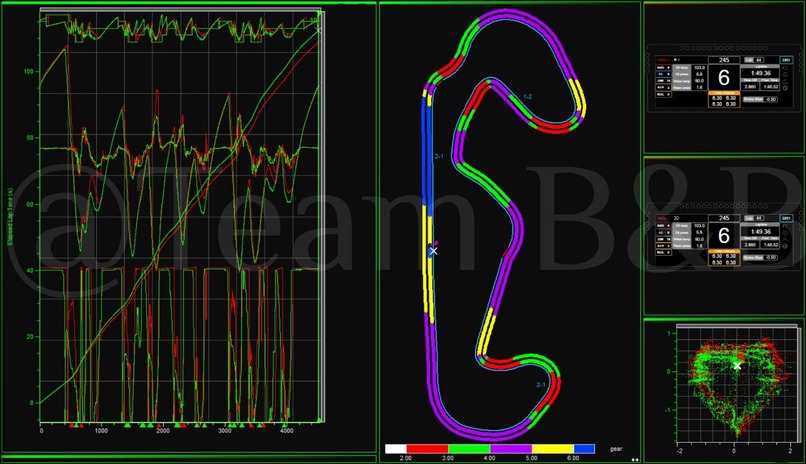
Race engineering work that lead to inspiration of the idea for this project
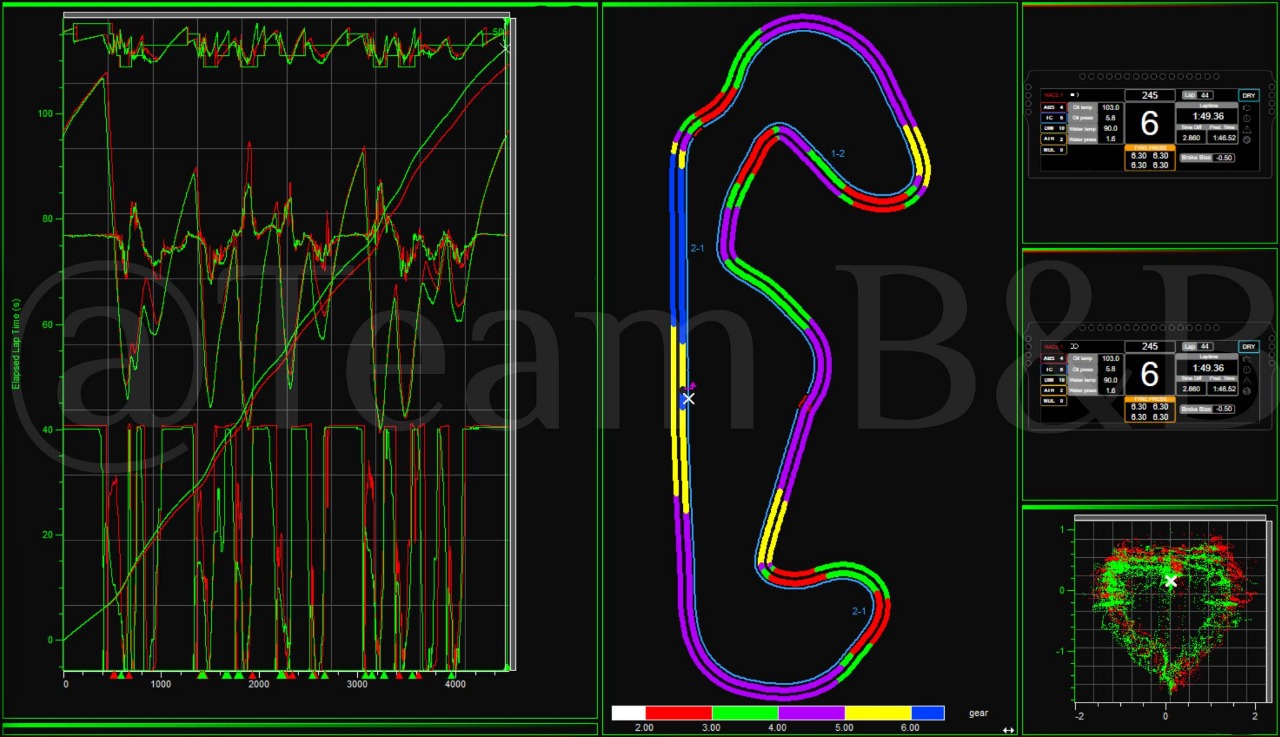
We’re three students — a CAD engineer, a vehicle dynamics engineer, and a race engineer — who spend most of our time arguing about setups, tire wear, and whether high downforce is actually worth it when you’re stuck behind someone on a straight.
This project was a result of those nights spent arguing late into the night. We said, "Why not just simulate it?" Not with millions of CFD cells or telemetry data, but with a reduced model that nevertheless describes the behavior of racing — risk, confidence, and trade-offs.
We developed a probabilistic race simulator in Python that characterizes every car by its setup and driving style. Cornering capacity, drag, and tire degradation all contribute to sector-based time calculations. When two cars are close enough, the model measures their instantaneous advantage and determines whether or not an overtake occurs. If it holds, the trailing car gains an advantage. If it does not, it loses time — just like in the real world.
The most difficult aspect was making the overtakes seem realistic without making the math too complicated. When we saw various configurations fighting it out — one excelling on corners but falling behind on straights — it really did feel like observing strategy in action.
What we've constructed isn't flawless, but it's a beginning. We'd love to develop this into something much more refined system — one based on actual physics and more robust data, simulating exponentially more factors and producing exponentially deeper understanding.
One day, it could aid engineers in forecasting not only lap time, but the beat of a race itself.
