-
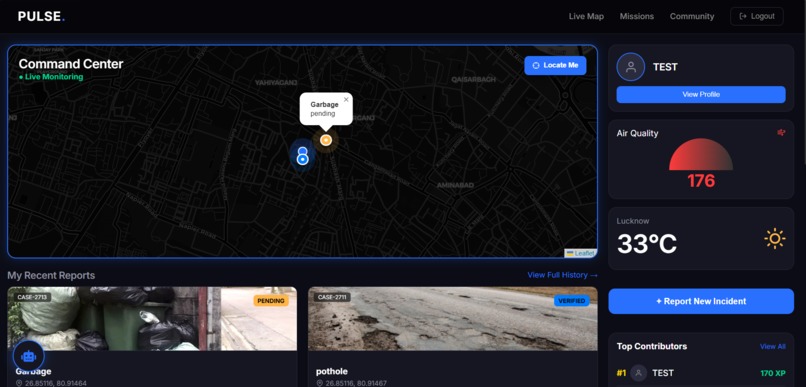
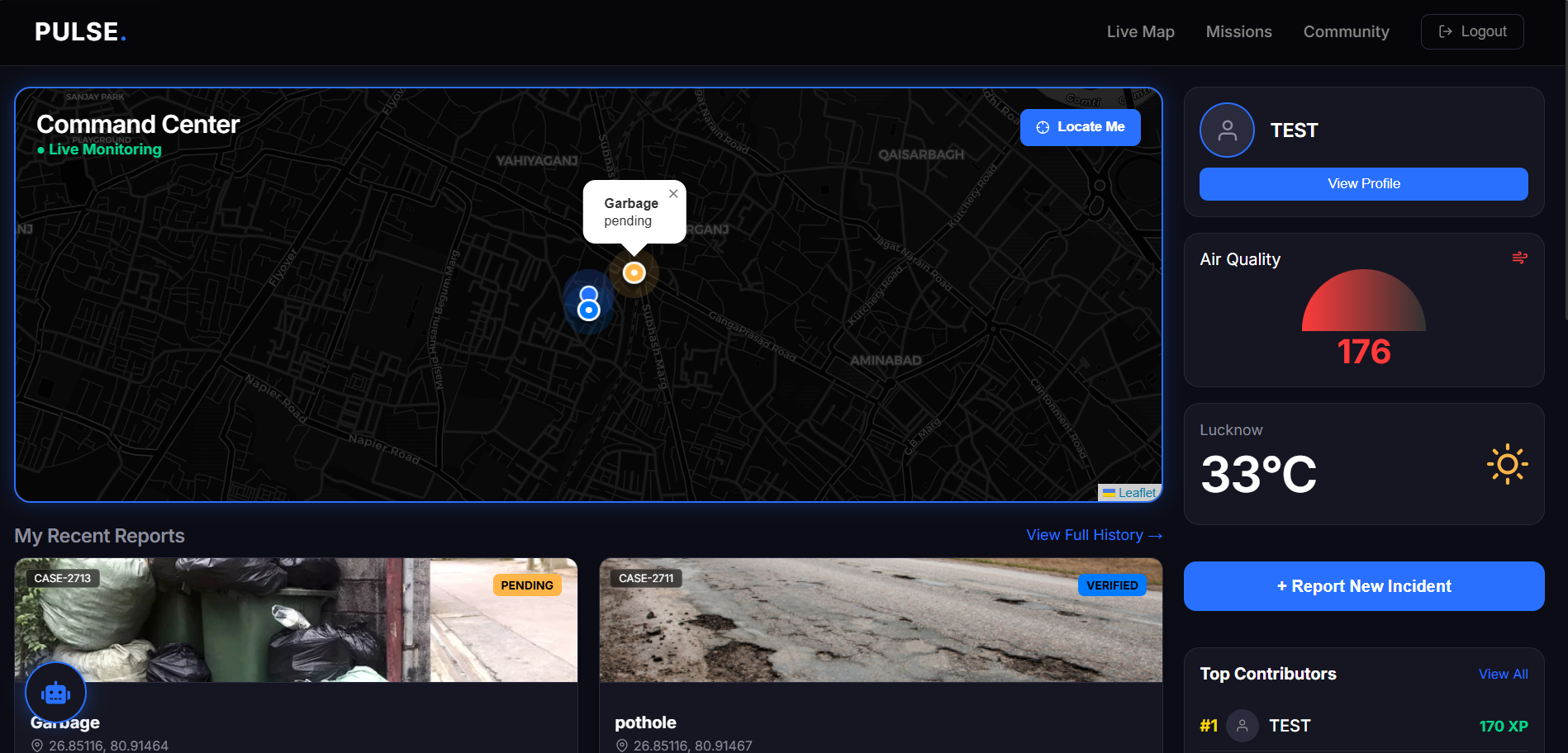
This image shows the home page of our application which has really eye catching features
-
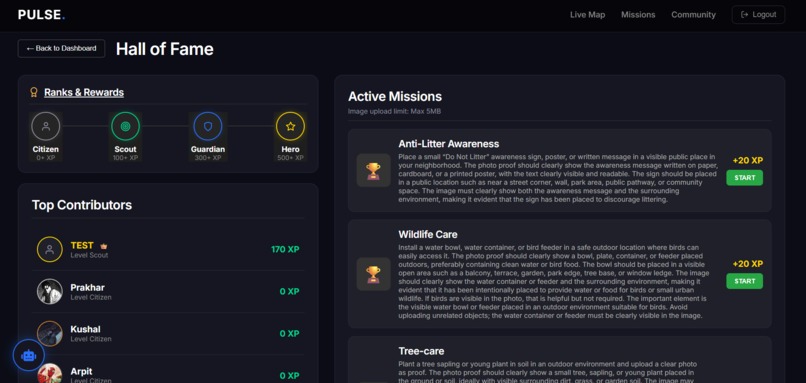
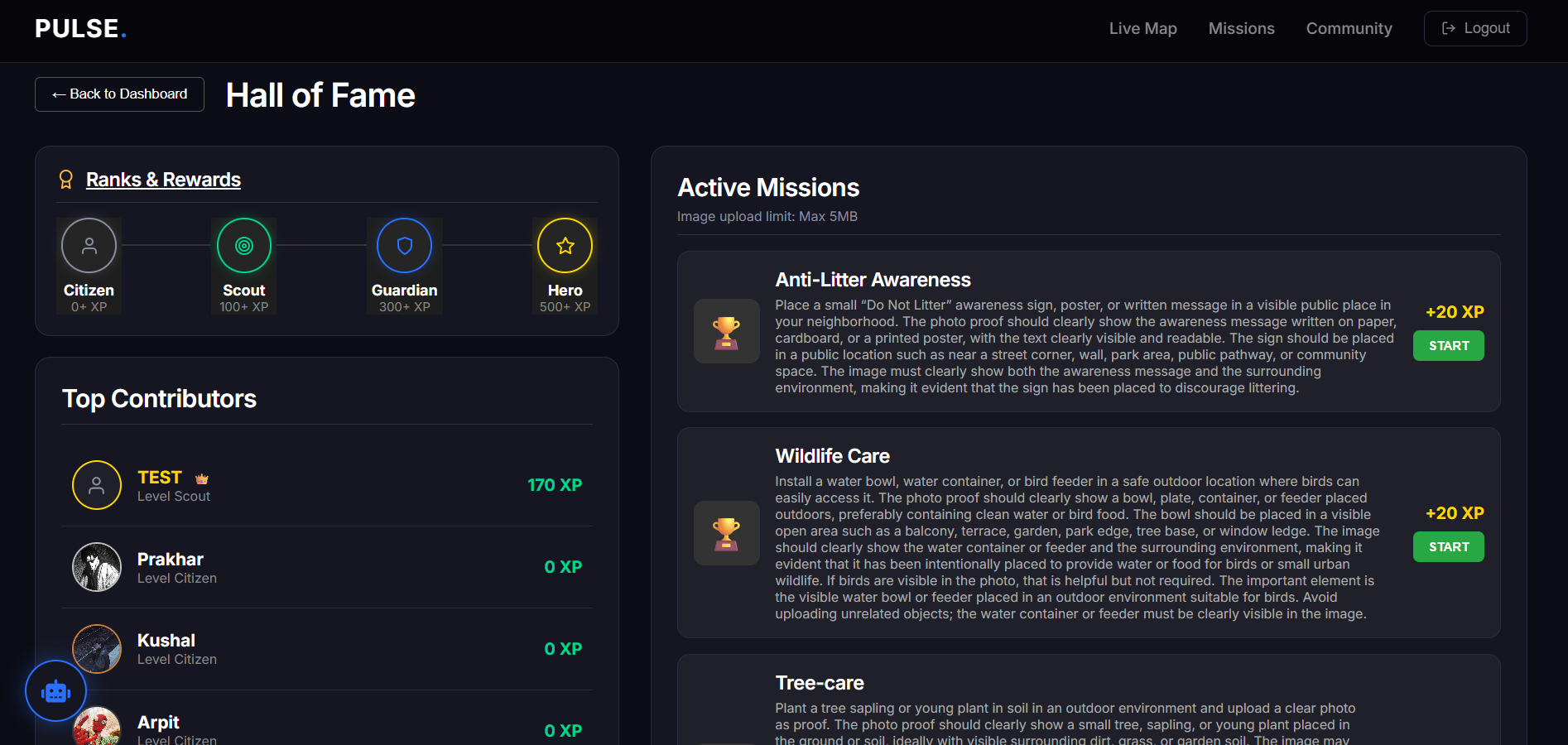
Yet another interesting feature called gamification in our application.
-
-
About PULSE
🚀 Inspiration
The idea behind PULSE came from a simple observation: people see problems around them every day—broken roads, garbage, waterlogging—but most choose to ignore them. Not because they don’t care, but because reporting issues is often tedious, time-consuming, and rarely leads to visible action.
At the same time, authorities lack structured, real-time data about what’s happening across the city. There is no unified system that collects, verifies, and organizes civic issues efficiently.
PULSE was built to bridge this gap—by making civic participation simple, engaging, and meaningful.
🛠️ How We Built It
PULSE is a full-stack web application designed around a structured civic workflow:
- Frontend: React.js for a smooth and responsive user interface
- Backend: Django with REST APIs for handling reports and logic
- Database: PostgreSQL for storing structured report data
- Image Storage: Cloudinary for managing uploaded images
- Maps Integration: Leaflet for geospatial visualization
- AI Integration: Gemini API for image validation and structured analysis
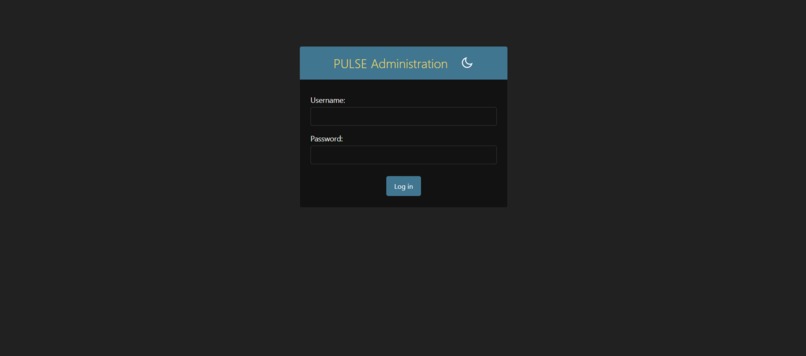
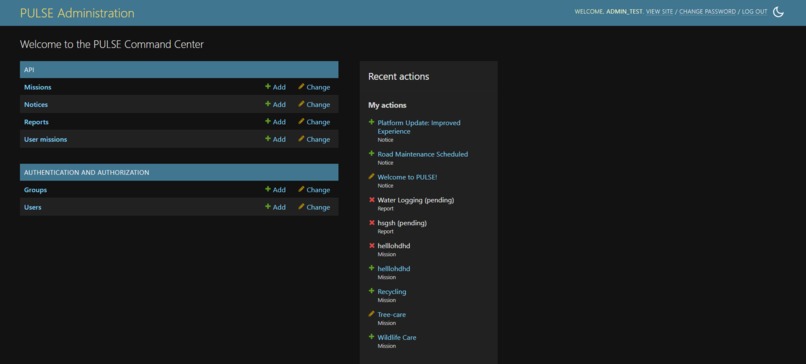
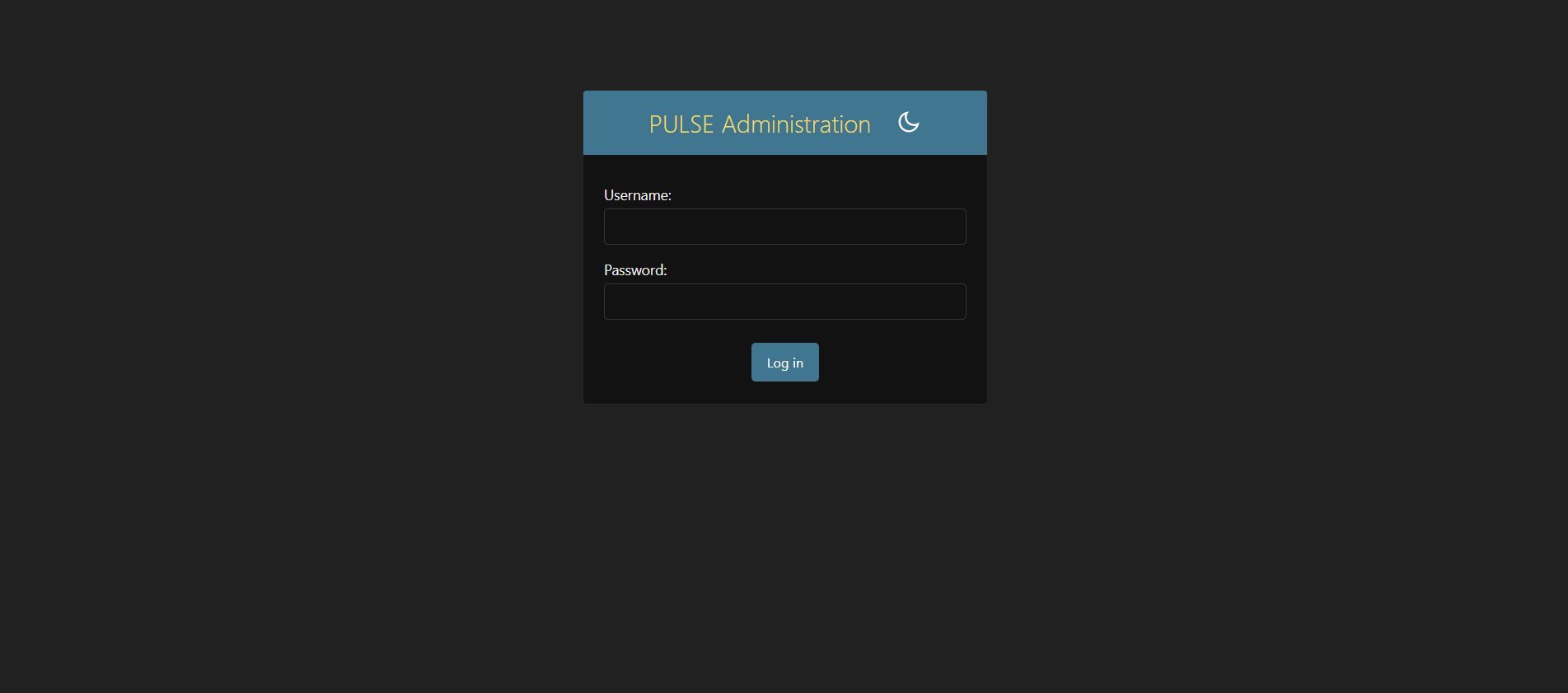
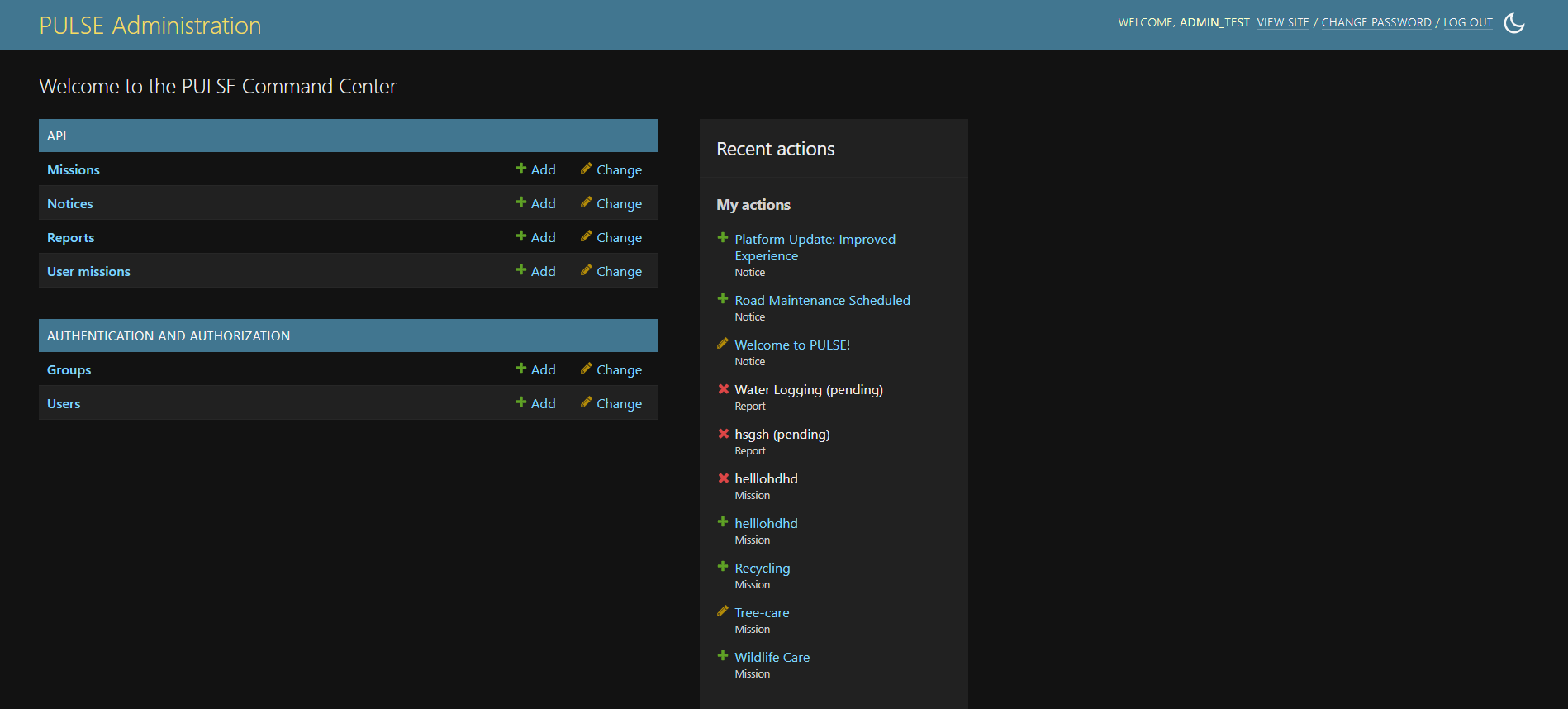
Users can upload an image of a civic issue along with a description and location. The backend processes this data, verifies it using AI, and stores it in a structured format. Admins can view, manage, and resolve reports through a dashboard, completing the entire lifecycle of an issue.
🧠 What We Built in the Hackathon
Instead of rebuilding the system, we focused on enhancing it by adding an Issue Understanding Layer:
- Issue Classification: Automatically identifies the type of problem (e.g., pothole, garbage, streetlight)
- Severity Detection: Assigns priority levels (High, Medium, Low) based on urgency
- Department Mapping: Routes each issue to the appropriate authority (e.g., Public Works, Sanitation, Electricity)
This transforms PULSE from a simple reporting tool into a structured decision-support system.
📚 What We Learned
- How to design systems that balance real-world practicality with technical feasibility
- The importance of structured workflows over raw data collection
- How to integrate AI effectively using controlled prompting instead of complex models
- Building scalable thinking: treating AI as a stateless service rather than a dependency
⚠️ Challenges We Faced
- Data Authenticity: Ensuring that reports are genuine and not manipulated
- AI Reliability: Handling inconsistent or invalid AI responses and validating outputs
- System Design Clarity: Defining roles like “admins” and mapping them to real-world authorities
- Scalability Thinking: Designing a system that can work for both small areas and large cities
- Team Alignment: Bringing all team members to a shared understanding of the system in limited time
🎯 Final Outcome
PULSE is not just a complaint platform—it is a structured civic engagement system that ensures issues are:
Reported → Verified → Understood → Prioritized → Acted Upon
Our goal is to move from passive reporting to active participation, where citizens feel that their actions can lead to real impact.

Log in or sign up for Devpost to join the conversation.