
Inspiration
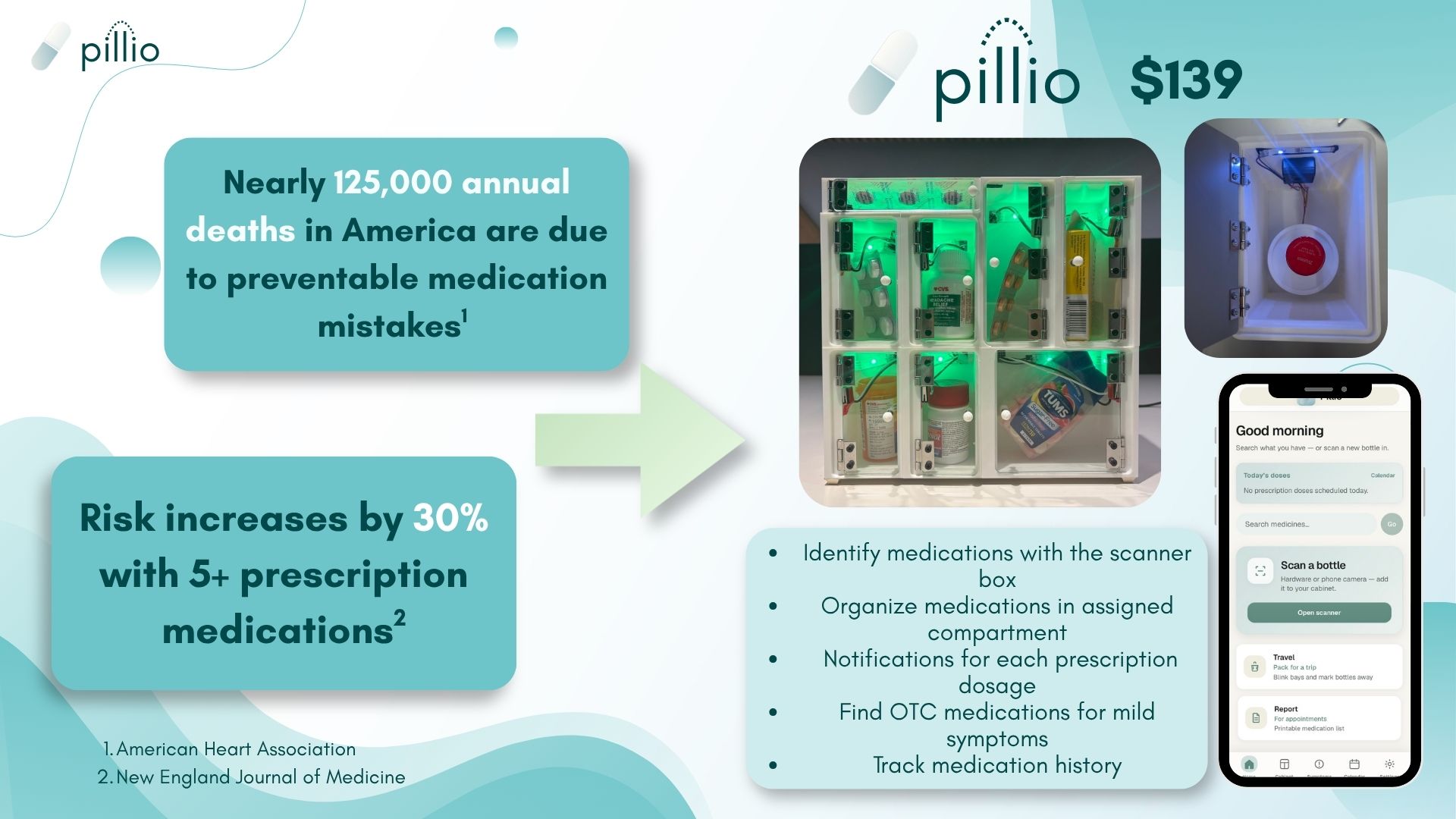
Medication errors are common, especially for elderly people taking several prescriptions. Many families still manage medications by memory, and caregivers often worry about missed doses, double doses, or mixing up medications. We wanted to create a system that could reduce this confusion without forcing users to remove pills from their original containers.
What it does
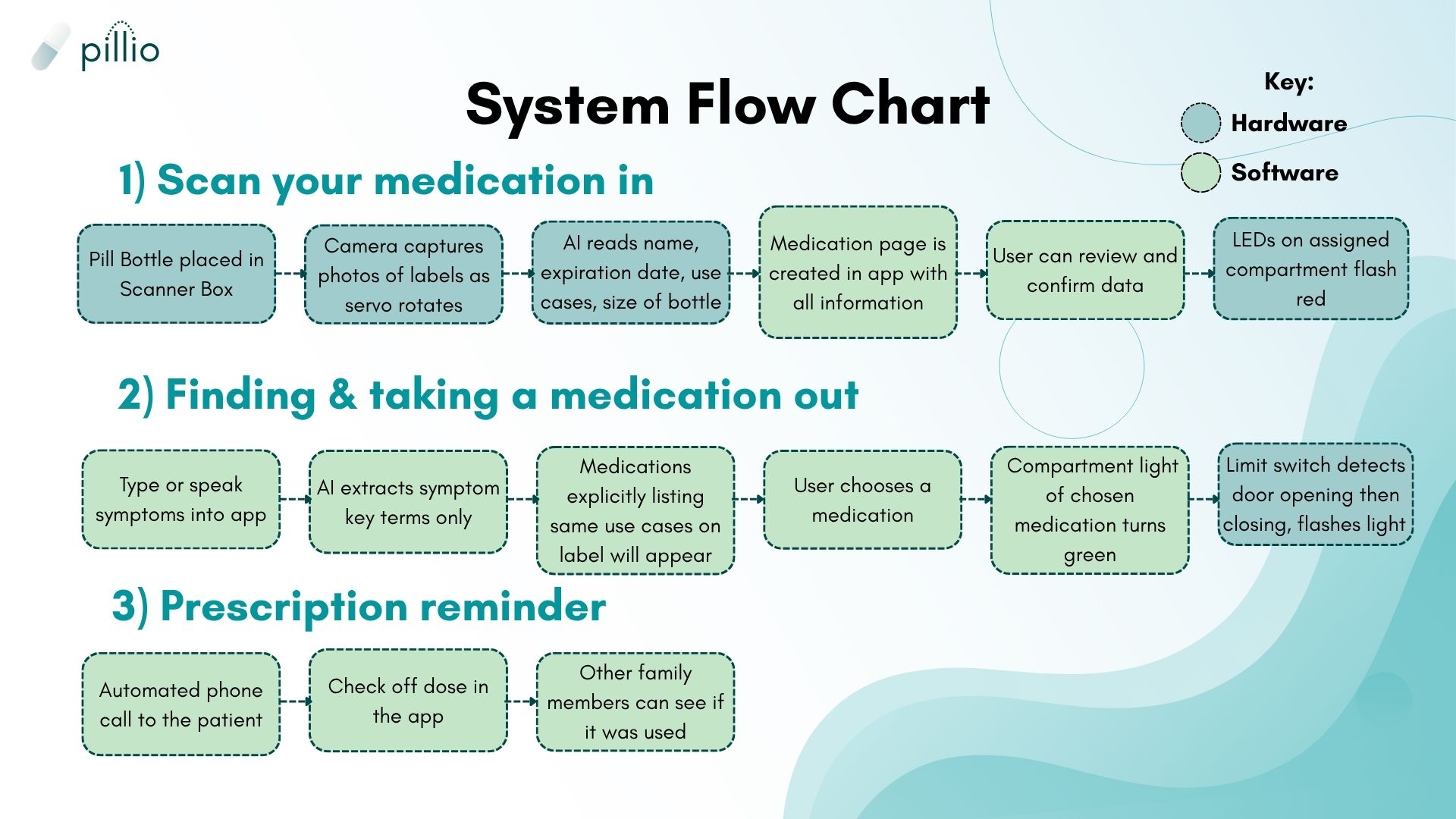
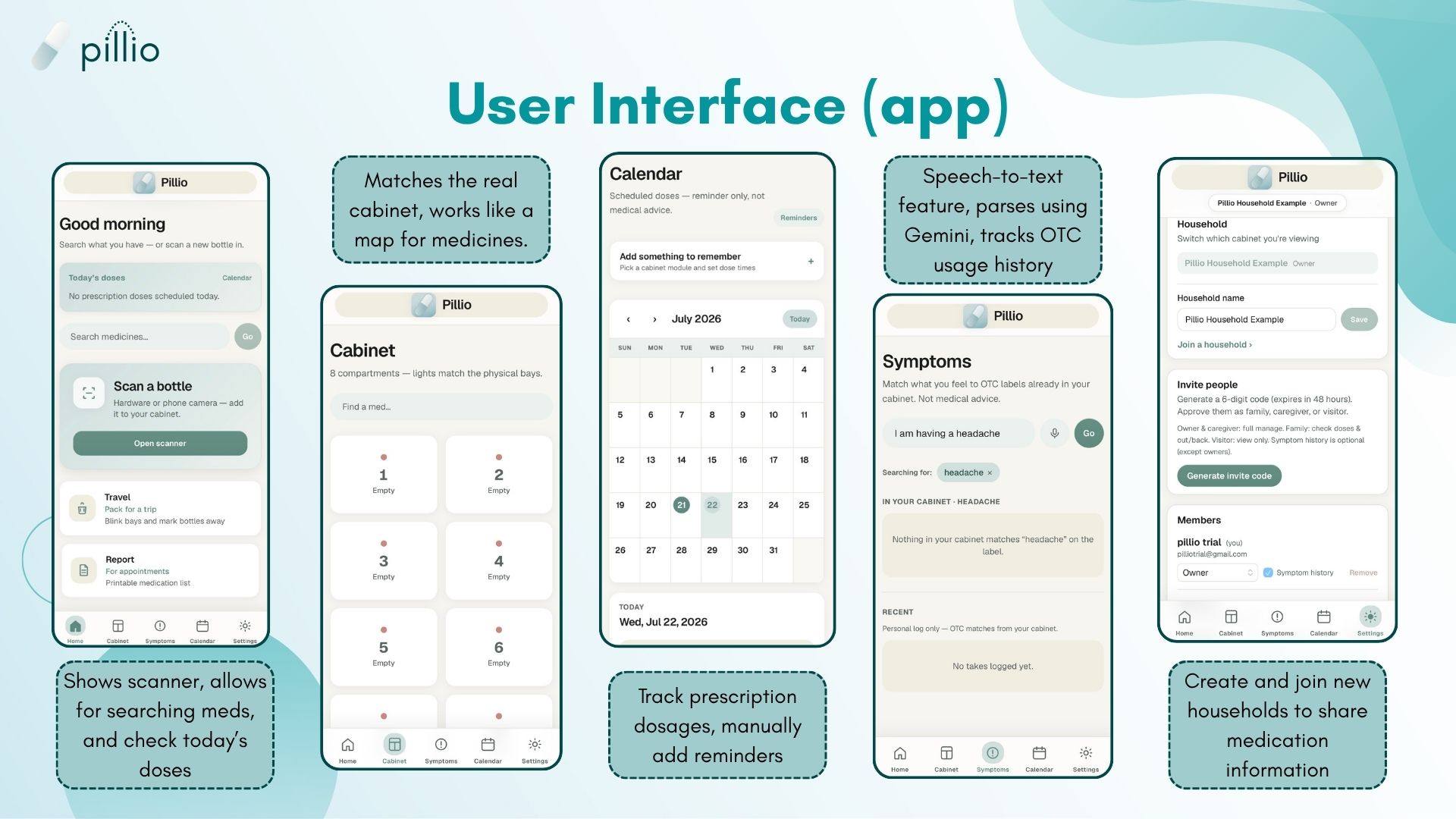
Pillio is a smart medication cabinet that identifies, organizes, and tracks medications. Users place a bottle in the scanning box, where it is rotated and scanned. Pillio identifies the medication, saves its information, and guides the user to the correct storage compartment using LEDs. The system also provides dosage reminders, medication history, and caregiver access while keeping medications in their original bottles.
How we built it
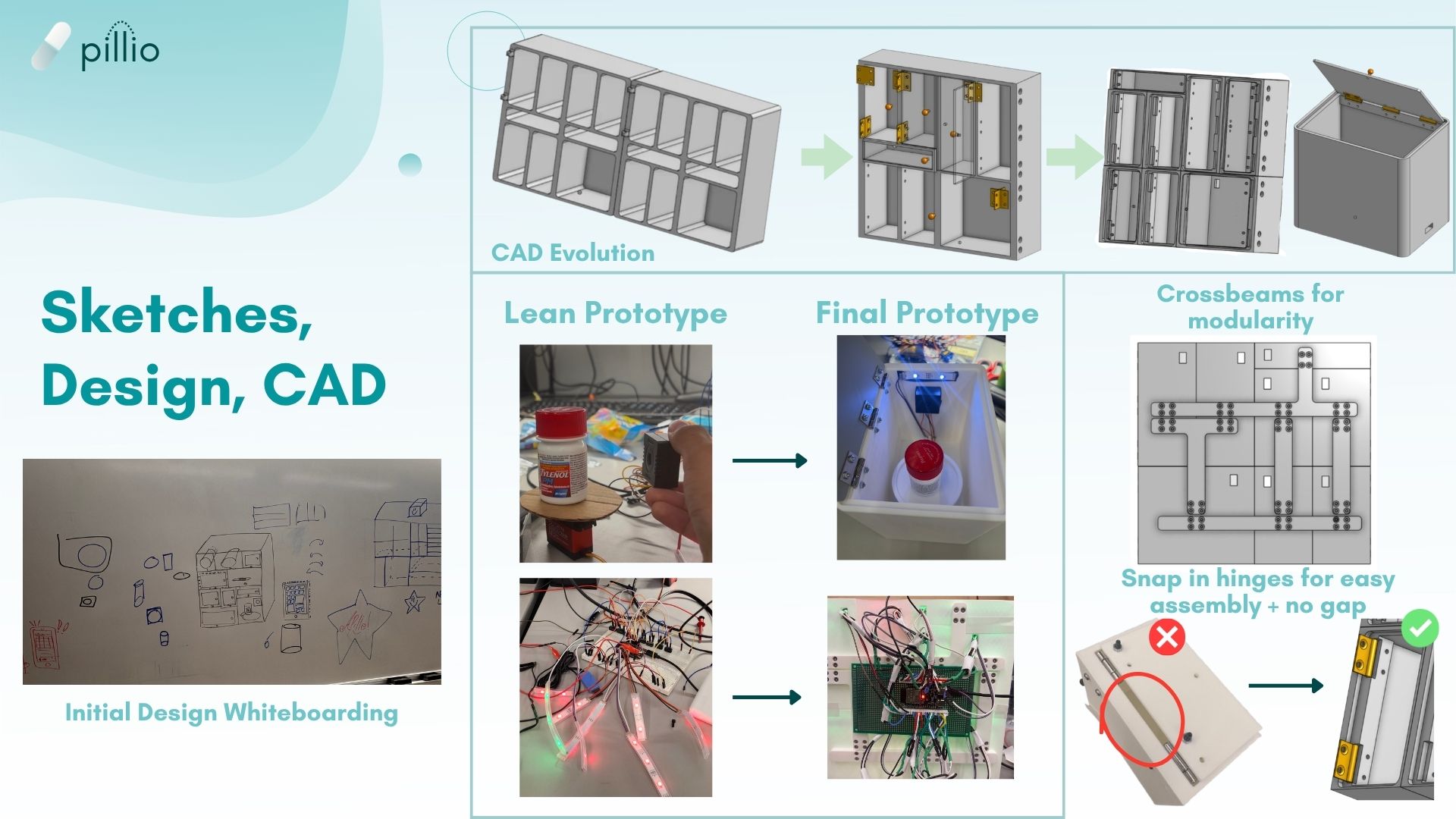
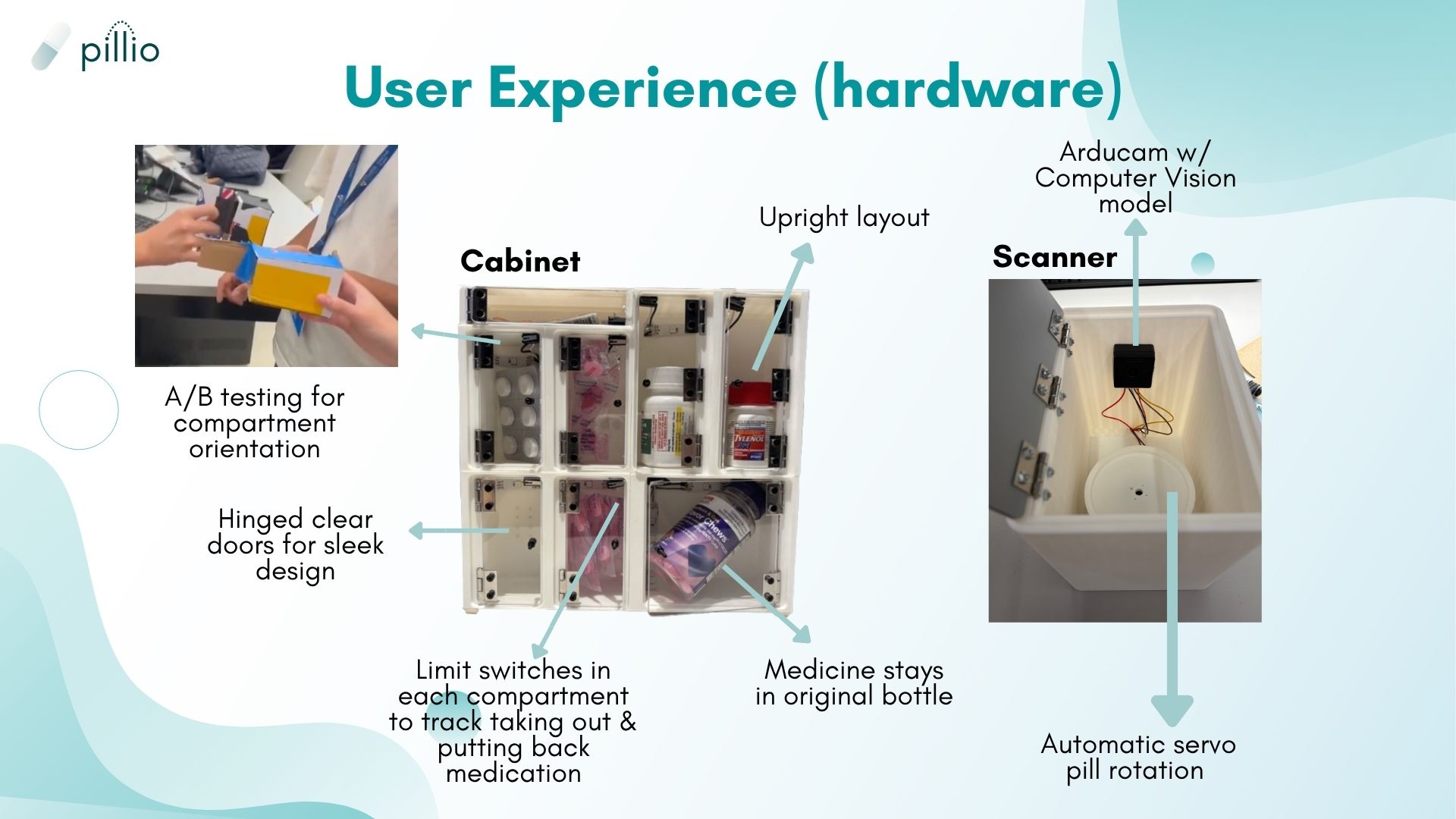
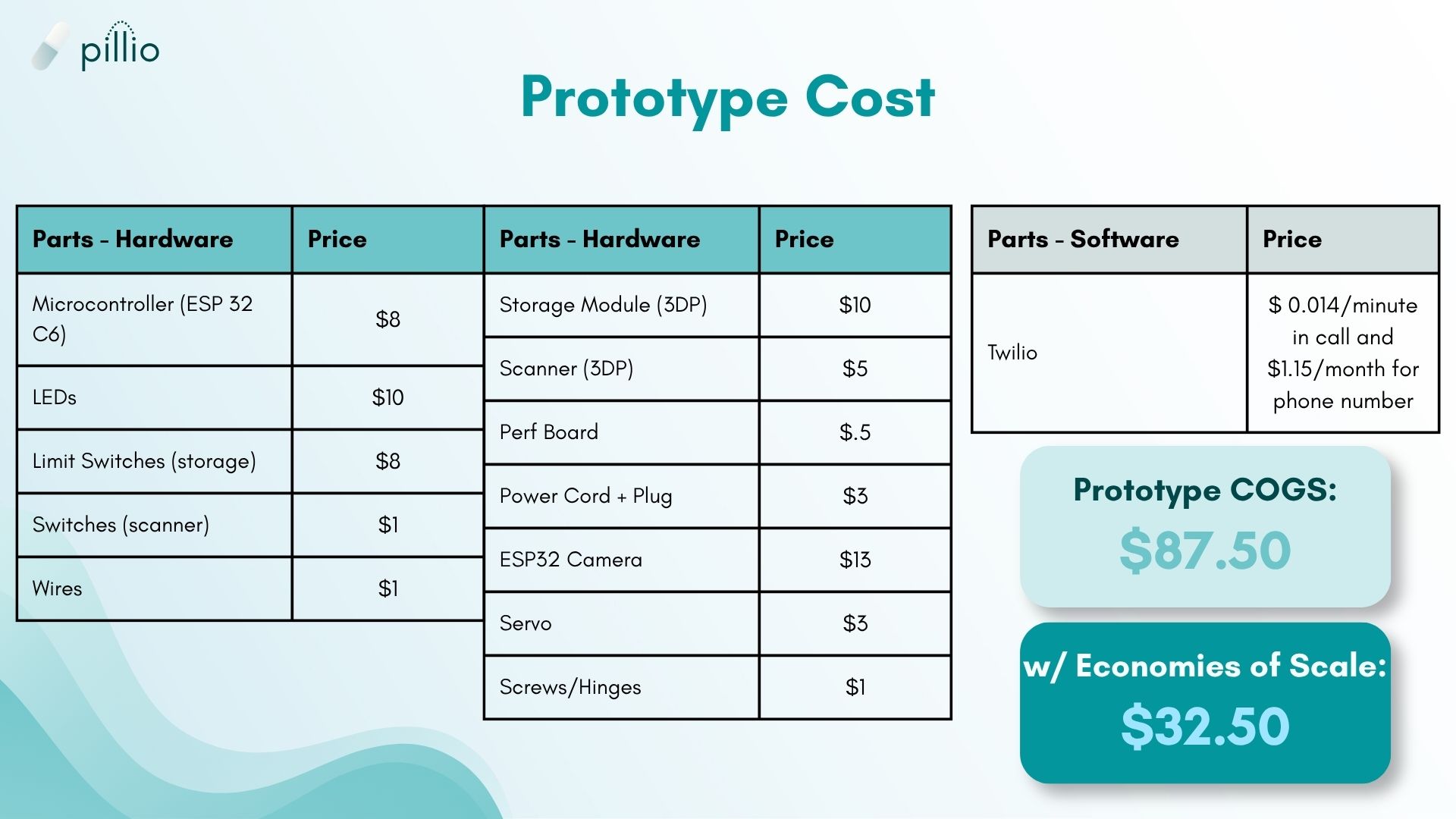
We designed a modular cabinet with eight compartments, each containing an LED, limit switch, and hinged door. A separate scanning box uses a servo-driven turntable and ESP32 camera to capture multiple images of the medication label. Two ESP32 microcontrollers communicate over WiFi with our web application. The images are analyzed using a cloud-based AI vision model, while medication information is retrieved using RxNorm and openFDA databases.
Challenges we ran into
Our early cabinet prototypes were difficult to assemble because the sections were hard to screw together accurately, and the hinges did not always align properly with the doors. We also faced difficulties with the scanning system, especially capturing clear images of curved medication labels and consistently identifying information located on different sides of each bottle.
Accomplishments that we're proud of
We are proud of the sleek, compact design of our medication cabinets and the modular system that allows users to add more storage as needed. We also developed an accurate scanning process that rotates each bottle, captures multiple views of the label, and identifies the medication without requiring users to remove it from its original container.
What we learned
We learned that building a strong product requires more than making the technology work. We had to understand who would purchase Pillio, how much they would pay, what features mattered most, and how the product would be marketed. Our surveys showed that many households rely on memory and that caregivers are especially concerned about forgotten doses and medication mix-ups.
What's next for Team 8 - Pillio
Our next steps are to improve scanning accuracy, reduce scan time, make the cabinet easier to manufacture, and conduct more testing with elderly users and caregivers. We also plan to complete structured interviews with parent-caregivers, refine the web application, and explore partnerships with pharmacies and senior living communities.
Built With
- cad
- esp32


Log in or sign up for Devpost to join the conversation.