-
-
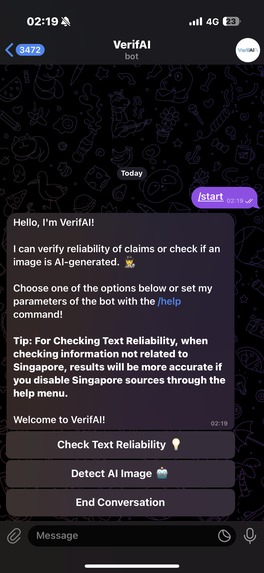
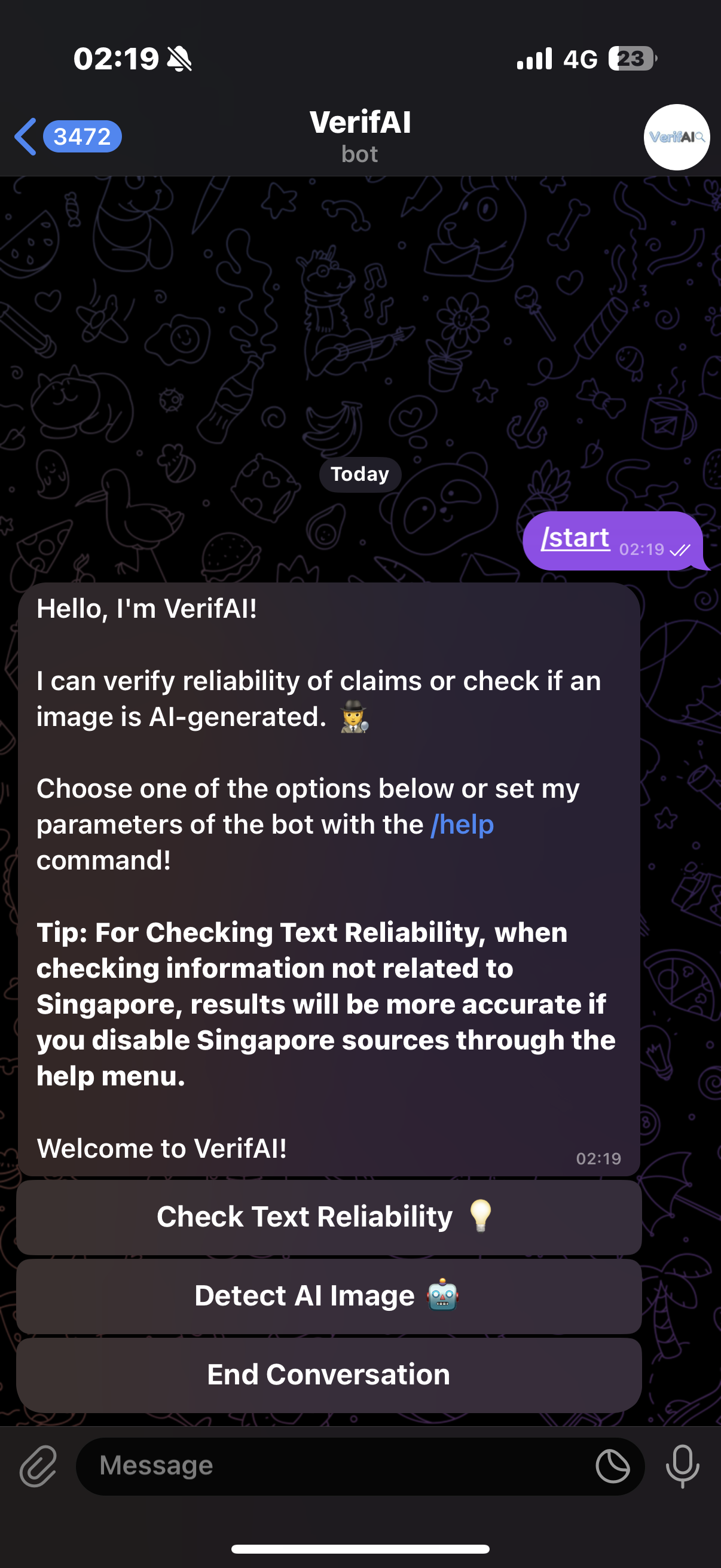
Starting page after /start
-
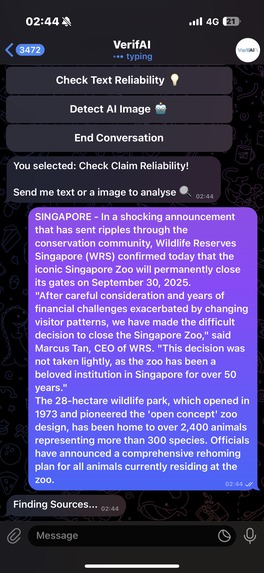
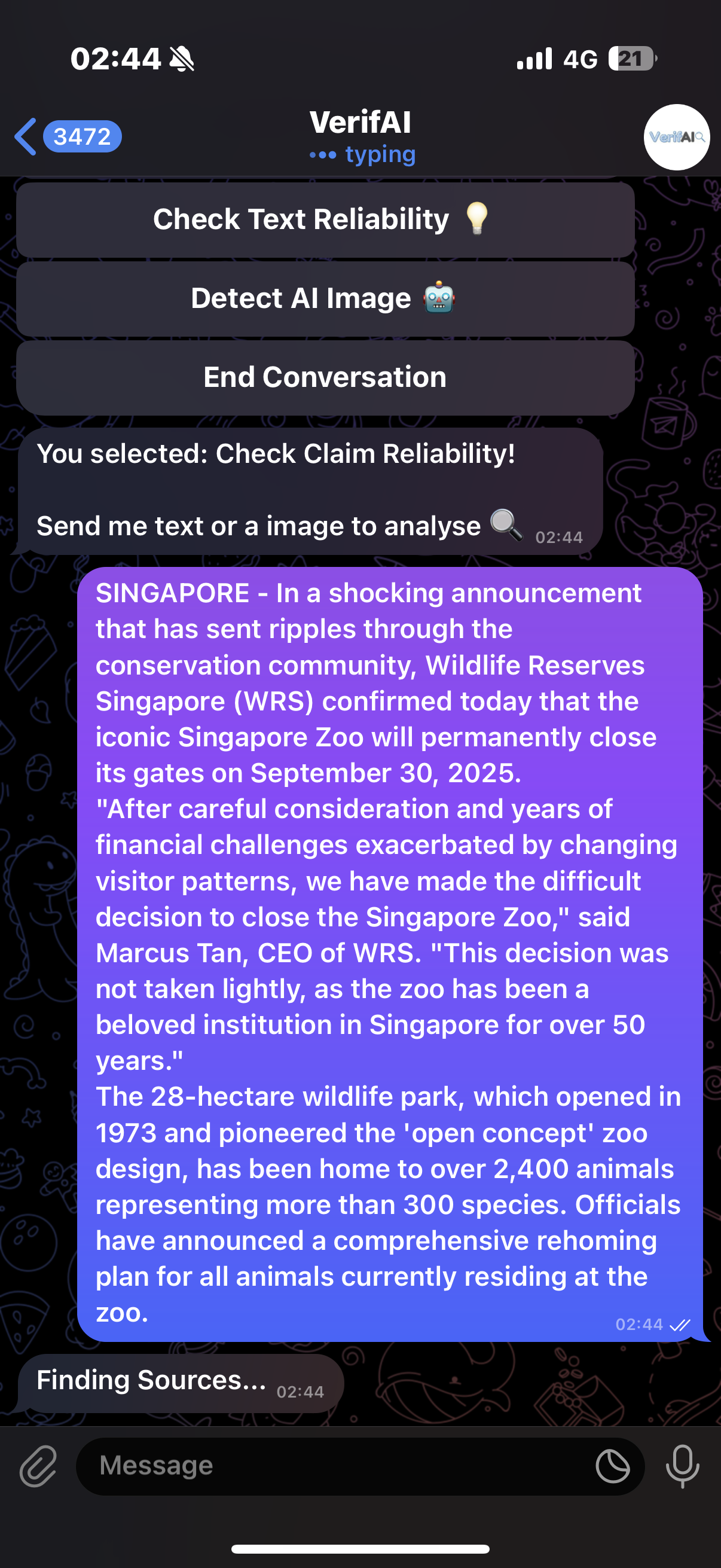
Using "Check Text Reliability"
-
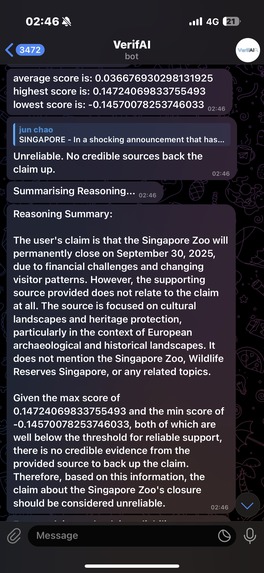
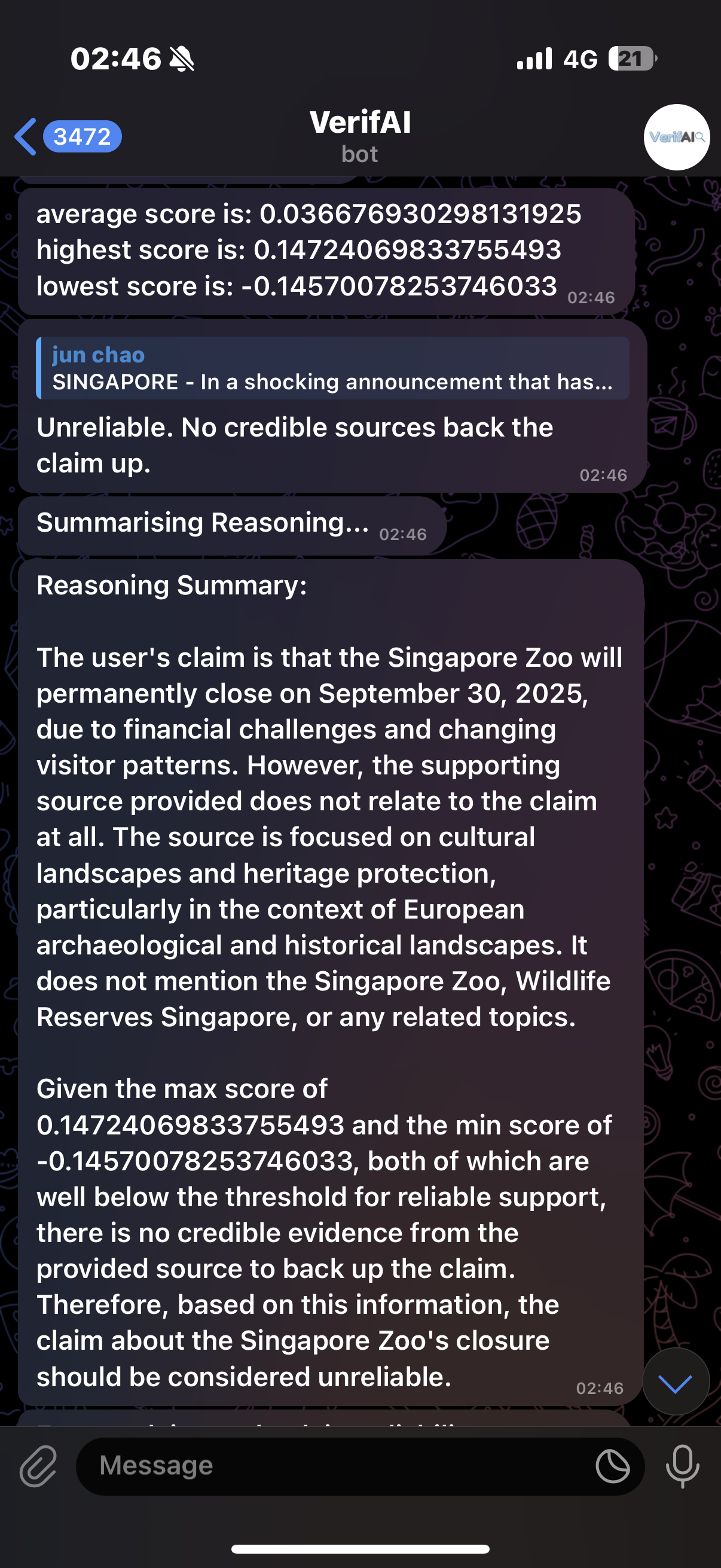
Results from Test Reliability Checker
-
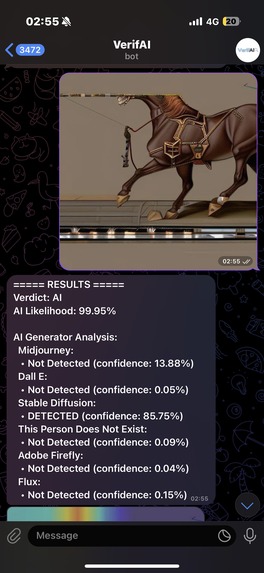
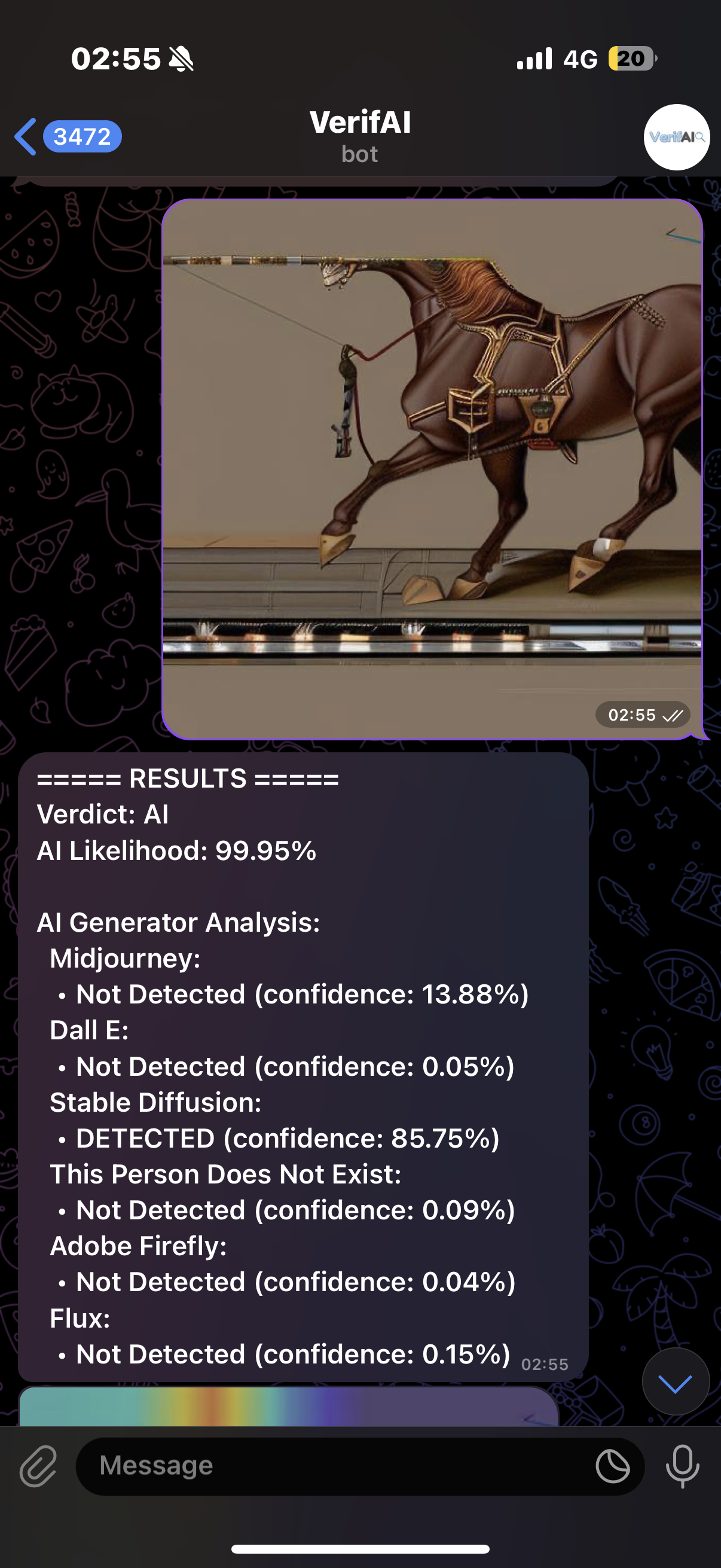
Results from using "Detect AI Image" to likelihood of image being AI-Generated
-
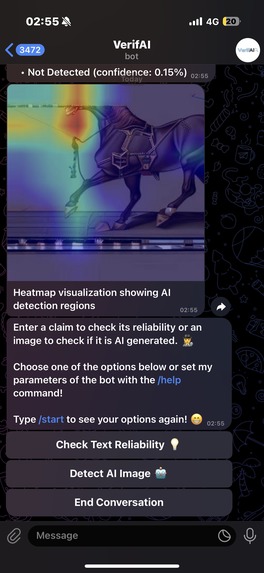
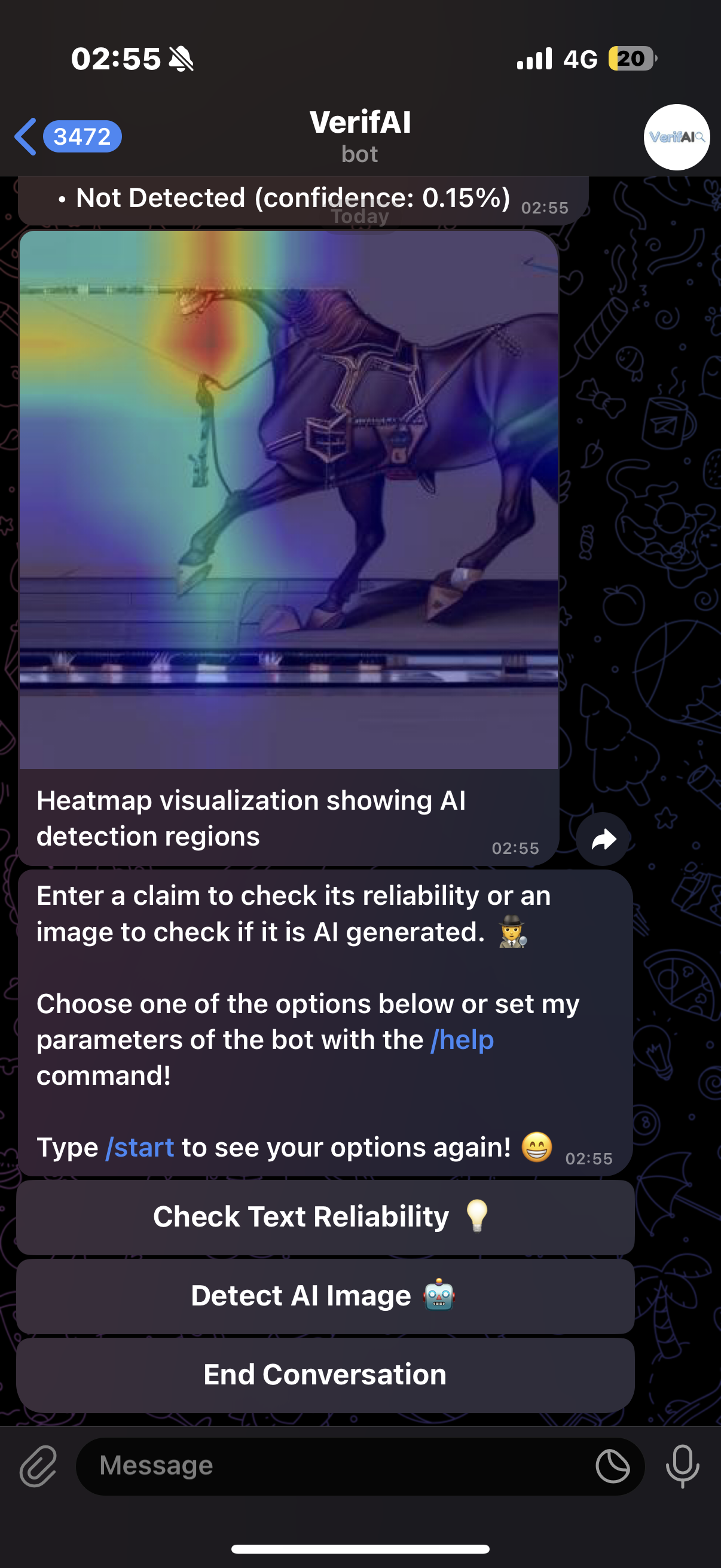
Heatmap generated from "Detect AI Image" to show AI detection regions
-
Inspiration:
The inspiration for VerifAI stemmed from a problem we encountered daily—our own families being exposed to misinformation. From sensationalized messages to AI-generated or manipulated images, we noticed that elderly family members were especially vulnerable, often receiving misleading content via WhatsApp and Telegram. While fact-checking tools exist, they are cumbersome, slow, and require manual effort, leaving many without an easy way to verify the truth. This sparked the idea for VerifAI, a Telegram bot that instantly verifies claims and detects AI-generated photos with a single prompt.
What it does:
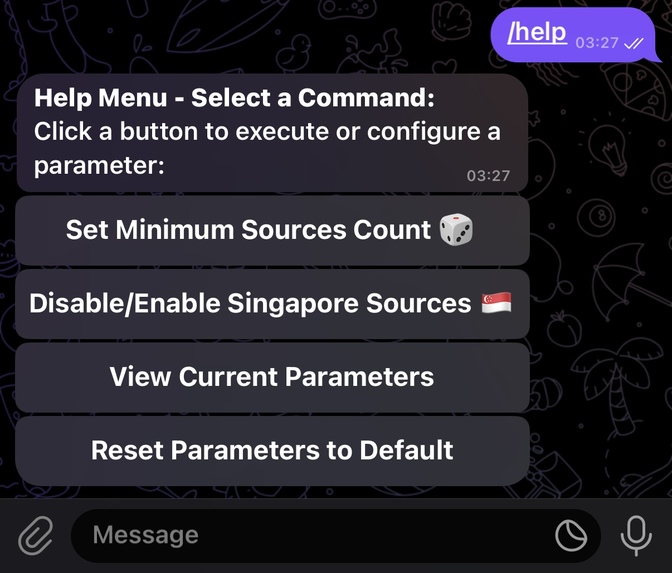
VerifAI empowers users to combat misinformation effortlessly, all within the convenience of a Telegram bot. It features two key capabilities: instant claim verification and AI-powered image detection. With claim verification, users can check the reliability of any statement, receive a credibility score, and get a clear, evidence-backed explanation. The AI Image Detector analyzes images to determine if they are AI-generated, providing a heatmap that highlights suspected areas of manipulation.
How we built it:
We first searched for existing solutions to fake news detection to see what has been built and works in the real world. All we found was a fact checker AI, which actually was quite inaccurate. Hence, we decided to ideate new ways to detect through natural language processing. We first came up with an intuitive way of detecting what is fake news - extraction of keywords, finding reliable sources, comparing these sources. We then decomposed the solution and researched on different parts, learning new libraries, frameworks and statistical models like TF-IDF, embedding vectors, cosine similarity. We then ideated on how to connect different key components together, while also deciding how to set specific numbers instead of hardcoding them - establishing a baseline of what our parameters would be.
Utilising Flask, it allowed us to pass data to one another without interfering with other functions, allowing abstraction and easy fixes if any problems arose. We classified different data, analysing the output, tuning the parameters. This rigorous process which usually is automated on libraries, had to be done manually as we are building something new; collection of different technologies that requires management in every aspect. We gathered feedback from peers around, commenting on our model’s speed, accuracy, explanation and what details they would like to see. This allowed us to focus more on key features that allow the application to be more likeable and enticing to use.
Finally, we adjusted our model and simplified the interface, making it much more easier to use, and continued to explore different parameters to fine tune our model.
Challenges:
One of our biggest challenges was the lack of a predefined approach where there was no established blueprint for real-time misinformation detection within messaging platforms. Unlike traditional fact-checking methods that rely on manual verification or basic API calls, we had to build an entire pipeline from scratch. Existing models, like those on Hugging Face, proved unreliable, offering only limited accuracy and generic results. To ensure credibility, we developed our own model, but fine-tuning it required large-scale data, high computational power, and financial resources, posing major constraints. To overcome this, we adopted an iterative approach, manually curating a dataset, optimizing parameters, and experimenting with different model variations. By leveraging external computing resources and fine-tuning hyperparameters, we ultimately achieved both speed and accuracy, proving that innovation thrives under constraint
Accomplishments:
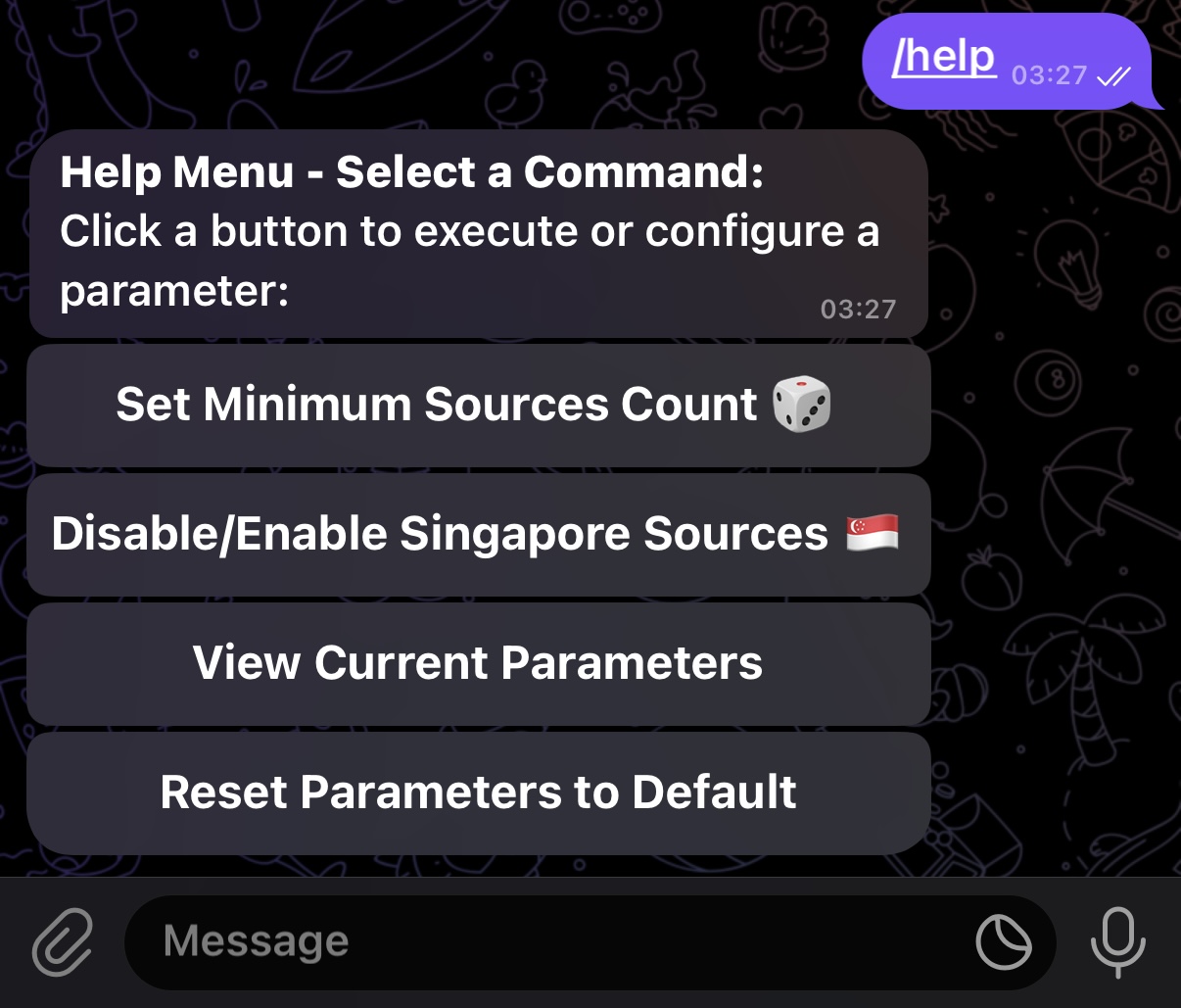
We take immense pride in the Telegram bot we built, which surpassed our expectations in both reliability and functionality. VerifAI’s ability to process diverse user claims and input types, verify them against credible sources, and provide clear, evidence-backed reasoning significantly enhances the fact-checking experience. Beyond its accuracy, we are equally proud of its seamless, intuitive, and personalized design. With customizable verification settings, effortless navigation, and a user-friendly interface, VerifAI ensures that fact-checking isn’t just effective but accessible to everyone. By bridging technology with usability, we are proud of how VerifAI empowers users to navigate misinformation with confidence and clarity at their fingertips.
What we learnt:
Throughout the hackathon, our team tackled a steep learning curve, gaining invaluable insights into technical development, problem-solving, and collaboration. Beyond refining our technical expertise, we experienced firsthand the crucial role of teamwork, adaptability, and clear communication,especially in high-pressure environments where time is of the essence. Making quick yet strategic decisions was essential, pushing us to think critically, iterate rapidly, and optimize our approach on the go. However, we also realized that technical excellence alone isn’t enough, user experience is just as critical, especially when tackling a national issue like misinformation. A solution is only as impactful as its usability, and ensuring that VerifAI is accessible, intuitive, and scalable is key to its long-term success. This experience reinforced that building technology is not just about innovation but about creating something people can truly rely on.
Whats next for testing:
The future of VerifAI is limitless. We aim to enhance our bot’s ability to process even more complex user inputs with higher accuracy, delivering faster and more precise fact-checking. Personalization will also be a key focus, allowing users to fine-tune more verification settings such as prioritizing regional sources or filtering information based on their preferences. Beyond functionality, we aim to expand VerifAI beyond Telegram to platforms like WhatsApp and Discord, tackling misinformation at its core, where it spreads the fastest. To maximize real-world impact, we plan to collaborate with fact-checking organizations, news agencies, and government bodies to strengthen VerifAI’s credibility and ensure access to the most reliable information. Ultimately, we envision VerifAI as more than just a bot but a trusted ally in the fight against online falsehoods, shaping a more informed and resilient digital world
Built With
- aiornot-api
- beautiful-soup
- flask
- google-search-api
- keras
- numpy
- openai-api
- opencv
- pypdf
- pytesseract
- python
- sbert
- scikit-learn
- telegramapi
- tensorflow


Log in or sign up for Devpost to join the conversation.