-
-
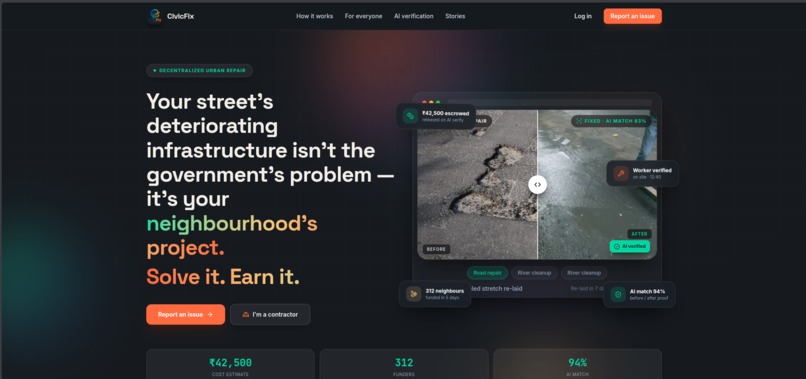
civic-fix landing page
-
civic-fix
-
civic-fix
-
civic-fix
-
civic-fix
-
civic-fix
-
civic-fix
-
civic-fix
CivicFix
Inspiration
Every one of us has walked past the same pothole for weeks, watched a streetlight stay dark for months, or reported an issue on a municipal app only to get a ticket number and silence. Civic tech has spent a decade digitizing the complaint — but nobody digitized the fix. Local governments are bottlenecked by budget and bureaucracy, small repairs are too tiny to prioritize and too disruptive to ignore, and meanwhile there's a whole hyper-local workforce of contractors and handymen sitting idle, ready to do the job for a fair price. We kept coming back to one question: what if a neighborhood could just... fix its own street? Not by replacing local government, but by giving citizens, verified workers, and civic-minded funders a trustworthy, AI-backed way to close the loop themselves. That question became CivicFix AI.
What it does
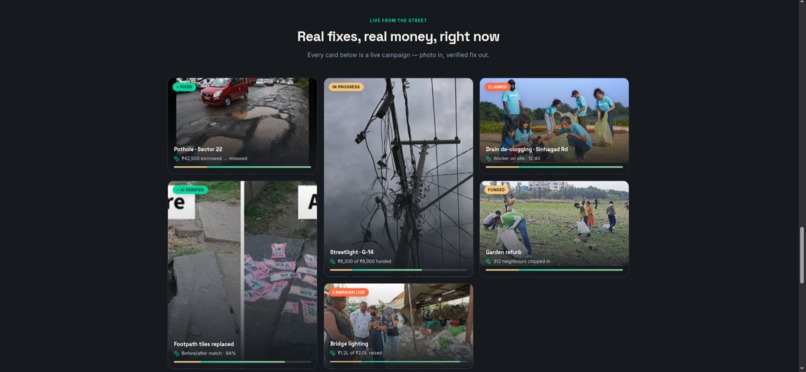
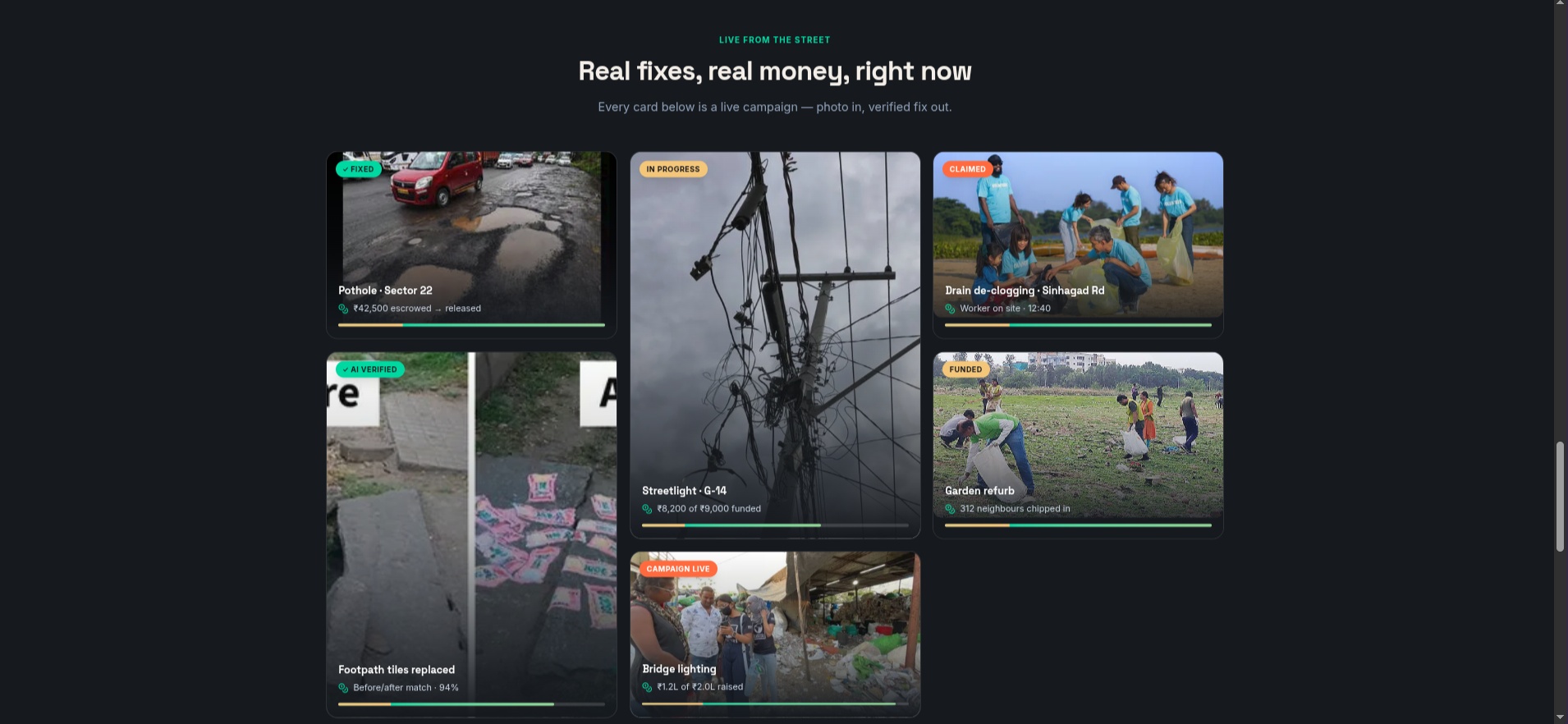
CivicFix AI turns a broken streetlight or a pothole into a fundable, trackable, verifiable repair project — no municipal form required.
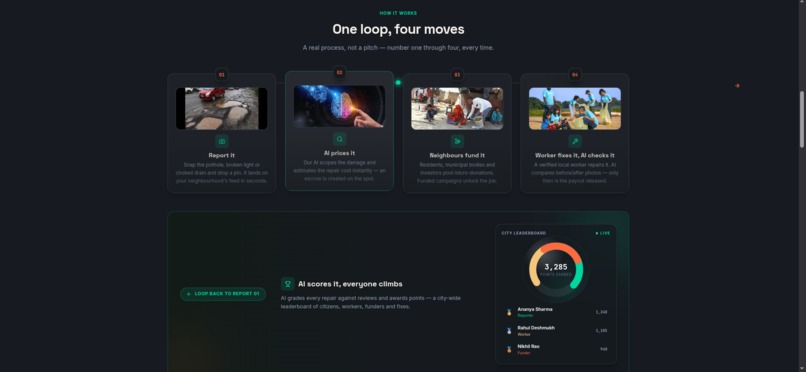
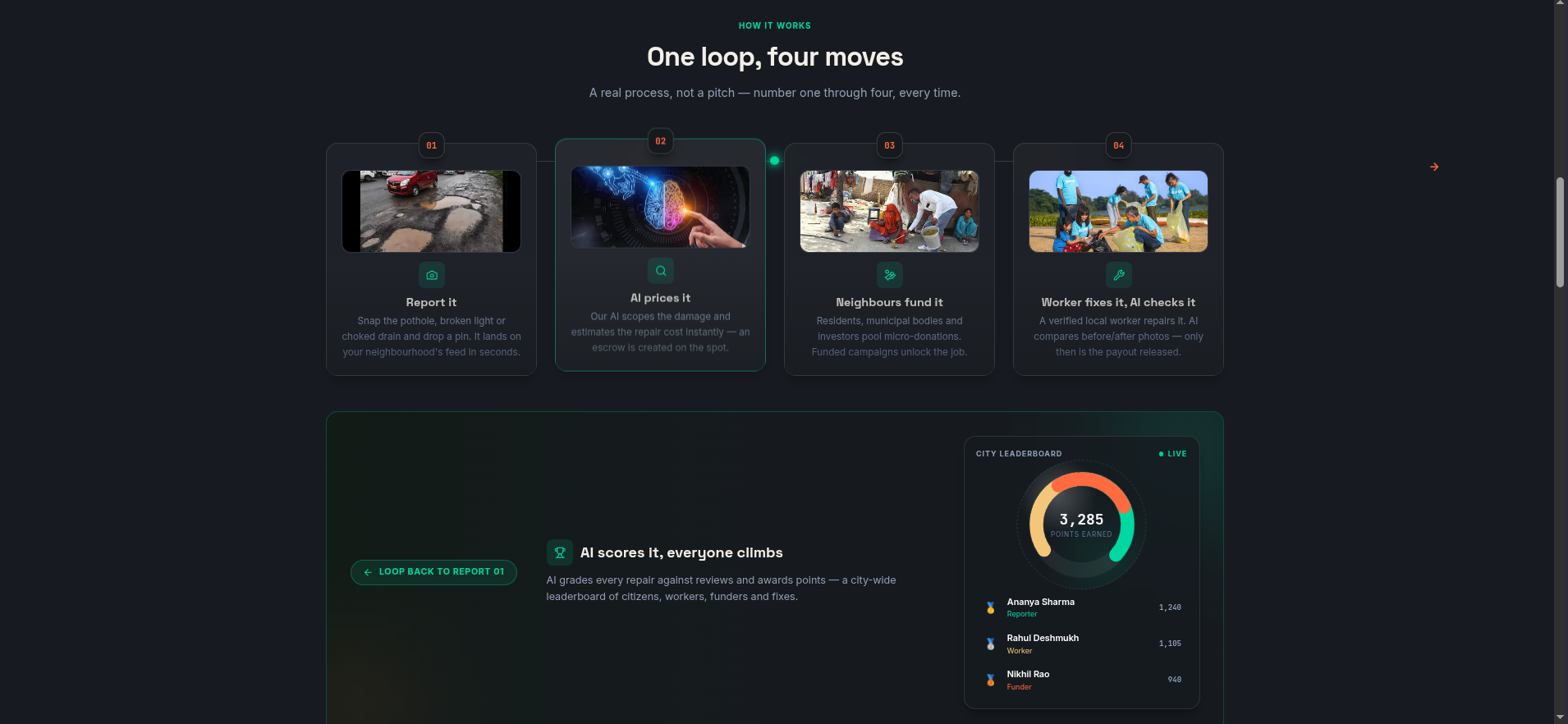
- A citizen photographs the issue. AI instantly estimates severity and repair cost from the image, and the report becomes a live micro-crowdfunding campaign.
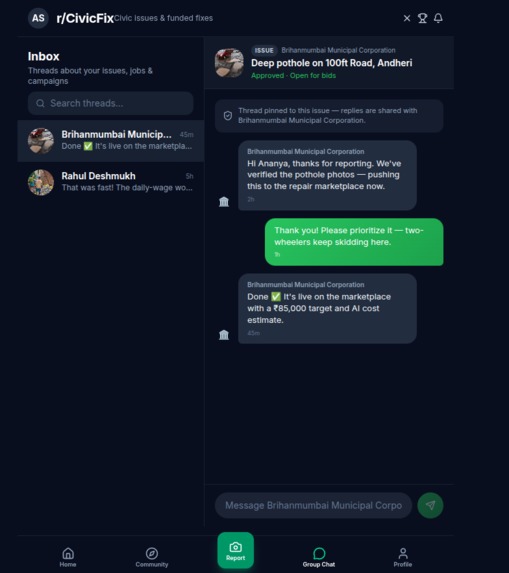
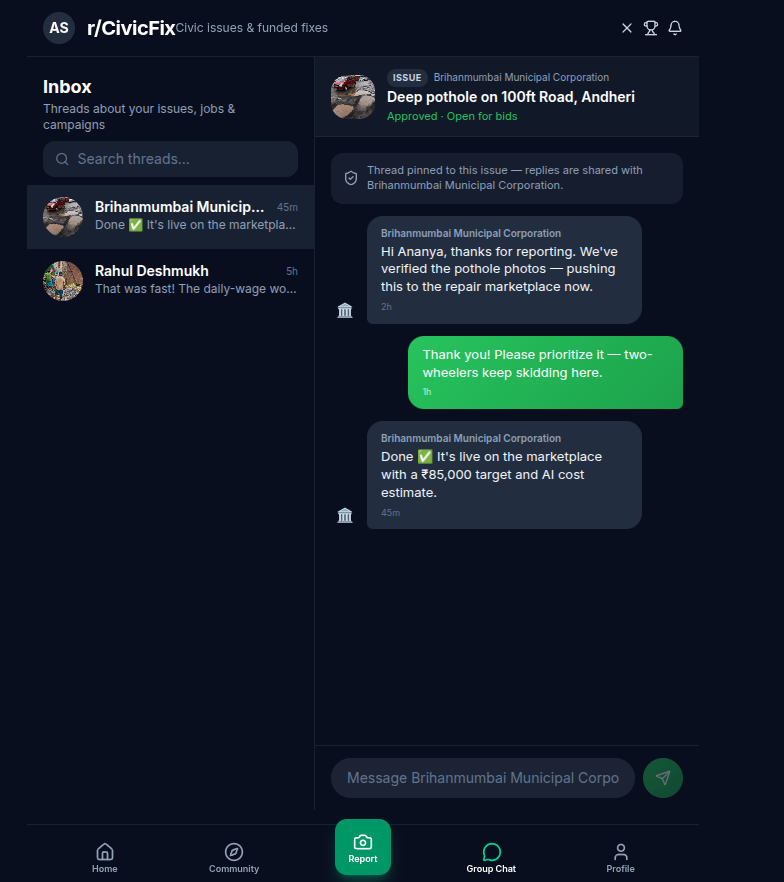
- The local organization (municipal body) reviews and verifies the report, then pushes it into an open job marketplace.
- A local worker browses nearby jobs, submits a quote, and completes the repair.
- A civic-minded investor can back verified, high-trust campaigns and see exactly where their money goes.
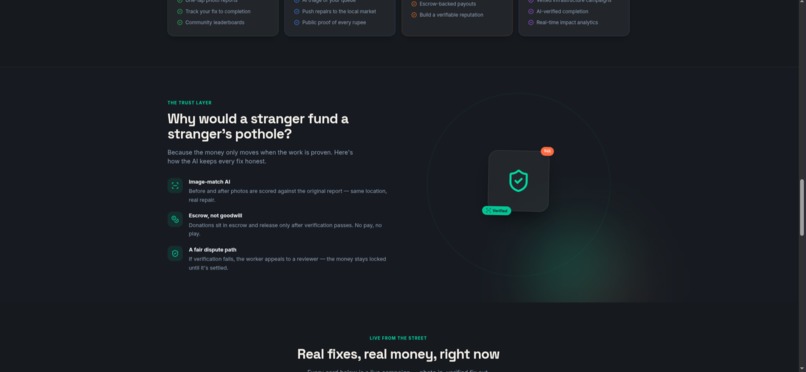
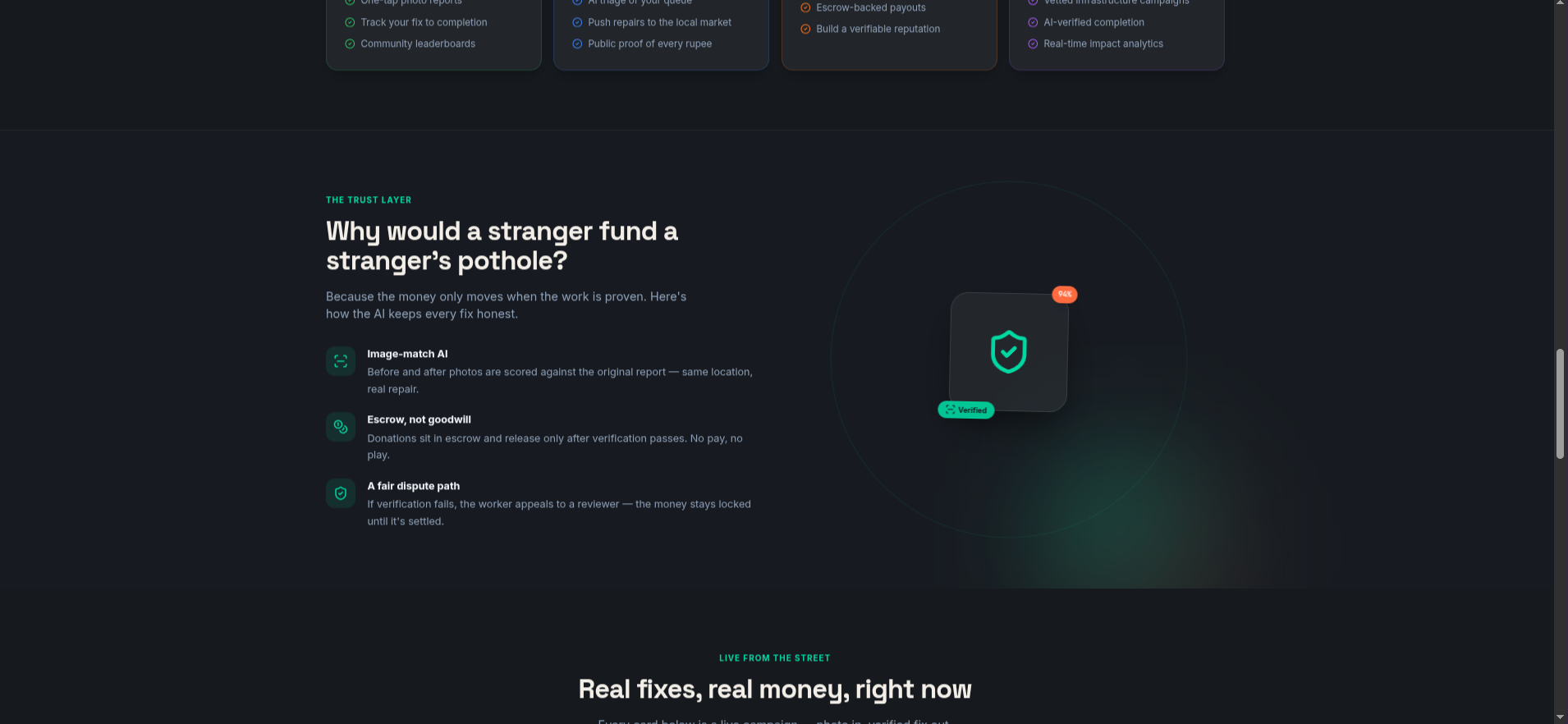
- Once the worker uploads an "after" photo, our AI compares it against the original "before" photo to confirm the job actually matches what was paid for — only then does escrowed money release to the worker.
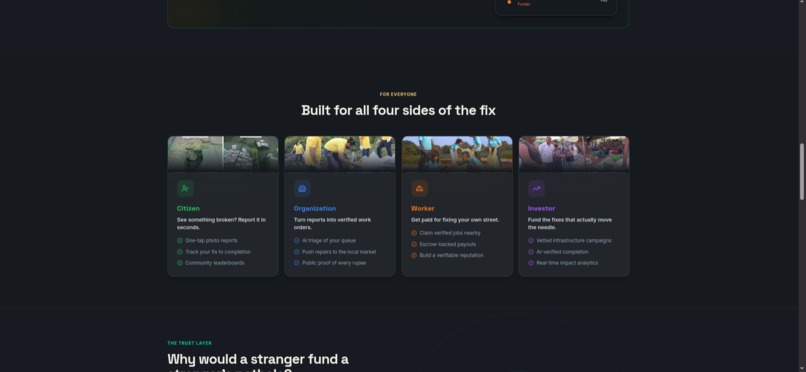
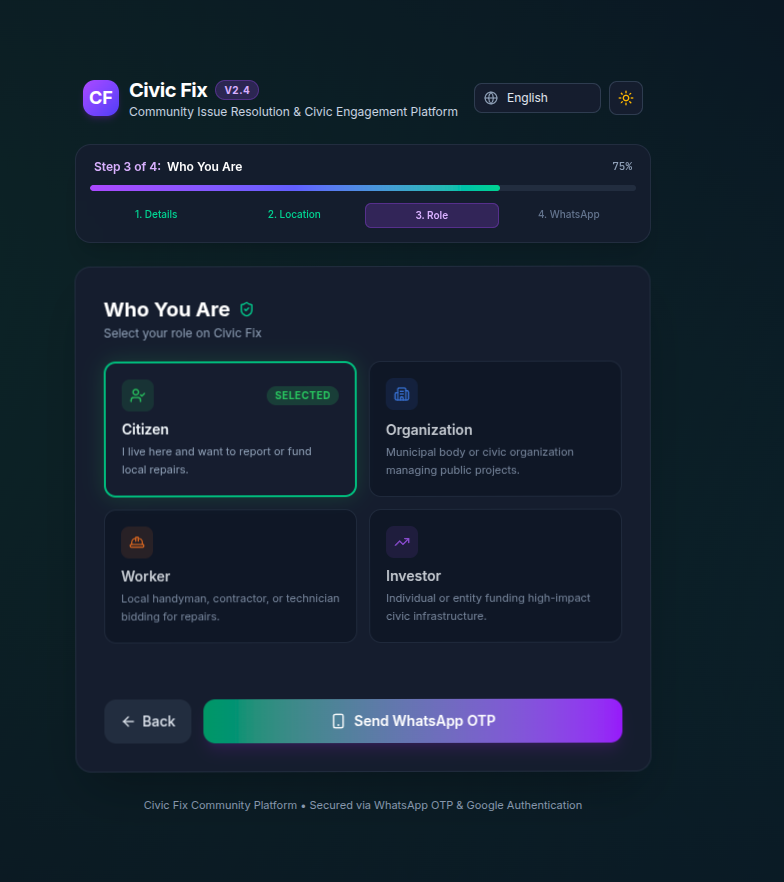
Four roles, one shared loop, and an AI verification layer that makes the whole thing trustworthy enough for a stranger to fund a stranger's pothole.
How we built it
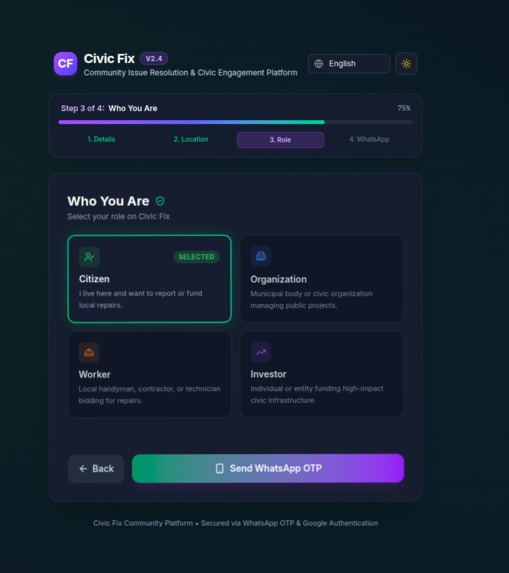
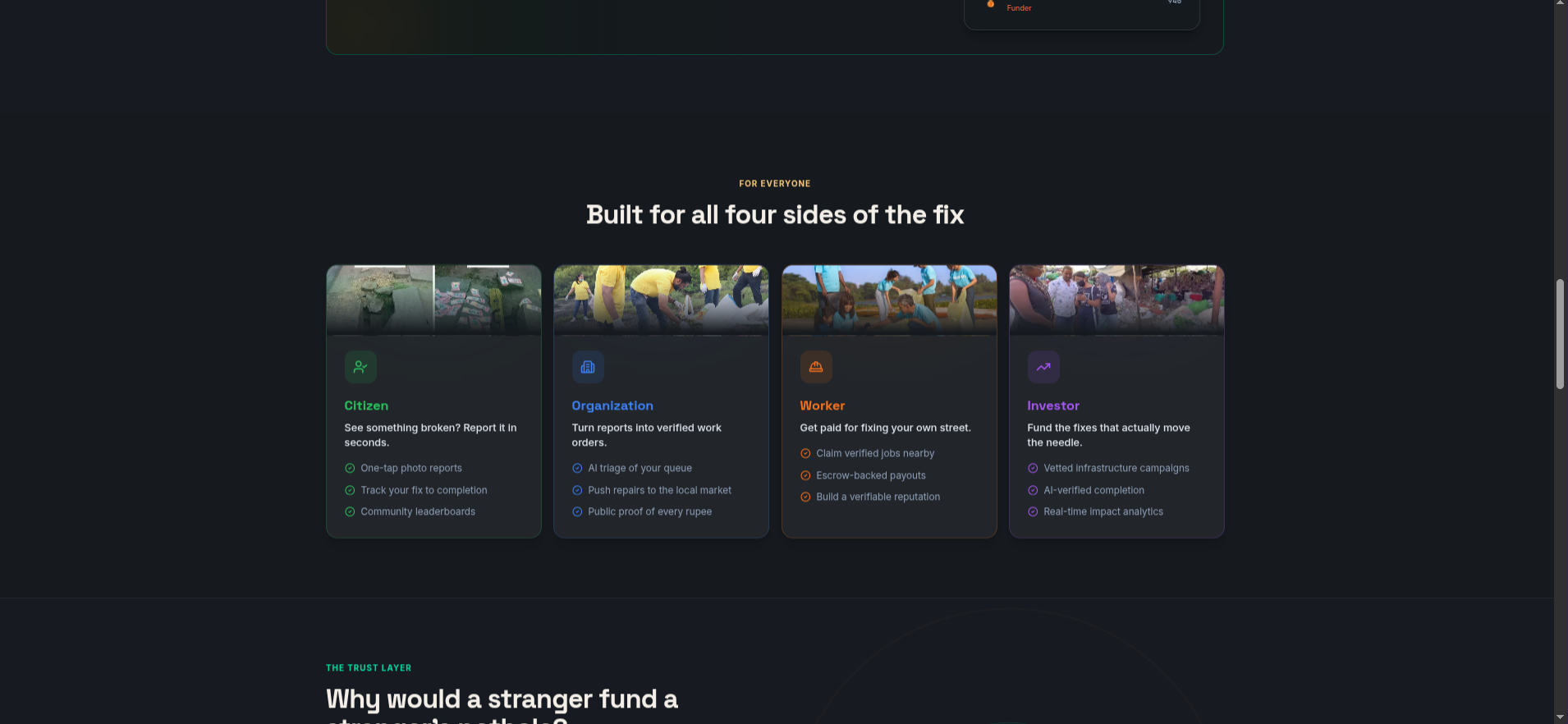
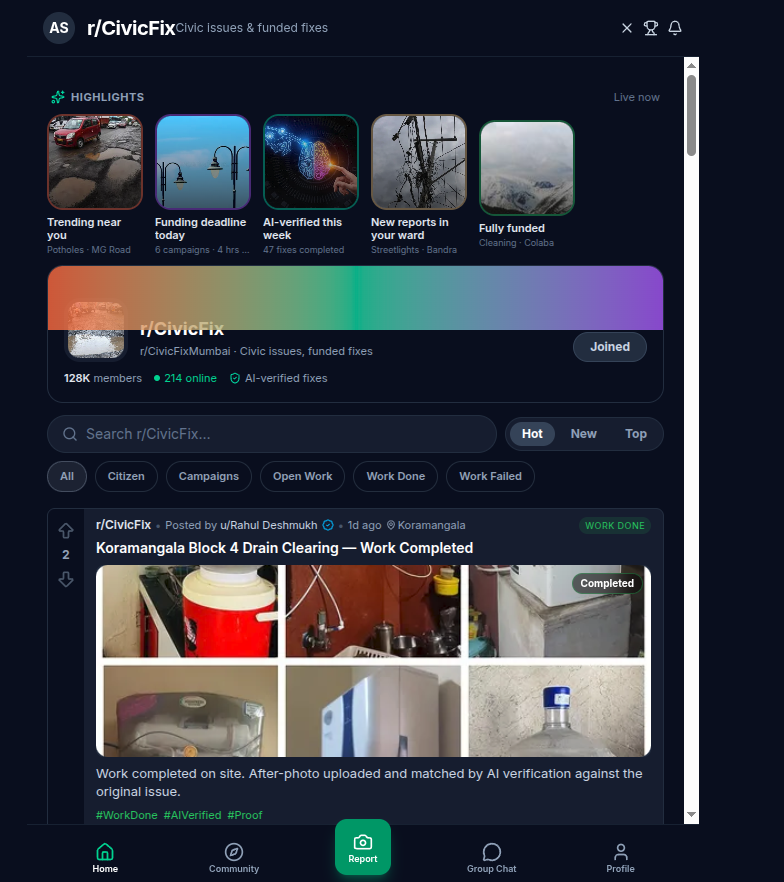
We split the product into four role-based experiences — Citizen, Organization, Worker, and Investor — each with its own screen flow, feed-style UI, and dedicated messaging inbox, but all hitting one shared backend and one shared AI service.
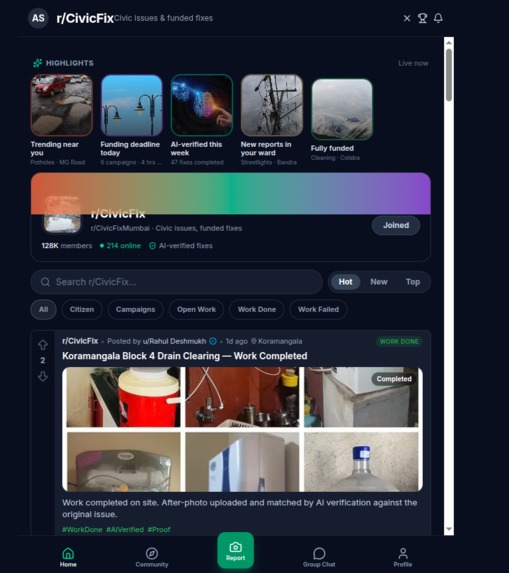
- Frontend: React / React Native, with a Discord-inspired dark UI — floating animated shapes, scroll-reveal sections, and a Reddit-style feed pattern for browsing issues and jobs.
- Backend: Node.js + Express REST API, with MongoDB for our data layer (users, issues, campaigns, jobs, bids, transactions).
- AI layer: a single multimodal image+text service, reused across four different prompts — cost estimation, completion verification, report pre-screening, and dispute review — so we only had to get one integration rock-solid instead of building four separate pipelines.
- File structure: we organized the codebase so each teammate owned their own screen folder, API file, controller, and route file end to end — meaning four of us could build in parallel with almost zero merge conflicts.
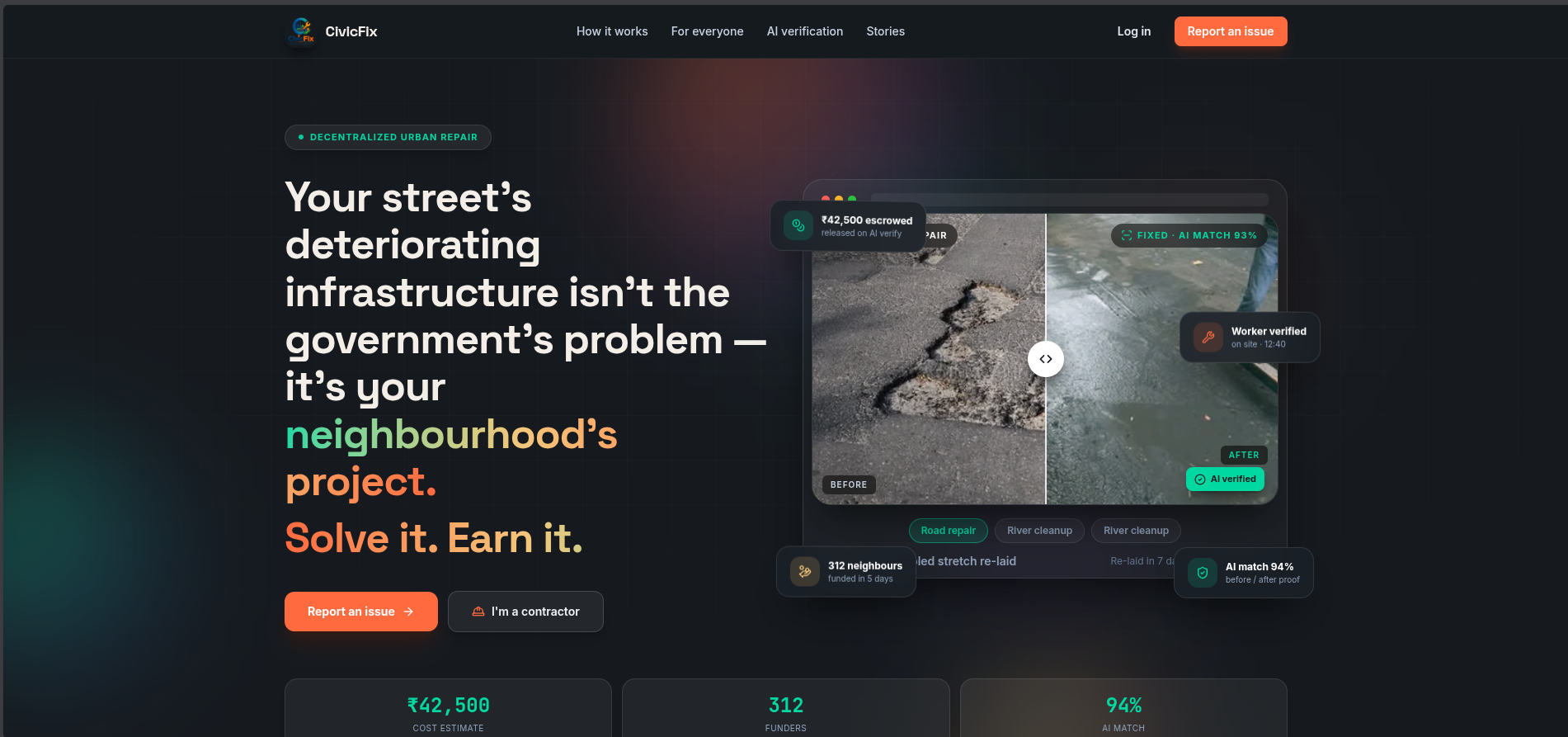
- Landing page: a standalone animated single-page site with an interactive before/after slider as the centerpiece, since that's the core trust mechanic of the whole product — we wanted people to feel the AI verification before we even explained it.
Challenges we ran into
- Designing four apps that feel like one product. With four very different user types, it was easy for each role's screens to drift into a different visual language. We solved this by standardizing on one shared UI shell (feed + detail + messages + profile) across all four roles, so the product feels cohesive even though the underlying logic is completely different per role.
- Making AI verification actually reliable. Comparing a "before" and "after" photo sounds simple, but photo angle, lighting, and partial repairs made naive comparisons unreliable. We had to iterate on prompting the model with explicit context (issue type, location, what "resolved" should look like) rather than just handing it two raw images.
- Avoiding merge conflicts across a 4-person team on a tight clock. We deliberately structured the file system role-by-role, down to which files were shared versus owned, before writing a line of feature code — that upfront planning paid off once we were all coding in parallel.
- Keeping the trust loop honest. It would have been easy to fake the "AI verified" badge for the demo. We made sure the verification call is a real gate in our escrow logic, not just a UI label — if it fails, the payout doesn't happen.
Accomplishments that we're proud of
- A working end-to-end loop — report → AI cost estimate → crowdfund → worker claims job → AI-verified completion → payout — across four distinct, fully-built role experiences.
- A single, reusable AI service powering four different features instead of four separate integrations.
- A codebase structured well enough that four teammates could build simultaneously without stepping on each other's files.
- A landing page that doesn't just describe the product but lets a visitor try the core trust mechanic themselves via an interactive before/after slider.
What we learned
- How much of "trust" in a decentralized system comes down to one well-designed verification gate, not a dozen scattered safety features.
- That good multi-role UX means finding the one shared pattern (feed, detail, messages, profile) that lets very different user journeys still feel like the same app.
- That planning your file structure and ownership boundaries before the hackathon clock starts is one of the highest-leverage things a small team can do.
- Multimodal AI is genuinely good at "does this photo show a fixed pothole" with the right prompt — but it needs real testing against messy, real-world photo pairs, not just clean examples.
What's next for TEAM-5-CivicFix
- Pilot the platform in a real neighborhood with real municipal partnership, starting with one ward and one issue category (streetlights) to prove the loop end-to-end.
- Add dispute resolution tooling so flagged jobs get a fair, fast second look from both AI and a human moderator.
- Build out worker verification (ID, licensing, ratings) so trust flows both ways — donors trust the work, and workers trust getting paid.
- Explore partnerships with municipal bodies to formally recognize AI-verified community repairs, closing the loop between grassroots action and official civic infrastructure records.
Built With
- css3
- express.js
- github
- google-gemini
- google-maps
- html5
- javascript
- mongodb
- node.js
- react
- react-native
- rest-api
- vercel


Log in or sign up for Devpost to join the conversation.