-
-
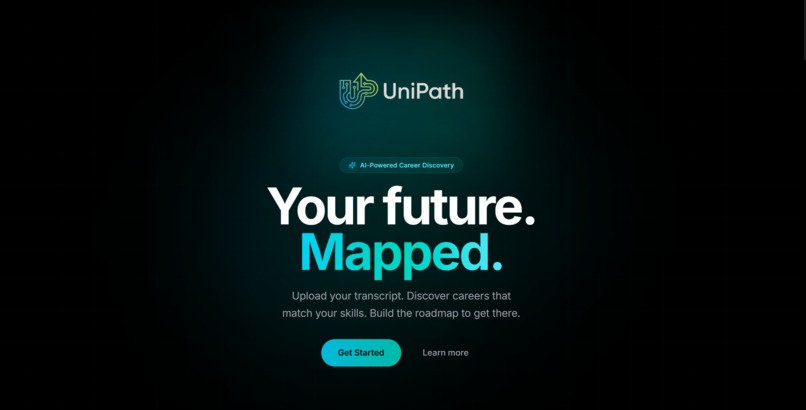
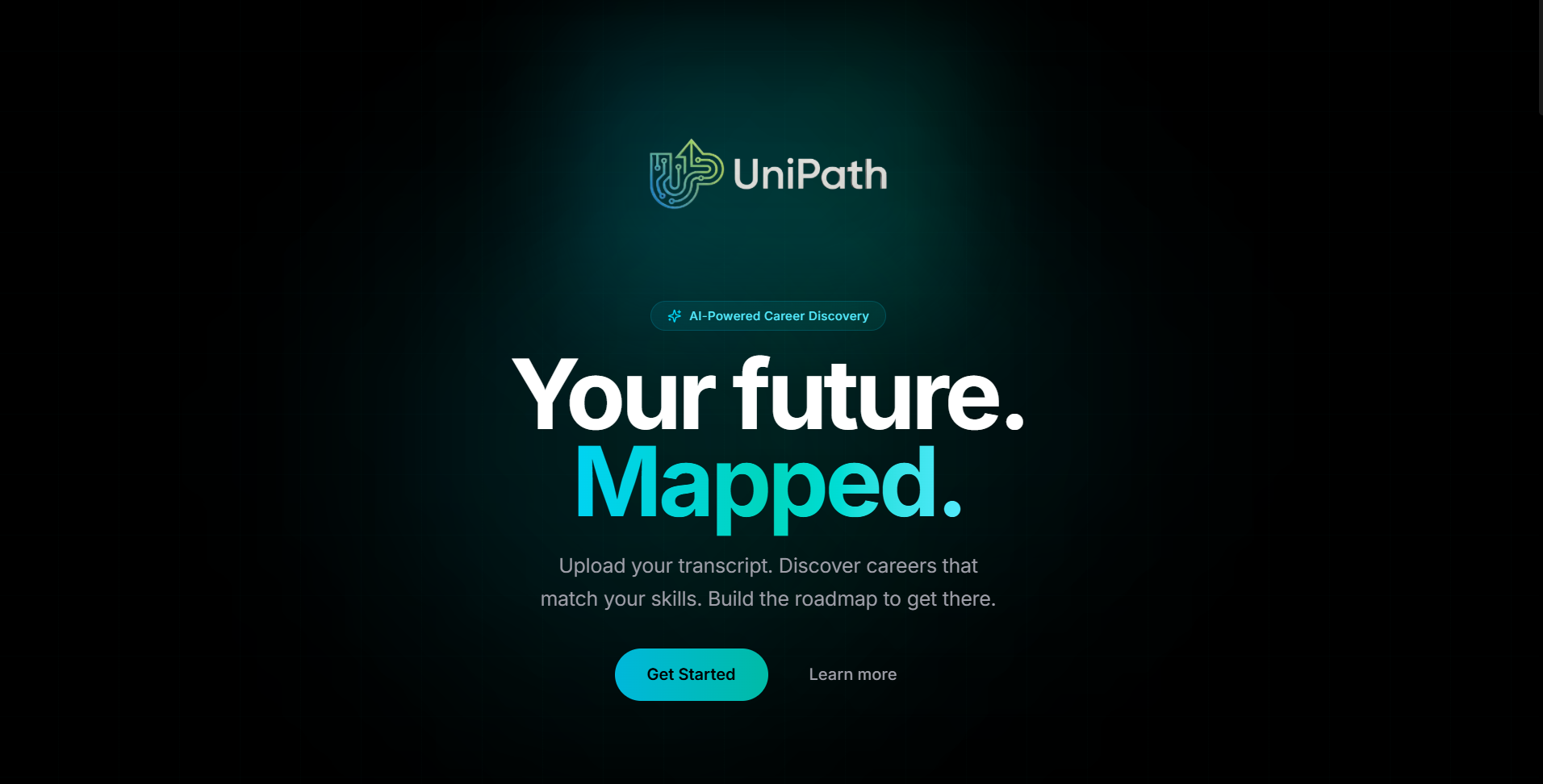
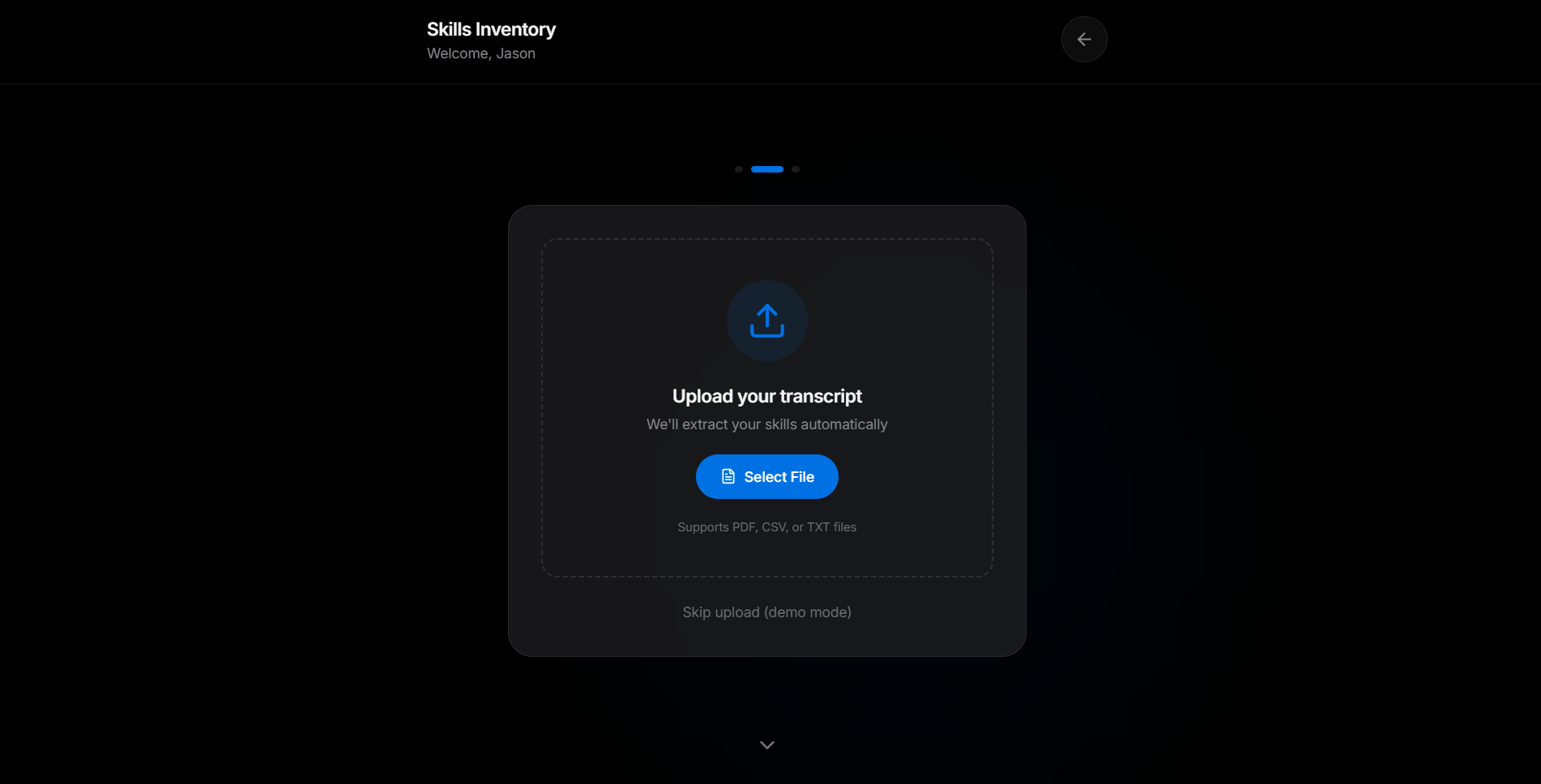
The Gateway: A high-impact landing page using AI to map your future based on transcript data.
-
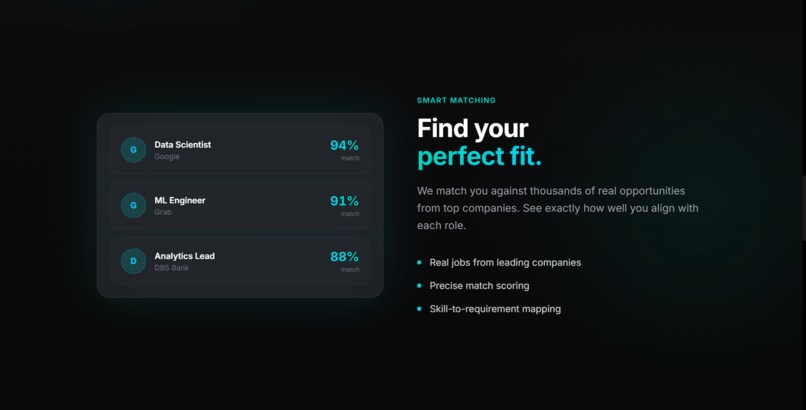
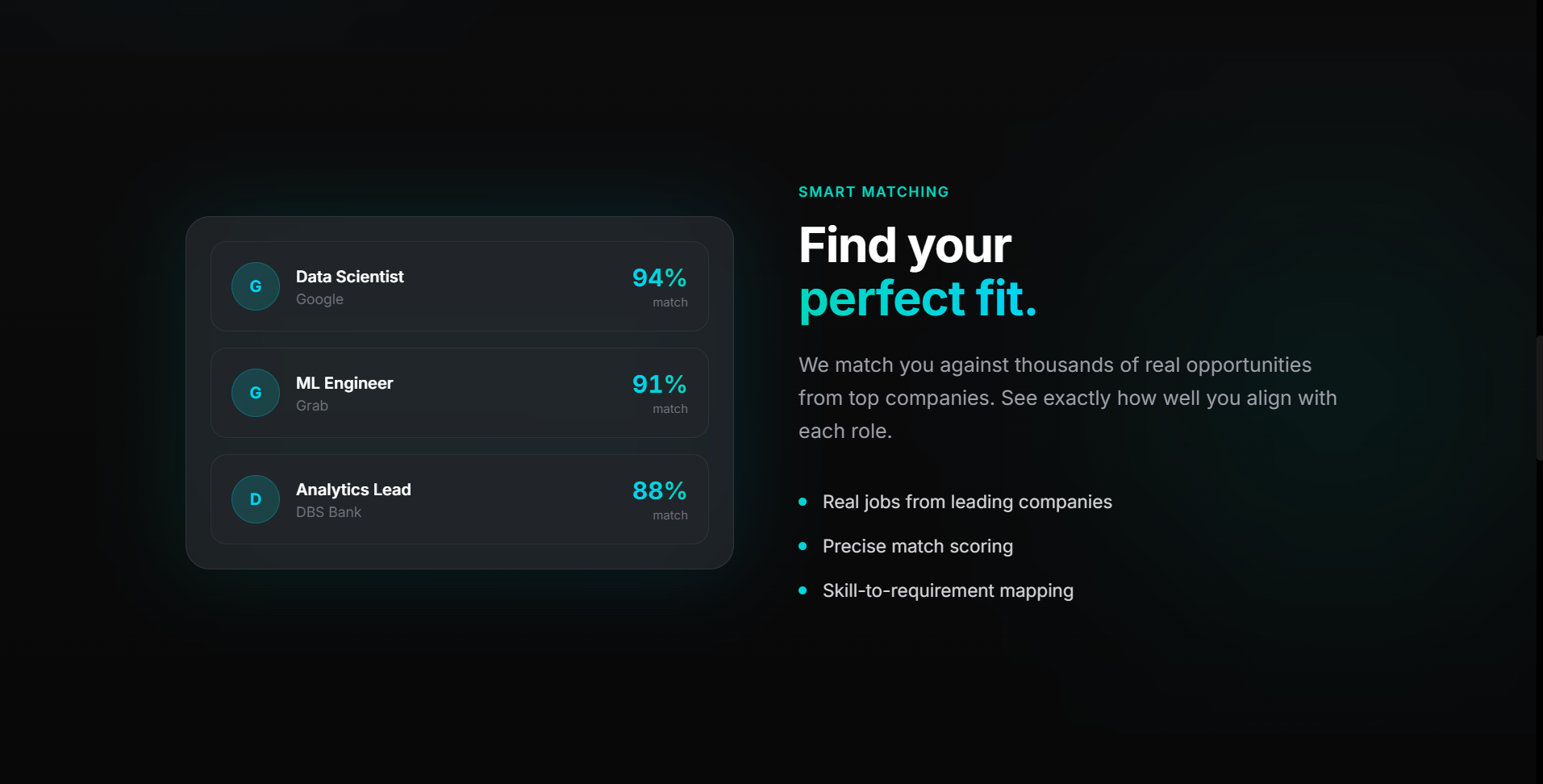
Smart Matching Engine: Visualizes the algorithm ranking users against real-time jobs to find their perfect fit.
-
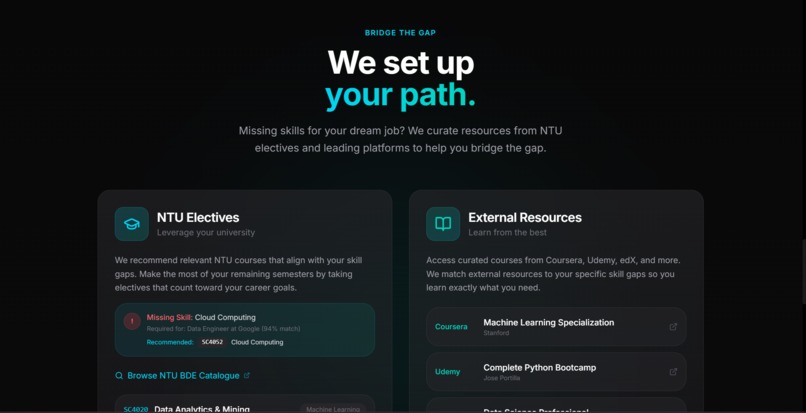
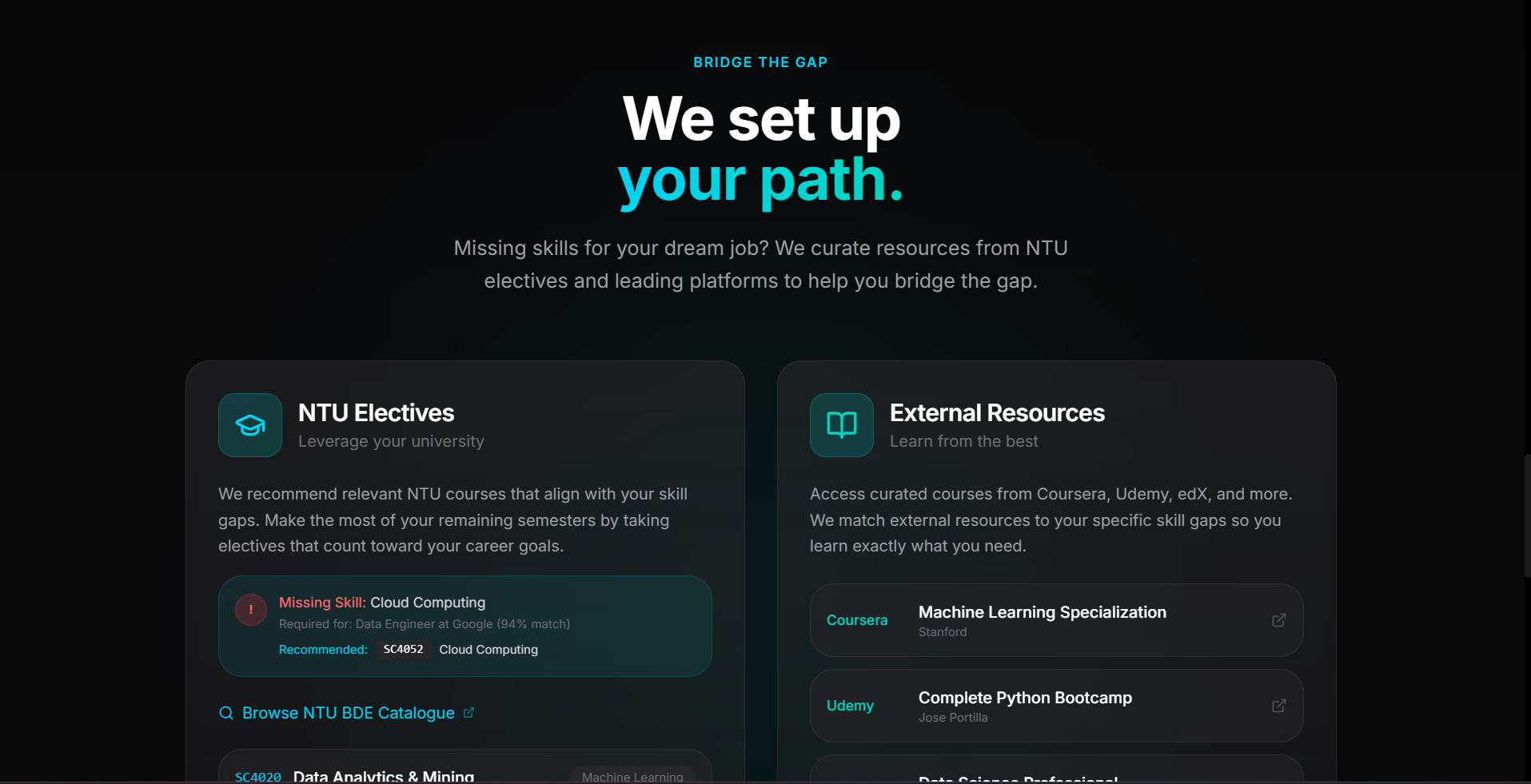
Bridge the Gap: Identifies missing skills and suggests university electives or MOOCs to fill them automatically.
-
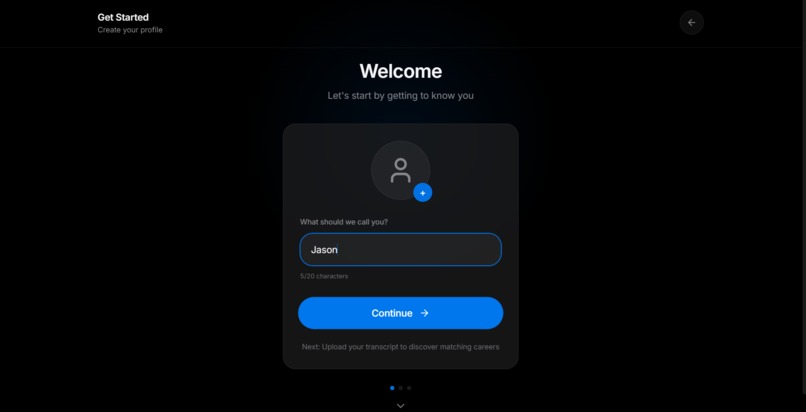
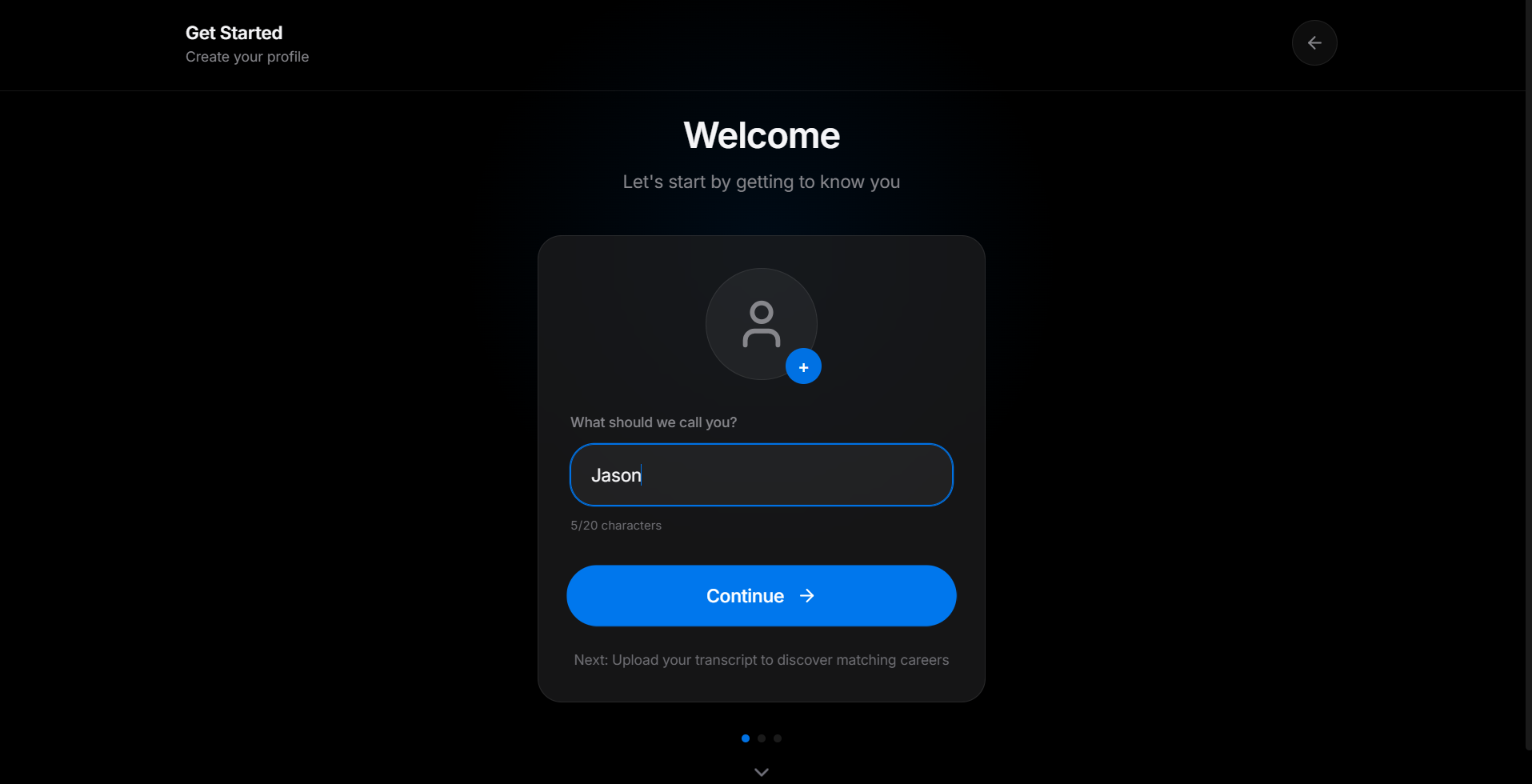
"Personalized Onboarding" – A clean, conversation-style interface to initialize the user profile and set the tone for a tailored experience.
-
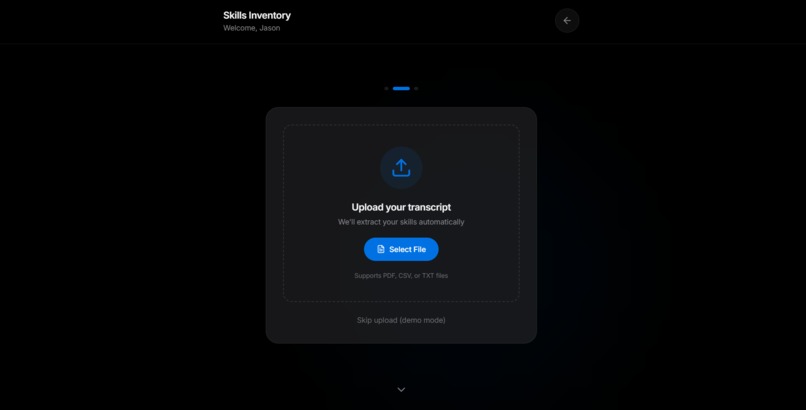
Frictionless Entry: Users simply drag and drop transcripts or resumes, completely eliminating manual data entry.
-
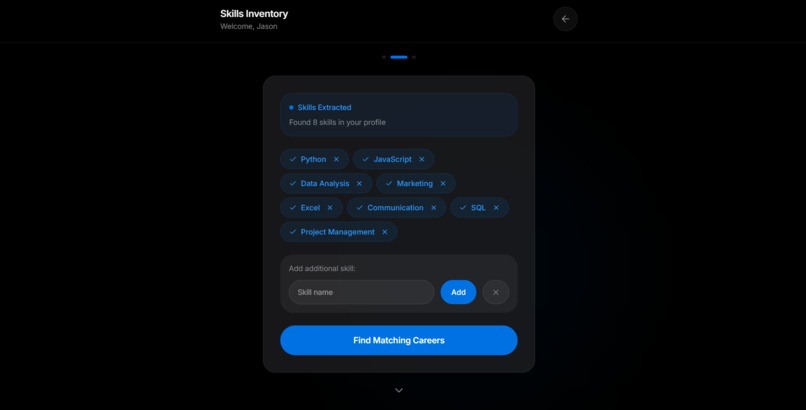
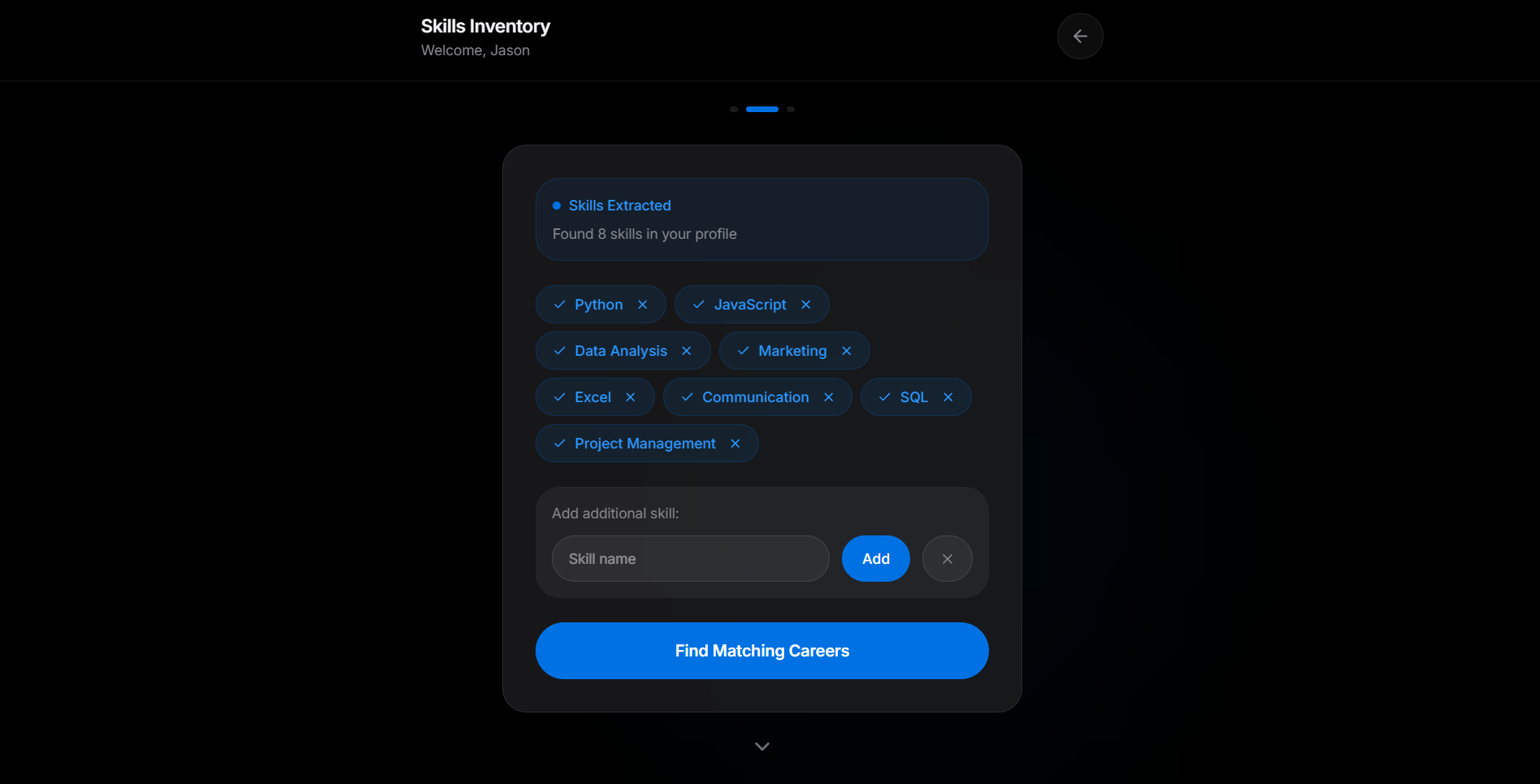
AI Skill Extraction: Parses documents to auto-tag hard skills like Python, allowing users to verify before matching.
-
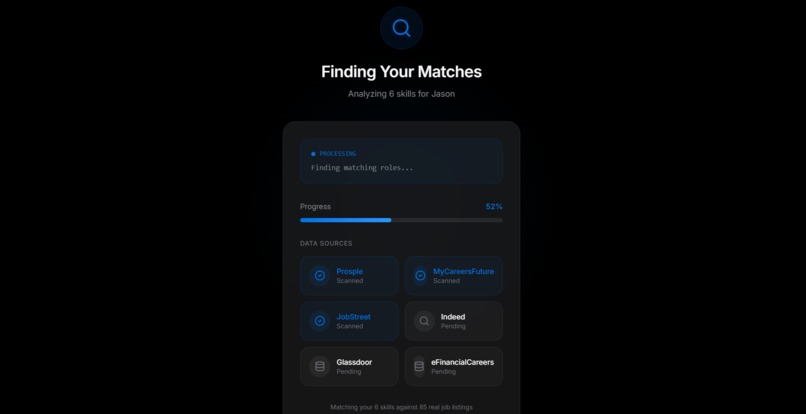
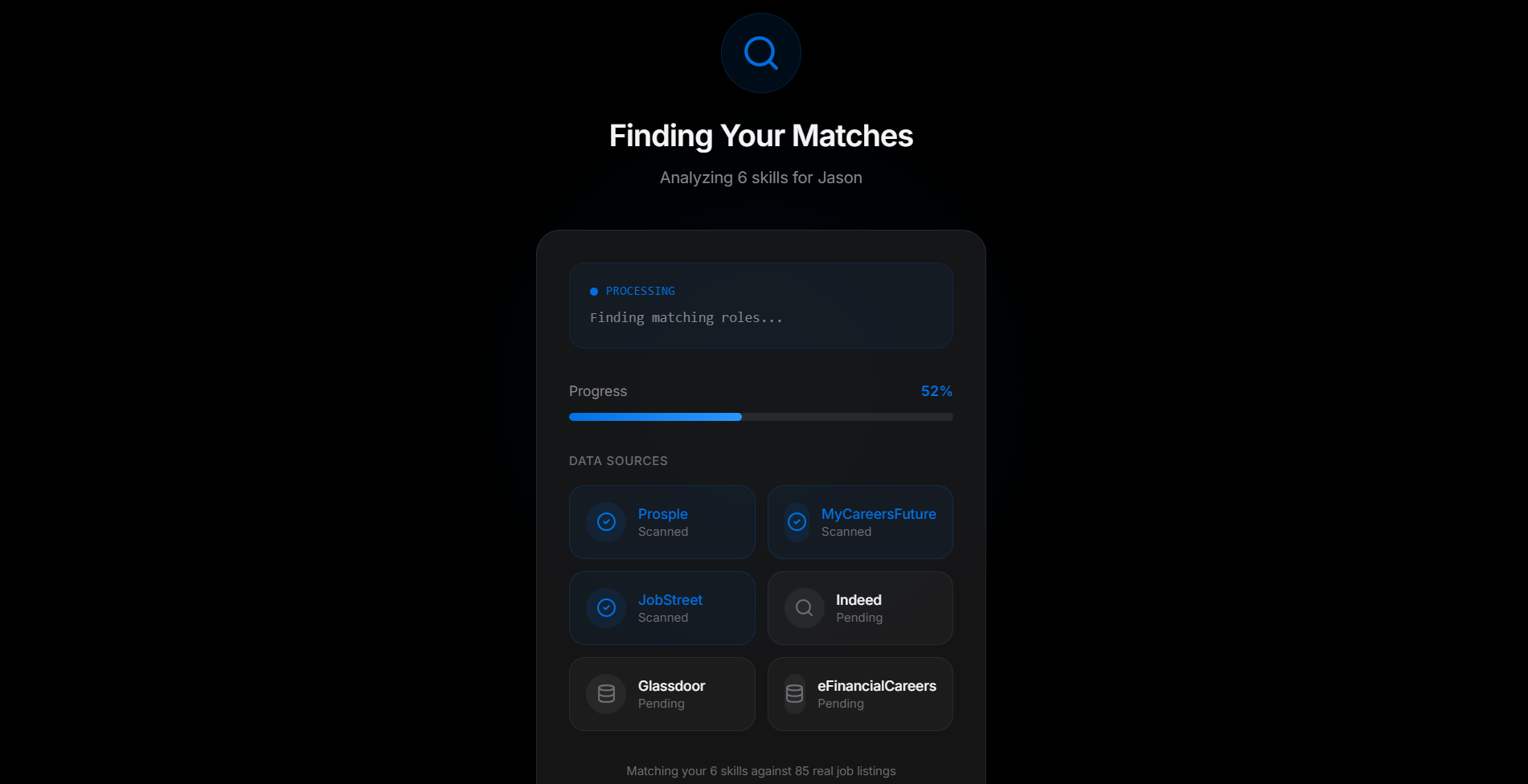
Market Scanner: Transparency screen showing the engine crawling live data from JobStreet, mycareersfuture, and Glassdoor.
-
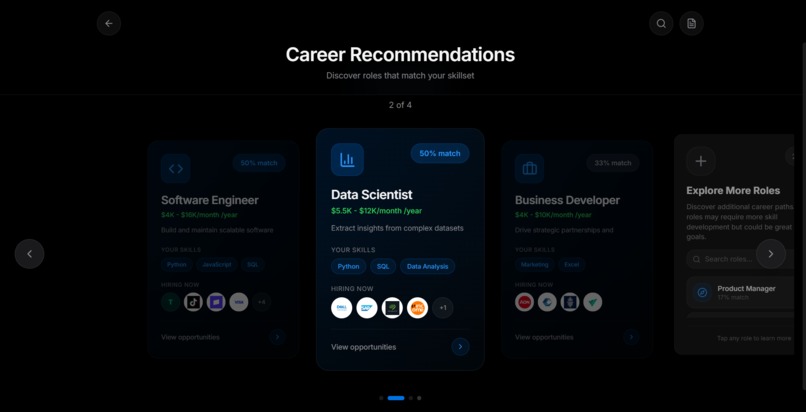
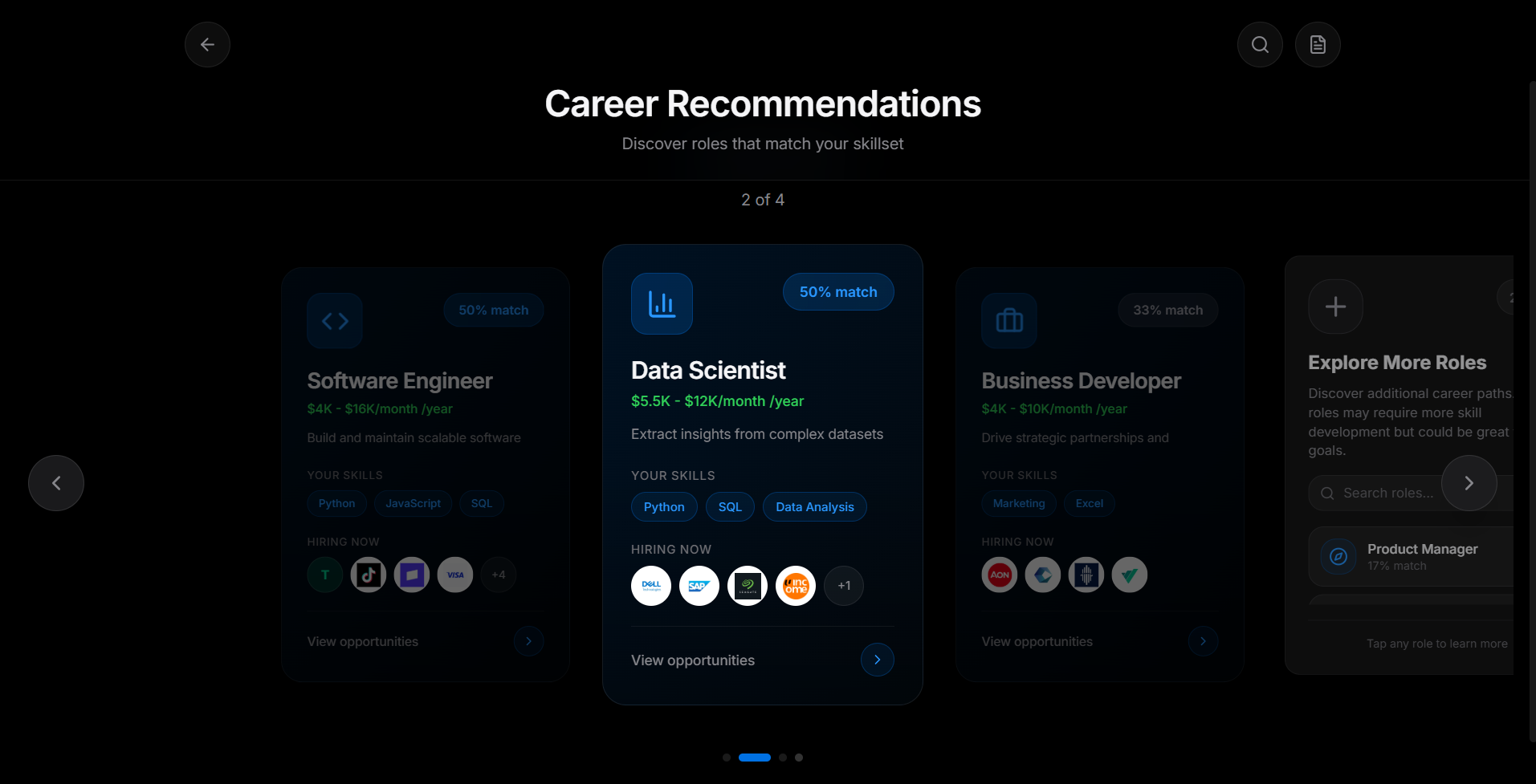
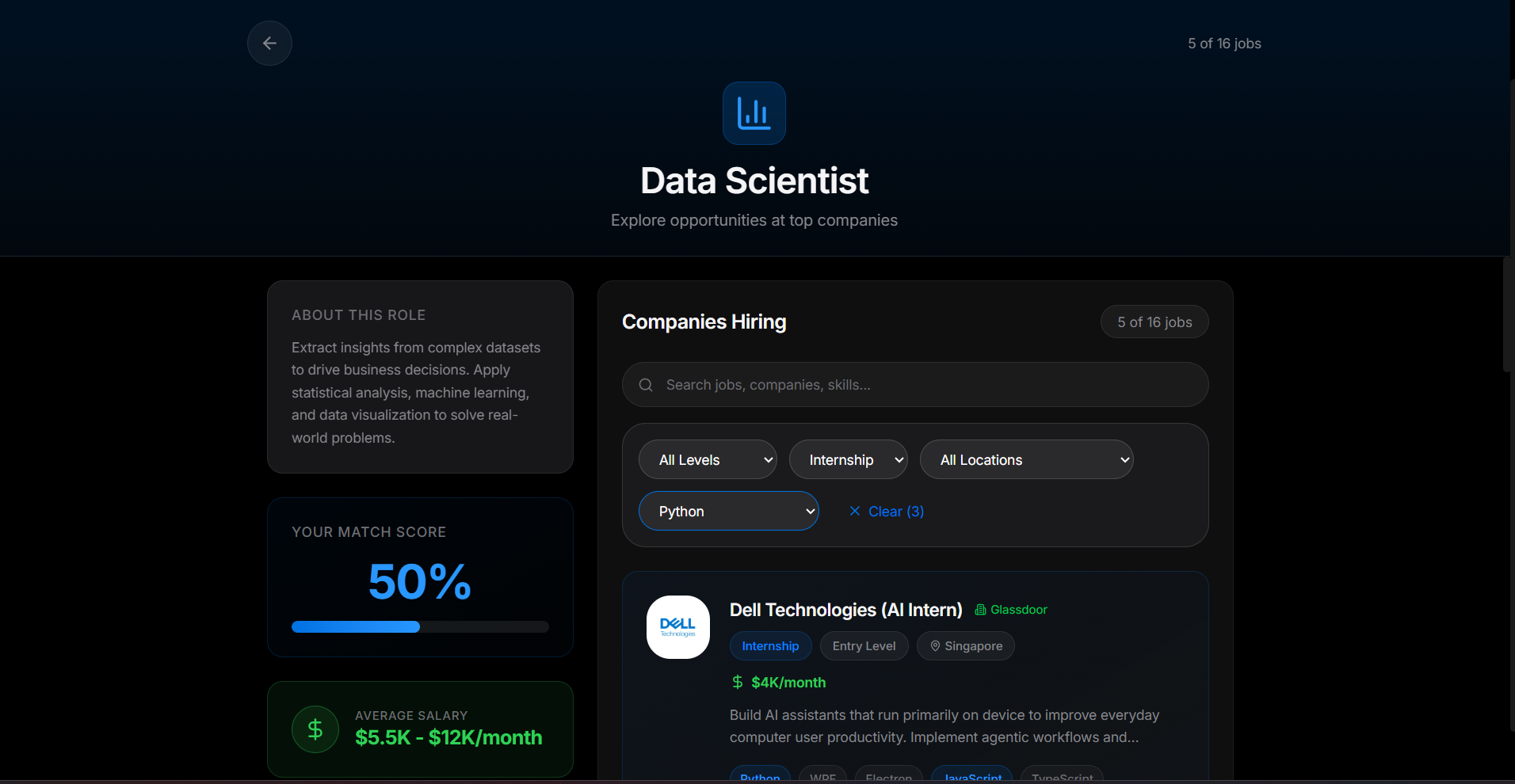
Opportunities Dashboard: A carousel of high-match job cards showing instant role fit, salary range, and hiring firms.
-
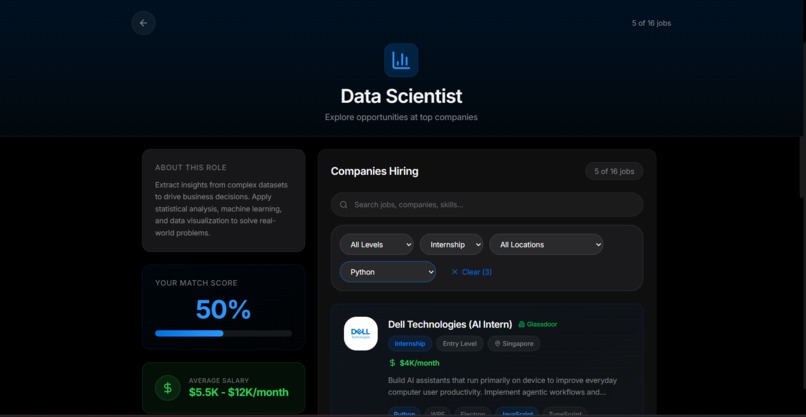
Role Intelligence: Detailed breakdown of career paths with aggregated live listings and full salary transparency.
-
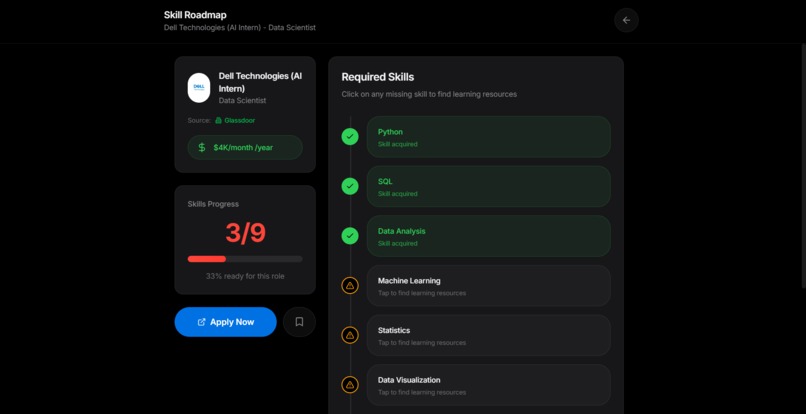
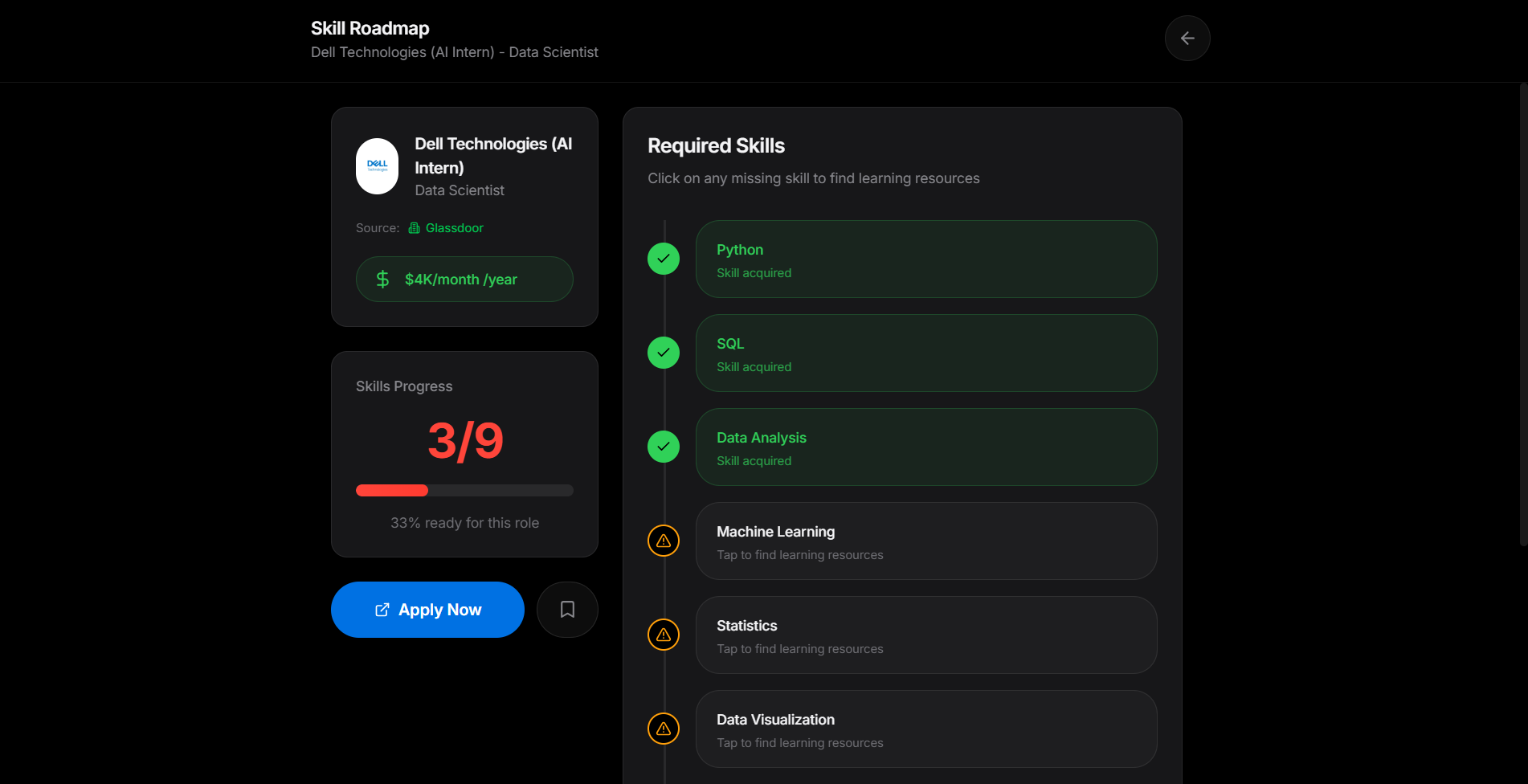
Skill Roadmap: Actionable screen tracking readiness, visualizing acquired vs. missing skills with links to apply.
-
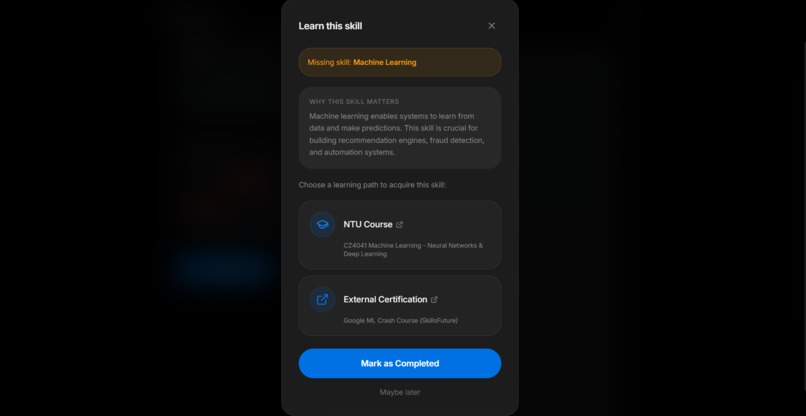
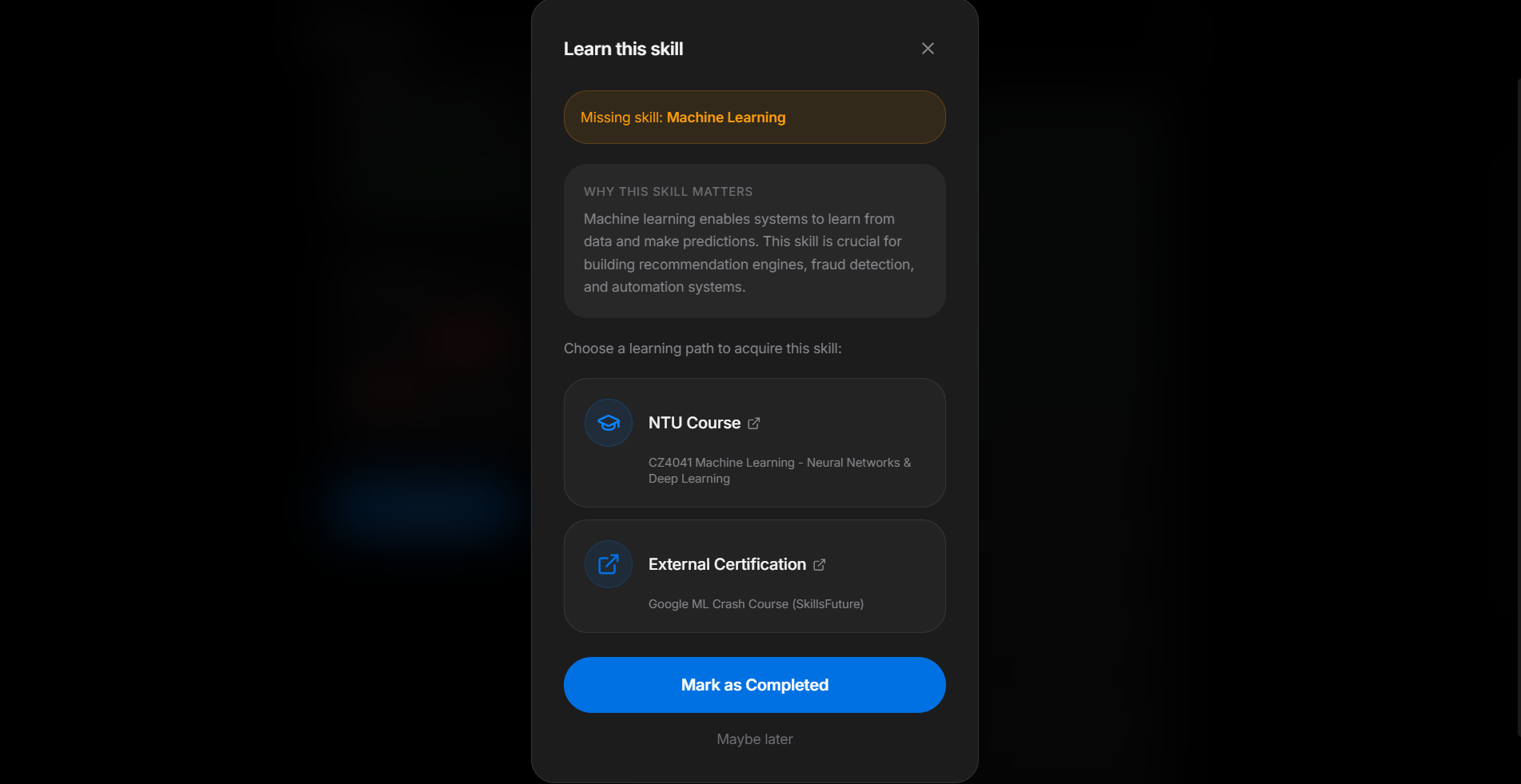
Contextual Learning: Explains why a missing skill matters and links directly to specific university / external courses to learn it.
-
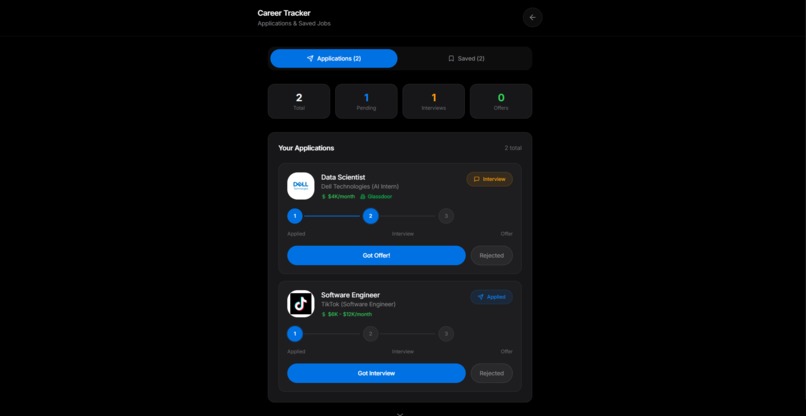
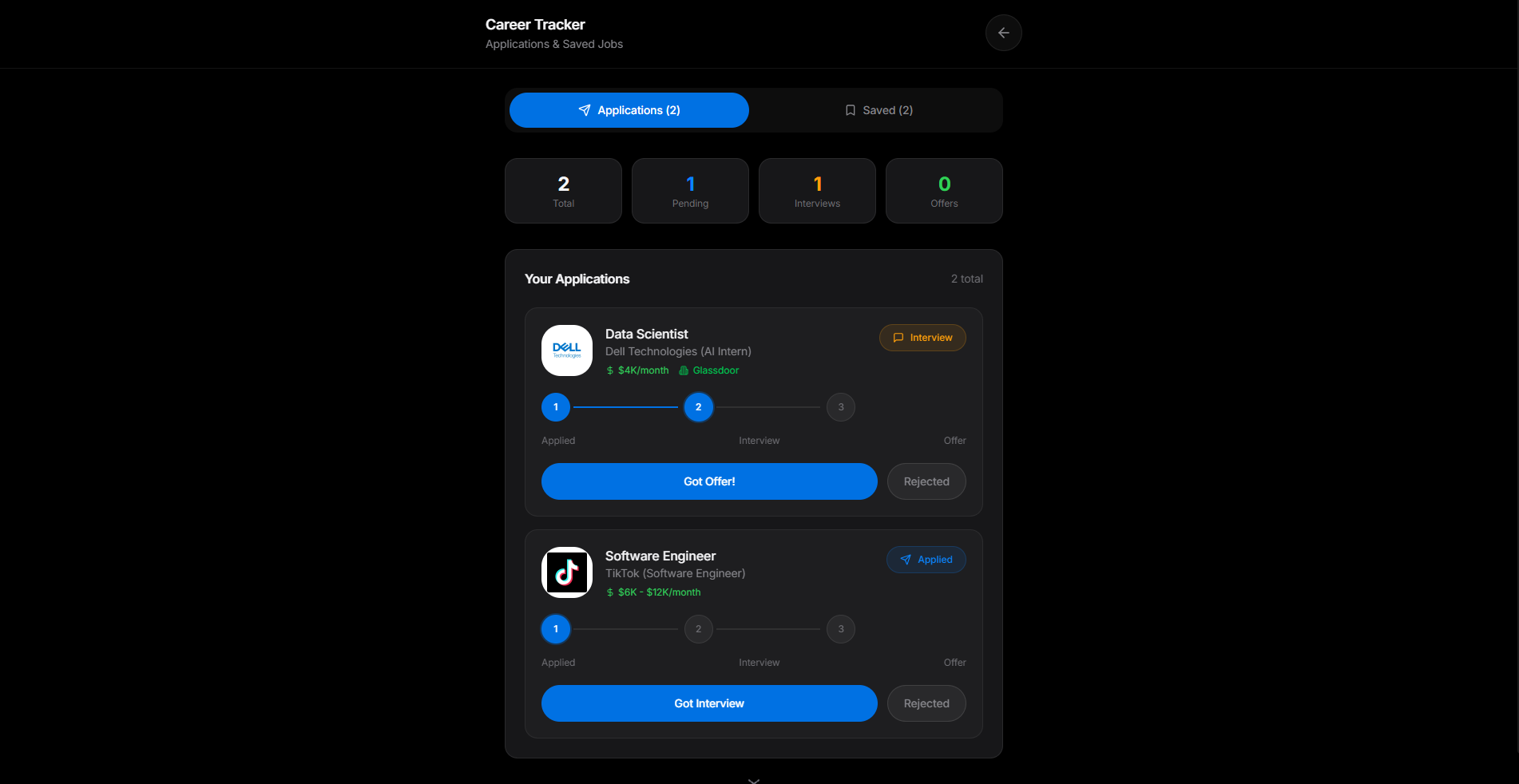
Application Tracker: Centralized hub to manage applications, track interview stages, and organize saved roles in one place.
UniPath: Bridging the Education-to-Employability Gap
Inspiration
As university students and fresh graduates, we noticed a common frustration: many of us know what we have studied, but struggle to understand what we can actually do with it. Academic transcripts, internships, and CCAs often feel disconnected from real-world job requirements. This leads students to apply for roles blindly or feel unprepared for the competitive market. UniPath was inspired by this gap between education and employability. We wanted to create a tool that helps students clearly see how their current skills map to real job roles, identify what they are missing, and provide concrete steps to take next.
What It Does
UniPath is a career-readiness and pathway planning application designed for undergraduates and fresh graduates. Rather than simply listing job openings, UniPath focuses on career clarity and guided preparation.
Key Features:
- Skill Normalization: Ingests academic backgrounds, internship experiences, and self-declared skills into a structured profile.
- Intelligent Recommendations: Suggests suitable job roles with clear explanations and readiness indicators.
- Company Insights: Shows specific skill expectations for selected roles within target companies.
- Personalized Roadmaps: Identifies skill gaps and generates a milestone-based roadmap to help users bridge them.
- Visual Career Map: Utilizes a node-based interface to visualize progress and explore different career trajectories.
- Application Tracker: Allows users to manage the outcome of their journey (Applied, Interviewed, Rejected, Offered).
How We Built It
We built UniPath around a data-driven and explainable architecture to ensure user trust.
- Data Layer: Curated CSV datasets sourced from multiple job platforms (e.g., Prosple, MyCareersFuture, JobStreet, Indeed, Glassdoor, eFinancialCareers) were consolidated into a unified schema covering roles, companies, and skills.
- Skill Taxonomy: Academic modules and internship descriptions were mapped to a standard skill taxonomy to ensure consistent matching across different industries.
- Matching Logic: We developed a rule-based engine that compares user skills against role requirements to compute readiness and highlight specific gaps.
- AI Assistance: AI was used selectively to extract and normalize skill terminology from unstructured job descriptions and to generate concise role summaries.
- UI/UX: The core experience is presented as a node-based "career map," allowing users to explore roles and milestones in a single, cohesive view.
Challenges We Ran Into
- Balancing UI Tone: We had to carefully design the interface to be engaging without becoming overly "gamified," ensuring it remained professional for an academic audience.
- The Hackathon Learning Curve: As first-time hackathon participants, we initially struggled with setting standards and narrowing down our ideation into a structured plan.
- Implementation Reality: We faced the challenge of translating ambitious ideas into a functional MVP within a limited timeframe.
- Data Complexity: Working with real-world data highlighted the difficulty of translating unstructured information into structured, actionable insights.
Accomplishments That We're Proud Of
- Data Integration: Successfully consolidated multiple job datasets into a high-integrity, unified data model.
- Explainable AI: Designed a matching system that is transparent rather than a "black-box" recommender.
- Tangible Planning: Created a career map visualization that makes abstract career planning feel concrete and achievable.
- End-to-End Flow: Delivered a complete user journey from transcript ingestion to actionable career steps.
What We Learned
We learned that explainability is the most important factor in career-related systems; users trust recommendations much more when they understand why a role was suggested.

Log in or sign up for Devpost to join the conversation.