-
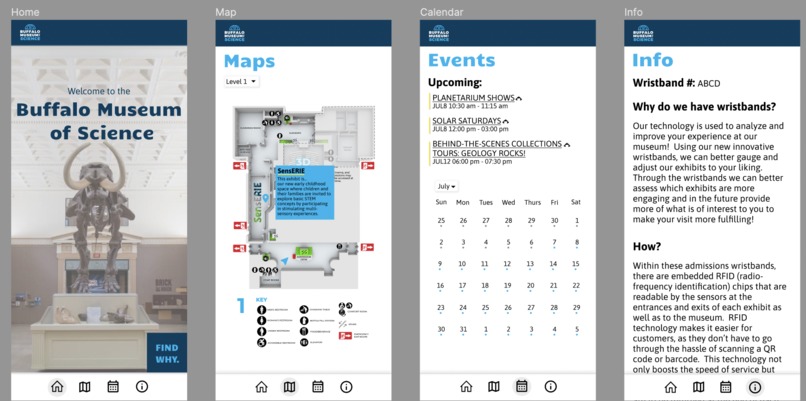
App prototype in Figma.
-
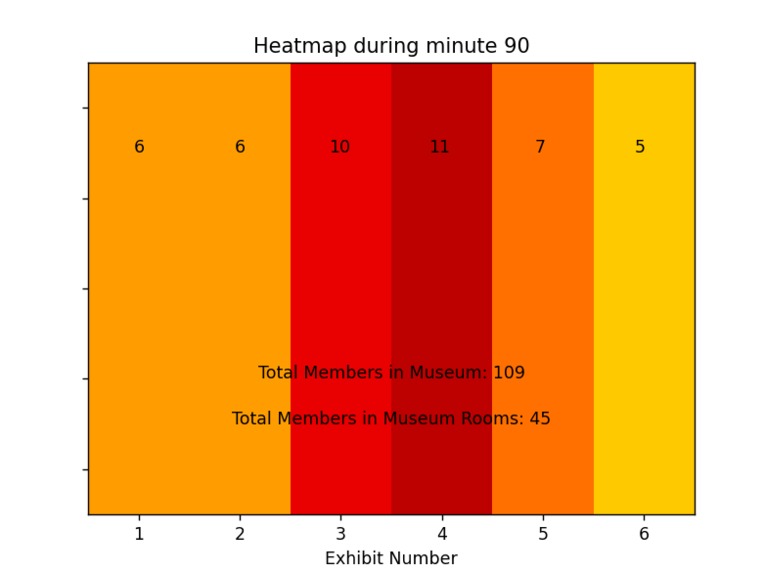
Heat map simulation of visitor traffic flow.
Inspiration
Our inspiration was to create a non-invasive way for the museum to track the flow of visitors in order to be able to better gauge visitors interests. Additionally, we wanted the solution to not only benefit the museum but to also provide an enhanced experience for the users.
What it does
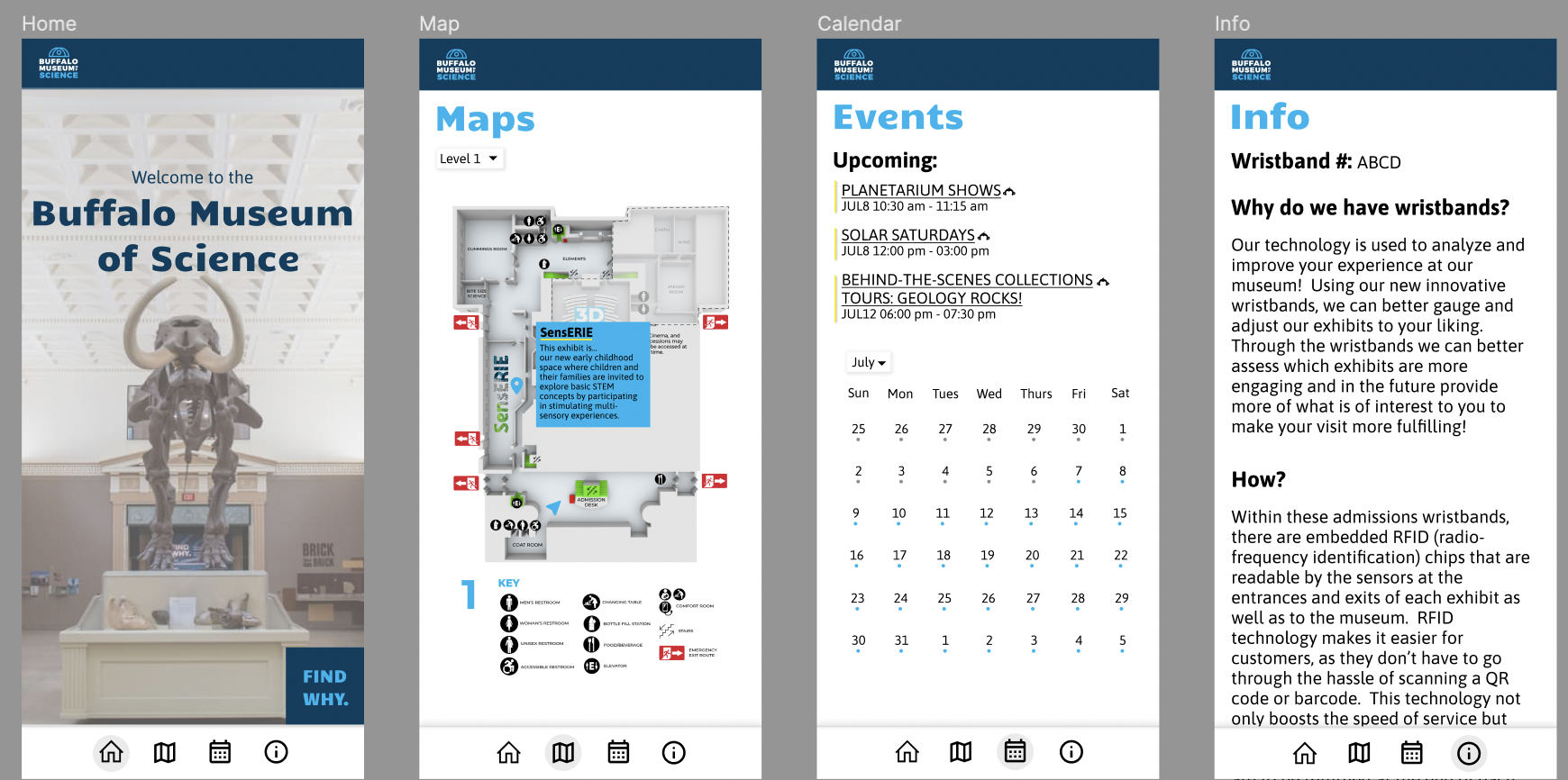
The wristbands allows the museum to accurately track the flow of users and how long they are spending at each exhibit. Additionally, by having sensors at the exits and entrances in the case of an emergency evacuation, staff will be able to ensure no visitors are left in the museum. The optional app has a calendar, info about the wristbands, and a map that users can allow to show their location by tapping it on their wristband.
How we built it
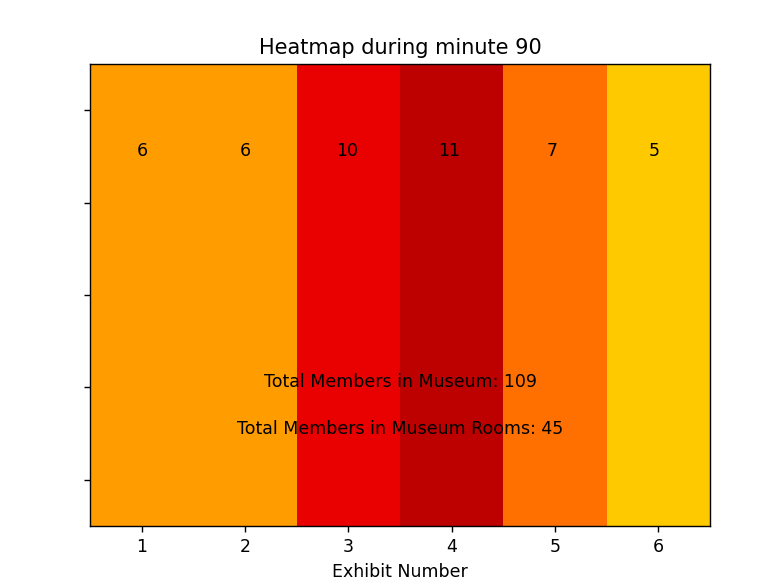
As stated above, our solution has a few parts to it: the app, sensors, and wristband. The app could be created using free software such as Flutter or React and then posting it to the app store. The RFID tag sensors would be placed around the museum at entrances and exits to allow for accurate tracking. The wristbands would have RFID tags placed inside them which average around $0.10 each. We used Figma, a popular prototyping software, to create an interactive prototype of the app. The prototype is easily sharable to let viewers get first hand experience with the app. Due to not having the material here to work with we ended up creating a heat map simulation of the possible data collected from the wristbands which can be found on our Github page.
Challenges we ran into
One of our main challenges was finding an option that would work for all age groups. Specifically we wanted a way to know where all visitors where even if they don't have a smart phone, such as children and elders. Additionally, we wanted the solution not to be an invasion of privacy like many other means of tracking such as facial recognition, thermal cameras, or apps that require you to share your location. Moreover, many alternative methods we considered weren't as accurate given their higher price. Our solution has the benefit of being both precision and cost effective.
Accomplishments that we're proud of
Our solution is beneficial to guests by allowing for a customized experience. Furthermore it benefits the staff by providing them accurate quantitative data about visitors. Our other accomplishment was that we took into account that not all users have smart phones or would want their phone tracking their location. We specifically kept in mind that young children are a large part of museum visitors whose perspectives should be taken into consideration.
What we learned
We learned that not every user has the same experience or access to technology and that their differences should be taken into consideration when creating projects. Additionally, with the interdisciplinary build of our team we realized the value of a variety of skill sets.
What's next for Team 24 - Buffalo Museum of Science
Our team members intend to use the skills and connections they've gained over the last two days to continue their professional growth in the tech world.
Built With
- figma
- python

Log in or sign up for Devpost to join the conversation.