

Inspiration
Many of our team members live or attend school in areas with high chances of encountering dangerous wildlife in our daily lives. Our goal is to mitigate this issue and provide a safer environment for everyone to live in.
What it does
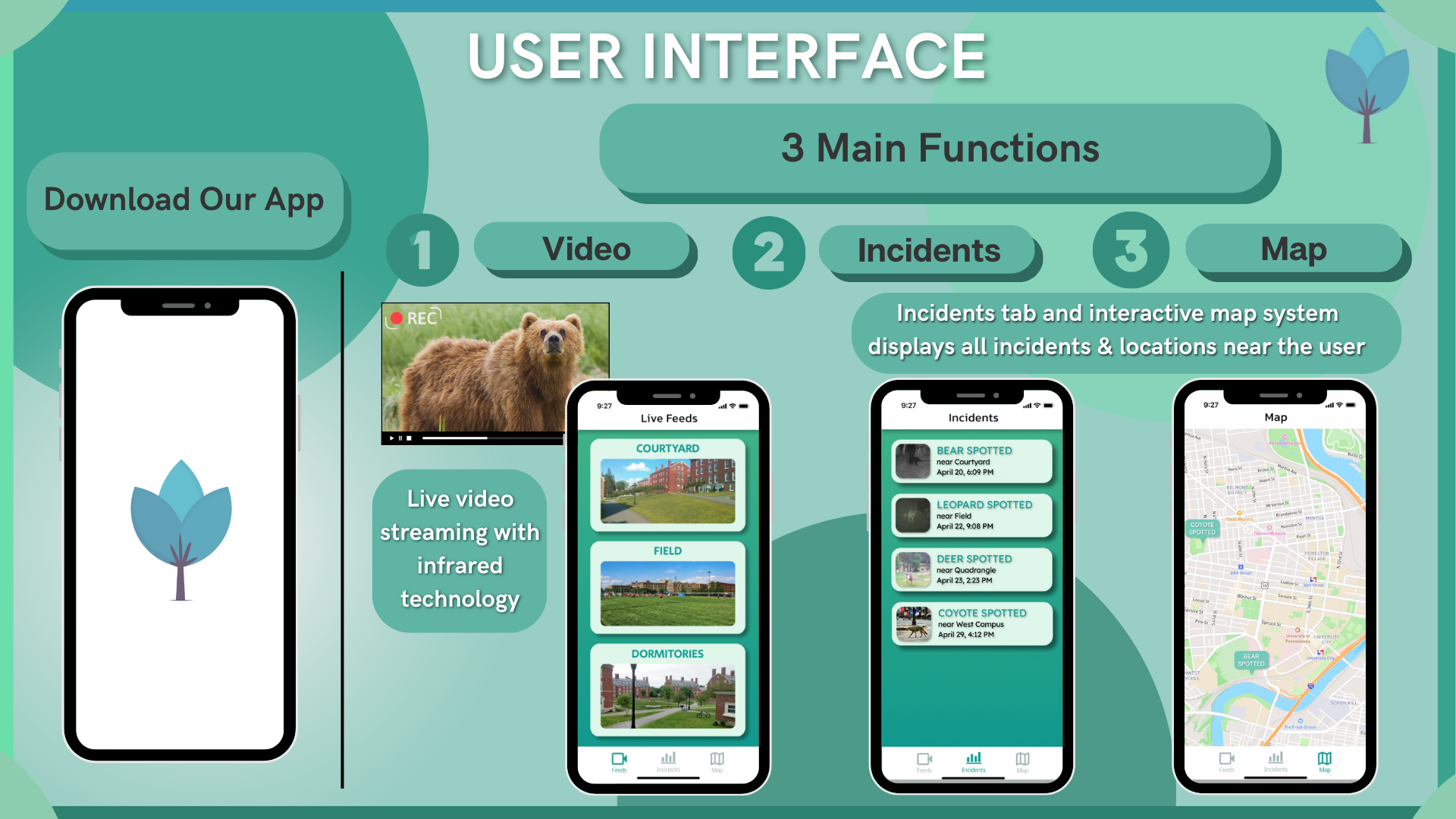
EcoSentry is an innovative solution to unwanted wildlife encounters that combines machine learning and user-friendly front-end design to create a smart, affordable, and effective animal detection system. Equipped with a Raspberry Pi-powered camera, our device captures live feeds of its surroundings. It utilizes a robust convolutional neural network model trained on TensorFlow to analyze these feeds and accurately detect the presence of a wide variety of animal species. Once an animal is detected and identified with a 70% or greater confidence level, the system triggers a detection function and sends details of the sighting, including the animal's image, location, and time of detection, to a Firebase database, which is then displayed on the mobile app. In turn, an instant alert is dispatched via SMS through Twilio to linked mobile devices. This efficient integration of hardware and software ensures timely warnings about potentially dangerous animal encounters, thereby increasing safety, particularly in rural areas.
How we built it
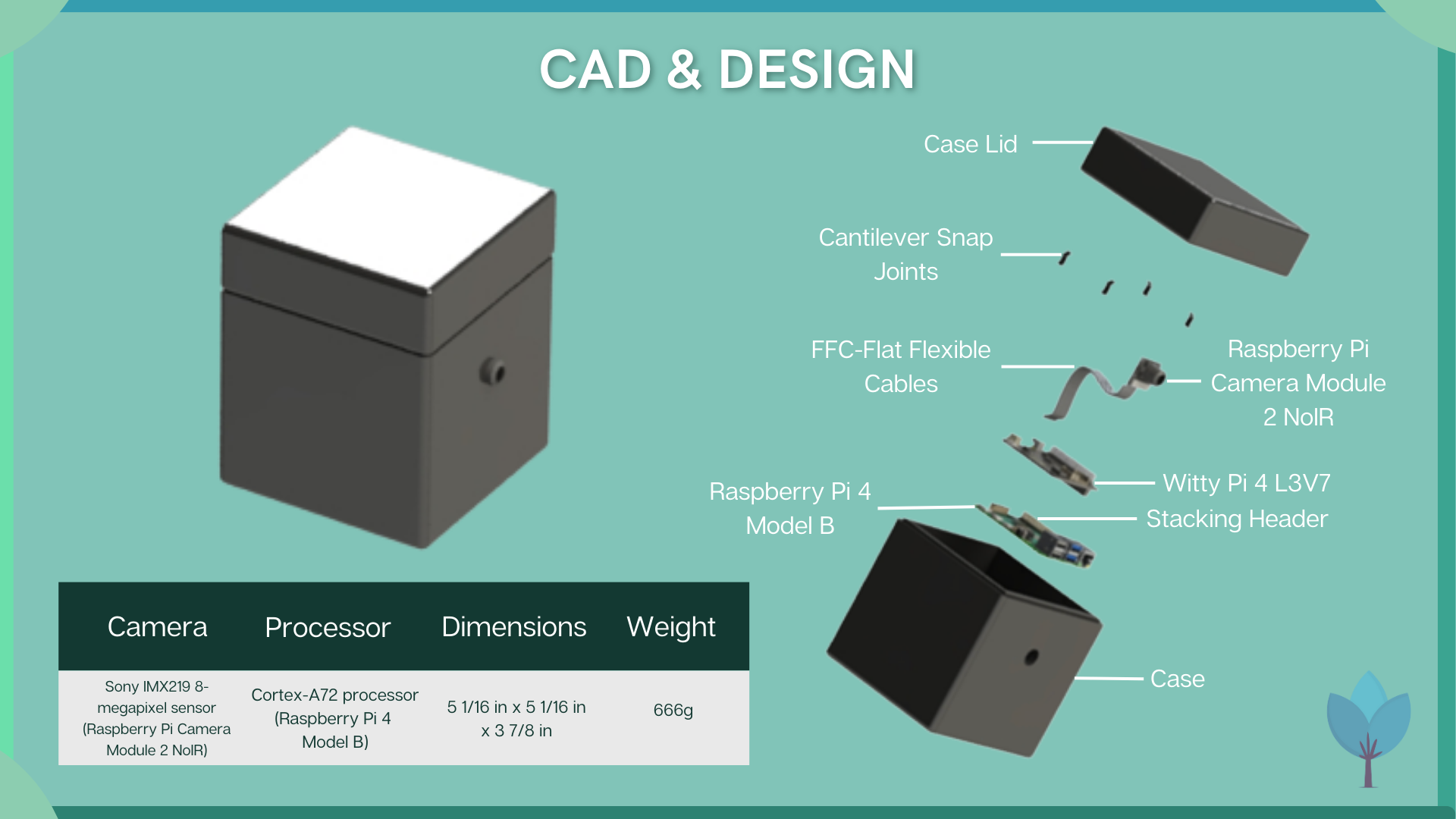
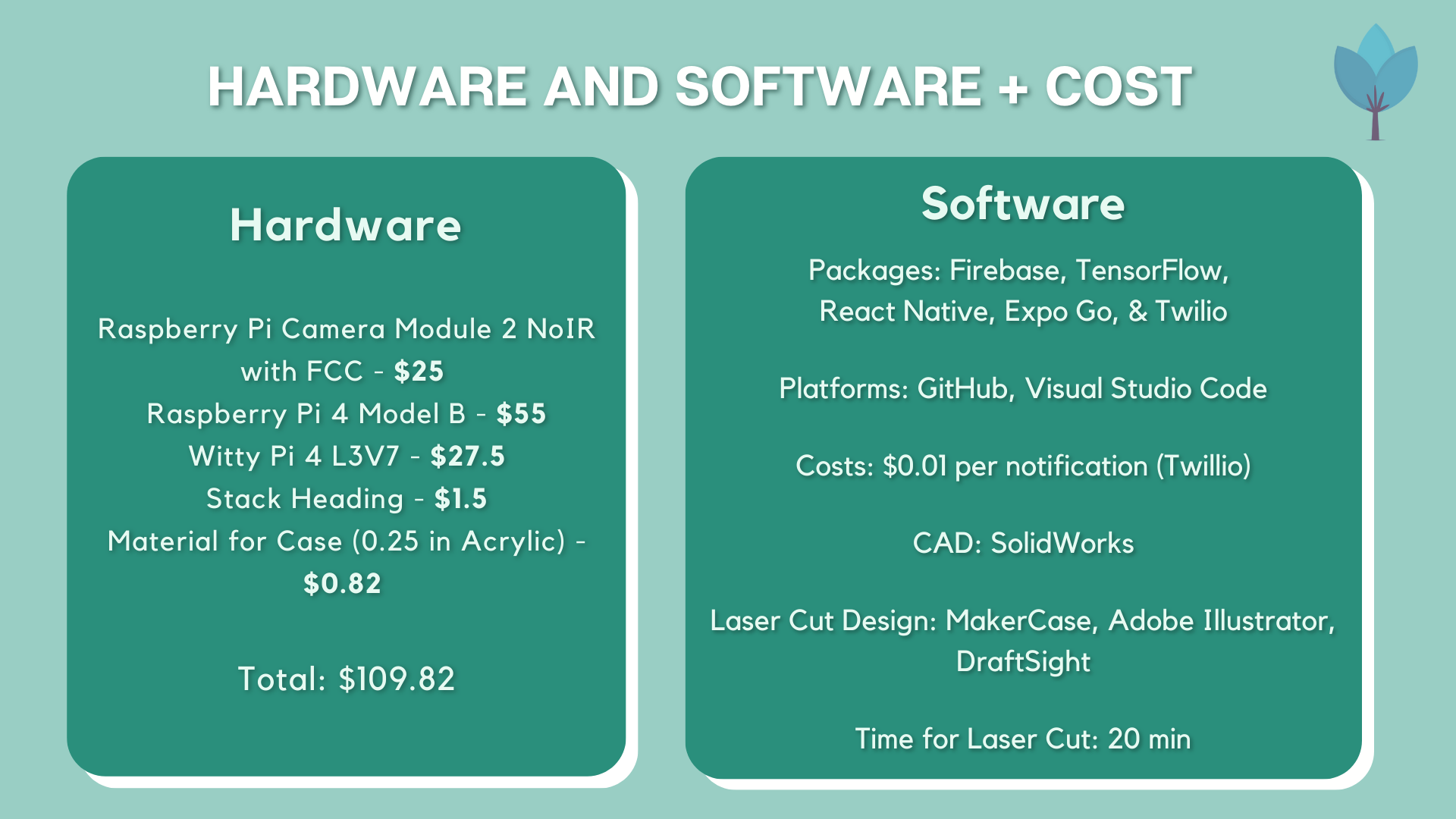
We leveraged Raspberry Pi 4 Model B and Witty P 4 L3V7 in our hardware prototype, the latter for efficient power management. The Raspberry Pi Camera Module 2 NoIR, connected via flat flexible cables, captures the live feeds. We also ensured that the device is aesthetically pleasing and easy to install by housing the components in a sleek black laser-cut acrylic case with a lid, attached using cantilever snap joints. On the software side, our mobile application was developed using React Native for a user-friendly interface, and Expo Go for mobile testing. The convolutional neural network model was built on Tensorflow, using a hand-collected dataset of many animal species. The notifications and alerts are managed through Firebase and Twilio.
Challenges we ran into
We faced certain limitations in our initial prototype. The lack of an infrared filter in the camera restricted the device's utility during nighttime. We also found that the Raspberry Pi and Witty Pi might not be cost-effective for mass production, given that we weren't using all the functionalities they offered. Additionally, identifying a way to reach our primary target market of rural schools and convincing the key decision-makers about the product's effectiveness and utility was also a significant challenge.
Accomplishments that we're proud of
Despite the challenges, we successfully built a prototype of an innovative animal detection system, which, in its current form, can identify twelve different animal species. We also designed a mobile application that allows for easy access and control of the system, including the ability to check a list of connected devices, view incidents, and access a map of all incidents. Moreover, we established a business model that has the potential to address a critical safety issue faced by rural schools and communities, and we are proud of our vision to create safer environments for people and wildlife to coexist.
What we learned
Throughout this journey, we learned how to integrate various technological elements into a cohesive product that addresses a specific and pressing issue. We gained insights into the challenges of mass production and the importance of continuous iteration in product development. Moreover, we understood the importance of a well-planned business model, including identifying the correct market segment, effective communication of our value proposition, and maintaining good customer relationships. Lastly, we recognized the role of technology in improving safety and the potential for creating a positive social impact.
What's next for Team 14: EcoSentry
If we were to build a second prototype, that process would include refining our camera system, building out distribution software, and improving our animal recognition model. It would also be beneficial to build partnerships with local governments, schools, and wildlife organizations to further understand an extended market.

Log in or sign up for Devpost to join the conversation.