Inspiration
Between 100,000 and 200,000 American lives that could have been saved are lost due to a lack of early Cardiopulmonary Resuscitation (CPR); yet, only 2.4% of Americans are trained in this procedure each year. The current CPR training system is highly inefficient, as CPR learners are unable to practice when outside of training facilities or after receiving their certification. This lack of ability to practice is part of the reason that more than 70% of Americans feel helpless to act in emergency situations. In light of this issue, we wanted to offer a more accessible, effective, and affordable method of CPR training.
What it does
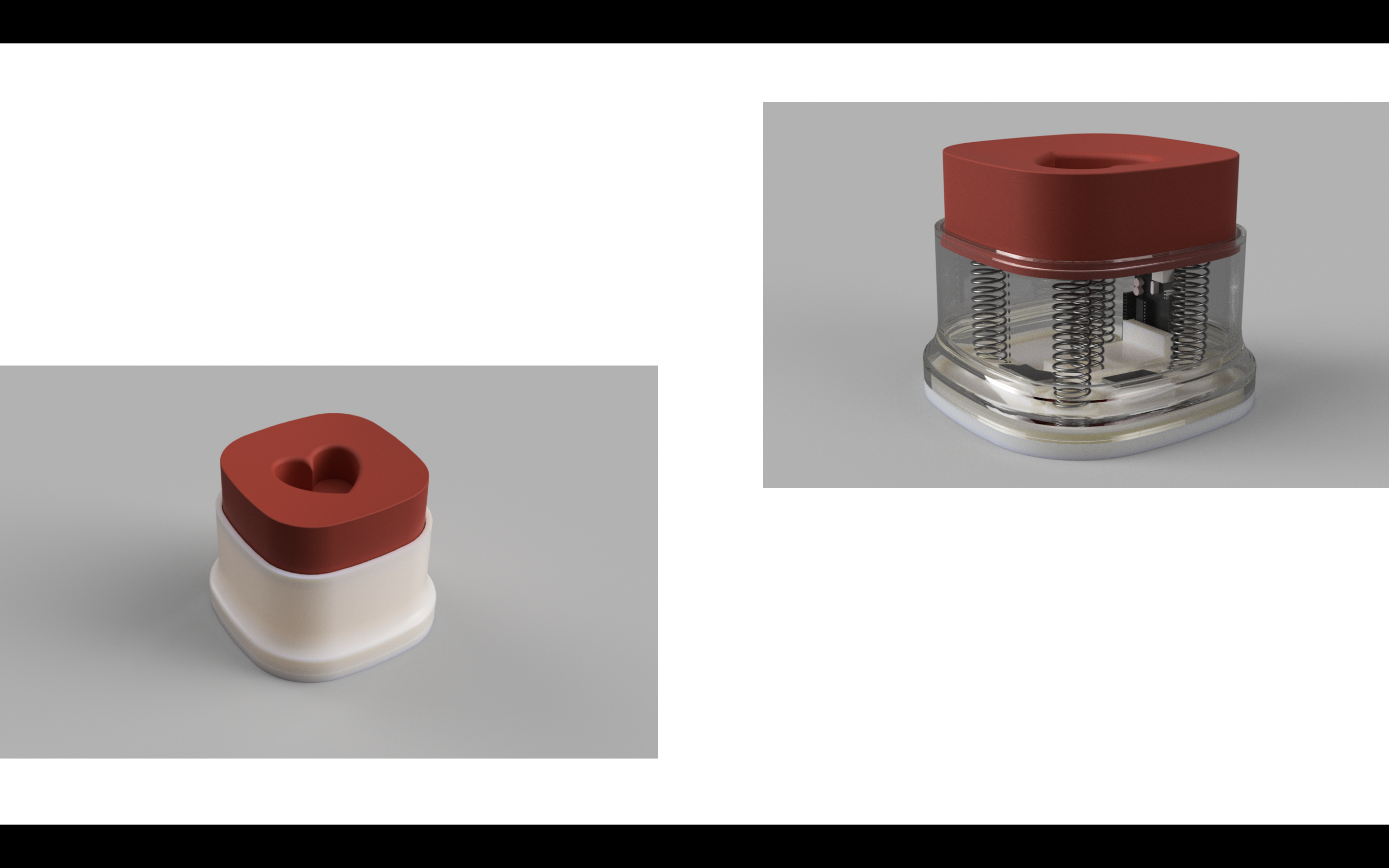
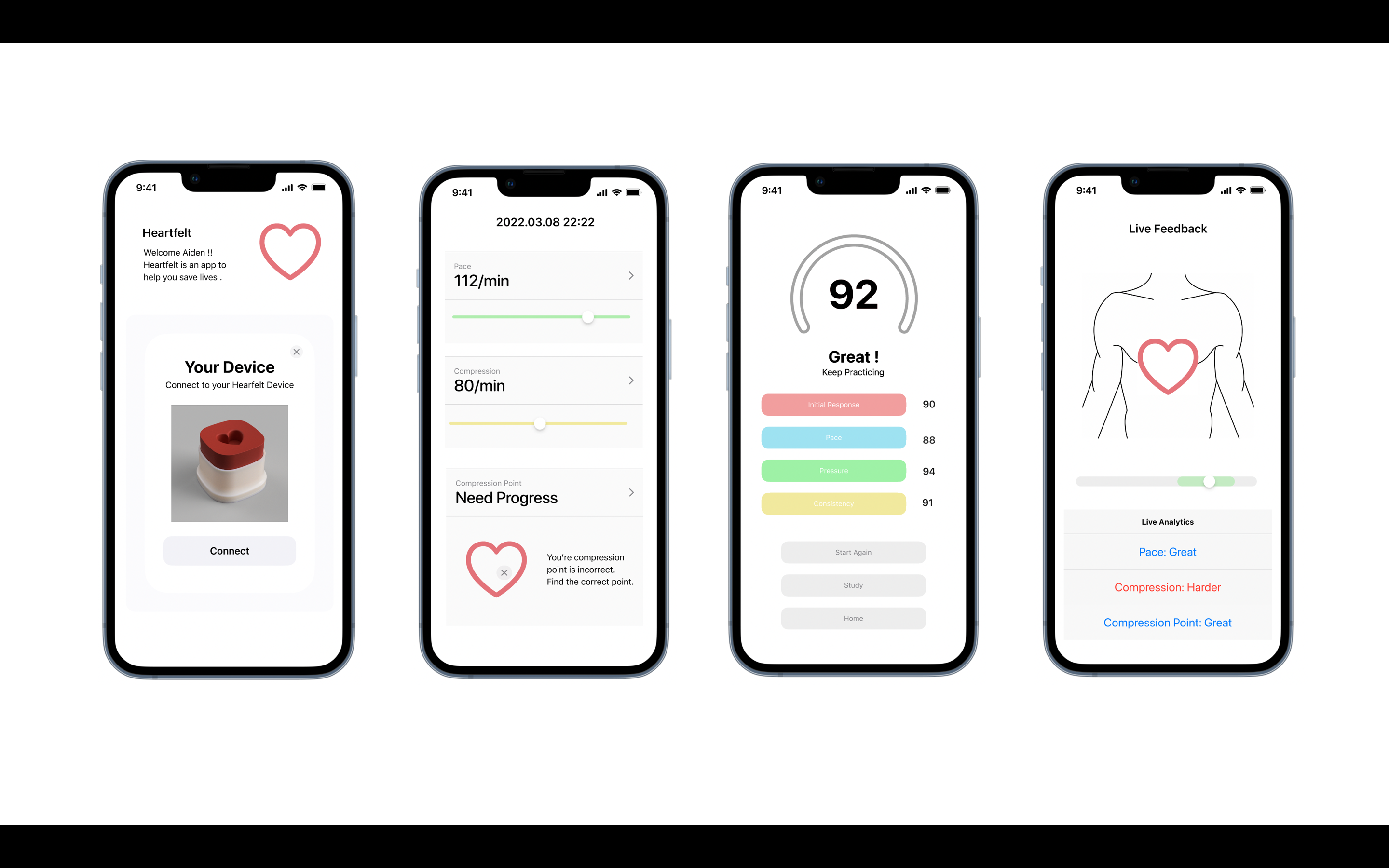
HeartFelt is designed and engineered to closely simulate CPR conditions. The user pushes down on a lunchbox-sized, button-like device, which is coated in TPU, a soft plastic, to make for a realistic experience. Unlike traditional dummies, HeartFelt provides real-time, easy-to-understand feedback on performance metrics, including the depth and rate of compressions, through haptic and visual feedback on the Heartfelt companion app. By stripping away many of the features of manikins and focusing only on the aspects that are most critical to CPR, HeartFelt serves as a portable and affordable supplement (though not a replacement) to traditional CPR training dummies and courses.
How we built it
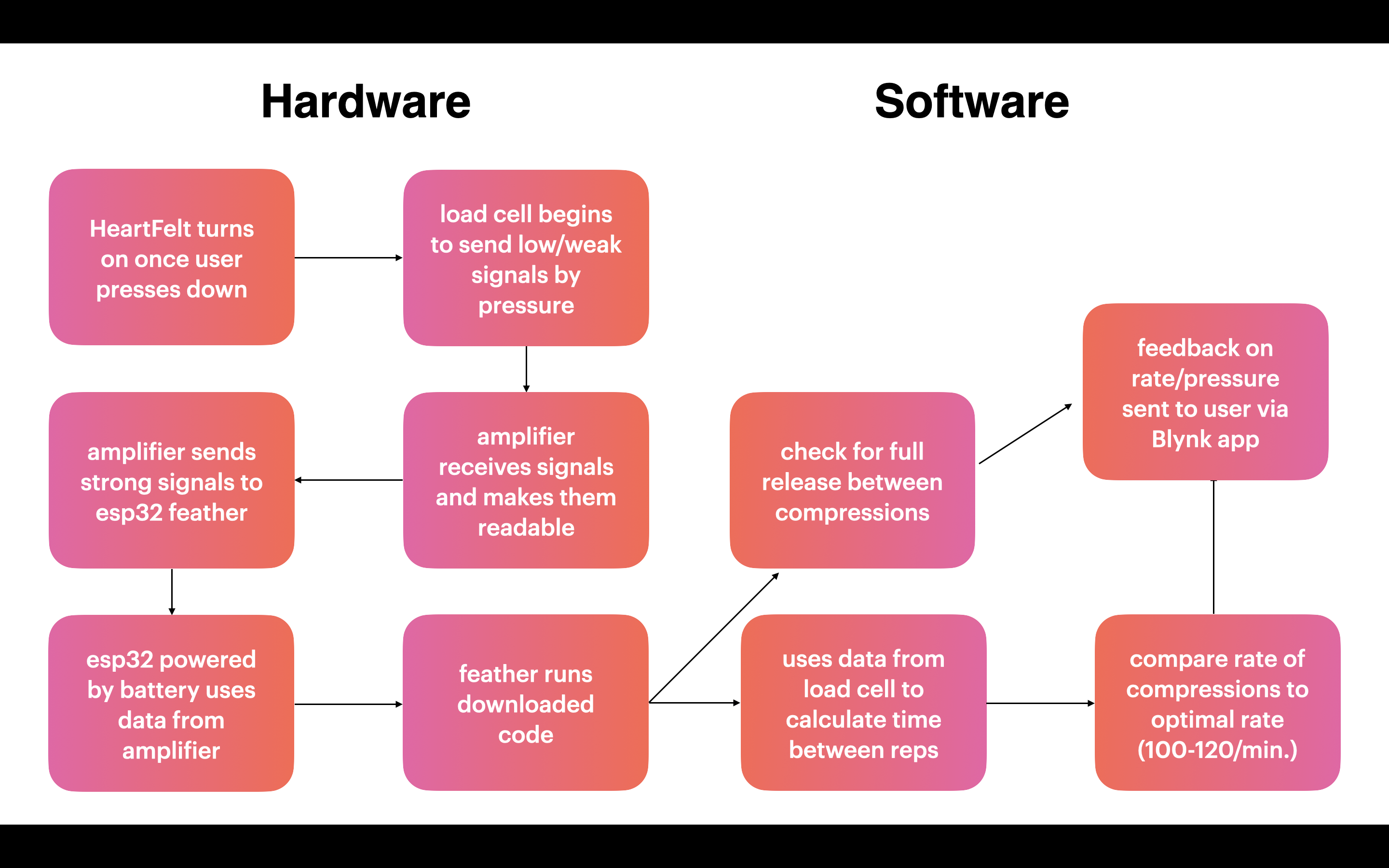
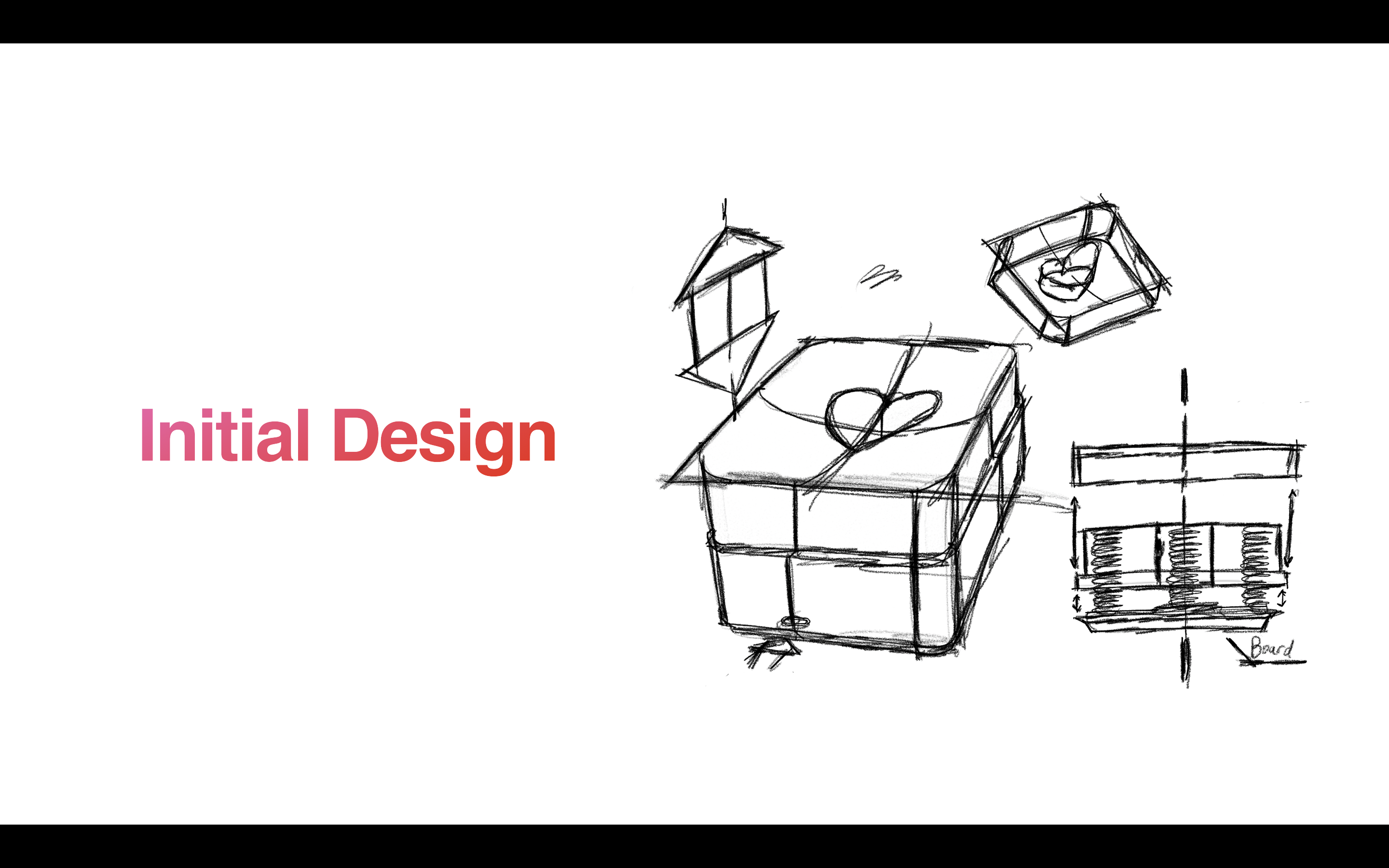
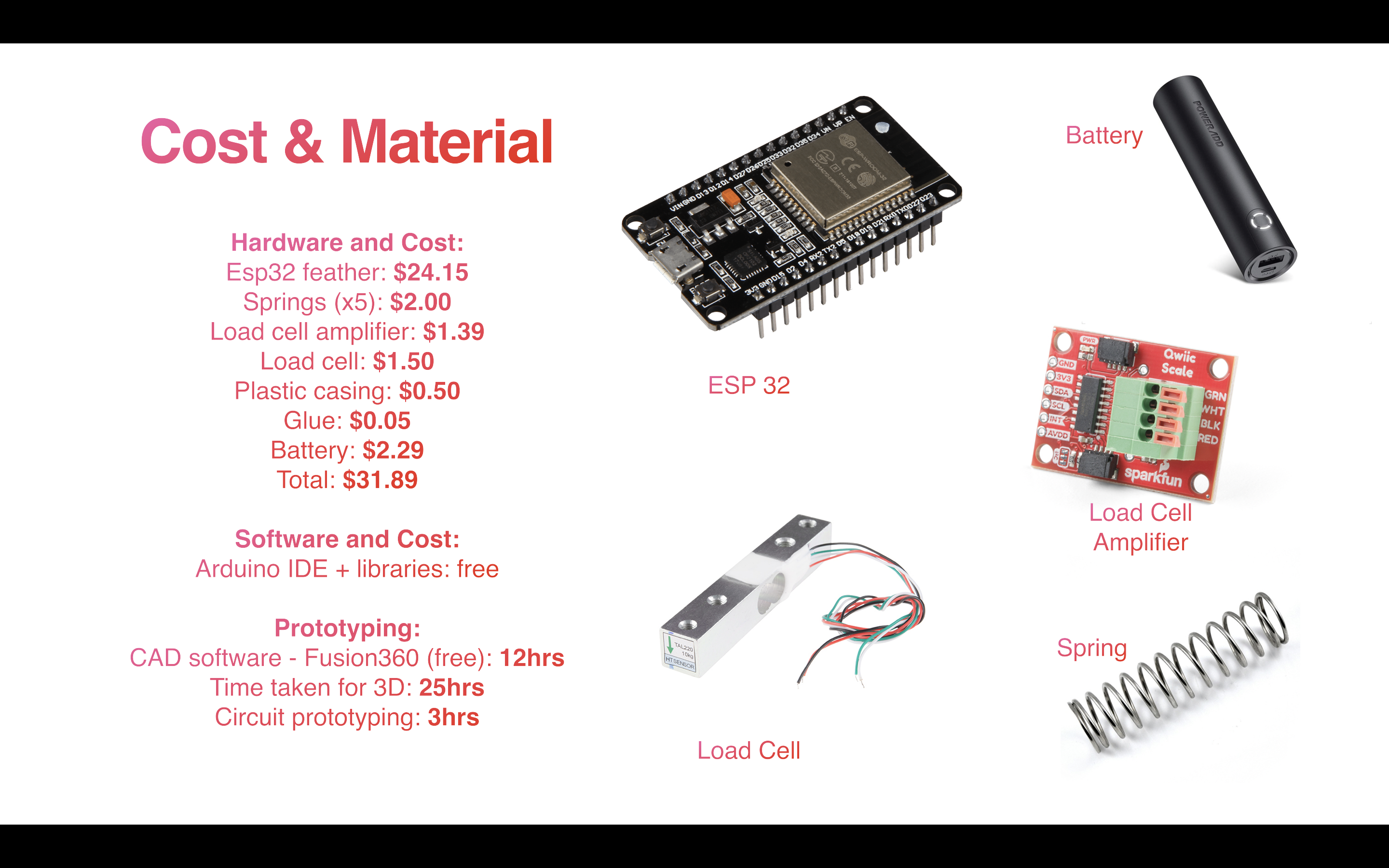
We used Blendr and AutoDesk Fusion360 to 3D print the body of the item. Inside the product, we attached 5 springs connected in parallel to a SparkFun loadcell, which we then connected to an amplifier and then a ESP32 Feather V2 microprocessor. Force exerted from the spring is interpreted as compressions according to the code stored in the Feather and then finally transmitted via WiFi to the Blynk IoT mobile app.
Challenges we ran into
While building the prototype, we had to wrestle with around 4 different load cells (and thus CAD designs) before finding one that worked with the Feather and C++ code. It was very difficult to calibrate the load cell, so our prototype was unable to unaccurately assess the depth of the user's compressions. The Feather was finnicky and would often disconnect itself from the wifi, which meant we had to constantly re-run the code when demonstrating the prototype.
Accomplishments that we're proud of
As a team, we experienced the process of developing a business idea, conducting market research, and creating financials, and incorporated what we learned into the technical side of our product. Considering the hardware struggles we had, we're very glad that we were able to put together a complete, functioning prototype!
What's next for Team 13 – HeartFelt
In the future, we plan to smooth out the engineering aspects of HeartFelt, including incorporating a soft plastic body, accurately calibrating the load cell, and developing a more comprehensive app.


Log in or sign up for Devpost to join the conversation.