Inspiration
Each year, tens of thousands of deaths are caused by drowsy driving. At SafeSense, we strive to combat this problem by creating an AI-driven device that monitors drivers for signs of drowsiness and distraction, ensuring the alertness and safety of all users. Utilizing advanced real-time image recognition technology, SafeSense analyzes the driver’s eyelid movements and facial expressions to assess alertness levels. It offers a comprehensive solution to enhance road safety, particularly for young drivers aged 16 to 24, especially prone to drowsy driving due to demanding schedules.
What technology it uses
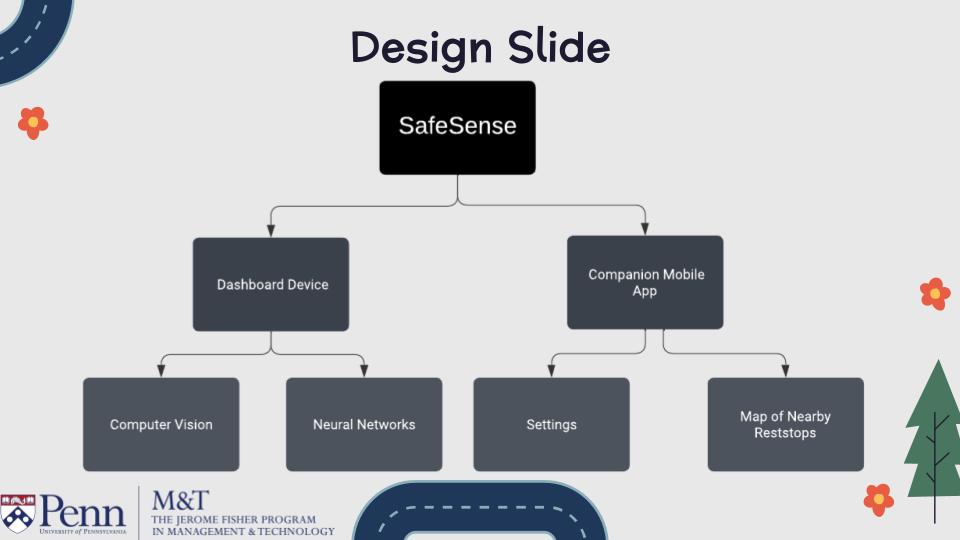
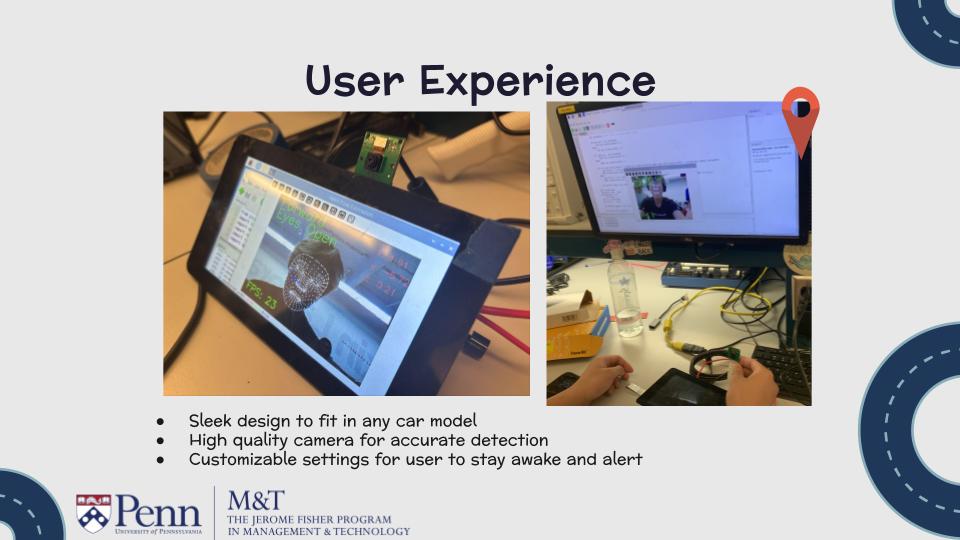
Computer vision is crucial to our project, enabling real-time live camera detection to monitor and analyze drivers' facial features. Tracking and outlining eye and mouth positions accurately detect signs of drowsiness or distraction, ensuring precise driver monitoring and safety. Following the survey for our market research, we noticed a high interest (43% of all respondents) in implementing our model not only for drowsiness but also for various distractions like texting while driving (59% of all respondents were interested in texting while driving detection). As a result, we modified our model to detect these multiple distractions like side-to-side or up-and-down head movements. Furthermore, by integrating convolutional neural networks (CNNs) and quantum neural networks (QNNs), SafeSense ensures accurate detection of drowsiness and distraction. The two neural networks were trained on blur-induced datasets to simulate real-world driving conditions, such as movement from shaky and bumpy roads
What hardware it uses
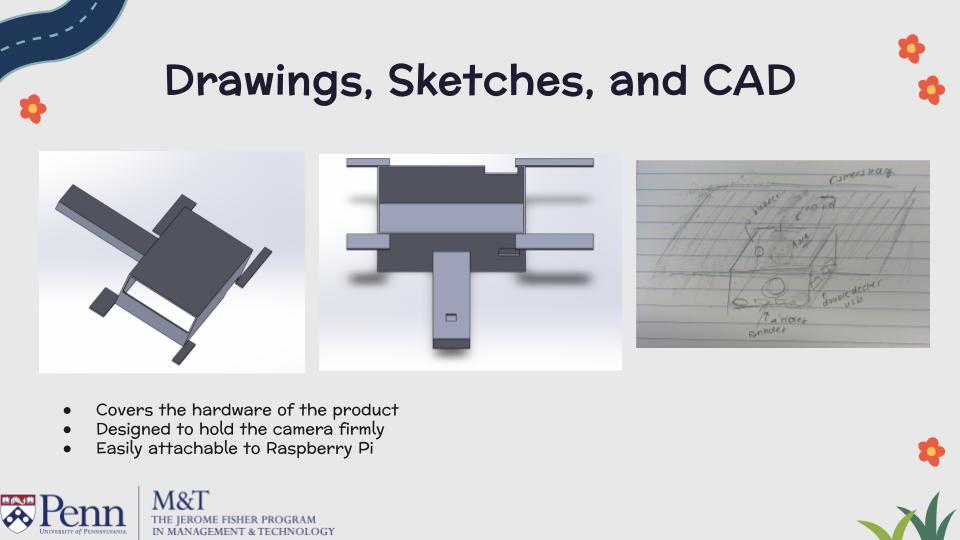
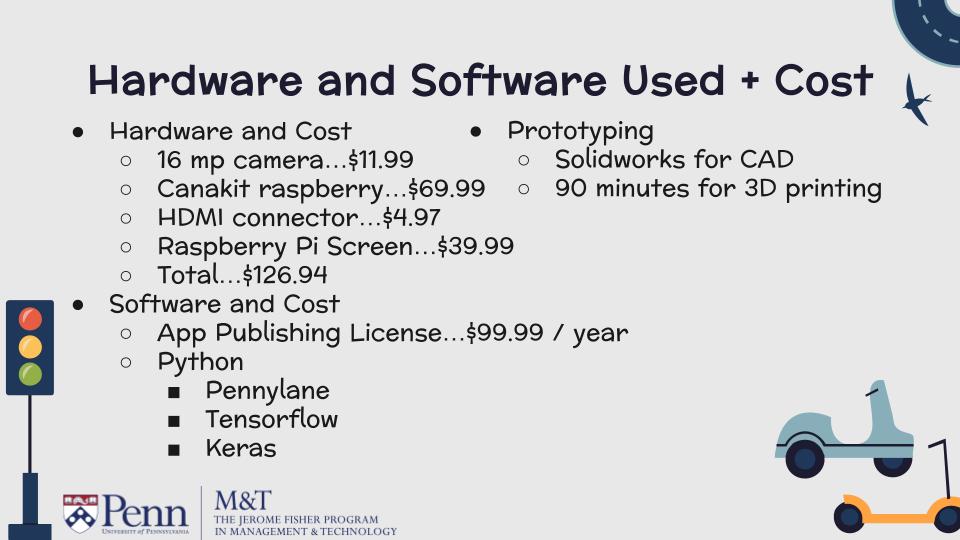
The device features a Raspberry Pi 4 Model B paired with a 6 MP camera and a piezo buzzer, providing a compact yet powerful solution for monitoring driver alertness. The Driver Alert System employs a 6 MP camera to continuously monitor the driver at 1080p resolution and 20 fps, ensuring precise recording of facial expressions and eye movements for accurate fatigue detection. The piezo buzzer in the SafeSense system can emit sounds ranging from 70 to 90 decibels, loud enough to wake drivers effectively over typical vehicle noises. Integrated into this setup is a touchscreen interface, similar to ones already installed in cars, where users can customize their alert systems.
The user experience
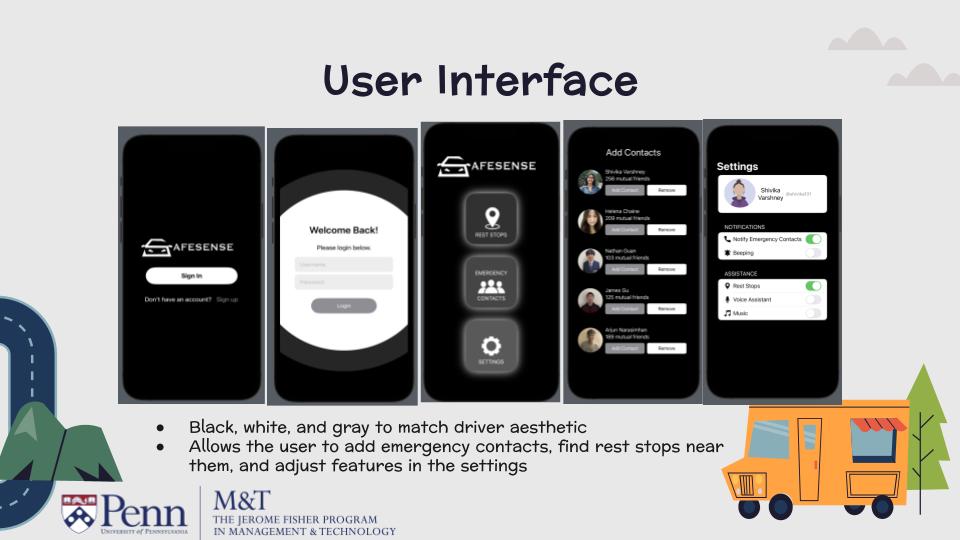
We have also developed an app using the SwiftUI programming language and XCode IDE to accompany the camera. The app aims to make the user experience more accessible by allowing them to customize certain product features. It serves three main functions: a map to find the closest rest stops, a settings screen to adjust what features on the camera the user wants to help them stay awake, such as a beeper or loud music, and a place to enter emergency contact information so loved ones can be notified about the driver’s potential risks. The emergency contacts page was added due to the surveys we sent out. About 40% of the responders stated they would benefit from a feature that notifies specified contacts about the driver’s alertness status. Ultimately, the goal is to inform family and friends if the driver may be at risk of accidents due to drowsy driving. Participants could also select which features they want to see in the product. The top two choices were warning signs to pull the car over after multiple beeps and a feature in the camera that detects if the driver is on their phone. Using the information gathered from the surveys, we developed our product to detect when the user is distracted by looking away or being on their phone. The app also has a feature where users can find the nearest rest stop if they ever get too tired from driving.
Challenges we ran into
We’ve decided to pivot away from the initial concept of having a “leaderboard of shame,” which ranks users from high to low based on several drowsy moments. The more tired moments a driver has, the higher up they will remain on the leaderboard. However, we recognized that the leaderboard could have dangerous misuses and lack of participation. Some people may not be wise and purposefully try to get in first place for the sake of being first. This could encourage more dangerous driving. Additionally, many people may not feel comfortable sharing their data online due to privacy issues. The alternative feature was implementing a map that searches for nearby rest stops where the driver can take a break. The critical reasoning points for our executive decision include dangerous misuse of the feature and the lack of data supporting its implementation. Furthermore, adding friends has been transformed into part of the sign-up process, where the user has to add three main points of contact who’ll be immediately alerted to any continuous drowsy or distracted driving.
How it's priced
SafeSense’s curated mix of targeting young and overworked students offers DLC plenty of opportunities for profit and expansion in the future. Due to the device’s uniqueness and significant gaps in the market, wherein young students currently lack a complete and effective solution to drowsy driving, SafeSense is priced reasonably at $59.99, allowing for healthy profit margins. SafeSense’s robust detection systems and integrated app differentiate it from current facial recognition technologies, which fail to implement those software components to the same extent. SafeSense augments its value proposition by targeting a niche market of new, young drivers, using an innovative solution that cultivates a safer driving culture and provides security for young students. Promotion will occur through social media advertising and a conversion pipeline involving demo videos, mailing lists, and customer service.
What's next for Team 12: SafeSense
In the future, we hope to implement a voice assistant feature where the driver can talk to a live chatbot. The voice assistant would ensure that the driver is awake by asking some basic questions. SafeSense is the perfect product for new, young drivers because it provides a plethora of safety features such as an alarm system. We are determined to create a high-quality product and save lives.

Log in or sign up for Devpost to join the conversation.