Executive Summary
The civil aviation industry bears much of the responsibility for anthropogenic climate change. Due to the difficulties in developing clean fuels for aviation, restructuring route networks remains the most feasible alternative for reducing emissions. While reducing emissions is crucial, it should not come at the expense of passenger accessibility. As flights connecting underserved communities generally have a significantly higher rate of emissions per passenger serviced, there exists a fundamental trade-off between increasing accessibility and reducing emissions.
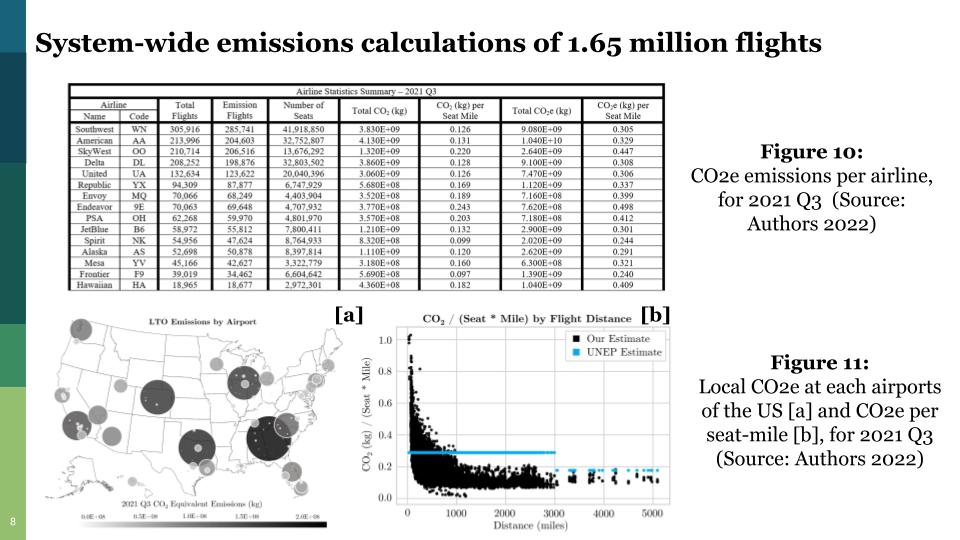
We develop an open-source, data-driven methodology for computing the system-wide emissions of the United States domestic civil aviation industry. For each documented flight, our approach examines the utilized aircraft, equipped engine, and time in each stage of flight to produce a more granular estimate than other competing approaches. As enabled by our methodology, we calculate the emissions of four different greenhouse gases for both LTO and CCD, allowing for emission estimates on both a regional and system- wide level.
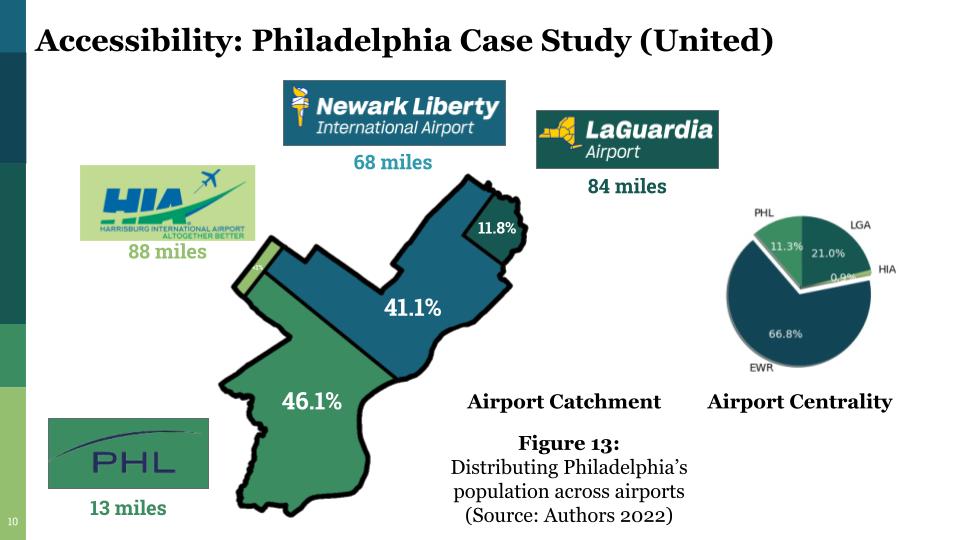
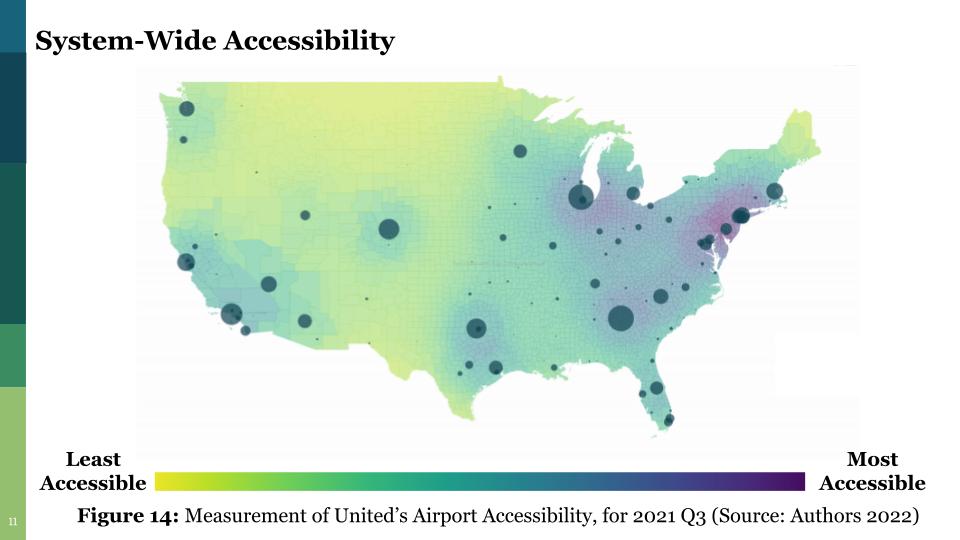
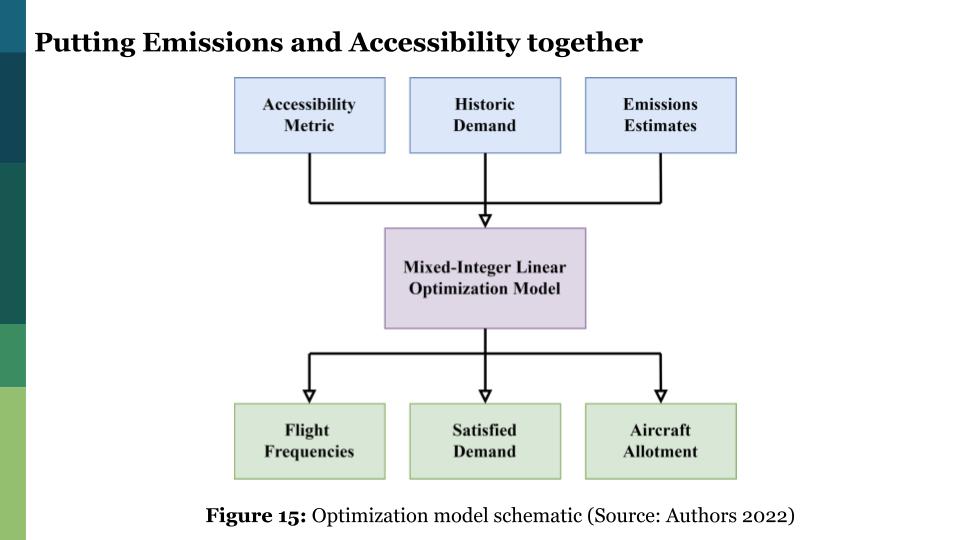
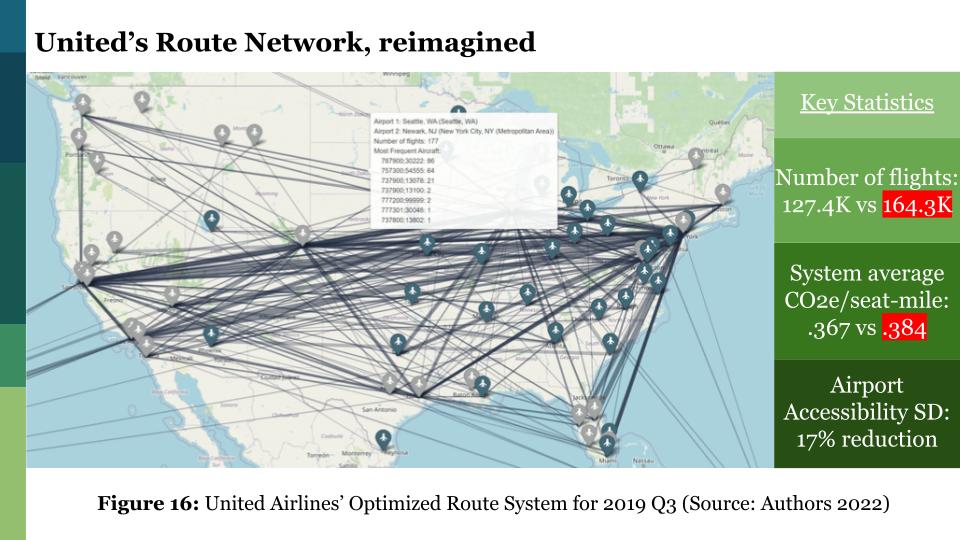
We also define a metric to quantify air transportation accessibility for each U.S. census tract, which can help airlines learn where best to allocate service in order to reach underserved communities. These developments are merged with an optimization model that creates a sustainable and equitable network by determining new itinerary options, flight frequencies, and aircraft allotment. We find that our resulting networks satisfy comparable demand, while reducing emissions and promoting service to marginalized populations.

Log in or sign up for Devpost to join the conversation.