Inspiration
Nearly everyone has endured a poor classroom experience at some point in their education, but the problem is most visible in our universities. At the higher education level, a professor’s primary focus is often tethered to research rather than instruction. Unlike grade school teachers, they aren't required to undergo rigorous pedagogical training or curriculum development studies. This creates a significant "expertise gap": we have professors who are world-class authorities in their fields, yet struggle to effectively convey their thoughts or pivot when faced with the dynamic, unpredictable nature of a live classroom.
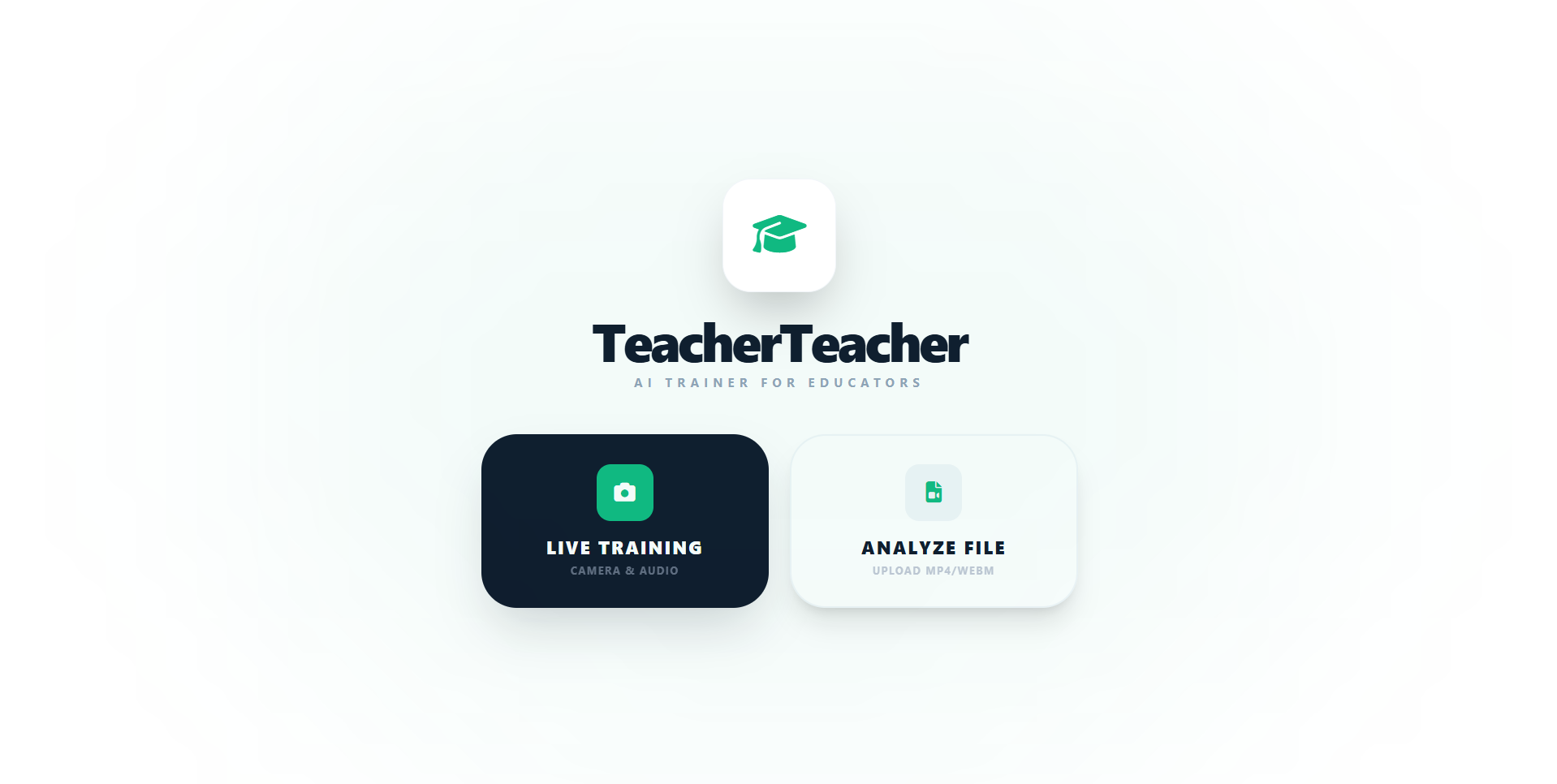
TeacherTeacher was born from the belief that expertise in a subject shouldn't be undermined by a lack of training in delivery. We wanted to provide these experts, and indeed any new instructor or teacher entering the field, with a safe, simulated environment to bridge that gap. Whether you're a professor or a first-year teacher, our platform lets you master the art of instruction in a low-stakes environment.
What it does
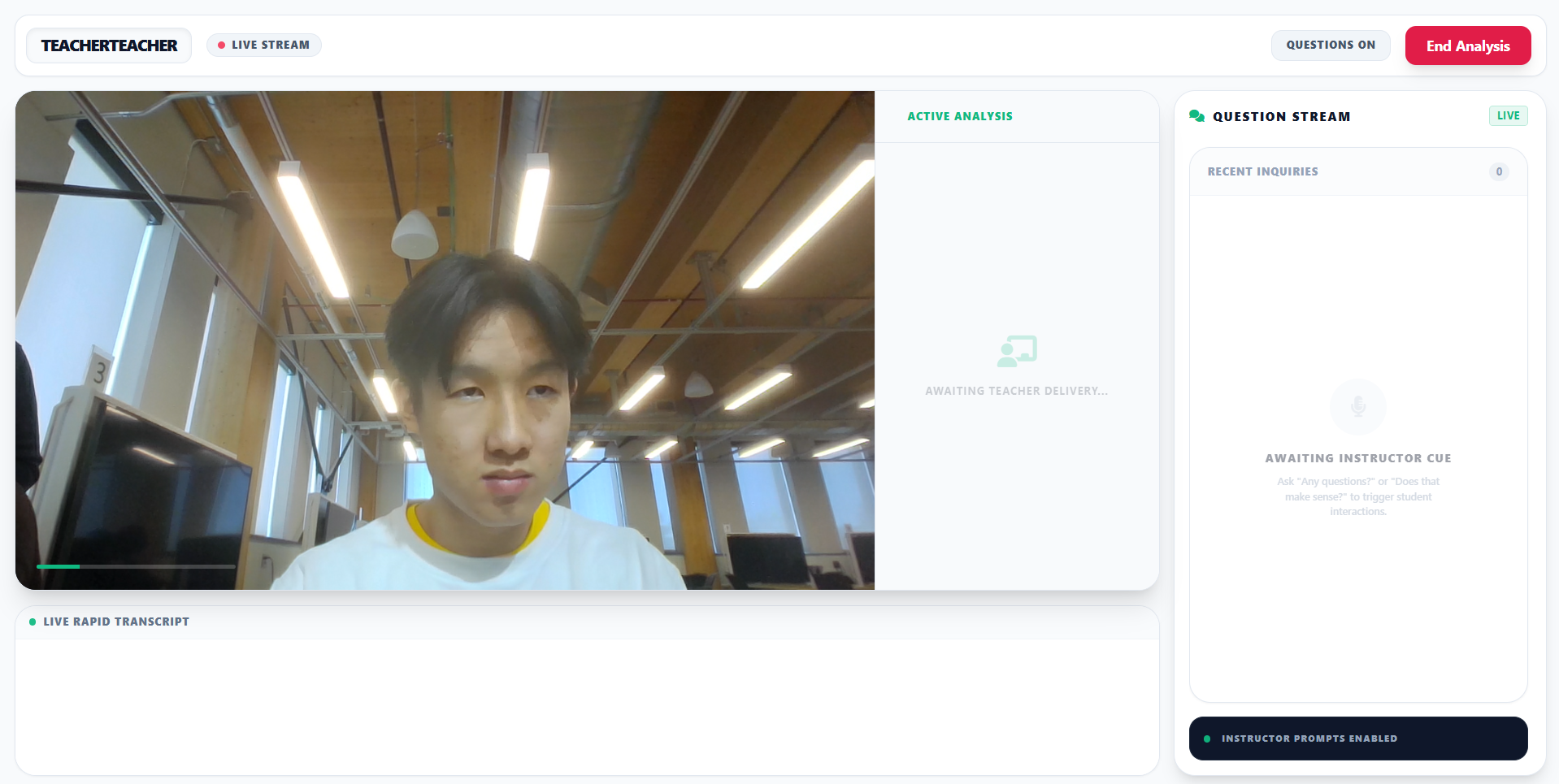
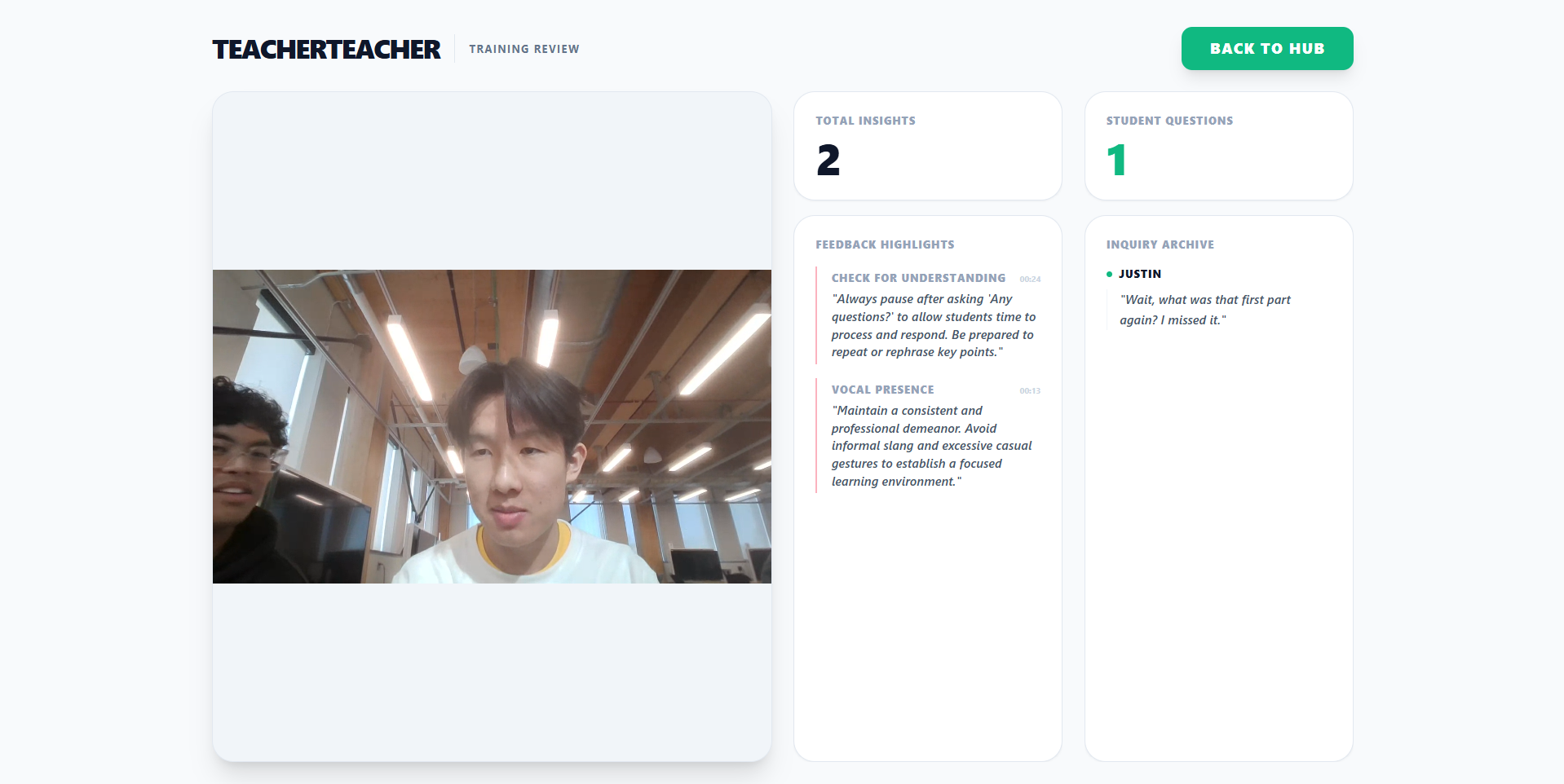
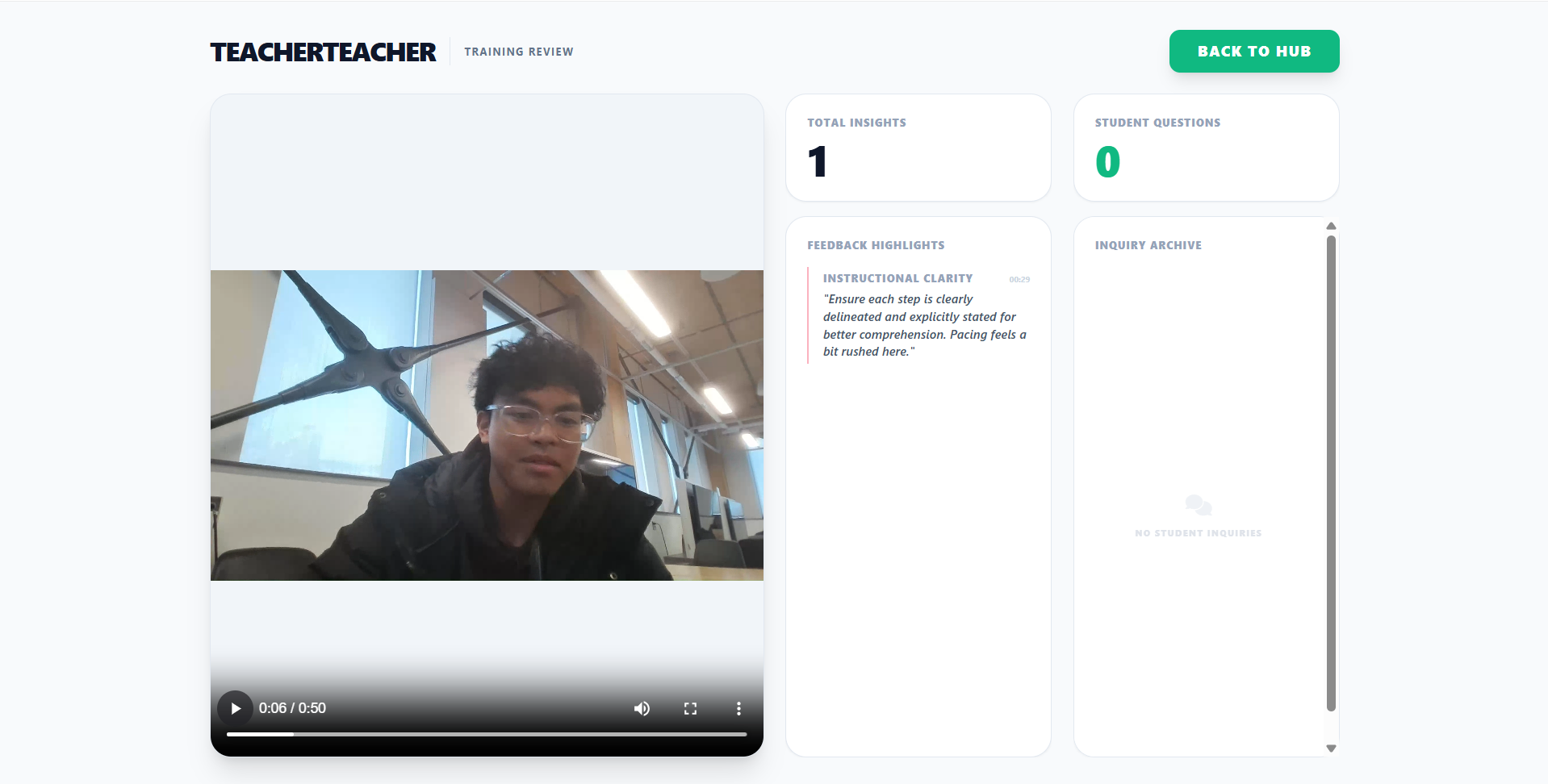
TeacherTeacher acts as a high-fidelity "flight simulator" for the classroom by capturing the user’s microphone and webcam to provide a dedicated space for practicing and refining lesson delivery. As the lesson unfolds, the system generates dynamic student interactions through a live chat where virtual students identify gaps in the explanation and ask probing questions, forcing the instructor to adapt and clarify complex concepts in real-time. Simultaneously, the platform functions as a digital coach, offering a separate feed of real-time pedagogical advice on speaking clarity, student engagement, and vocal tone. By simulating the unpredictability of a real classroom and layering it with instant, actionable feedback, we enable teachers to sharpen their skills and build confidence in a low-stakes environment.
How we built it
The backend uses Presage AI’s heart rate and breathing detection to provide vitals on the teacher. Presage AI is fairly new and only currently supports Ubuntu 22.04. To get around this we used a docker container to emulate Ubuntu. Using the examples provided in the doc we were able to access our computer webcam so the AI could read our vitals. The data was then stored and sent to the frontend. We used Gemini’s AI Studio to build the frontend, fine tuning our prompts to get the desired output. We then connected the two together to get our desired project.
Challenges we ran into
We ran into a lot of challenges on the backend. The main issue was the dependency issues for the libraries which took a long time to fix. Presage AI, being newer, didn’t fully support the features that they claimed which wasn’t communicated clearly.
What's next for TeacherTeacher
Moving forward, we want to make the simulation even more immersive and accessible. Our roadmap includes replacing the chat interface with realistic AI-driven video avatars that show non-verbal cues, like nodding or looking confused. We also plan to add voice analysis to give feedback on an instructor's tone and confidence. A major priority is the deeper integration of biometric data with Presage, which will allow us to create more detailed stress-response profiles to help teachers see exactly how their bodies react under pressure. Finally, we intend to build a library of specific classroom scenarios to help teachers practice everything from basic explanations to managing difficult student interactions.


Log in or sign up for Devpost to join the conversation.