-
-
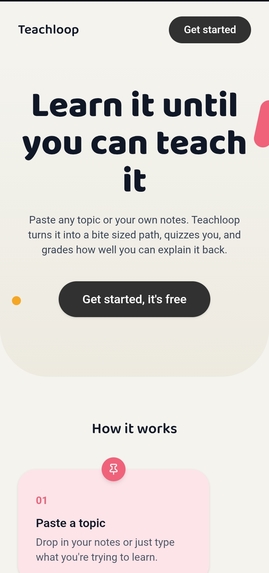
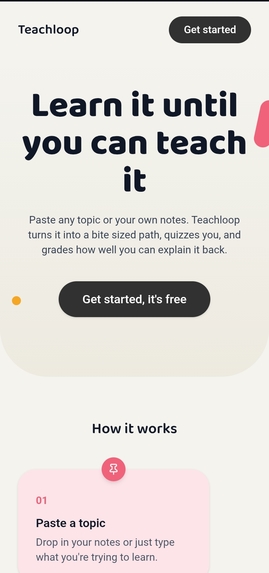
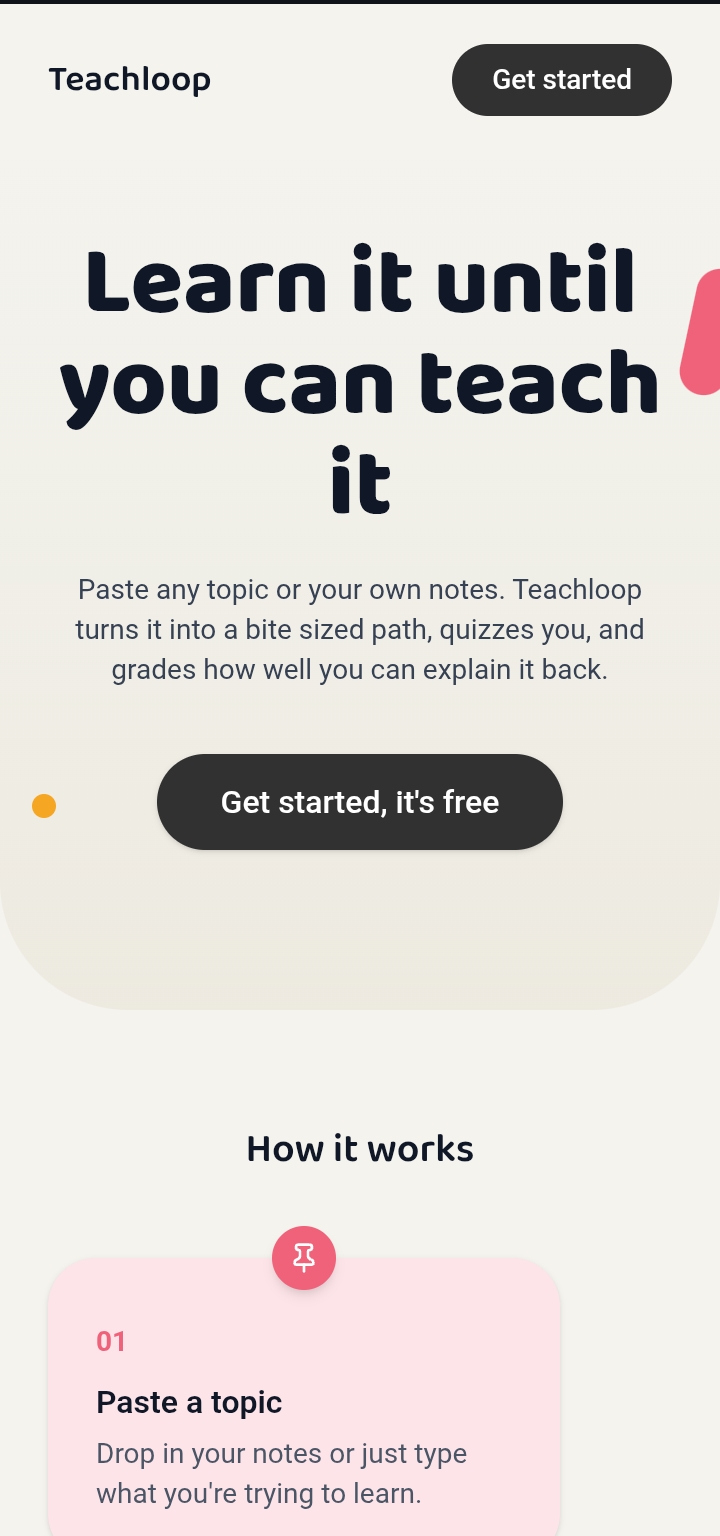
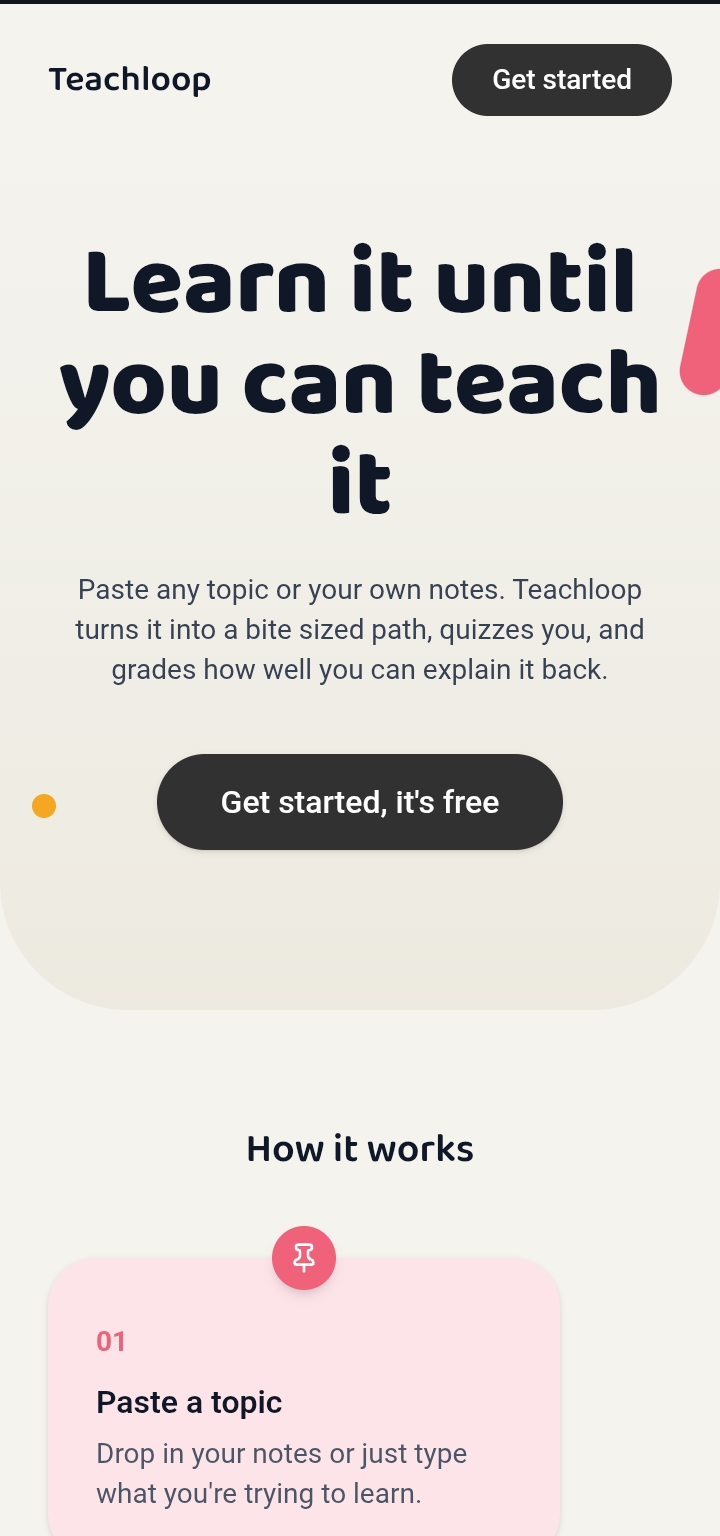
Landing page
-
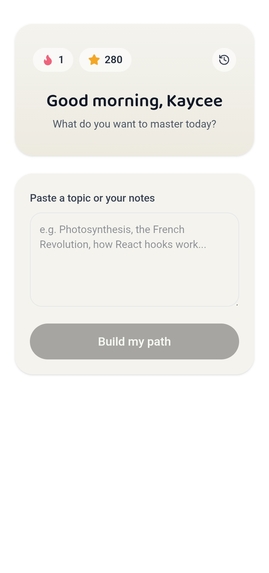
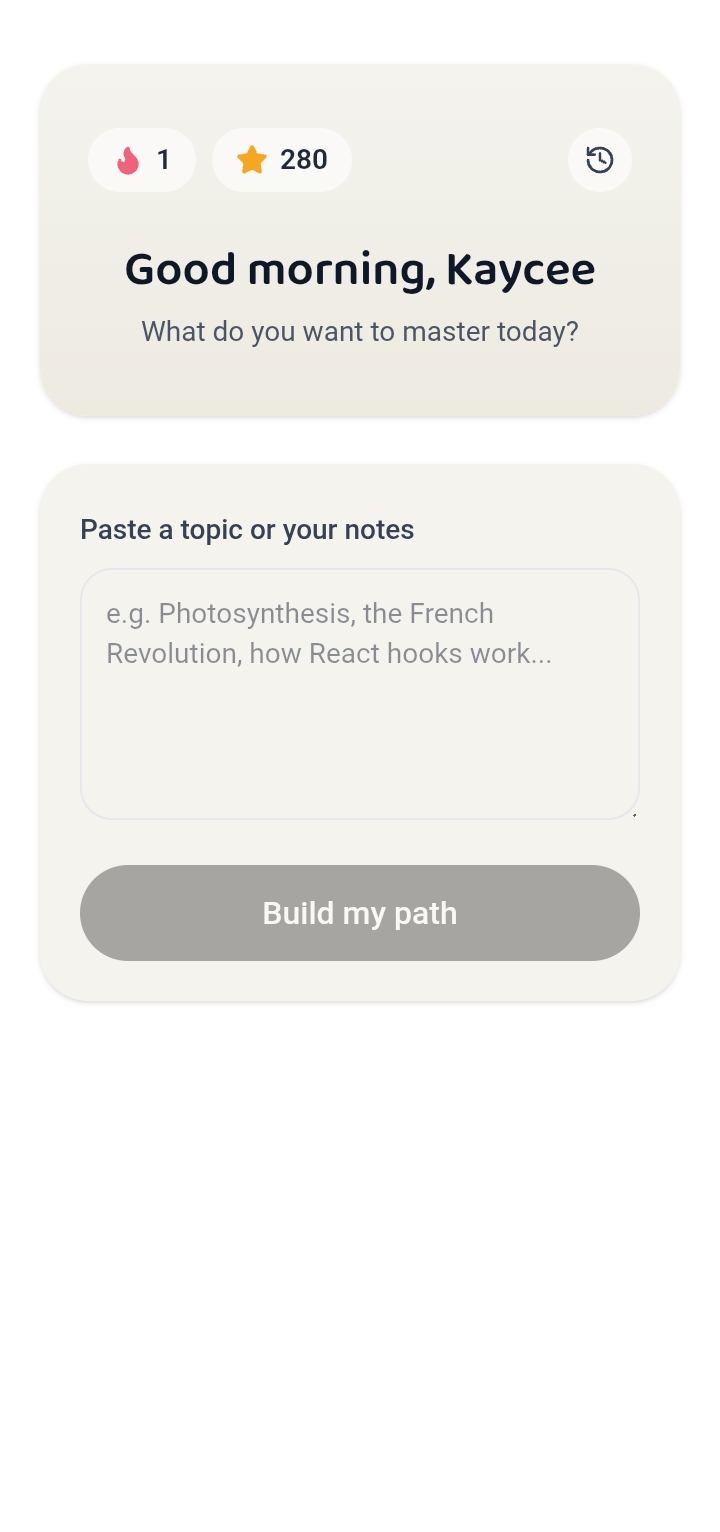
User dashboard, for pasting note or writing a topic
-
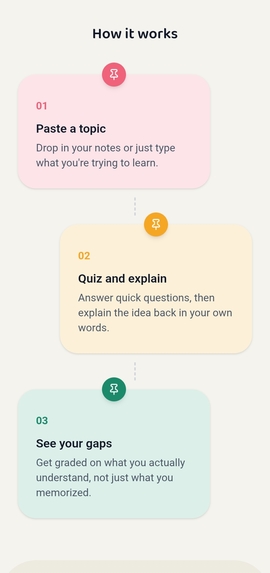
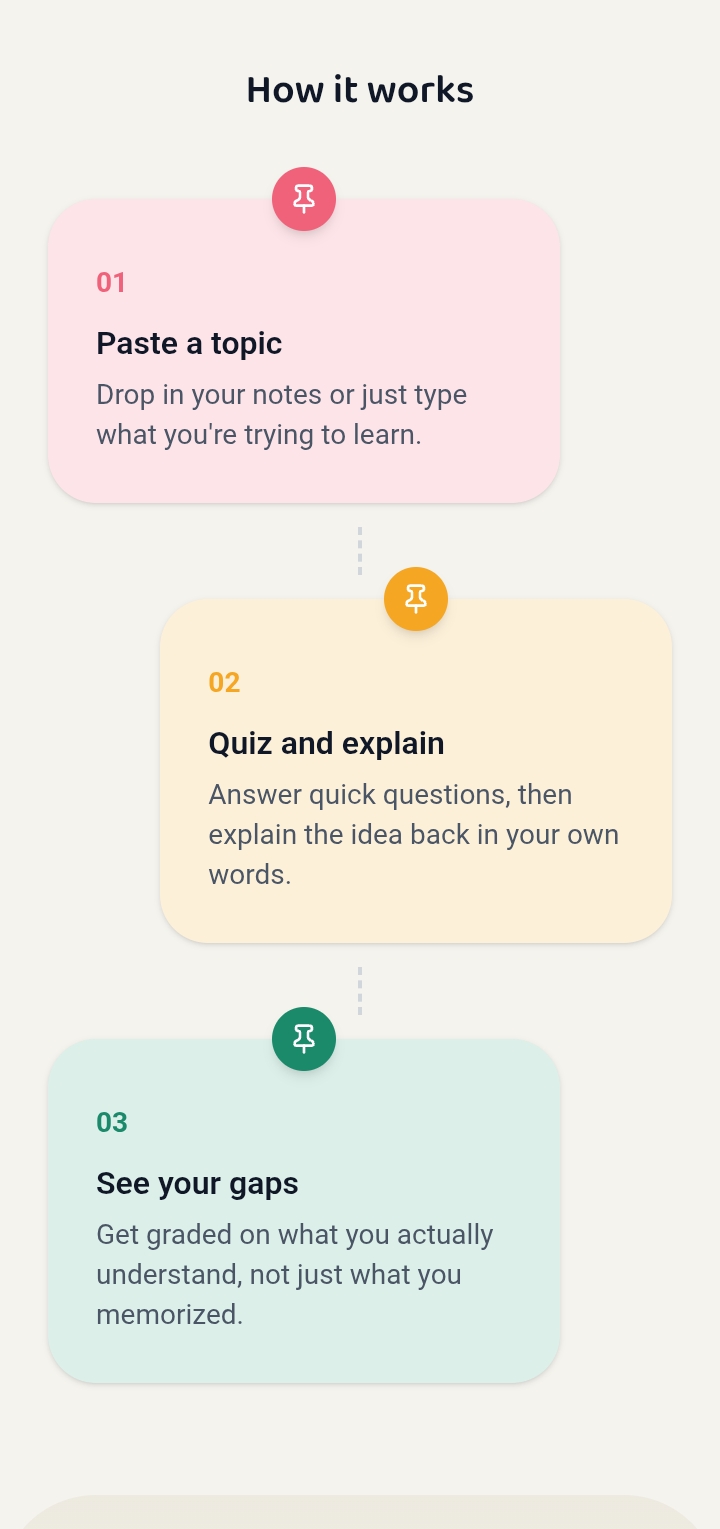
How it works
-
-
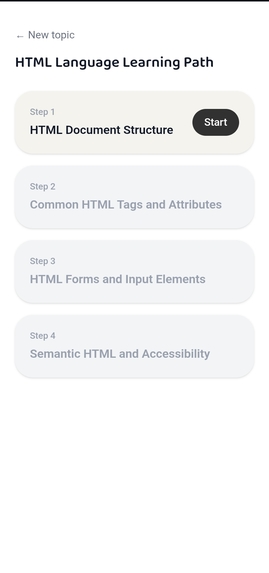
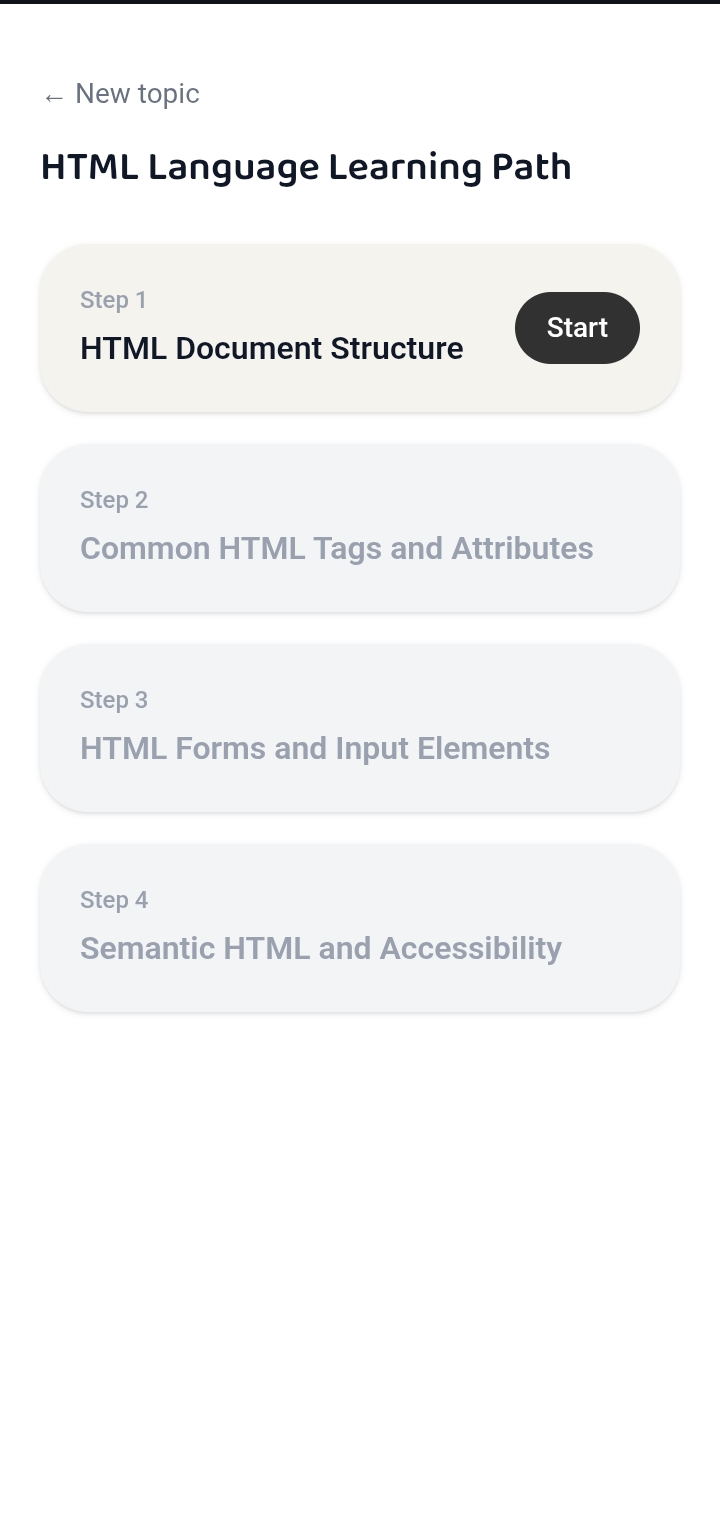
Learning part, bite sized step by step
-
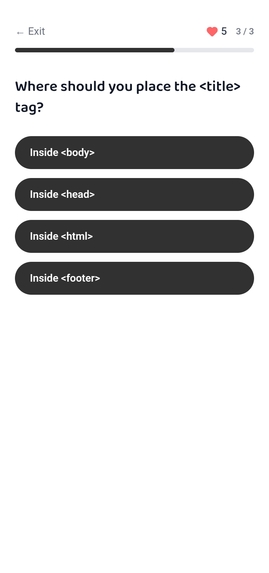
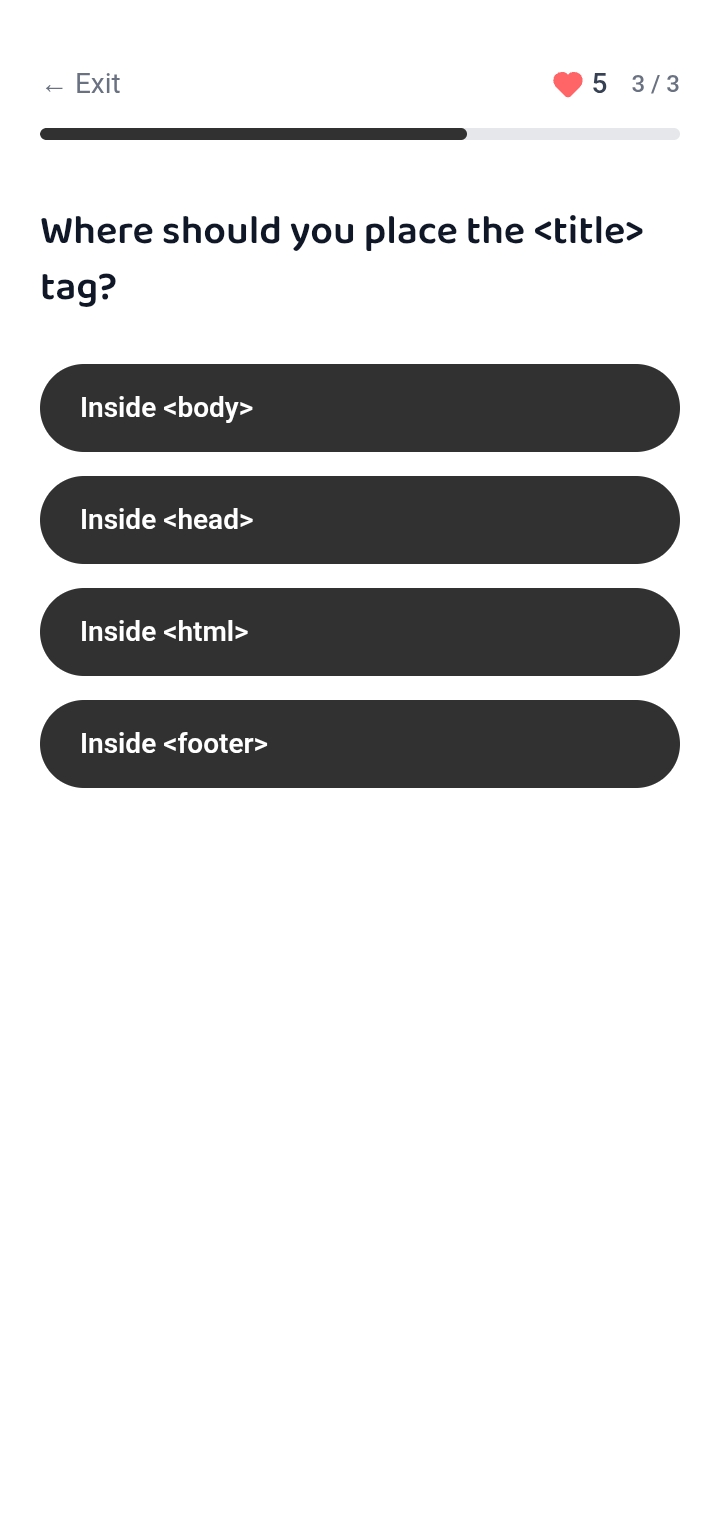
Quize
-
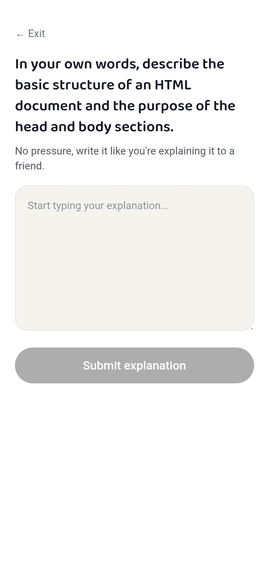
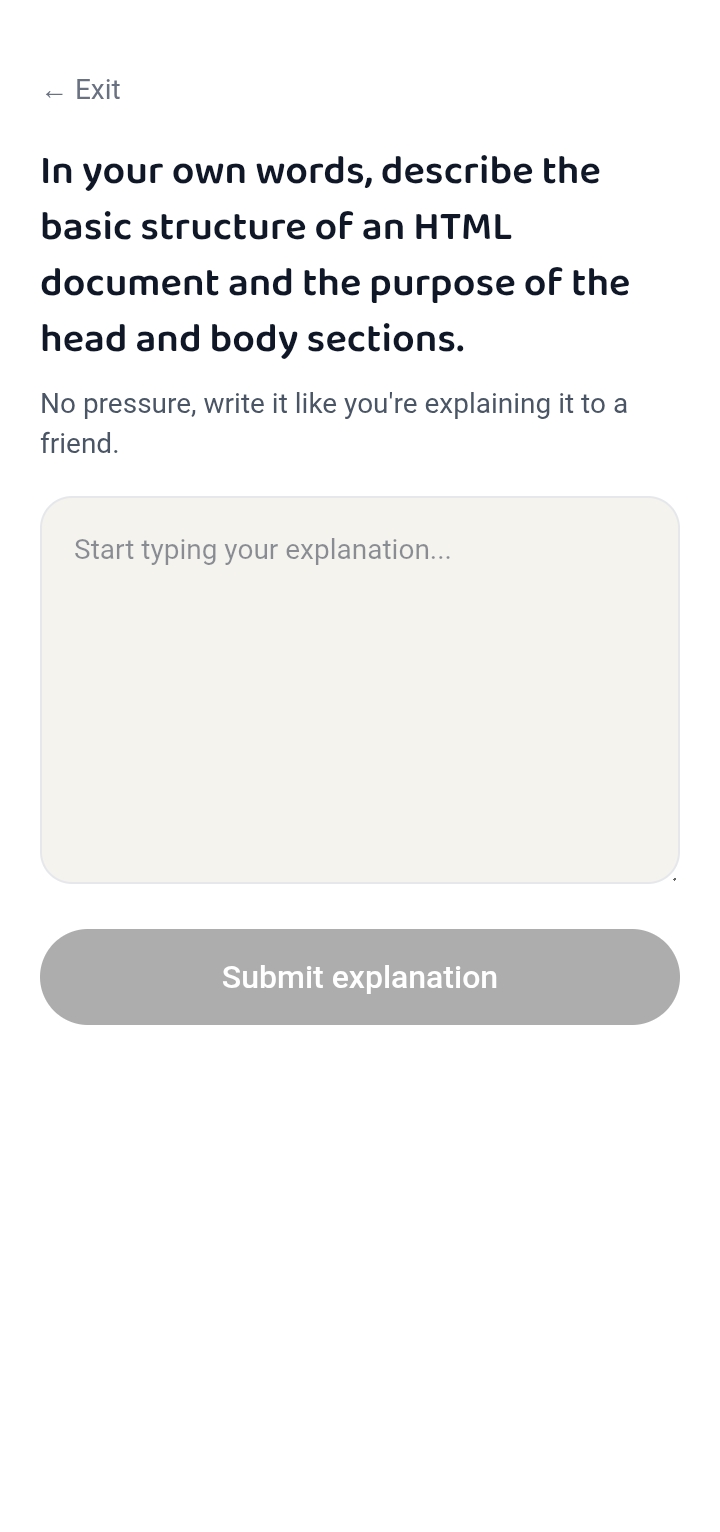
Type your explanation, in your own words
-
-
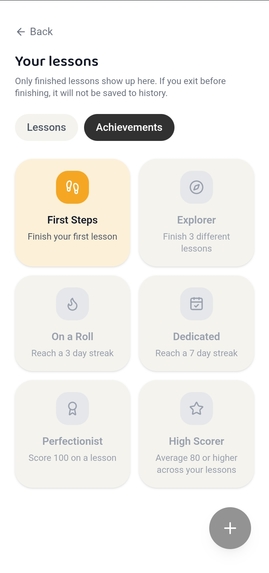
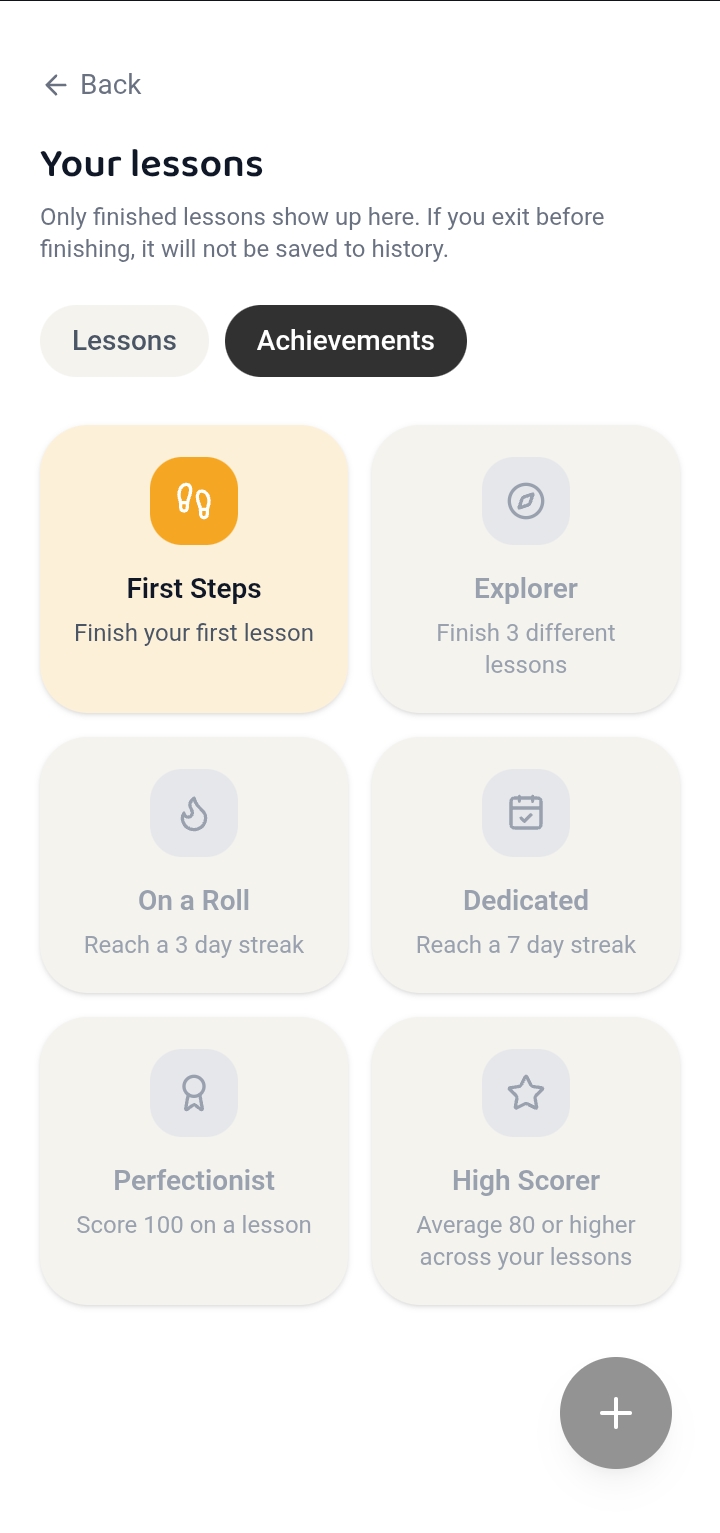
Achievement wall
Inspiration
Most study tools stop at quizzes, and quizzes measure recall, not understanding. It's entirely possible to pass a multiple choice question on a concept you couldn't actually explain to someone else. Teachloop is built around the Feynman technique: if you can't explain something simply, you don't know it yet. The idea was to build a study app that actually checks for that gap instead of stopping at "did you pick the right answer."
What it does
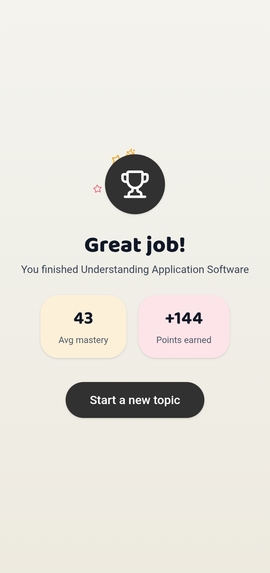
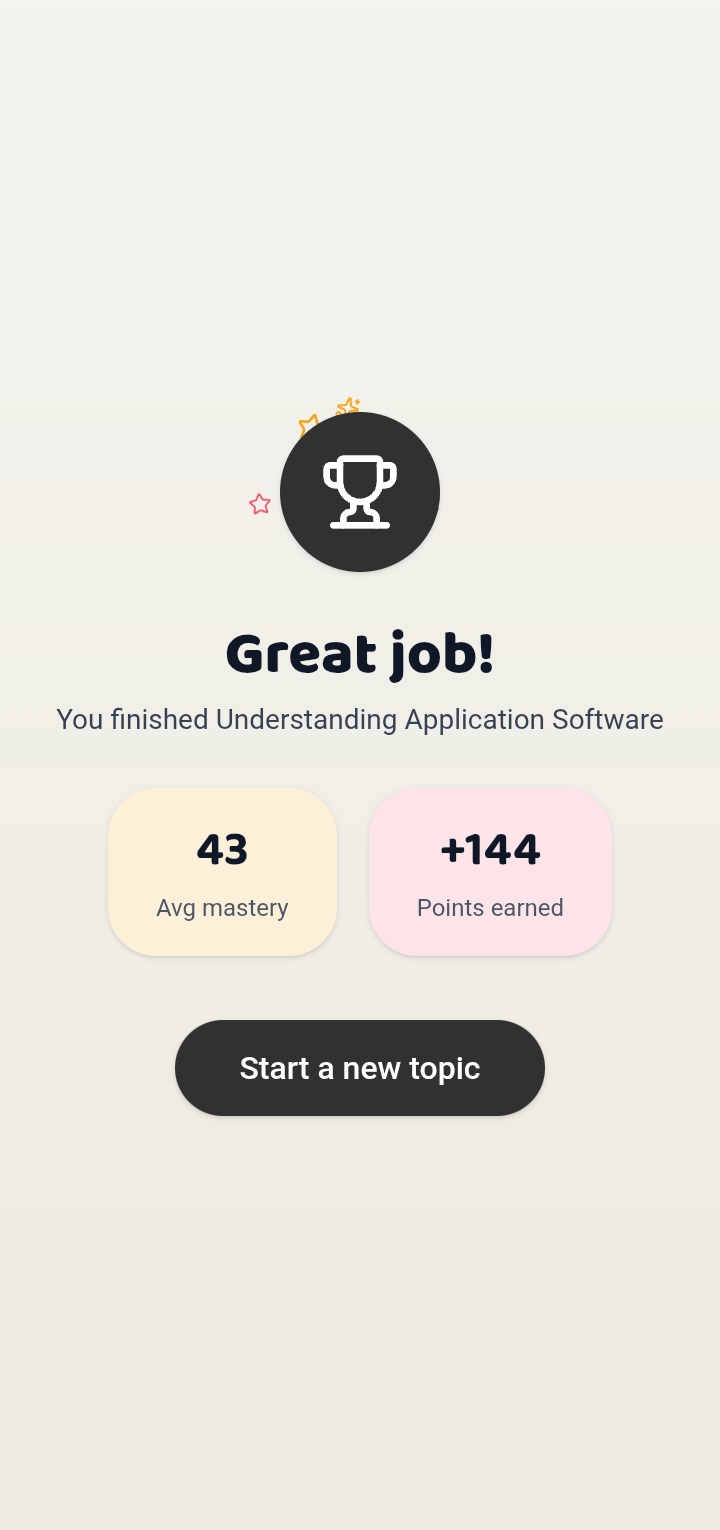
Paste any topic or your own notes, and Teachloop uses AI to generate a short, bite sized learning path built specifically for that input, not a fixed curriculum. Each step in the path starts with a quick quiz, familiar mechanics, hearts, instant feedback. Then comes the actual differentiator: you explain the concept back in your own words, no multiple choice to lean on, and an AI grader reads your explanation and tells you exactly what you got right and exactly what you're still missing. Finish a path and you get a real mastery score built from every explanation you wrote, not just a completion badge. Teachloop also has a short personalized onboarding, a lesson history with an achievement wall, and progress that survives closing the tab and coming back later.
How we built it
Next.js with the App Router and TypeScript, Tailwind CSS v4 for styling, and the Groq API running openai/gpt-oss-120b for two distinct jobs: generating the learning path as structured JSON, and grading free text explanations against the concept, also returned as structured JSON so the UI can render specific, structured feedback instead of a wall of text. Deployed on Vercel. The build itself has a story worth telling: it was built entirely from an Android phone, no laptop, first through GitHub Codespaces' browser terminal, and then, after running out of free Codespaces usage partway through, by switching to editing directly through the GitHub mobile app with Vercel handling every build and deploy automatically on each commit.
Challenges we ran into
Building an entire Next.js app with zero access to a local terminal for most of the project forced a different workflow than usual: committing files in a careful order so a page component was never live before the component it imports actually existed in the repo, since there's no way to test locally first when every change has to go through a real deploy to get feedback. That constraint actually shaped good habits, small commits, one file at a time, confirming each one built clean before moving to the next. The other real challenge was avoiding the generic "AI app" look, soft gradient, rounded cards, indigo everywhere, that most quickly built AI products default to. Getting a distinct visual identity, an actual color system, a custom display font, and structural details that don't read as a template took real iteration.
Accomplishments that we're proud of
A fully working, deployed, end to end product built solo, from a phone, that does something genuinely different from a quiz app: it evaluates open ended understanding with AI, not just multiple choice answers. Everything from generation to grading to gamification to persistence works without a backend or database, just the Groq API and the browser's local storage.
What we learned
Structured JSON output from an LLM is a reliable way to build both a generation pipeline and an evaluation pipeline quickly, and designing the grading prompt carefully, specific fields for what was right, what was missing, and a plain language summary, made the AI's output immediately usable in the UI instead of needing extra parsing logic.
What's next for Teach loop
Education level is already collected during onboarding but isn't yet used to adjust how hard a generated path is, that's the most obvious next improvement. Full replay of a past finished path, not just its outcome summary, and a study buddy chat for lingering weak spots were both scoped early on and cut to protect the deadline. Live section to connect with friends in app and share achievement, helping each other learn better.
Built With
- groq
- next.js
- react
- tailwindcss
- typescript
- vercel


Log in or sign up for Devpost to join the conversation.