Inspiration
Patients, caregivers, and even front-line staff keep getting healthcare documents they don’t fully understand — not just discharge notes, but EOBs, prior-auth letters, billing statements, prescriptions, and lab reports. Generic AI chatbots can explain these, but they don’t verify that the person actually understood. We wanted to turn the clinical “teach-back” method into an AI experience that works across clinical, pharmacy, and insurance documents, is installable (PWA), and doesn’t store PHI.
What it does
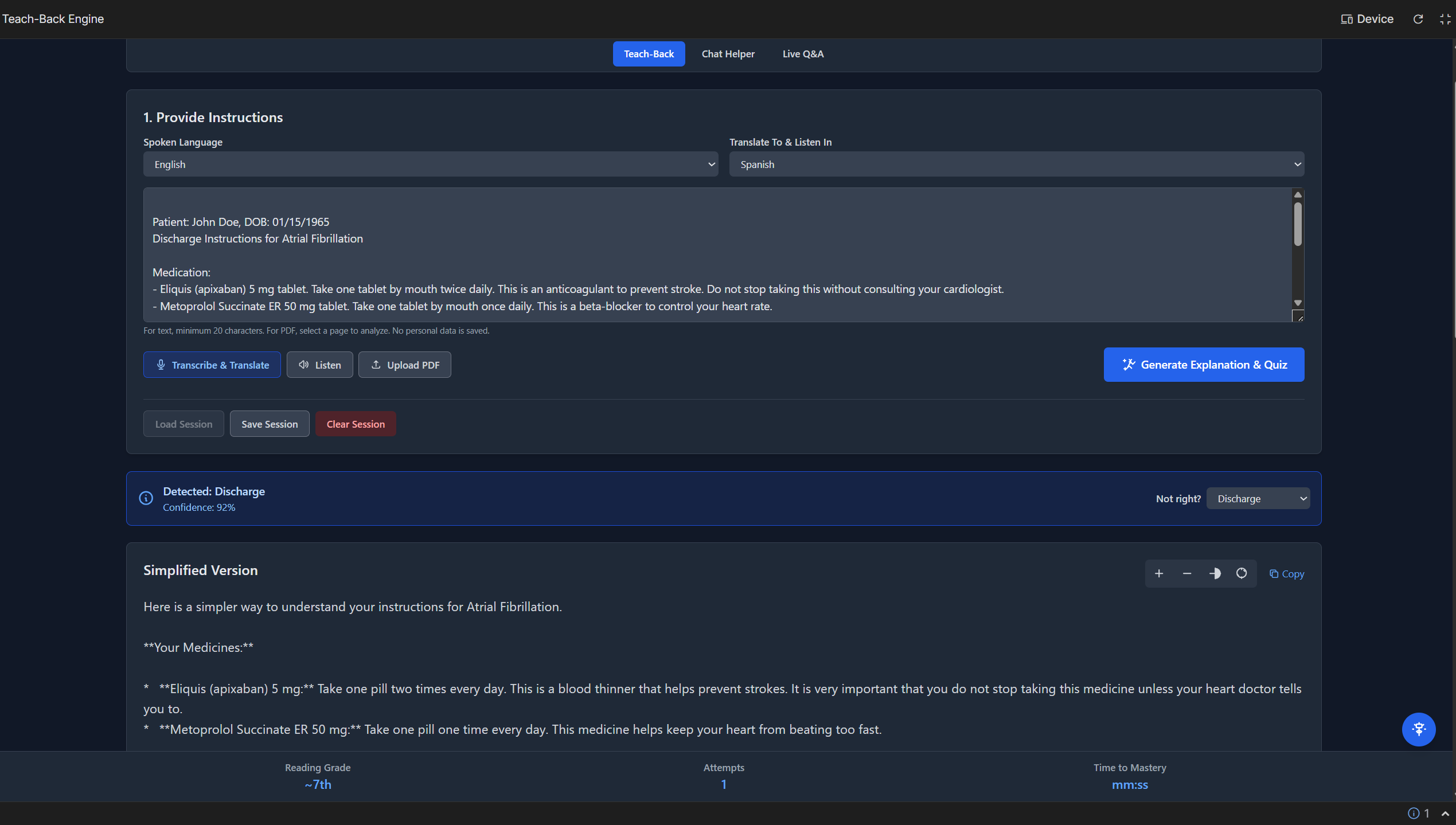
- Detects the type of document (prescription, EOB, prior auth, discharge, lab) and falls back to General if it’s something else.
- Simplifies the text to 6th–8th grade level using Gemini with Structured Output.
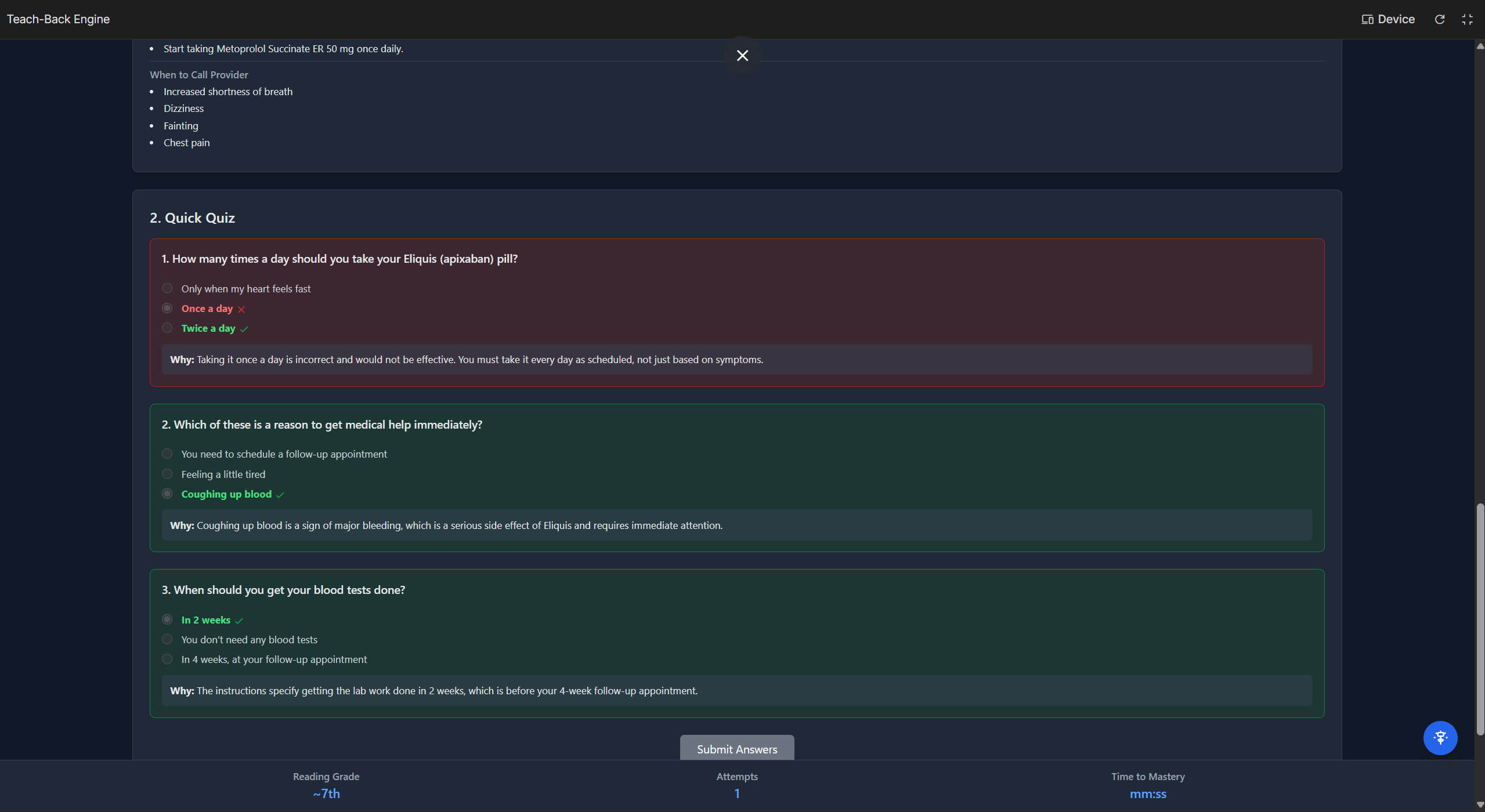
- Creates a 3–5 question quiz tied to the exact content in the document.
- If the user gets something wrong, it reteaches just that part and lets them retry.
- Shows a context-specific panel (e.g. EOB math, prescription dose/timing, discharge follow-ups).
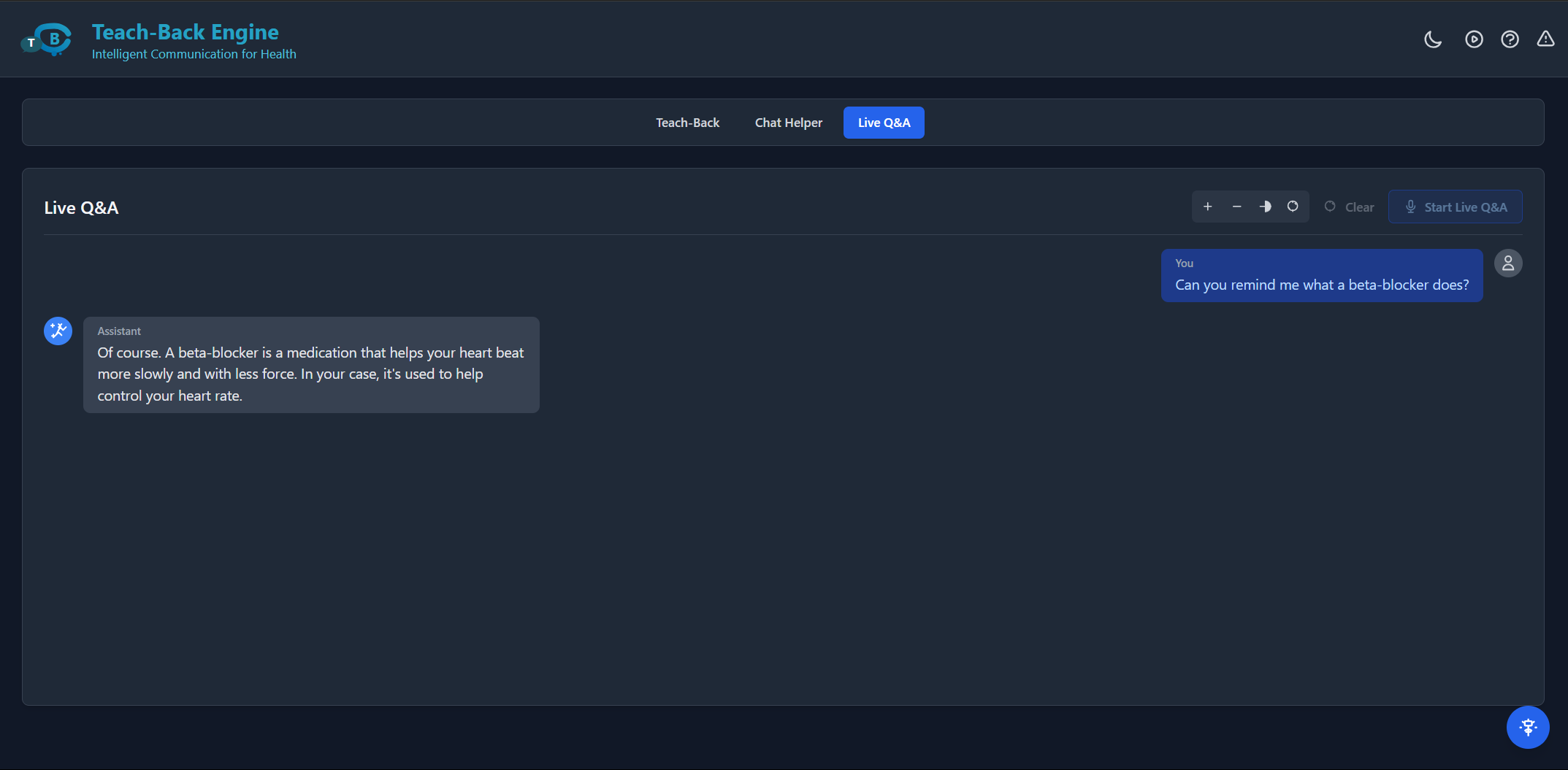
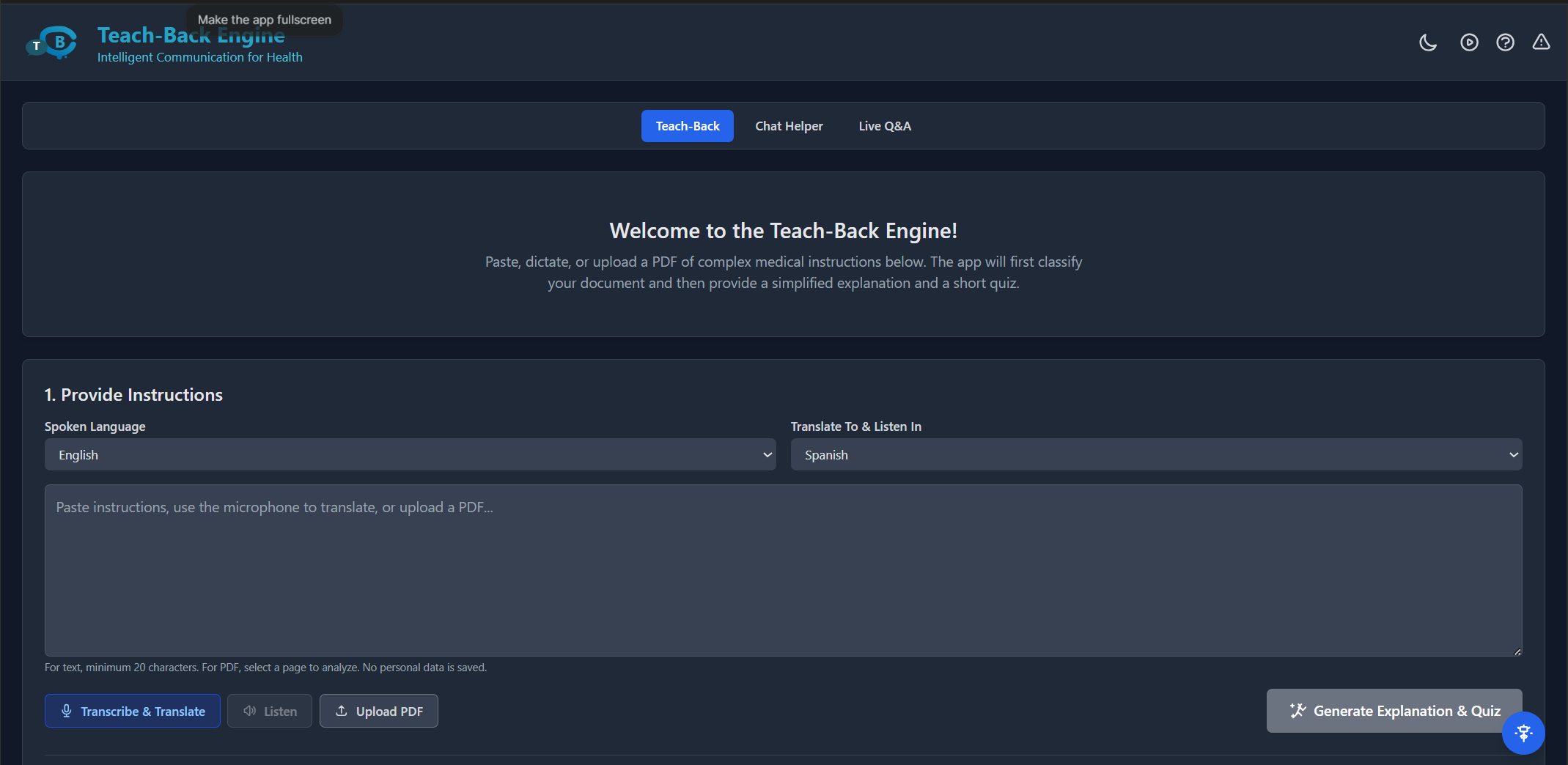
- Has three modes: Teach-Back, Chat Helper, and Live Q&A (voice).
- Runs as a PWA so it can be installed and show the tutorial offline.
- Tracks only local, anonymous metrics (unknown docs, user overrides, mastery count).
How we built it
- Google AI Studio (Gemini) for classification + generation with Structured Output.
- React + TypeScript + Vite for a fast, component-based UI.
- PWA using manifest + service worker (vite-plugin-pwa) for installability.
- LocalStorage for privacy-friendly telemetry (no PHI stored).
- Accessibility-first layout: help modal, disclaimer modal, keyboard-friendly controls.
Challenges we ran into
- Preventing the model from forcing a wrong category when the document is out of scope → we added an explicit
unknownpath and a user override. - Keeping the JSON strict so the UI can render the right domain card every time.
- Balancing PWA caching with not caching potentially sensitive responses.
- Designing one flow that works for clinical docs and payer/insurance docs.
Accomplishments that we're proud of
- One app now handles clinical, pharmacy, and insurance documents in a single UI.
- We don’t just explain — we measure comprehension (attempts + time-to-mastery).
- Voice/Live mode makes it usable for low-literacy or vision-limited users.
- Fully browser-based and deployable from Google AI Studio → good for demos, pilots, hackathons.
- We can show when the model was uncertain (unknown + override counters).
What we learned
- The real differentiator over generic chatbots is verification (teach-back), not simplification.
- A tiny “we’re not sure” banner + user override prevents most misclassifications.
- Structured Output is the key to adding more health document types later.
- PWA + AI Studio is enough to ship something real without standing up a backend.
What's next for Teach Engine
- Add more document families (imaging, consent, therapy homework, community-health flyers).
- Export to FHIR-safe summaries for EHR/payer portals.
- Run a small usability study and publish it as a perspective/short paper.
- Add a provider/admin view to surface common patient misunderstandings by document type.
Built With
- accessibility
- ai/ml
- cloud-run
- css3
- gemini-2.5-flash
- gemini-live-api
- google-ai-studio
- healthcare
- html5
- javascript
- localstorage
- pwa
- react
- tailwind-css
- typescript
- vite
- vite-plugin-pwa
- voice-ai
- workbox


Log in or sign up for Devpost to join the conversation.