-
-
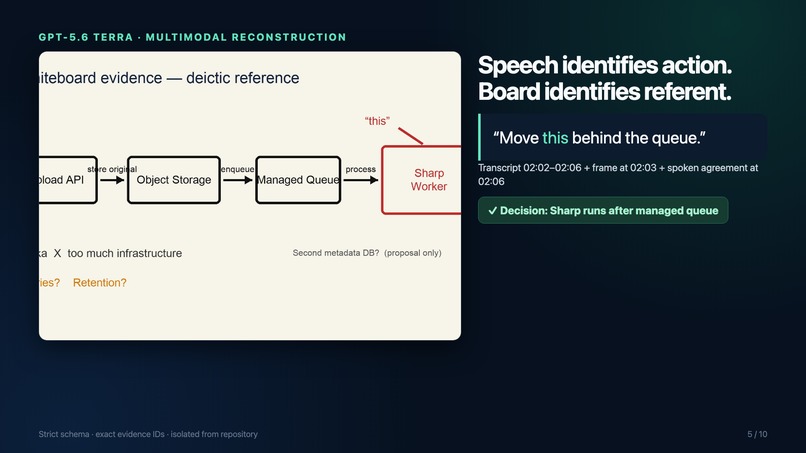
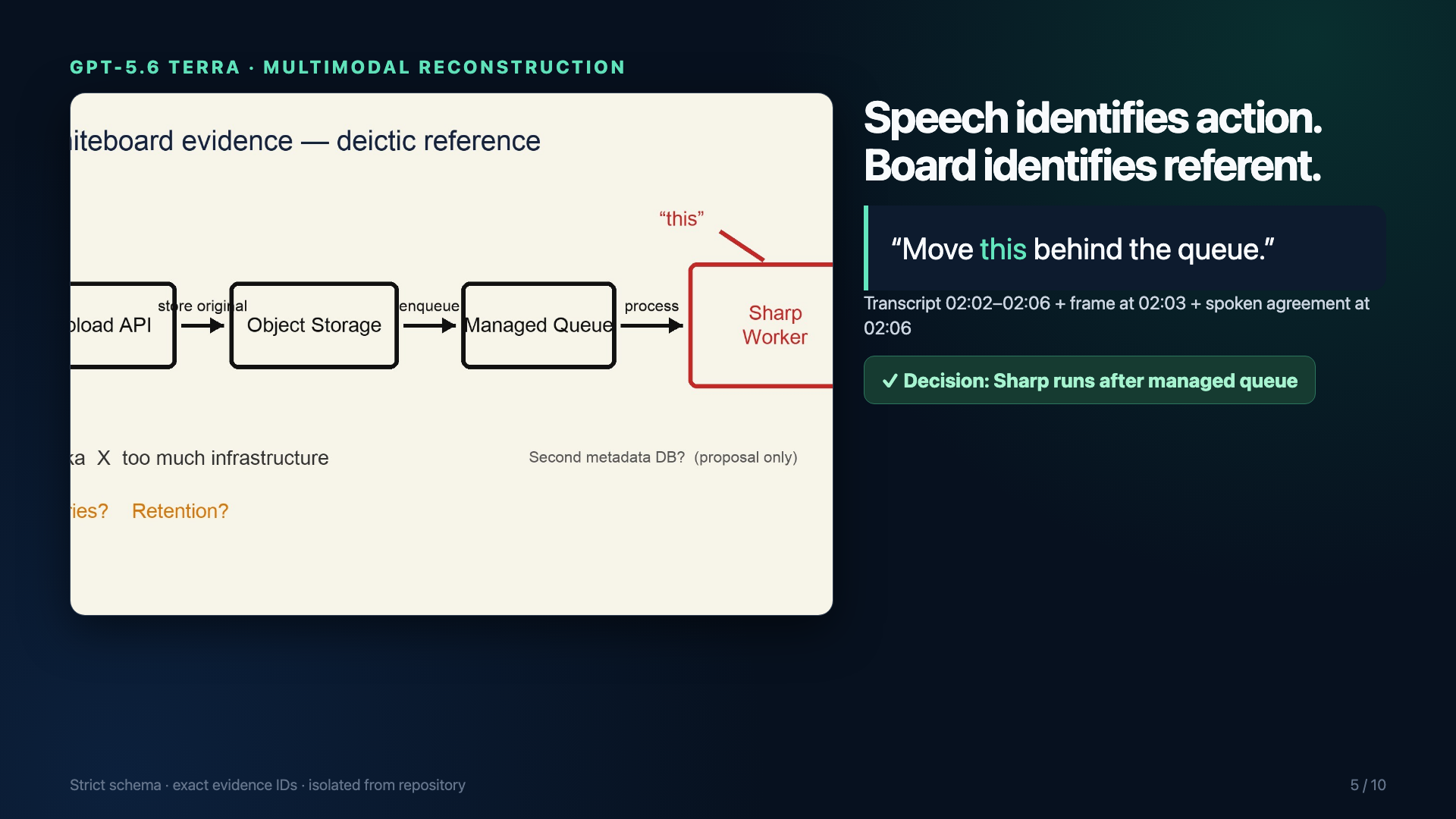
GPT-5.6 Terra combines transcript and visual evidence to resolve a deictic decision.
-
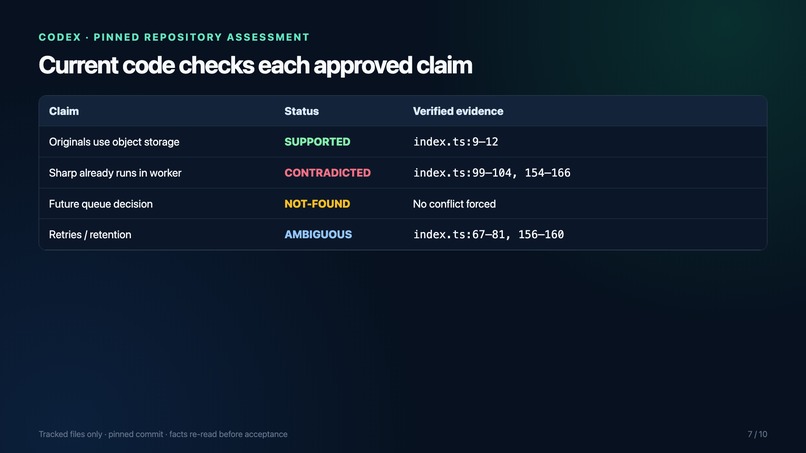
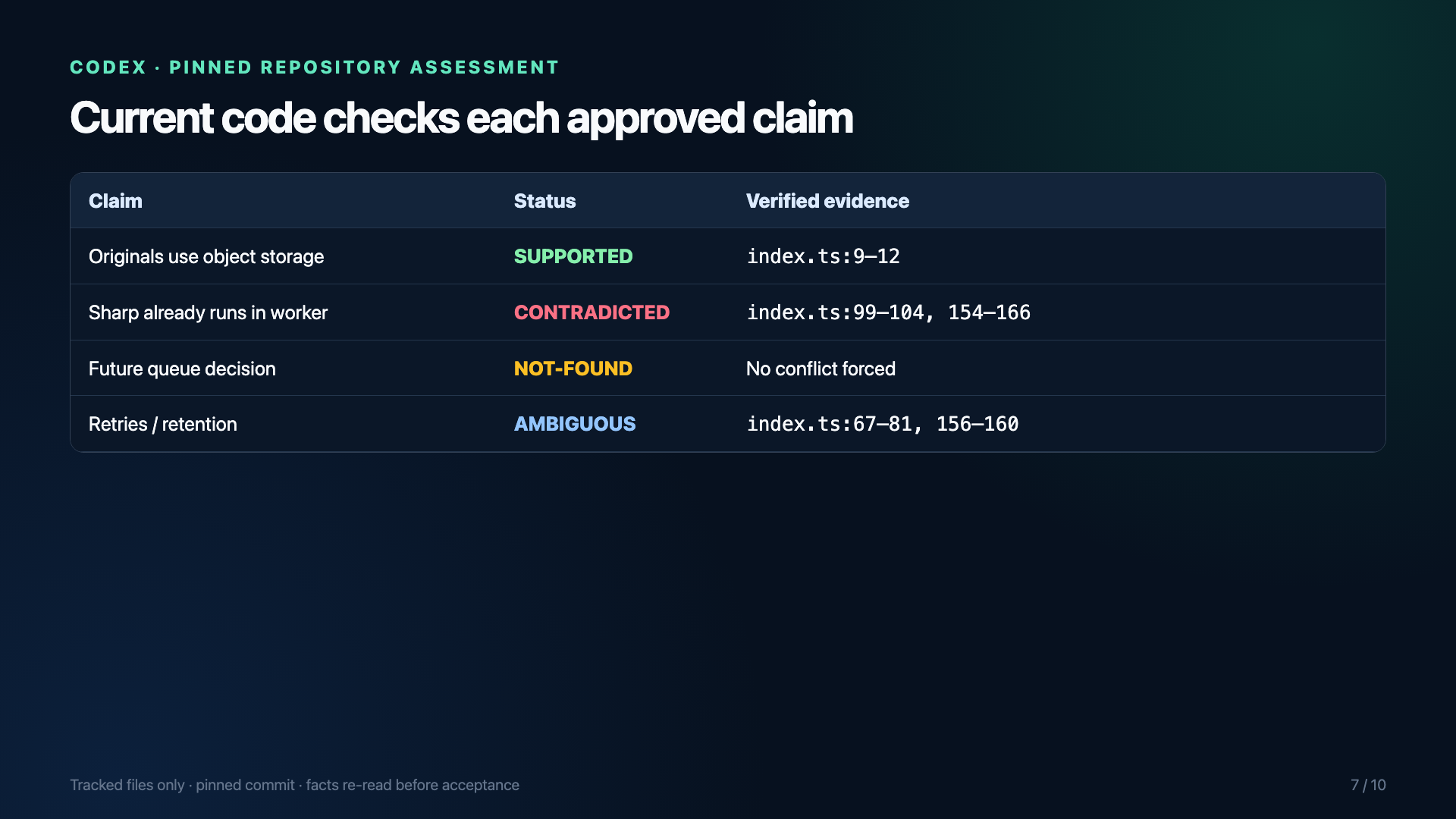
Codex checks approved intent against verified lines at the pinned repository commit.
-
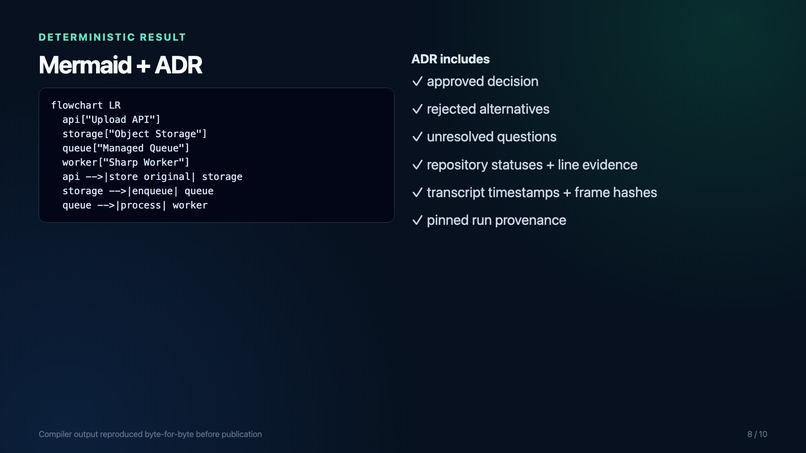
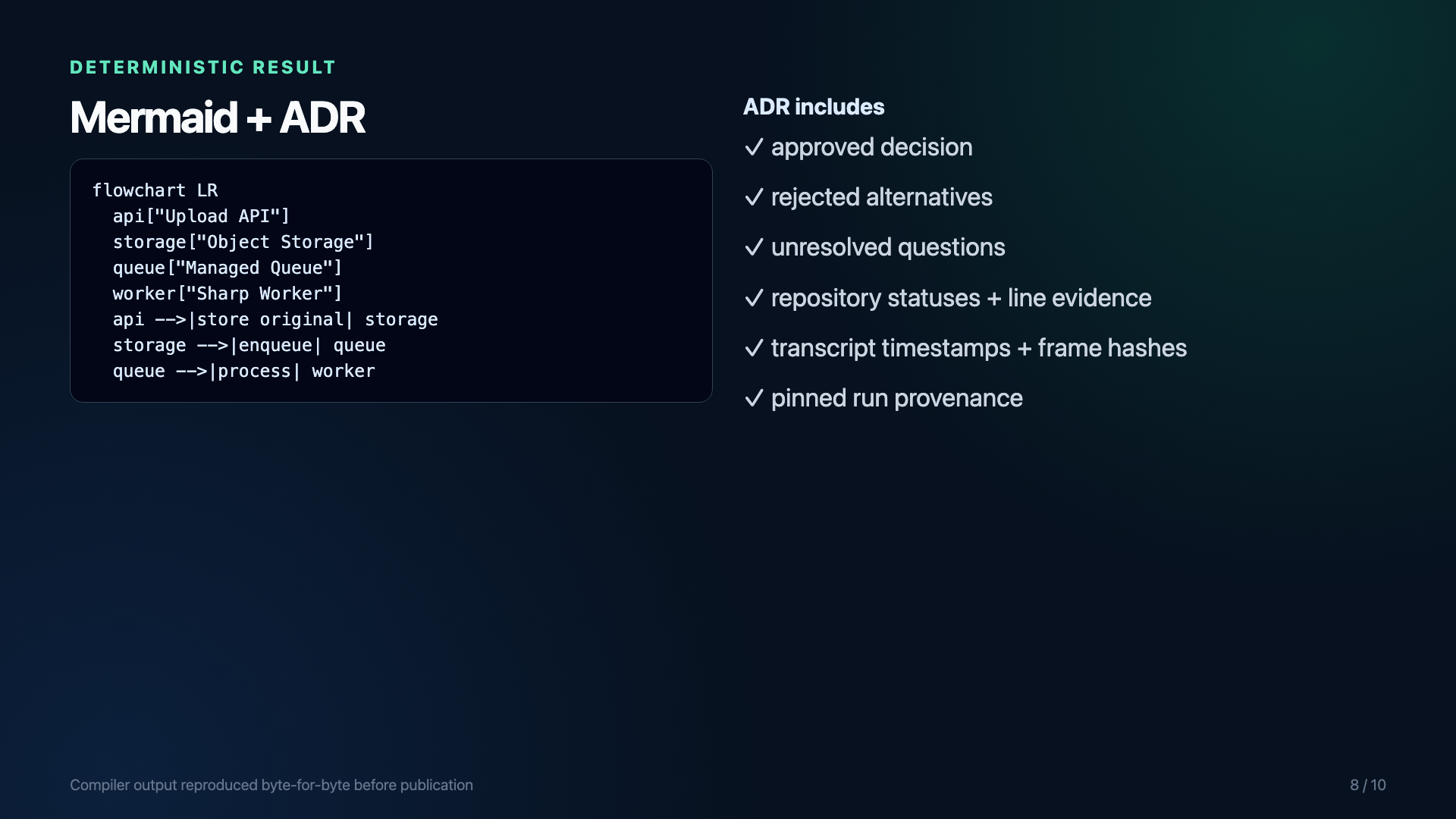
Deterministic Mermaid and ADR output includes approved claims, verified facts, evidence, and provenance.
Why I built this
Physical architecture sessions lose exactly the context that matters. A transcript records “move this behind the queue,” but not what “this” means. A final whiteboard shows boxes and arrows, but not whether an idea was accepted, rejected, or left open. Checking those decisions against the code later is manual and easy to skip.
Recover Design Record turns that messy handoff into an evidence-backed design record.
What it does
The installable Codex plugin takes a short session video and up to two board photos. FFmpeg prepares timestamped local evidence and whisper.cpp transcribes speech locally. An isolated GPT-5.6 Terra run combines transcript segments with board frames to reconstruct architecture, decisions, proposals, rejected alternatives, assumptions, and unresolved questions.
Nothing becomes accepted intent automatically. The user first reviews and approves the reconstructed meaning. Codex then checks each approved claim against a snapshot of the repository at a pinned commit. Results use four non-forcing states: supported, contradicted, not-found, or ambiguous.
The plugin deterministically compiles the reviewed record and verified repository facts into Mermaid and an ADR. A second approval binds the exact docs-only diff, remote, commit, branches, and PR title before any publication action. The plugin never merges.
Demo scenario
The staged demo discusses moving Sharp image processing behind object storage and a managed queue. GPT-5.6 resolves “move this behind the queue” using both spoken and visual evidence. Codex then finds a real conflict: participants thought Sharp already ran in a worker, while the pinned repository shows Sharp running in the API request path.
The bundled replay is intentionally disclosed and uses synthesized sample media plus genuine repository evidence. Saved model outputs and every referenced visual file are hash-checked, so judges can run the complete validation and documentation path without API keys or nested model calls.
How I used Codex and GPT-5.6
Codex helped scaffold the current plugin format, implement the local media pipeline through test-driven slices, shape the repository-assessment workflow, and validate installation and replay behavior. I made the product decisions: narrow the tool to physical architecture sessions, separate semantic approval from publication approval, preserve uncertainty, and prevent repository state from rewriting session truth.
GPT-5.6 Terra is also part of the product itself. It performs isolated multimodal reconstruction from timestamped speech and board imagery under a strict schema. Codex owns the repository-aware workflow, pinned evidence verification, deterministic documentation, and guarded publication boundary.
Built and tested
- Installable Codex plugin for macOS
- Node.js 22, FFmpeg, whisper.cpp, Git, and GitHub CLI
- 70 passing automated tests
- Deterministic replay with no API key required
- Docs-only publication guard tested against a real local Git remote

Log in or sign up for Devpost to join the conversation.