-
-
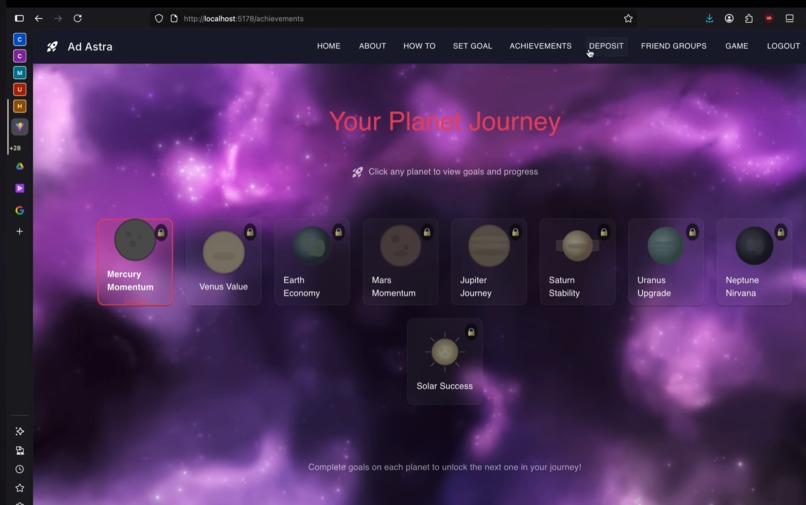
Planets each with achievements to be completed
-
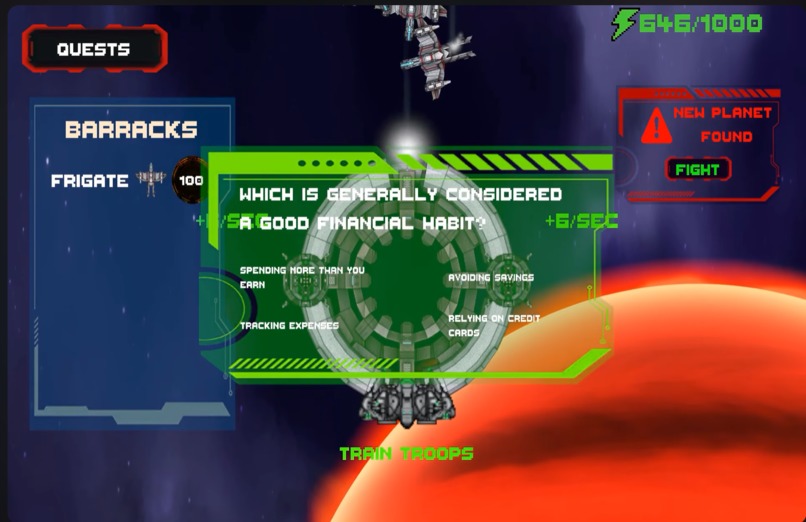
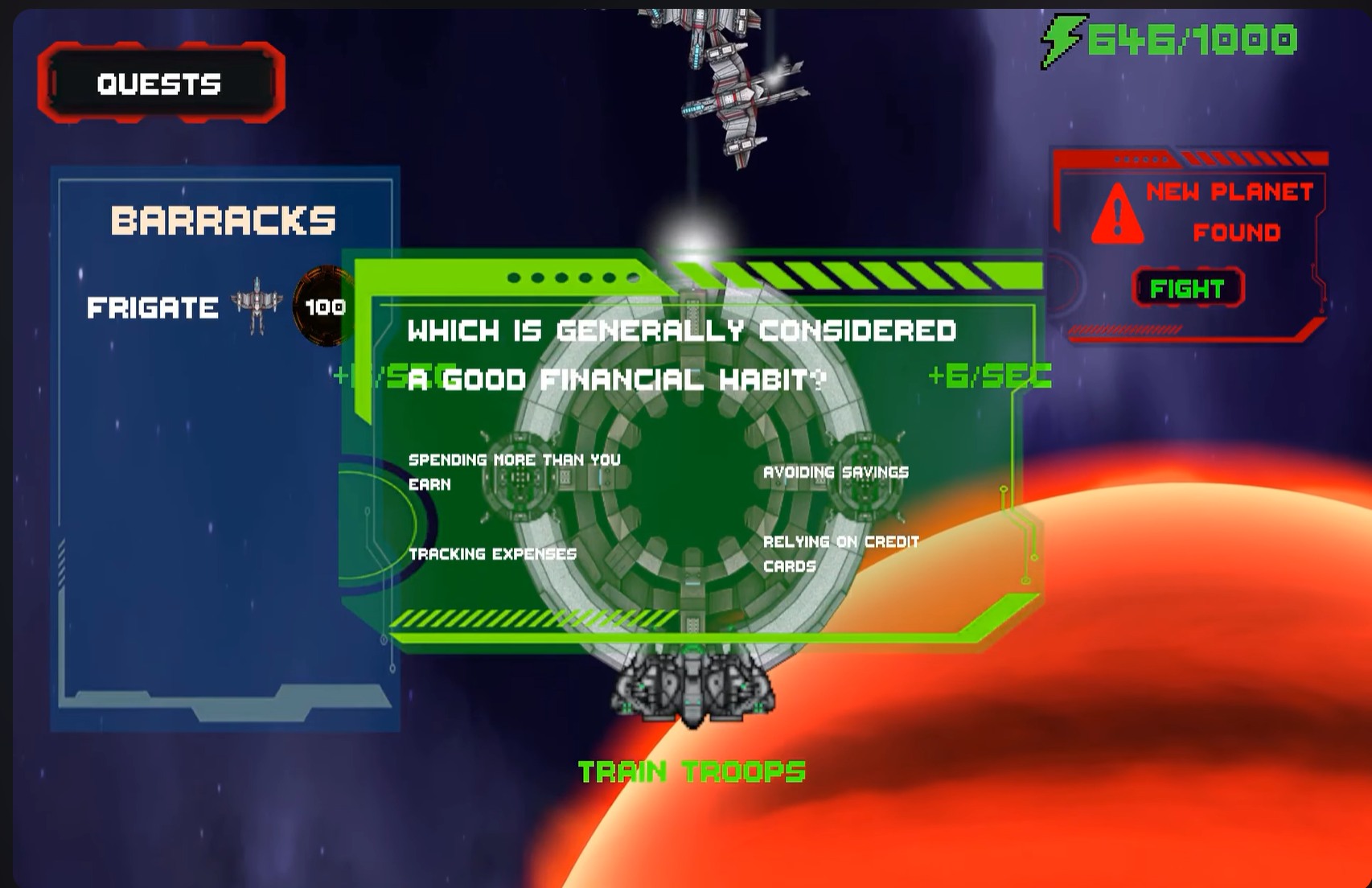
Gameplay screen
-
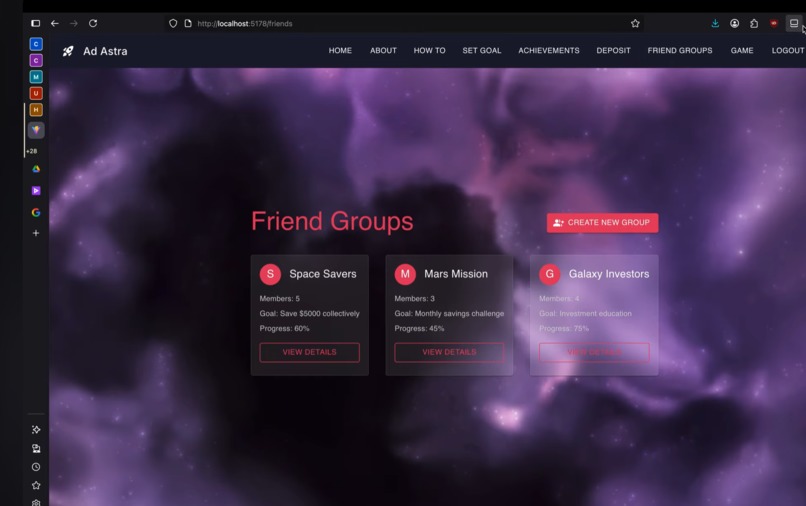
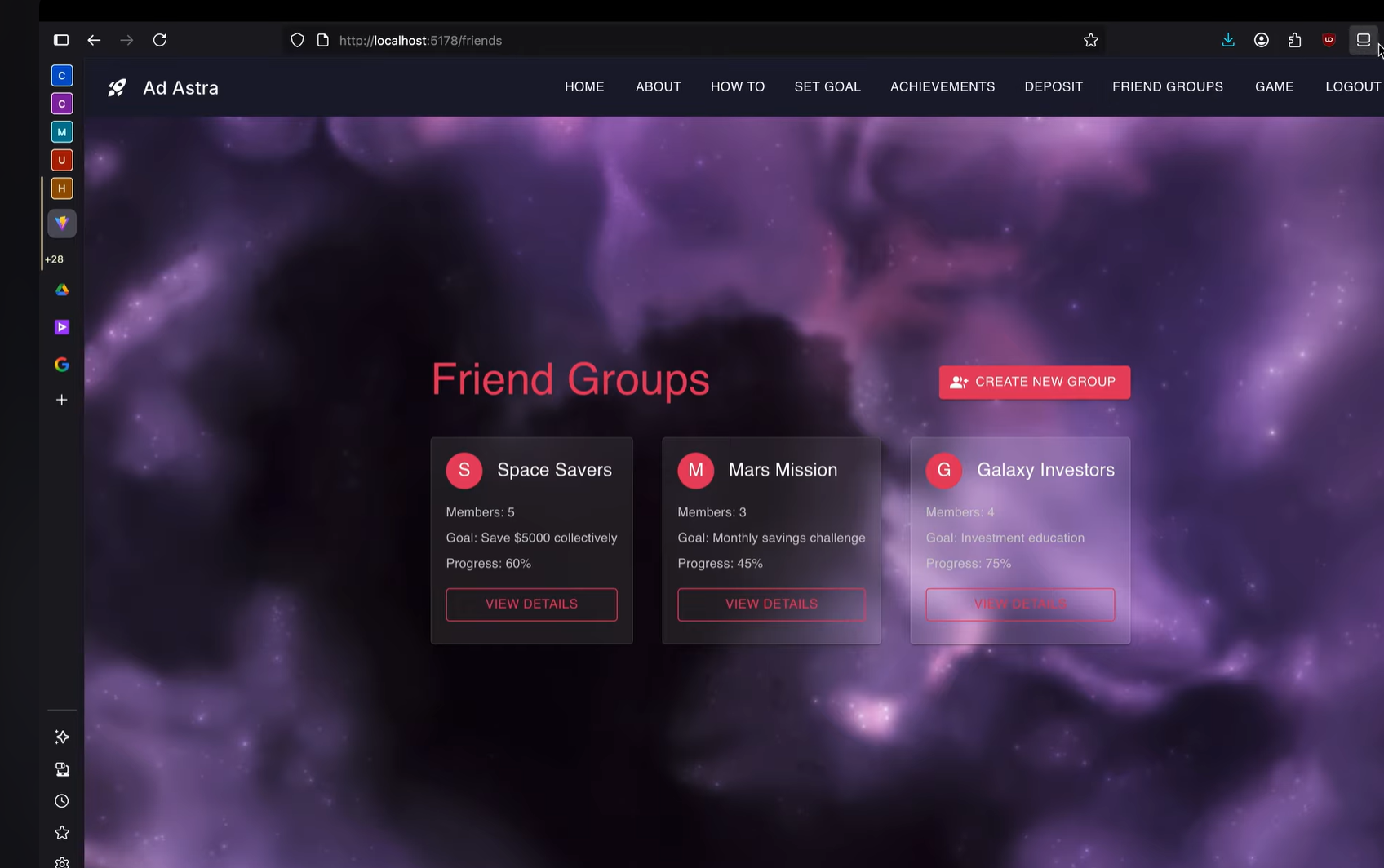
Friend groups apart of to save money together
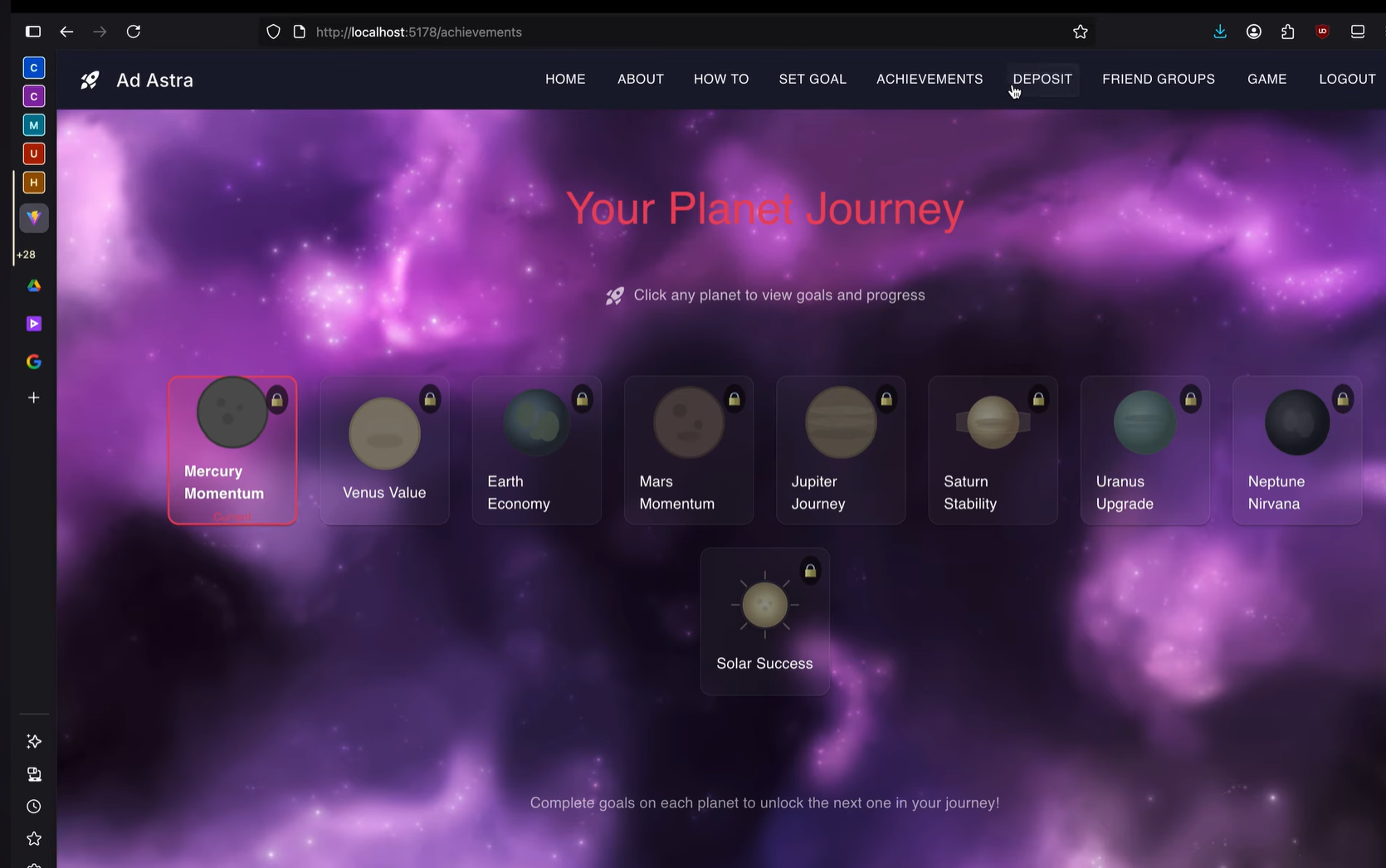
Ad Astra (To The Stars)
Inspiration
We were inspired to create Ad Astra after realizing that many people struggle with financial literacy and discipline—not because they don’t care about their money, but because they lack engaging tools to manage it effectively. Every day, people face difficulty tracking their spending or sticking to saving goals, often without clear motivation or guidance. We wanted to change that.
Our idea was simple yet ambitious: to make managing money fun and rewarding. We envisioned a platform that gamifies financial literacy and saving habits—encouraging people to learn, grow, and stay consistent. We also wanted to build something that banks and companies could one day use to reward users with merchandise as they achieve their goals.
In short, Ad Astra was born from the desire to help people reach for the stars—both financially and personally. ✨
What it does
Ad Astra is a web application (and in the future, a mobile app) that helps users learn about financial literacy while tracking their saving and spending goals through gamified experiences.
It has two main features:
An interactive financial literacy game — Users pilot a spaceship through space while answering questions about personal finance. Each correct answer brings them closer to new galaxies and builds their understanding of essential financial concepts.
A personalized goal tracker — A few-shot AI model with system instructions and response schema generates customized saving and spending goals for each user, presented in a space-themed progress tracker. As users progress, they “travel” from planet to planet, ultimately venturing beyond the solar system and into the stars! 🌌
We also hope to expand the platform into a collaborative experience, where multiple users can team up toward a shared savings goal and encourage each other by viewing one another’s achievements.
How we built it
We divided our project into four main components—AI, backend, frontend, and game development—each tackled by a team member according to their expertise.
AI: We integrated the Google Gemini AI model and used prompt engineering to ensure consistent JSON-formatted responses that the backend could easily process and the frontend could visualize.
Backend: We used Firebase and Python Flask to build a REST API that handles communication between the AI, database, and frontend.
Frontend: We developed a responsive React interface with a celestial, space-themed design to immerse users in their journey through the stars.
Game: The interactive spaceship game was built with C# and Unity, allowing users to reinforce their financial knowledge in a playful, dynamic environment.
By combining our specialized skills, we were able to bring the separate components together into a unified product—an achievement that required both technical precision and creative teamwork.
Challenges we ran into
We faced several challenges during development:
Integration issues: Each of us used slightly different programming styles and structures, so merging our work required careful coordination and early communication to maintain code consistency.
Debugging complexity: Combining multiple systems (AI, API, frontend, and Unity) led to unexpected bugs. We overcame them by consulting documentation, testing iteratively, and occasionally seeking help from generative AI tools.
Time constraints: Balancing ambition with limited time was tough. However, our commitment and teamwork allowed us to produce a working prototype that we’re proud to showcase.
Accomplishments that we're proud of
Successfully developing a functional prototype that could one day revolutionize how people think about financial literacy.
Designing a fun, educational, and interactive experience that encourages consistent financial discipline.
Building our first group project from the ground up while learning to communicate and collaborate effectively.
Balancing fun and focus during the hackathon—attending workshops, sharing laughs, and coding late into the night to make something meaningful.
What we learned
This project taught us both technical and conceptual lessons:
We gained a deeper understanding of financial literacy—from how people save money to why they often fail to stay consistent.
We learned how to build an app that bridges education and engagement, transforming dry financial lessons into memorable experiences.
Several of us learned new frameworks and technologies—including React, Flask, Firebase, Unity, and Google Gemini AI—through documentation, experimentation, and mentorship.
Most importantly, we learned the value of collaboration, time management, and creative problem-solving under pressure.
What's next for Ad Astra (To The Stars)
We have big plans for Ad Astra’s future:
Expand financial literacy tools: Add a flashcard/Quizlet-style feature to help users study financial concepts more deeply.
AI Chatbot assistant: Implement an intelligent chatbot to help users navigate the platform, translate text, or explain financial topics in simpler terms.
Community collaboration: Allow users to connect with others in their region who are saving for similar goals, fostering support networks and motivation.
More goal options: Broaden the types of goals users can set, making Ad Astra useful for people from all walks of life.
Rewards system: Partner with banks and businesses to provide exclusive merchandise and incentives as users complete saving milestones.
Our journey is just beginning—Ad Astra’s name reflects our mission perfectly:
To the stars, and beyond financial limits. 🚀


Log in or sign up for Devpost to join the conversation.