-
-
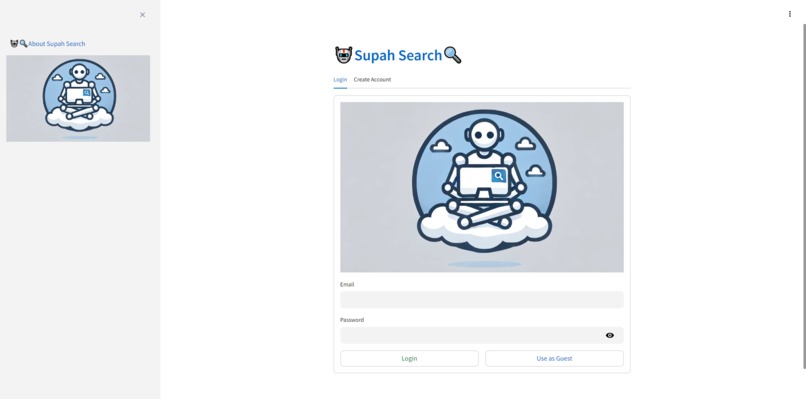
Login Page
-
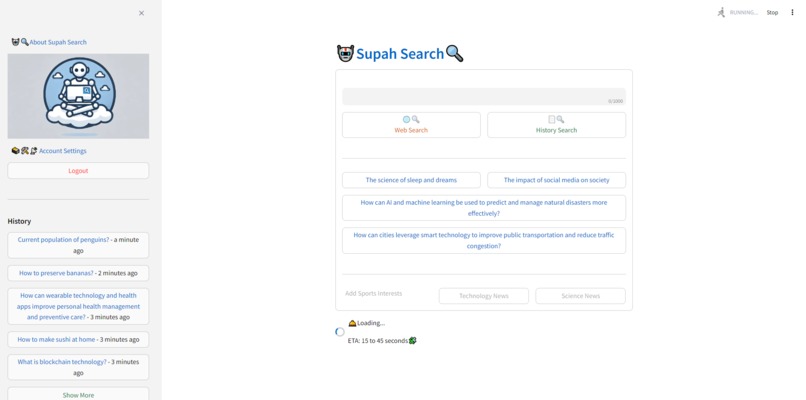
Home Page
-
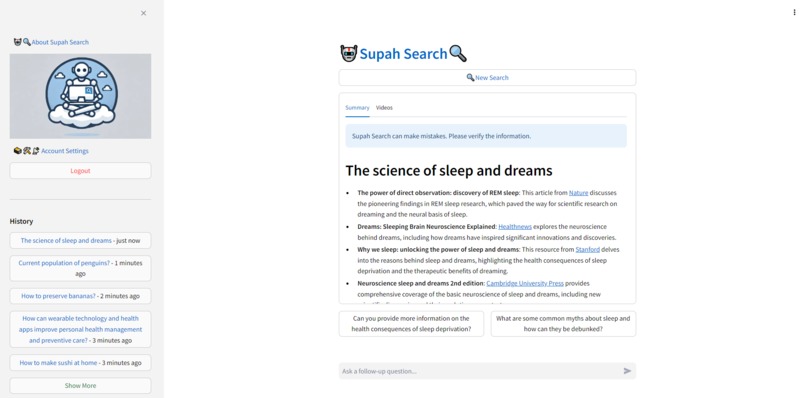
Results
-
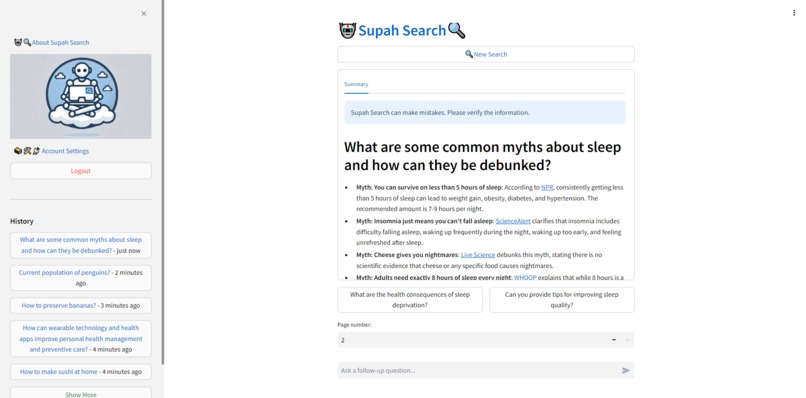
Follow up
-
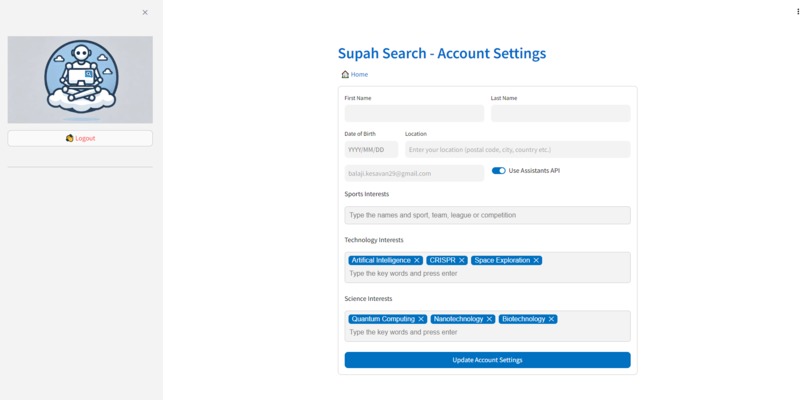
Account Settings


Inspiration
The seed of inspiration for Supah Search was planted by a desire to streamline the information discovery process. Fueled by the ambition to cut through the noise of traditional search engines, I developed a tool that anticipates and meets the users' need for instant, direct answers. By integrating respect for robots.txt restrictions, Supah Search stands out as a considerate and ethical digital assistant.
What it does
Supah Search revolutionizes the way users interact with search engines. Instead of bombarding them with links, it conducts Bing searches on behalf of the users, distilling the vast array of information into succinct summaries. It doesn't stop there; Supah Search can also retrieve and summarize website contents, provided that the websites' robots.txt allows it. Additionally, it offers the unique ability to conduct location-based searches once users share their location, adding a personalized touch to the search experience. Finally, the user can also perform keyword searches on their search history and retrieve relevant historical searches.
How I built it
Built on a robust framework of cutting-edge technologies, Supah Search combines several components to deliver its innovative service:
- Front End: Streamlit for intuitive user interfaces.
- Authentication & Database Management: Supabase for secure user handling and data storage.
- AI: OpenAI Assistants and Azure OpenAI.
- Vector Embeddings: Azure OpenAI's Vector Embeddings.
- Vector Data Store: Azure Cosmos Mongo DB for efficient data storage and retrieval.
- Web Search: Bing
- AI Security: Lakera Guard for safeguarding against prompt injection threats, ensuring the safety and reliability of user interactions.
Challenges I ran into
The journey of developing Supah Search was not without its obstacles. The first significant hurdle was the inconsistency in the API's response format, which initially threw a wrench into my streamlined integration process. I overcame this technical glitch through rigorous error handling and the introduction of format-normalizing measures. Another challenge was addressing the extended latency in API responses.
Accomplishments that I'm proud of
The development of Supah Search is encapsulated in triumphs that resonate with every milestone reached.
- Rapid Prototyping: The ability to transition Supah Search from concept to a fully functional prototype in record time is a feat I hold dear.
- User-Centric Design: Garnering positive feedback on user interface design and usability from early adopters, which affirmed my commitment to a user-first approach.
- AI Integration: Successfully integrating multiple AI technologies to deliver a cohesive and seamless search experience, a task that was both challenging and rewarding.
- Ethical AI Use: My adherence to ethical AI practices, especially respecting the limitations set forth by robots.txt.
- Community Engagement: The establishment of a growing user base and the formation of a community around Supah Search
What I learned
The journey of creating Supah Search was not just about building a tool; it was also a profound learning experience, especially in leveraging the capabilities of Azure Cosmos DB.
- Azure Cosmos Mongo DB Mastery
- Vector Storage Techniques:
What's next for Supah Search
Looking ahead, I plan to continue refining Supah Search for more accurate and relevant search summaries, improving user interface design for a more engaging experience. I am also looking for help to improve the response time of the OpenAI API calls.
Built With
- azure-cosmos-db
- azure-openai
- lakera-guard
- openai-assistants
- python
- render
- streamlit
- streamlit-components
- supabase

Log in or sign up for Devpost to join the conversation.