-
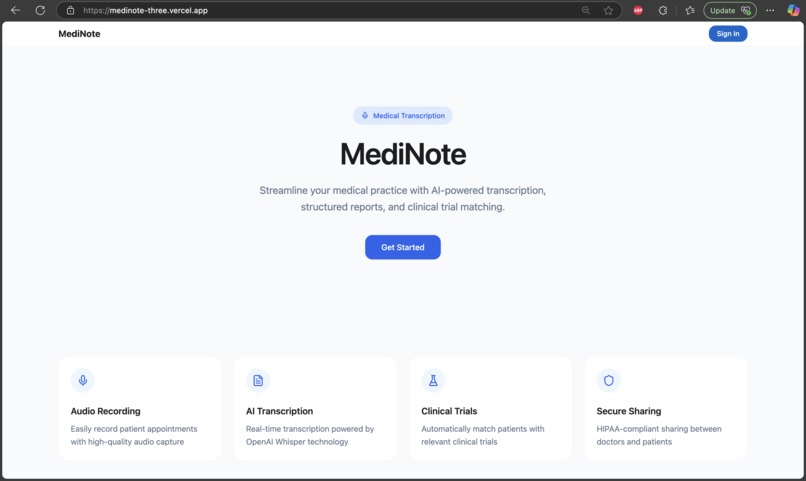
Homepage
-
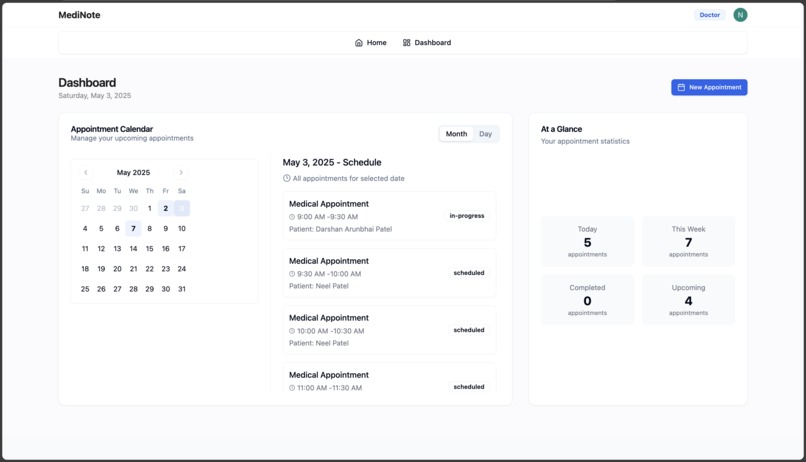
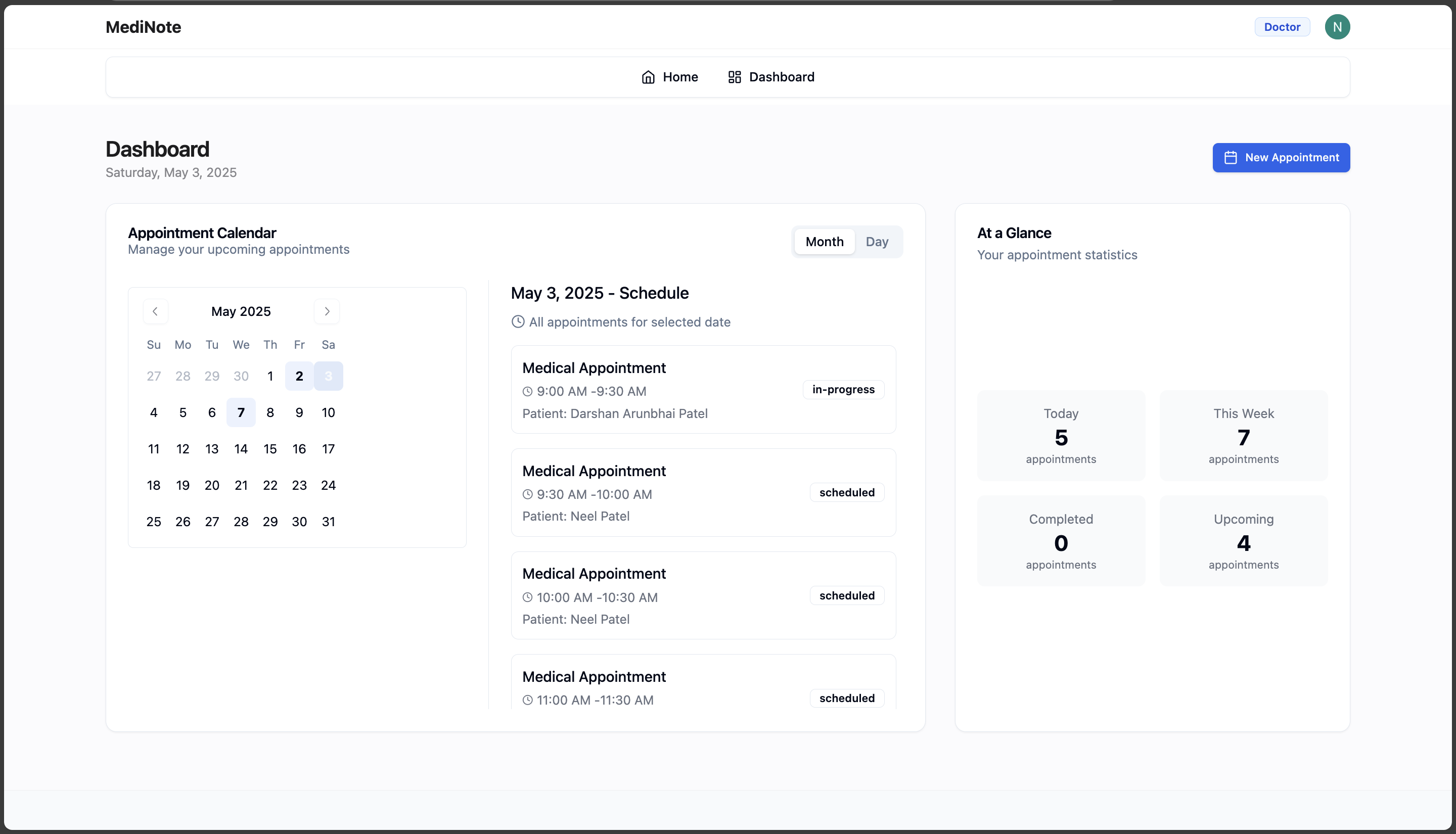
Doctor's View
-
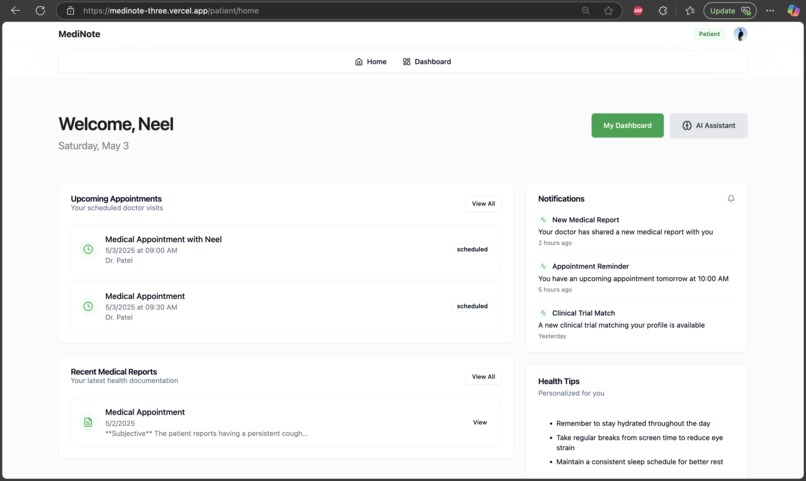
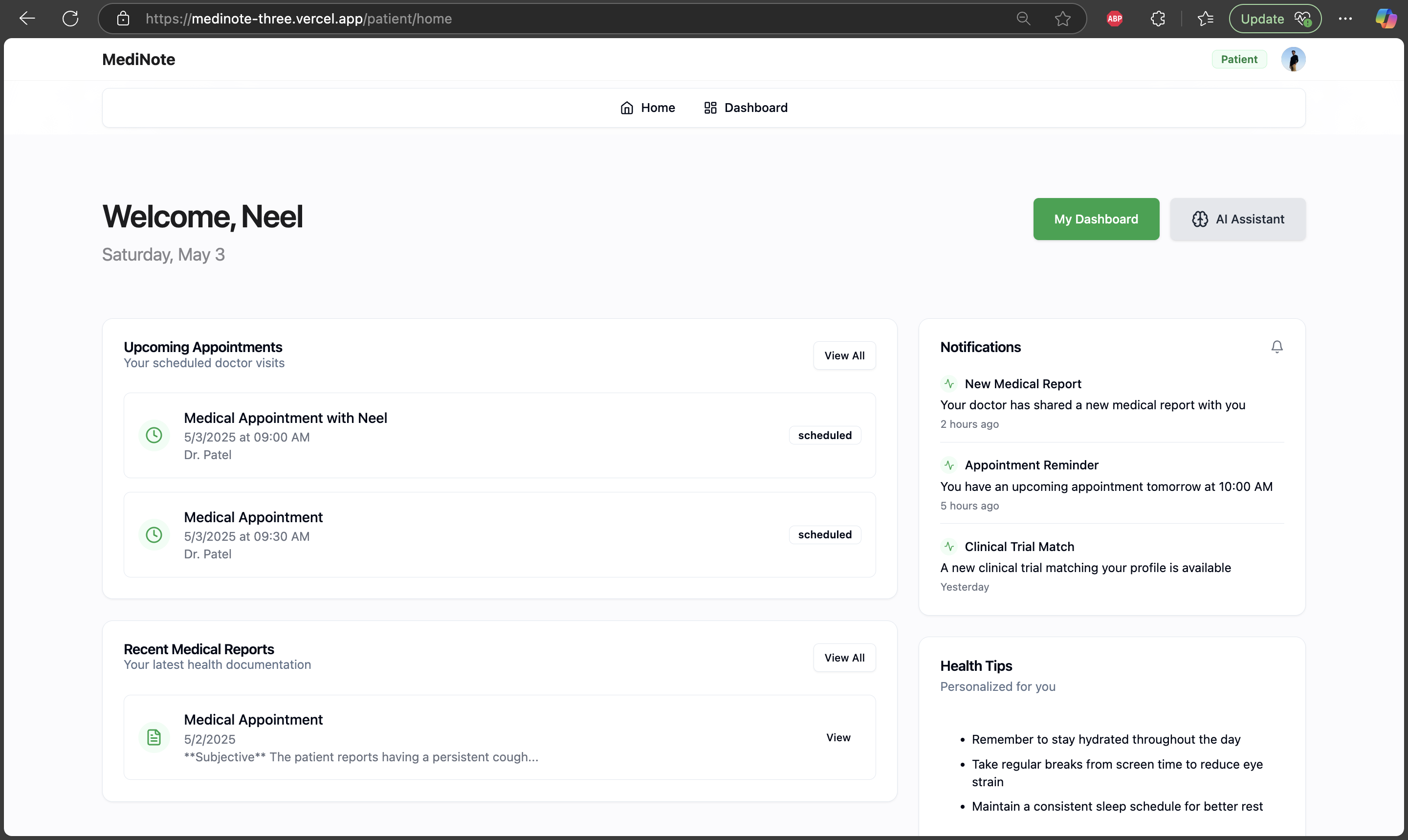
Patient's View
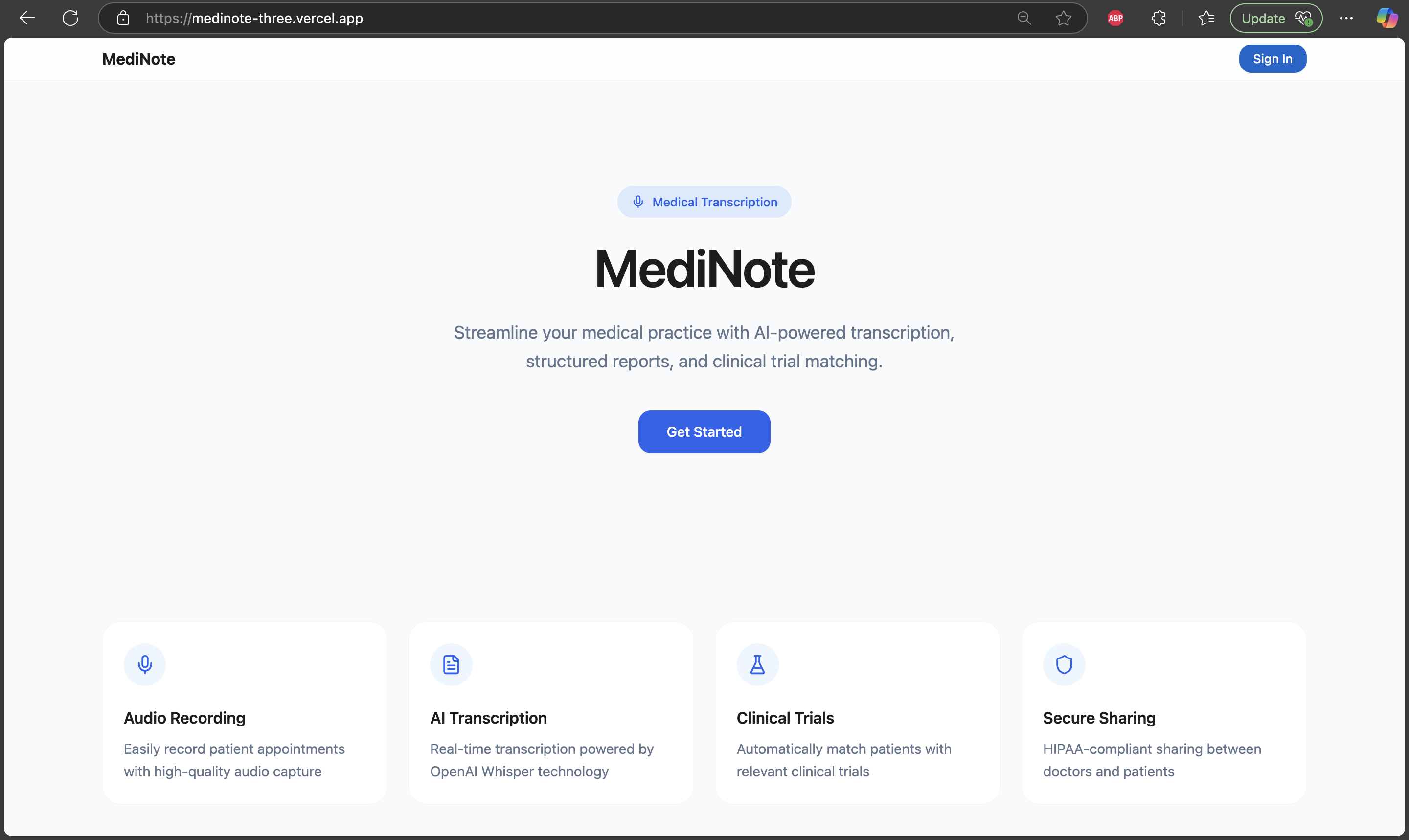
Inspiration
MediNote: AI-Powered Medical Transcription & Analysis
Inspiration
We were inspired by the challenges doctors face with documentation, often spending more time on paperwork than patient care. Our team member's personal experience with a doctor who was visibly stressed about completing patient notes after hours motivated us to create a solution that would give healthcare providers more time for what matters most - their patients. The inefficiency in medical documentation not only affects physician well-being but also impacts patient care quality, creating a problem worth solving.
What it does
MediNote transforms the medical documentation process through AI-powered transcription. Doctors can record patient appointments, and our system automatically creates structured medical reports. It also identifies potential clinical trial matches based on patient data and provides an AI assistant to help patients understand their medical records in plain language. The platform serves as a bridge between healthcare providers and patients, making medical information more accessible while reducing the administrative burden on medical professionals.
How we built it
We built MediNote using React with TypeScript for the frontend, styled with Tailwind CSS and Shadcn UI components. For the backend, we leveraged Convex for real-time data synchronization and user management through Clerk. The audio transcription pipeline uses OpenAI's Whisper model, while our medical report generation and AI chat assistant are powered by large language models fine-tuned on medical data. We implemented end-to-end encryption for patient data and created a responsive interface that works seamlessly across devices.
Challenges we ran into
Building our secure platform presented significant challenges. We needed to ensure end-to-end encryption for all patient data while maintaining real-time capabilities. Optimizing the accuracy of medical transcription required extensive domain-specific training, and creating a truly helpful AI assistant meant balancing accessibility with clinical precision. We also navigated complex healthcare regulations around data sharing between doctors and patients. On the technical side, we integrated multiple APIs and ensured reliable audio processing across diverse devices and connection speeds.
Accomplishments that we're proud of
We're particularly proud of our transcription accuracy rate of over 95% for medical terminology, significantly higher than general-purpose solutions. Our clinical trial matching algorithm has already helped connect patients with potentially life-changing research opportunities. We've also received enthusiastic feedback from both doctors and patients during early testing, confirming that we're addressing a real need in healthcare. The intuitive design of our platform has been praised for its ease of use, which is crucial for adoption in the busy healthcare environment.
What we learned
This project taught us the importance of domain expertise in AI applications. Working closely with healthcare professionals throughout development was crucial for creating truly useful tools rather than just technically impressive ones. We gained insights into healthcare workflows, medical terminology processing, and the subtle ways doctors communicate information that wouldn't be obvious to outsiders. We also learned about the regulatory landscape of healthcare technology and how to build products that can navigate these complexities while still delivering value.
What's next for MediNote
We're focused on expanding our specialty-specific templates to better serve different medical fields like cardiology, neurology, and pediatrics. We're also developing integration APIs for popular Electronic Health Record (EHR) systems. Looking forward, we plan to add multilingual support and explore using our anonymized medical data (with proper consent) to help researchers identify broader healthcare trends and improve patient outcomes. We are also exploring partnerships with medical schools to provide training tools for future doctors and investigating potential applications in underserved communities to address healthcare disparities.
Built With
- clerk
- convex
- openai
- radix
- react
- tailwindcss
- typescript
- vercel
- vite


Log in or sign up for Devpost to join the conversation.