-
-
-
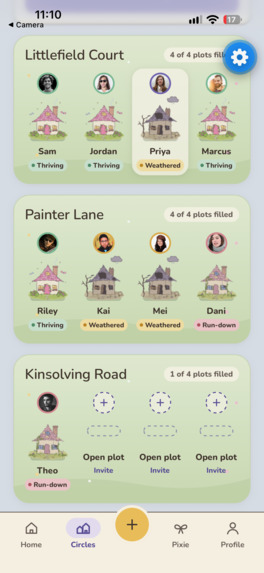
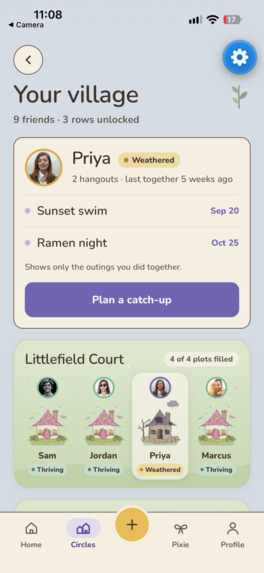
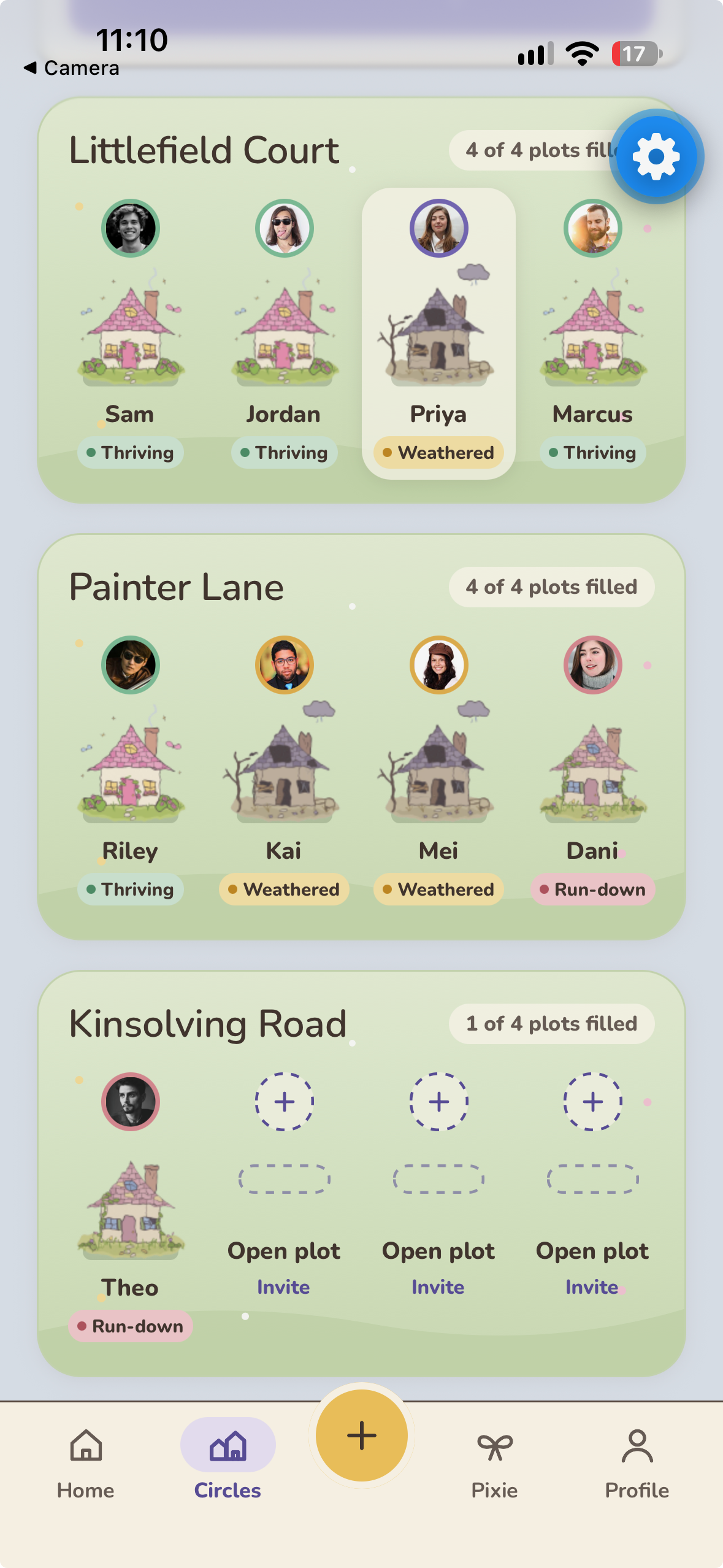
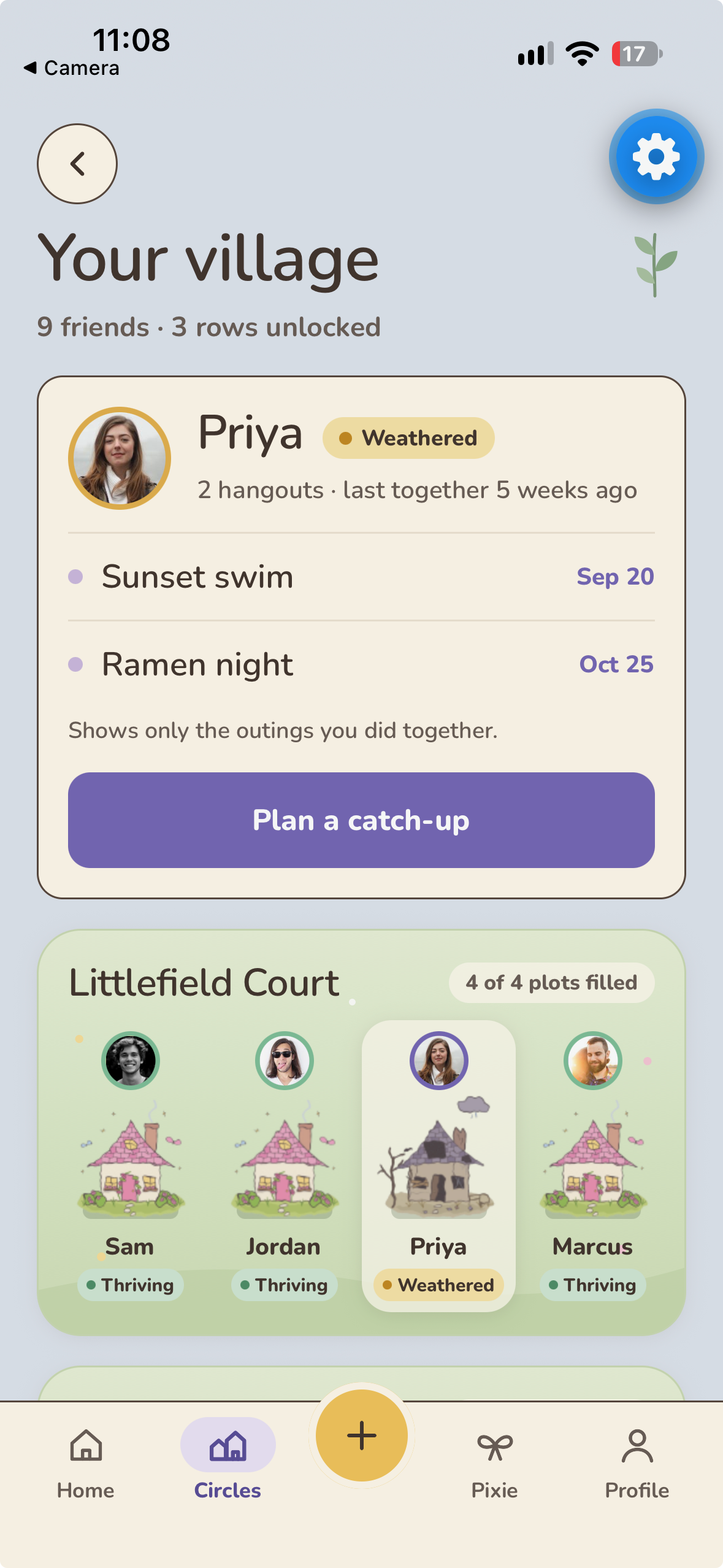
Your chats become a village. Cottages thrive when you hang out, weather when you drift, and open plots invite new friends.
-
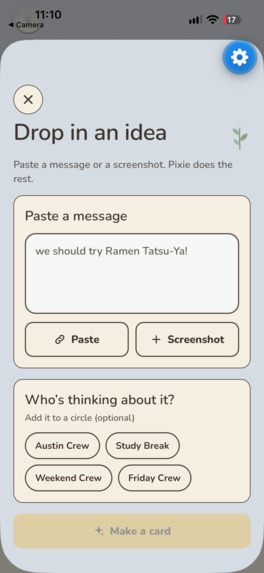
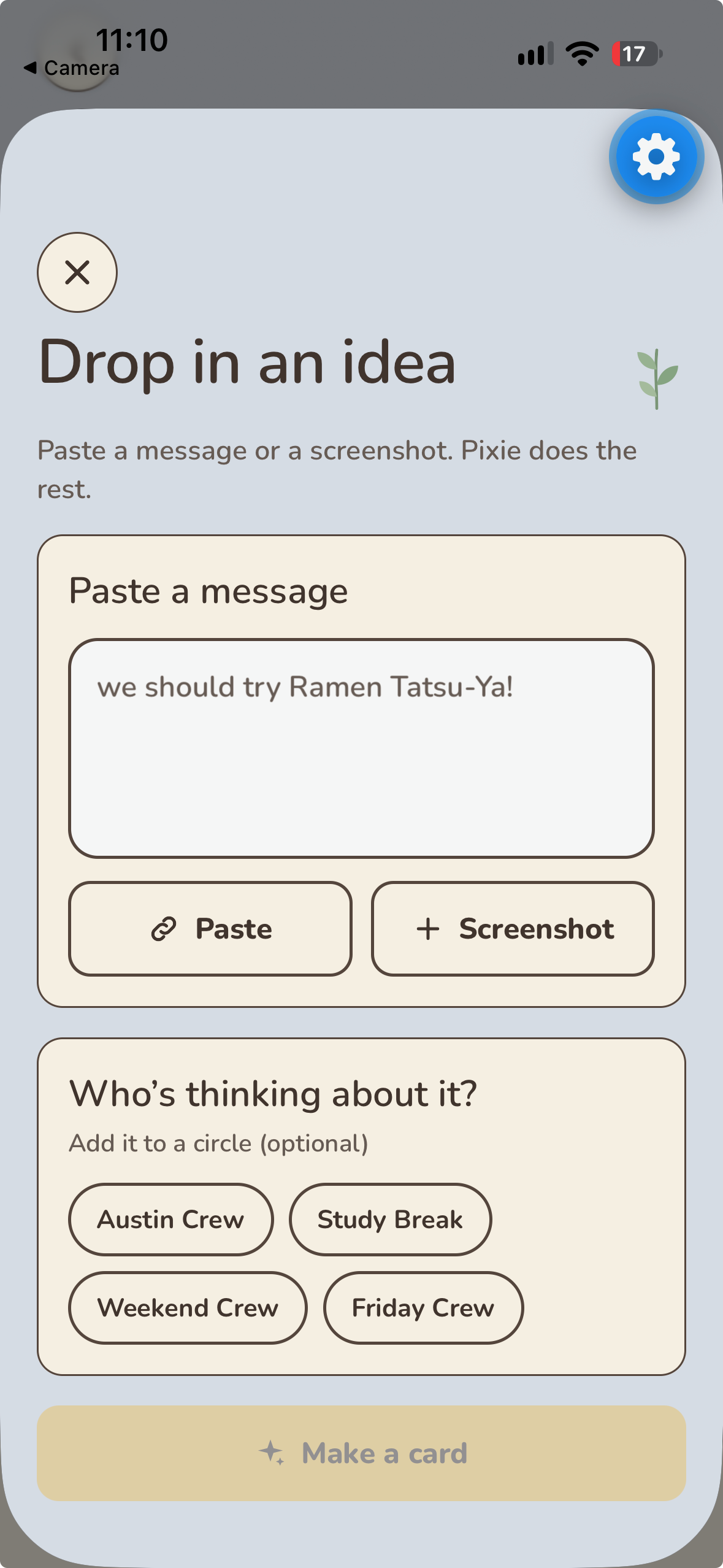
Paste a message or screenshot, pick a circle, and Pixie turns “we should try this” into a card.
-
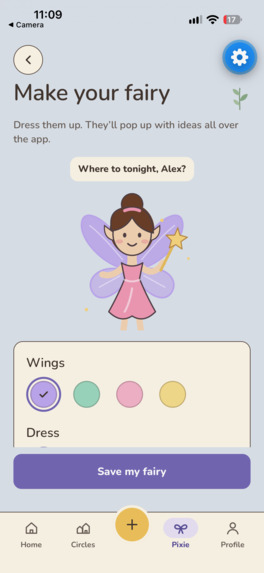
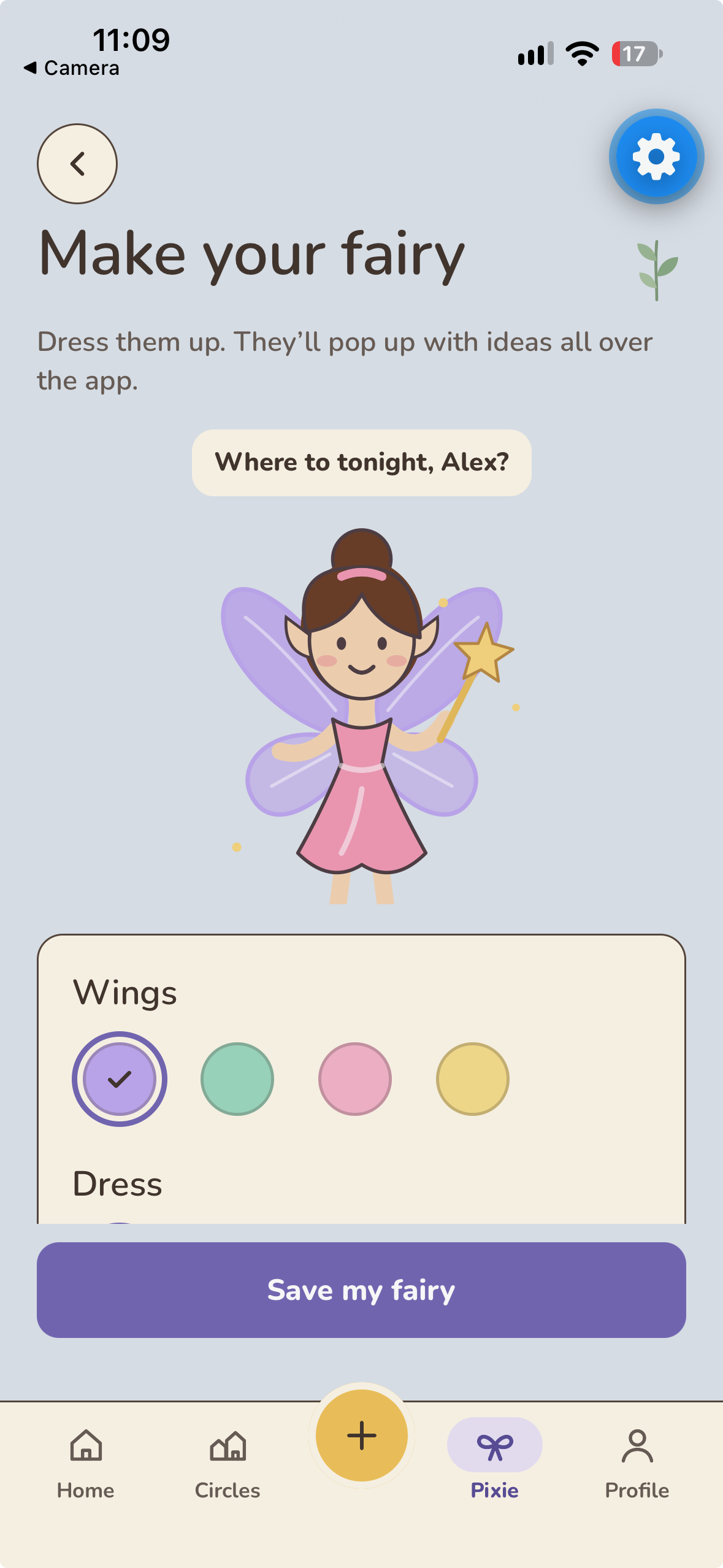
Make Pixie yours. Pick her wings, dress and hair, and she’ll pop up with ideas all over the app.
-
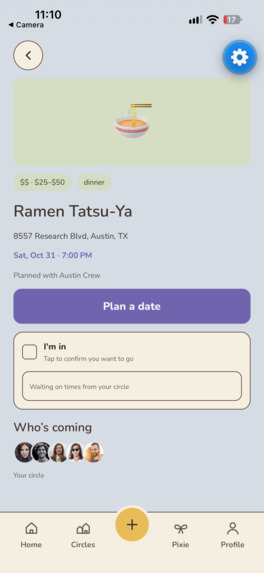
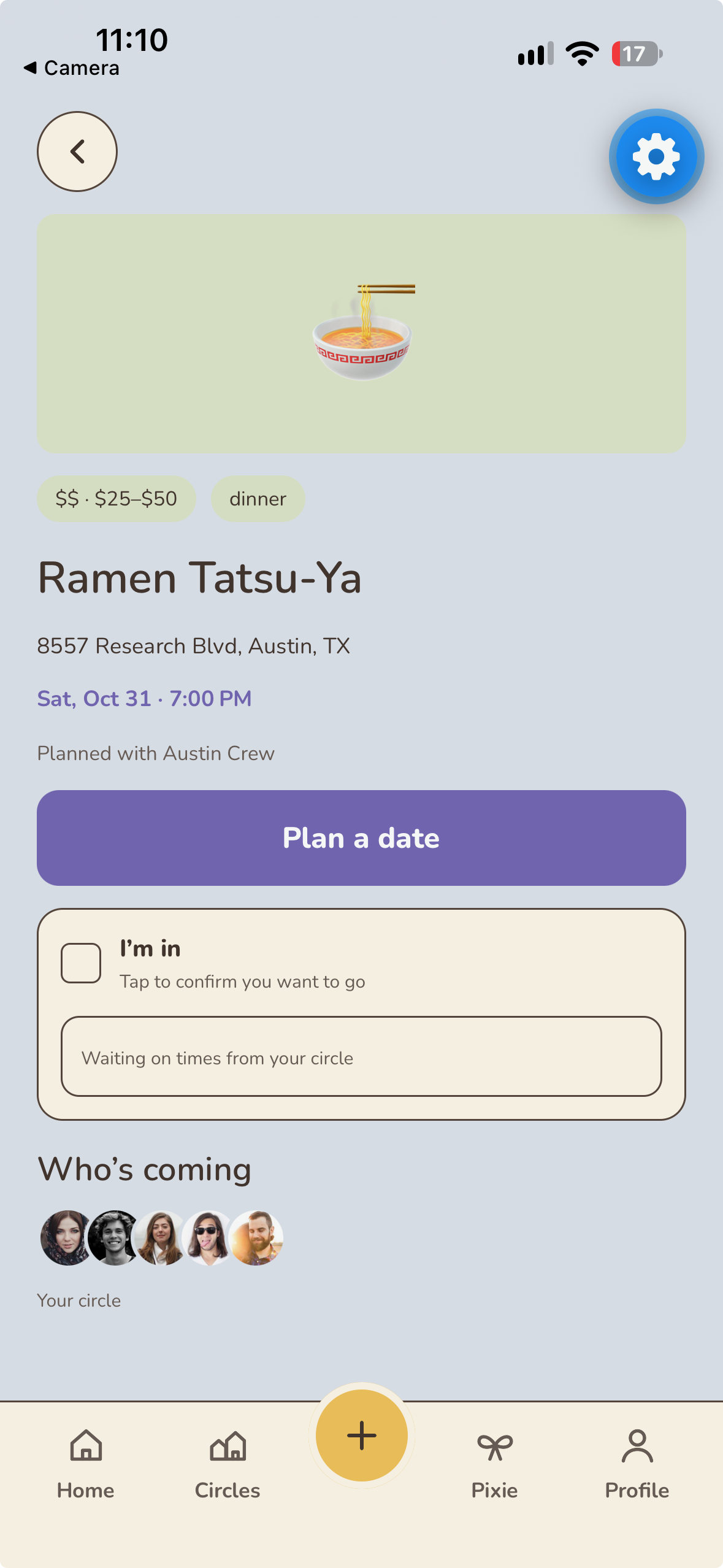
Every idea becomes a card with price, address and details. Tap “I’m in,” then plan a date that works for the group.
-
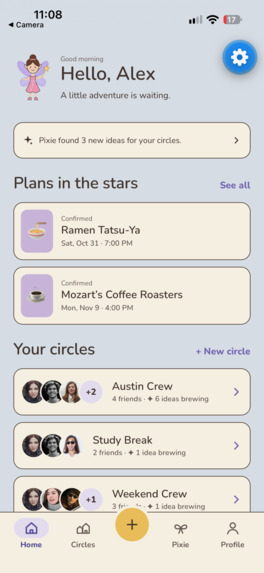
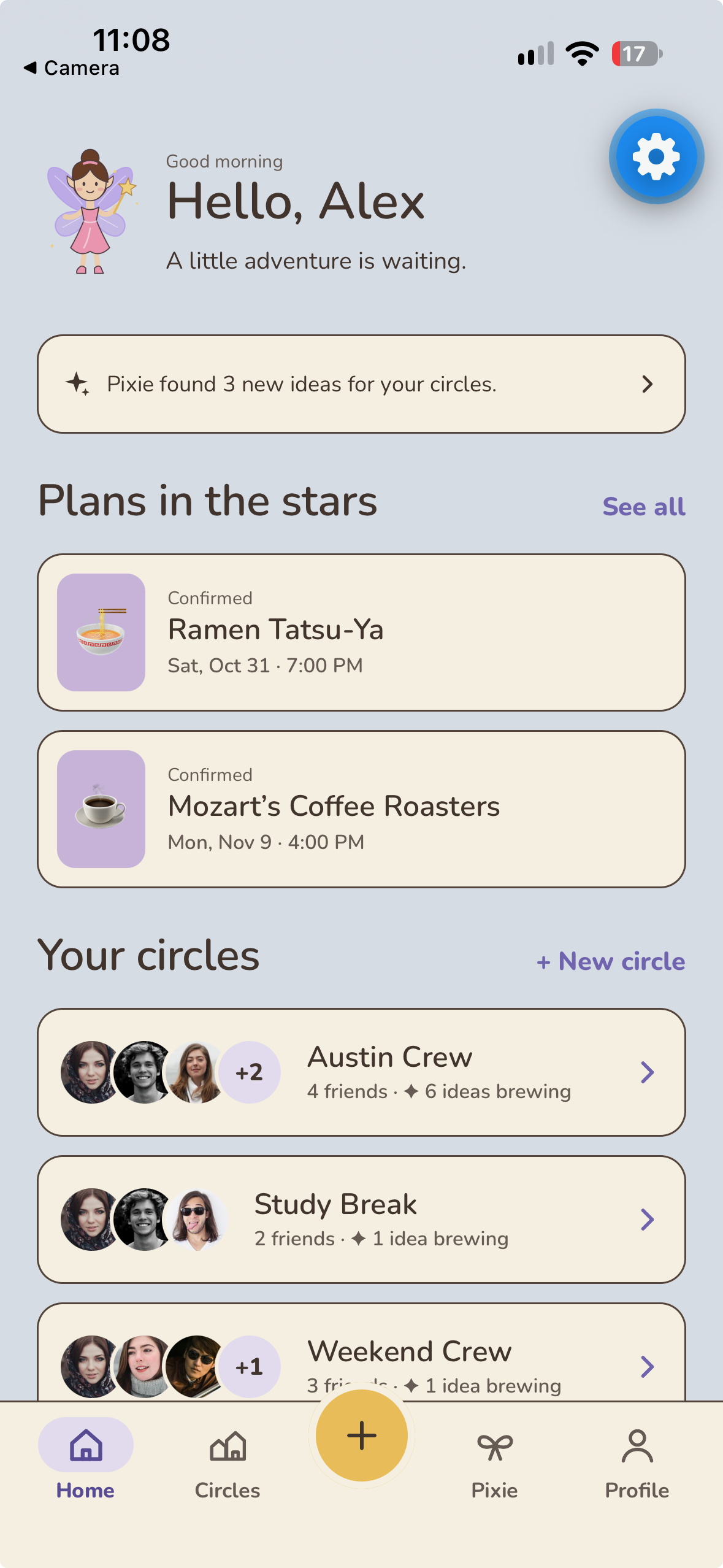
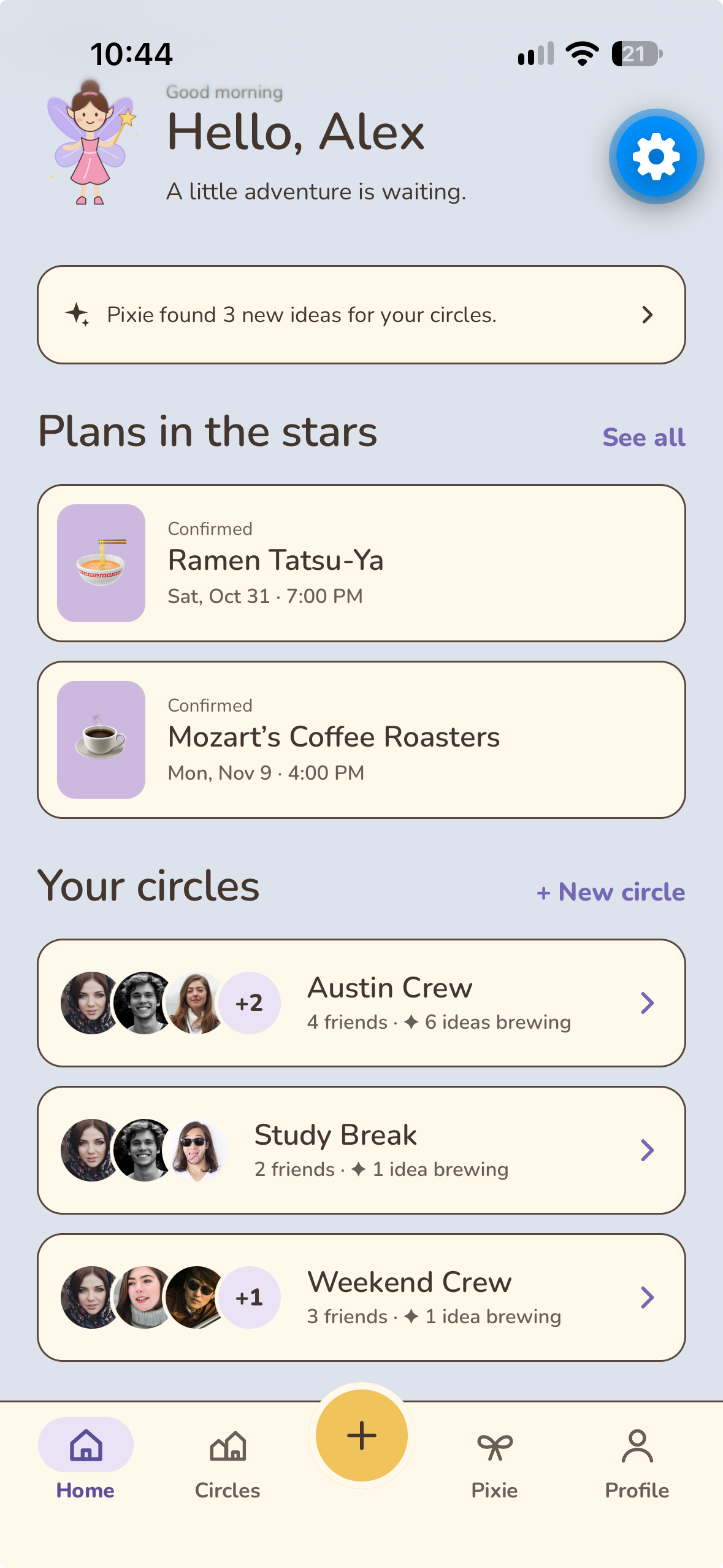
Your home base: confirmed plans, your circles, and Pixie flagging fresh ideas the moment your friends drop them in.
-
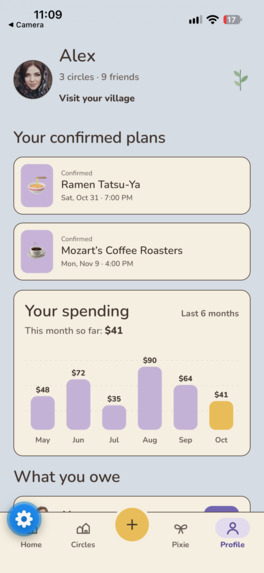
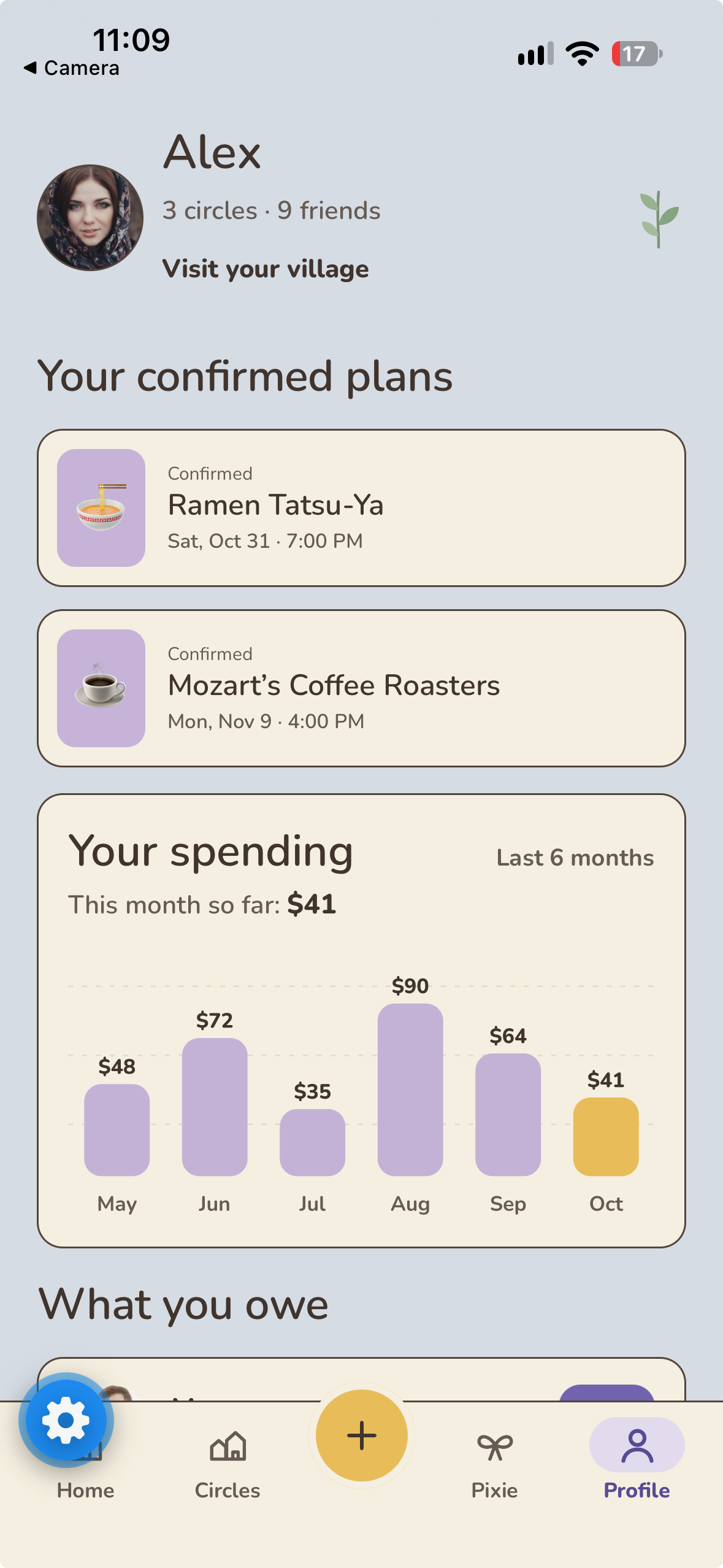
Your profile tracks confirmed plans and a six-month look at what you spend hanging out with friends.
-
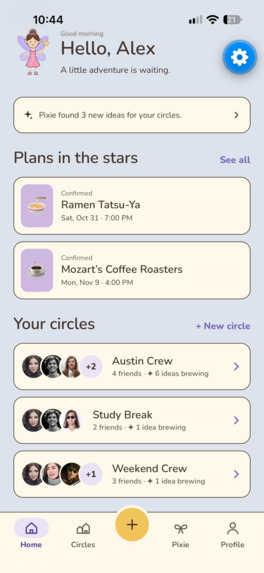
Every circle at a glance, with how many ideas are brewing, so nothing gets buried in the group chat.
-
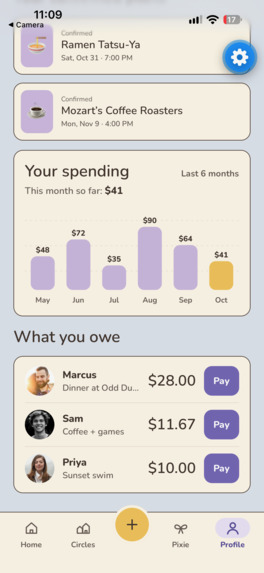
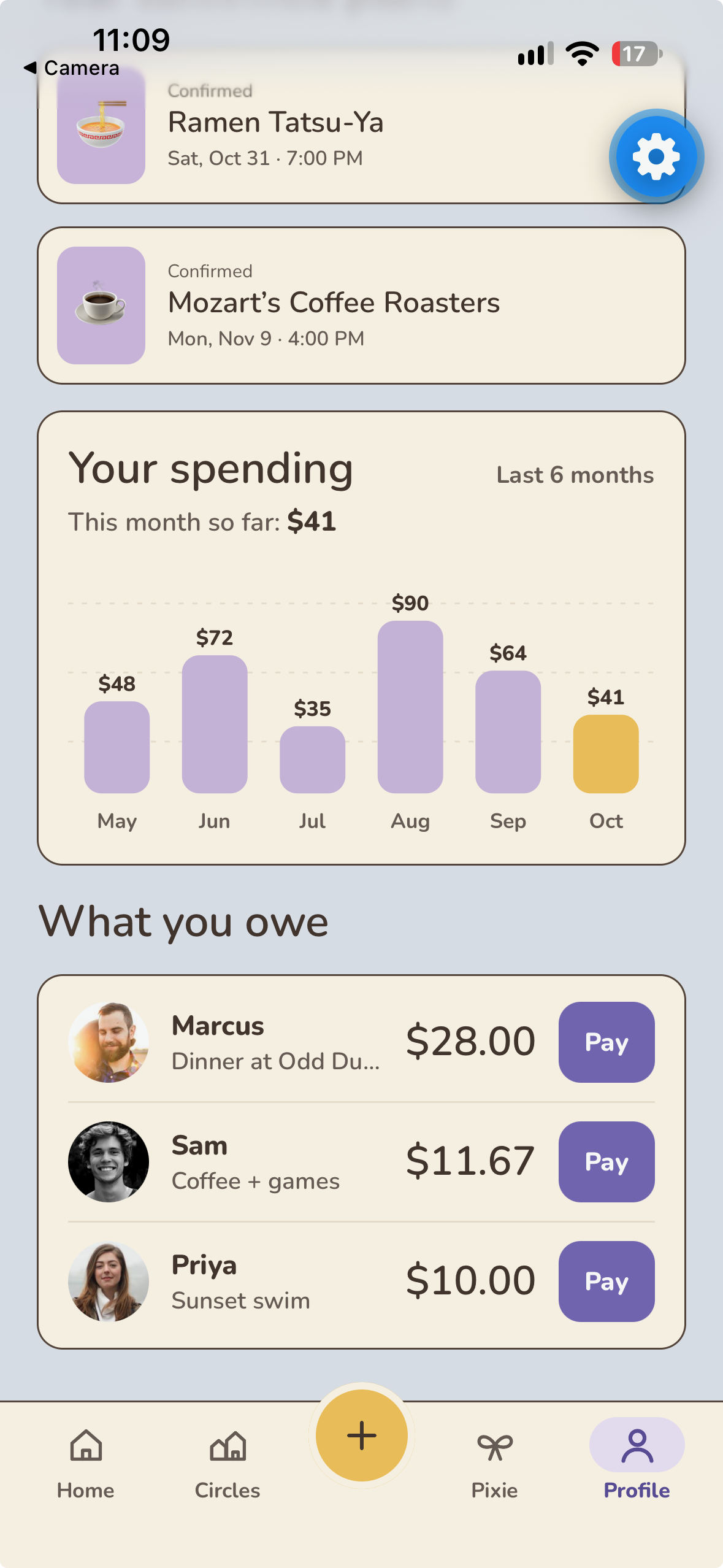
After the hangout, Kindred splits the bill. See who you owe and settle up with one tap.
-
Every idea becomes a card with price, address and details. Tap “I’m in,” then plan a date that works for the group.
Inspiration
Every group chat has a list of hang outs they discuss that often get buried away. This can happen due to budget, scheduling, or even just agreements upon everyone. We wanted to create a place that kept all these ideas together and also tracked how often you see your friends. Village maintenance depends on how often you see a friend and each cottage has memories from past hang outs with a friend.
What it does
Kindred is a friendship planning app prototype. You can create villages for different groups of friends, collect activity ideas, and mark the times you're available. The onboarding screens collect interests and practical preferences, including accessibility and dietary needs. You can either send screenshots of conversations in directly to the app or paste the messages to our AI fairy companion, Pixie. Pixie helps develop plans and suggest other hang outs based on past experiences. Your village shows your friends' cottages, with its maintenance dependent on how long it has been since you've seen them. You can choose a friend and start planning something together.
How we built it
We started with a 12-screen mockup and refined the design in Figma, then built Kindred with React Native, Expo, and TypeScript. We used SVG artwork for the customizable fairy and the village cottages.
The backend uses Next.js API routes and PostgreSQL. Gemini extracts a place or activity from pasted text and screenshots, and SerpAPI looks up details such as the address, price, and rating. If those services fail, the app can use cached results or let users correct the card manually. We also built backend planning logic that considers group preferences and finds overlapping availability.
Challenges we ran into
Getting the visual style right took several attempts. We wanted to find a balance between simple and fantastical, so we simplified them into small doodles and reusable components.
We also had to account for incomplete information. A screenshot might mention a restaurant without showing its location or price. We added cached results and editable cards so users could still save an idea when an API request failed or returned missing details.
Scheduling raised a similar issue: a suggested time needed to come from the group’s actual availability. Our backend calculates overlapping time slots instead of relying on an AI-generated time.
Accomplishments
We built a mobile app with React Native and Expo, along with a backend that turns pasted messages and screenshots into saved activity cards. The card flow combines Gemini’s extraction with place information from SerpAPI and lets users review the result.
We’re especially happy with the village. Each cottage reflects how recently you’ve spent time with that friend, and its detail view shows only outings you shared together. We also built a customizable fairy companion and carried the same visual style across the app.
What we learned
We learned to distinguish between information an AI can extract and details the app still needs to verify. Recognizing a restaurant’s name doesn’t establish whether it meets someone’s dietary or accessibility needs. Our planner flags those gaps for review.
Building the frontend and backend separately also showed us where integration work can accumulate. A screen can look finished while still depending on sample data. Keeping the data structures aligned helped, but connecting and testing the full flow remains an important next step.
What's next for Kindred
We want to add a personalized monthly recap of the time you’ve spent with friends. It would highlight your hangouts, places you visited, and photos or memories you saved along the way.
You could revisit a favorite outing and find ideas for the next month, including activities your group saved but never got around to trying. We want to give people a reason to look back on those moments and make plans for more.
Built With
- expo.io
- figma
- gemini
- muse
- native
- next.js
- postgresql
- react
- serpapi
- svg
- typescript
- vultr

Log in or sign up for Devpost to join the conversation.