-
-
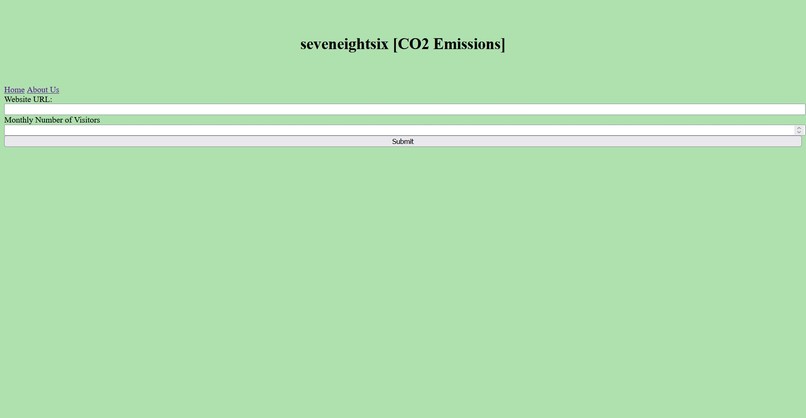
Homepage
-
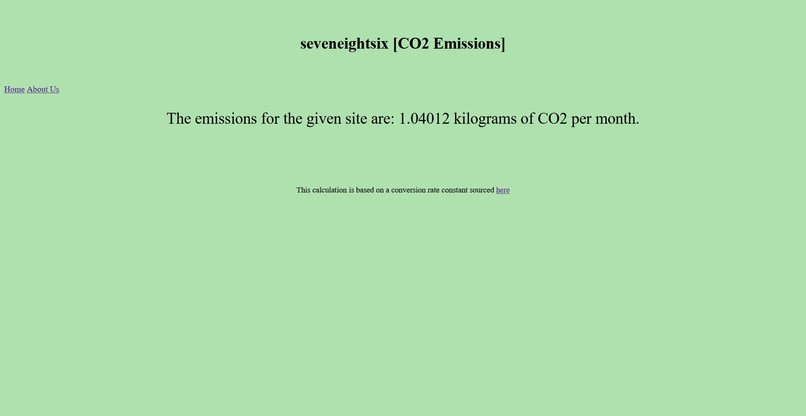
Calculation
-
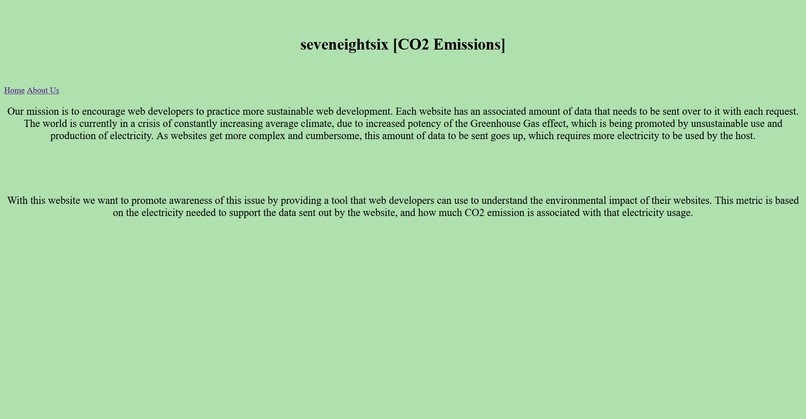
About page
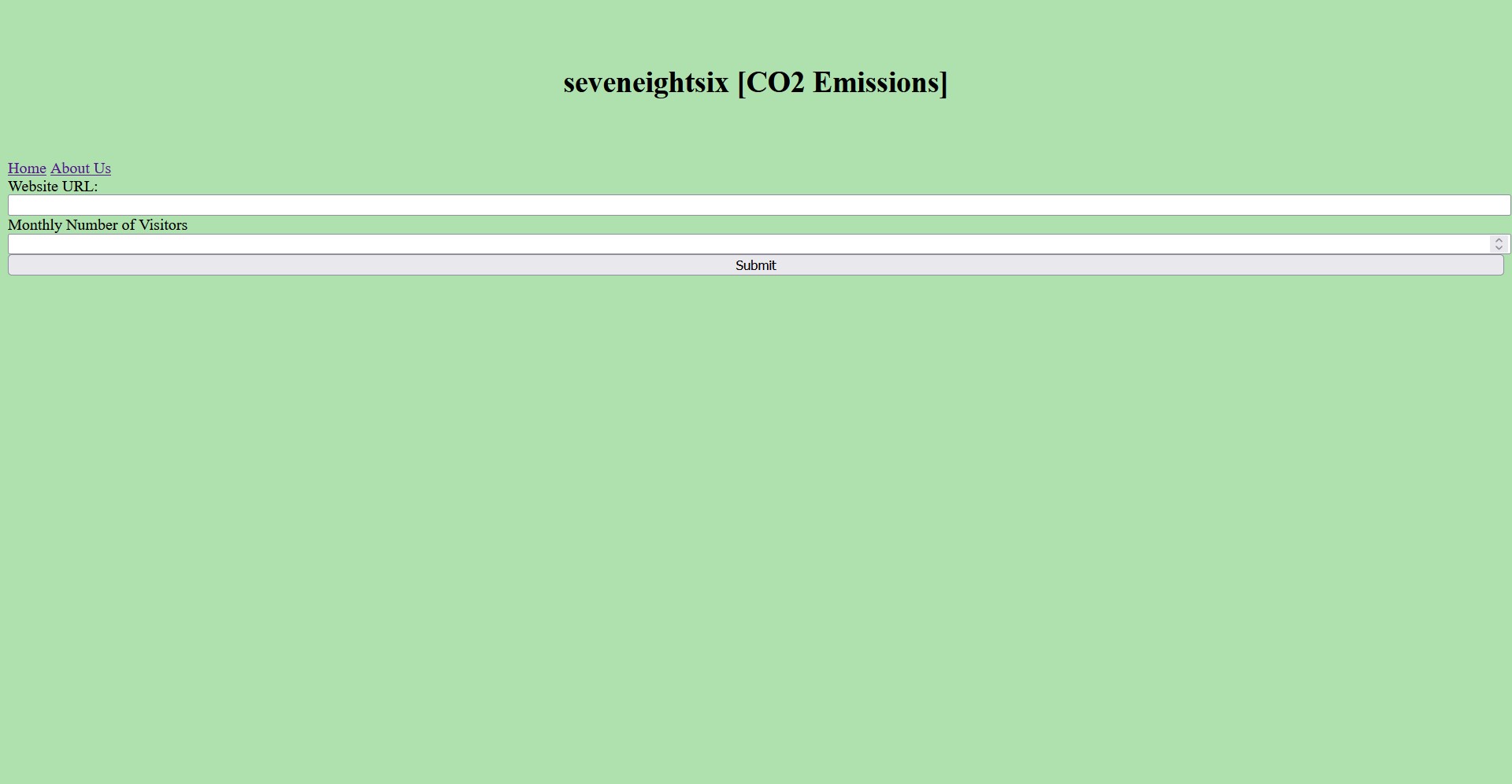
Inspiration
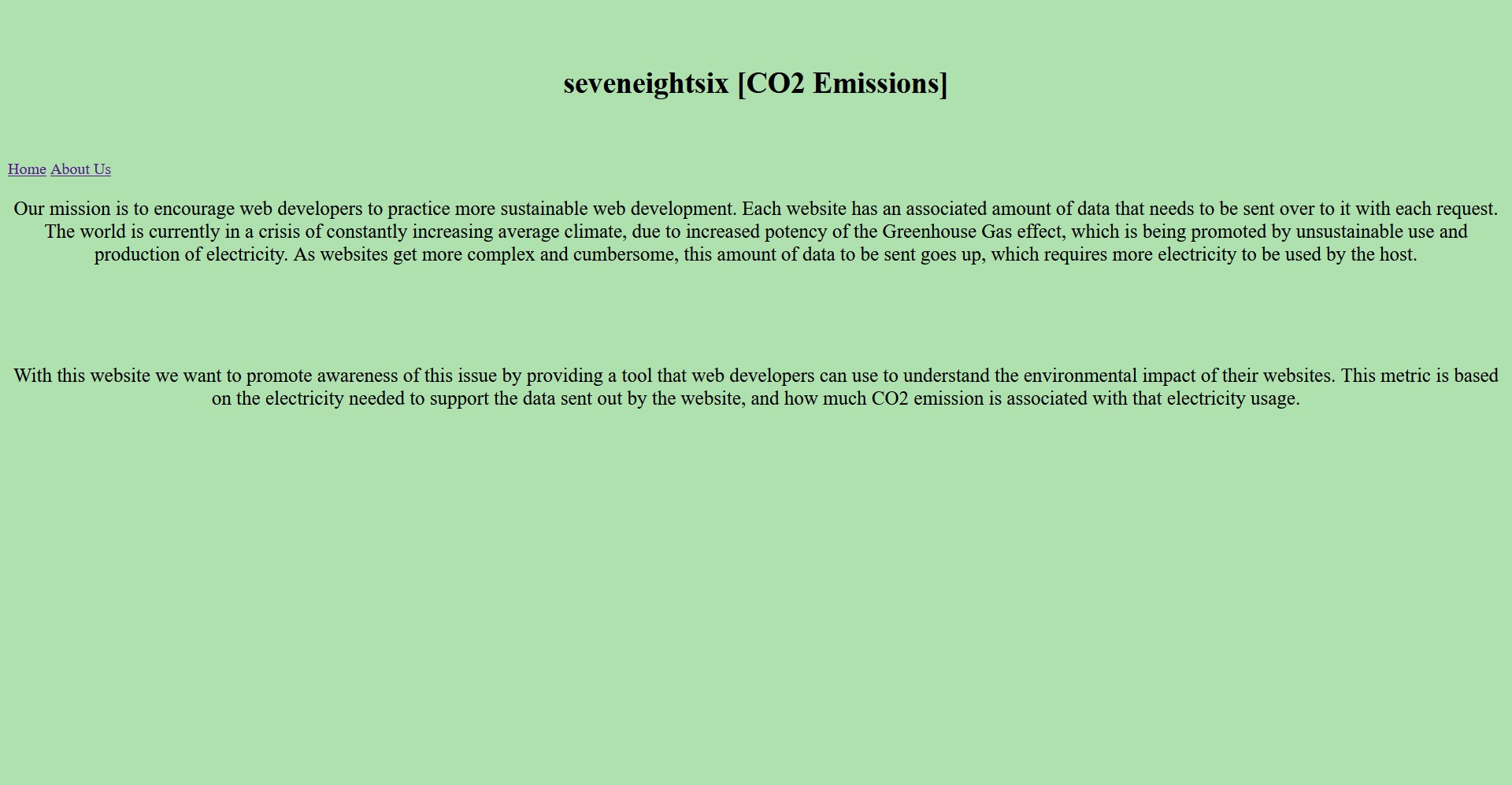
The world is facing a great crisis with the increasingly detrimental effects of climate change. This is mainly due to the Greenhouse Gas effect, which traps heat within out atmosphere; however, the increasing amount of CO2 leads to more and more heat being trapped, and less and less escaping. This is why the world has been facing a climate crisis for the last several decades. Electricity production using unsustainable methods accounts for about 25% of the CO2 emission in the US. Seeing this, we were inspired to make a tool that web developers could use to scope the affect of their website on the world's CO2 emissions. Our websites title represents the first 3 digits of how much carbon our website emits from one visit
What it does
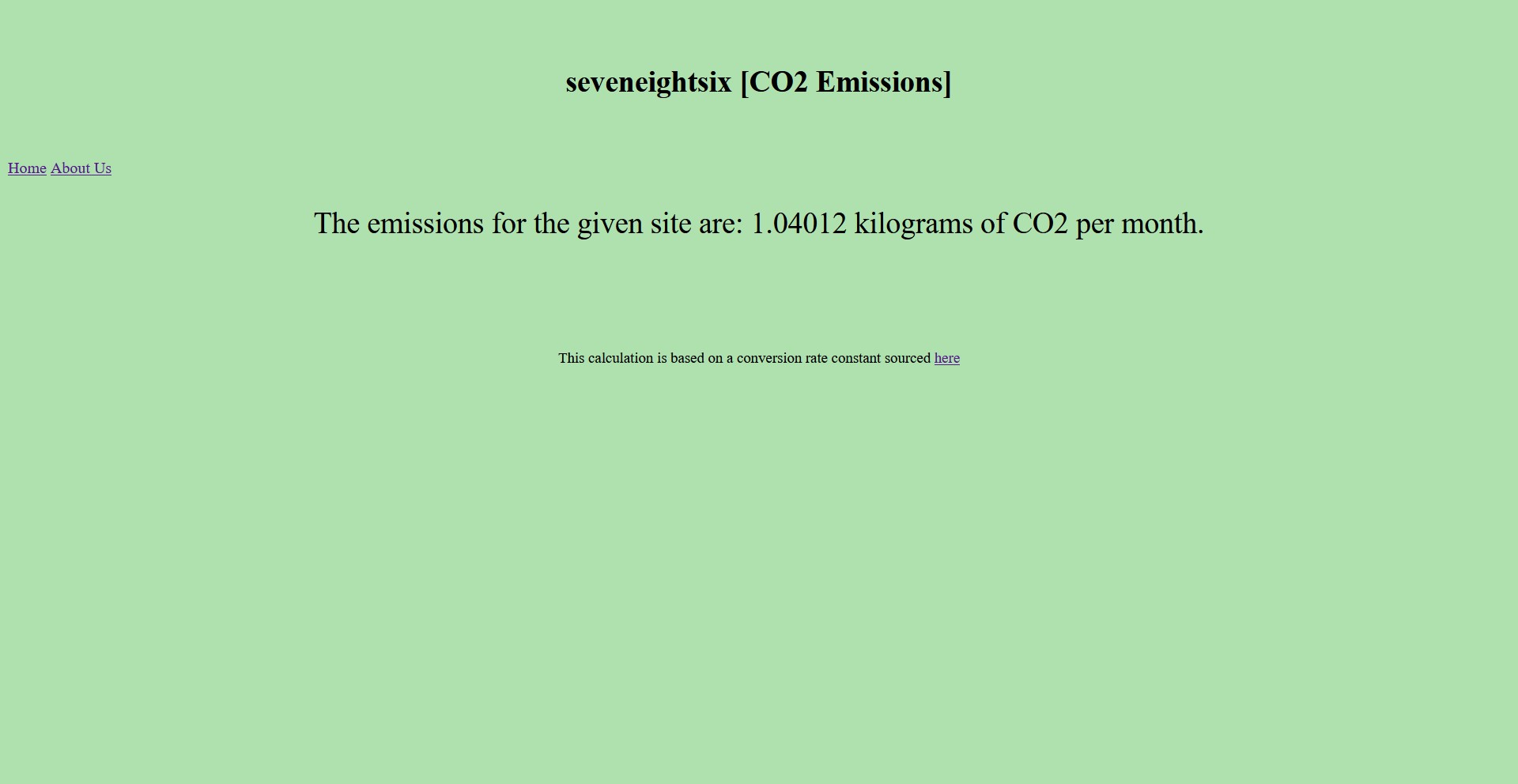
Our website lets web developers enter one of their webpages, along with the number of visitors they get to their site monthly. From using this information, the client sends a request to the webpage linked. from that information, we extract the amount of data in bytes the webpage is, and find out how much CO2 that website's electricity usage emits per month. Our website is hosted by AWS using an EC2 instance.
How we built it
Our web-app was built with python, using flask, as well as some html and css. The calculation from bytes to CO2 emissions is based on a source here: link
Challenges we ran into
Honestly the entire project was a challenge, because our group only knew a little bit of python. We had never even heard of flask before, let alone used it, and we had never done any website work before, so even html and css were completely new. We also had trouble with setting up and using a virtual environment, and we ran into a few merge conflicts using git.
Accomplishments that we're proud of
We are very proud of We're really proud of just getting the project done, hosting it on an AWS, and learning/practicing so many other things. Especially so because nobody in our group had ever done anything web-related before.
What we learned
We learned how to create and use virtual environments in python, host a git repository on an EC2 instance, project collaboration with git, using flask to create a web page with html and how to use css for style.
What's next
Next, we plan to make a Route 53 domain association, add scalability and redundancy with auto-scaling groups and spanning it across multiple availability zones respectively. Next, we hope to learn more about website design, in order to make it look nicer, as well as a better breakdown of byte usage across the website. We also plan to associate it with

Log in or sign up for Devpost to join the conversation.