-
-
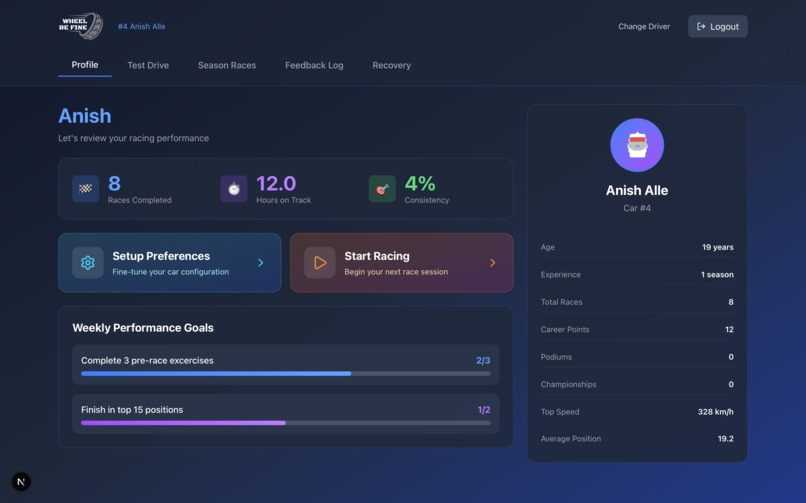
Driver Profile and Preferences
-
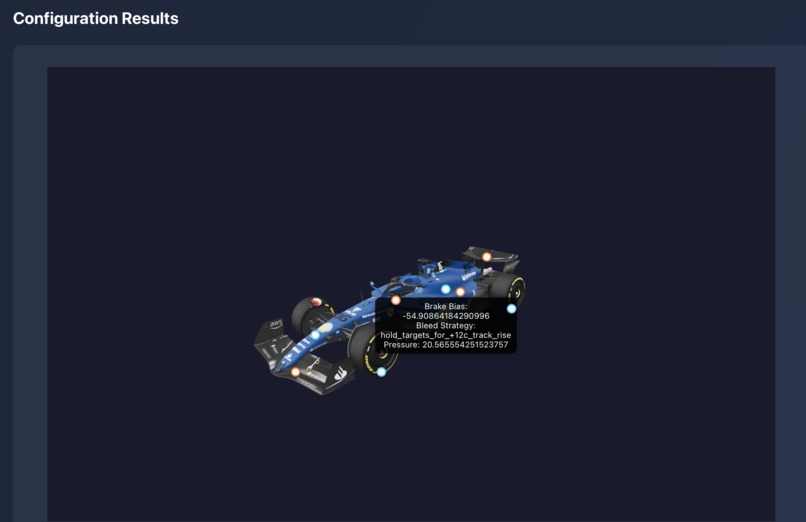
Ideal Configuration and Sensor Data
-
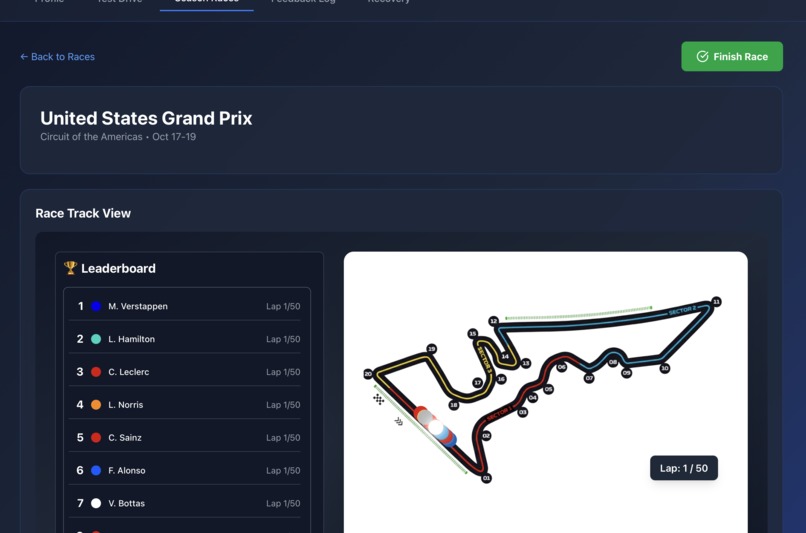
Grid Analysis and Live Feedback
-
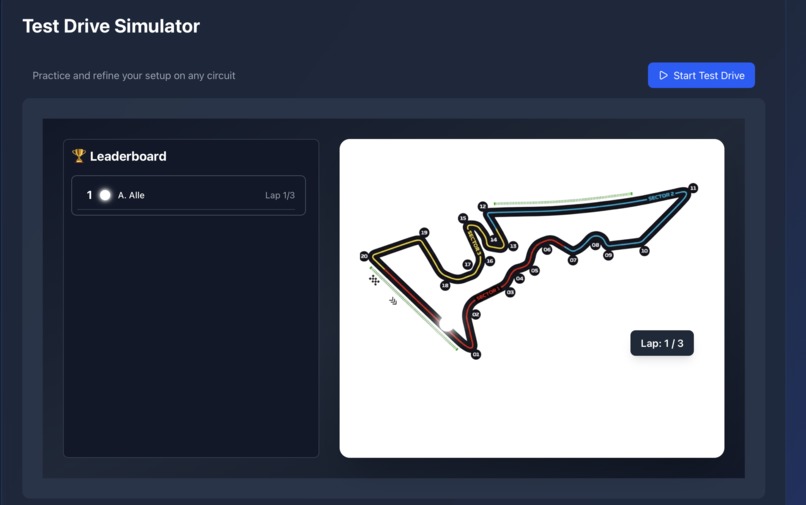
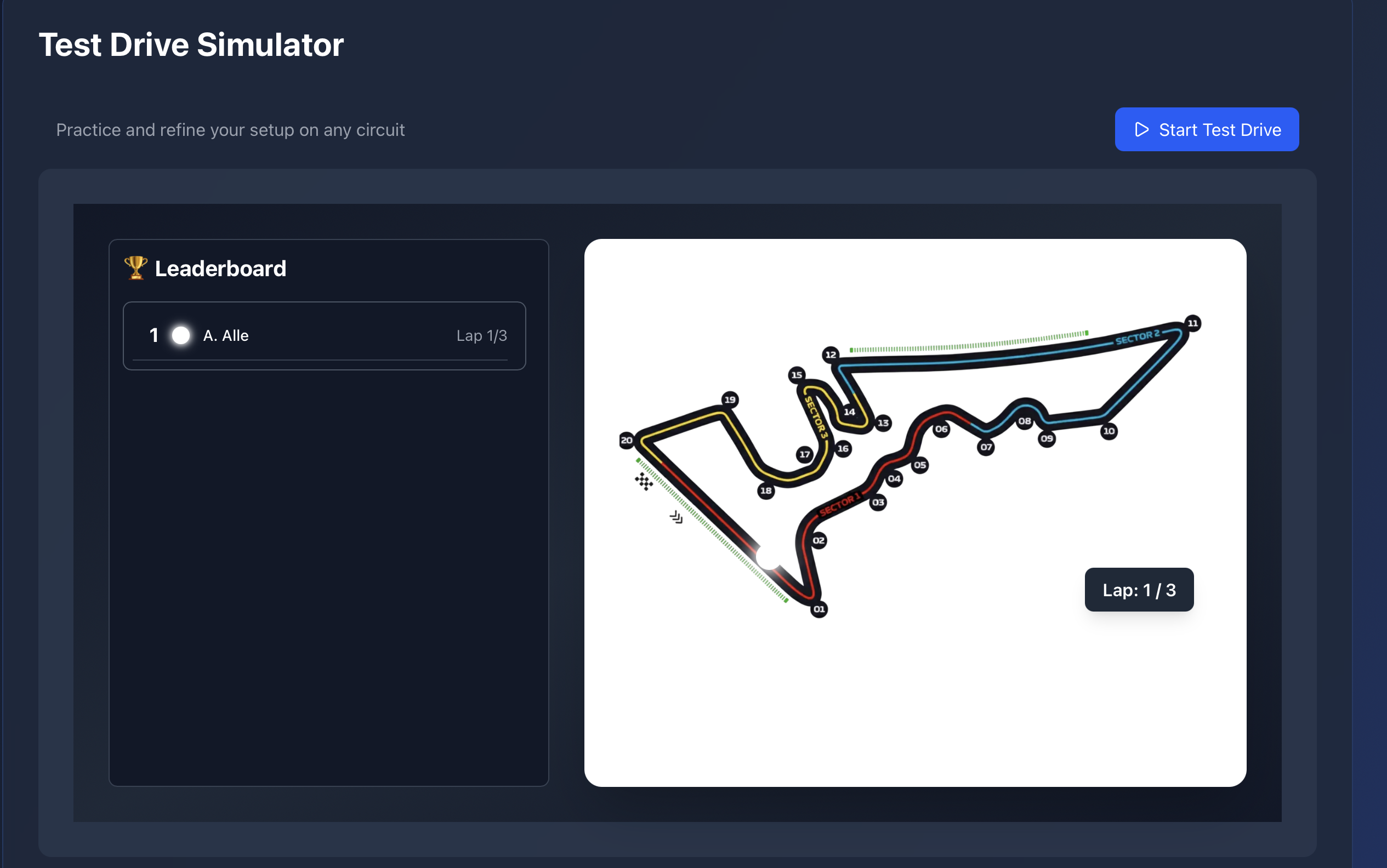
Test Drive HPC Simulator
-
Authentication Page
🏎️ Wheel Be Fine
Bridging new F1 drivers and engineers with algorithmic strategy planning, real-time physiological and vehicle health feedback, designed to get rookies to pole position
🧠 Inspiration
Formula 1 is a sport of milliseconds and margins. When a new driver joins a team, there's an often-overlooked challenge: the learning curve. New drivers may not yet understand their own racing preferences, optimal vehicle setups, or how their driving style translates into car configurations. Meanwhile, teams lack historical data to build effective race strategies, leading to suboptimal performance in those crucial first races.
But the challenge goes beyond just lap times. F1 drivers endure extreme physiological stress – sustaining up to 6G forces during braking, cornering, and acceleration. These forces take a serious toll on the body, yet driver health and recovery often take a backseat to performance metrics.
Who is affected:
- New F1 drivers joining teams
- Racing teams with limited driver data
- Team physiologists and medical staff
- Long-term driver health and career longevity
Why it matters: The faster a driver and team can sync up, the better they perform. More importantly, understanding and addressing the physical, mental, and emotional toll of racing ensures our athletes can compete at the highest level for longer, safer careers.
🎯 What It Does
Wheel Be Fine is a comprehensive driver-team integration and health monitoring platform that helps F1 teams reduce the learning curve with new drivers while promoting racer longevity through physiological analysis.
Key flows:
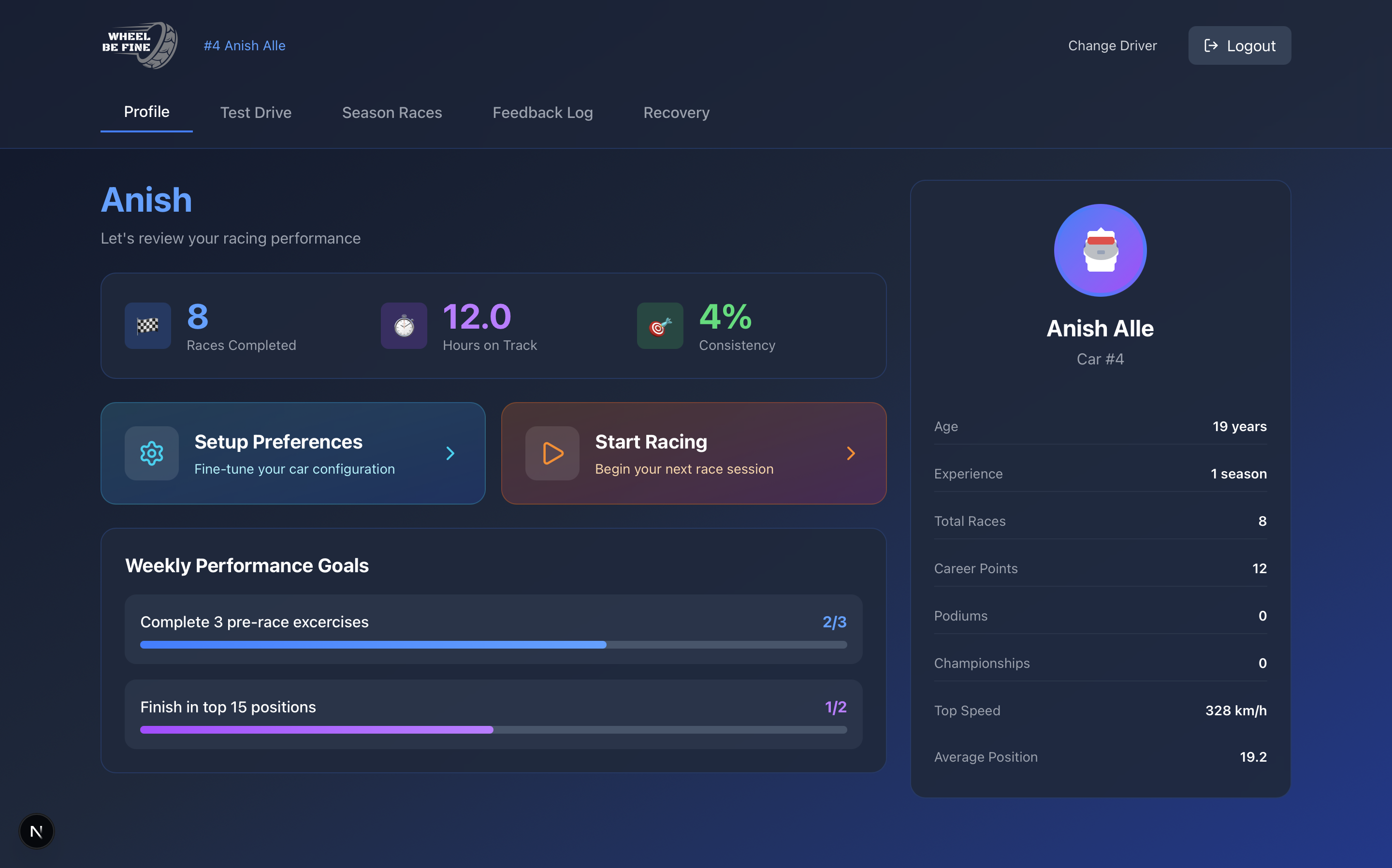
- Driver profile creation with preference inputs and baseline health metrics
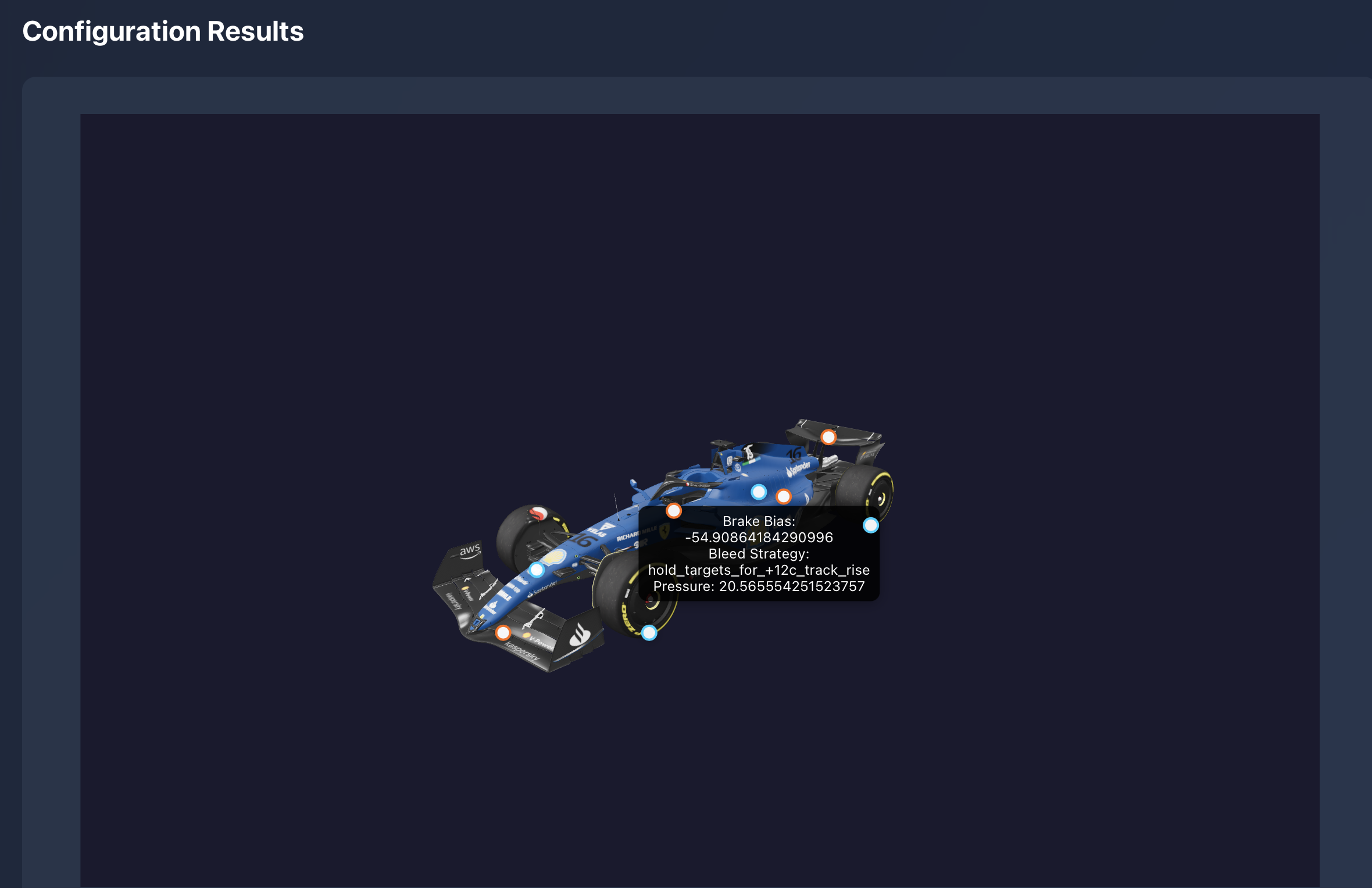
- Vehicle setup recommendations based on driver preferences and track characteristics
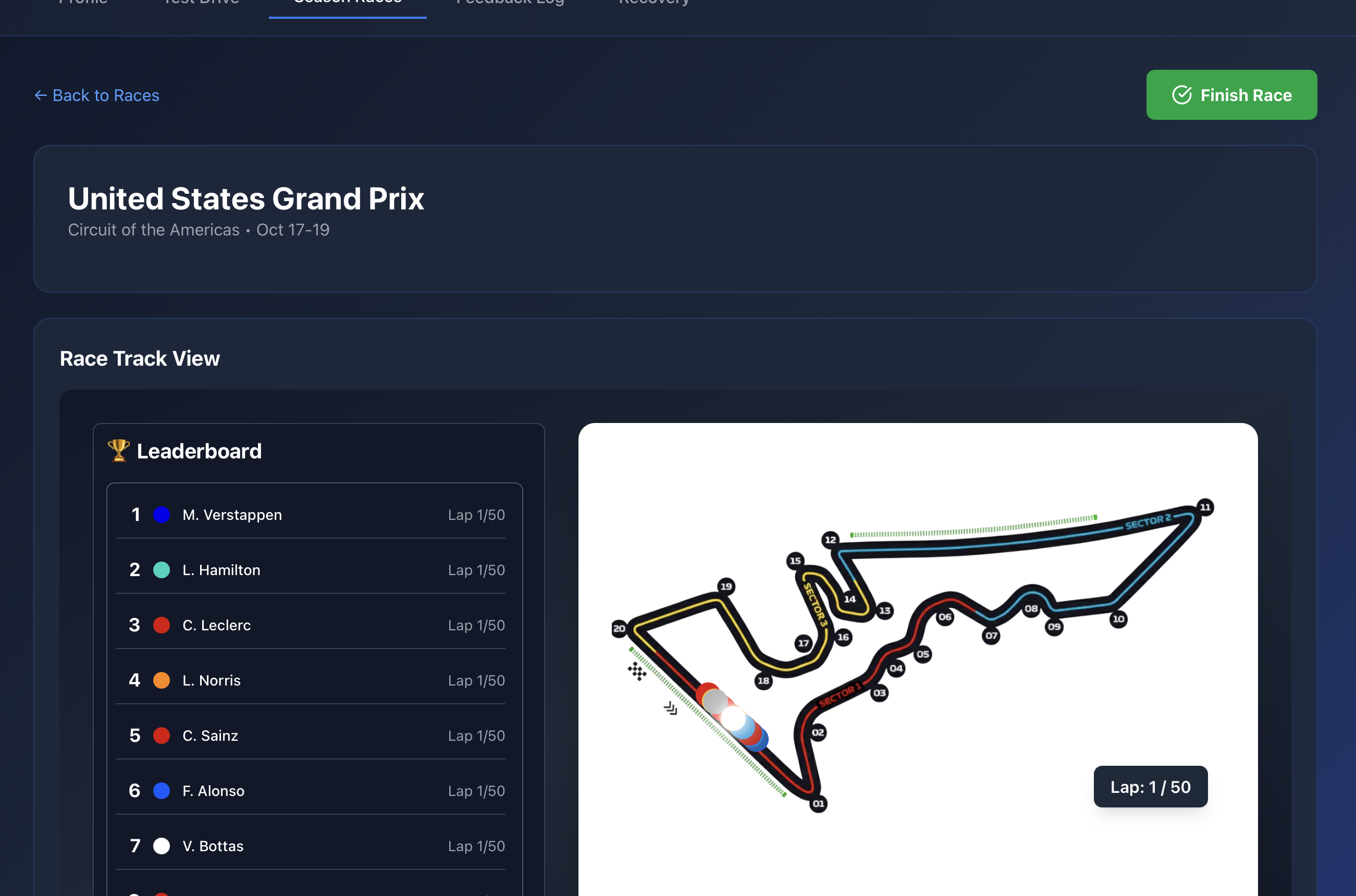
- Race strategy generation for debut races with limited historical data
- Post-race physiological analysis calculating G-forces and physical strain
- Recovery planning with personalized physical therapy and wellness recommendations
🔍 Main Features
🏗️ Vehicle Setup Optimizer: Analyzes driver preferences (steering sensitivity, brake balance, downforce levels) and generates optimal car configurations for different track types
📊 First-Race Strategy Builder: Creates data-driven race strategies for new drivers using track analytics, historical team data, and driver input preferences – no prior driver history needed
💪 Physiological Impact Calculator: Tracks and calculates G-forces experienced during racing (braking, acceleration, cornering) and their cumulative effect on the driver's body
🩺 Health Monitoring Dashboard: Provides post-race analysis of physical, mental, and emotional strain with visual representations of stress points
🧘 Recovery Plan Generator: Delivers personalized recovery protocols including physical therapy exercises, rest recommendations, and mental wellness strategies based on race intensity
📈 Longevity Tracker: Monitors driver health metrics over time to identify concerning trends and prevent long-term injuries
🏗️ How We Built It
Frontend:
- React with component-based architecture
- Chart.js for data visualization and health metrics
- Custom dashboard interfaces for driver and team views
- Responsive design for pit-lane and office use
Backend:
- Node.js/Express server
- RESTful API architecture
- Algorithm-based calculations (no ML/AI) for G-force physics and strategy optimization
- Custom algorithms for vehicle setup matching
Core Algorithms:
- G-Force Calculator: Physics-based computations using velocity, track geometry, and braking data
- Setup Optimizer: Rule-based system matching driver preferences to aerodynamic and mechanical configurations
- Strategy Generator: Algorithmic decision trees considering fuel loads, tire degradation, and track position
- Recovery Scorer: Algorithmic health impact assessment based on force exposure and duration
Data Processing:
- Track telemetry parsing
- Driver preference weighting system
- Health metric aggregation
- Time-series analysis for trend detection
🤖 Why No AI/ML? The Human Intelligence Approach
Wheel Be Fine was intentionally built without machine learning or artificial intelligence at its core, qualifying for the Human Intelligence Track. Here's why this matters:
Transparency & Trust: Every recommendation our system makes can be traced back to established physics principles, racing expertise, and biomechanical research. Teams know exactly why a setup is recommended or how a G-force was calculated, no black box decisions.
Reliability: Rule-based algorithms and physics calculations produce consistent, predictable results. In high-stakes racing where milliseconds matter, teams need systems they can trust and verify, not probabilistic models that might behave unpredictably.
Explainability: When our system suggests a recovery protocol or vehicle setup, engineers and medical staff can understand the reasoning behind it. This is critical for safety-related decisions affecting driver health.
Data Independence: Unlike ML models that require massive training datasets, our algorithmic approach works immediately – even for a driver's first race with zero historical data. Perfect for the new driver integration problem we're solving.
How we achieved it:
- Physics-based G-force calculations using classical mechanics
- Rule-based decision trees for strategy generation
- Algorithmic matching systems for vehicle setup preferences
- Mathematical models for health impact assessment
- Expert-system architecture encoding racing and medical knowledge
This human-centric approach ensures our platform is not just intelligent, but understandably intelligent – crucial when human lives and careers are on the line.
🧩 Technical Challenges
Challenge 1: G-Force Accuracy Without Sensors: Calculating realistic physiological impact without direct telemetry from the car required building physics models based on track characteristics, speed data, and racing lines. We developed algorithms that estimate forces at different track sections using publicly available circuit data.
Challenge 2: Strategy Generation with Limited Data: Building effective race strategies for drivers with no team history meant creating robust algorithms that could extrapolate from similar driver profiles, track patterns, and team historical performance while accounting for uncertainty.
Challenge 3: Vehicle Setup Complexity: Matching subjective driver preferences to technical car setups involved creating a sophisticated rule-based system that translates qualitative feedback (e.g., "I prefer aggressive turn-in") into quantitative setup parameters (front wing angle, suspension stiffness).
Challenge 4: Human-Centric Algorithm Design: Qualifying for the human intelligence track meant avoiding ML/AI shortcuts. Instead, we built decision algorithms based on racing expertise, biomechanics research, and engineering principles – ensuring transparency and explainability in every recommendation.
🎉 Accomplishments and Highlights
✅ Fully functional platform built in under 24 hours
✅ Zero ML/AI usage – pure algorithmic intelligence based on physics and racing principles
✅ Comprehensive physiological tracking system with medical accuracy
✅ Real-time strategy generation for race scenarios
✅ Integrated health and performance in a single platform
📚 What We Learned
- Biomechanics of racing: Understanding how G-forces affect different body systems
- F1 vehicle dynamics: How minute setup changes dramatically impact performance
- Algorithm design without AI: Building intelligent systems using rule-based logic and physics
- Health-performance balance: The critical importance of monitoring driver wellbeing alongside lap times
We were surprised by:
- How much physiological strain occurs in a single race (equivalent to running a marathon while sustaining repeated impacts)
- The complexity of vehicle setup interdependencies
- How much strategy can be inferred from track data alone
- The lack of existing tools focusing on driver health in motorsports
🔭 What's Next
- Multi-season tracking to identify long-term health trends
- Team collaboration features for engineers, strategists, and medical staff
- Expanded health metrics including heart rate variability, cognitive load, and chemical levels
- Mobile app for drivers to log wellness data between races
- Integration with team simulators for setup validation
🚀 Check It Out
https://github.com/iampritisee/hacktx/
🧾 Acknowledgments & References
- F1 technical regulations and telemetry standards
- Sports medicine research on high-G force impacts
- Biomechanics studies on racing driver physiology
- Track data from official F1 circuit documentation
⚠️ Known Limitations
Current limitations:
- Vehicle setup recommendations are generalized and need team-specific calibration
- Health impact models are approximations and should complement (not replace) medical professionals
- Strategy generation works best for circuit races; street courses add complexity
Ethical considerations:
- Driver privacy: Health data must be securely stored and accessed only by authorized personnel
- Performance pressure: Health warnings should be taken seriously, not ignored for competitive advantage
- Medical disclaimer: All health recommendations require validation by team medical staff
📈 Impact Metrics
Potential users:
- 20 F1 drivers per season
- 10 F1 teams
- Expanding to Formula 2, Formula 3, and other racing series
Value delivered:
- Faster team integration: Reduce new driver learning curve from 3-5 races to 1-2 races
- Improved performance: Data-driven strategies even without historical driver data
- Enhanced longevity: Proactive health monitoring could extend driver careers by reducing cumulative injuries
- Cost savings: Better first-race performance reduces testing time and costly early-season mistakes
- Safer racing: Identifying dangerous strain patterns before they cause serious injury
Health impact:
- Monitor cumulative G-force exposure over a season
- Early detection of concerning injury patterns
- Reduced recovery time through targeted therapy recommendations
- Long-term career sustainability for drivers
Built With
- css3
- html5
- javascript
- lucide
- python
- react
- tailwindcss


Log in or sign up for Devpost to join the conversation.