-
-
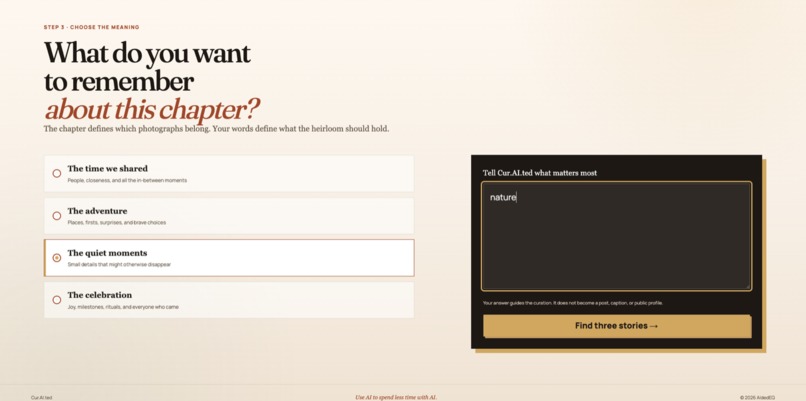
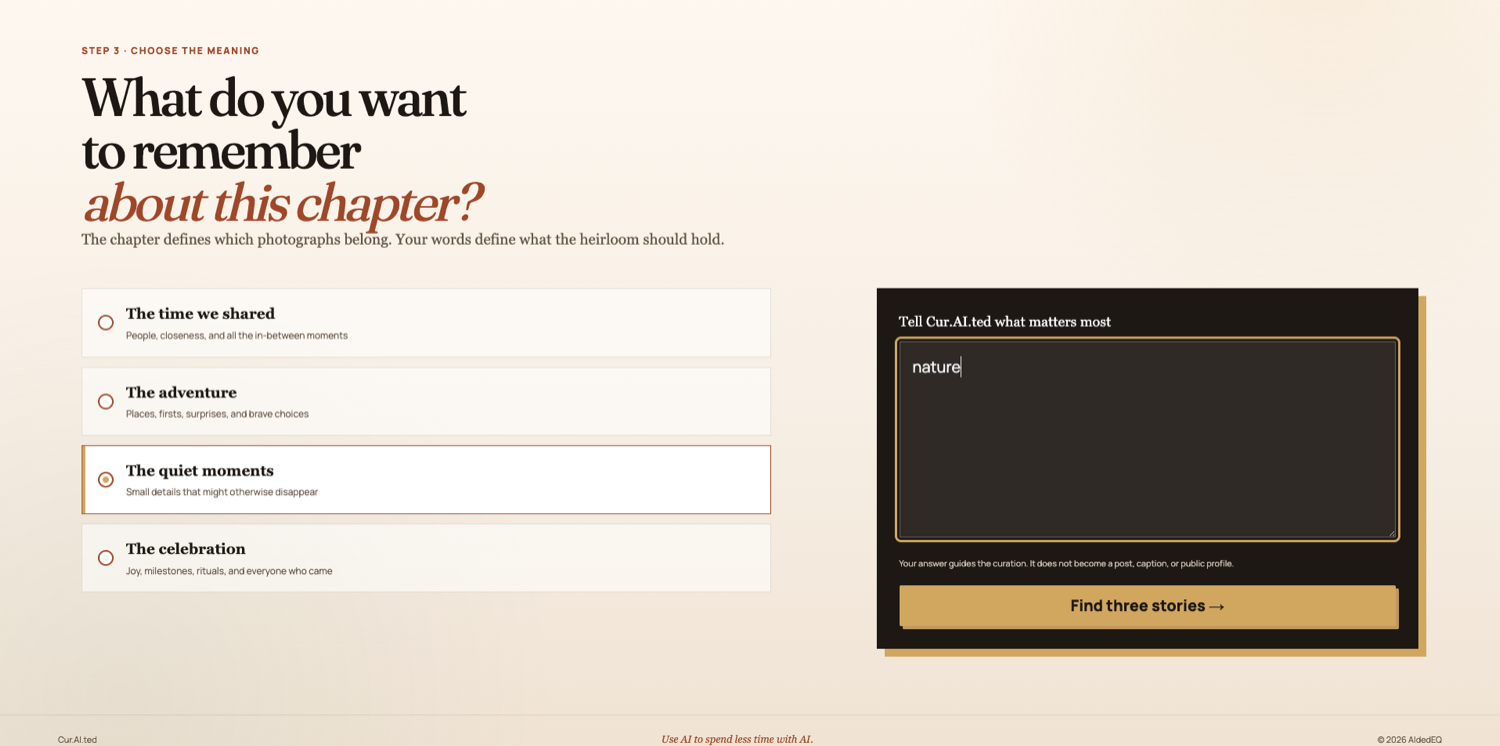
Central question: what do you want to remember?
-
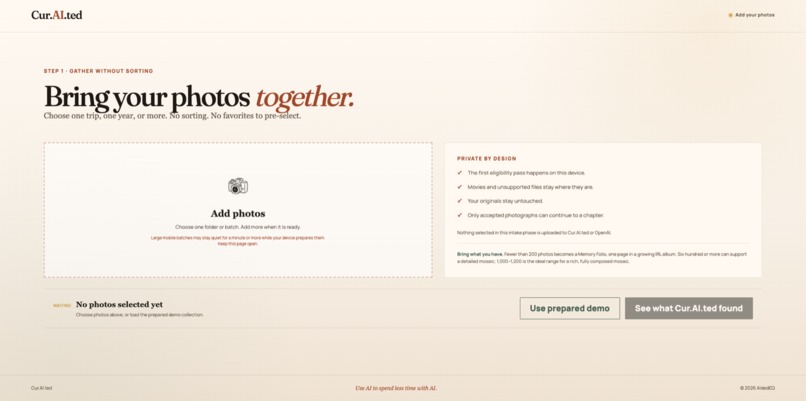
Judges: prepared demo collection, no setup, no API cost
-
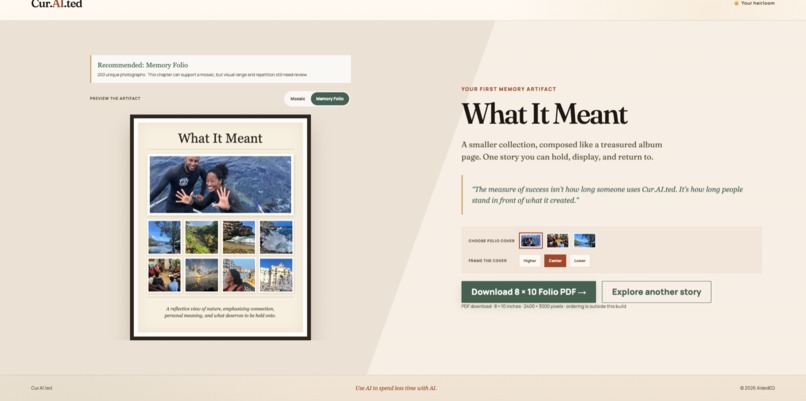
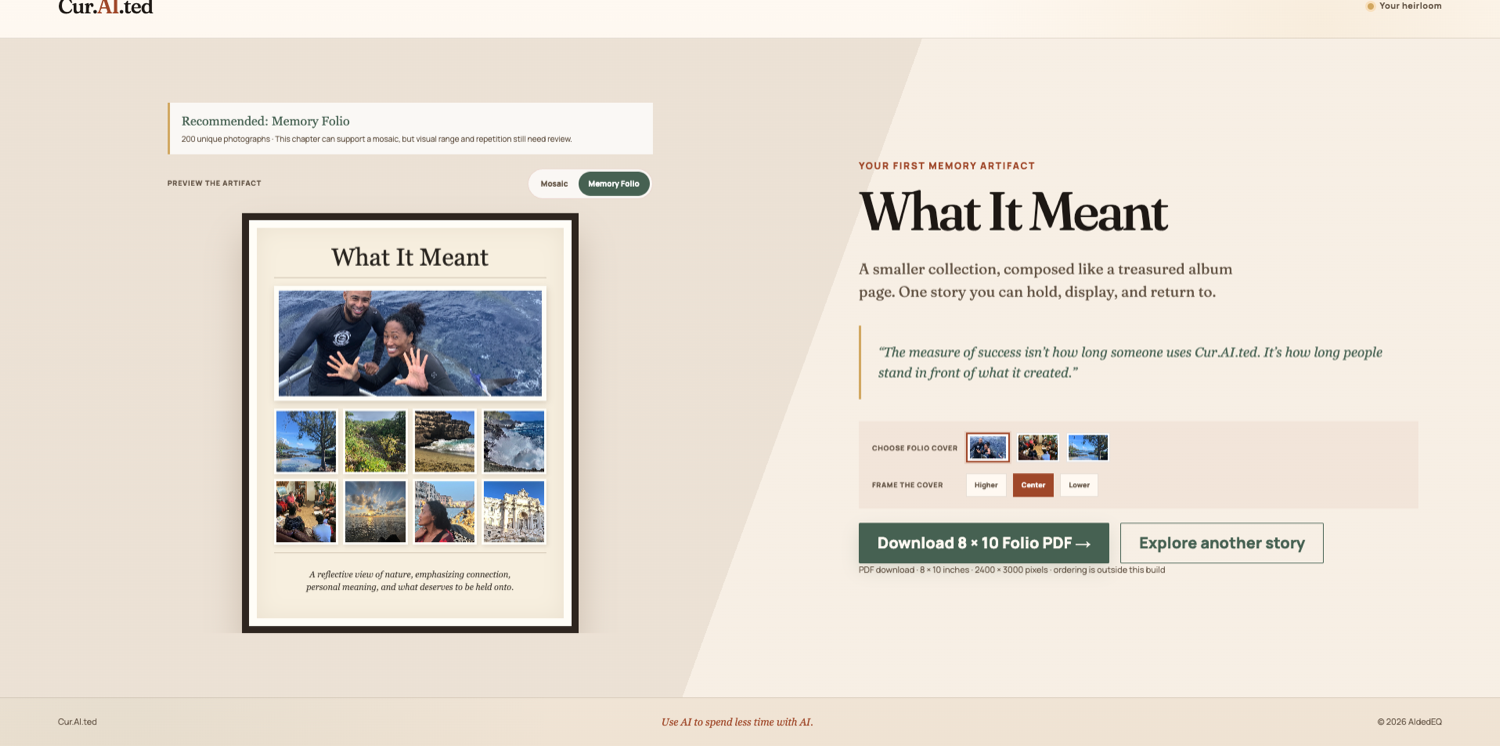
An 8×10 Memory Folio for a growing album
-
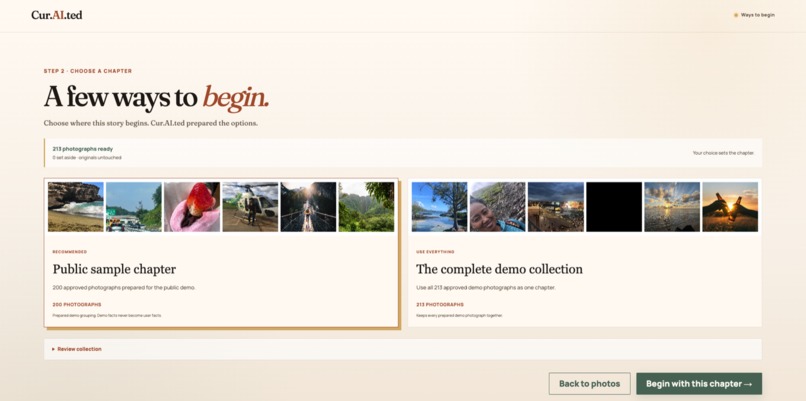
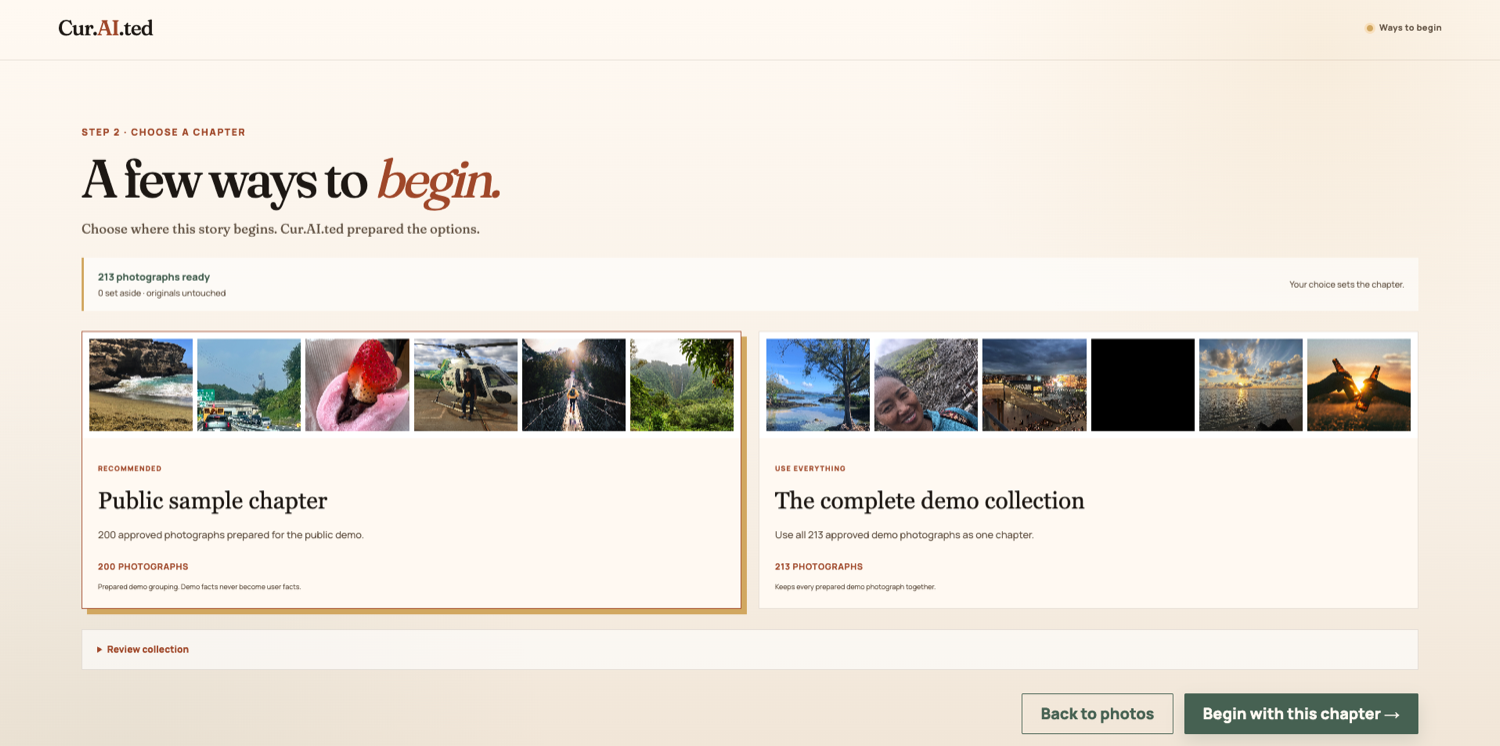
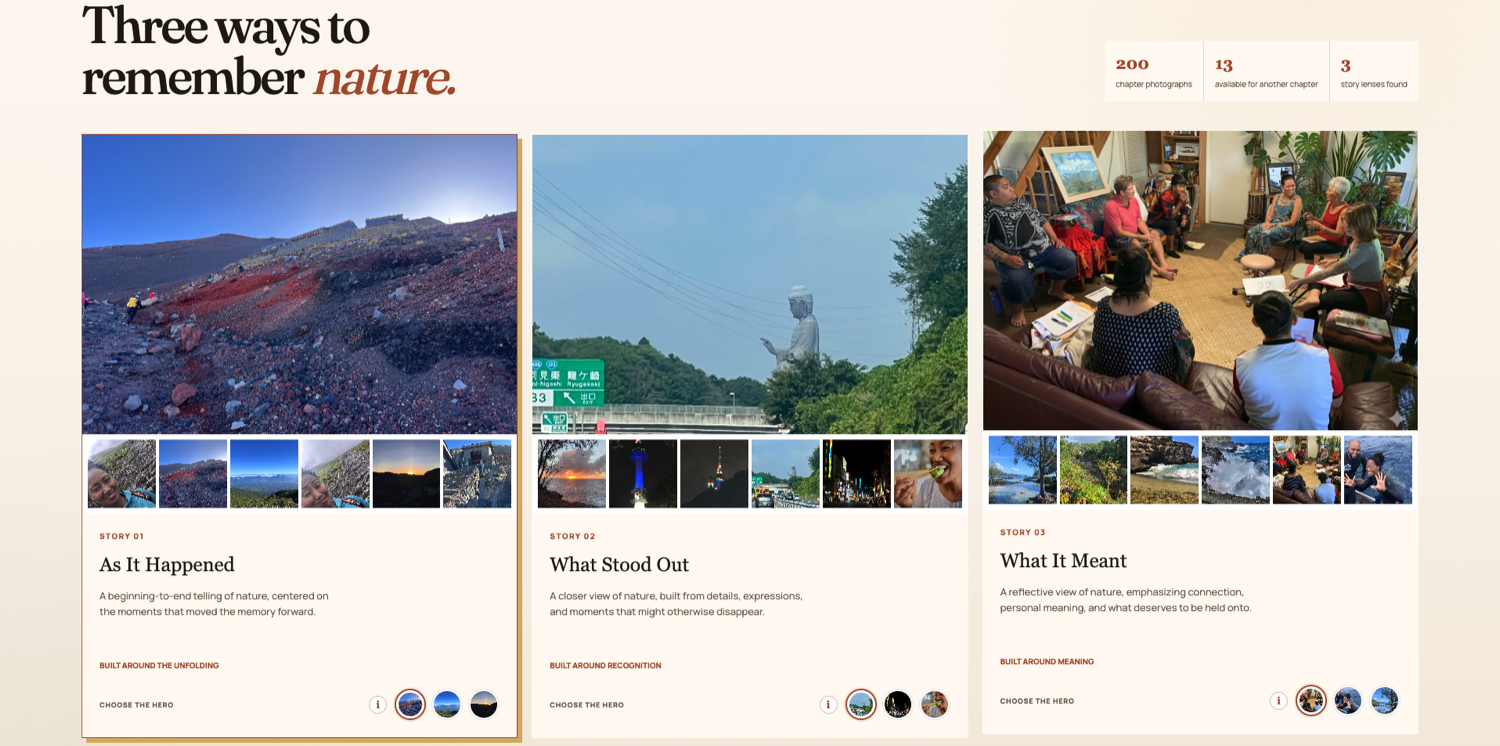
Cur.AI.ted finds the chapters hiding in your collection
-
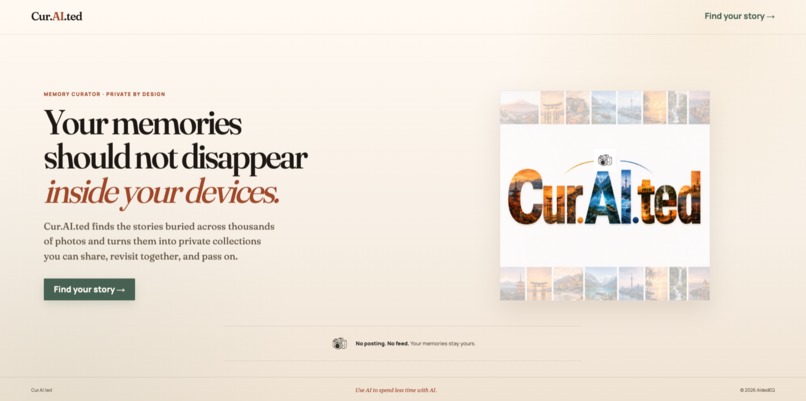
our memories should not disappear inside your devices
-
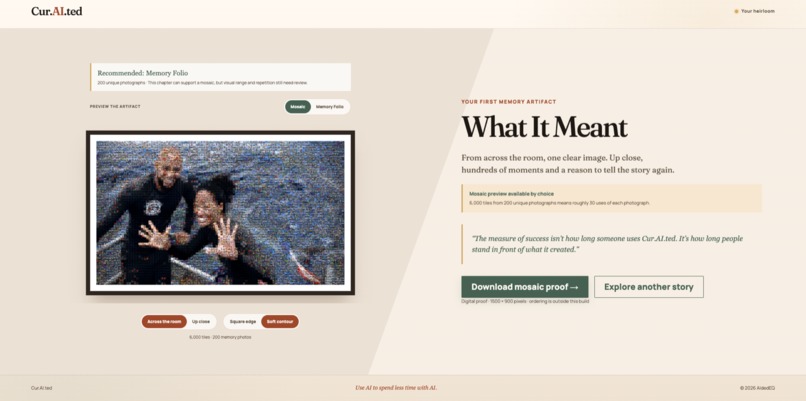
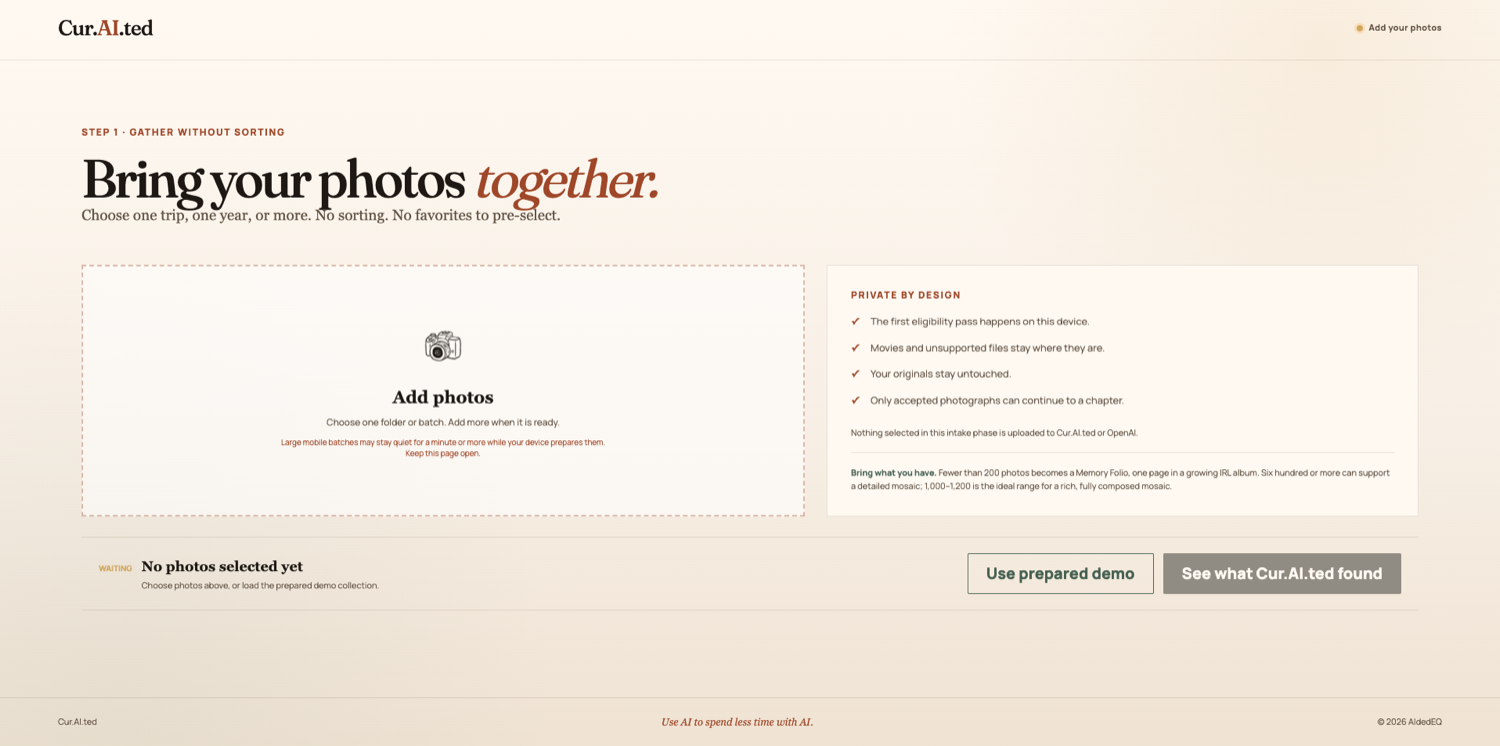
From upload to heirloom, private by design
-
Cur.AI.ted: a private AI memory curator
-
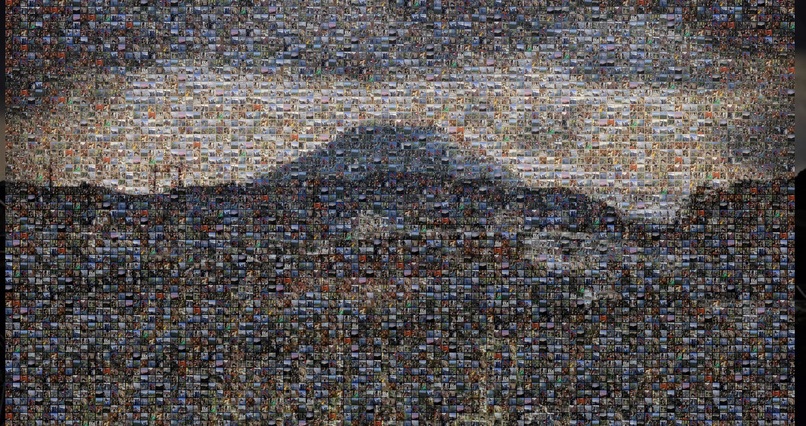
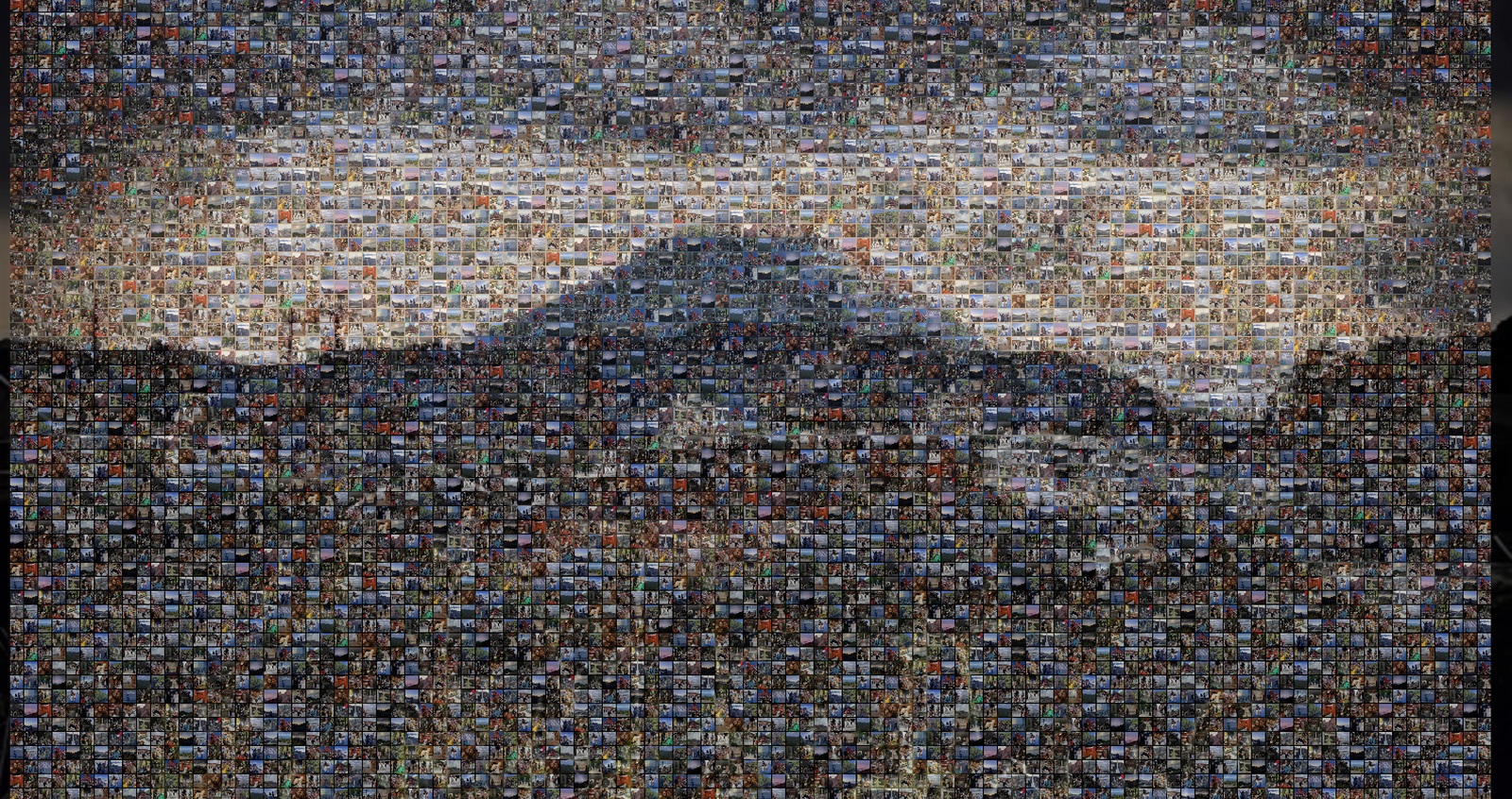
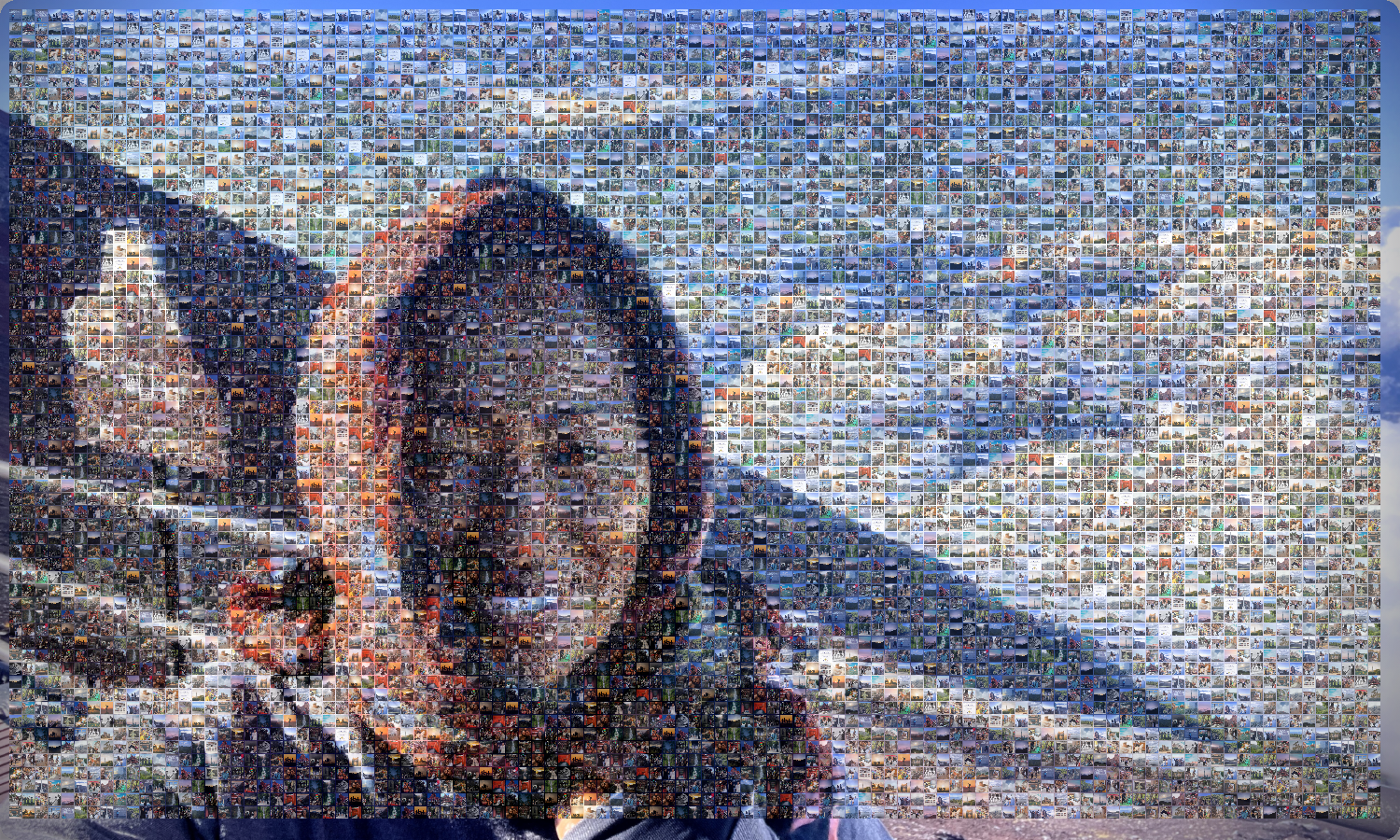
Mount Fuji, built entirely from our own photos of the climb
-
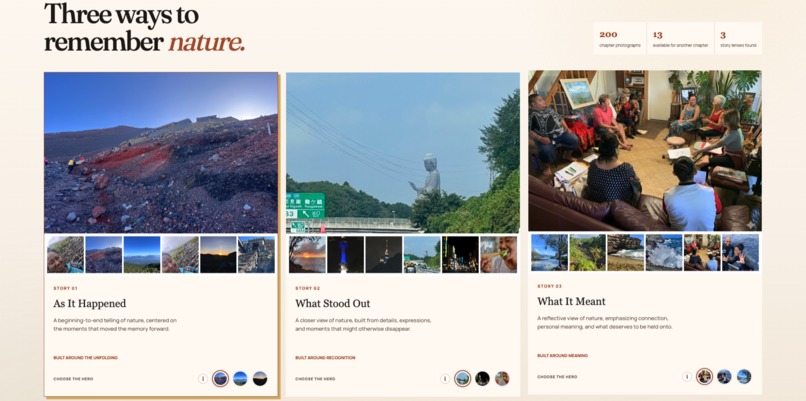
GPT-5.6 Sol proposes three story options — you decide
-
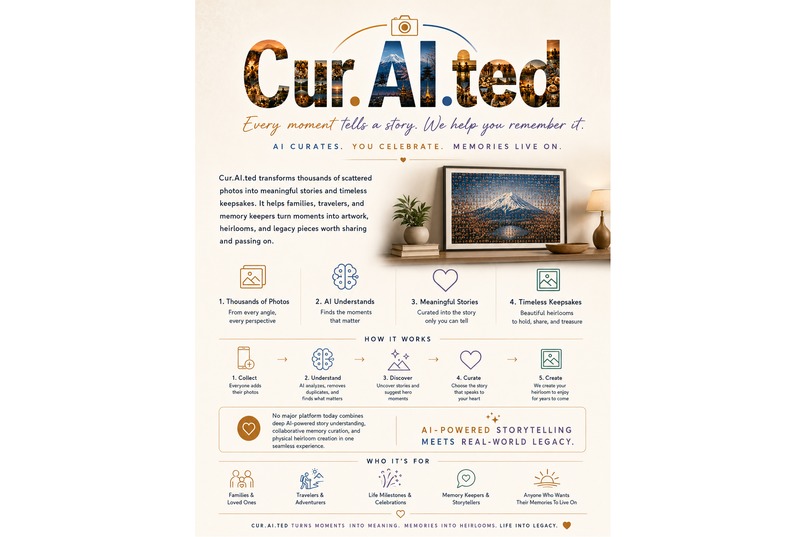
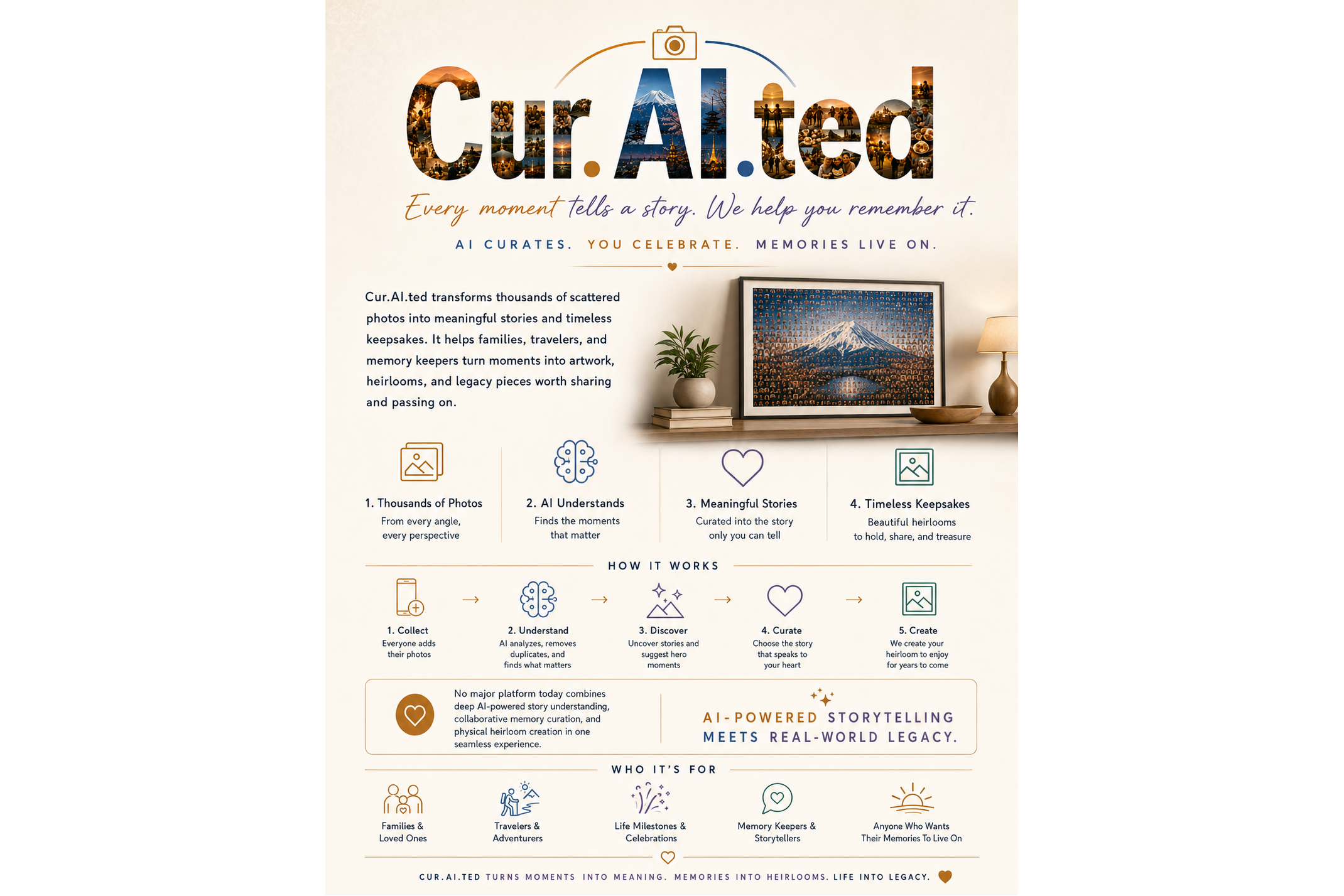
What it does, how it works, who it's for
-
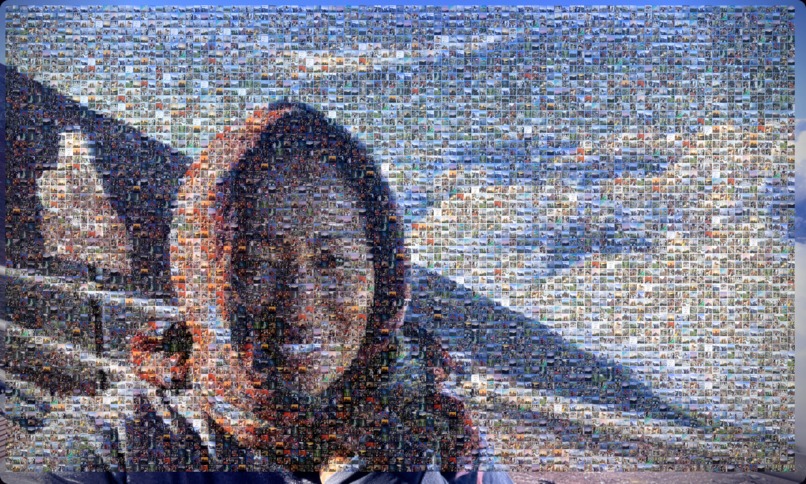
A finished heirloom mosaic: one hero image, hundreds of moments
-
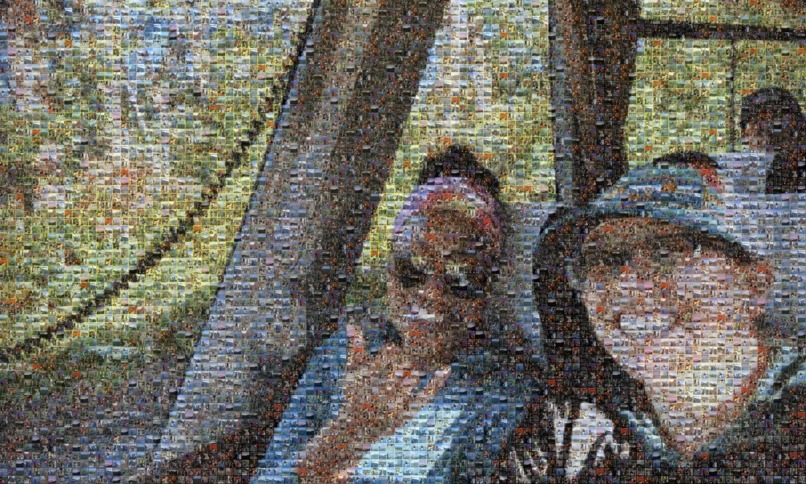
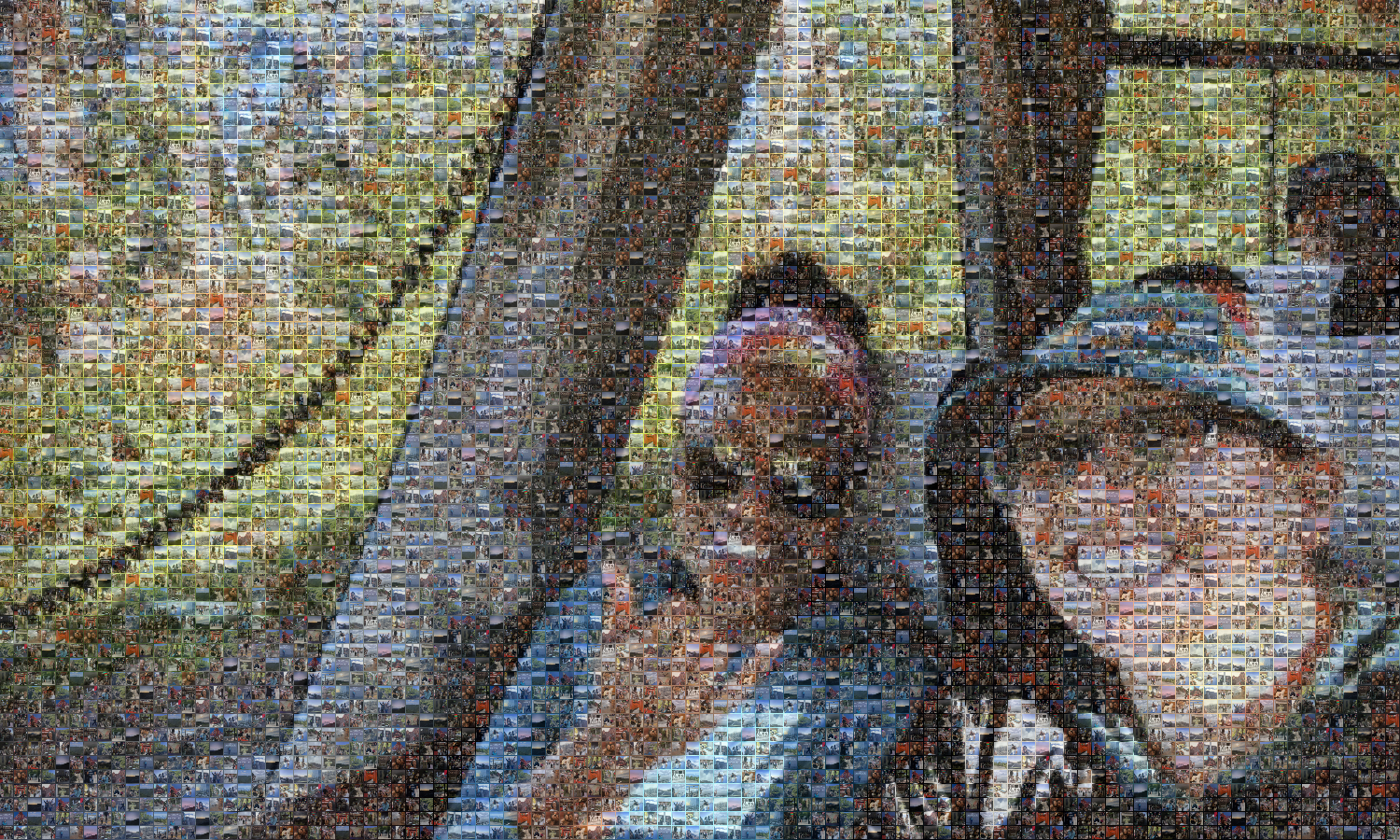
Every mosaic is print-ready wall art
Cur.AI.ted: Turning Forgotten Photos Into Stories We Can Gather Around
Inspiration
Nearly two trillion photos are expected to be taken worldwide this year. Most will remain buried inside phones, cloud accounts, old devices, and group chats.
I have been thinking about this problem for years.
My family travels and takes thousands of beautiful pictures. Recently, I was scrolling through our group texts and found photos my children had sent while traveling. I was glad to have them, but I had no context. I did not know where they were, what had happened before the picture, why they stopped there, or what story they would tell about that moment.
The image survived. The story did not travel with it.
That is very different from how I grew up with photographs. Pictures lived in albums, frames, hallways, and other people's homes. We gathered around them. We leaned closer. Someone pointed to a face or place and started talking.
Today, someone usually hands us a phone and scrolls through fifty versions of the same picture. Most of the thousands of other images will never be seen again. We cannot print two trillion individual photos, but we can use them to create something meaningful.
That became the question behind Cur.AI.ted:
Can AI help us spend less time with AI and bring our memories back into real life?
What Cur.AI.ted Does
Cur.AI.ted is a private AI memory curator and mosaic storyteller.
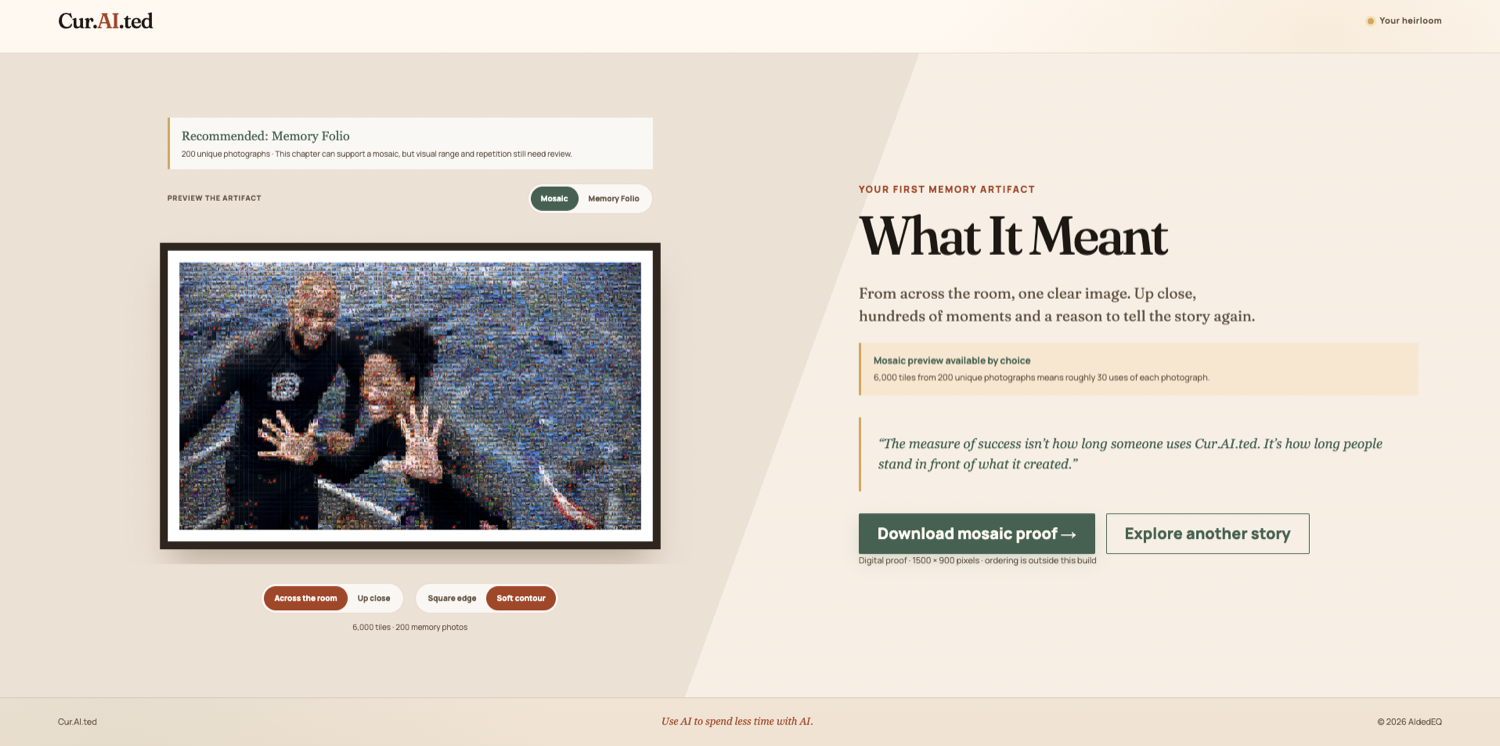
A person or family can contribute hundreds or thousands of scattered photos from a trip, wedding, reunion, milestone, or ordinary chapter of life. Cur.AI.ted helps find the moments and patterns inside that collection, then uses the photos to create one hero image.
From across the room, you see one clear photograph.
As you move closer, you discover that the image is made from hundreds or thousands of smaller moments.
You lean in. You recognize another picture. Someone begins telling the story behind it.
The final piece can be printed as wall art, while smaller curated folios can be printed for albums people can touch, hold, revisit together, and pass on.
There is no public feed and no pressure to perform for strangers. The memories belong to the people who lived them. Cur.AI.ted is private by design.
Why the Mosaic Matters
I spent almost two days on a side quest trying to create alternatives for people who do not love mosaics as much as I do.
Then I had to wrangle myself back to the heart of the project.
I built this for me.
I built it for my traveling, picture-taking family. I want to print one for each of my children. I want them to come home, see one hanging on my wall or resting inside an album, recognize a tiny picture, and finally tell me what was happening.
The mosaic is not decoration. It creates discovery.
It gives people a reason to move closer, look again, and uncover another layer. The hero image holds the larger memory, while the smaller photographs hold the individual moments that make the story ours.
How I Built It
This was my first time building with GPT-5.6. I was nervous about working with a new model during such a short build period, but I decided to stop overthinking it and start.
I used GPT-5.6 as a reasoning and development partner while keeping the product decisions grounded in the experience I wanted to create. I did not want an AI-generated photo organizer, another social feed, or a tool that gave users more work.
The central technical question was whether I could process a collection of up to roughly 1,000 photos quickly and turn them into a strong, recognizable mosaic without producing a cluttered or low-quality result.
The experience was built around:
- Accepting a large collection of personal photographs
- Preparing and evaluating images for use inside the mosaic
- Preserving a clear hero image from a normal viewing distance
- Selecting and placing smaller images so the composition remains visually coherent
- Producing an output suitable for physical printing
- Keeping the experience private rather than building another public sharing platform
Technical stack:
- Codex as my pair programmer throughout the build (the collaboration and dated commits are documented in the repository README.)
- GPT-5.6 Sol via the OpenAI Responses API with structured outputs for story curation - every story suggestion is grounded in and linked to the source photographs
- Next.js / React / TypeScript web app
- Deterministic on-device intake pipeline in the browser: metadata reading, quality checks, and duplicate detection happen on the user's device; originals never leave it during intake
- Deterministic mosaic renderer producing print-ready output (large-format wall art plus 8x10 folio PDFs)
- Netlify hosting and deployment
- Judge demo mode with a prepared collection, so anyone can try the full experience with no setup and no API cost. Additionally, separate credentials for judges are provided to test end to end.
Pre-existing work, disclosed: the mosaic-rendering engine was adapted from FestivalLoreDrop, my first app (February 2026). Everything else - the intent-led flow, chapter discovery, GPT-5.6 Sol story curation, folio output, judge demo mode, and the product itself - was designed and built from scratch during Build Week (dated commits, July 14-21, 2026).
Challenges I Faced
Making a large mosaic look intentional
Managing hundreds or thousands of photographs is not difficult only because of volume. The images have different colors, dimensions, lighting, subjects, and quality. The finished piece still needs to read clearly as one hero image while rewarding someone who walks closer.
The goal was not to cram photographs into a grid. The goal was to make the smaller moments paint the larger memory.
Keeping the project emotionally meaningful
It would have been easy to build a technically interesting mosaic generator and stop there.
The harder task was protecting the reason I was building it. Every feature had to support remembering, storytelling, physical connection, or preservation. Making AI meaningful within a short build period was much harder than simply adding AI features.
Controlling the scope
My largest detour was trying to solve the product for people who might not want a mosaic. I explored additional formats and outputs until I realized I was pulling the project away from its clearest idea.
The mosaic was the point because it invites people to gather, lean closer, discover another photograph, and tell another story.
Building alone
I worked alone, which meant I was also my own product manager, developer, critic, tester, and giant echo chamber.
That gave me freedom, but it also made it harder to know when to stop exploring and commit. I am proud of what I completed, and I am also glad my next project will be built with a team.
What I Learned
I learned that AI becomes more meaningful when it helps us engage more deeply with what already exists instead of constantly creating more.
I learned that photographs alone are not the full memory. Context, voice, relationships, and the stories we tell around them are what give pictures meaning.
I also learned that scope discipline is part of building. The strongest version of a product is not always the version with the most options. Sometimes it is the version that stays closest to the reason it needed to exist.
Most importantly, I learned to trust myself with a new model. This was my first project using GPT-5.6, and I was nervous. I built anyway, made decisions, corrected course, and completed something I genuinely want to use.
I am happy with the result.
What Comes Next
The next version of Cur.AI.ted will deepen the storytelling around the photographs.
Future possibilities include:
- Shared private collections where families and friends contribute their perspectives
- Improved AI-assisted identification of duplicate images and distinct moments
- Voice or written memories attached to individual photographs
- Album-ready collections
- Multiple physical formats for trips, weddings, family histories, memorials, and milestones
- Tools for preserving the stories behind inherited or older photographs
We are not only the pictures stored on our devices.
We are the stories we share about them.
Cur.AI.ted helps those stories leave the phone, return to the people who lived them, and reach the next generation.
Try It (Judges)
- Live app: https://curaited.org - click "Come inside" for the demo mode with a prepared collection (no setup, no API cost), or Judges, use the provided credentials to upload your own photos for the full experience.
- The demo video shows the complete flow with my own photos from climbing Mount Fuji with my friend last September.
Built With
- canvas
- codex
- gpt-5.6
- netlify
- next.js
- openai
- react
- responses-api
- structured-output
- typescript

Log in or sign up for Devpost to join the conversation.