-
-
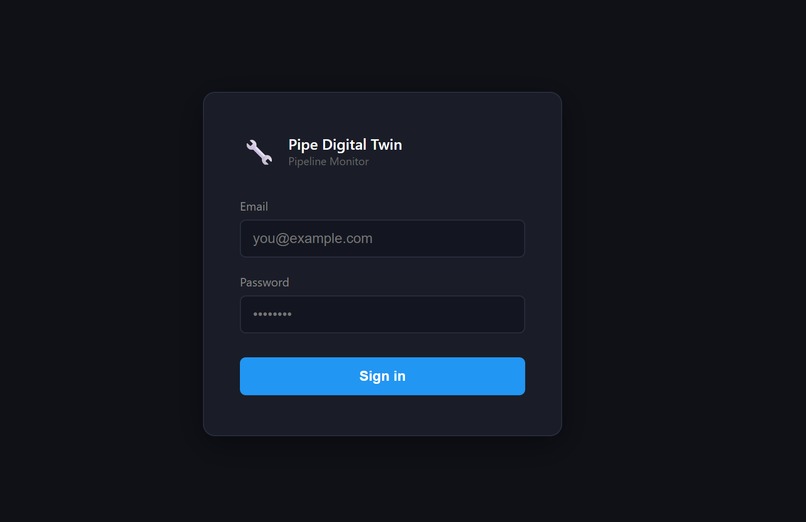
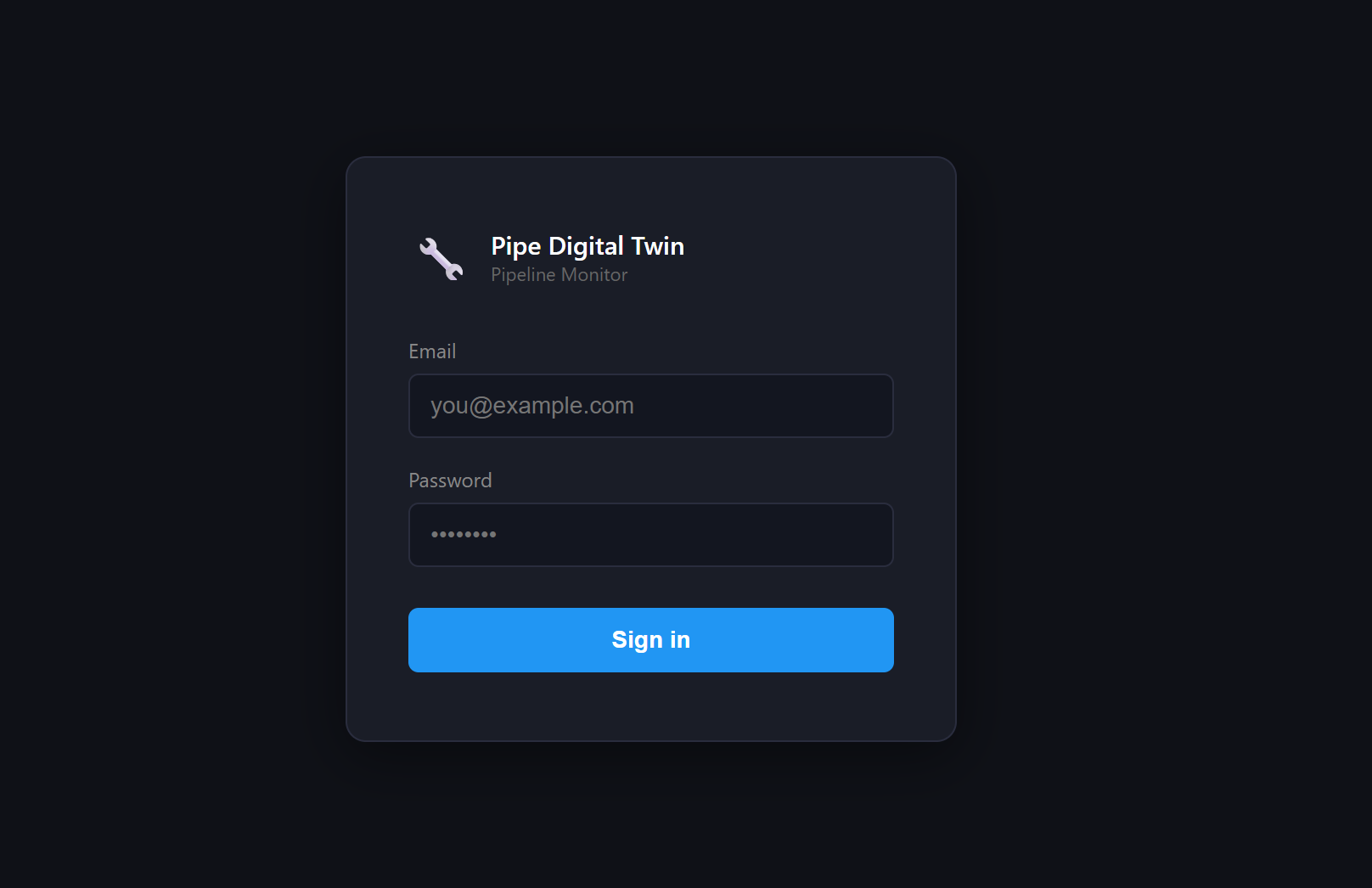
Login Screen
-
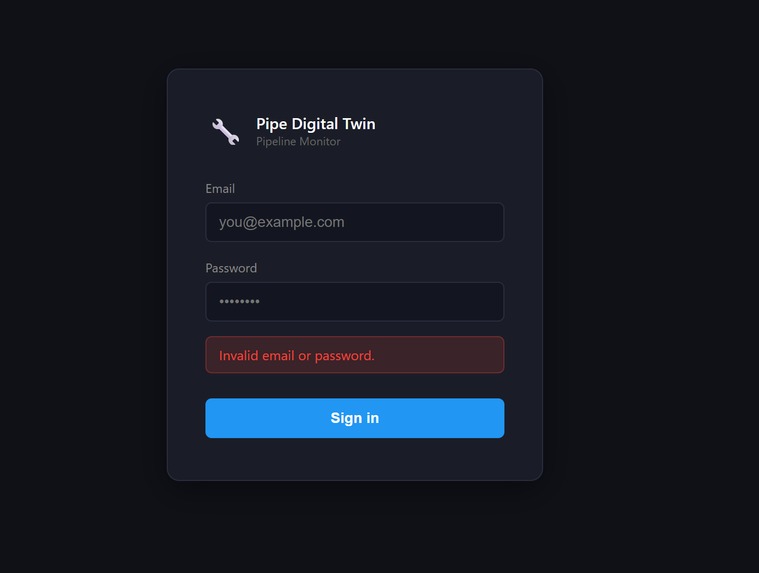
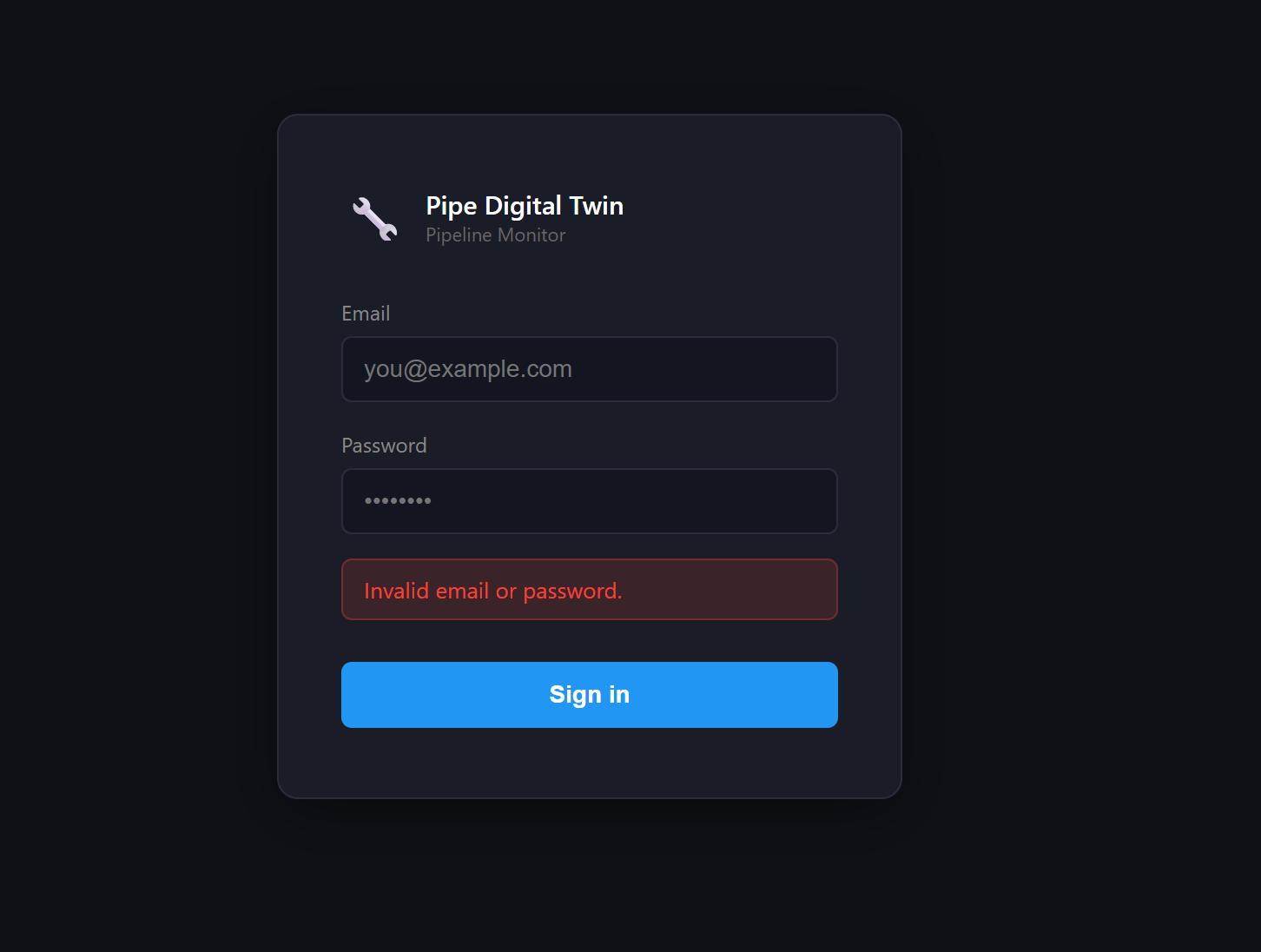
Login Screen(Incorrect email/password)
-
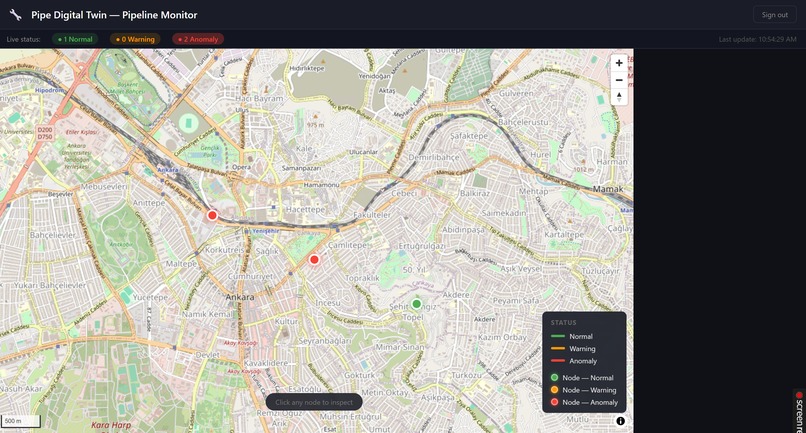
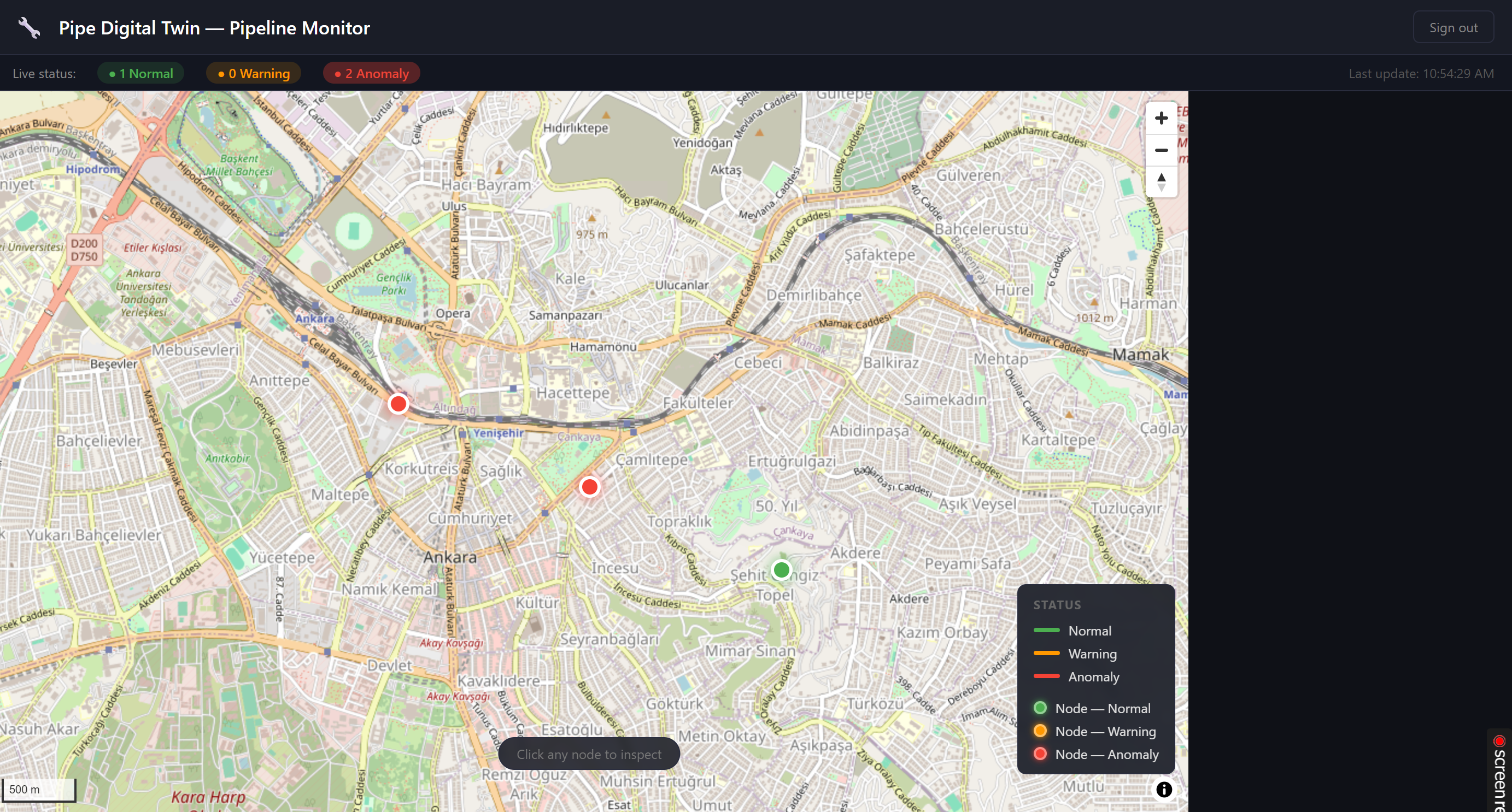
Nodes
-
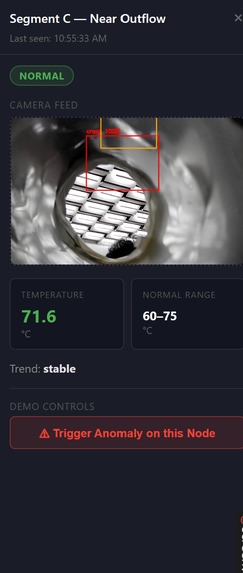
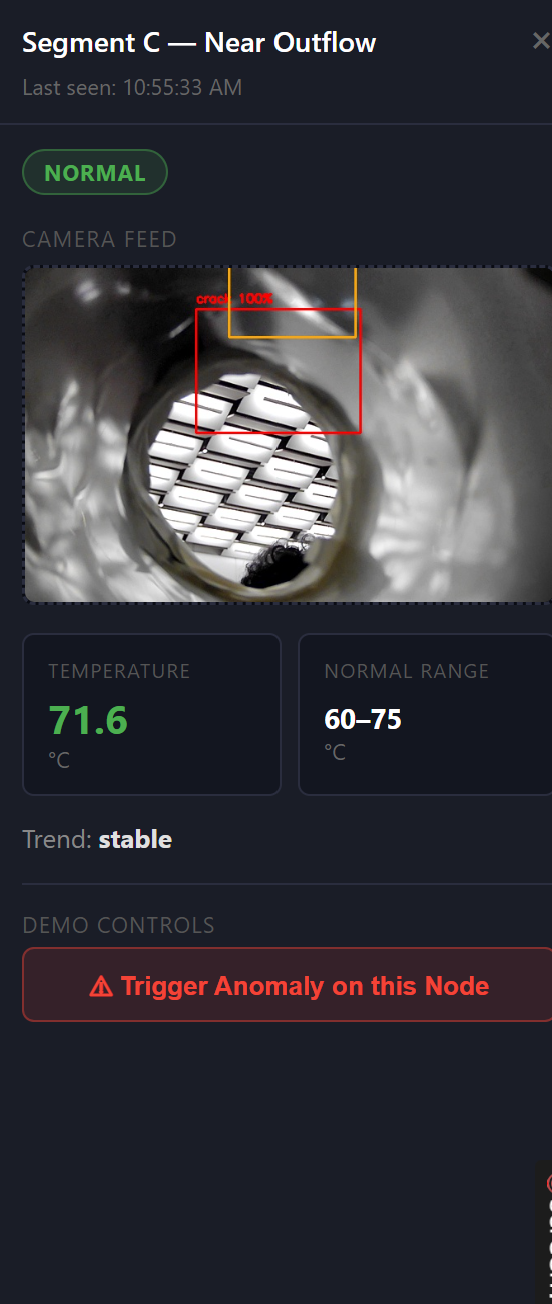
Node - Normal condition
-
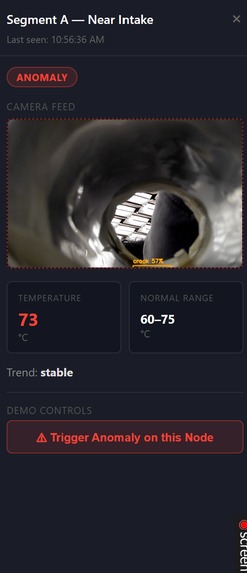
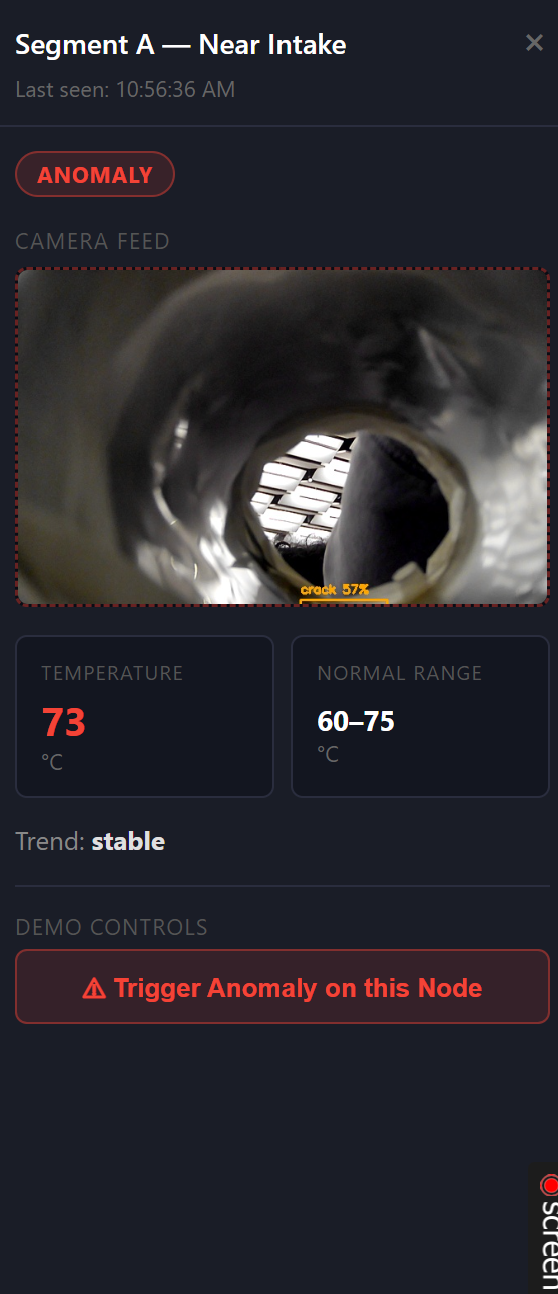
Node - Anomaly(Crack detected)
Inspiration
One of our team members recently did a research project on pipe line inspection and learned how immensely expensive mandated pipe inspections are. Each inspection costs $2,500 on average, and a pipeline failure costs approximately $1.4 million in damages. The issue: only about 3-4% of inspected pipes typically actually exhibit damages, meaning that a majority of the $2,500 cost of inspection per pipeline goes to waste. To prevent such a waste of time, resources, and money, we came up with our solution, PipeDown.
What it does
PipeDown is a tool that can be used to constantly monitor the inside of pipes, detect pipe damages when they occur, and isolate the location at which repairs are necessary. Each of our developed nodes contains a live camera and temperature sensor, and is built to be placed at intervals along the inside of pipes. Users can then log into our software, which is an interactive map that displays all nodes within a certain region, and view the status (safe, warning, or damaged based on temperature and presence of cracks, holes, etc.), live temperature, and live camera footage of each individual node if desired. If any node becomes damaged, the user will instantly receive an email stating the location of the damaged node, which will completely eliminate the unnecessarily repetitive pipe inspections that occur today. Rather than a recurring $2,500 fee, this fee will only have to be paid once for the installation of our system within a pipeline, and damage control only has to be deployed when absolutely necessary.
How we built it
We used an Arduino to get temperature sensor data and a Raspberry Pi 4 to get live webcam feed as well as to run our entire program. A majority of our code was written in Python, and we used the Browserbase API to create our live email alert system. We used an OpenCV script to detect the presence of cracks, holes, and breaks in the pipe, which we then fed our live camera feed into to accurately detect when damages occur. Finally, we created a box to hold our components together using cardboard and tape, which serves as a very low quality MVP of what our product may look like in the future.
Challenges we ran into
This was our first time working with hardware at a hackathon, and for some of us, our first time working with hardware ever. With our limited experience, it was initially difficult to work with and understand these hardware components (Arduino and Raspberry Pi). Once we gained some familiarity with the tools, we decided to attempt to use a QNX Raspberry Pi to run our project instead. However, after spending over 5 hours working with the new Pi, we were eventually unable to navigate through the Pi's new OS, as we had no experience working with new operating systems ourselves.
Accomplishments that we're proud of
We are extremely proud that we were able to create a hardware-based project with a very real application even with our lack of hardware experience. We entered the hackathon with little to no knowledge on how to even use a Raspberry Pi, and emerged with a fully functional MVP for a product that could potentially one day become a concept behind a startup.
What we learned
We learned how to use a Raspberry Pi to run software and gather data through sensors such as webcams, and we learned how to use an Arduino to collect additional sensor data. We also learned how to use OpenCV for real time crack detection
What's next for PipeDown
To make this product marketable, we plan to first decrease the size of the product (potentially by using ESP32s rather than Raspberry Pi's and looking into finding smaller hardware components to replace those that we used in this project. Our next step would be to look into better materials for the product, ideally water-resistant and tough external materials that can withstand the conditions inside a pipe and protect the hardware inside. Finally, we would potentially like to look into adding a motor to our product so that it could move on its own, making each node movable and therefore able to encompass larger distances and even be applicable beyond pipe inspection. All this while, we hope to continue training a YOLO model for a higher accuracy level in our live damage detection.
Built With
- arduino
- browserbase
- html
- opencv
- python
- raspberry-pi
- temperature-sensor
- webcam


Log in or sign up for Devpost to join the conversation.