-
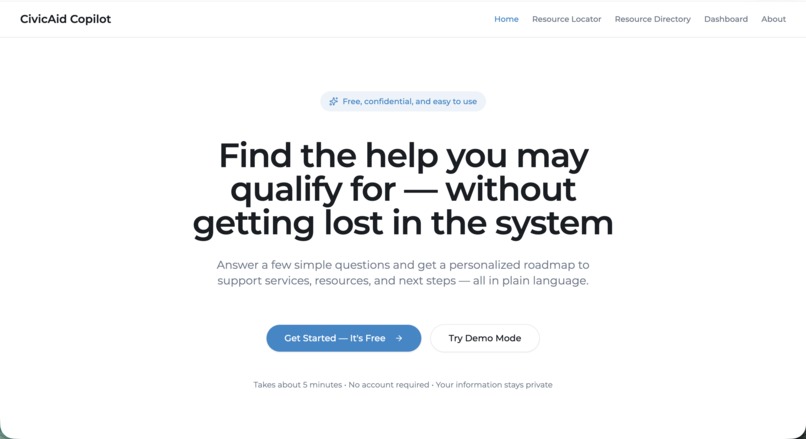
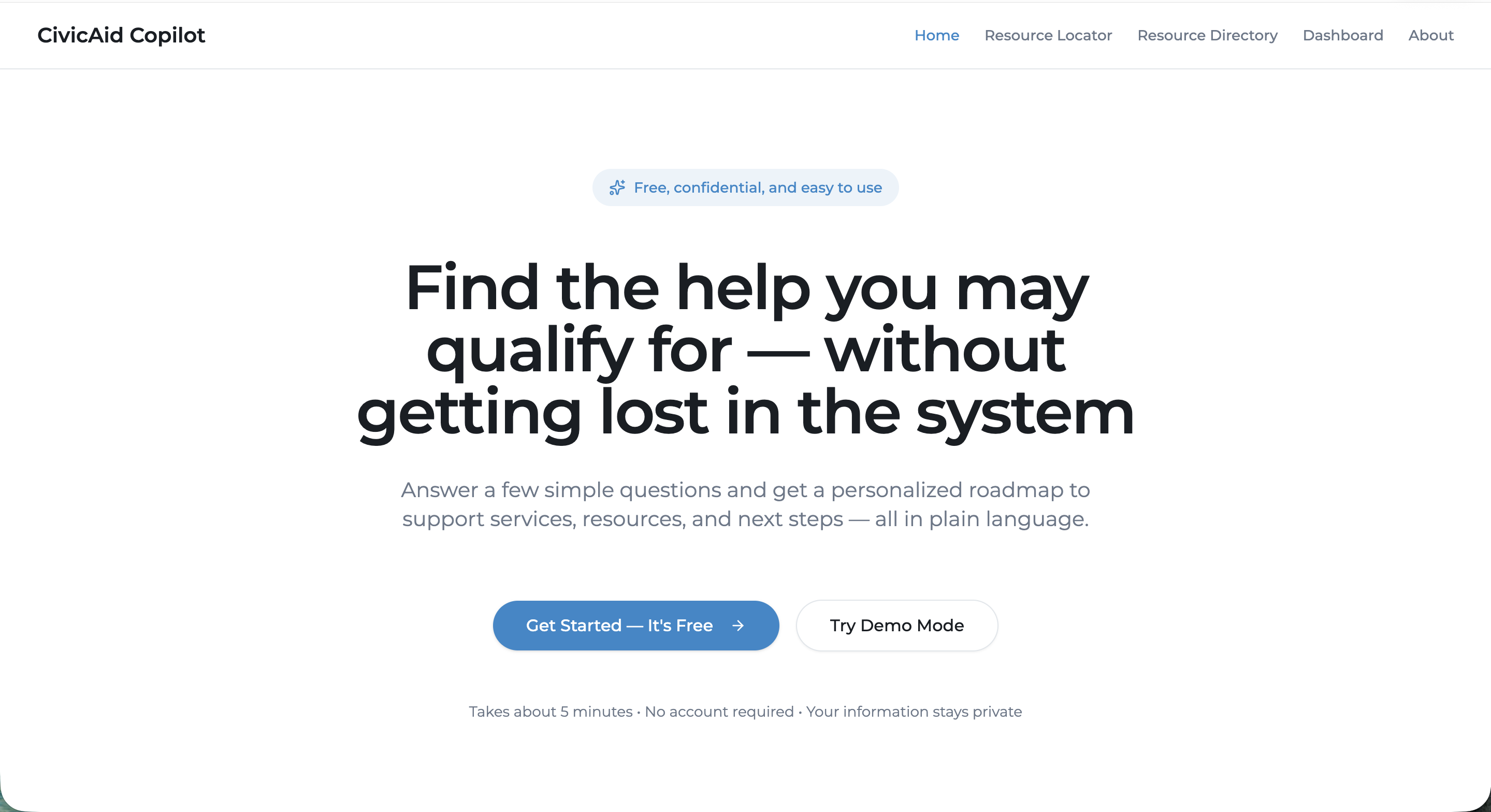
Home Page
-
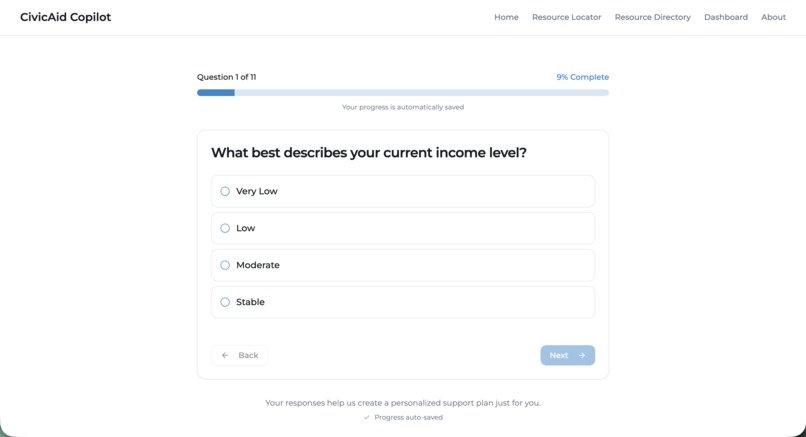
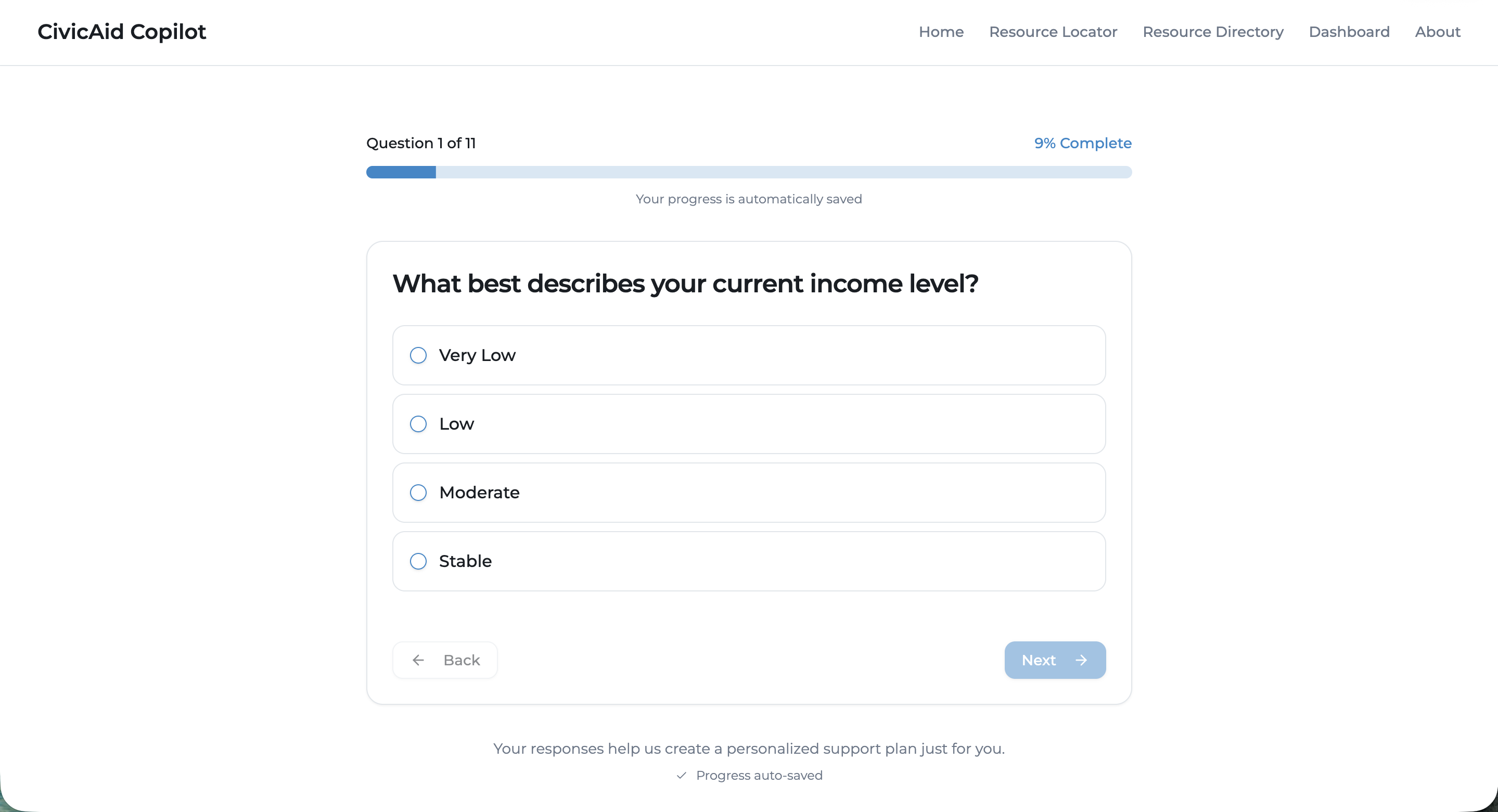
Intake Questionnaire
-
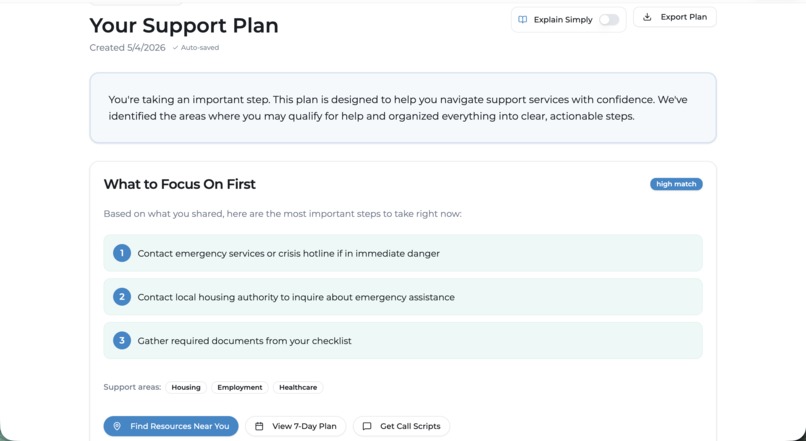
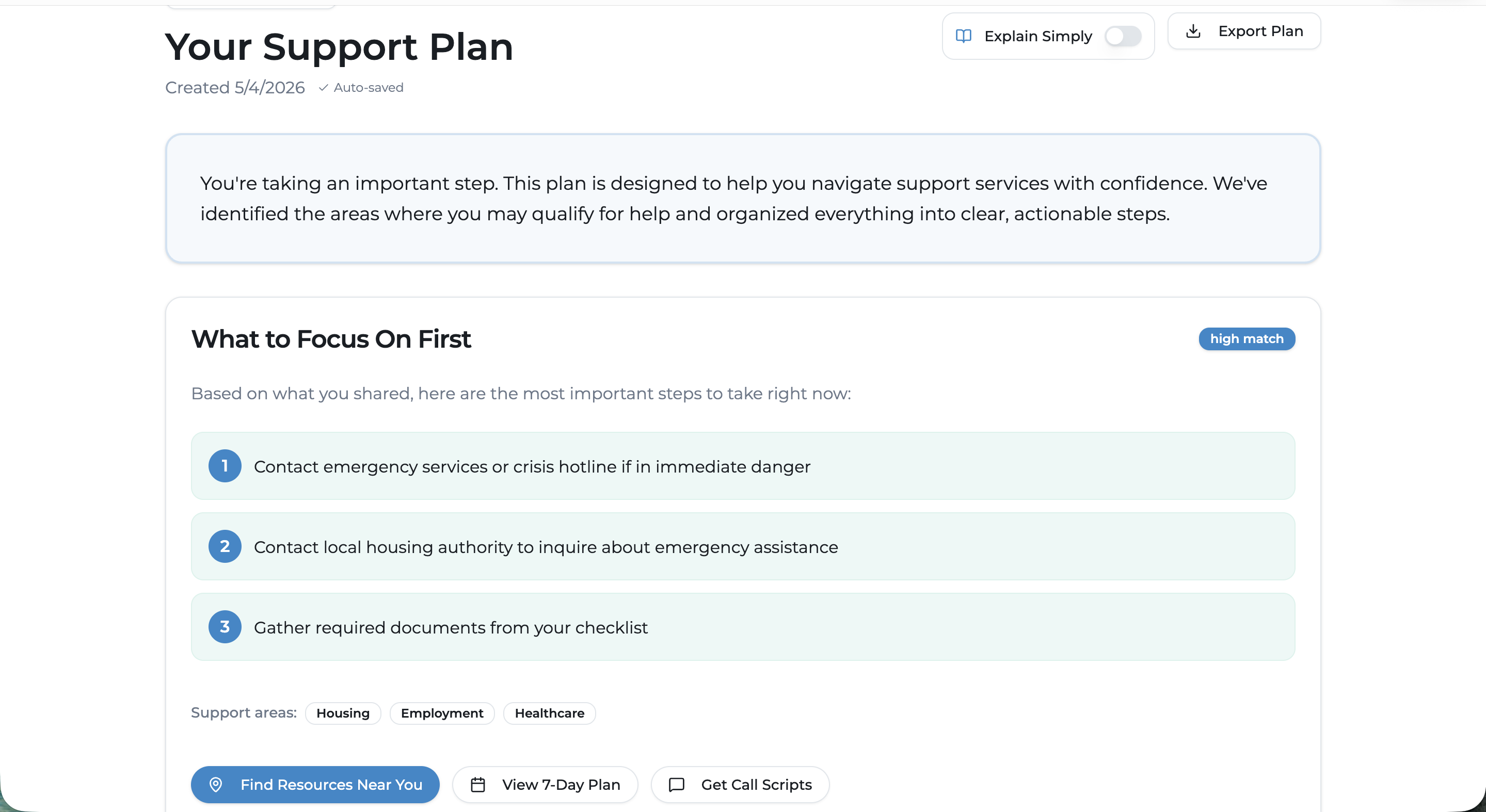
Support Plan
-
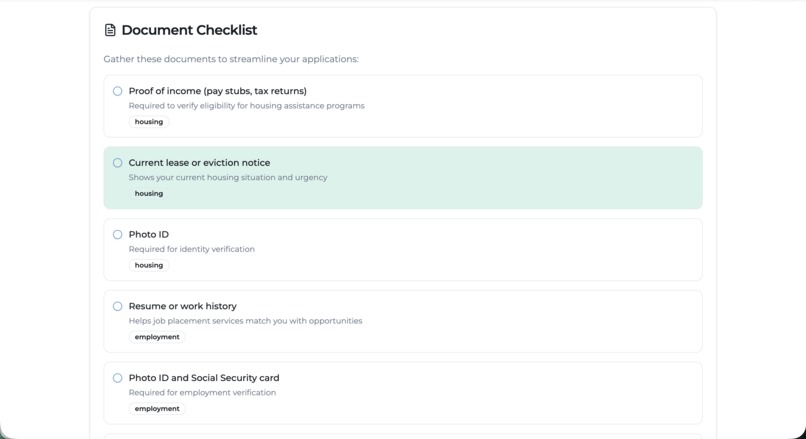
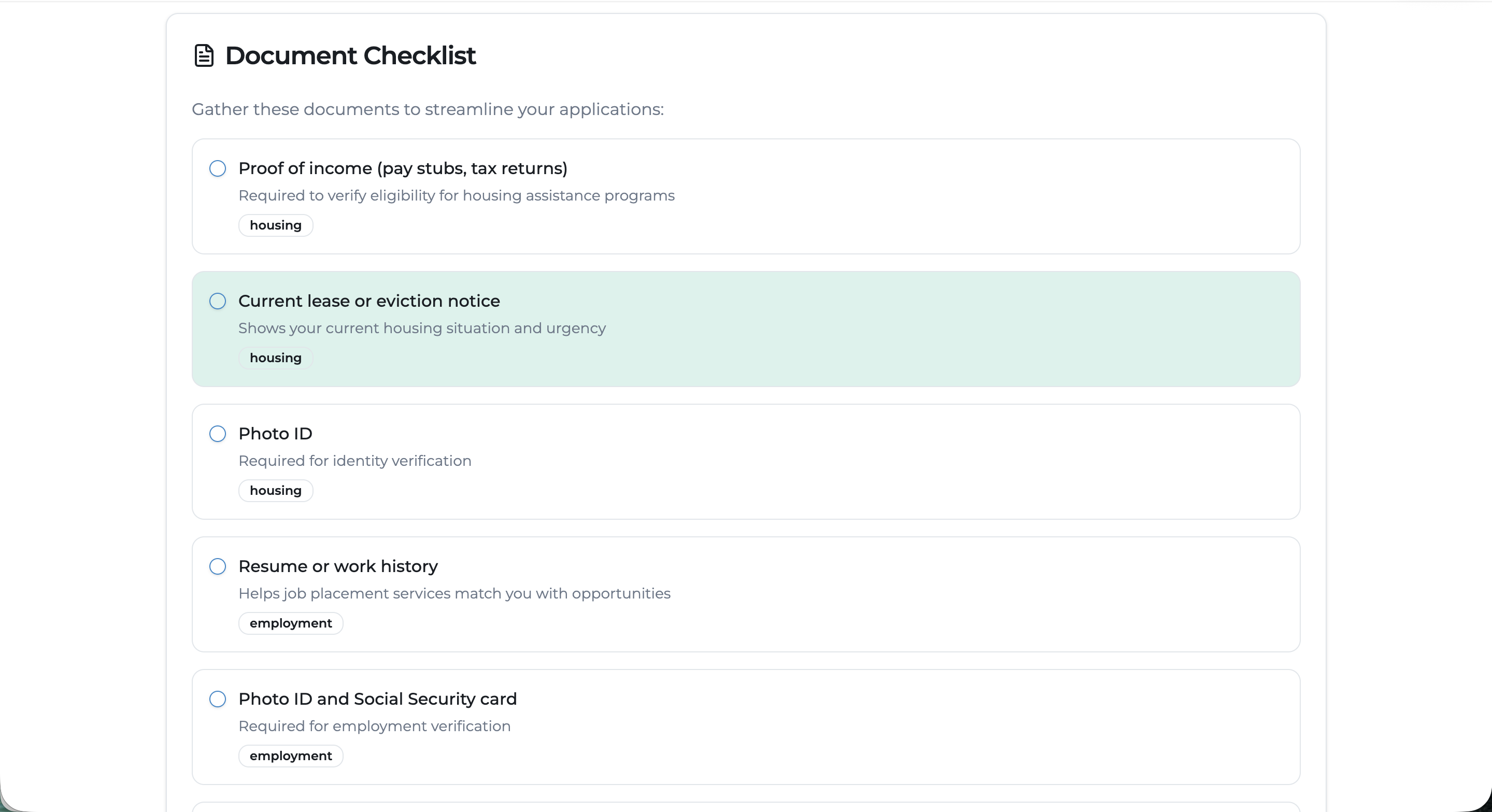
Document Checklist
-
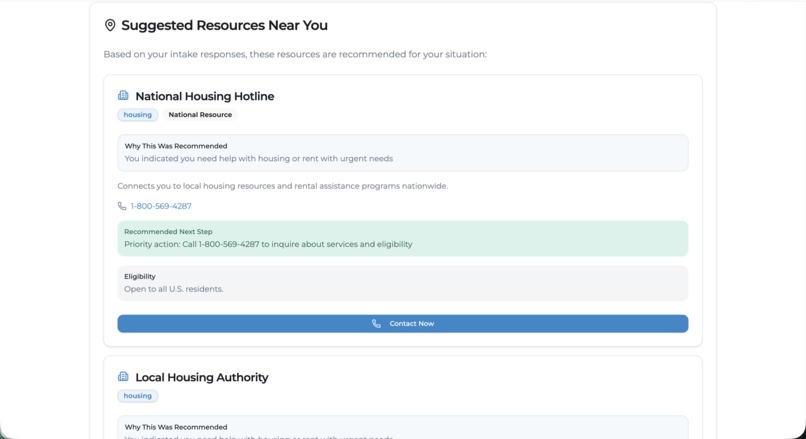
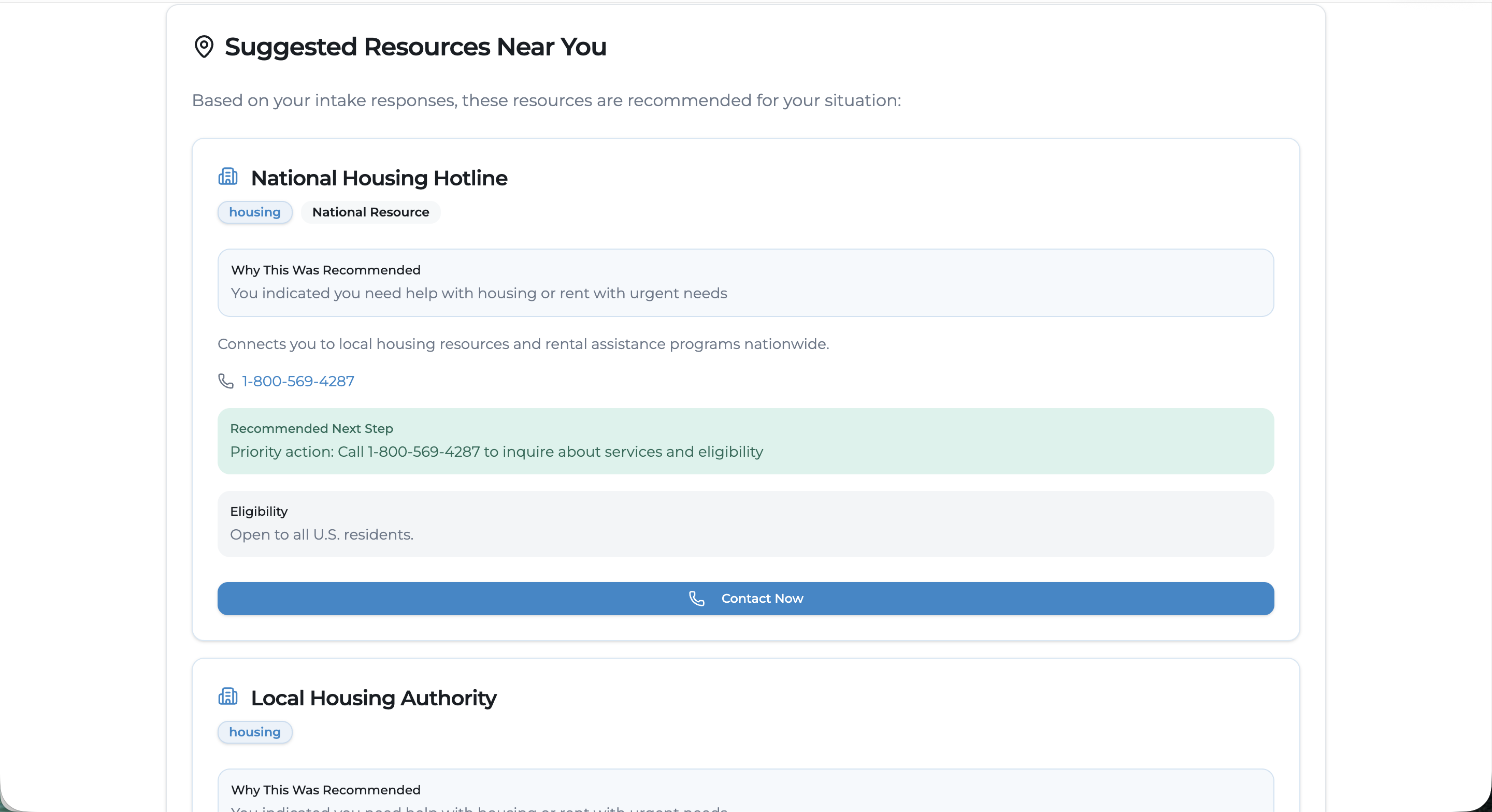
Suggested Resources
-
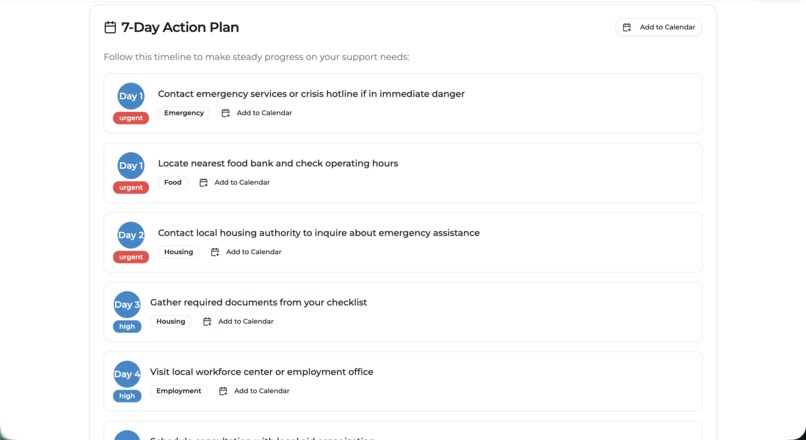
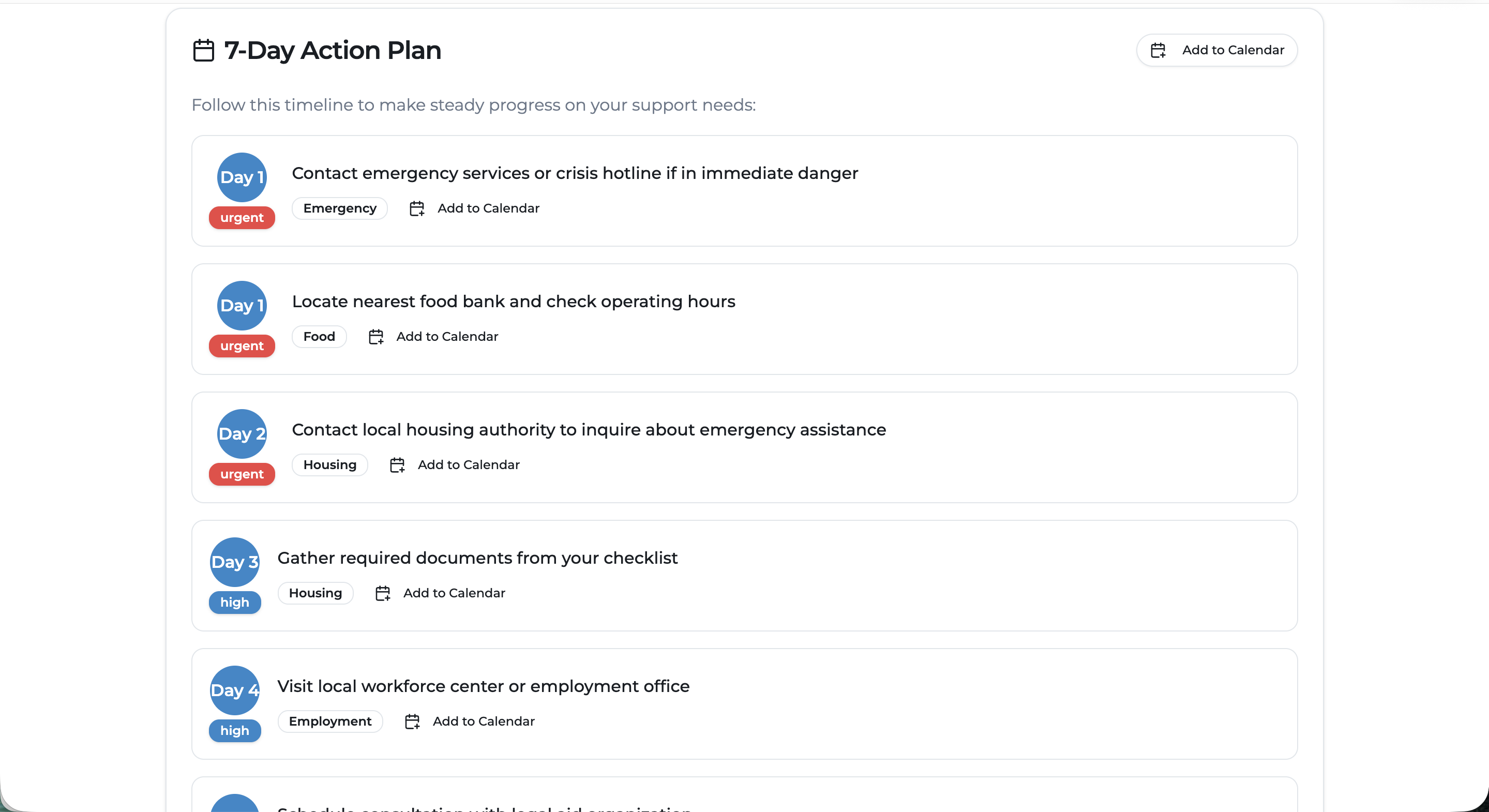
7-day Action Plan
-
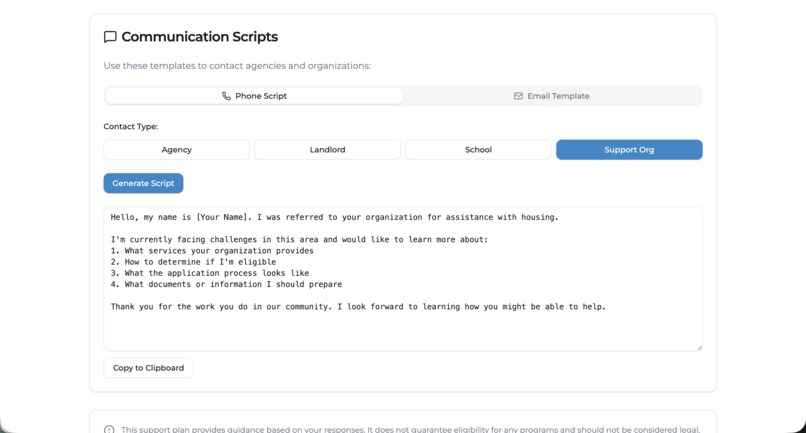
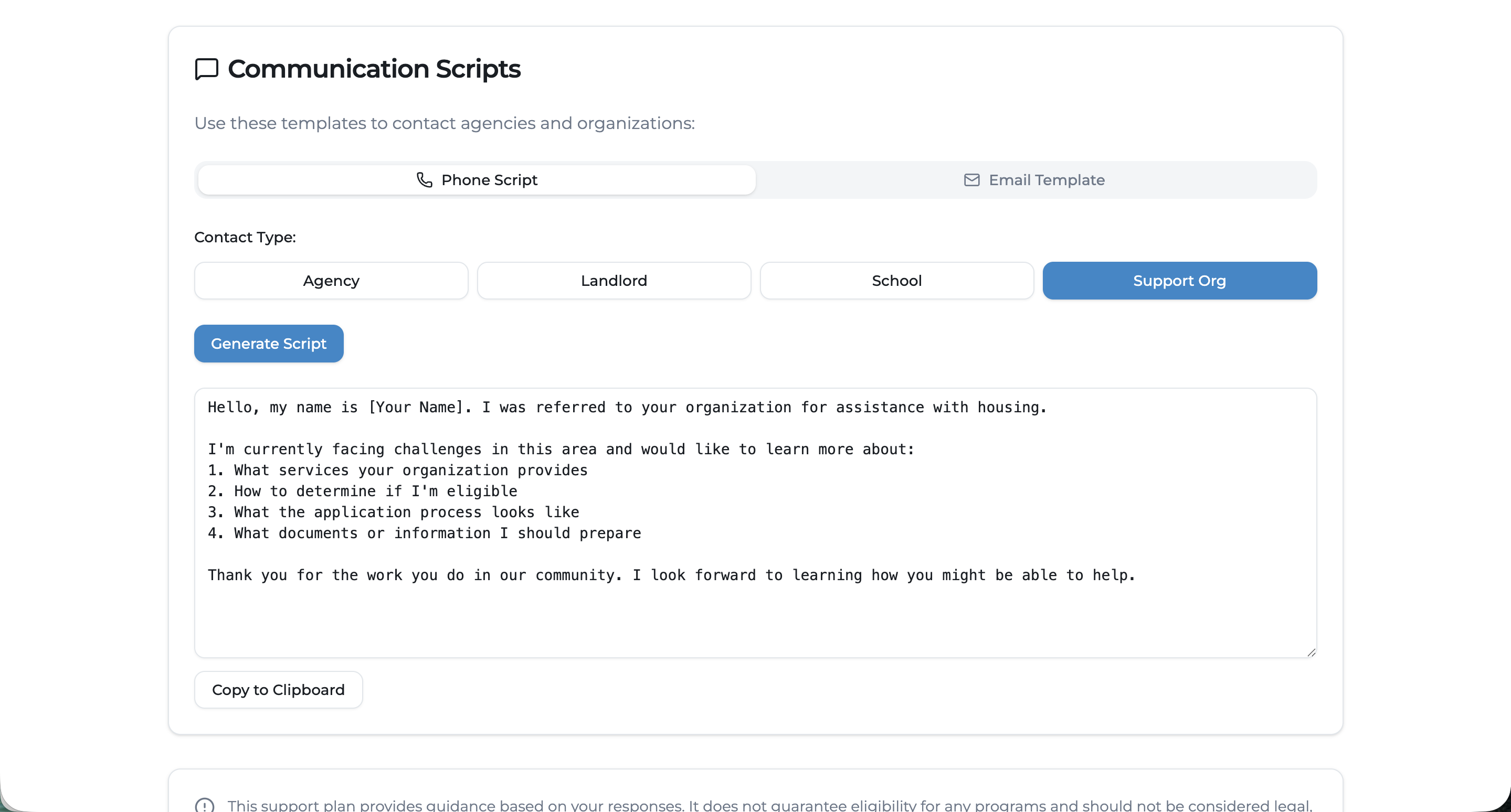
Communication Scripts
-
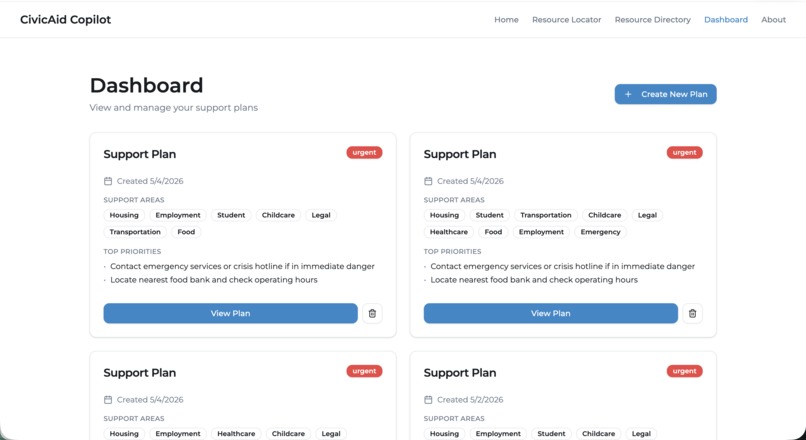
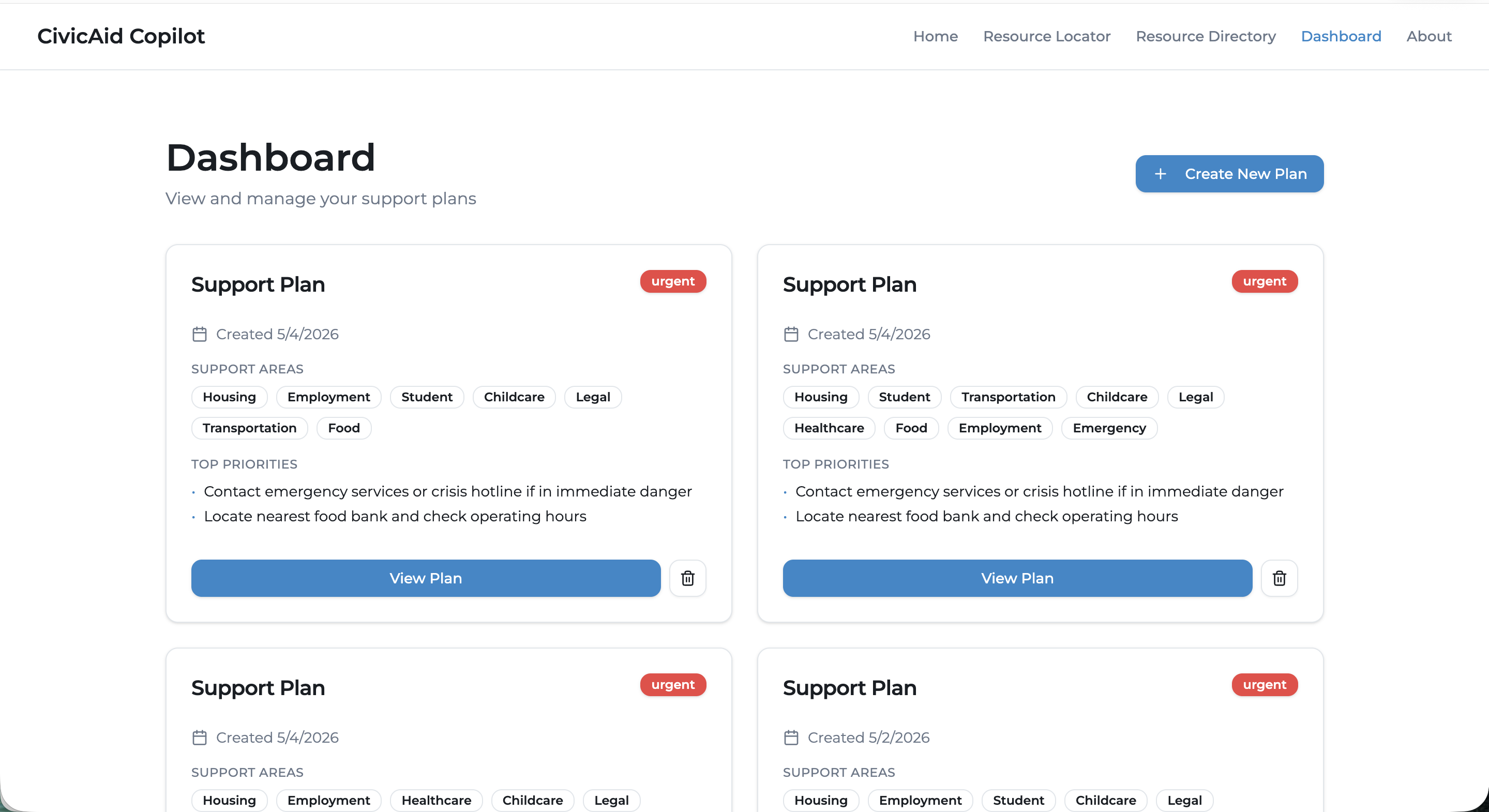
Dashboard Page
Inspiration
CivicAid Copilot was inspired by a simple but frustrating reality: when people need help the most, the systems designed to support them are often the hardest to navigate.
Whether someone is trying to find housing assistance, food support, emergency resources, or employment help, the information is usually fragmented, difficult to understand, and buried across dozens of websites and agencies. For people already dealing with stress or uncertainty, figuring out what to do next can feel overwhelming.
I wanted to build something that meets people in that moment and turns confusion into clarity.
The goal behind CivicAid Copilot was simple: transform “I don’t know what to do” into “I know exactly what to do next.”
What it does
CivicAid Copilot is an AI-powered web application that transforms a user’s situation into a clear, personalized support and action plan.
Through a conversational intake flow, the platform:
- Identifies relevant support areas such as housing, food assistance, employment, healthcare, and transportation
- Matches users with relevant local resources and organizations
- Generates a structured support plan based on urgency and need
- Creates personalized document checklists
- Builds a prioritized 7-day action plan
- Generates call and email scripts to help users contact agencies, landlords, schools, or support services
At the core of the platform is the Crisis-to-Checklist Engine, which converts stressful and complex situations into practical next steps within minutes.
The application was designed to prioritize clarity, accessibility, and low cognitive load for users navigating difficult situations.
How I built it
I built CivicAid Copilot as a solo developer using MeDo as the primary development platform, leveraging its rapid full-stack generation capabilities to iterate on backend logic, UI flows, and data models through natural-language-driven development.
The application was built using:
- React + TypeScript
- Tailwind CSS
- Supabase for backend persistence and real-time synchronization
- OpenStreetMap geocoding for location-aware resource matching
- Responsive mobile-first design patterns
- Local persistence and auto-save reliability features
My development process followed a structured approach:
Product Definition
I first defined the core problem, user journey, and key differentiators to ensure the platform stayed focused on reducing confusion and helping users take immediate action.Conversational Intake Design
I designed a multi-step intake flow that captures meaningful context while remaining approachable and low-friction. The goal was to reduce cognitive overload while still collecting enough information to generate useful recommendations.Crisis-to-Checklist Engine
I developed a prioritization system that maps user inputs to support categories and urgency signals such as housing instability, income level, transportation limitations, and time-sensitive needs.
This engine powers:
- Personalized action planning
- Resource recommendations
- Document checklists
- Communication script generation
UI and Experience Layer
I built a calm, structured interface focused on readability and accessibility. The experience was intentionally designed to feel supportive rather than overwhelming, especially for users navigating stressful circumstances.Feature Expansion and Iteration
Using MeDo’s multi-turn development workflow, I rapidly iterated on both frontend and backend functionality to expand the platform with:- Intelligent resource matching
- Saved support plans
- Crisis-to-Checklist summaries
- Calendar export support
- Script generation tools
- Real-time intake persistence
- Plain-language mode support
MeDo allowed me to move from concept to a polished functional MVP extremely quickly while continuing to refine both the technical architecture and user experience.
Challenges I ran into
One of the biggest challenges was balancing simplicity with usefulness.
It’s easy to overwhelm users by asking too many questions or presenting too much information too quickly. I had to carefully design the intake flow so it gathered meaningful context without feeling stressful or time-consuming.
Another challenge was ensuring the output felt genuinely personalized instead of generic. I addressed this by building prioritization logic around urgency signals and contextual factors so recommendations would feel more relevant and actionable.
I also spent significant time refining tone and presentation. Because the target users may already feel overwhelmed, the platform needed to feel calm, supportive, and easy to navigate without becoming overly technical or clinical.
From a technical perspective, I also had to balance MVP scope with long-term scalability. The current version focuses on guidance, planning, and resource organization rather than direct government system integrations or eligibility verification.
Accomplishments that I'm proud of
- Building a complete end-to-end platform as a solo developer
- Designing the Crisis-to-Checklist Engine to transform complex situations into actionable next steps
- Creating a product that feels both technically structured and human-centered
- Building a polished, responsive MVP in a short timeframe using MeDo
- Implementing real-time persistence, intelligent resource matching, and dynamic planning workflows
- Designing an experience focused on reducing cognitive load during stressful situations
- Creating something with meaningful real-world impact beyond the scope of a hackathon project
What I learned
This project reinforced that clarity is one of the most valuable features you can build.
I learned how to:
- Design conversational flows that reduce cognitive load
- Translate complex real-world problems into structured workflows
- Build AI-assisted systems that still feel thoughtful and human-centered
- Use MeDo effectively for rapid full-stack application development
- Iterate quickly through multi-turn prompt engineering and product refinement
- Balance technical functionality with accessibility and user experience
I also learned that AI alone is not enough to create meaningful products. The real impact comes from combining AI capabilities with intentional UX design, structure, and clear decision-making systems.
What's next for CivicAid Copilot
Next, I plan to expand CivicAid Copilot into a more robust and accessible platform by adding:
- More advanced location-aware resource matching
- Multi-language support for accessibility
- Secure user accounts and saved case histories
- A helper/caseworker collaboration interface
- Real-time resource and availability integrations
- Expanded accessibility and plain-language support
- Analytics and follow-up workflows for ongoing support tracking
Long term, the vision is to make CivicAid Copilot a trusted, accessible layer between people and the systems designed to help them—turning complexity into clarity at scale.
Built With
- external-api's
- local-storage
- medo
- node.js
- prompt-engineering
- react
- rest-style-architecture
- typescript
- ui

Log in or sign up for Devpost to join the conversation.