Inspiration
In the US alone, the healthcare systems handle around ~36 million telehealth visits per year with an average nurse wait times of 8-20mins during peak hours. At the same time, emergency departments report that up to 30% of ER visits are non-emergent. This creates two simultaneous problems,
- Unnecessary emergency visits
- Delayed care for emergency situations Meanwhile, generic AI chatbots have their own set of challenges such as:
- Hallucinations in diagnosis
- Unsafe medical suggestions
- Lack of context This lead us to wonder, why dont we build a system that doesnt try to be a doctor but instead act like a disciplined, safety-first medical call operator? Instead of replacing clinical judgment, PioneerCare augments the human intake and response layer where consistency, gated safety checks and proper routing matter most. Our goal is not automation for its own sake. Our goal is safely triage and respond at scale.
What it does
PioneerCare is a real-time AI-powered medical call-line operator that safely handles patient intake, triage, analyze and routing through natural voice conversation. When a user speaks, our system:
- Understands the concern through structured intake
- Performs mandatory safety triage using a fine-tuned medical model trained on multiple custom datasets built on pioneer with HIPAA and hospital guidelines.
- Classifies urgency (emergency, urgent, routine).
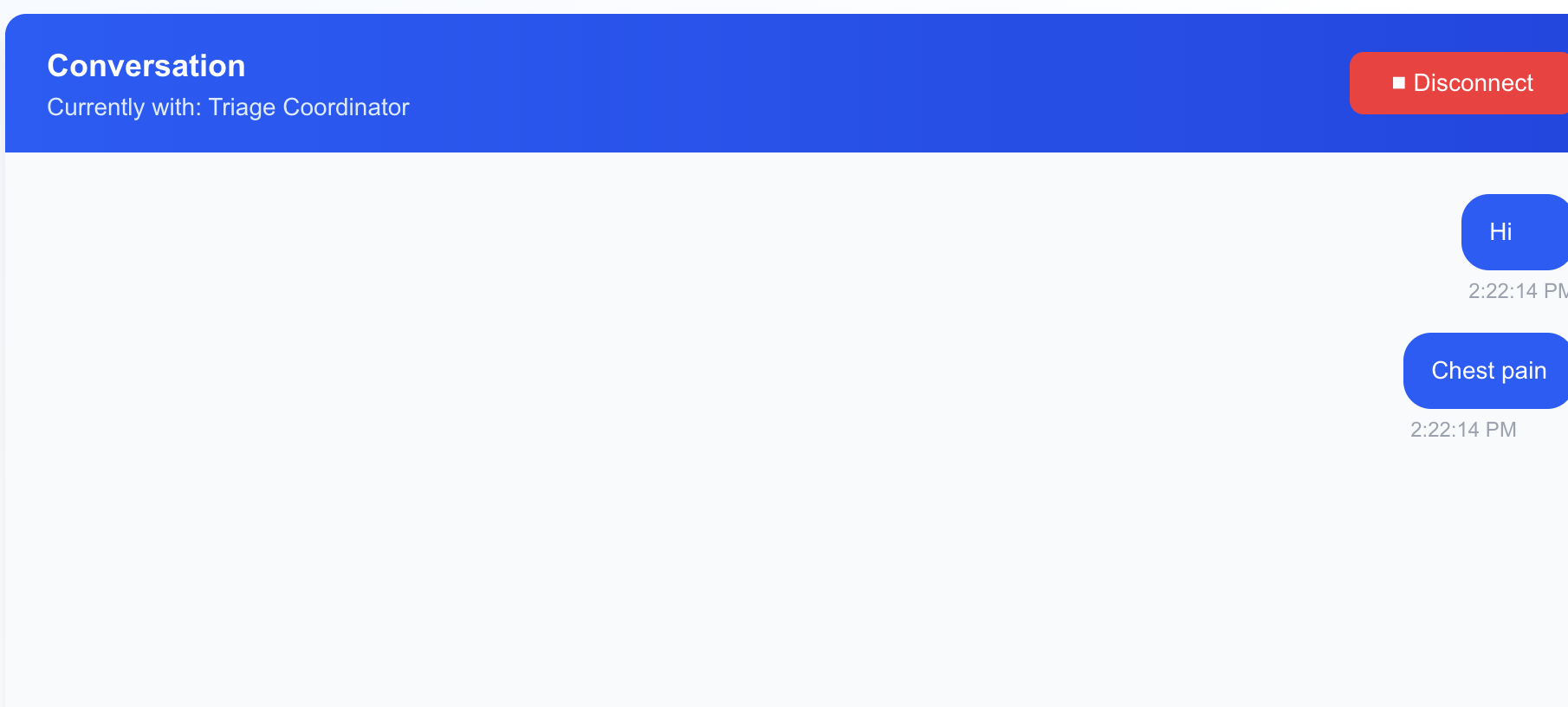
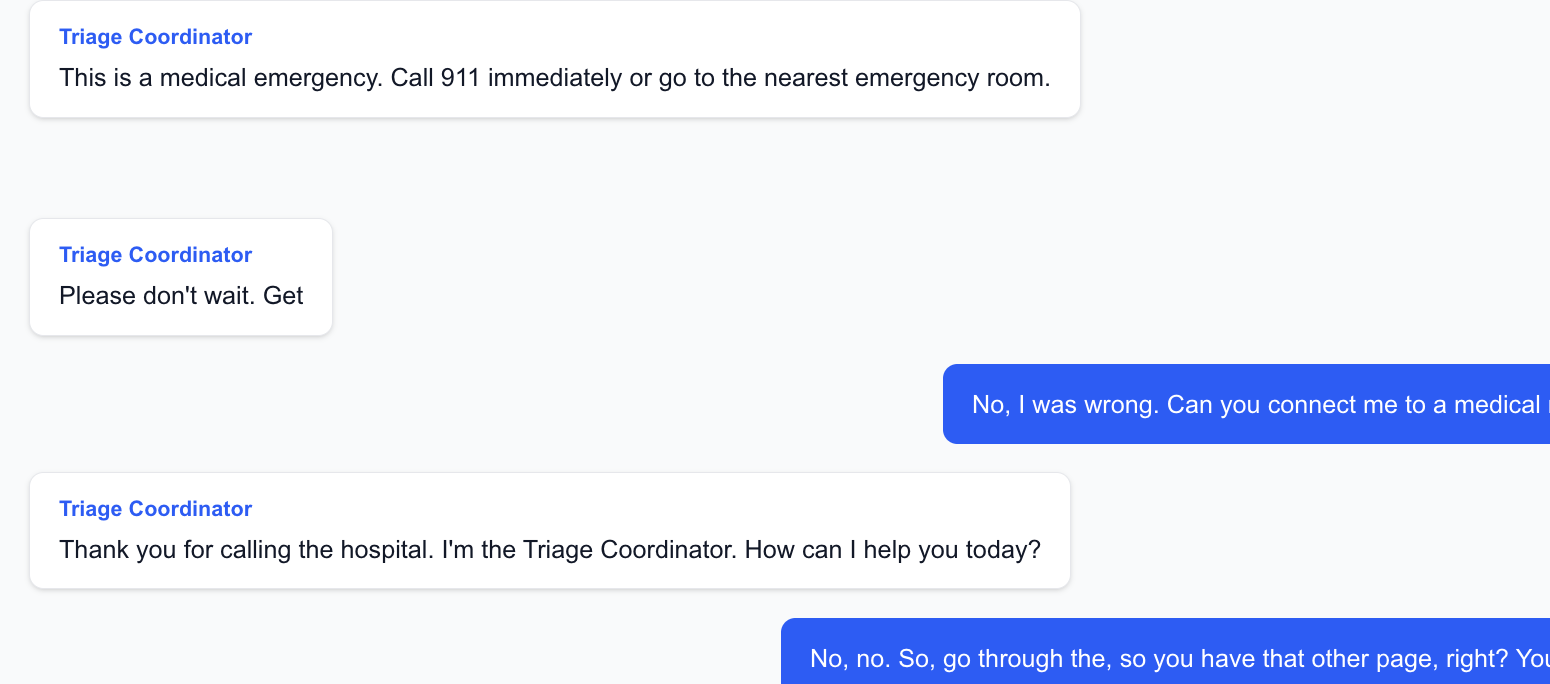
- Escalates immediately if red flags are detected.
- Provides bounded guidance for low-risk cases.
- Routes administrative or clinical cases to the appropriate human team.
- Builds structured documentation automatically in the background.
- Retrieves prior conversation history from a Neo4j context graph to maintain continuity across calls.
The system separates conversational interaction from medical decision-making. The voice agent never invents medical advice. All safety and routing decisions are delegated to the fine-tuned custom model on Pioneer, ensuring consistent escalation behavior and reducing hallucination risk. By combining structured triage, contextual memory, and compliance-aware inference, PioneerCare strengthens the most overloaded layer of healthcare: the front-line call operator.
How we built it
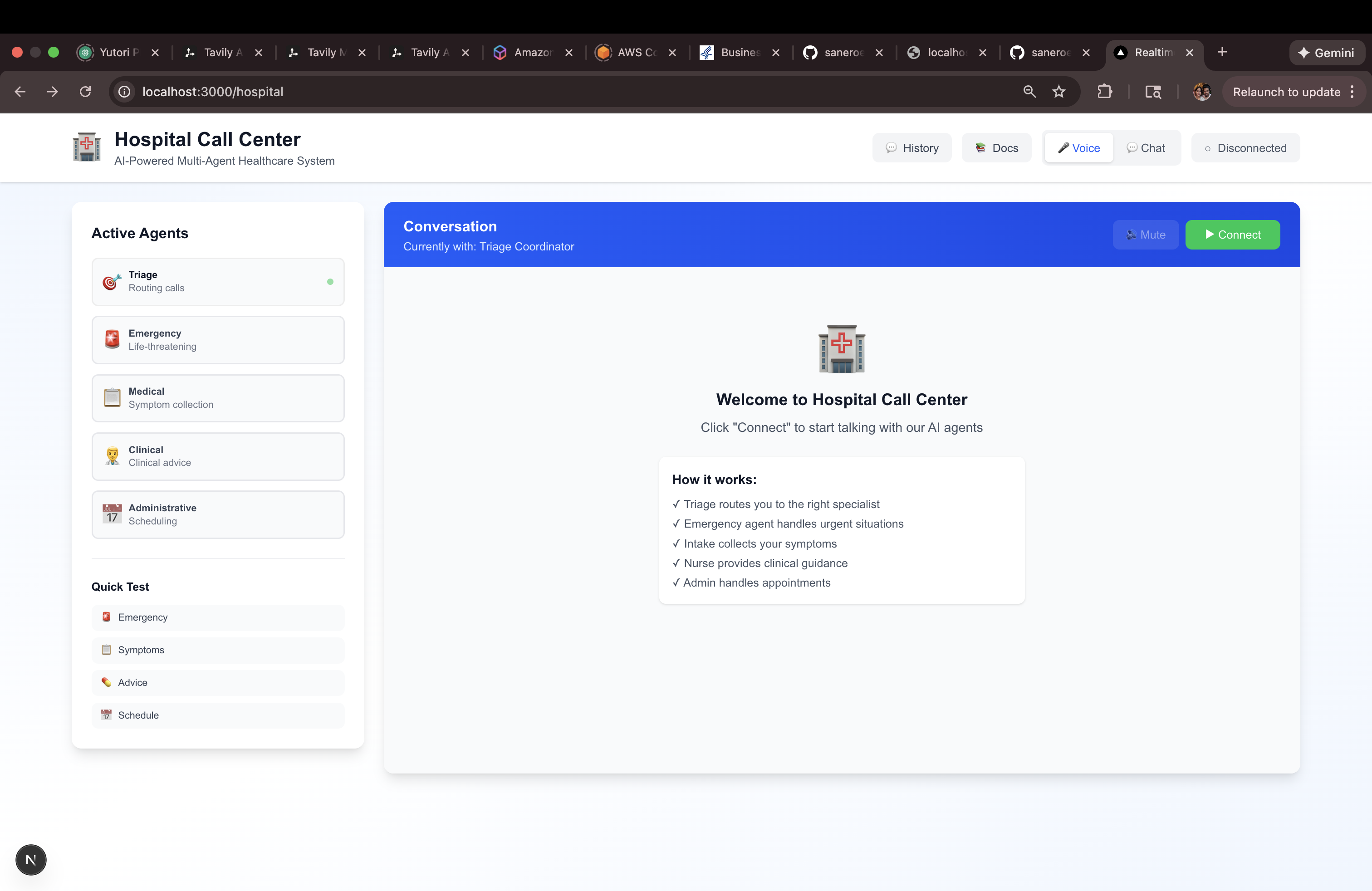
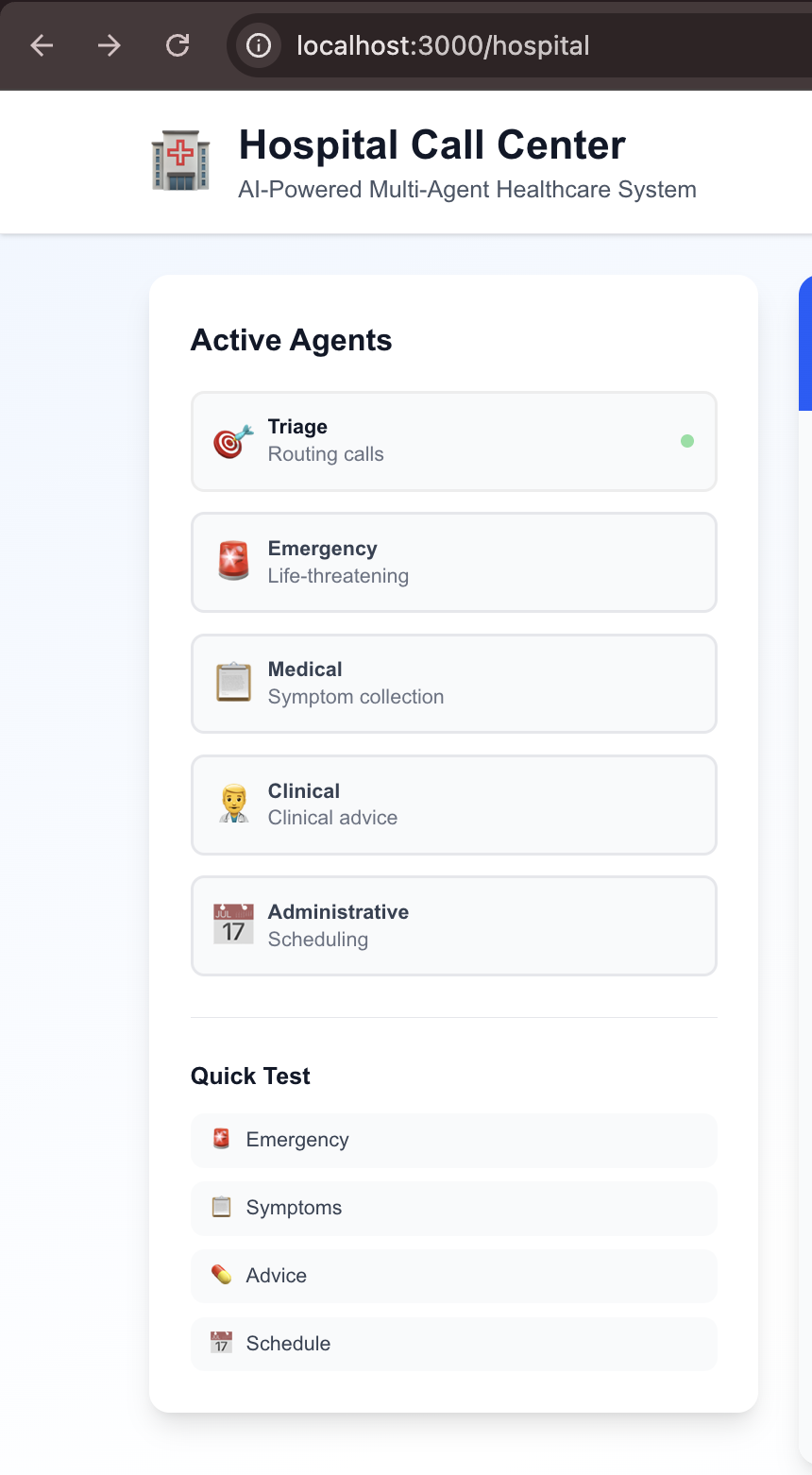
PioneerCare is built using a multi-agent architecture powered by the OpenAI Agents SDK.
- Operator Agent - built using OpenAI realtime runner that handles realtime speech-speech. Switches dynamically between triage, emergency, medical guidance, and appointment workflows
- Pioneer tuned custom model - that were trained on the datasets that are relevant to the domain which enforces compliance and safety. Also synthetic scenario generation aligned with structured triage flows.
- Neo4j Context Graph - stores prior call summaries, tracks symptom recurrence and escalation history.
- NoteTaker Agent - runs in parallel to the conversation to generate summaries to build context.
- Triage agent - understands the patient's concern to infer decisions.
- Emergency agent - acts on emergency conditions for faster and more accurate decisions while keeping an operator in loop.
- Clinical agent - routes to the appropriate providers, fetches provider information attached to the user and more.
- Administrative agent - helps with billing, record update and other medical administrative tasks. We hosted all the agents on "Render" with service and webhook endpoints. We used "Tavily" to generate the data for synthetic dataset that is based off complaince. This was useful because the web keeps evolving and its hard to keep up with the compliance policies. And ofcourse "Pioneer" for training and fine-tuning the custom models for our specific agents.
Challenges we ran into
Realtime audio latency Audio latency and consistency was a challenge because ordering of responses, enforcing guardrails over them and reiterating on stale decisions while still maintaining the response time was a challenge we faced.
Multi agent orchestration stability Managing multi agent context consistency and accuracy was a challenge given the realtime request-response stream.
Dataset quality The public datasets were not strong enough for training the model for understand different aspects of decision making. They were very susceptible to hallucinations.
Accomplishments that we're proud of
- Of course the end to end working system, thanks to Pioneer, Render and Tavily for making things easy.
- The multi-agent orchestration that switches automatically between different agents.
- Fine tuning models on number of datasets.
- Context aware decision making based on patient history using Neo4j Graph context.
What we learned
Multi-agent consistency is critical for decision making Having fallback workflows are critical, especially for medical response system Structured context memory dramatically improves continuity across conversations
What's next for Pioneer Care
Multi-user session management Confidence and feedback based learning of agents and models Integration with real scheduling systems owned by medical industries Reinforcement learning based on triage corrections


Log in or sign up for Devpost to join the conversation.