-
-
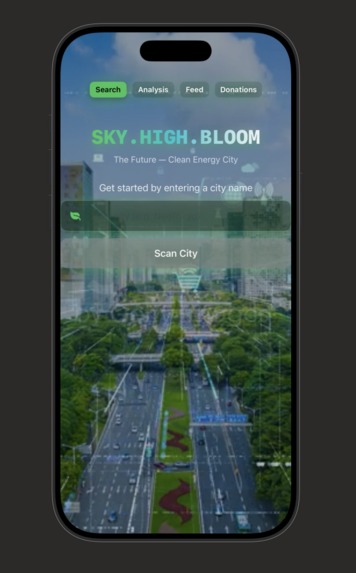
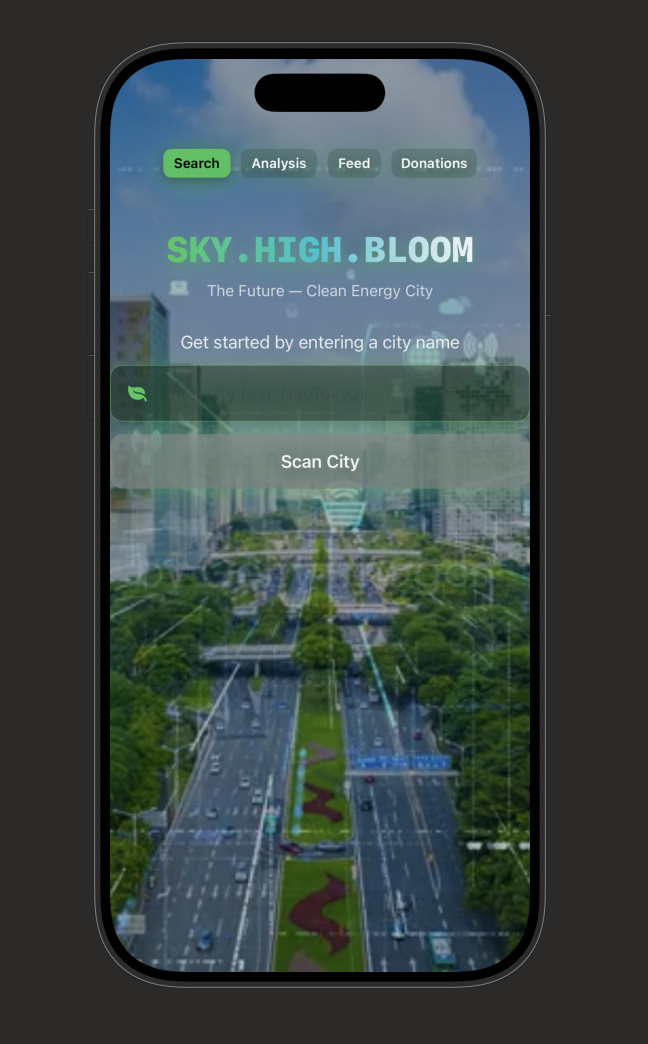
Home/Search Page
-
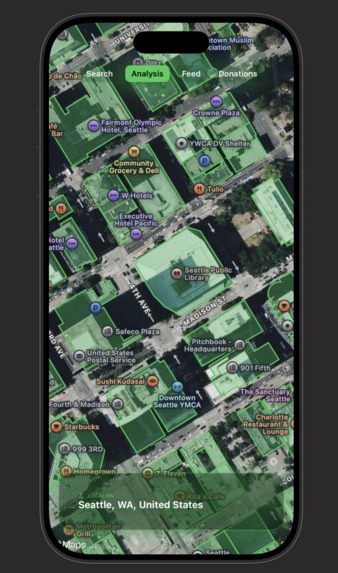
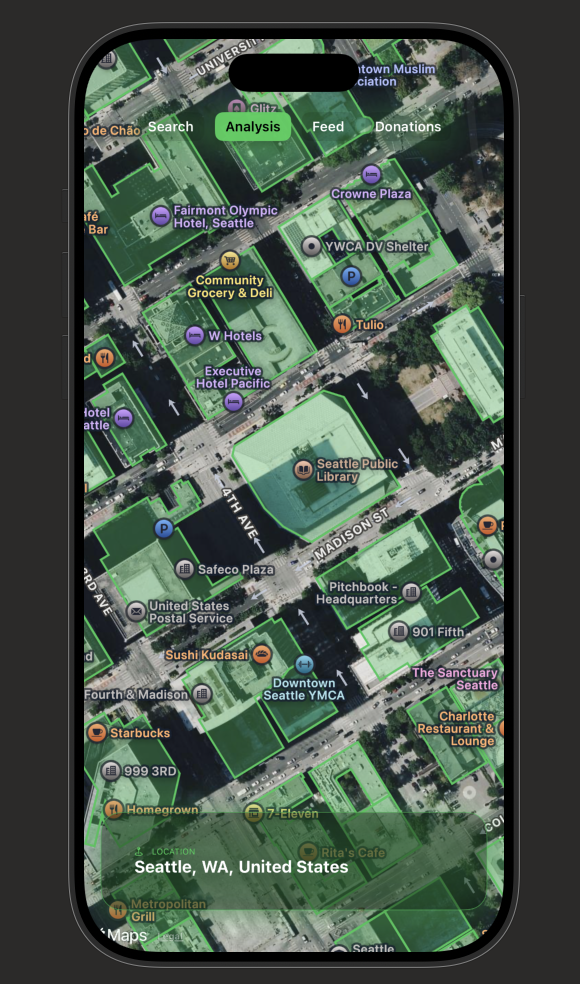
Analysis/Map Page
-
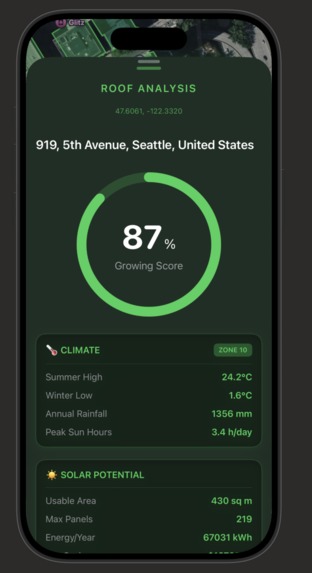
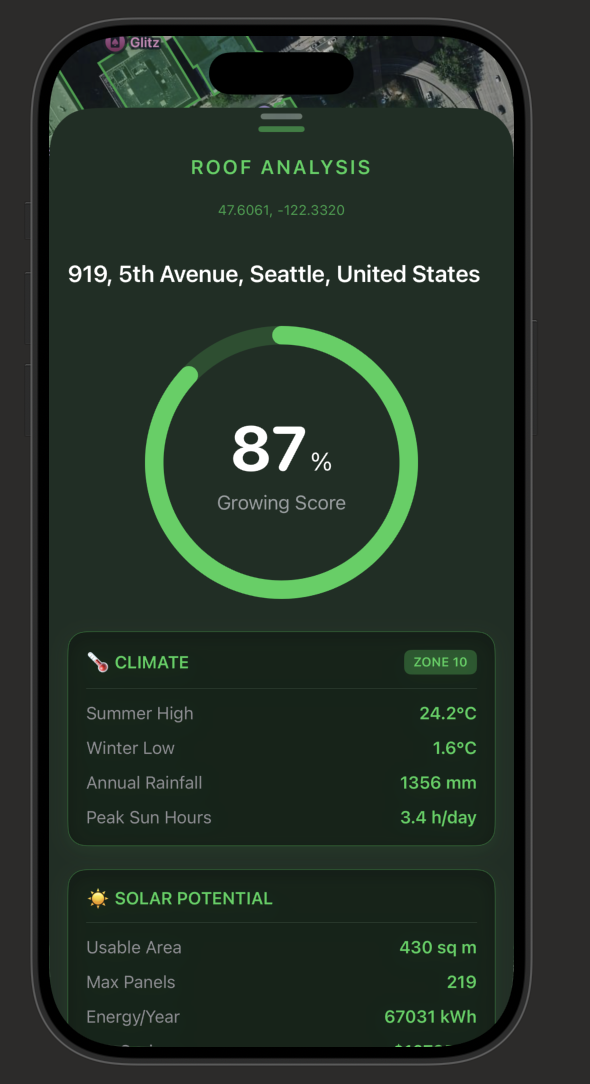
Roof Analysis Pop-Up
-
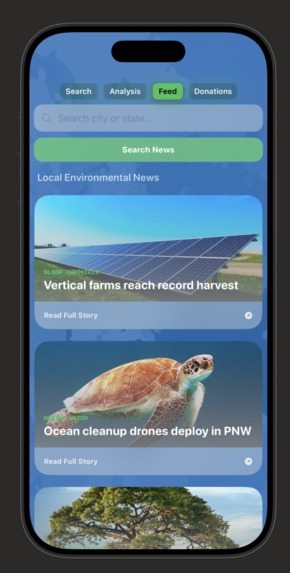
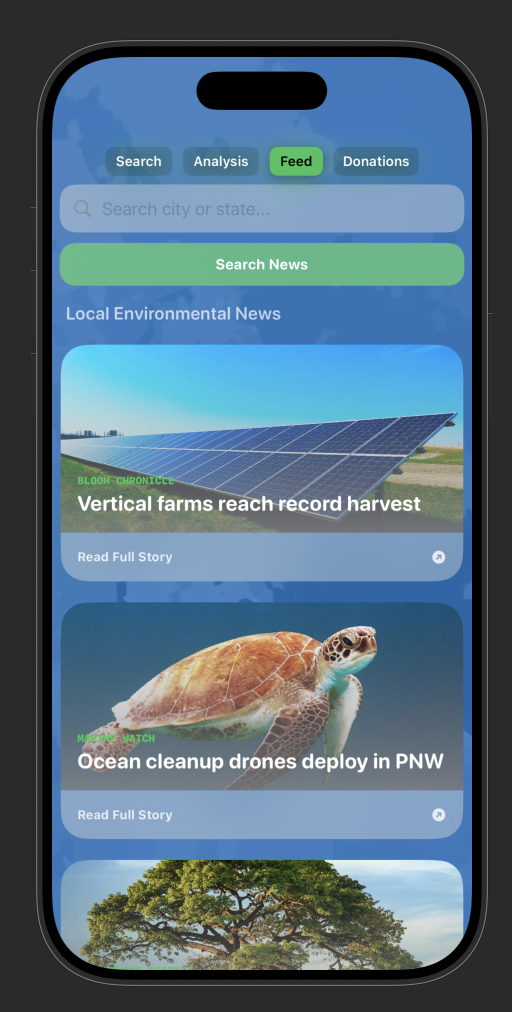
Feed/News Page
-
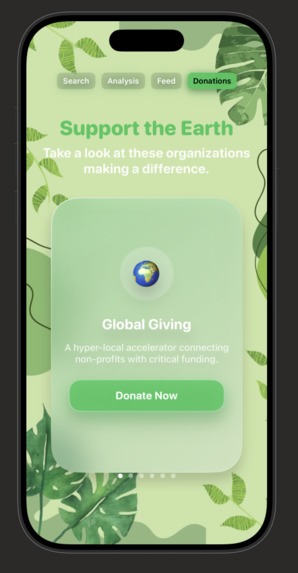
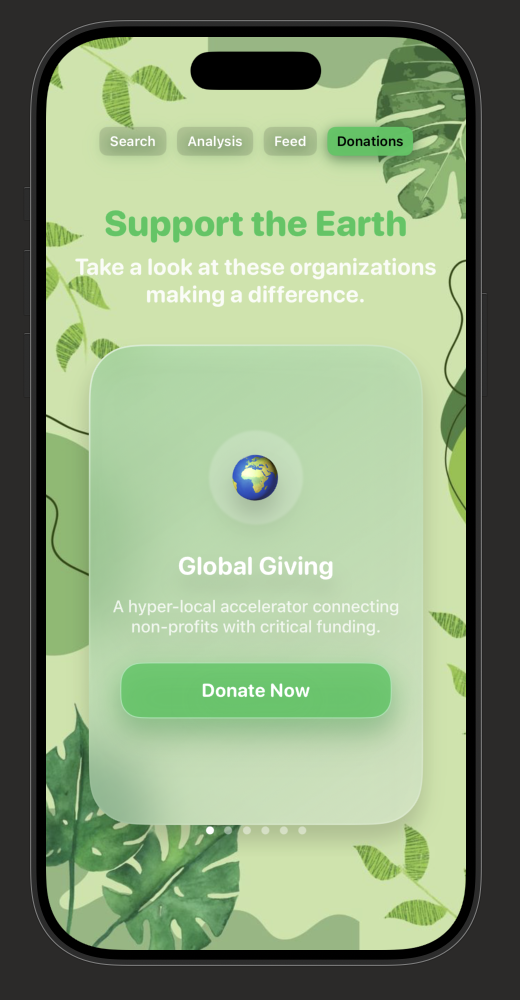
Donations Page
-
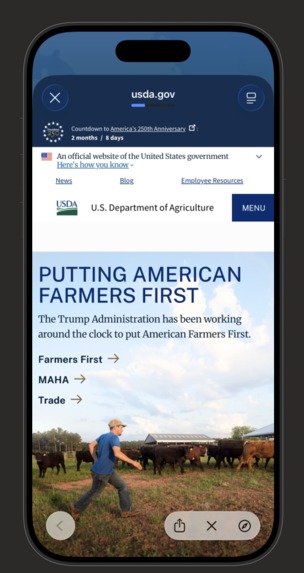
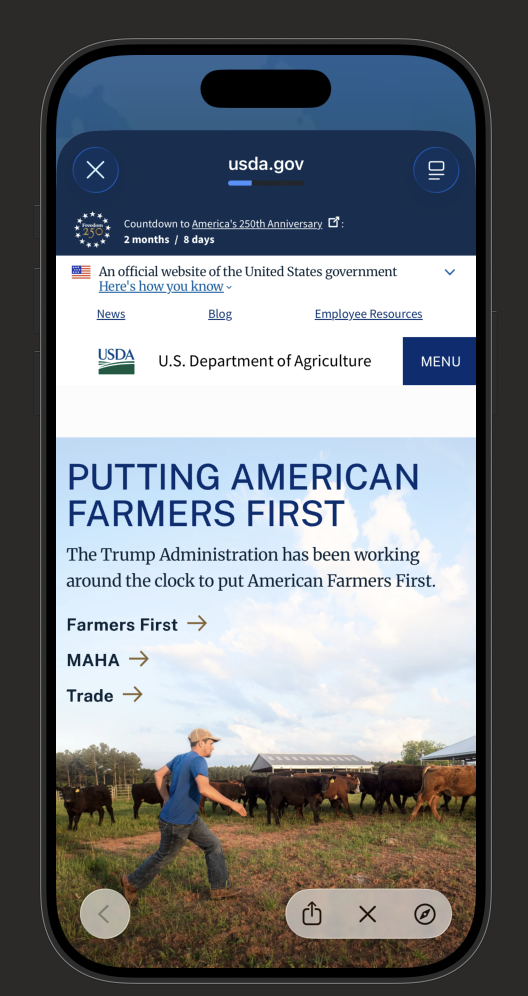
Internal Website Pop-Up Example
Inspiration
- We were inspired by how many rooftops in the cities remain completely unused despite having a huge potential for sustainability. Cities face challenges related to food security, energy demand, and climate change during crisis. This contrast led us to explore how rooftops could be transformed into a meaningful environmental asset.
- We noticed that rooftops are ideal locations for solar energy generation. Solar panel installation became a part of our idea for turning spaces into practical sustainability solutions.
- We wanted to build a system that uses data-driven insights to help identify opportunities for urban farming based on the environmental factors, renewable energy like solar panels, making sustainability more accessible.
What it does
- Our app focuses on transforming unused urban rooftops into opportunities for sustainability and positive environmental impact.
- We analyze rooftops to identify how they can be repurposed for eco-friendly solutions such as urban farming, renewable energy generation, and water conservation. The goal is to help cities better utilize existing space to support both environmental and community needs.
- To do this, our system evaluates key factors like sunlight exposure, water availability, weather conditions, and overall roof structure. Based on this analysis, we determine whether a rooftop is suitable for activities like growing plants or installing solar panels. Equation we used to analyze: $$ score = round (100 × (0.25·sun + 0.20·season + 0.20·winter + 0.15·summer + 0.10·rain + 0.10·area)) $$
- Beyond recommendations, we also connect these insights to real-world impact by suggesting ways the output can support sustainability organizations and community initiatives focused on food security and clean energy.
- Overall, our app bridges the gap between underused rooftop space and actionable solutions that benefit both cities and the environment.
How we built it
- We built the UI and backend separately, then merged them together at the end. We technically have a working iOS app and website because we programmed them separately (the backend was tested with a basic webpage first)
- The backend was built with various APIs to gather climate, solar, and map data
- The frontend was built using Swift and XCode as an iOS app
Challenges we ran into
- Coming up with a name for our app which would also help people to instantly get an idea about what the app is about.
- Certain amount of time to use the API and then waiting for an hour to use it again.
- The API we used to highlight rooftops responded slowly and would periodically have servers that went down. We solved this by adding a fallback server in case the first server went down.
Accomplishments that we're proud of
- Running the app without any errors
- Displaying the rooftop analysis statistics the way we envisioned it to look like.
- Able to provide the recommendations about the possible veggies you can grow based on the environmental factors affecting it.
What we learned
- We learned that most of the unused space on rooftops can be transformed into sustainability opportunities that would impact the environment and cities in positive way. We also learned that renewable source of energy could be used to provide resources to people in the future.
Built With
- google-maps
- javascript
- open-meteo
- python
- swiftui
- vscode
- xcode

Log in or sign up for Devpost to join the conversation.