Inspiration
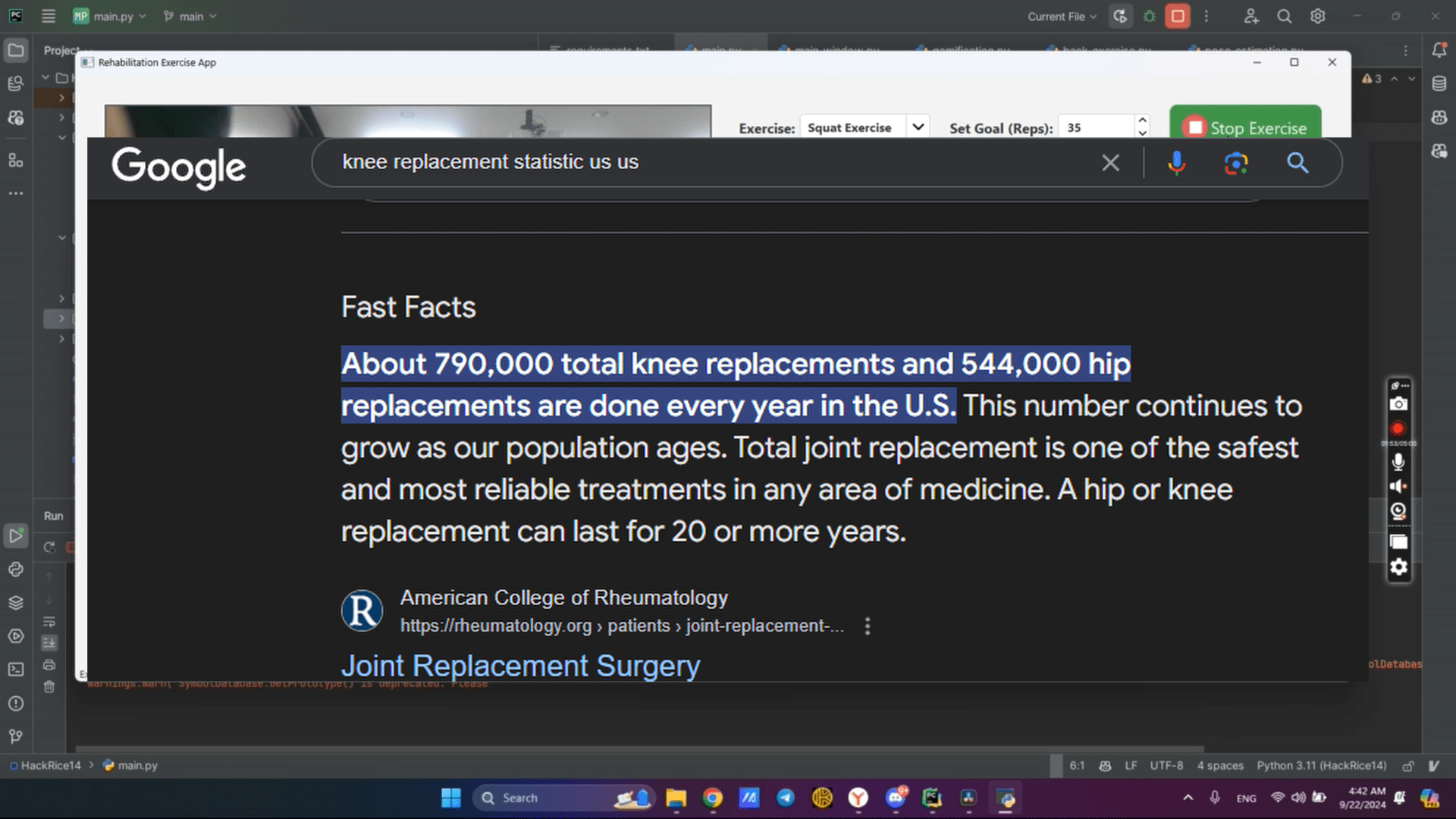
RestoreIO was created in response to the demand for an intelligent, customized solution to accelerate healing following an accident or knee replacement surgery. To reduce stiffness in the newly repaired knee, patients typically need to perform daily exercises under the guidance of a physician. However, this procedure can be costly and time-consuming. Our goal was to develop an app that enables patients to monitor their recovery and receive real-time feedback on their form, eliminating the need for ongoing medical supervision.
What It Does
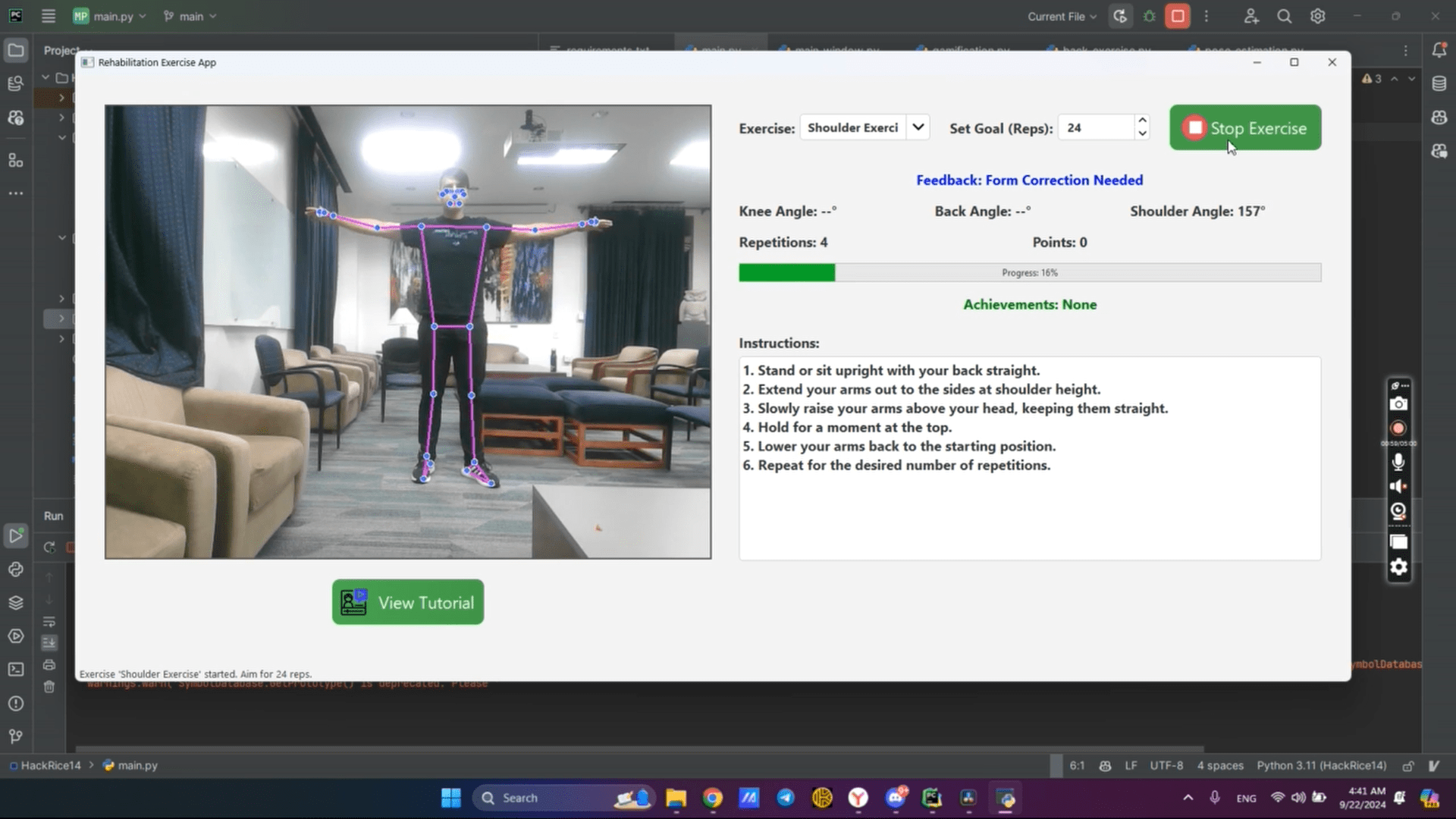
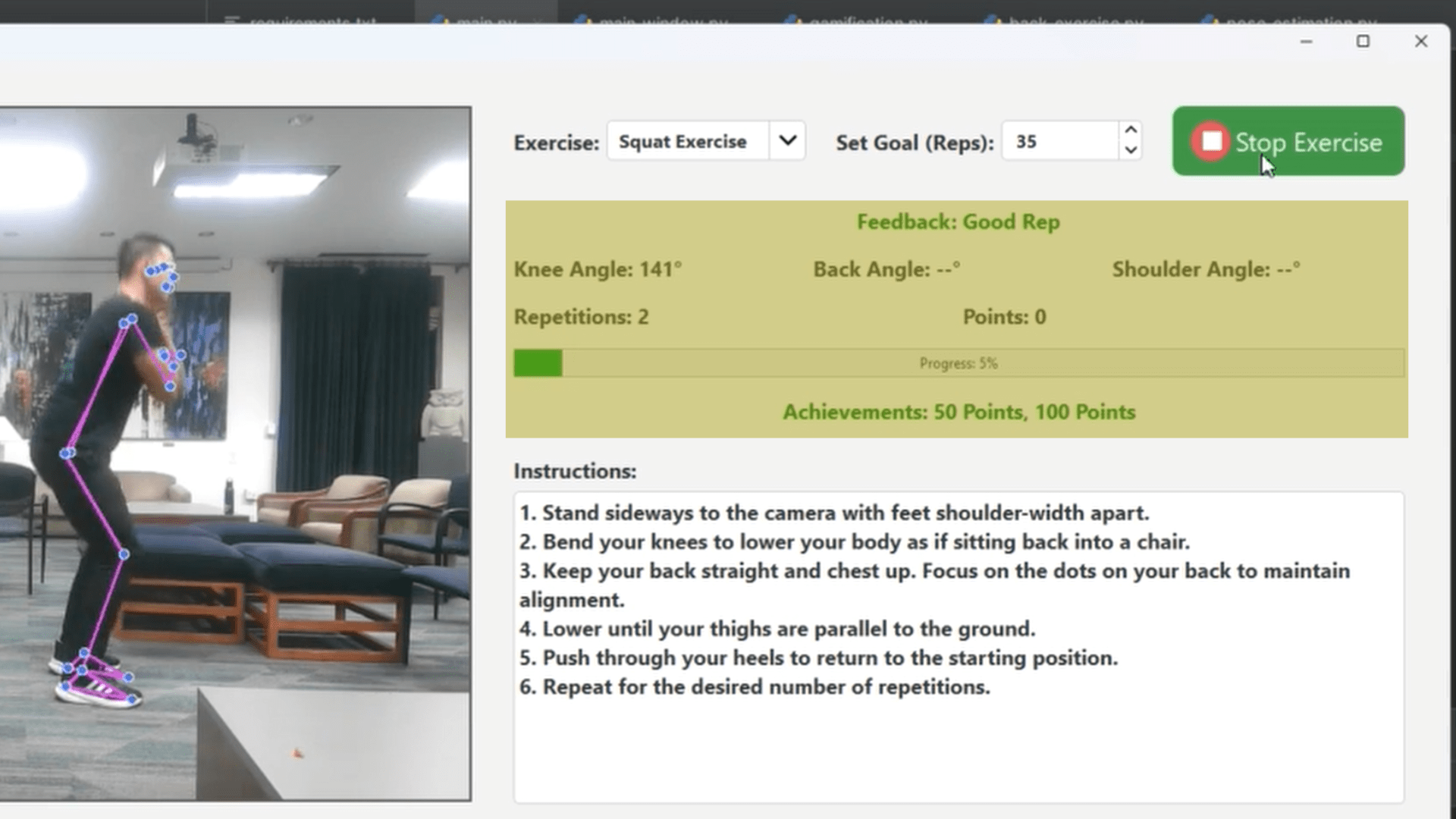
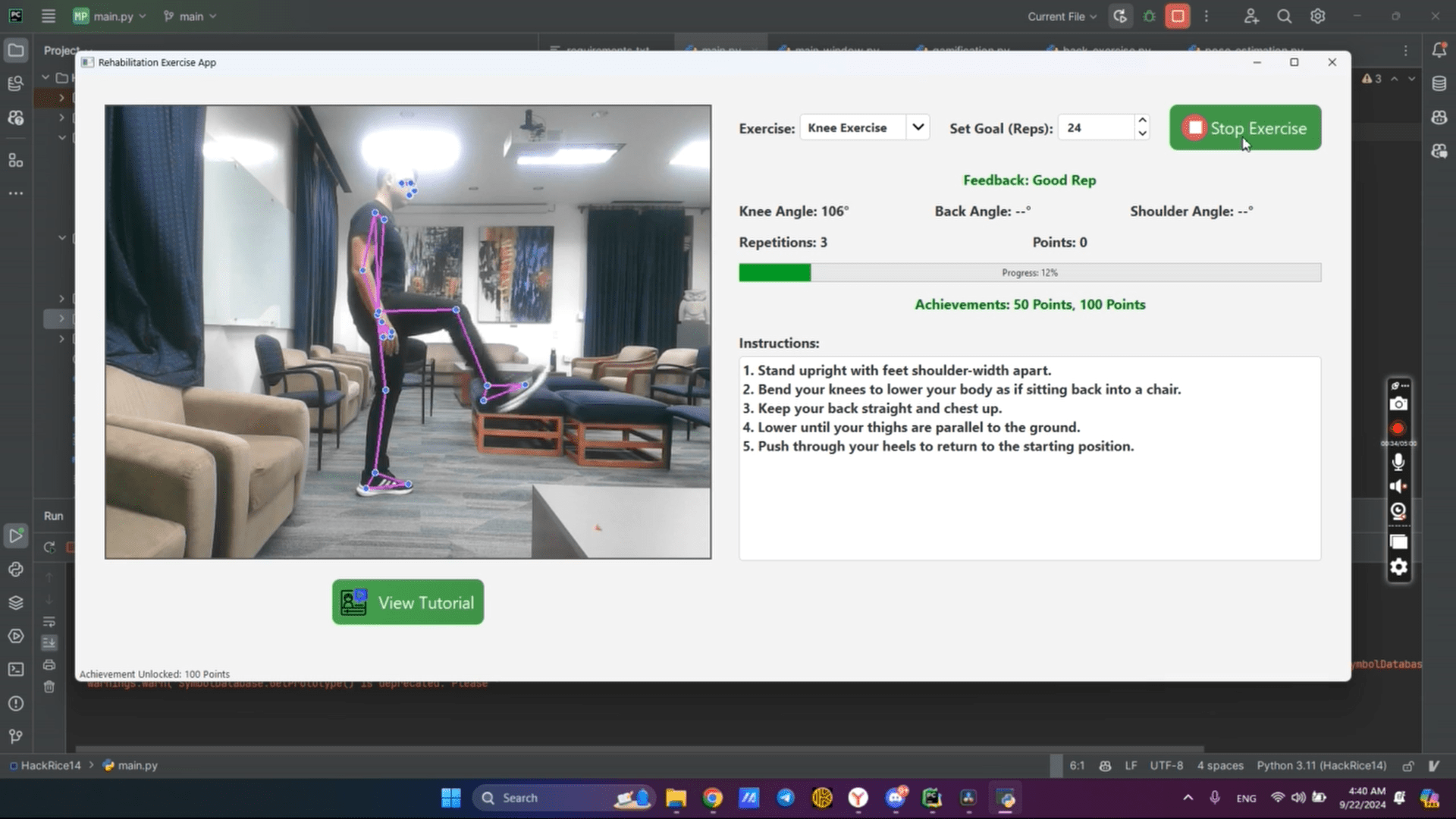
RestoreIO tracks patients' progress and analyzes their form in real-time during recovery exercises using computer vision. By assisting users in maintaining proper posture throughout rehabilitation activities, it reduces the risk of re-injury or delayed recovery. The software aids in knee replacement recovery by offering tailored workout modifications based on user performance.
How We Built It
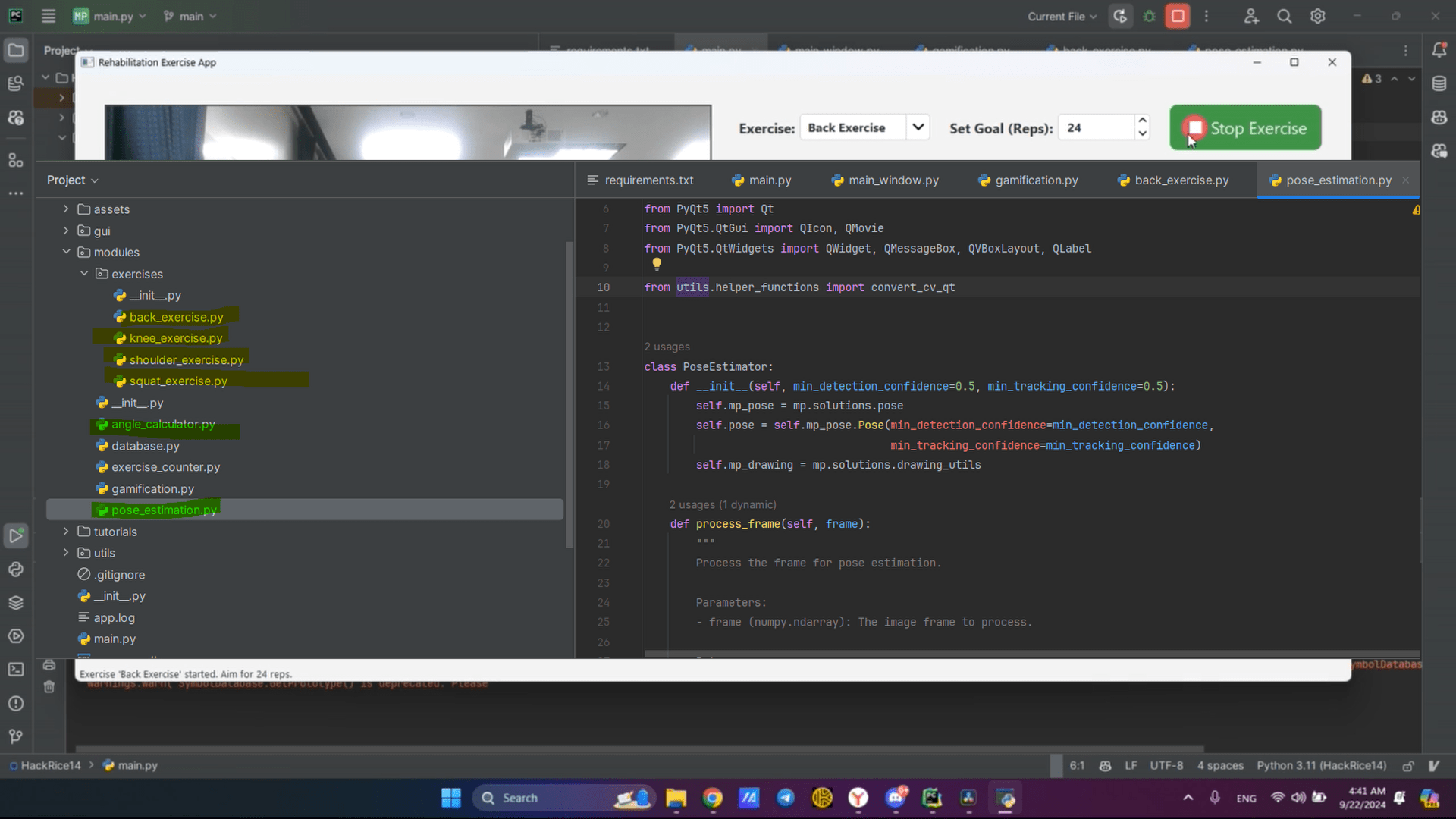
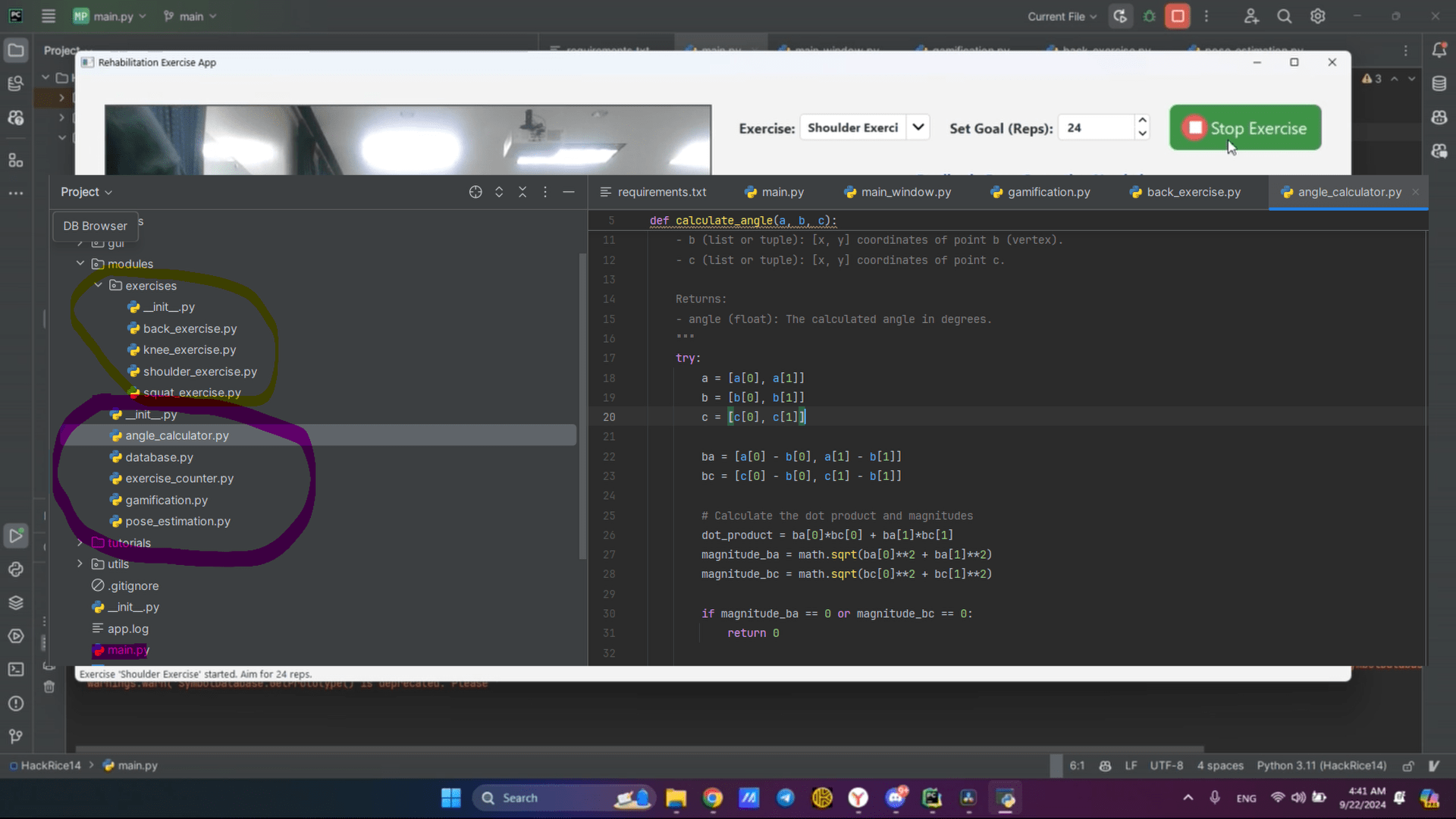
We built RestoreIO as a client-side application with a complete and user-friendly graphical interface using Python in PyCharm. The application incorporates libraries for motion tracking and body movement analysis, such as MediaPipe from Google, NumPy, OpenCV, and PyQt5 for the graphical interface. This combination allows RestoreIO to provide comprehensive feedback on recovery activities and make form-based improvement suggestions effectively.
Challenges We Ran Into
One of the main challenges was accurately identifying body movements in various settings, including different lighting conditions and backgrounds. Adjusting the computer vision model to account for these variances required extensive effort. Additionally, ensuring the app provided real-time feedback with minimal latency, especially when processing video feeds for quick form corrections, was particularly difficult.
Accomplishments That We're Proud Of
We successfully developed a real-time monitoring system that effectively tracks a variety of rehabilitation exercises. A significant achievement of RestoreIO is its ability to act as a physician during daily recovery workouts, providing prompt feedback on form. Furthermore, we managed to balance incorporating sophisticated AI functionalities while keeping the app lightweight and user-friendly.
What We Learned
During the development process, we gained valuable knowledge on implementing computer vision in dynamic, real-world environments. We learned how to overcome obstacles such as varying lighting conditions and diverse body types, and how to tweak algorithms for real-time performance. Additionally, we acquired practical expertise with Python libraries, enabling us to create a seamless experience for patients undergoing rehabilitation using the PyQt5 library for the user interface.
What's Next for RestoreIO
In the future, we aim to enhance RestoreIO by integrating machine learning models that can forecast and recommend customized recovery activities based on the user's injury history and level of rehabilitation. Our focus will continue to be on helping individuals restore mobility after surgeries like knee replacements. Additionally, we plan to incorporate compatibility with wearable devices to provide more comprehensive tracking and progress monitoring. Lastly, we intend to gamify the rehabilitation process by allowing users to track their progress, set recovery goals, and engage in motivating challenges.


Log in or sign up for Devpost to join the conversation.