-

The logo of the website
-
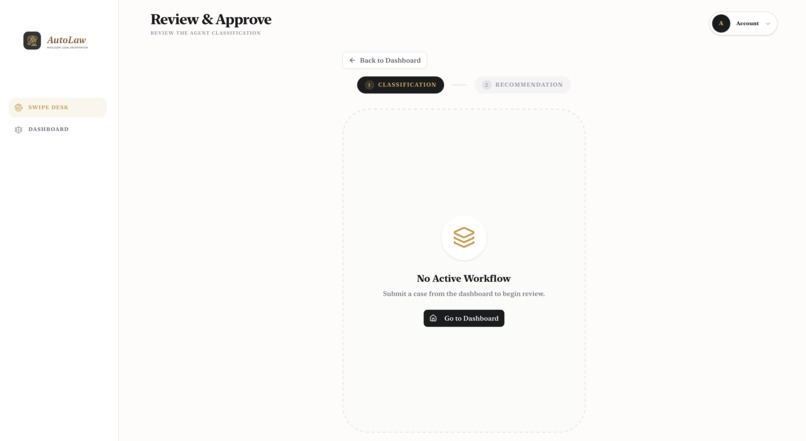
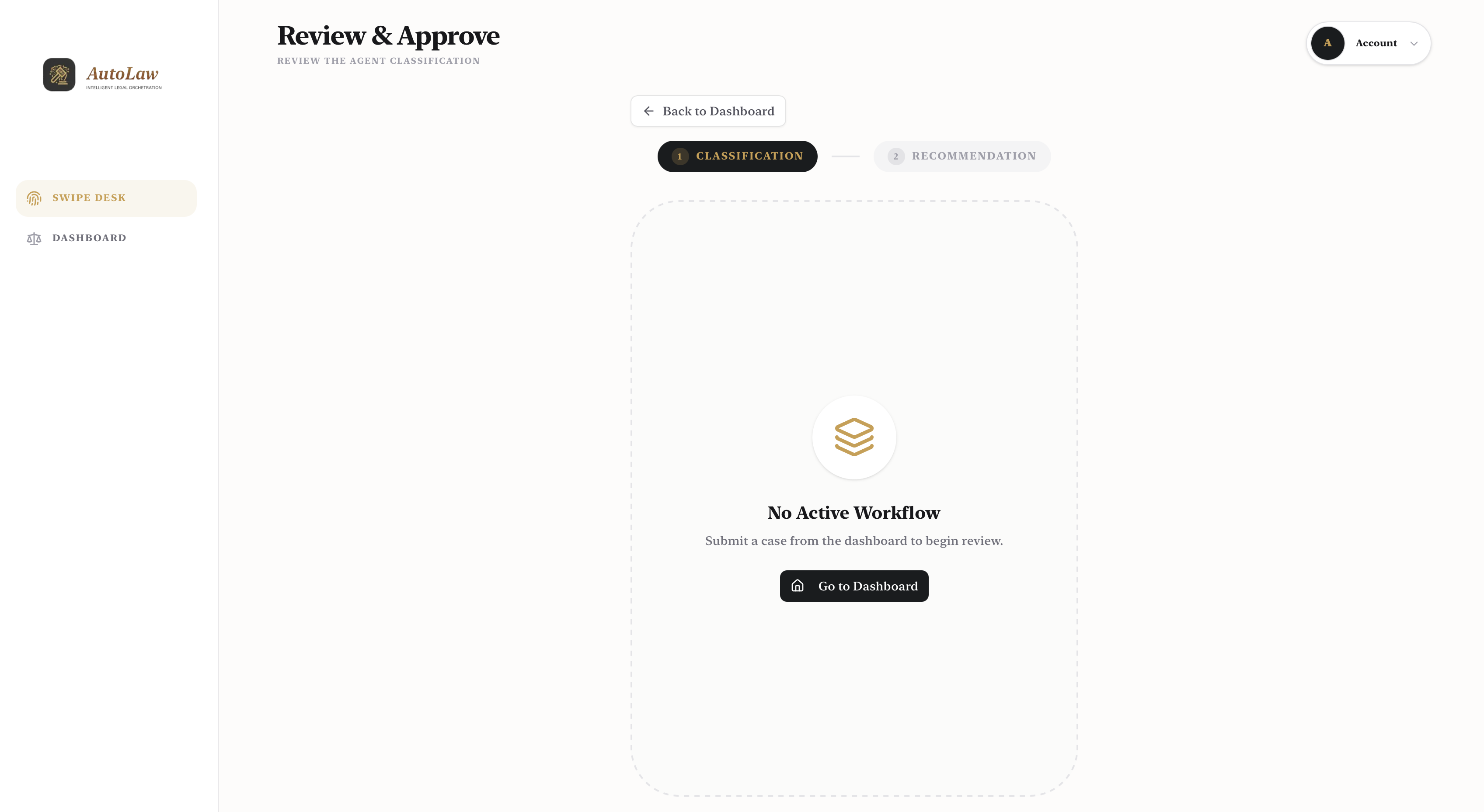
Swiping left/right on an action to utilize an AI Agent
-
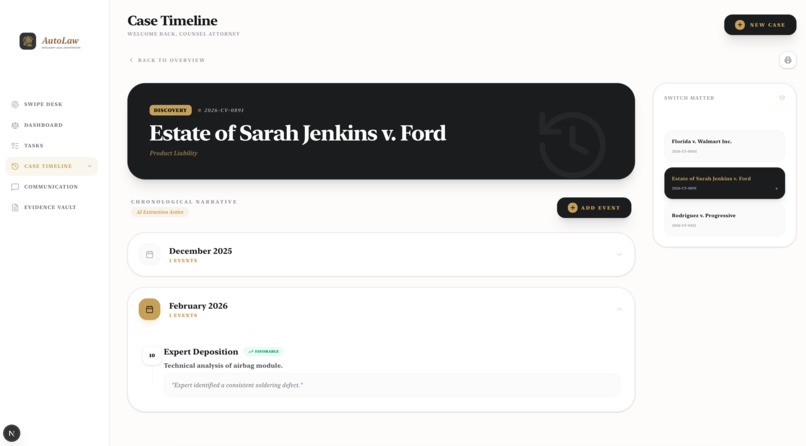
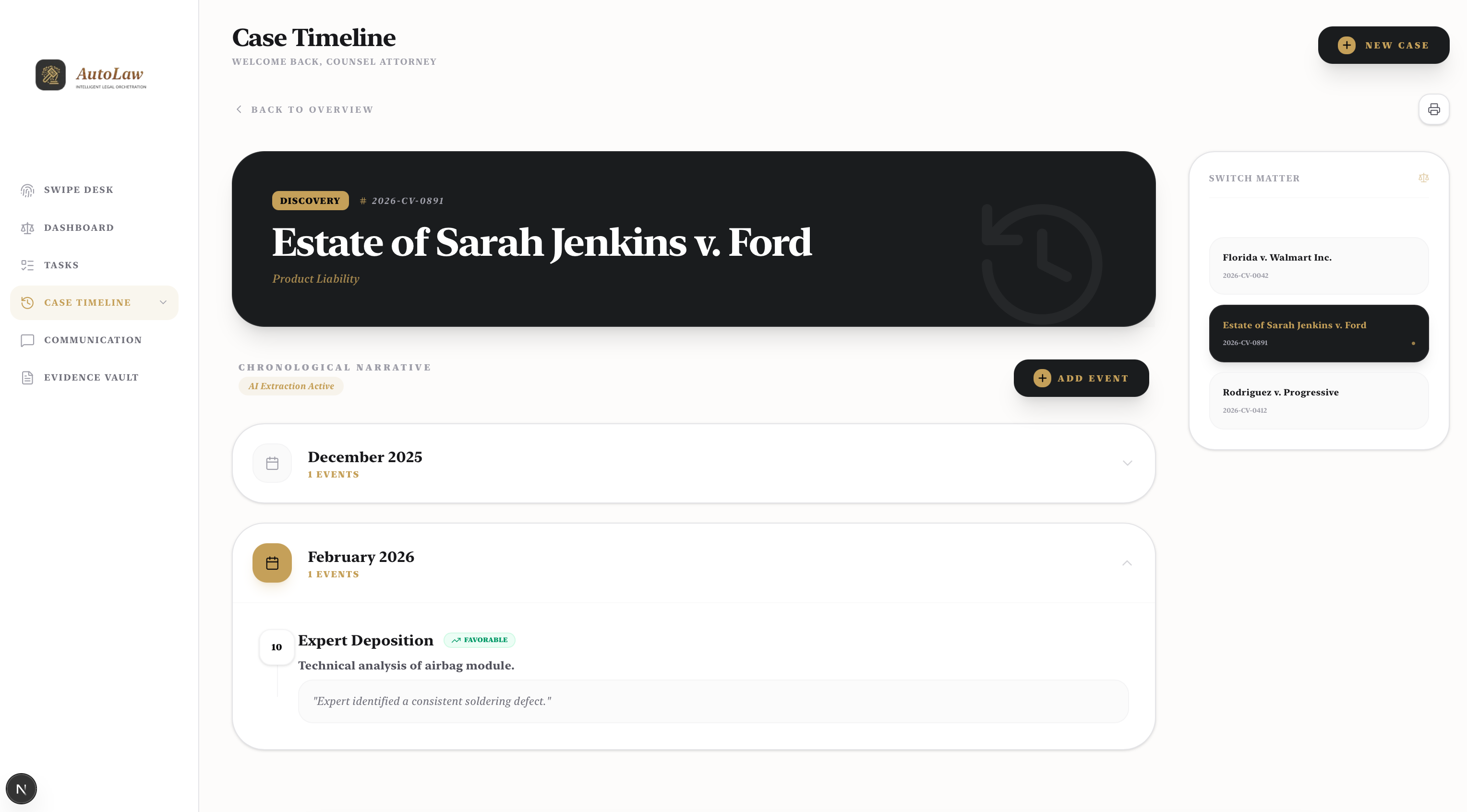
Viewing the timeline of a case
-
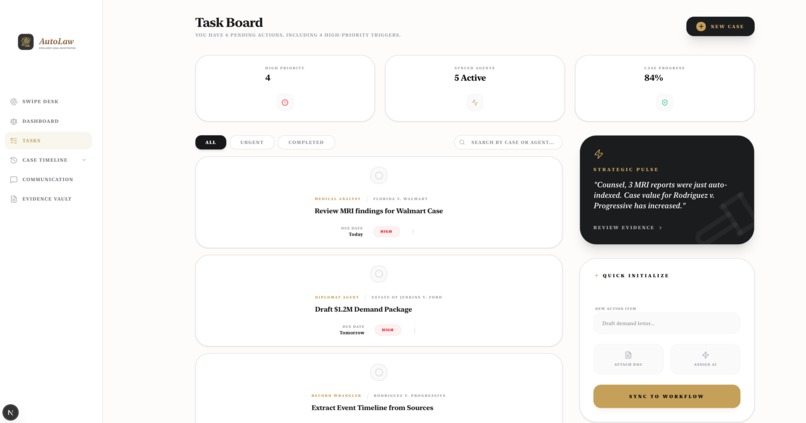
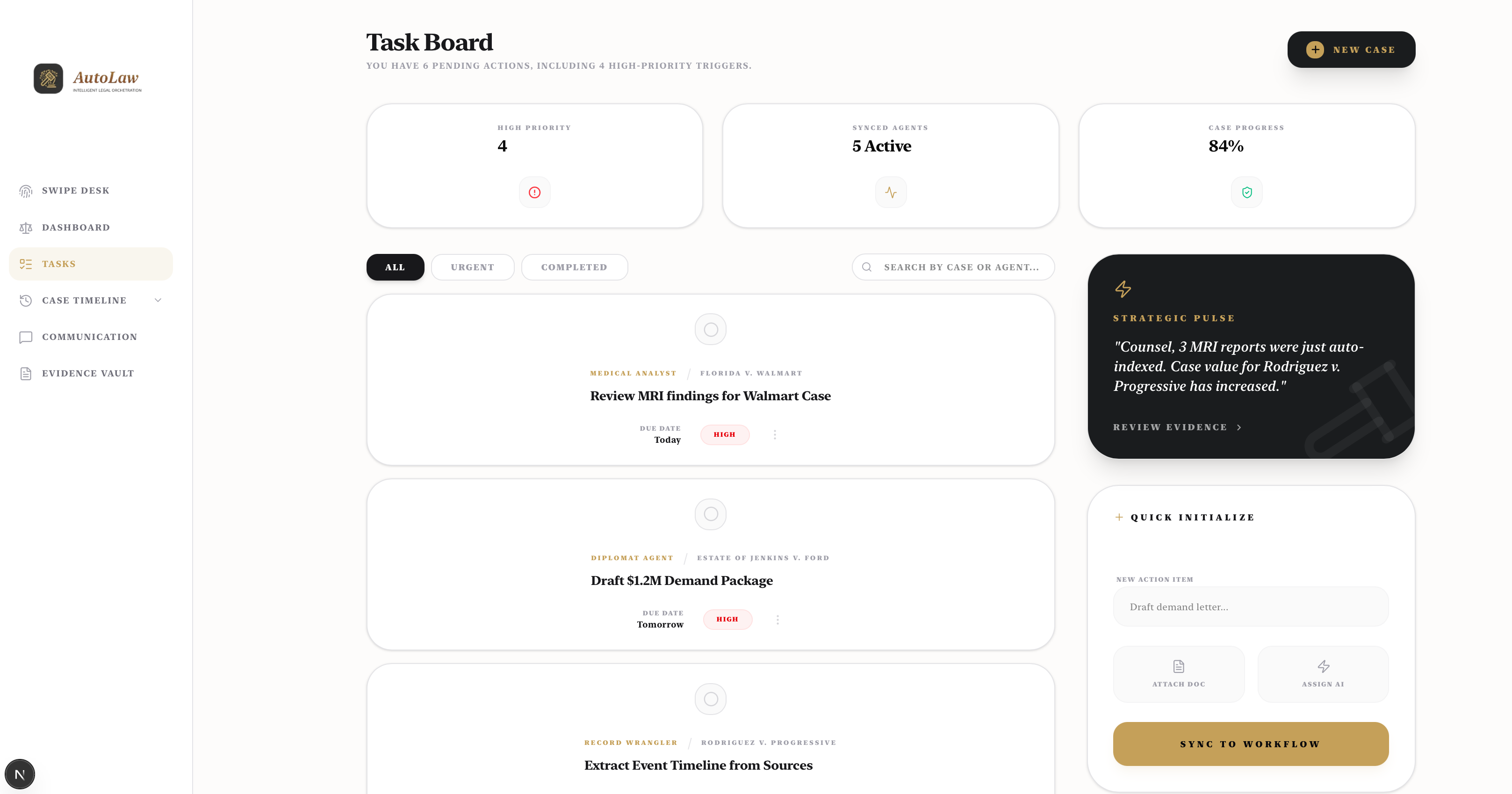
Observe the tasks that need attention

Inspiration
High-volume consumer law firms like Morgan & Morgan handle overwhelming amounts of messy, multi-channel input each day—emails, texts, portal messages, call transcripts, medical records, and attachments, often all tied to the same case. Simply identifying what actually needs attention can be time-consuming and costly for busy legal teams.
This challenge motivated us to explore how AI-assisted interfaces could help legal professionals quickly review incoming information, prioritize what matters most, and stay in control of every decision—without attempting to replace legal judgment.
This problem space led us to focus on:
- Reducing manual review effort in high-volume legal practices to help teams move faster and assist more people every day, affecting millions of people
- Helping legal teams quickly identify which inputs may require action so they can respond to high-priority items first and sorted accordingly
- Designing an intuitive review experience that makes decision-making fast, clear, and low-friction
- Ensuring lawyers remain in control through a human-in-the-loop process built directly into the interface
What it does
- Centralizes messy, multi-channel legal inputs such as emails, texts, client portal messages, documents, and call transcripts into a single dashboard
- Uses AI to summarize incoming items and surface potential next steps for review
- Presents recommendations through a swipe-based interface where users can accept, pass, or flag items for follow-up
Core experience
- A dashboard-first review system that reduces context-switching and information overload
- A swipe-based triage flow that enables fast decisions with minimal friction
- A human-in-the-loop workflow where every AI suggestion requires explicit user approval
- A feedback-aware system where user decisions inform how recommendations are presented over time
How we built it
- Frontend: Next.js (App Router), TypeScript, Shadcn UI
- Backend: FastAPI
- Database: PostgreSQL for cases, inputs, and review decisions
- LLM Access: OpenRouter (Claude, GPT-4, and others)
- Authentication: NextAuth.js
- Dev Tools: Docker, GitHub
Challenges
- Designing a dashboard that surfaces signal over noise from messy legal inputs
- Ensuring AI-generated summaries and suggestions were concise and reviewable
- Building a swipe-based UX that felt natural and useful rather than gimmicky
- Balancing speed and efficiency with the caution required in legal workflows
Accomplishments
- Built a functional review dashboard tailored to high-volume legal work
- Designed and implemented a swipe-right / swipe-left decision flow for legal triage
- Delivered a realistic end-to-end prototype focused on legal review and prioritization
- Maintained a human-in-the-loop design that keeps lawyers fully in control
What we learned
- UX decisions heavily influence trust in AI-assisted legal tools
- Fast prioritization can be more valuable than full automation
- Highlighting potential actionability is a strong first step in legal workflows
- Human oversight is essential in high-stakes, regulated domains
What’s next for AutoLaw
- Add confidence indicators and brief explanations for each recommendation
- Improve prioritization logic across different case types
- Introduce filtering and role-based dashboard views
- Explore real-world deployment and feedback from consumer law firms
Built With
- betterauth
- docker
- fastapi
- framermotion
- gemini
- git
- github
- langgraph
- next.js
- openrouter
- postgresql
- python
- shadcn
- typescript
- visual-studio



Log in or sign up for Devpost to join the conversation.