-
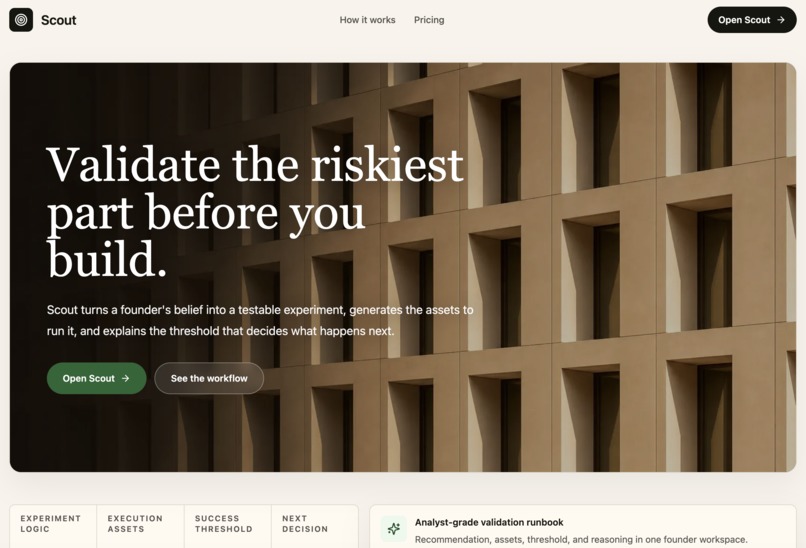
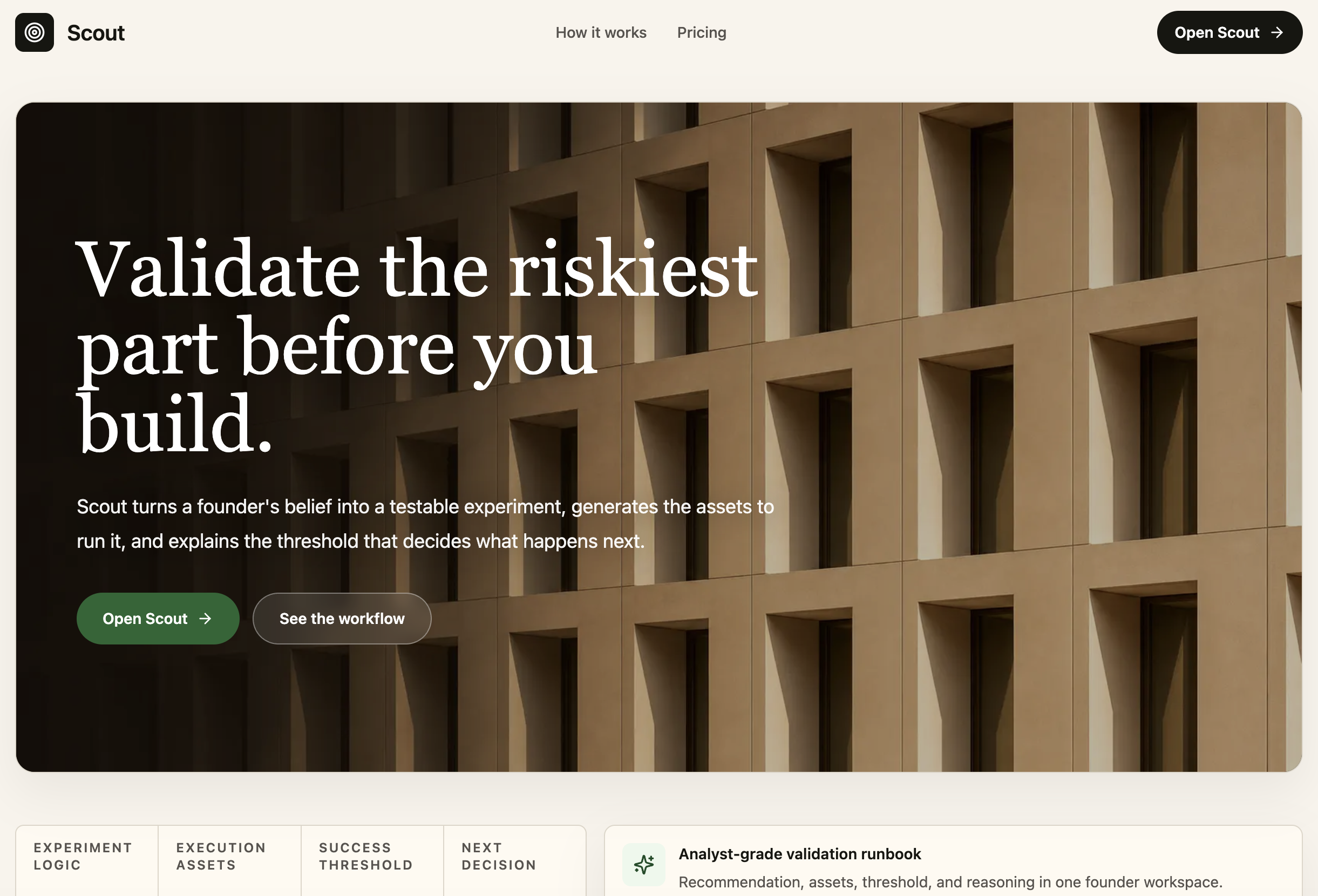
Scout Landing Page
-
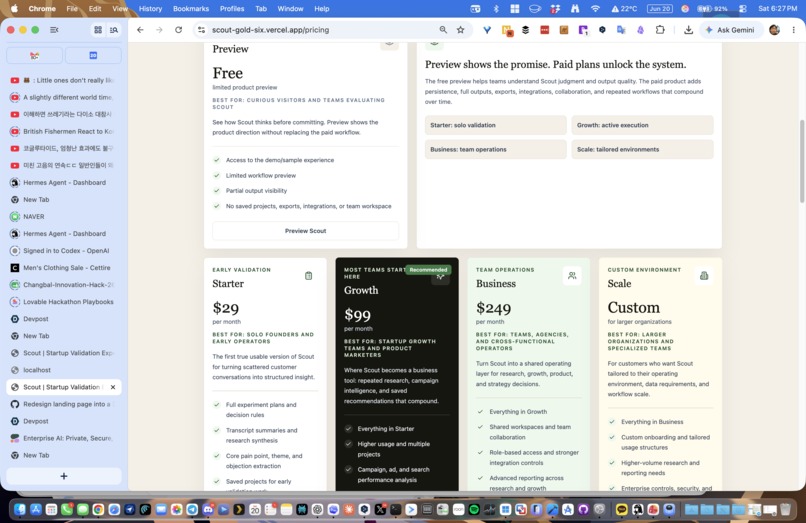
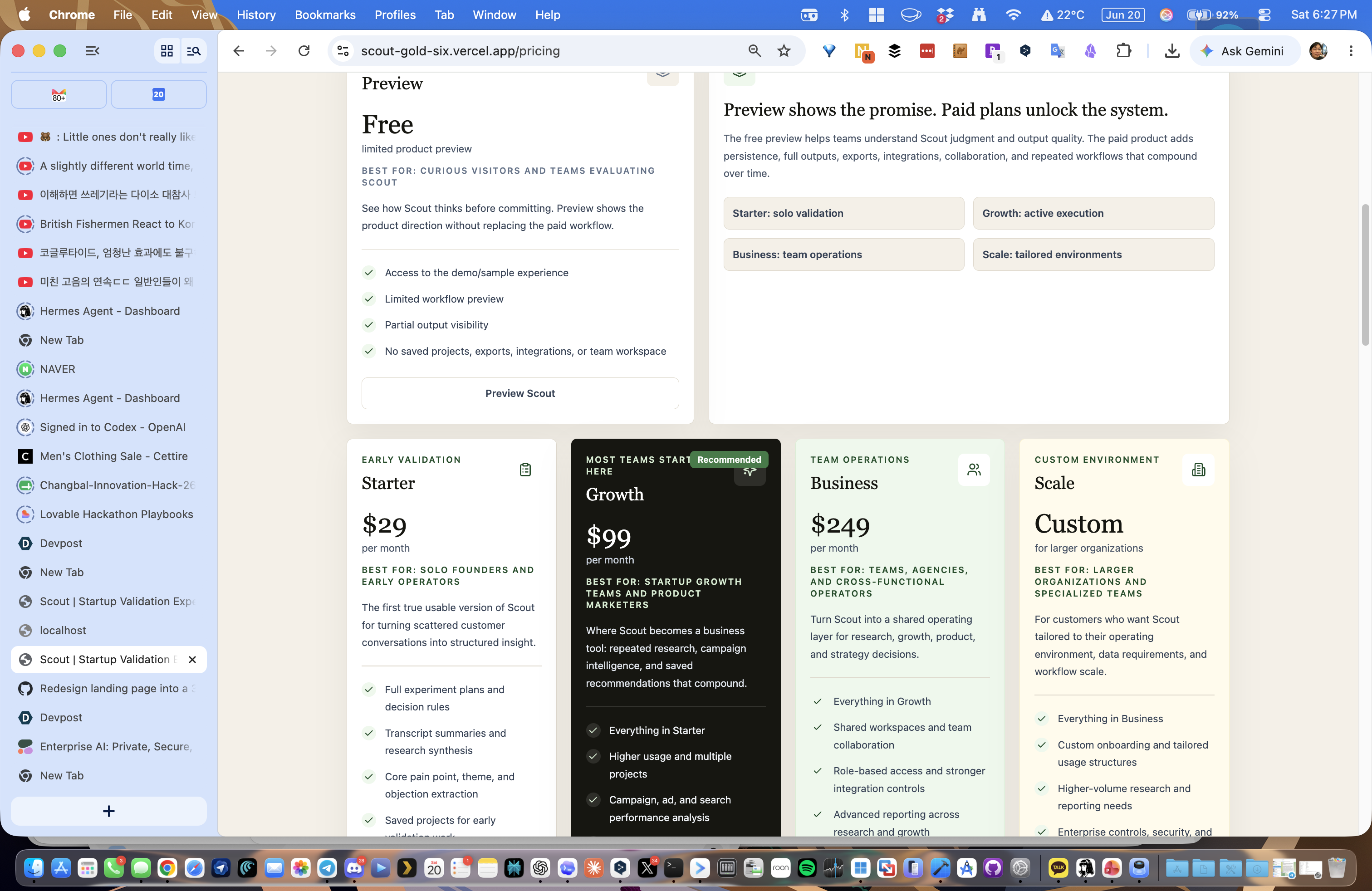
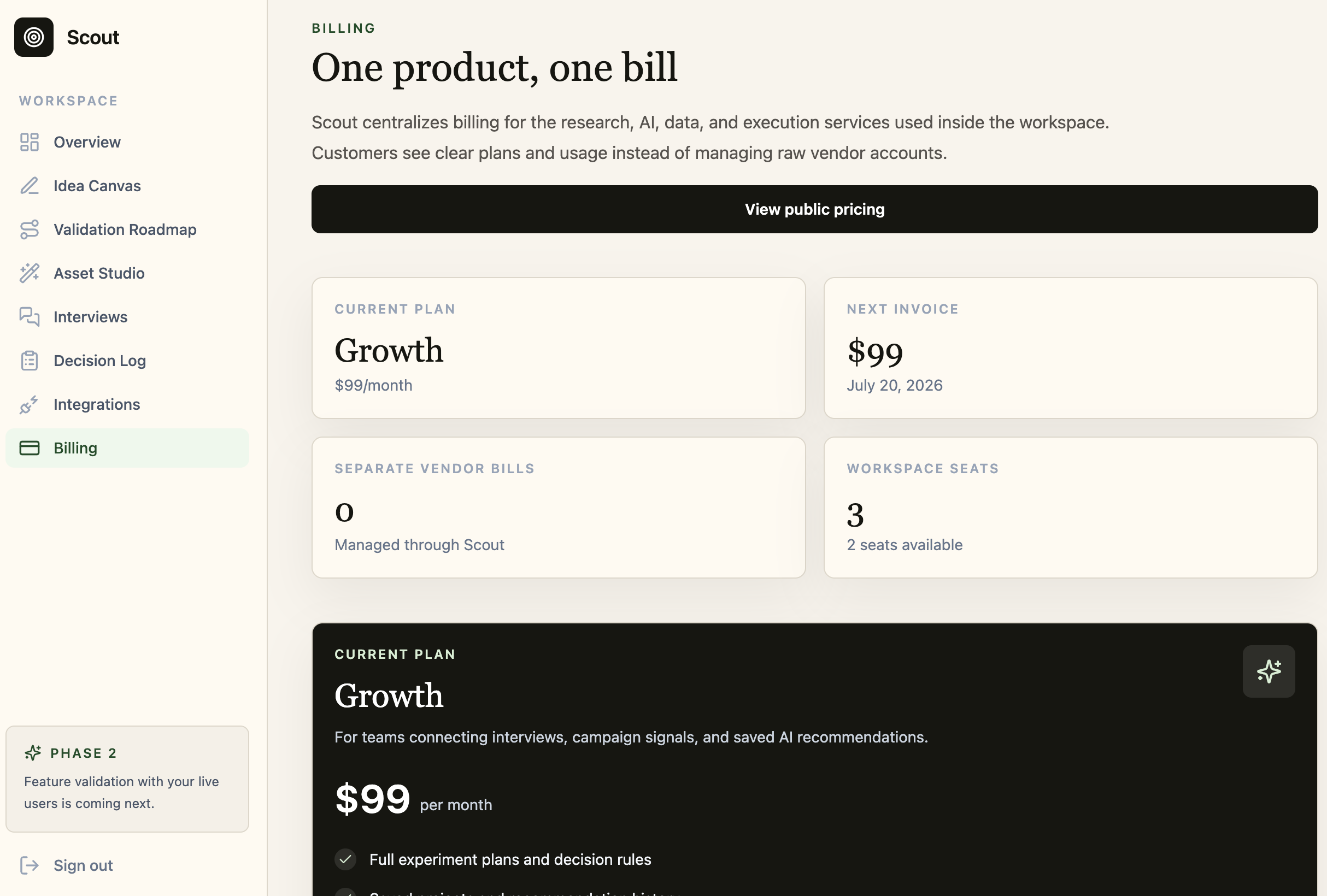
Pricing Tiers
-
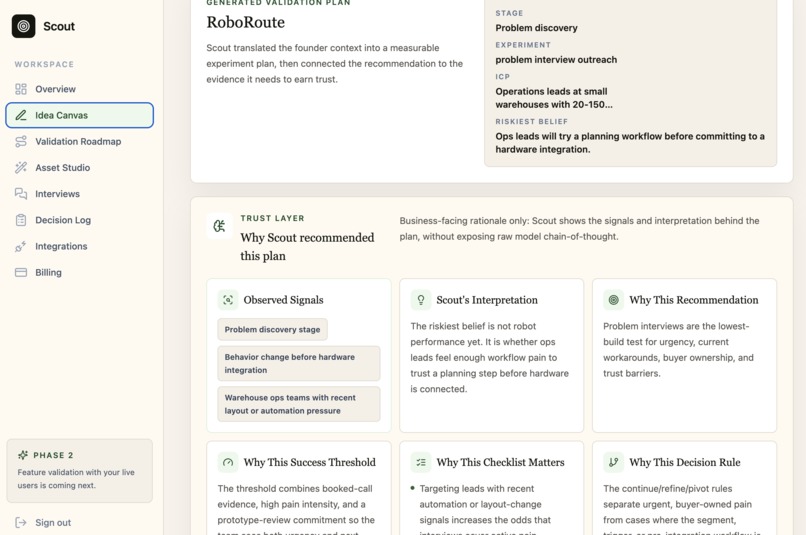
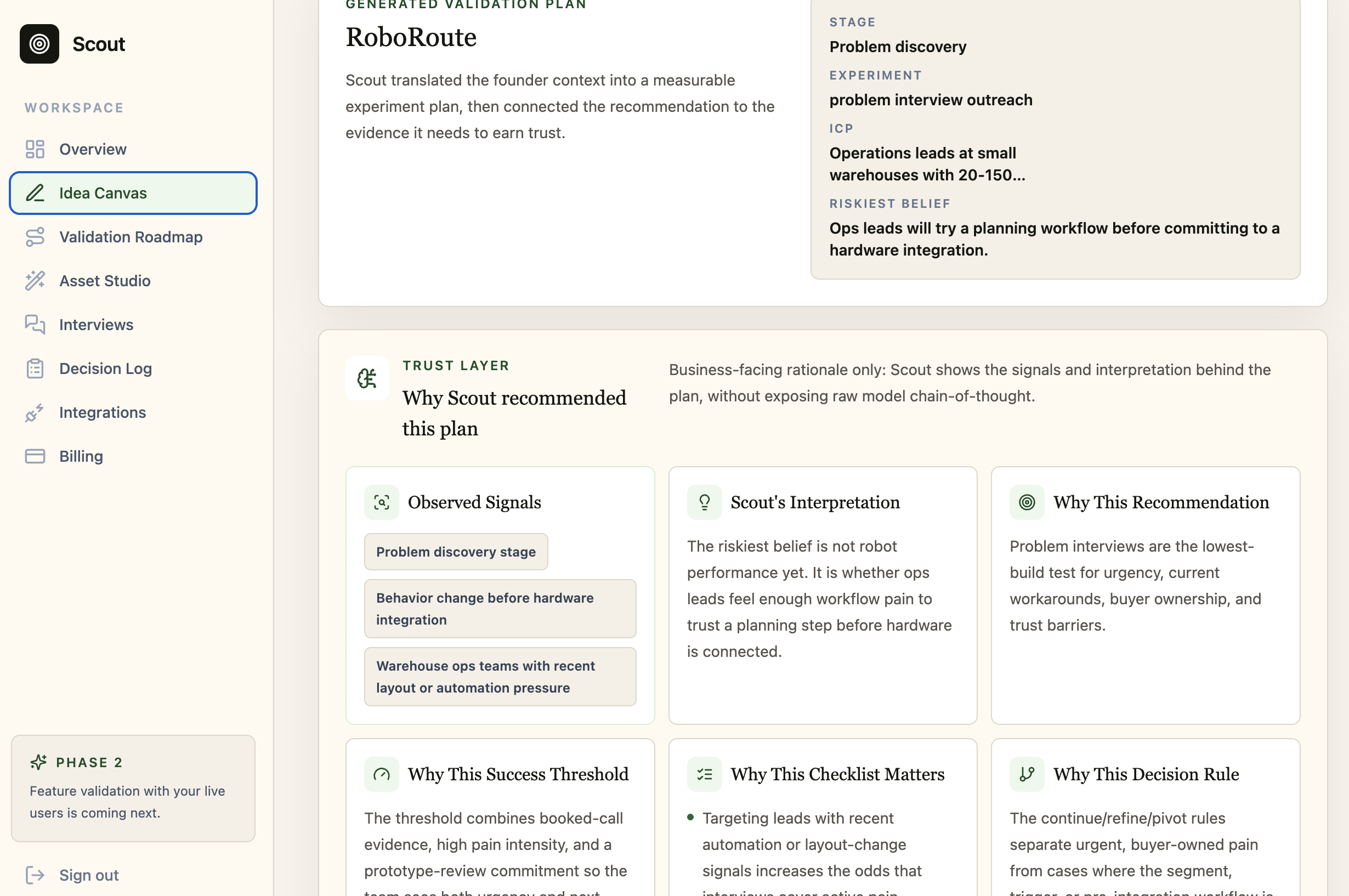
Idea Validation
-
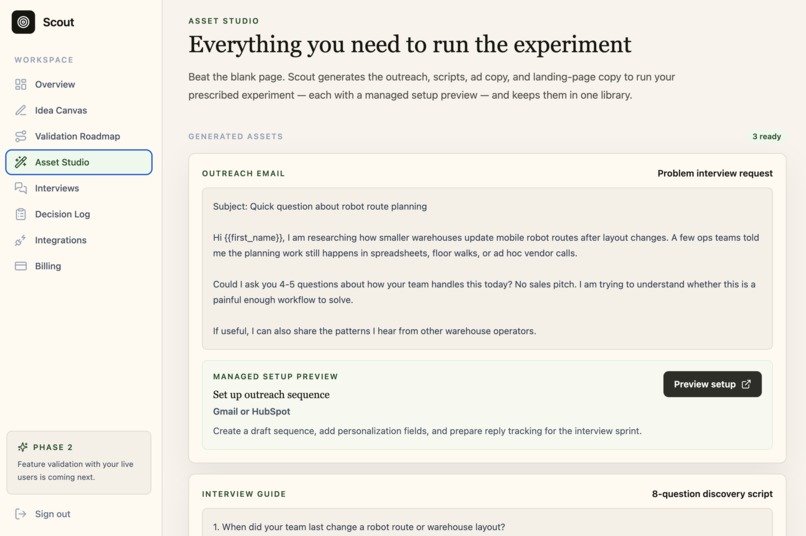
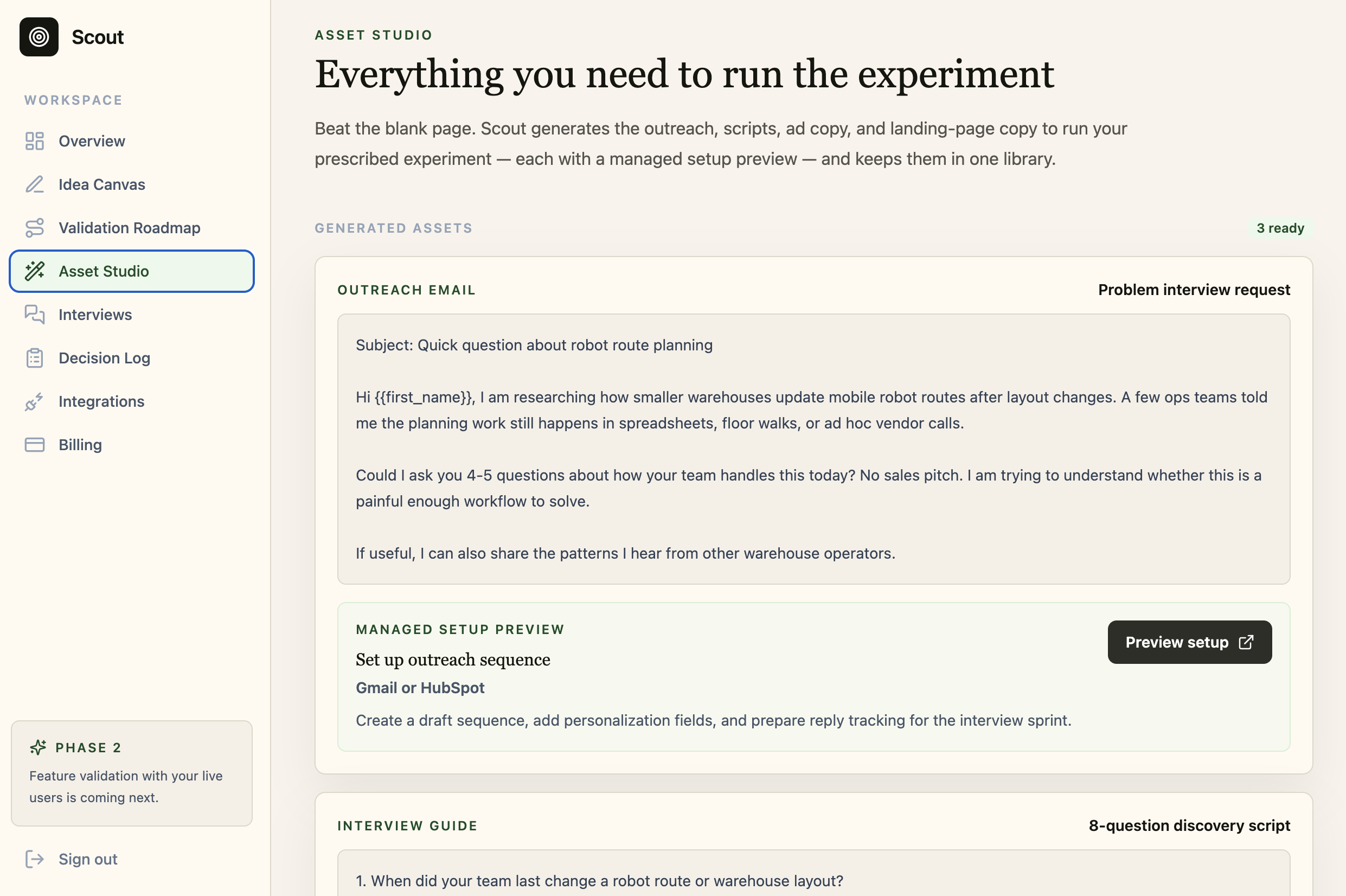
Asset Studio
-
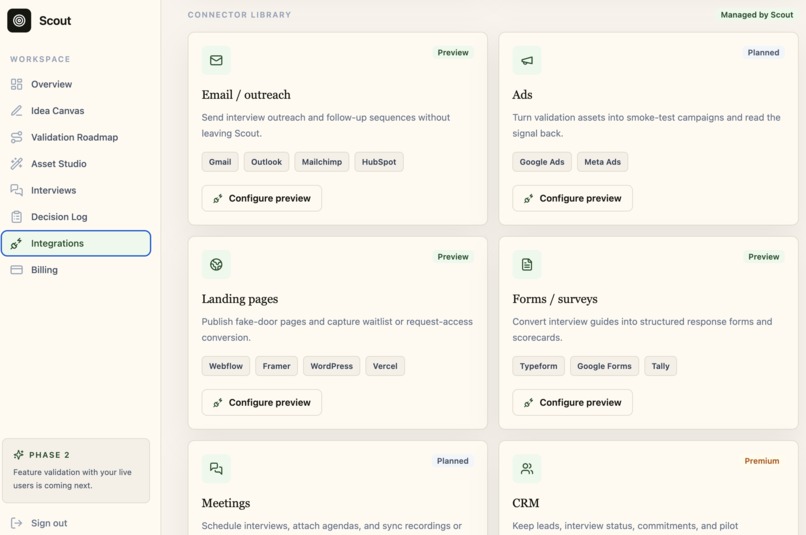
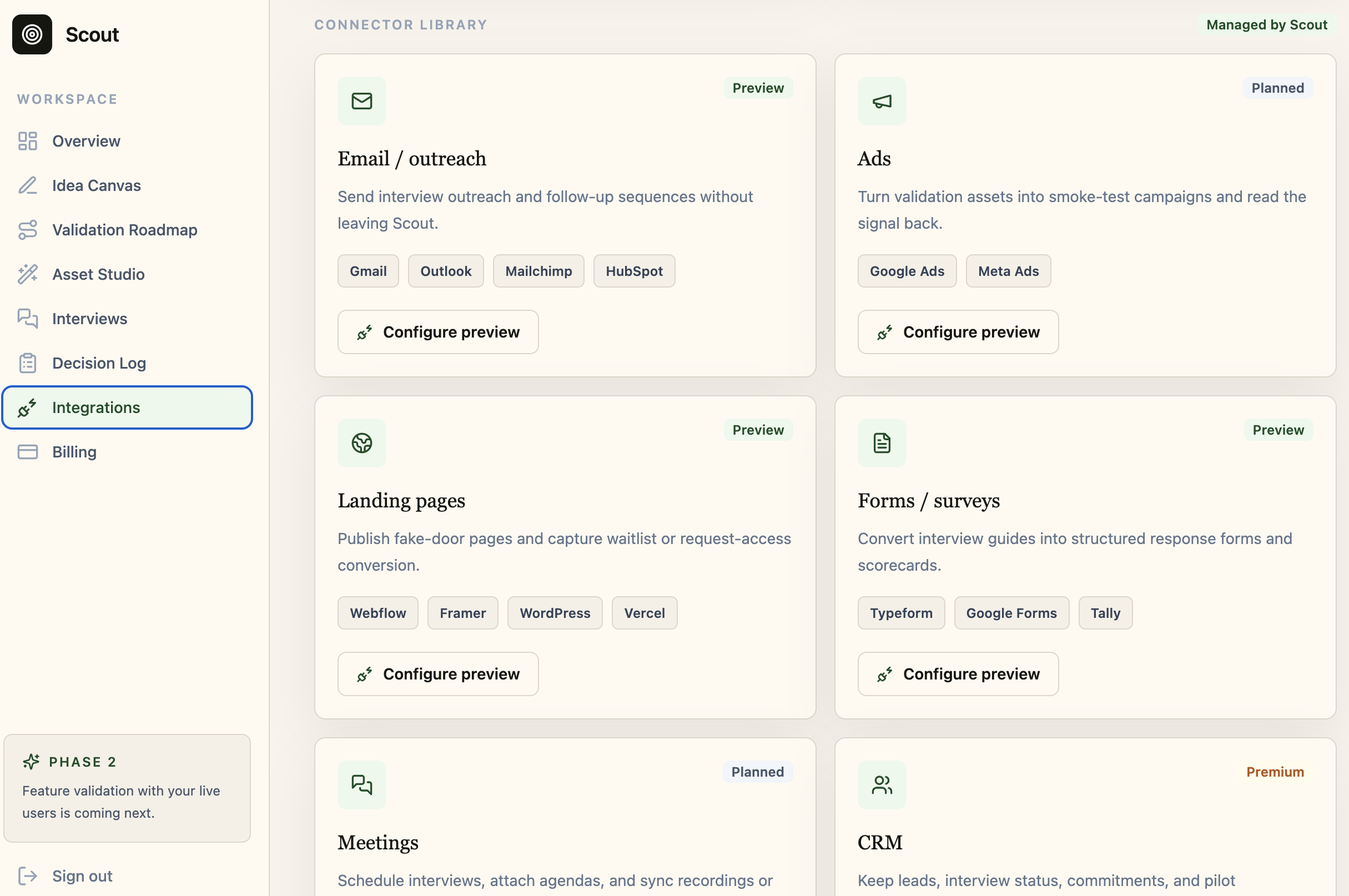
Tools Integration
-
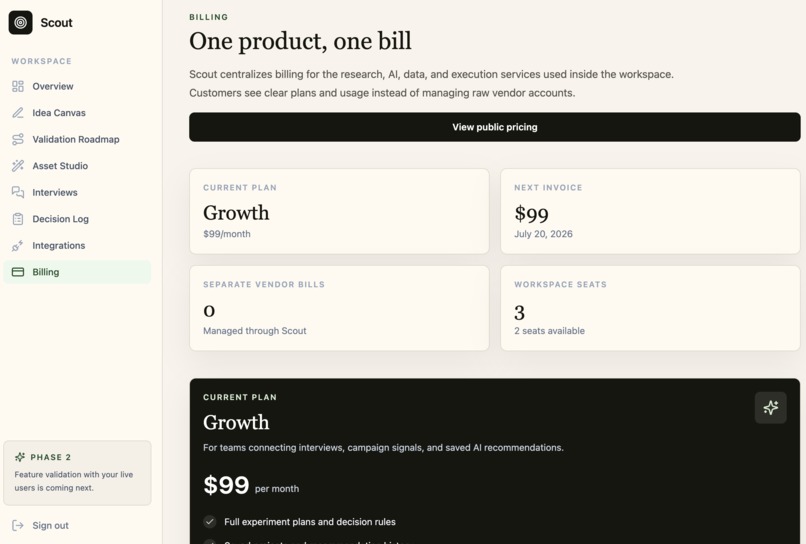
Centralized Billing
Scout
Inspiration
We were inspired by a common problem faced by founders, marketers, and growth teams: customer insight and performance data live in separate places, and that makes decision-making slow and fragmented.
Teams often have access to customer interviews, research notes, ad campaign dashboards, landing pages, and analytics tools, but they still struggle to answer a simple question: what should we change next?
We wanted to build a product that connects customer truth to growth execution. Instead of forcing teams to bounce between transcript tools, analytics dashboards, AI chat tools, and docs, we imagined a single workspace that could turn scattered signals into clear recommendations.
That idea became Scout.
What it does
Scout is an AI-powered research and growth intelligence workspace. It helps teams:
- ingest customer interviews and research
- transcribe and summarize conversations
- extract themes, pain points, objections, and key quotes
- connect qualitative insights with campaign and performance data
- generate actionable recommendations for messaging, experiments, and growth decisions
Rather than acting like a generic chatbot, Scout is designed as a decision-support system. It helps users move from raw input to strategic action.
How we built it
We built Scout as a web-based product experience focused on structured workflows rather than chat alone.
The product concept combines:
- a landing and product experience that explains the workflow clearly
- pages for research, transcript, insight, and pricing flows
- a pricing model centered around free preview and paid unlock
- a product narrative that abstracts away vendor complexity and presents Scout as one unified platform
On the technical side, we combined modern web app tooling with AI-oriented workflows for content generation, analysis, and future integrations such as transcript processing and Google marketing data connections.
We also designed the business model and UX to reflect the product strategy: Scout should feel like one managed product, not a loose bundle of vendors.
Challenges we ran into
One major challenge was product definition.
At first glance, many AI products sound similar. There are already tools for transcript analysis, analytics dashboards, ad reporting, and copy generation. Our challenge was to define what makes Scout actually different.
We realized the key was not to position Scout as “another AI tool,” but as the bridge between customer conversations and growth decisions.
Another challenge was pricing and product packaging. Showing raw vendors and technical infrastructure created confusion. We had to rethink the pricing experience so that users would understand Scout as a unified product with managed setup and consolidated billing.
We also had to narrow our MVP aggressively for the hackathon so that the demo remained clear, focused, and pitchable.
What we learned
We learned that the hardest part of building an AI product is not just making AI outputs work. It is defining the workflow, value proposition, and decision-making layer around them.
We also learned that users do not want more fragmented tools. They want clarity, actionability, and a system that helps them move from insight to execution.
Most importantly, we learned that product positioning matters as much as technical capability. Scout became much stronger once we defined it as a unified intelligence workspace for growth rather than a generic AI assistant.
What’s next
Next, we would deepen the product in three directions:
- richer interview ingestion and transcript intelligence
- stronger integrations with tools like Google Ads, GA4, and Search Console
- more persistent recommendation memory and team collaboration workflows
Our vision is for Scout to become the operating layer where customer truth becomes growth action.
Built With
- claude
- codex
- css
- github
- next.js
- openai
- openclaw
- react
- tailwind
- typescript
- vercel


Log in or sign up for Devpost to join the conversation.