Inspiration
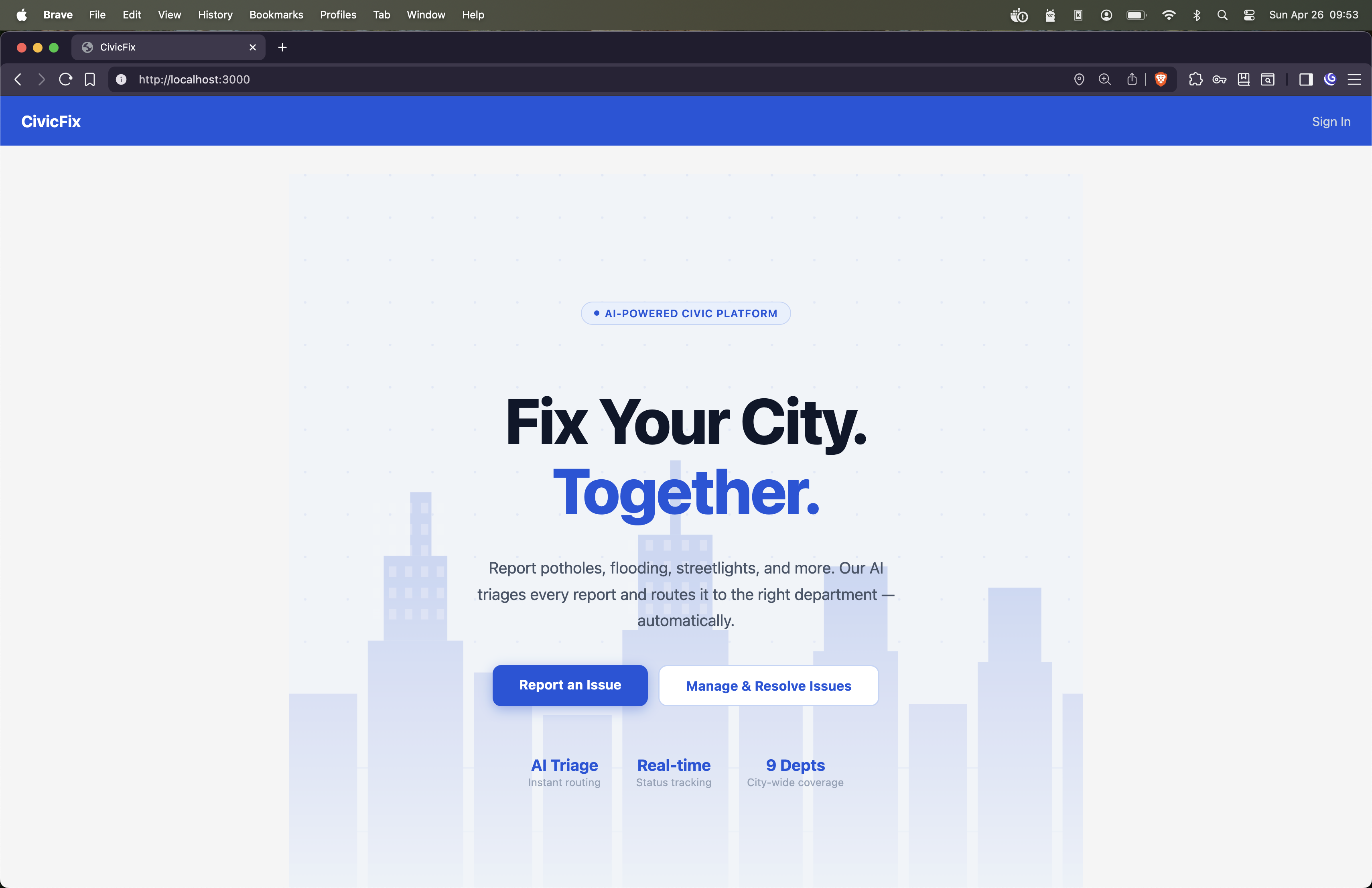
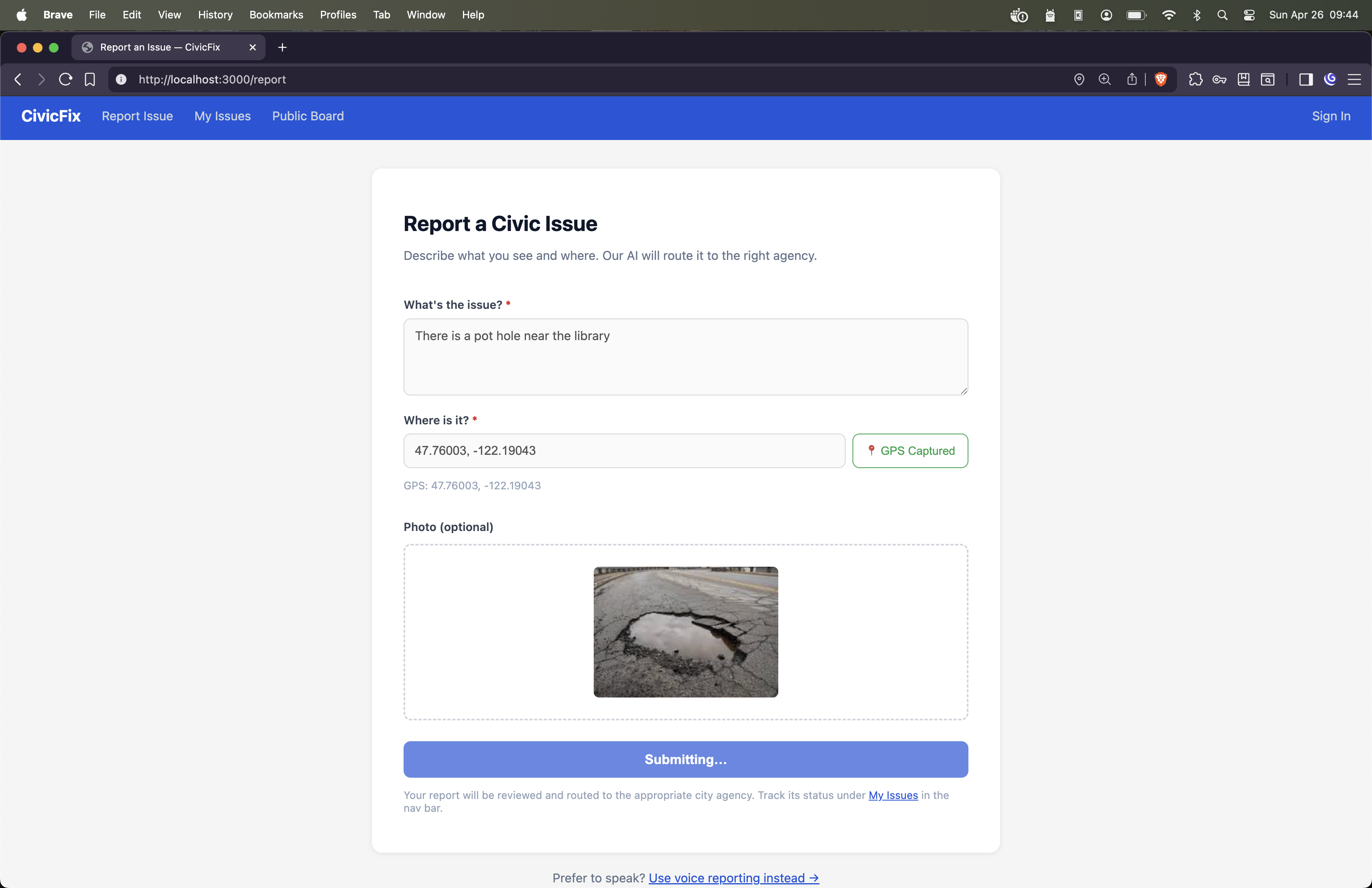
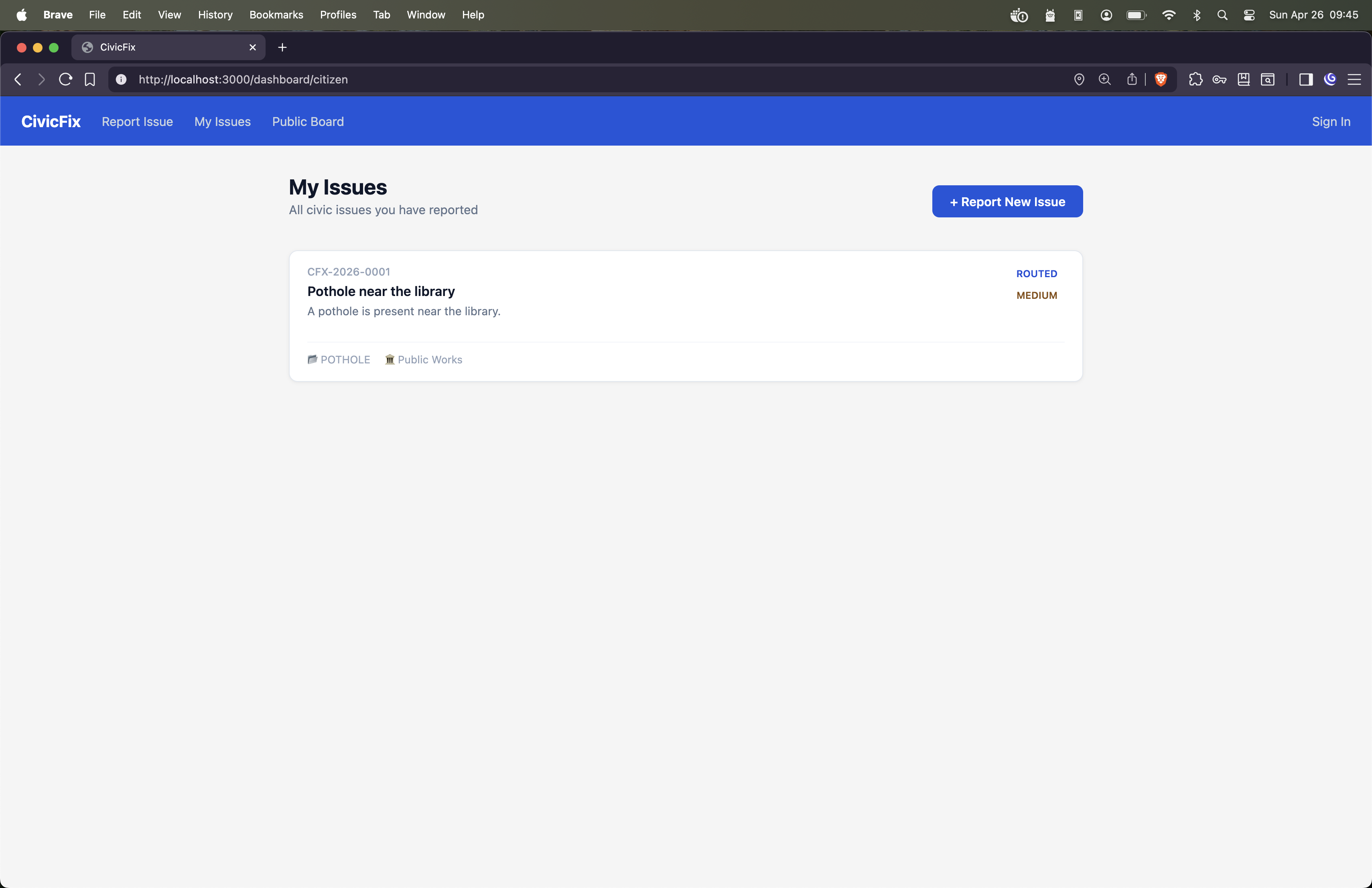
Residents often see civic issues like potholes, broken streetlights, overflowing trash, flooding, or unsafe sidewalks, but they may not know which government department to contact. We wanted to make reporting simple: describe the issue once, and let the system collect the right details, structure the report, and route it.
What it does
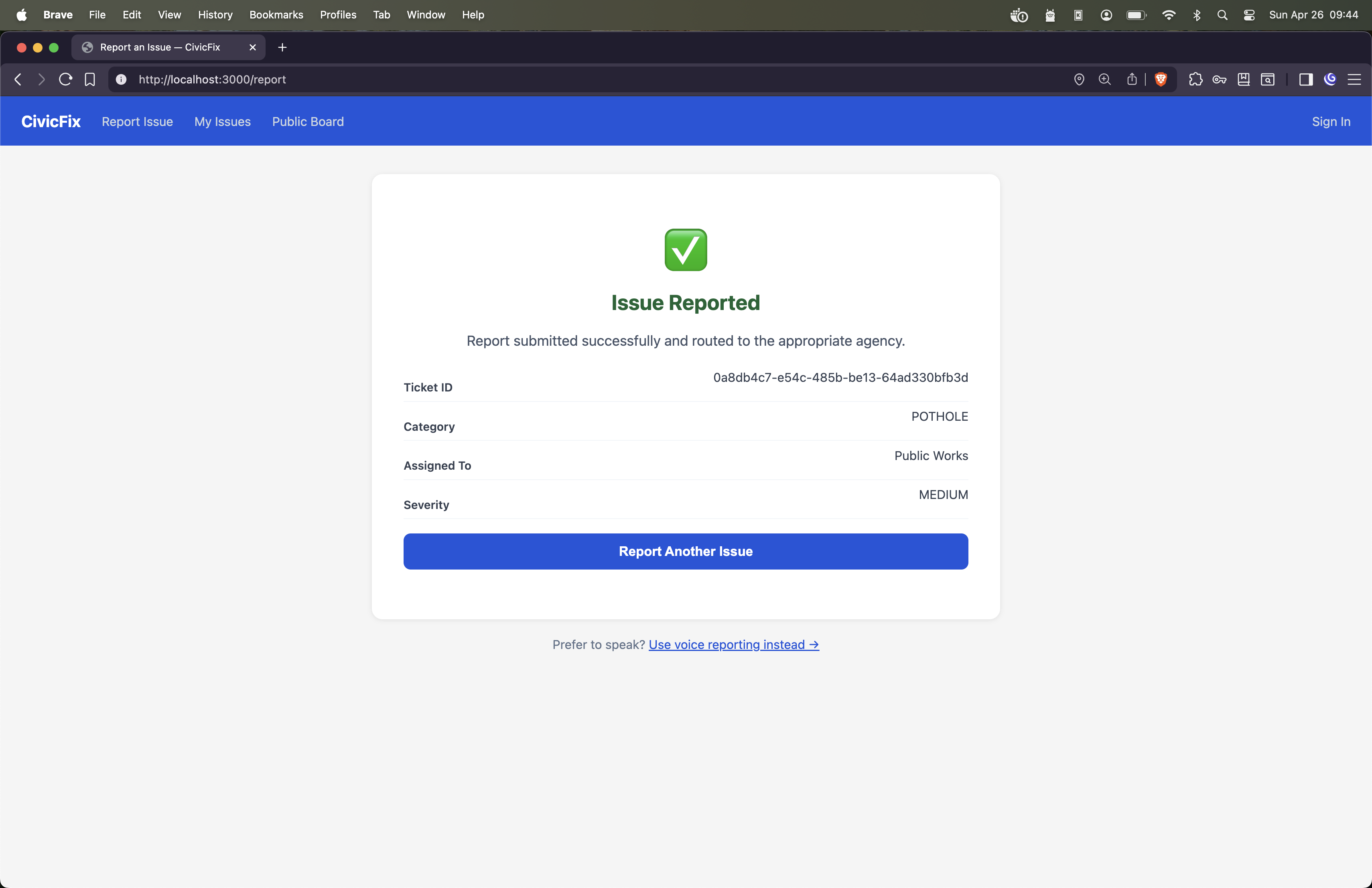
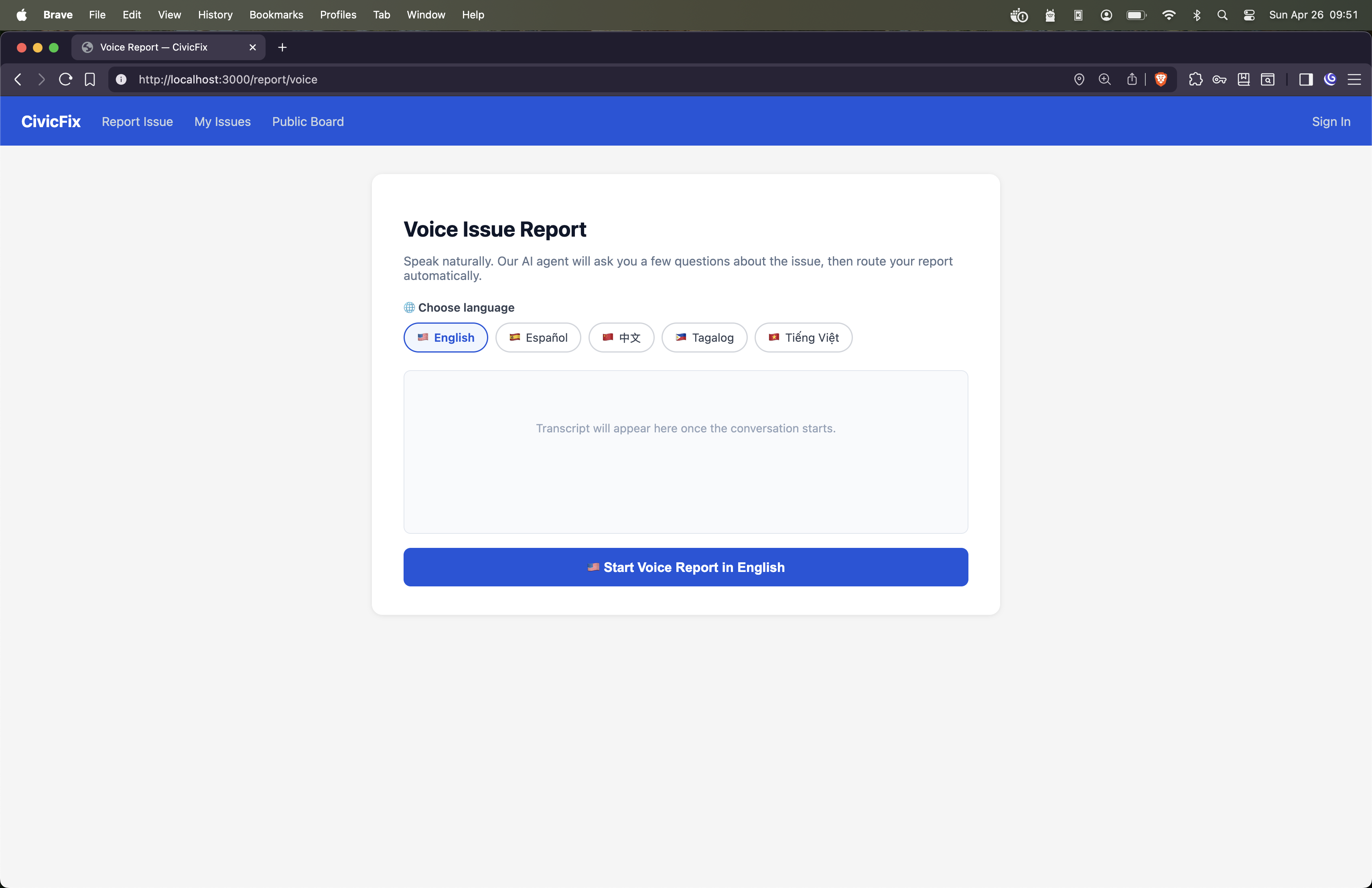
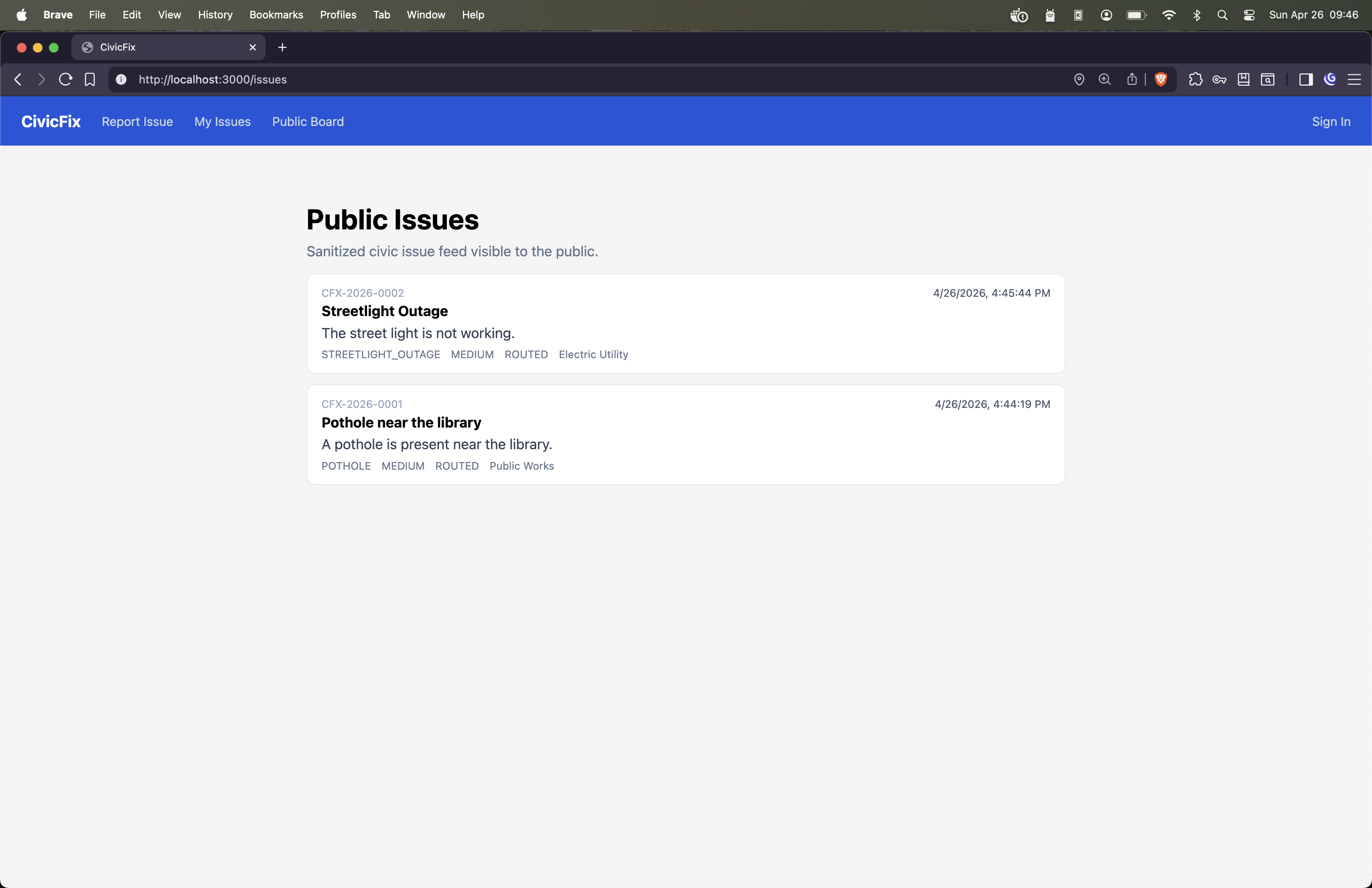
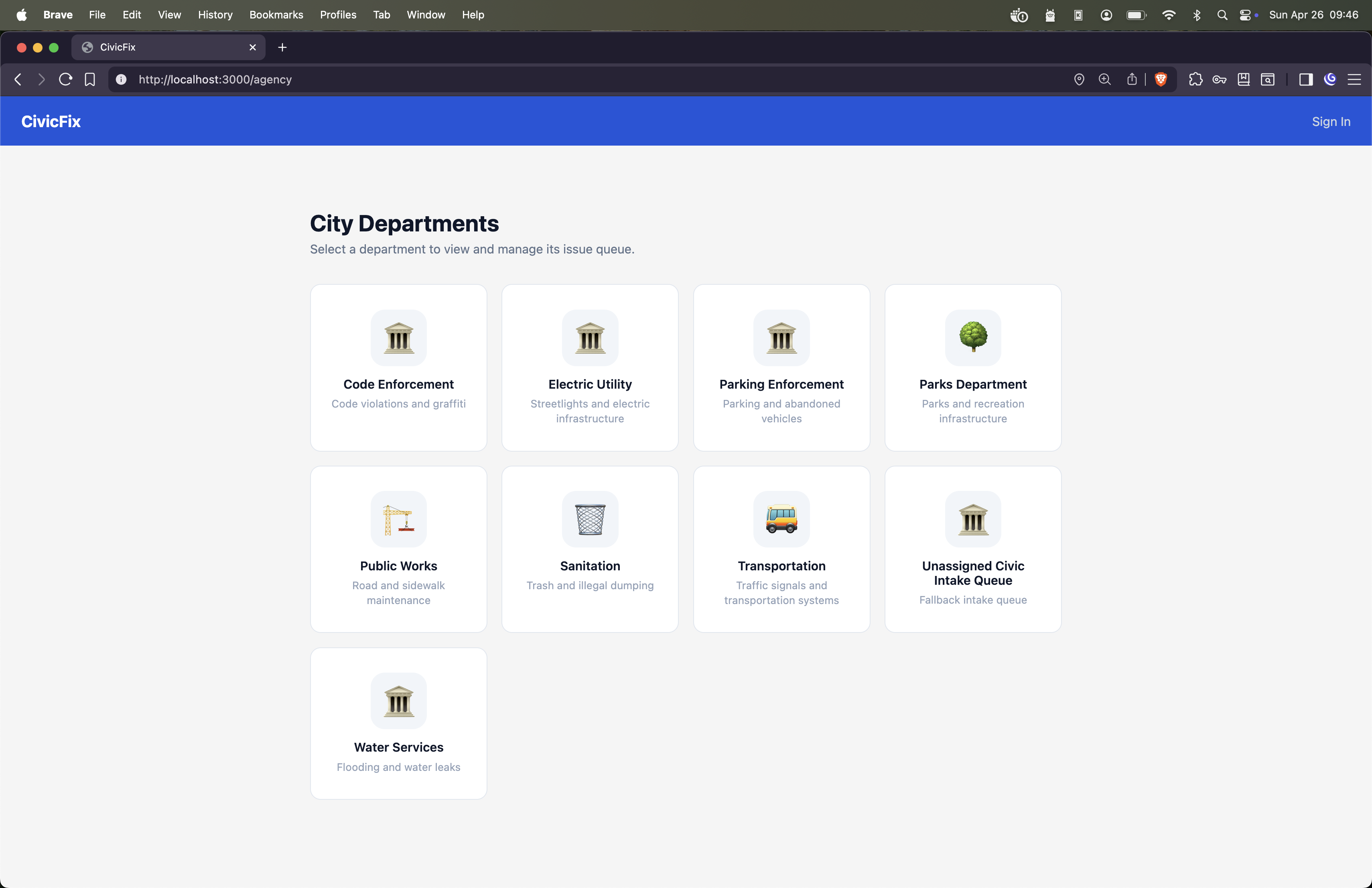
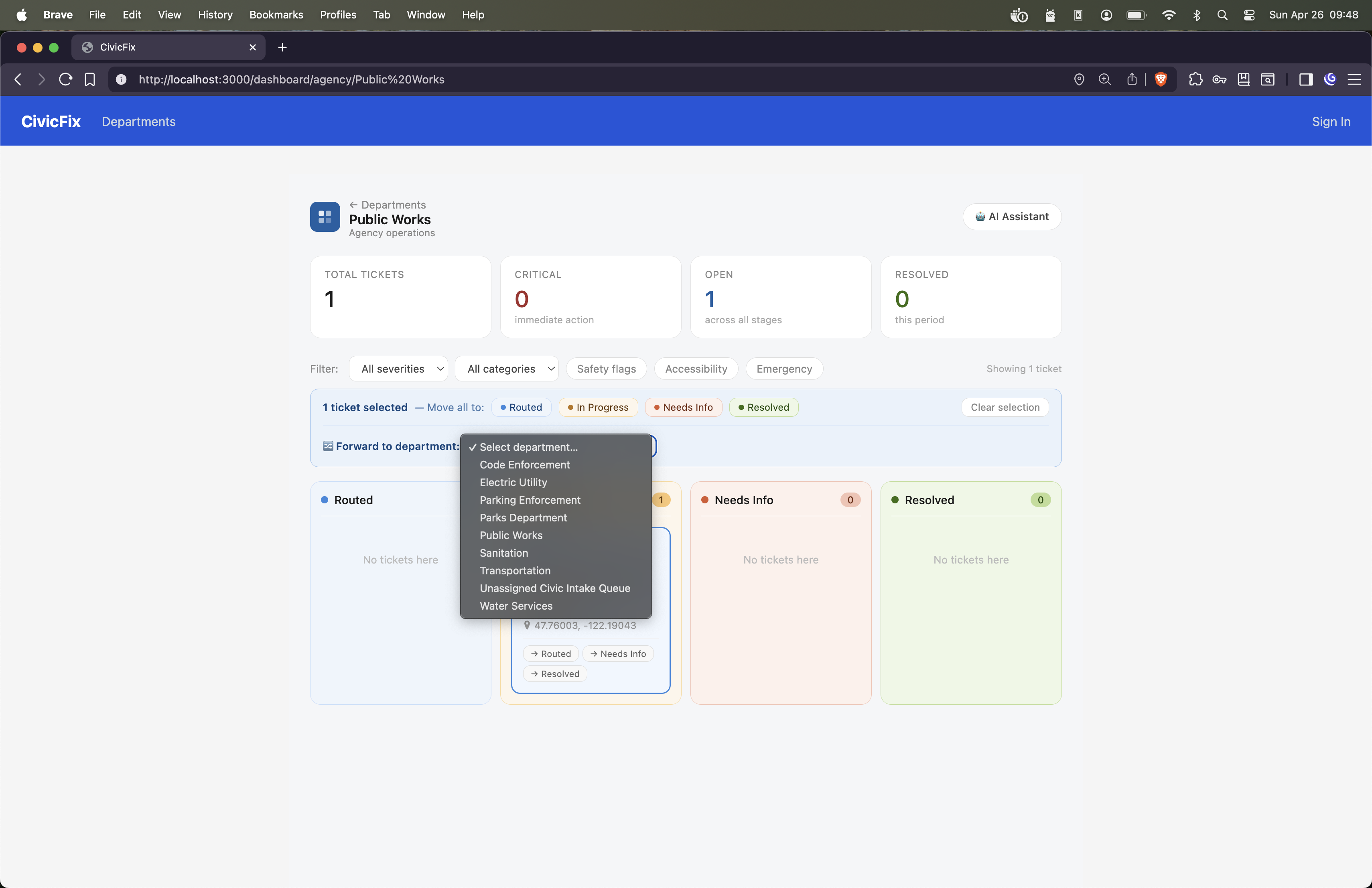
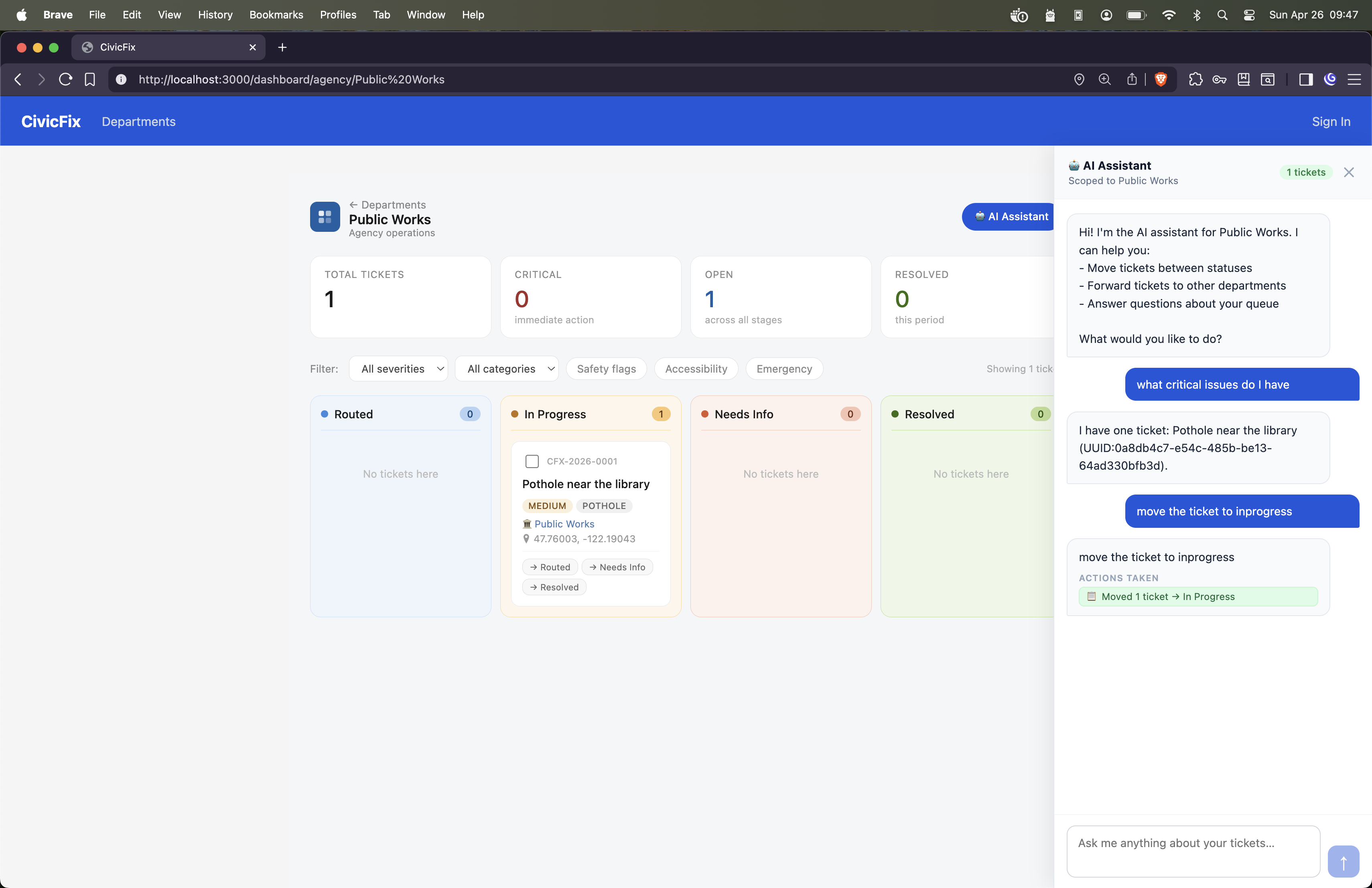
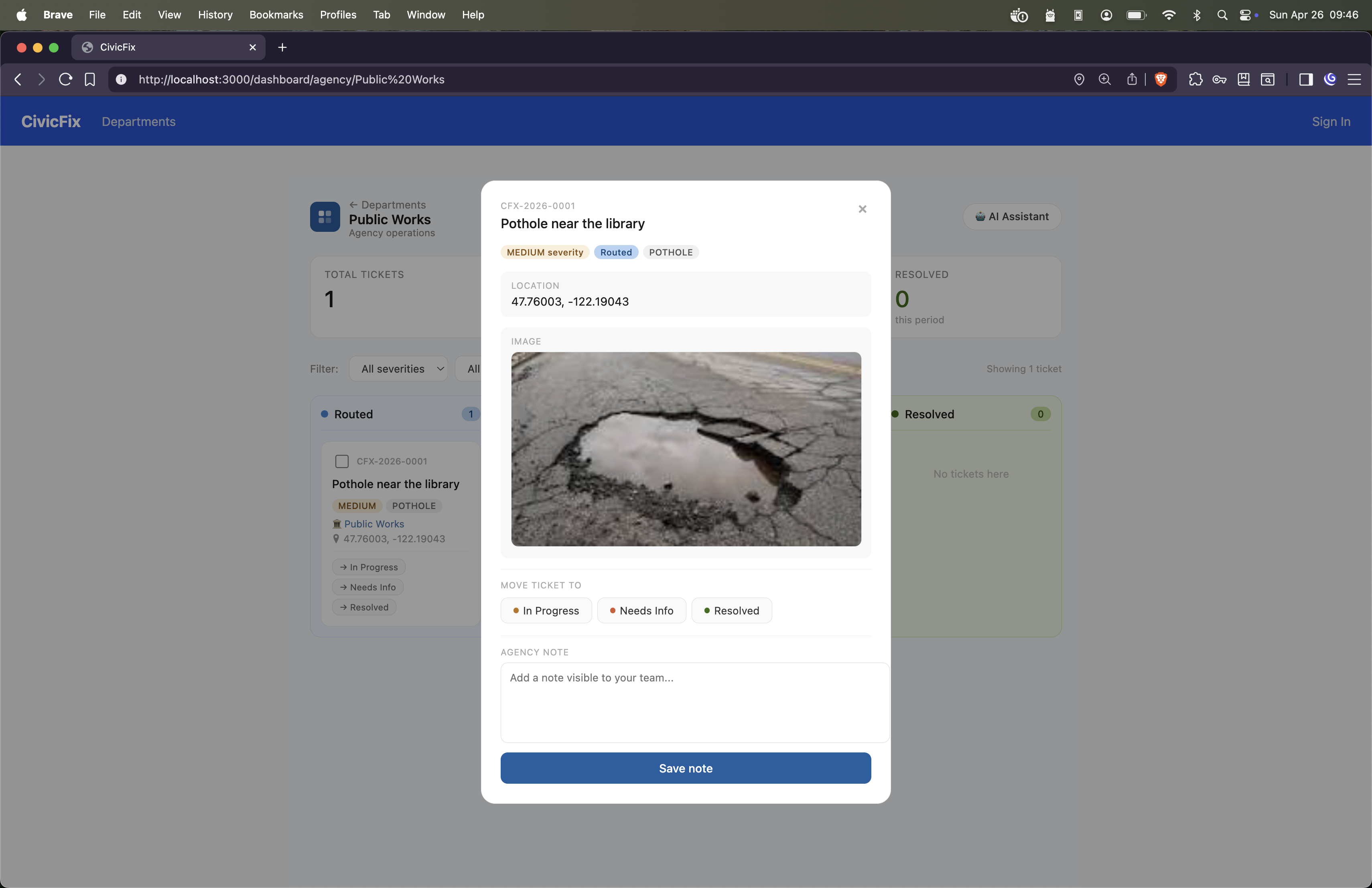
CivicFix lets residents report civic issues through a form or a multilingual voice agent. The ElevenLabs voice agent asks questions in the user’s chosen language and fills out the report details. Gemma 4, hosted locally, analyzes the report, classifies the issue, estimates severity, and creates a structured ticket. Tickets can be assigned, moved, or shared across multiple government departments when more than one department is involved.
How we built it
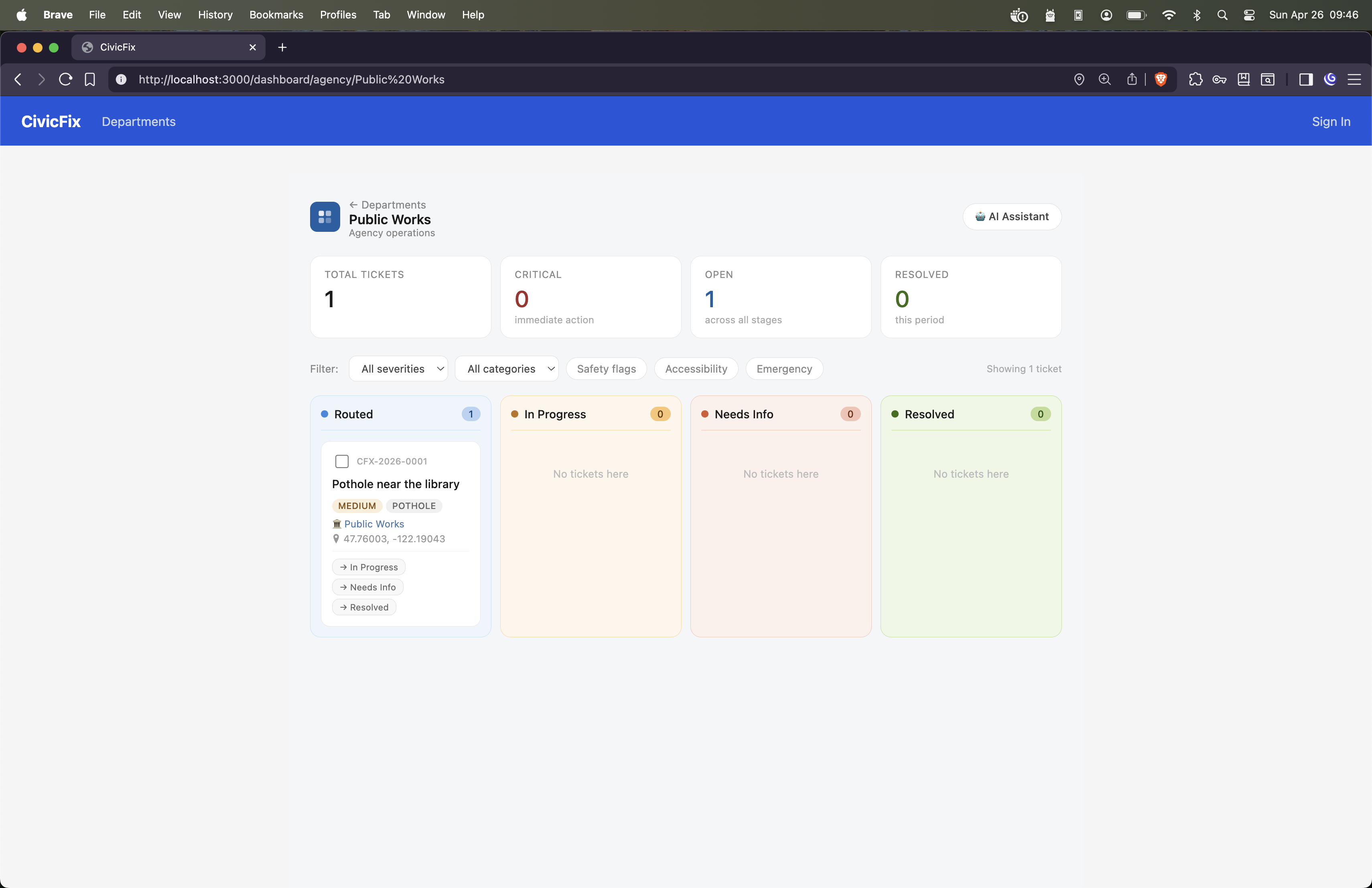
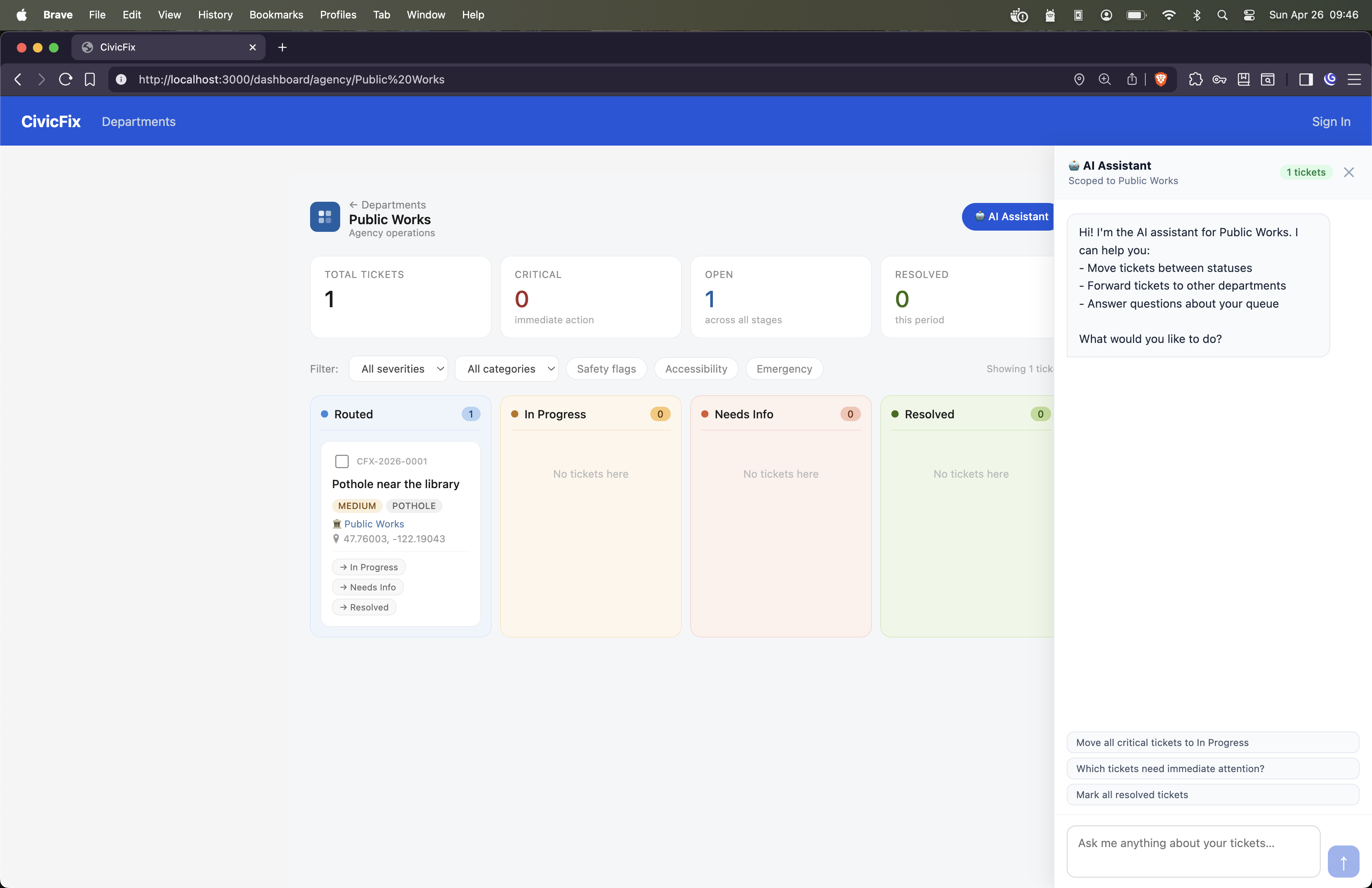
We built CivicFix as a web app with a resident reporting flow, a voice-reporting flow, a ticket system, and department dashboards. ElevenLabs powers the multilingual voice-based intake experience. Locally hosted Gemma 4 processes the collected information and turns it into structured civic tickets. The dashboard lets departments view, update, move, and coordinate on tickets.
Challenges we ran into
One challenge was adapting our original plan as the project evolved. We initially planned a more complex authentication and routing system, but focused instead on the strongest working features: AI ticket generation, multilingual voice intake, and department coordination. Another challenge was designing tickets that are simple for residents but detailed enough for departments to act on.
Accomplishments that we're proud of
We are proud that CivicFix became more than a basic issue-reporting form. It supports multilingual voice reporting, locally hosted AI processing with Gemma 4, structured ticket creation, and coordination across multiple government departments. We also built a workflow where tickets can move between departments or be shared when responsibility overlaps.
What we learned
We learned that civic reporting is not just about collecting complaints. The harder problem is collecting the right information, formatting it clearly, and getting it to the right department. We also learned how useful voice can be for accessibility and inclusion, especially when residents can report issues in different languages.
What's next for CivicFix
Next, we would add more roles, especially field workers who physically resolve issues. This would allow departments, workers, and residents to see live updates as work progresses. We would also add stronger status tracking, map-based issue views, duplicate issue detection, real government integrations, notifications, and deeper analytics for department workload and response times.
Built With
- docker
- elevenlabs
- gemma
- python
- typescript

Log in or sign up for Devpost to join the conversation.