-
-
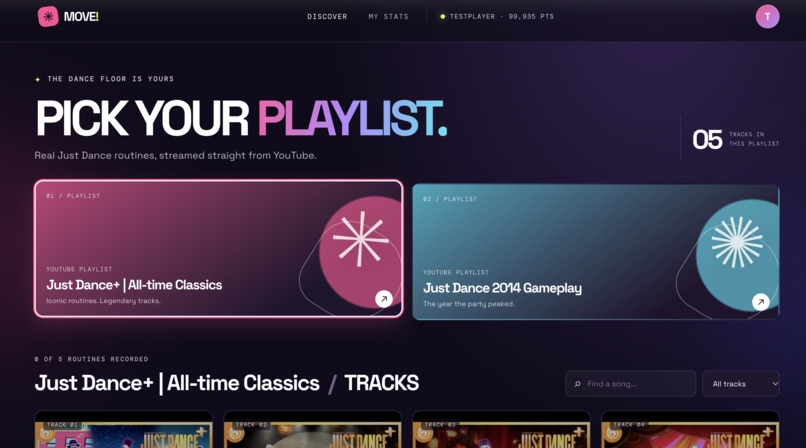
MOVE! Landing Page
Inspiration
I was inspired by the game Just Dance that turn music and movement into a fun, inclusive, social experience from my childhood! I used to beg my parents for a Wii controller when I was younger, but we never ended up buying one- so I would just play tons of Just Dance videos on YouTube instead. I wanted to bring that Just Dance experience to the browser, making it easier for anyone to dance, stay active, and have fun without needing a console or specialized equipment. This inspired me to build MOVE!, a dance game that combines music, technology, and movement in one interactive experience.
What it does
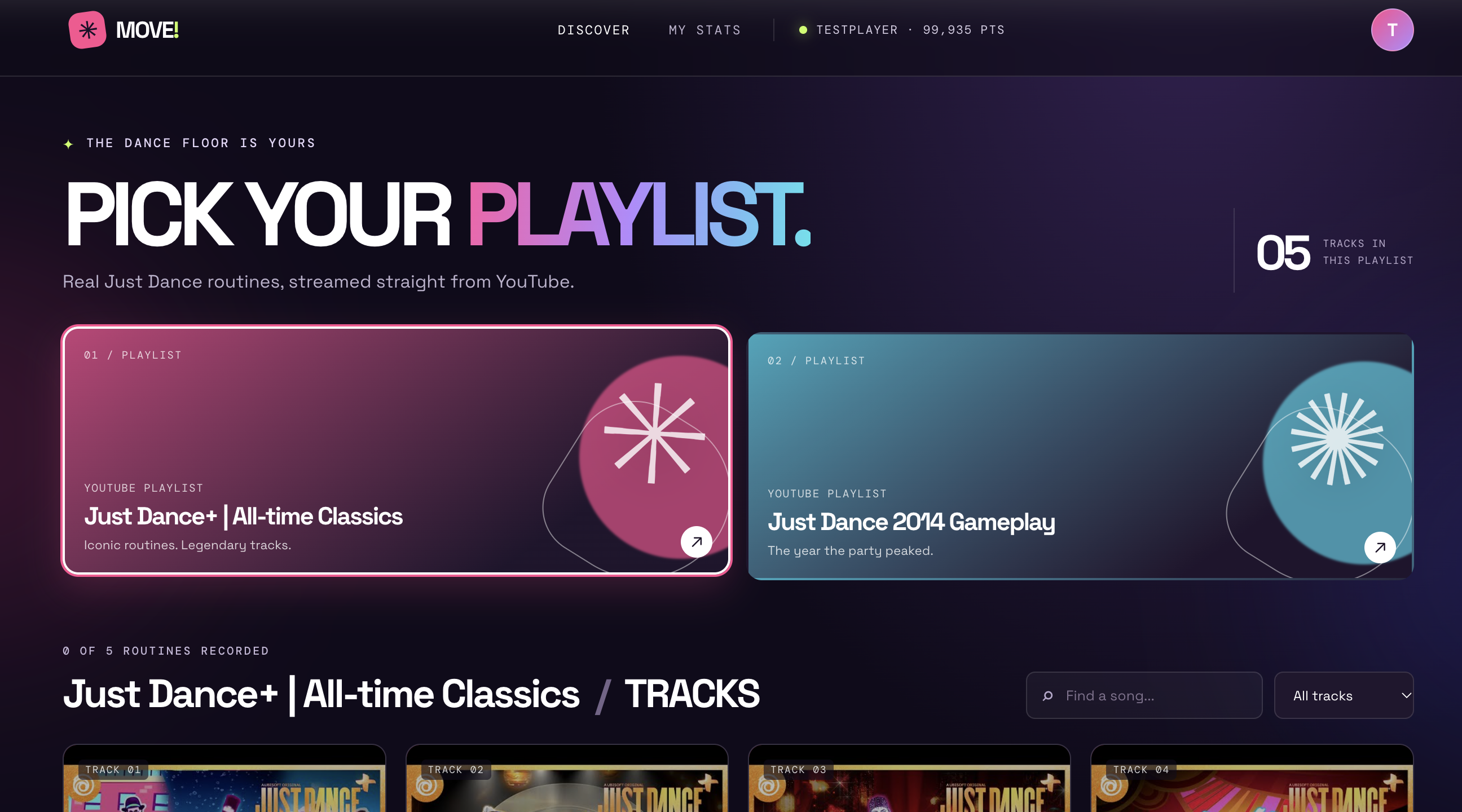
MOVE! is a browser-based dance game where users can explore songs, choose a track, and dance along with music videos. The goal is to make dancing feel like a game by combining an engaging interface with webcam-based body tracking and movement-based scoring. Players can follow the dancer on screen, challenge themselves to match movements, and view their performance at the end of a session.
How we built it
I built MOVE! using React, TypeScript, Vite, MediaPipe, and TigerData to create a responsive, interactive application. I designed a colorful interface for and enabled YouTube video embedding to let users dance along with music videos. I planned movement-tracking experience uses webcam input and pose estimation to compare a player's movements with reference poses.
Challenges we ran into
One of the biggest challenges was connecting different parts of the experience into a cohesive game. Integrating YouTube playback while maintaining a smooth user experience required me to consider video availability and embedding limitations. I also had to think about how to translate real-world body movements into meaningful feedback and scoring.
Accomplishments that we're proud of
I'm proud of creating MOVE!'s visual identity and building the foundation for a browser-based dance game. I'm especially excited about the potential to make dancing more accessible by allowing users to play through a browser without specialized gaming hardware.
What we learned
I learned how to approach a project that combines frontend development, multimedia integration, and computer vision. I've gained experience thinking through the limitations of third-party video platforms and the challenges of building real-time interactions.
What's next for MOVE!
Next, I want to improve real-time pose estimation, compare users' movements with reference dancer poses, and develop a more accurate scoring system with feedback on individual movements. I also hope to expand the song library and introduce multiplayer challenges or leaderboards. My long-term vision is to make MOVE! a fun, accessible way for people to dance, compete, and stay active anywhere.
Built With
- mediapipe
- postgresql
- react
- tigerdata
- vite

Log in or sign up for Devpost to join the conversation.