-
 GIF
GIF
-
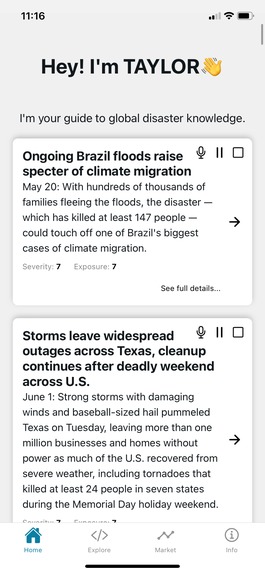
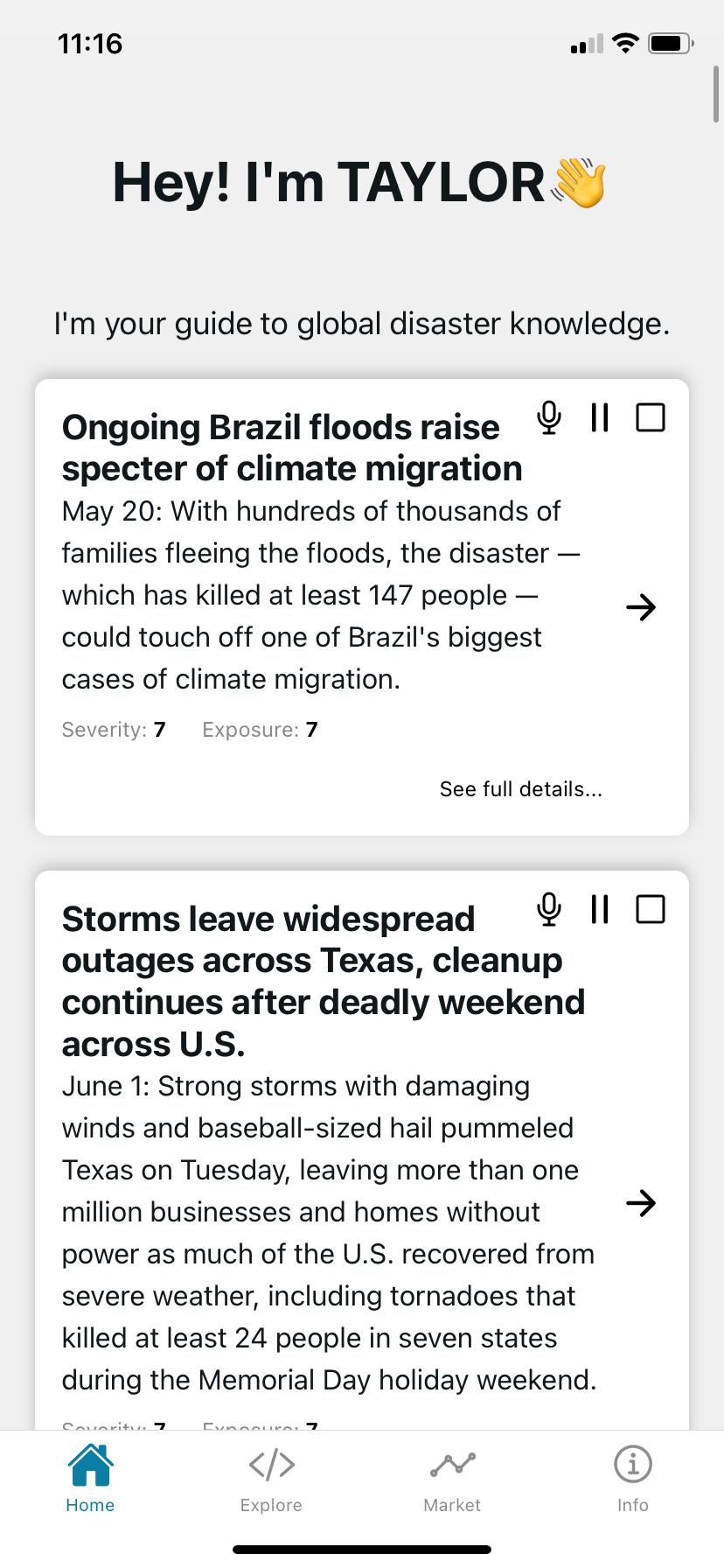
Taylor's Home Page - Where you get real-time unforeseen distress intel
-
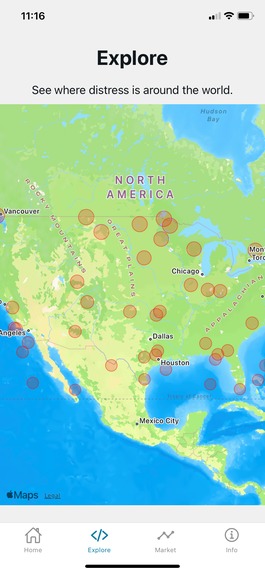
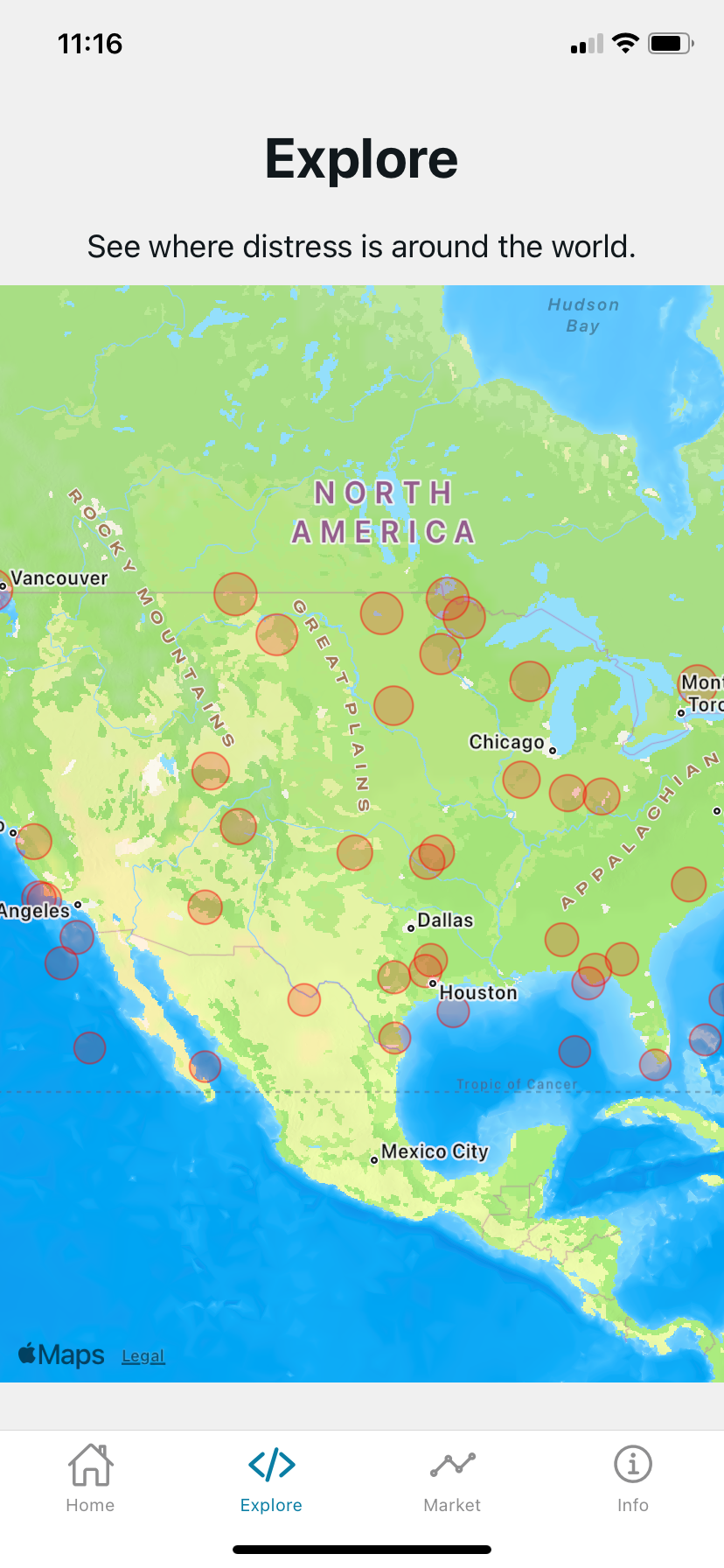
Taylor's Explore Map - Map out major areas of impact before they are known
-
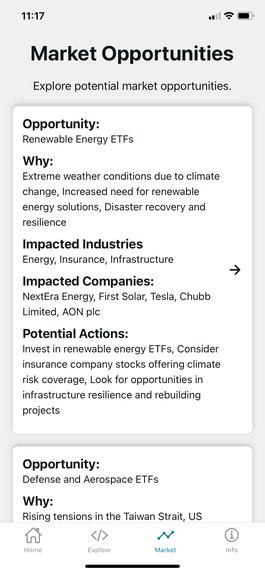
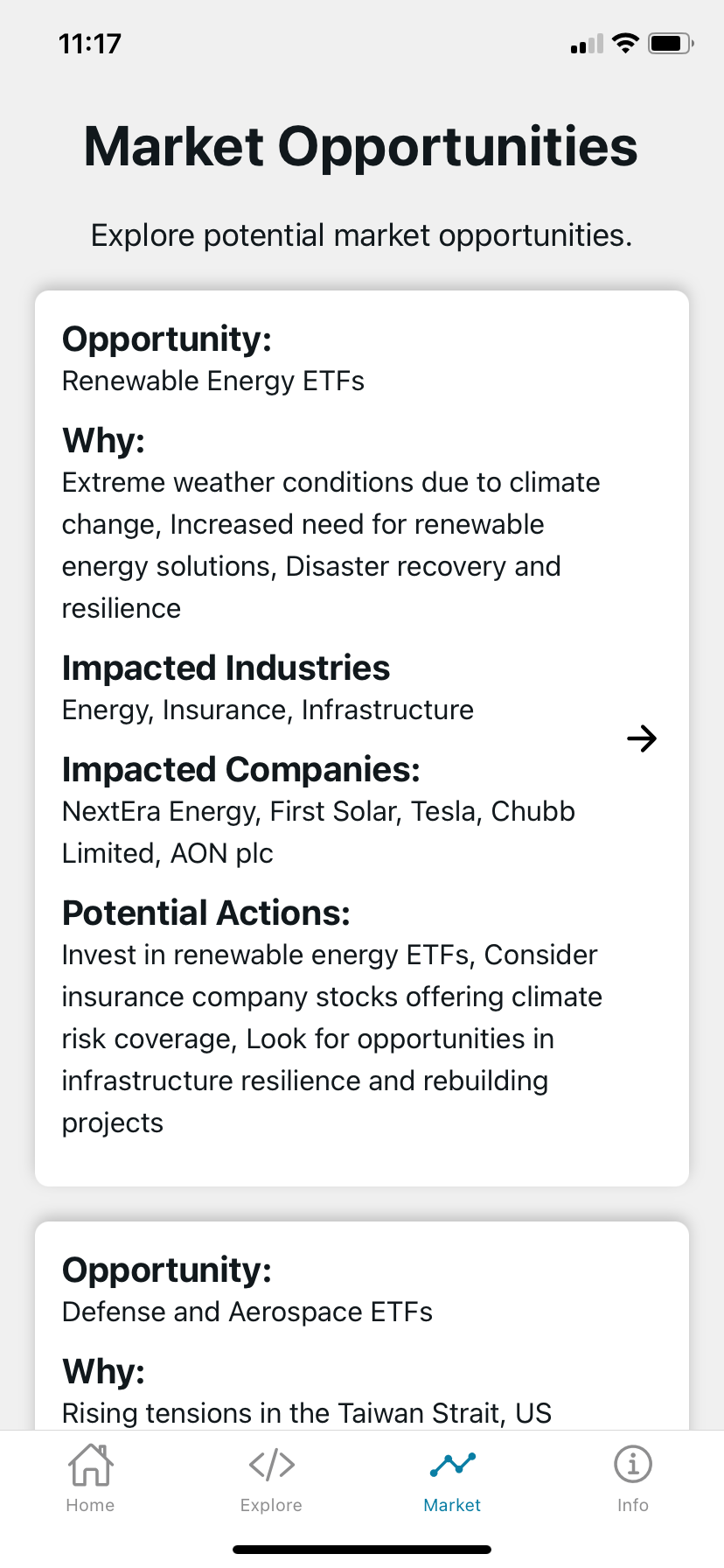
Taylor's Market Opps - Find Opportunities to invest, hedge against risk, and give back!
-
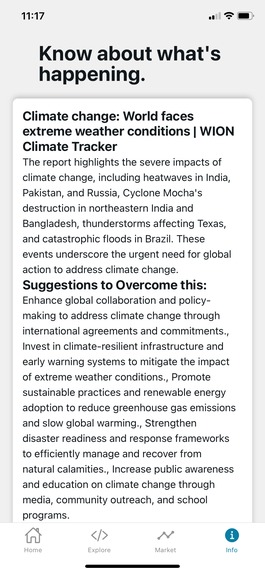
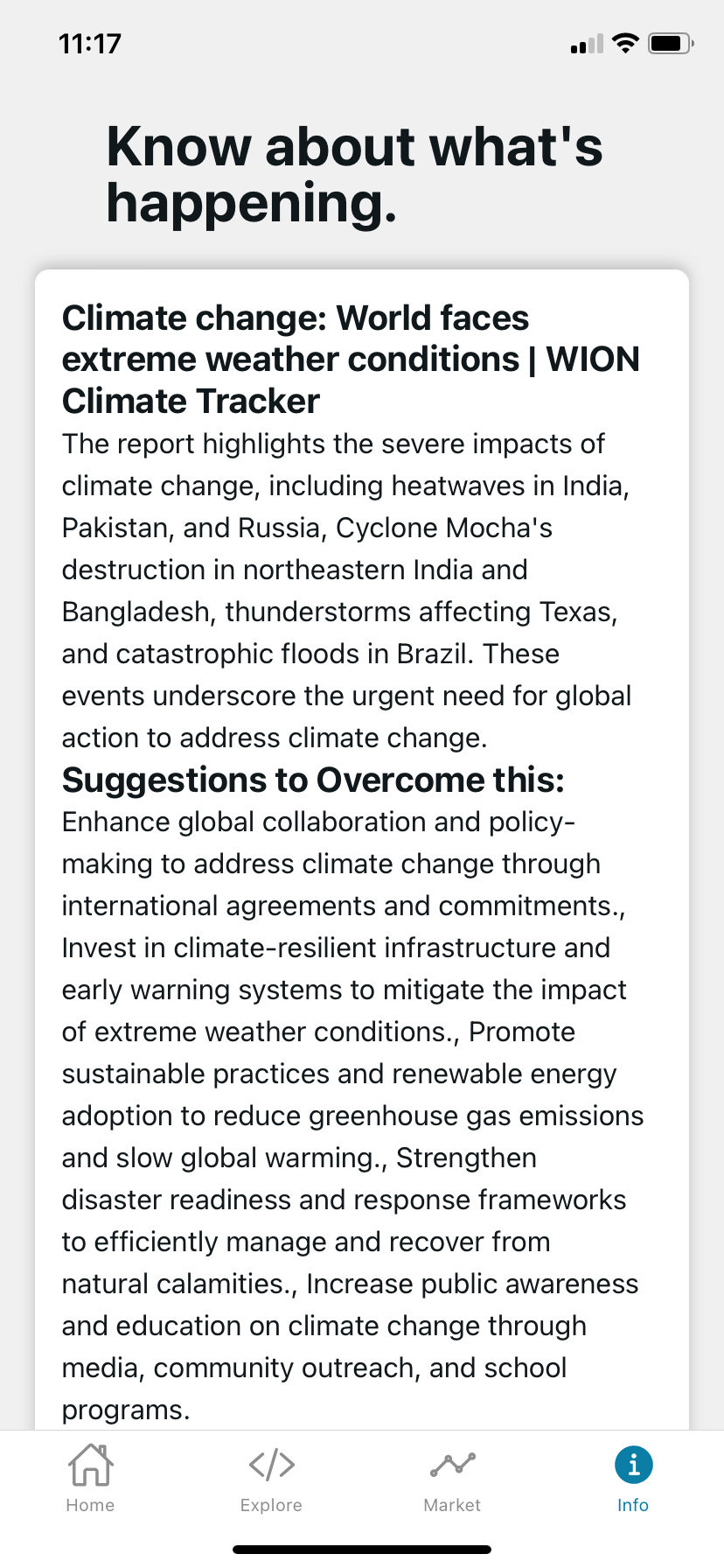
Taylor's Details Page - Find ways to overcome big challenges
-

Taylor's logo


Inspiration
The inspiration for Taylor (Tracking Awareness & Yielding Local Opportunities for Relief) stemmed from witnessing the increasing frequency and impact of global disasters. According to the World Meteorological Organization (WMO), over the past 50 years, there have been nearly 12,000 weather, climate, and water-related disasters, resulting in more than 2 million deaths and $4.3 trillion in economic losses. Furthermore, the UN Office for Disaster Risk Reduction reported that between 2000 and 2019, climate-related disasters alone affected 4.2 billion people and resulted in $2.97 trillion in economic losses. These alarming statistics underscore the urgent need for Taylor, to not only raise awareness but also provide actionable insights and opportunities for individuals and organizations to contribute meaningfully. By leveraging AI technology, we aimed to create a comprehensive tool that educates, maps out critical areas, and incentivizes philanthropic efforts to address these pressing global issues as they emerge.
What it does
Taylor watches YouTube videos, reads social media posts, and analyzes news articles in real-time through a full-fledged mobile app. By unifying the data scattered in multiple sources, Taylor is able to:
- Raise awareness of global unforeseen distress by educating users through concise summaries of current events.
- Enable users to learn while away from the phone through audio functionality to listen to the news on the go, making it easier for them to stay informed as distress unfolds.
- Map out major impacted areas before they become widely known, providing users with a visual representation of the disaster's scope.
- Identify ways to help overcome hardships and distress by suggesting actionable steps and opportunities for individuals and organizations to contribute to relief efforts.
- Finally, Taylor is able to analyze the macroeconomic and microeconomic effects of the disasters on society. Providing with highlights on potential market opportunities, industries, companies, and underlying assets incentivizing philanthropic causes and helping to drive economic recovery globally.
How we built it
Taylor is built on React Native for cross-platform support between multiple devices. The backend is powered by an API deployed on the Google Cloud Platform (GCP) with a Python/Flask web server. For aggregating data from multiple sources, Taylor uses the Youtube Data API to search & understand relevant videos, the Reddit API to get social media news and comments on what users are thinking about the issues, and You.com for finding the freshest news articles to minimize hallucinations.
Now, when it comes to building the entire AI infrastructure, we developed our own orchestration pipeline to use Retrieval Augmentation Generation among a class of AI agents. We ended up developing the following AI agents & tools using a combination of You.com, Intel AI, and OpenAI:
- Crawlers: Youtube (Youtube Data Api v3 + Transcriptions), Socials (Reddit), News Articles (You.com)
- Information Synthesizer/Summarizer (Helps taking big chunks of text (e.g 100k tokens through youtube and synthesizing it)
- Impact Measurer & Impact Explainer based on The Federal Emergency Management Agency (FEMA) protocols for disaster relief.
- Exposure/Awareness Measurer to find how well-known this situation is to the public.
- Audio Generation: First tried Hume.API but ended up implementing ElevenLabs to enhance the experience.
- Comment Augmentation: Use comments from people in social media posts to infer what people might think of currently uncommented global disasters.
- Financial Market Opportunities: Find underlying assets to invest in, potential industries impacted by this recent news, companies vulnerable to this, and actions to take.
Challenges we ran into
One of the main challenges we faced was ensuring the accuracy and timeliness of the data. Aggregating data from multiple sources and ensuring it is up-to-date requires a robust backend infrastructure and efficient data processing algorithms. Additionally, creating a user-friendly interface that effectively conveys complex information was another challenge. Balancing the amount of information displayed without overwhelming the user was critical. Implementing the audio functionality also presented challenges in ensuring smooth playback and handling.
Accomplishments that we're proud of
We are proud of creating a platform for social good that not only raises awareness but also empowers users to take actionable steps in response to global disasters. Successfully integrating real-time data and presenting it in an accessible and informative manner is a significant accomplishment.
What we learned
Through the development of Taylor, we learned the importance of data accuracy and the challenges of integrating multiple data sources. The project underscored the value of interdisciplinary collaboration, combining expertise in technology, data science, and humanitarian response to create a meaningful tool to help communities at risk.
What's next for TAYLOR
Moving forward, we plan to enhance Taylor by incorporating more advanced data analytics and predictive modeling to provide even more precise and actionable insights. We aim to expand our data sources to cover various disasters and impacts. Additionally, we plan to introduce more features that enable users to contribute directly to relief efforts, such as donation platforms and volunteer coordination. By continuously improving the platform, we hope to make an even greater impact on global disaster awareness and response. Additionally, we would like to enhance Taylor's functionality to include multi-language support, and offline playback is also on our roadmap to make Taylor more accessible and available to any location a user calls home.


Log in or sign up for Devpost to join the conversation.