-
-
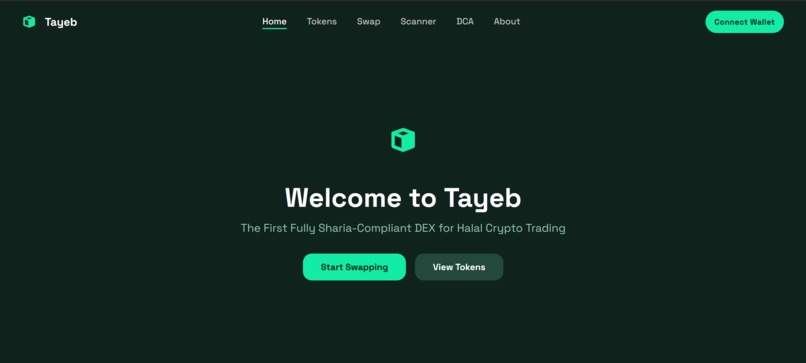
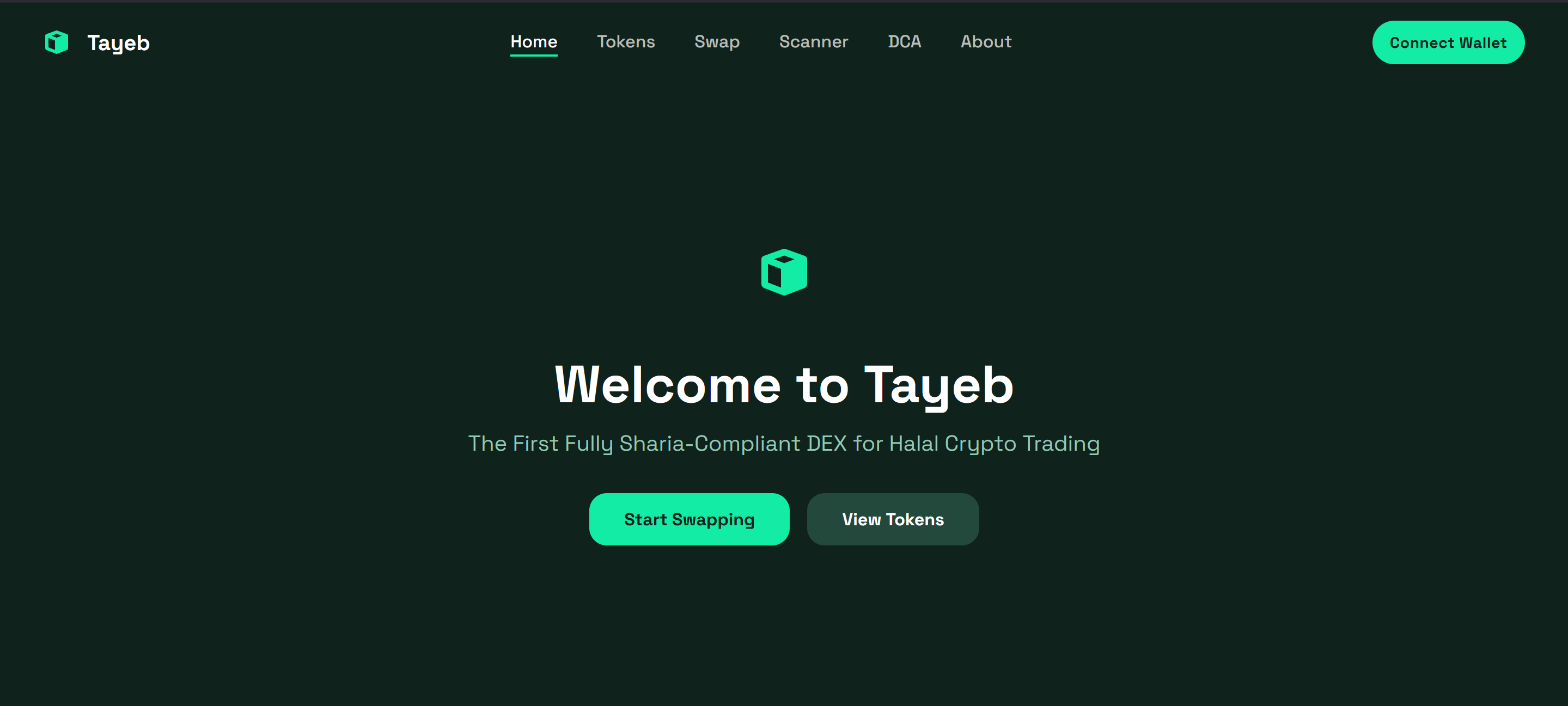
Landing Page
-
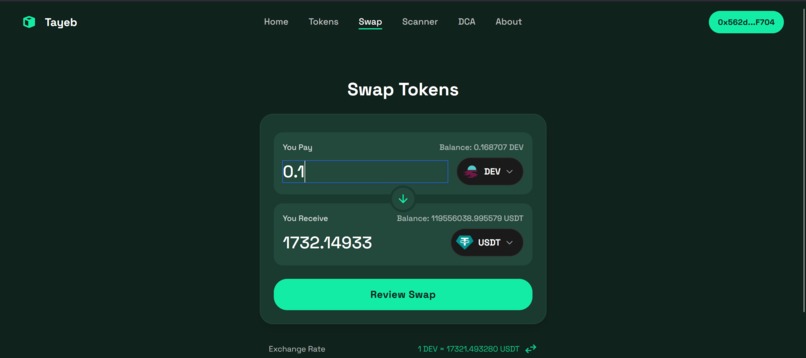
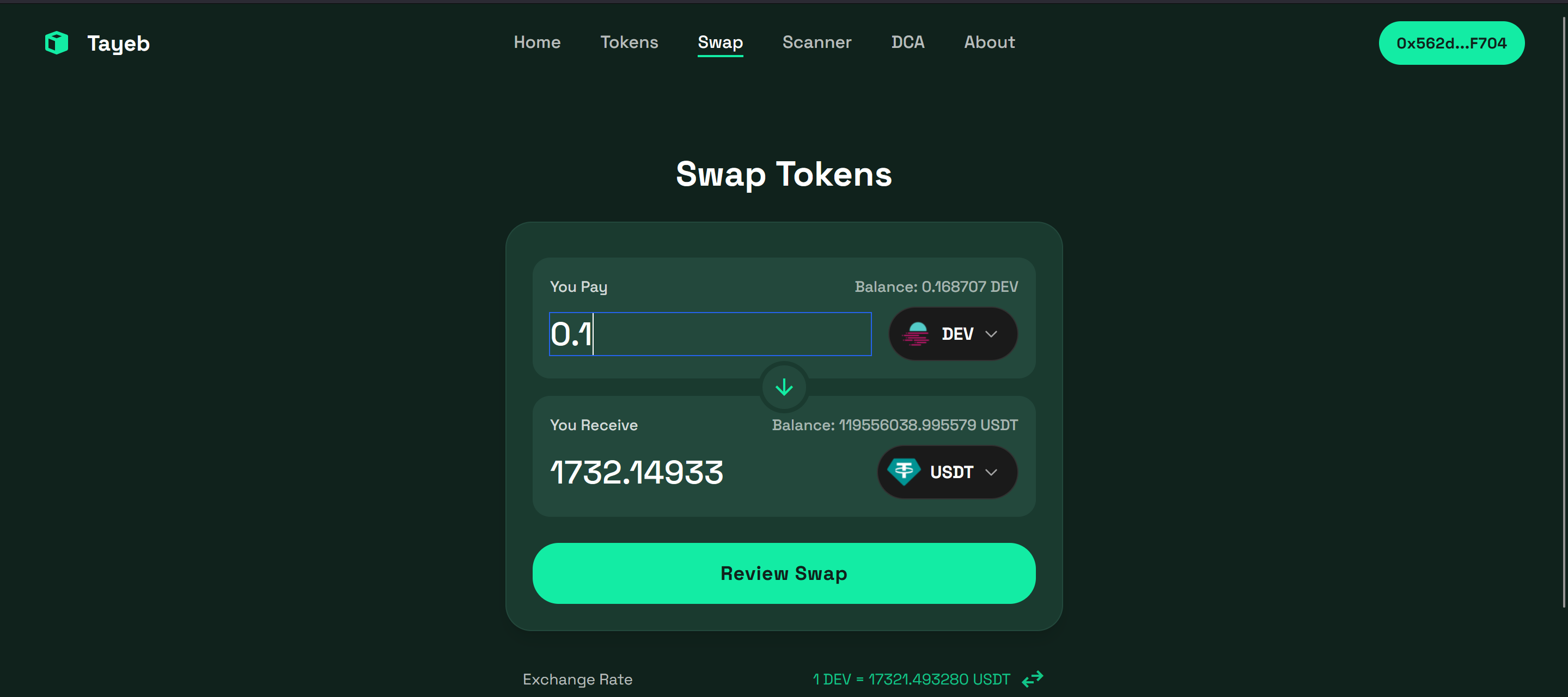
Swapping Interface
-
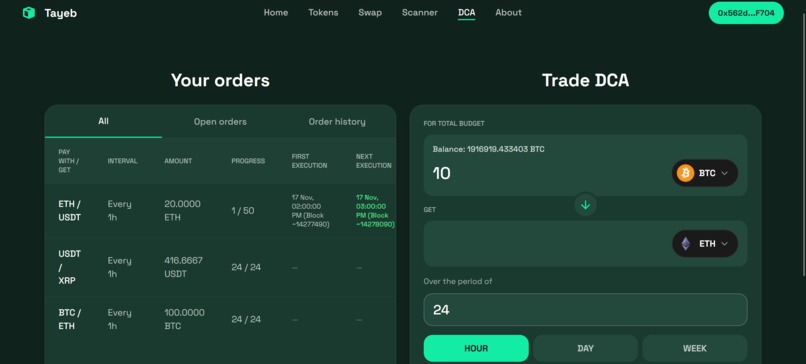
DCA Interface
-
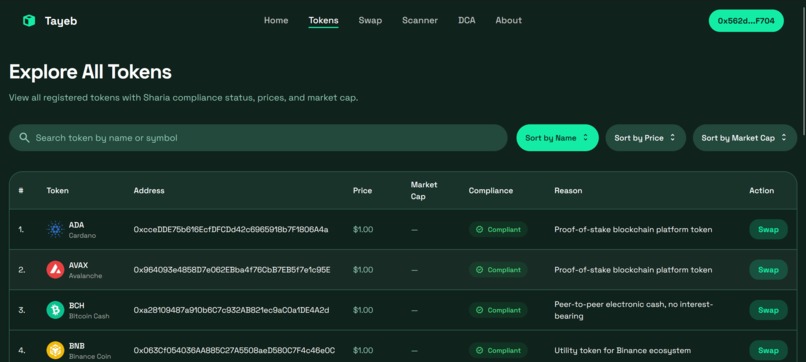
Tokens List Interface
-
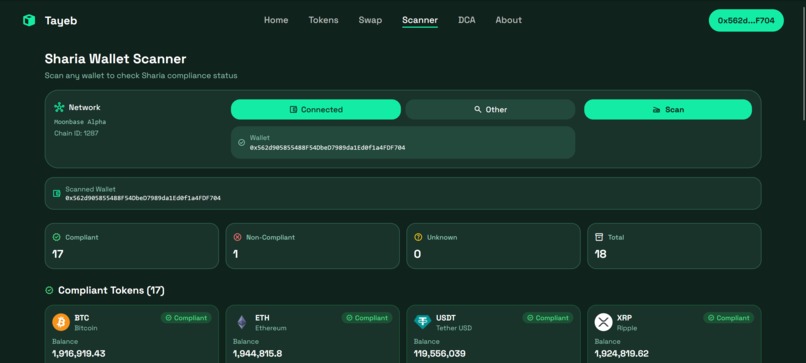
Scanner Interface
-
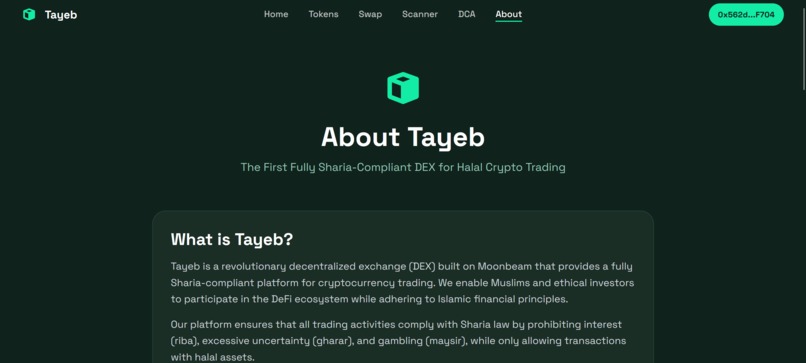
About Interface
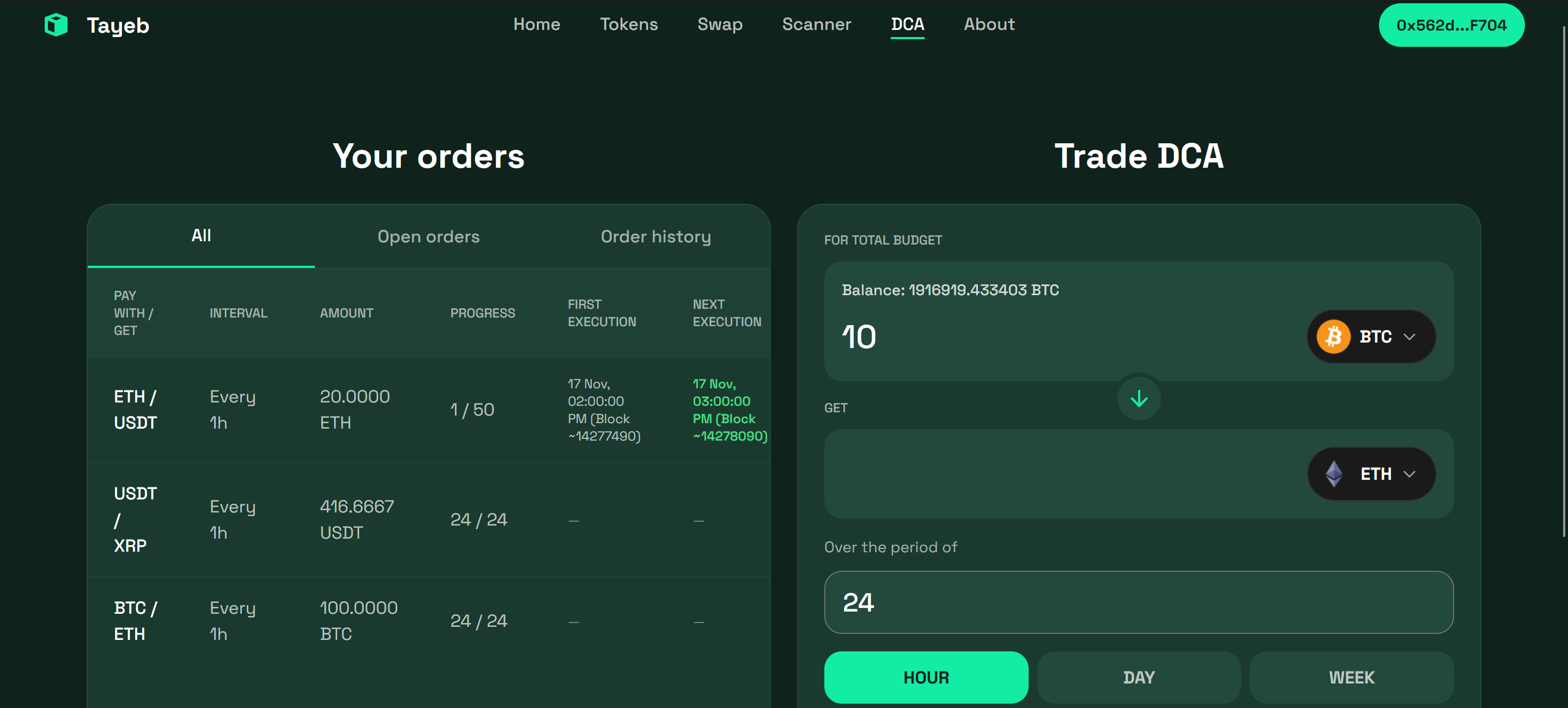
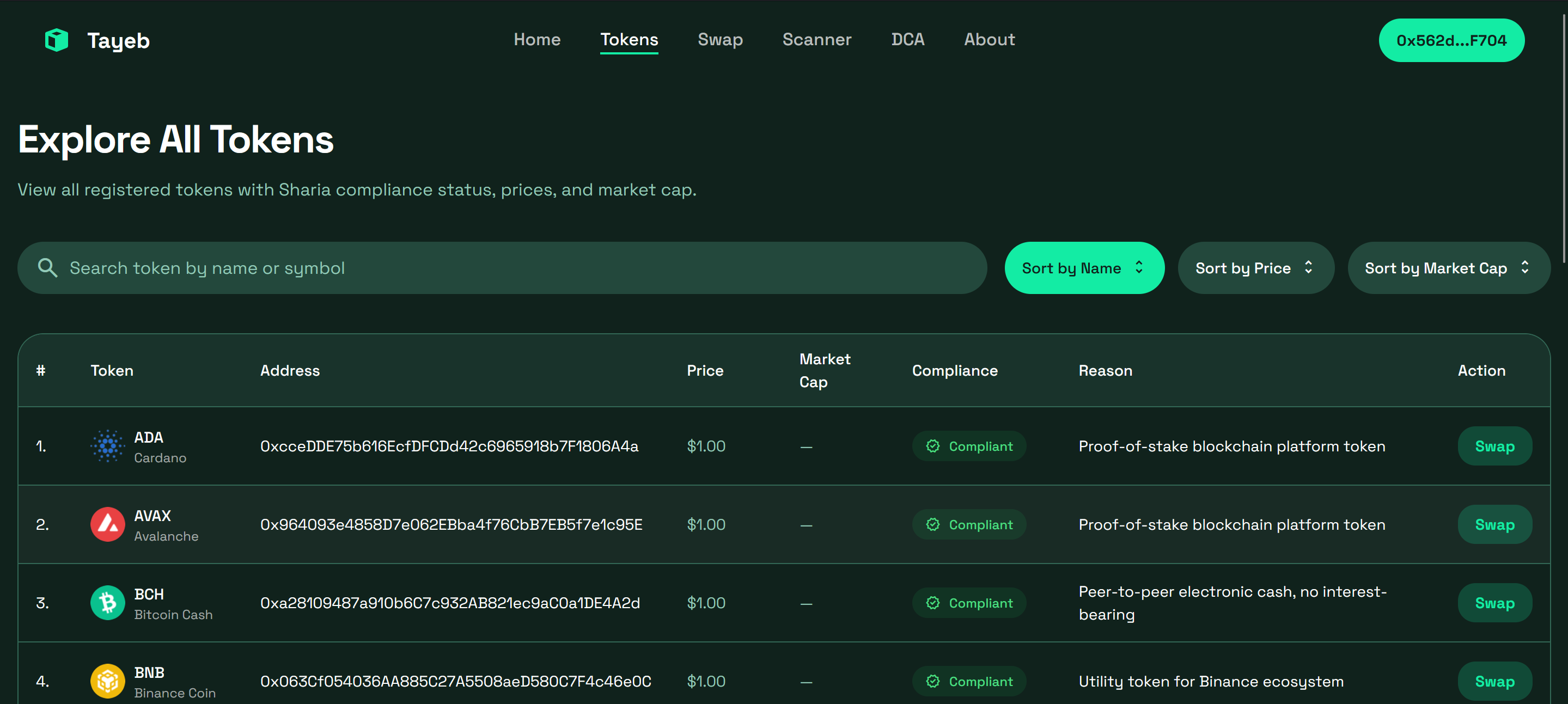
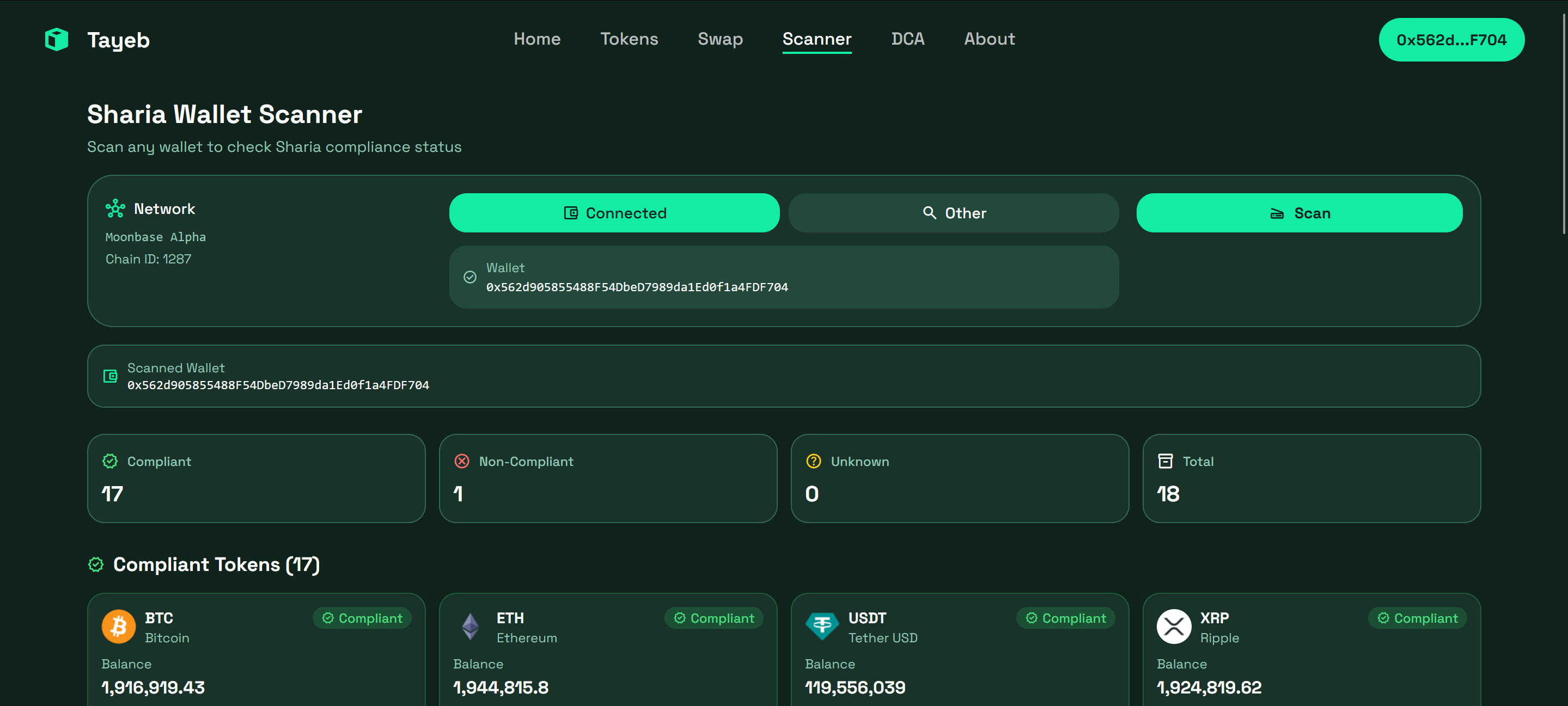
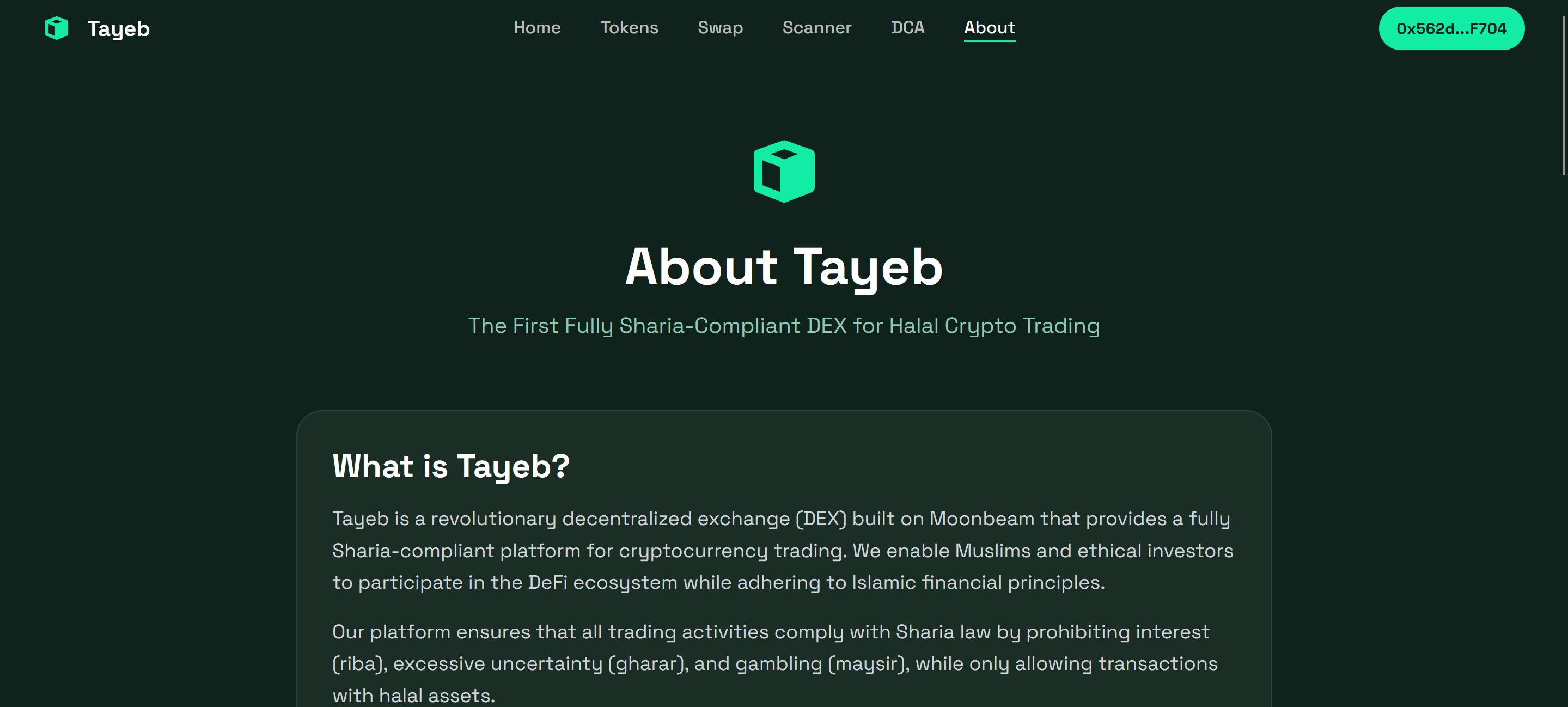
Getting Started: Grab some DEV tokens from the Moonbase Alpha faucet → Begin exploring the app and swapping into other tokens 🚀
What Inspired Me
I was inspired by how Islamic banking transformed the financial landscape in Muslim-majority countries, not only as a religious alternative, but as a driver of overall market growth.
According to the IFSB, in some key jurisdictions Islamic banking now represents a large share of total banking assets. For example, as of 2024:
- Saudi Arabia: Islamic banking makes up ~ 74.96% of total banking assets.
- Kuwait: Islamic banking is about ~ 60.6% of total banking assets.
- Malaysia: Islamic banking is ~ 33.2% of total banking assets.
- UAE: Islamic banking is ~ 23.2% of total banking assets. )
This data showed me that Islamic banking is not only growing fast, but is deeply embedded in some national banking systems. That inspired me to build Tayeb — the first Sharia‑compliant DEX — to bring the principles of Islamic finance into the world of decentralized finance, and serve a market with real scale and potential.
What I Learned & How I Built It
In building Tayeb, I first explored deploying Solidity smart contracts on the Paseo testnet, then experimented with Ink! contracts. After testing, I settled on writing Solidity contracts on Moonbase Alpha testnet, which offered a stable EVM environment and easier integration with Solidity tools.
I built four core components:
Sharia-Compliant Asset Registry: Controlled token registry validating all swaps against Sharia principles with transparent compliance documentation.
ShariaSwap (Custom AMM): Uniswap V2-style AMM with automatic USDC routing and compliance enforcement.
ShariaDCA (Dollar Cost Averaging): Automated periodic investments with flexible intervals, prepaid deposits, and cloud-deployed execution scripts.
Sharia-Compliant Scanner: Wallet scanner identifying Sharia-compliant tokens to help users make informed trading decisions.
The platform was built with a modern tech stack: Solidity & Hardhat for smart contracts, React + TypeScript + Vite + Wagmi v2 for the frontend, and local automation scripts for DCA execution and liquidity management — enabling real-world automated investing features.
This process taught me the importance of adapting tooling to blockchain limitations and designing around liquidity and compliance constraints. Building my own liquidity pool and DCA automation gave me complete control over Sharia compliance enforcement rather than relying on external integrations.
Challenges Faced
Building Tayeb required navigating several technical and ecosystem limitations:
ETH-RPC Adapter & Contracts UI Issues
Chopsticks Fork & Missing HRMP Channel
- No HRMP channel exists between Moonbase Alpha and Hydra testnets.
- Chopsticks forks lack Frontier EVM RPC methods, preventing EVM-Substrate interoperability.
- I tested cross-chain workflows on mainnet (Moonbeam ↔ Hydration) to confirm architecture viability.
- No HRMP channel exists between Moonbase Alpha and Hydra testnets.
Stellaswap Liquidity & SDK Issues
- No testnet liquidity pools, outdated mainnet SDK, and limited developer support.
- I built my own liquidity pool contracts on Moonbase Alpha testnet for testing.
- No testnet liquidity pools, outdated mainnet SDK, and limited developer support.
These challenges revealed critical gaps in EVM-compatible cross-chain tooling and shaped my architectural decisions to prioritize flexibility and mainnet validation.
Built With
- chopsticks
- contractsui
- hardhat
- metamask
- moonbase
- node.js
- npm
- openzeppelin
- paraspell
- react
- solidity
- typescript
- vite
- wagmi
- zombienet


Log in or sign up for Devpost to join the conversation.