-
-
TaxRadar
Inspiration
Freelancers and small business owners overpay on taxes every year — not because deductions don't exist, but because tracking expenses is painful. We wanted to build something that does the hard work automatically.
What it does
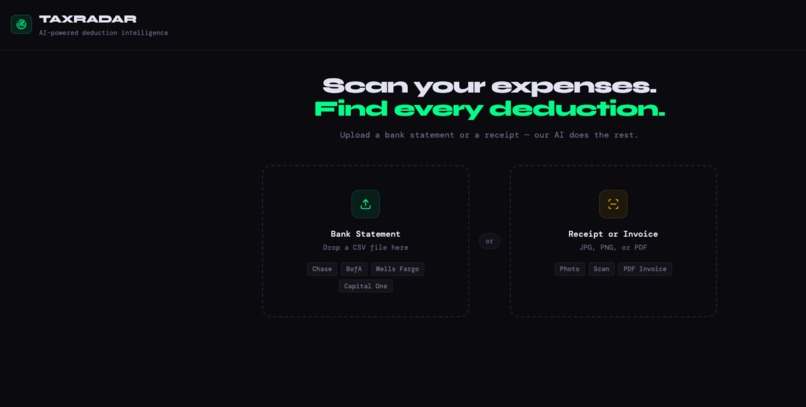
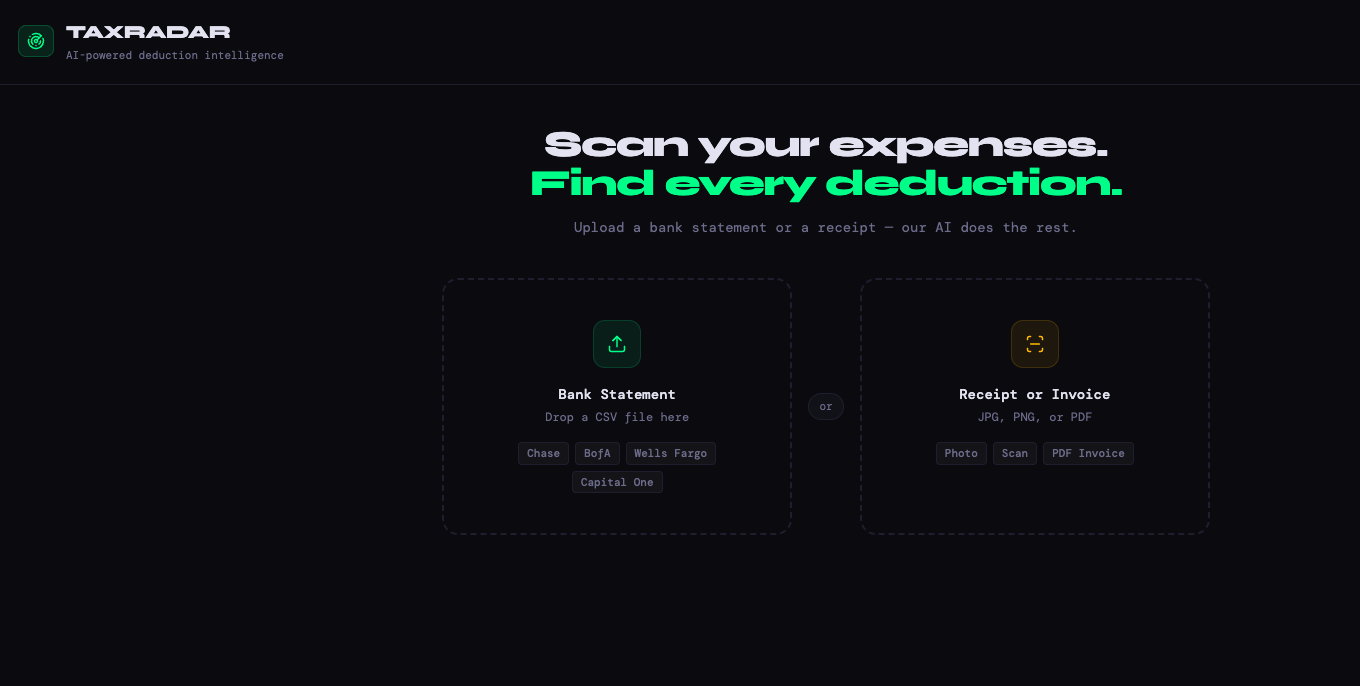
TaxRadar lets you upload a bank statement CSV or a receipt photo. It classifies every transaction, flags what's likely tax deductible, explains why, and generates a PDF report you can hand straight to your accountant.
How we built it
FastAPI backend with a hybrid classification engine — deterministic rules for known merchants, Claude AI for ambiguous ones. Receipt scanning uses Claude Vision instead of traditional OCR for much cleaner extraction. Next.js frontend deployed on Vercel, backend on Render.
Challenges we ran into
Getting Tesseract OCR to reliably read real receipt photos was rough — thermal printer fonts and phone camera angles made it consistently inaccurate. Switching to Claude Vision solved it immediately.
Accomplishments that we're proud of
The hybrid classification engine — it's fast and cheap for known merchants, and genuinely intelligent for ambiguous ones. Also getting a fully deployed, end-to-end working product in one hackathon.
What we learned
Sometimes the "cheaper" solution (Tesseract) costs more in reliability than it saves in API credits. Claude Vision was the right call for anything involving real-world document photos.
What's next for TaxRadar
Bank integrations via Plaid, multi-year tax summaries, and a review workflow where users can approve or override AI suggestions before exporting.
Built With
- claudeapi
- fastapi
- lucide
- next.js
- pdf2image
- pillow
- pydantic
- python
- python-multipart
- reportlab
- tailwind
- typescript
- uvicorn

Log in or sign up for Devpost to join the conversation.