-
-
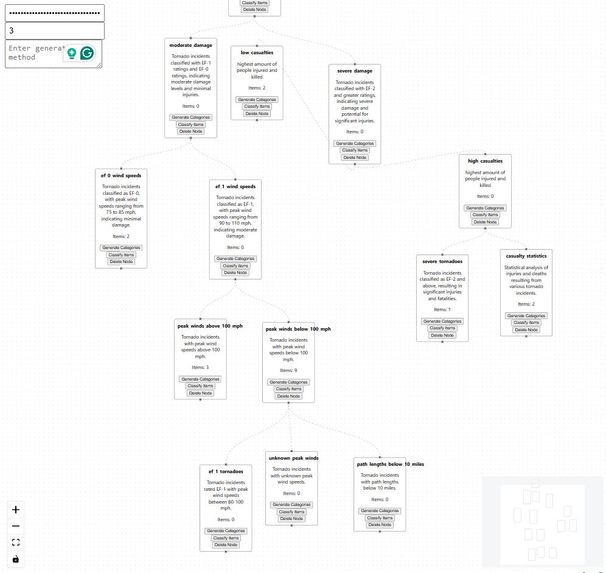
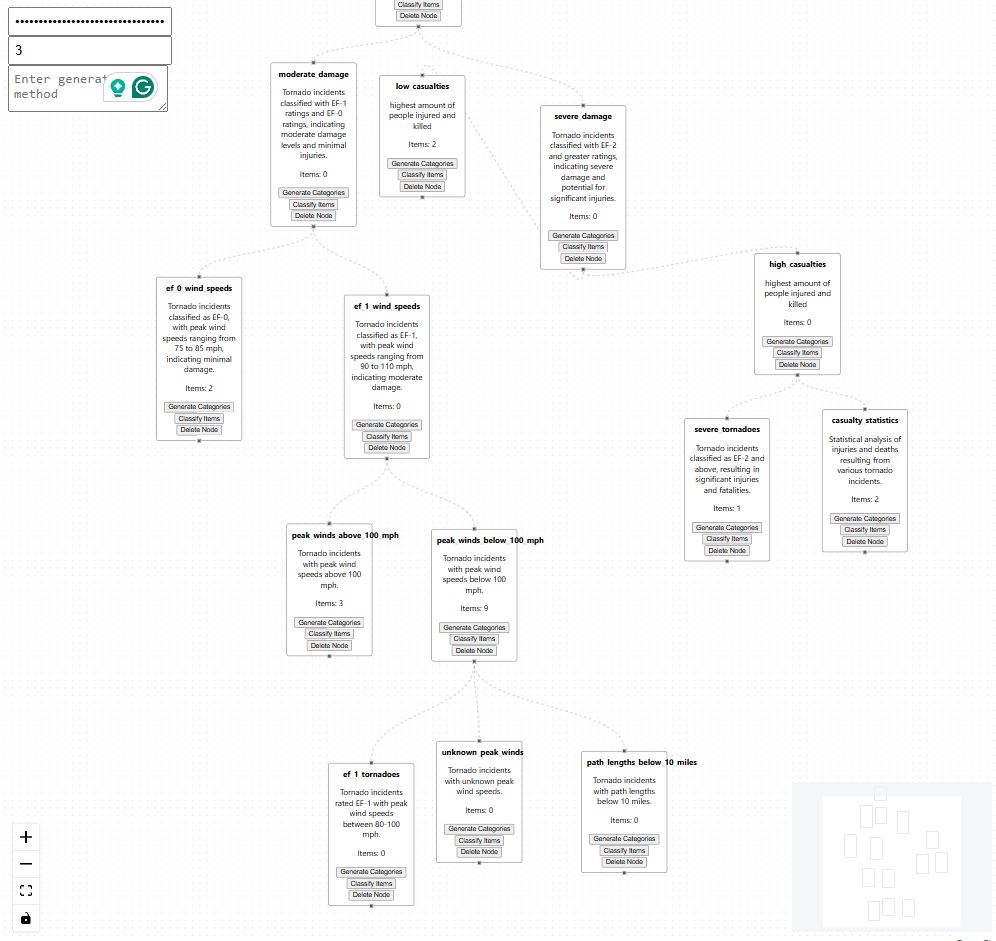
full granular damage taxonomy
-
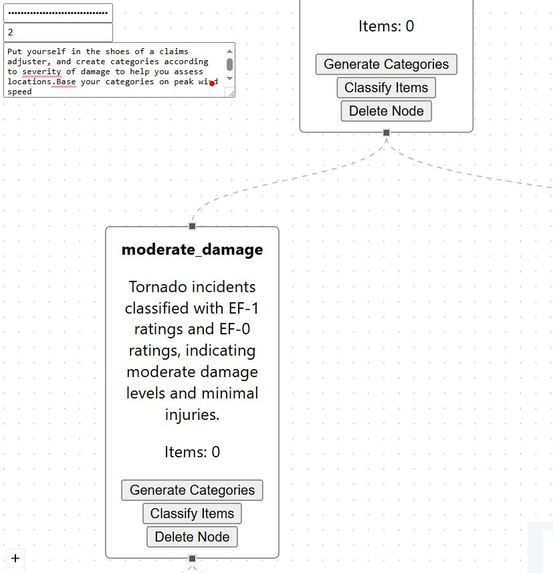
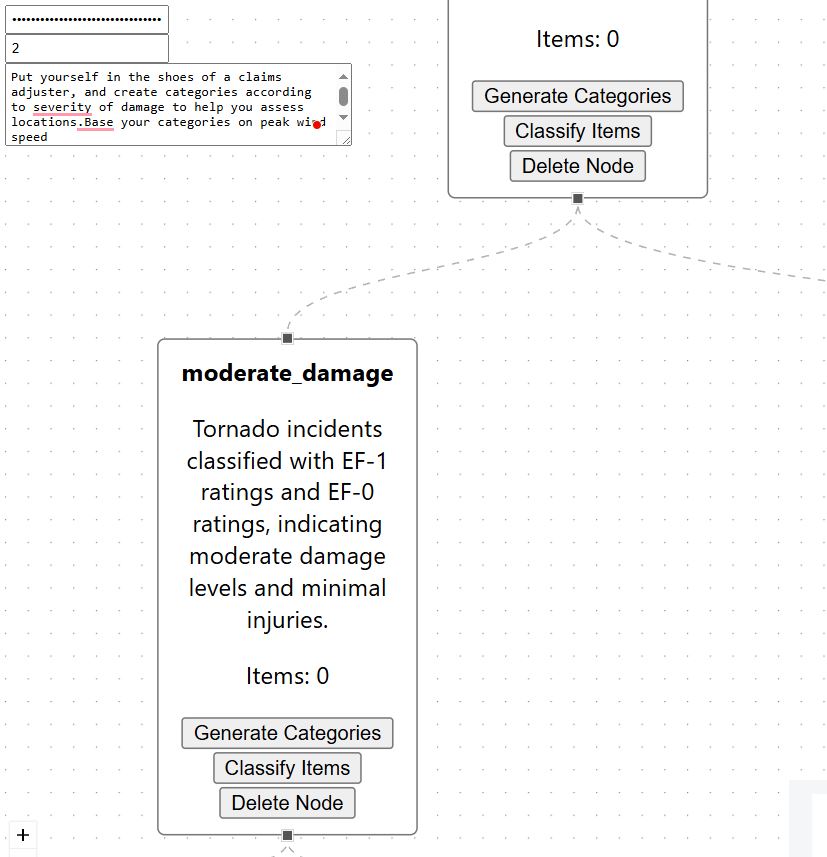
a connected damage taxonomy node
-
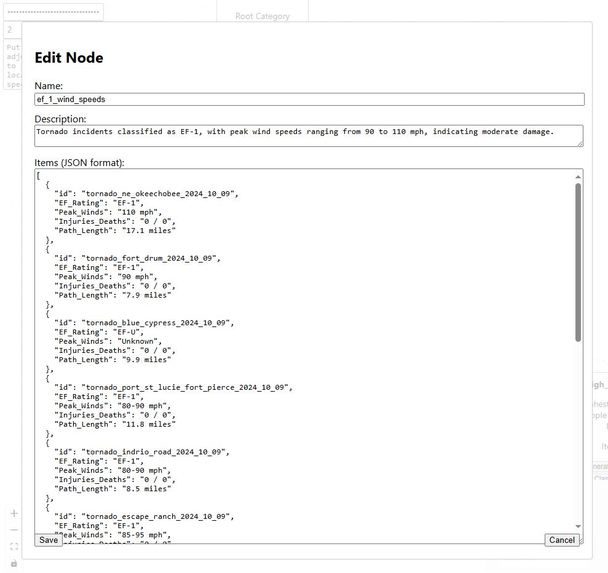
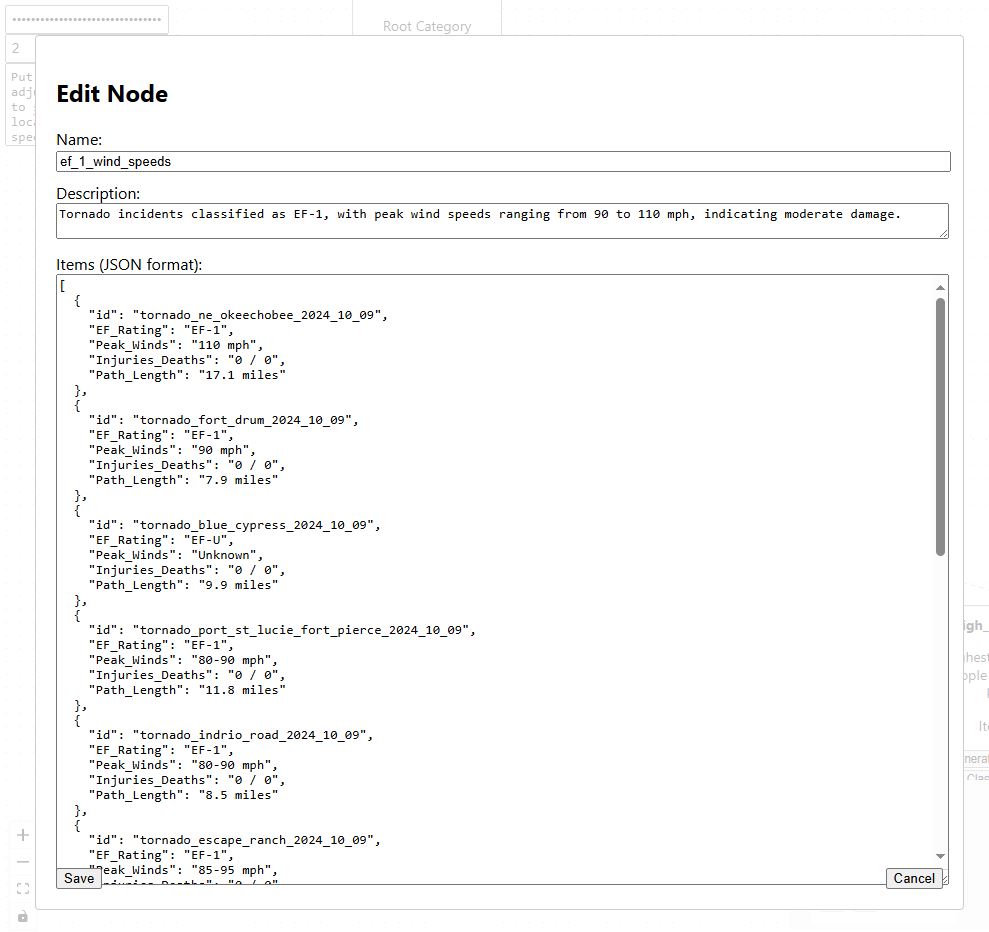
damage taxonomy node details
-
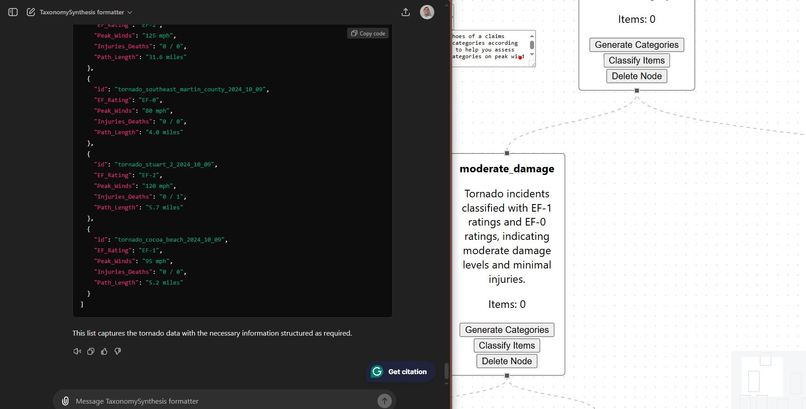
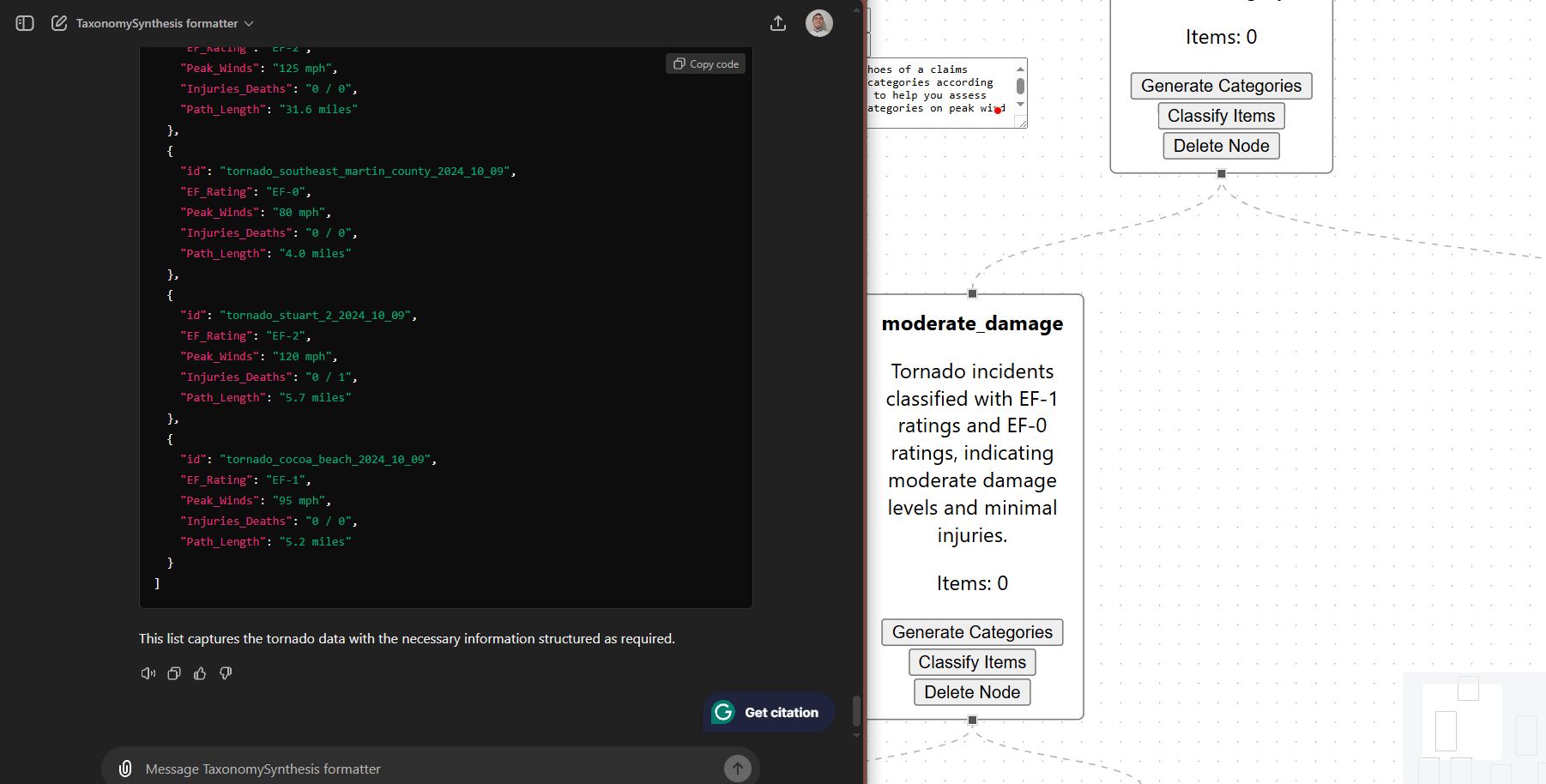
structured data
-
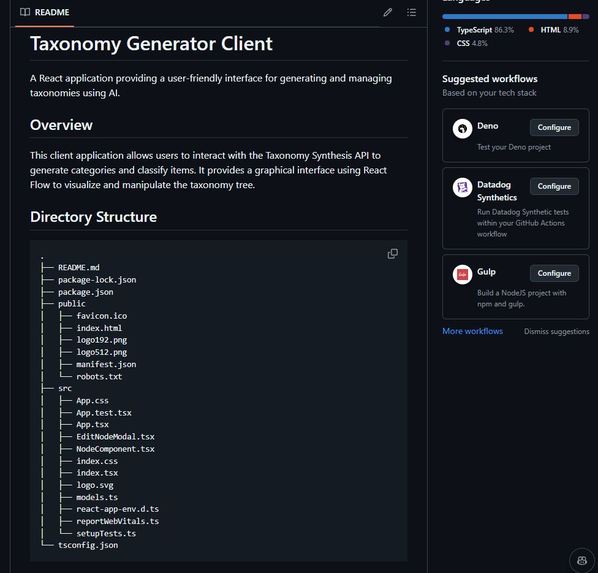
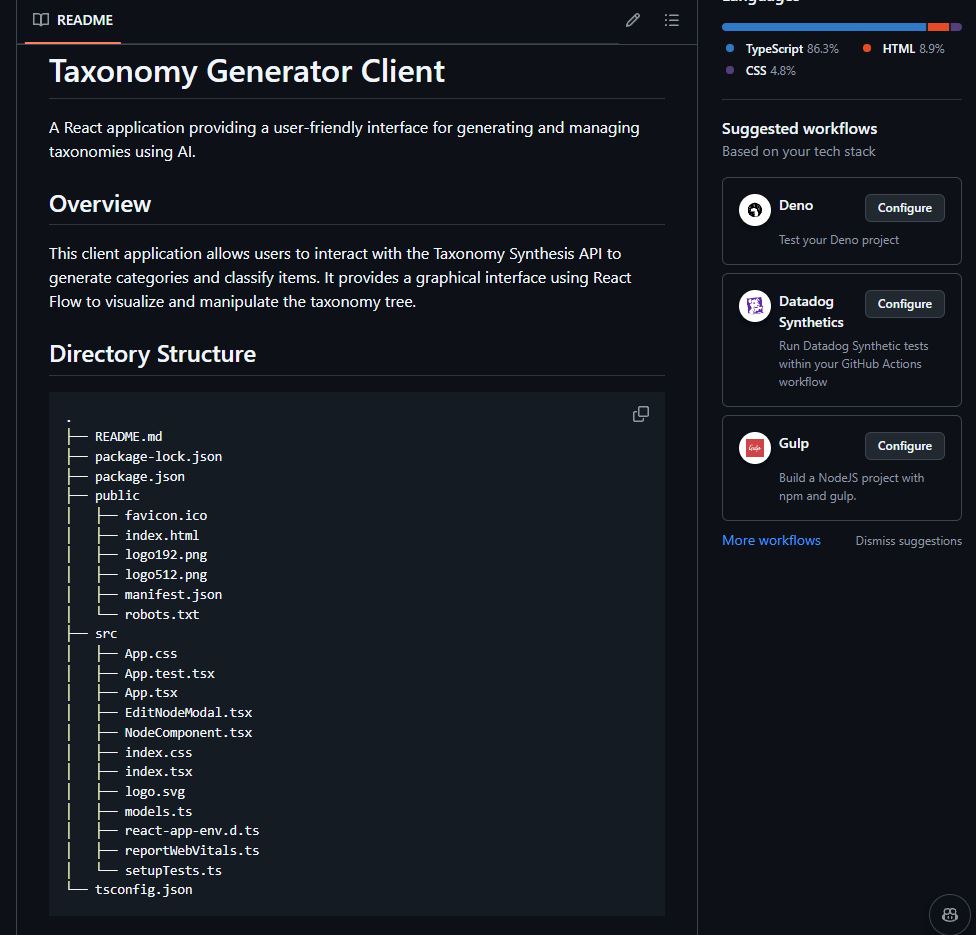
client
-
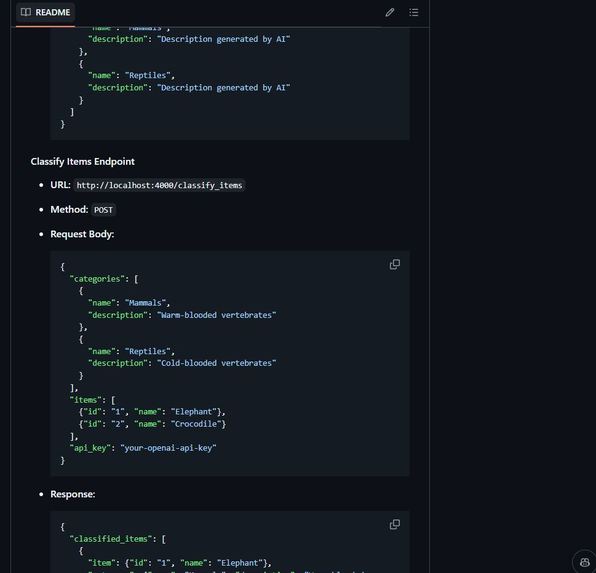
backend
-
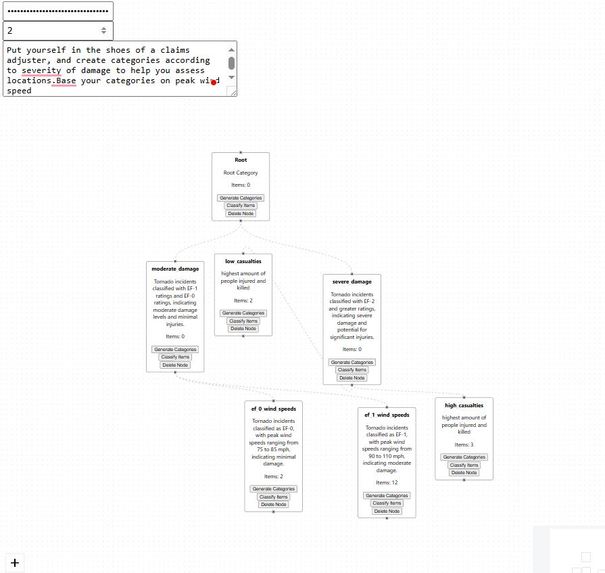
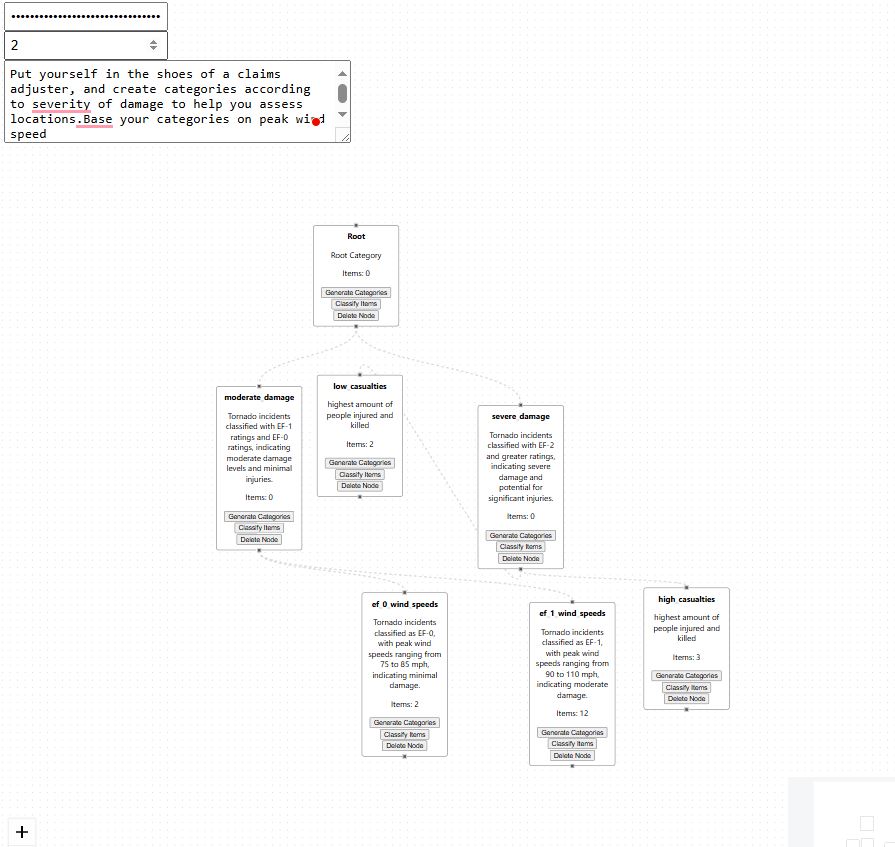
partial taxonomy tree
Inspiration
In the wake of natural disasters like Hurricane Milton, insurance adjusters are overwhelmed with an influx of claims that need immediate attention. We noticed that adjusters often struggle with unstructured data, leading to delays and potential inaccuracies in claim assessments. Inspired by the need to support these professionals during critical times, we set out to create a solution that could help them process claims more efficiently and accurately.
What It Does
Relief AI is an AI-driven taxonomy generator that transforms unstructured data from disaster claims into a structured, hierarchical format. It allows insurance adjusters to:
- Automatically generate meaningful classifications and subcategories for claims data.
- Visualize and organize claims through an intuitive graphical interface.
- Quickly identify patterns and prioritize urgent cases.
- Reduce bias by providing consistent and data-driven classifications.
By simplifying the data organization process, adjusters can focus on analyzing claims and making informed decisions, ultimately speeding up the relief process for those affected by disasters.
How We Built It
Our solution consists of two main components:
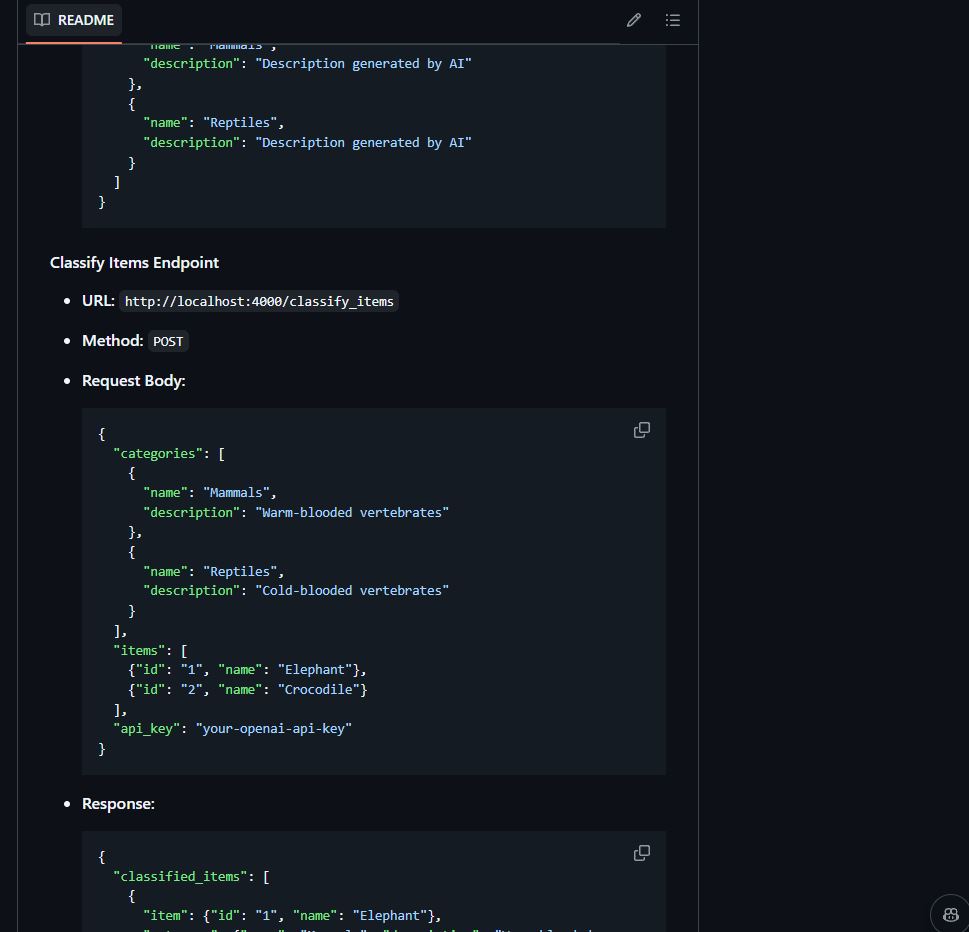
- Backend API: Built with Python and FastAPI, the backend leverages OpenAI's GPT models through the
taxonomy-synthesispackage to generate taxonomies and classify items. It provides endpoints for:
- Generating subcategories based on provided data.
- Classifying items into appropriate categories.
- Client Application: Developed using React and TypeScript, the client features an interactive interface powered by React Flow. Users can:
- Input unstructured data and visualize it as nodes and connections.
- Generate subcategories and classify items using the backend API.
- Edit, delete, and rearrange nodes through an intuitive drag-and-drop interface.
We integrated Axios for API communication and used libraries like Dagre for layout algorithms to enhance the user experience.
Challenges We Ran Into
Data Structuring: Converting unstructured claim data into a format suitable for processing was a significant hurdle. We had to design flexible data models that could handle diverse input.
API Integration: Ensuring seamless communication between the frontend and backend, especially with asynchronous operations and error handling, required careful planning and debugging.
Accuracy of AI Classifications: We needed to ensure that the AI-generated taxonomies and classifications were accurate and meaningful. This involved iterative testing and refining prompts to the GPT models.
Collaborative Development: Coordinating work across different disciplines—AI, frontend, and backend development—was both a challenge and a learning experience in effective teamwork.
Accomplishments That We're Proud Of
Functional Prototype: Building a working prototype within the hackathon timeframe that effectively demonstrates the concept.
User-Friendly Interface: Creating an intuitive client application that non-developers can use to interact with complex AI functionalities.
AI Integration: Successfully integrating OpenAI's GPT models to generate meaningful taxonomies and classifications relevant to disaster claims.
What We Learned
Interdisciplinary Collaboration Is Key: Combining expertise from different fields leads to more robust and user-centric solutions.
AI Prompt Engineering: Crafting effective prompts for AI models significantly impacts the quality of the output.
Importance of UX in Data Tools: Even the most powerful backend needs an accessible frontend to make a real impact.
What's Next for Relief AI: Disaster Claims Copilot for Insurance Adjusters
Enhancing AI Models: Incorporate more advanced models and fine-tune them specifically for insurance data to improve accuracy.
Real-World Testing: Partner with insurance companies to pilot the tool in actual disaster scenarios and gather feedback.
Feature Expansion: Add functionalities like report generation, integration with existing insurance software, and collaborative features for teams.
Security and Compliance: Implement robust security measures and ensure compliance with industry regulations like HIPAA.
Built With
- axios
- fastapi
- fastapi-libraries:-react-flow
- node.js
- openai
- pydantic
- pydantic-platforms:-node.js
- python
- react
- react-flow
- taxonomy-synthesis
- typescript
- typescript-frameworks:-react
- uvicorn
- uvicorn-apis:-openai-gpt-models-tools:-taxonomy-synthesis-sdk


Log in or sign up for Devpost to join the conversation.