Inspiration
When we filed our taxes for the first time last year, it was far more painful than expected. Not because of the tax rate—but because of the chaos of tracking receipts scattered across emails, photos, and drawers. We realised the real problem wasn’t the calculation… it was the paperwork. As we researched further, the national picture became clearer:
- Malaysia has over 17 million people in the labour force, but only around 5.7 million actually pay income tax (Nov 2025).
- Malaysia also ranks second lowest in tax-to-GDP among ASEAN countries.
A major cause is manual, difficult tax compliance, especially around claimable receipts. Most Malaysians still handle receipts manually—often losing them, forgetting to record them, or discovering deductible items only at year-end. This is the single biggest barrier to accurate filing. This shared pain point inspired us to create a smarter, automated way to track and organise receipts, so taxpayers can stop stressing over paperwork and start focusing on life.
What it does
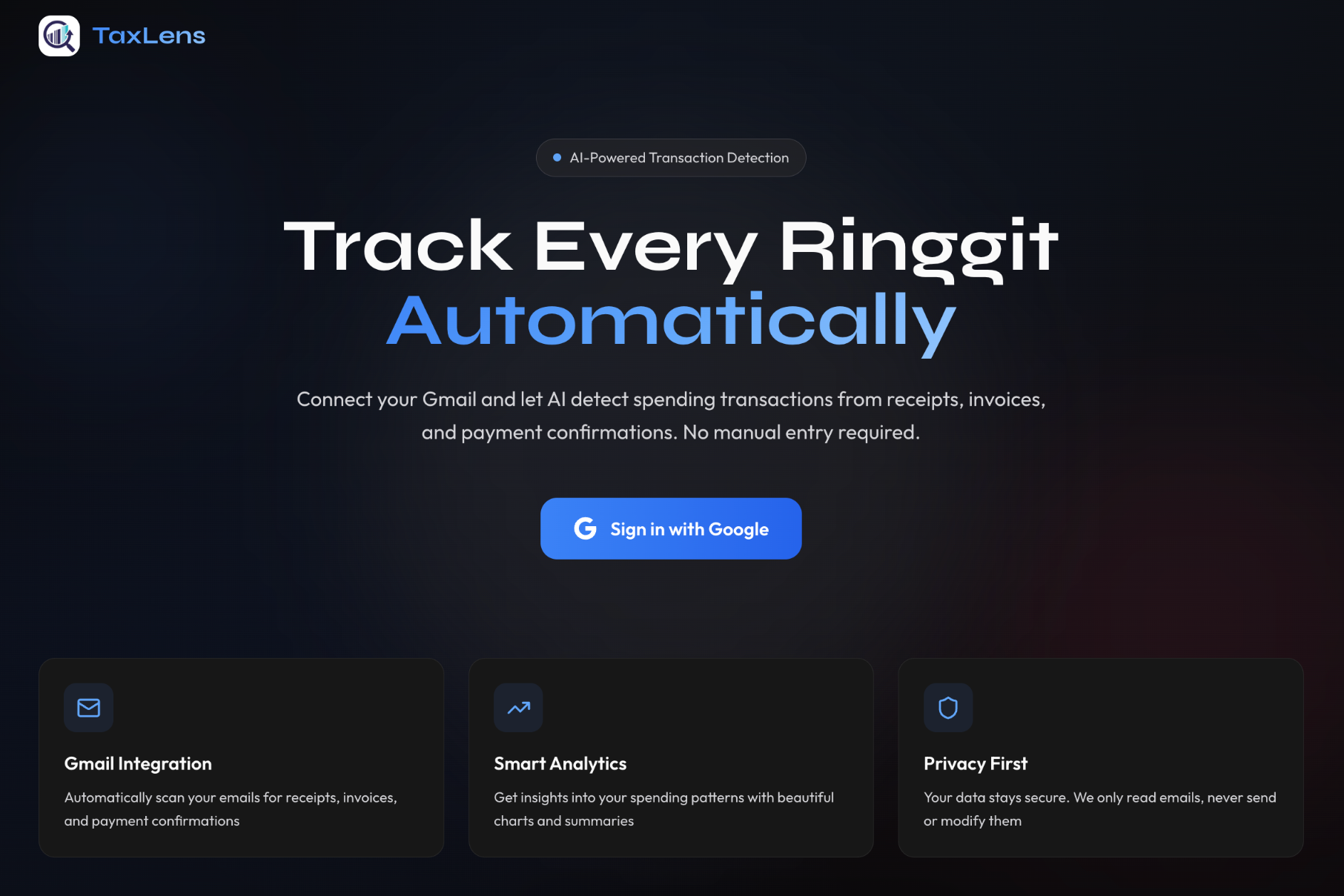
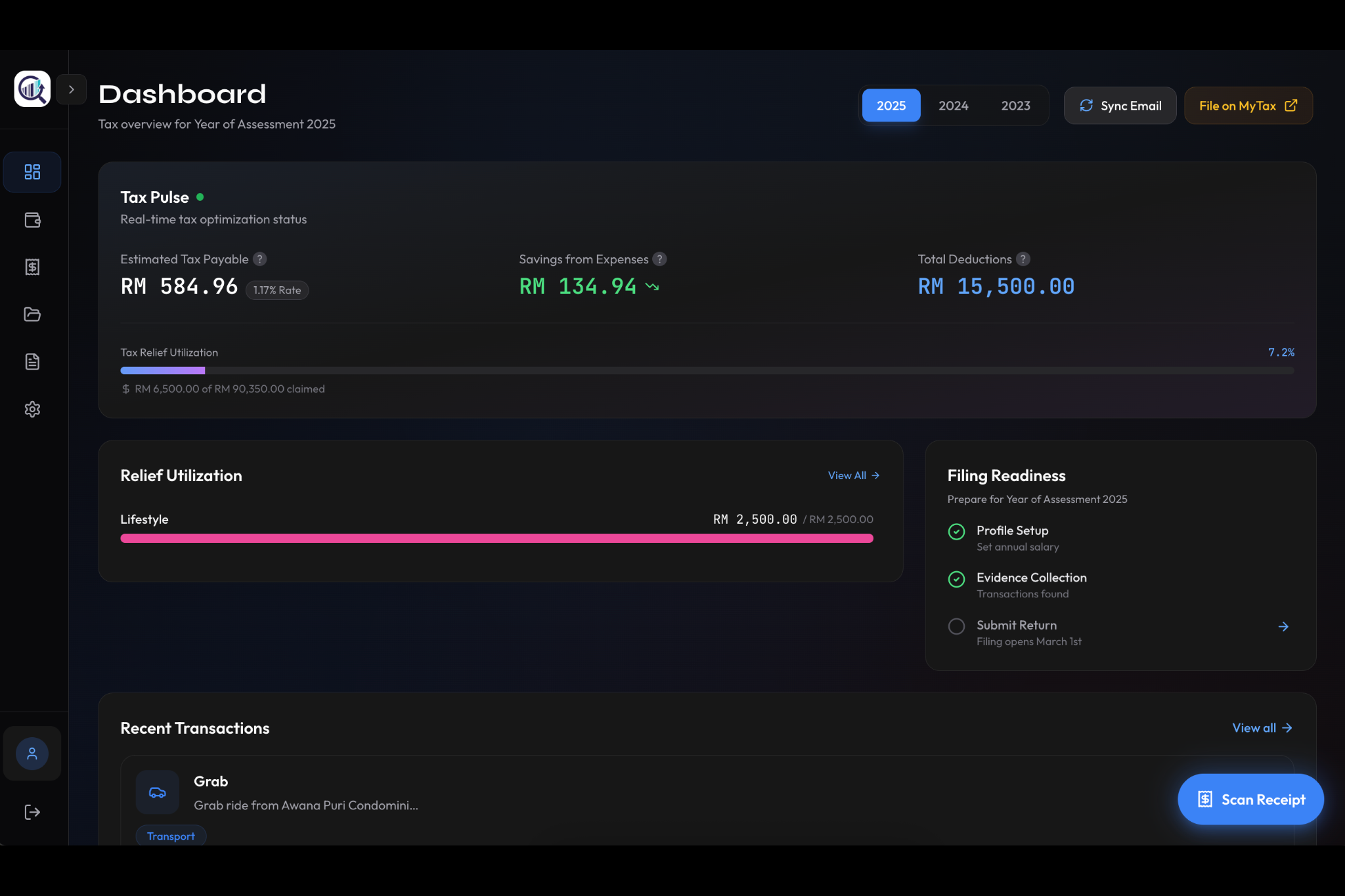
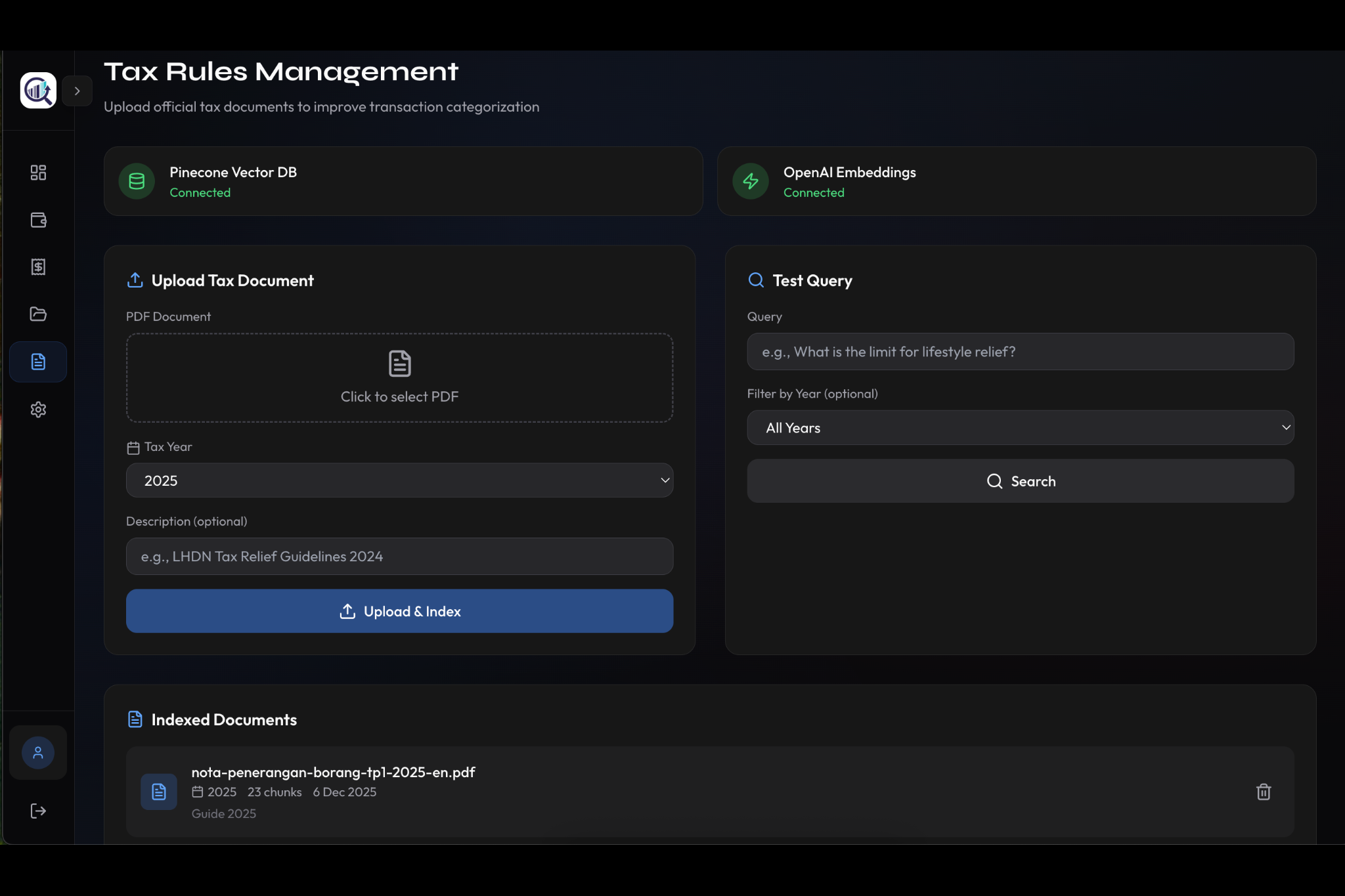
TaxLens automatically extracts, categorizes, and tracks claimable receipts from your emails. It identifies transactions eligible for Malaysian tax relief, stores them in one place, and calculates how much relief you’ve accumulated. No manual data entry, no missing receipts - everything is detected, organized, and ready for tax season.
How we built it
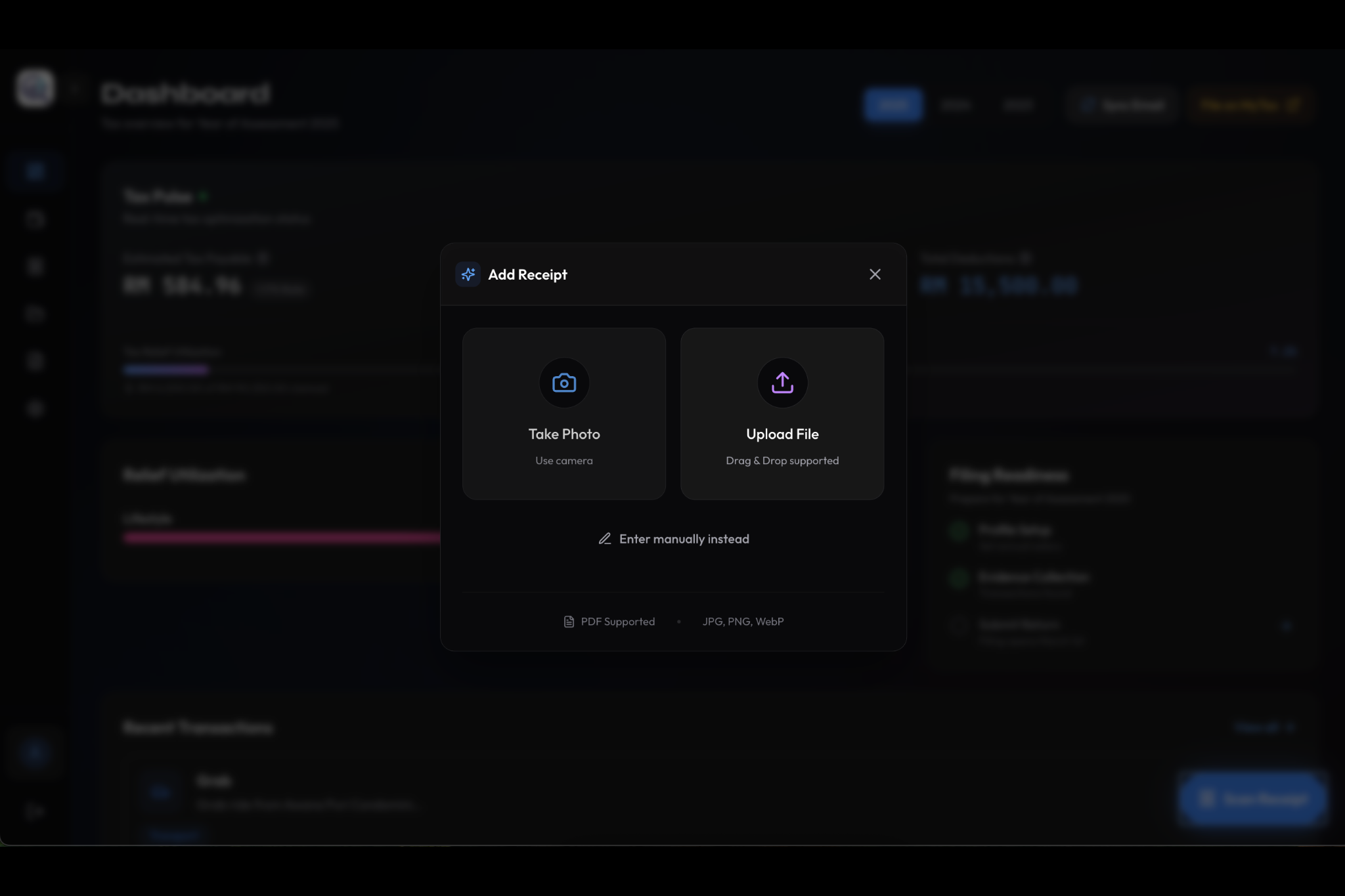
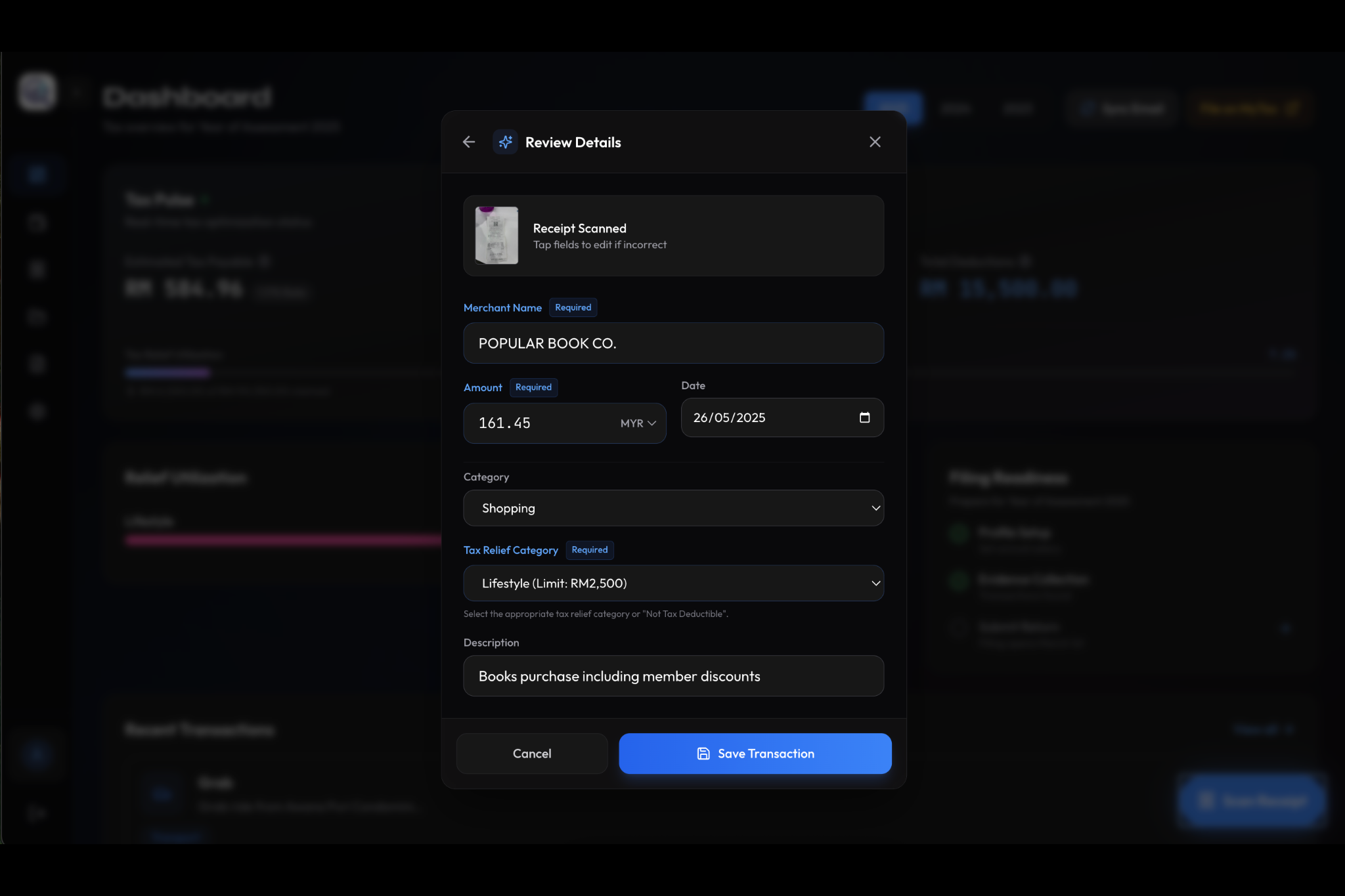
We built TaxLens as a full end-to-end pipeline that automates receipt extraction and tax-relief classification. Our frontend is a Next.js dashboard where users can upload PDFs or images, or connect their Gmail via OAuth. Uploaded files are stored in Supabase Object Storage and processed through a Vision API to extract key receipt details.
For email receipts, we pull messages directly from Gmail, send them into our backend, and run them through the same extraction flow. The parsed data is then sent to Claude, which performs structured data labelling, merchant/category classification, and eligibility checks based on Malaysian tax-relief rules. Finally, all processed records and calculations are saved into a PostgreSQL database, which powers the real-time dashboard.
This architecture lets us combine email ingestion, AI vision, and rule-based logic into one seamless automated tax-tracking system.
Challenges we ran into
Our biggest challenge came from Gmail OAuth. Without full verification, only whitelisted emails can authenticate - so we had to prepare a dedicated test account for judges instead of letting them log in with their own Gmail. Designing the demo around this limitation while still showing the full flow required careful planning.
Accomplishments that we're proud of
To be actually tackling pain points that we are facing individually, and gaining insights into Malaysia's tax revenue status Build this in a day from FE, BE and using Claude AI - as well as pretty slides and content To have this idea sparked for real world challenge - then we tend to overlook - and now solving it with AI
What we learned
One Team One Dream <3<3<3
What's next for TaxLens
We are expanding TaxLens beyond individual taxpayers. Phase 2 focuses on microbusinesses and self-employed Malaysians, enabling them to upload income and expenses, auto-tag deductible items, and instantly generate audit-ready documentation - a group with major compliance needs but almost no digital tools today.
Next, Phase 3 brings TaxLens to SMEs, with automated receipt ingestion, deductible classification, an accountant-facing dashboard, and structured documentation folders to make audits seamless. Our goal is to become a full-stack compliance automation platform for every level of Malaysian business.
Built With
- claude
- express.js
- google-gmail-oauth
- next.js
- node.js
- postgresql
- supabase
- tailwind
- typescript
- vision-api


Log in or sign up for Devpost to join the conversation.