-

TaxiCab Translations Logo
-
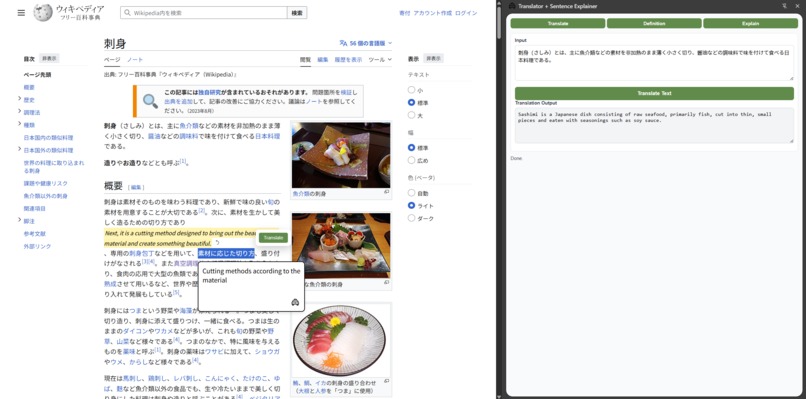
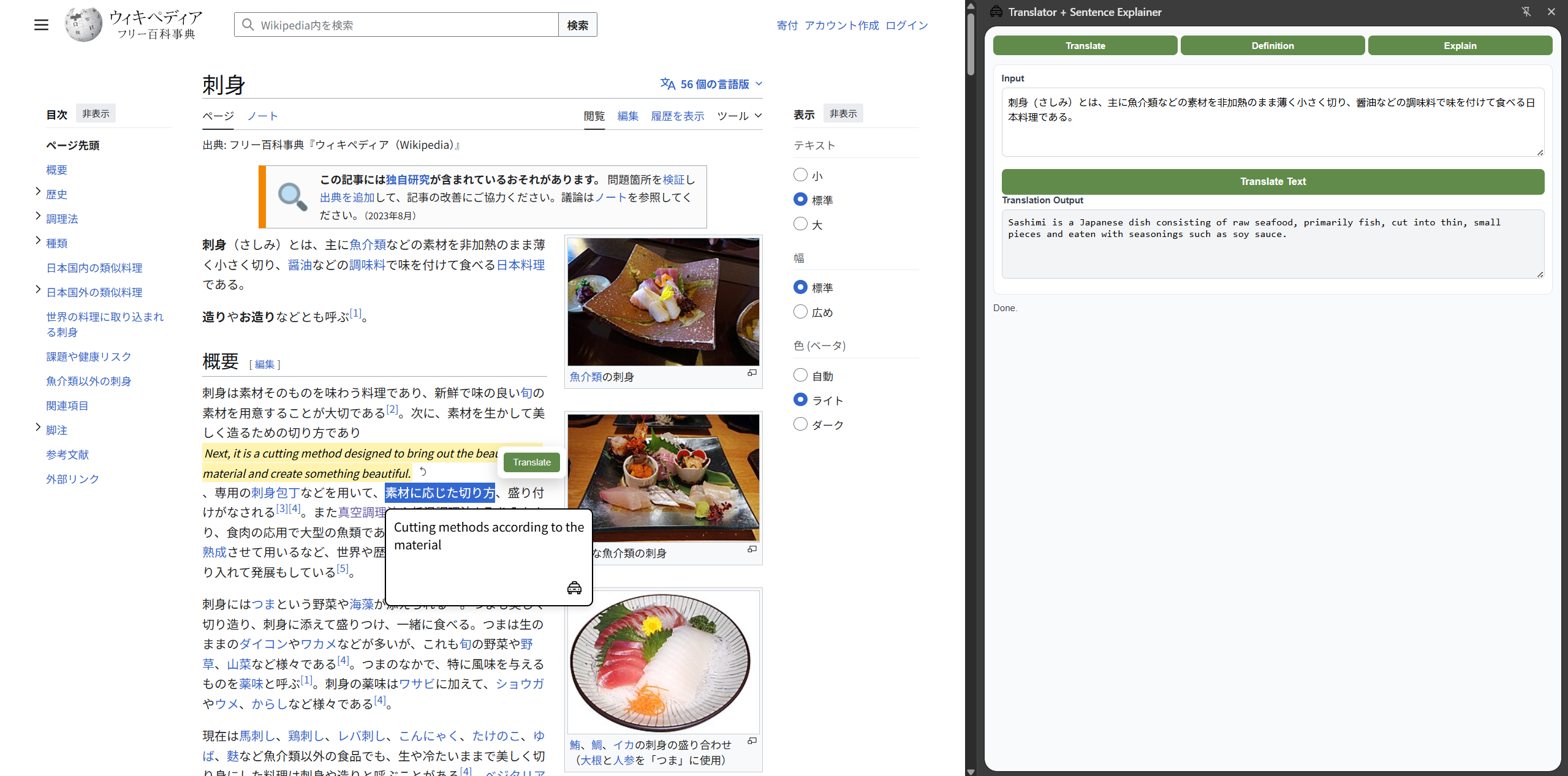
Example Translation
-
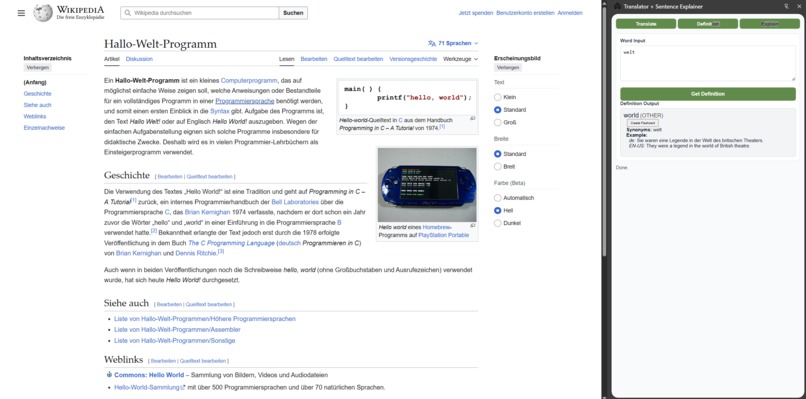
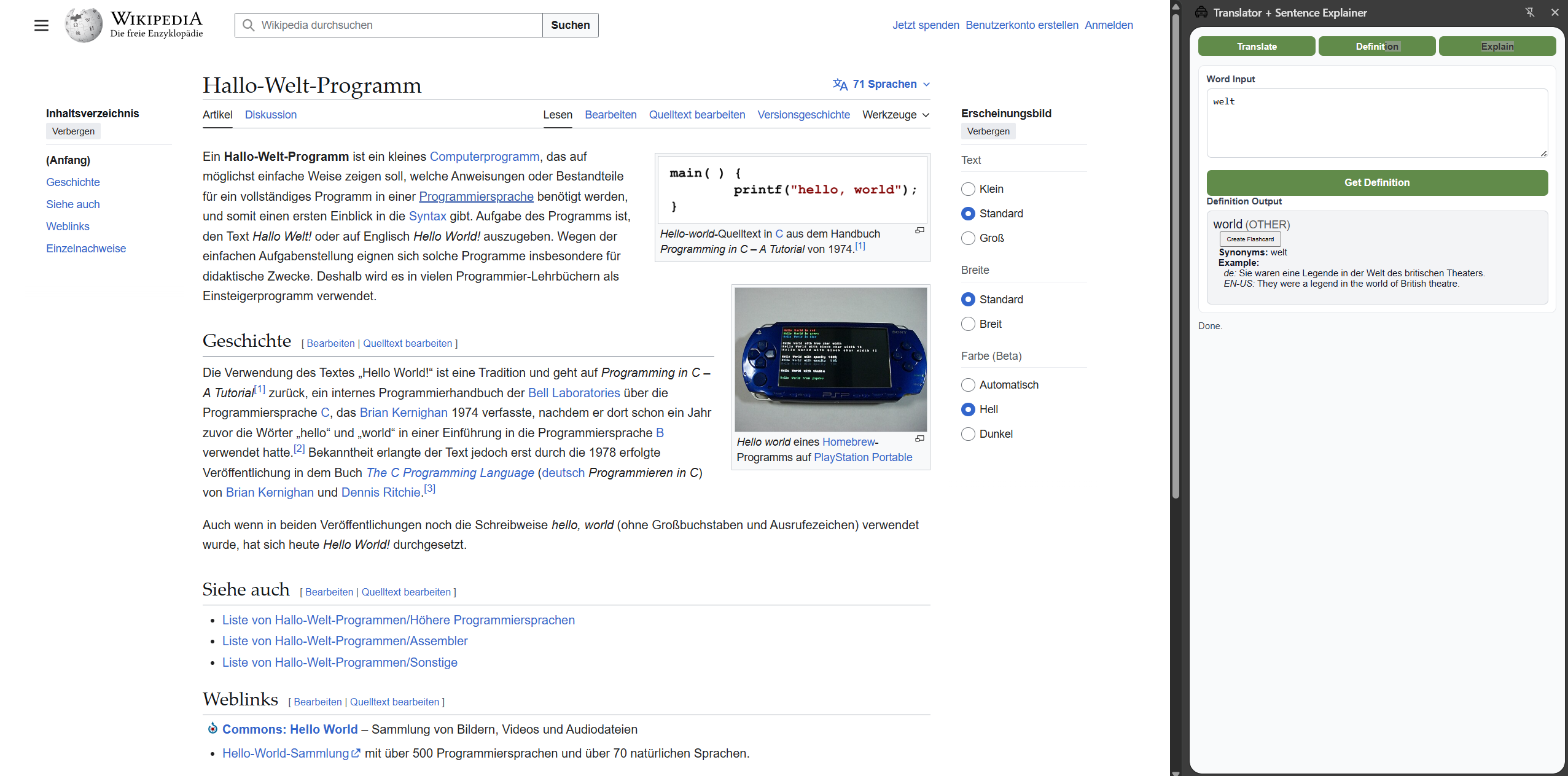
Example Defnition
-
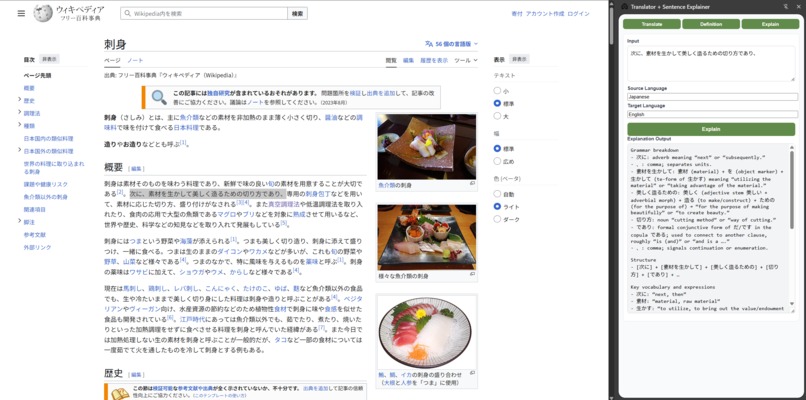
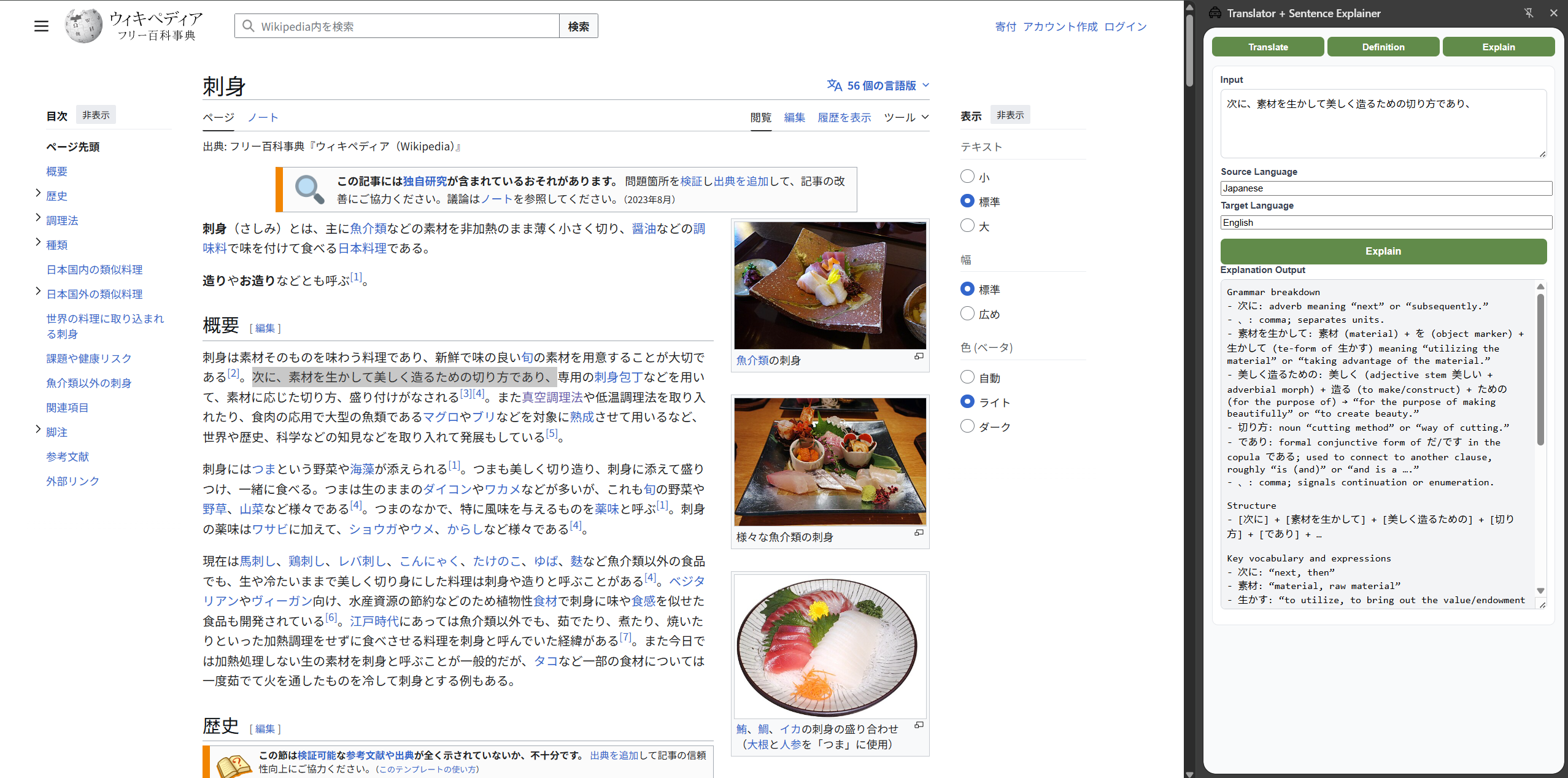
Example Explanation
-
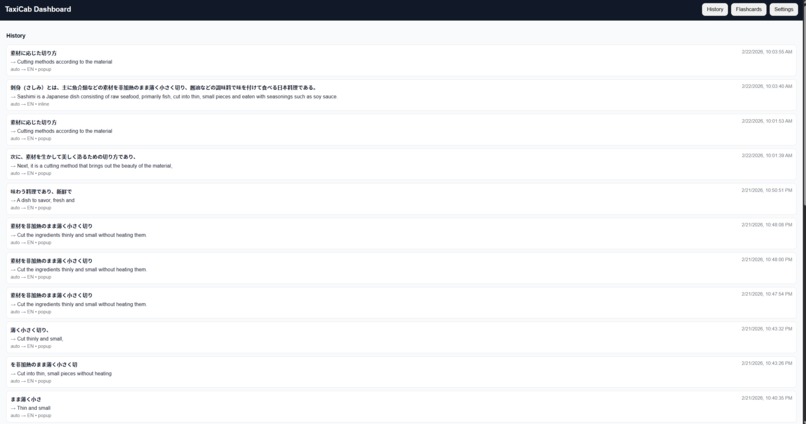
History
-
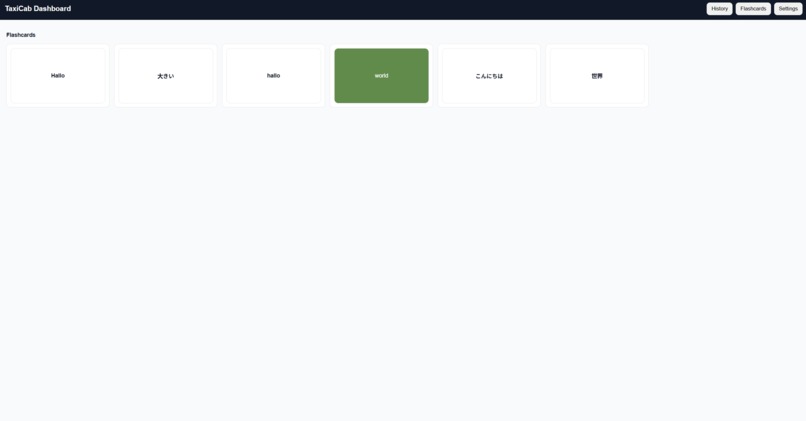
Flashcards

Inspiration
Many of our members took Japanese as an option course at the UofA. A very prominent gripe we faced was the constant switching of tabs to different resources required to understand readings and assignments. Many times during our studies we had wished that there was a tool that not only translated what we wanted, but also explained grammatical significance and also helped facilitate the learning of words we may have had more trouble remembering. So, for this hackathon, we decided to tailor our product to those who will inevitably face the same problems as we did. To potentially help create an environment of effective and efficient learning. Our motto throughout development was, "We aren't here to reinvent the wheel. Rather, we're here to streamline it and make it more accessible to those that need it."
What it does
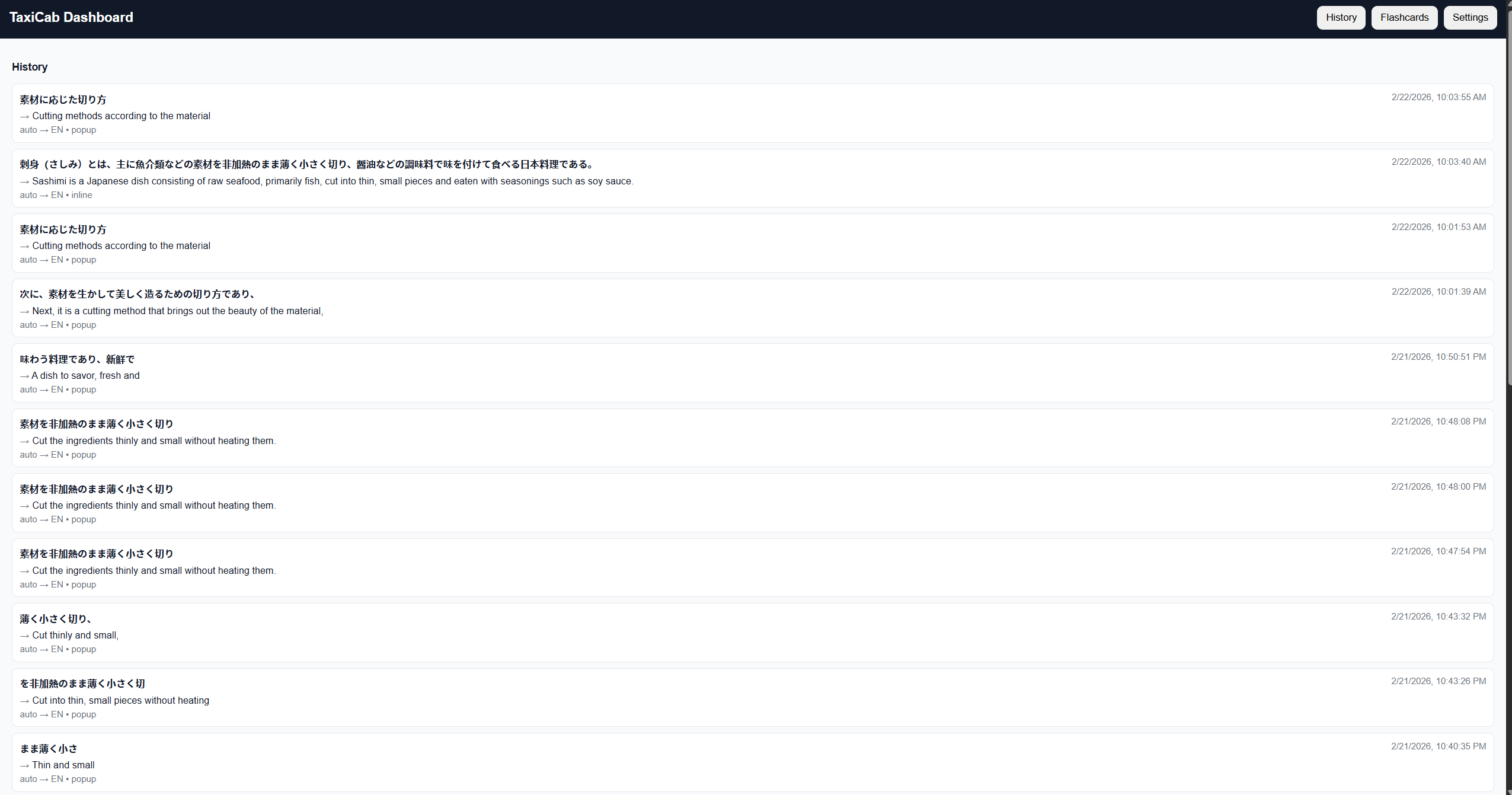
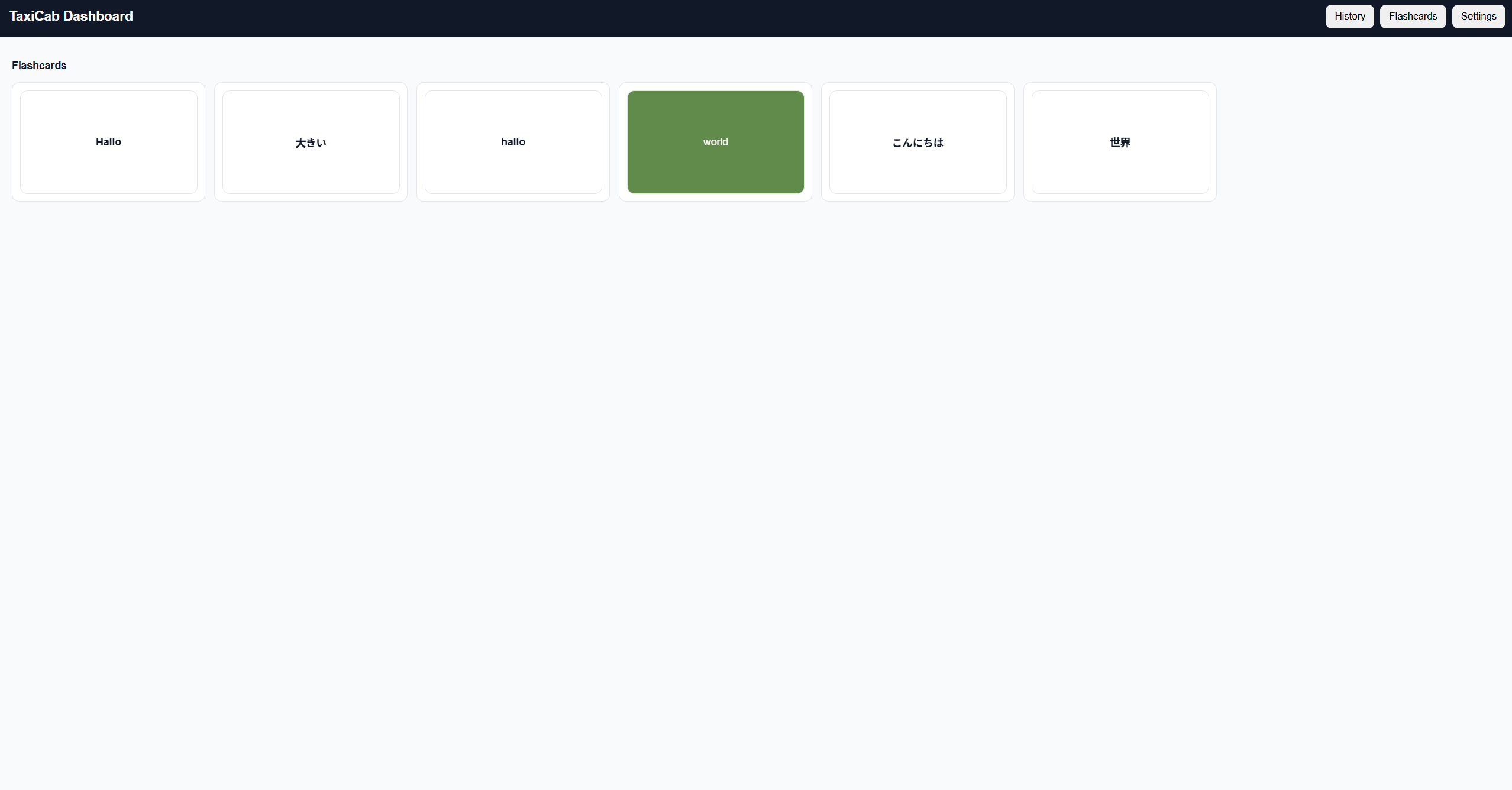
TaxiCab Translations activated off of the user highlighting a word or phrase. A button then appears above the highlighted element asking if you would like it translated will appear. Upon selecting translate, a popup will appear with your text translated. Within that same translation box is a button to access the sidebar. The sidebar gives access to a grammatical breakdown of your desired phrase, or the definition and synonyms of your specific word. We also included a dashboard page that upon access shows your history and allows the user to create flashcards for tricky words that just don't seem to stick.
How we built it
Initially we planned how we wanted everything to look and function on paper. Then, we looked at possible methods of delivery and ultimately settled on chrome extensions. From there, we used HTML, CSS, and JavaScript to bring our product to life. Alongside APIs connected to DeepL and openai to provide the extra functionalities such as definitions and grammatical breakdown respectively.
Challenges we ran into
We ran into many challenges during the development of TaxiCab Translations. A difficult problem we ran into early on was how we wanted the grammatical breakdowns and definitions to work. LLM token limitations also became an issue when trying to get our program to use their APIs. However, the biggest challenge we ran into was not necessarily a bug or coding issue, but rather a time issue. The hackathon time was very limited, so many of the accessibility/secondary features such as a high contrast mode, text to speech, and personally designed examples, among other features, had sadly been cut from the priority list.
Accomplishments that we're proud of
We were able to come together as a group to work cohesively without any friction to accomplish our common goal. That goal being, creating a program that not only translated what you needed, but also explained it to you and gave you alternatives.
What we learned
Sometimes the problem is not whether or not tools exist, but rather, its accessibility to the average person/target audience. We had the tools we needed during our studies, however, those tools were scattered in different places.
What's next for TaxiCab Translations
Our product is something we intend to use in our own personal studies, but also would like to present it to our Japanese Professors and have their feedback and potential testing. Furthermore, we intend to also reach out to those who struggle with disabilities in order to learn how to improve our application and provide accessible services to a larger demographic of language learners.
Built With
- css
- deepl
- html
- javascript
- openai


Log in or sign up for Devpost to join the conversation.